Rabka-Zdrój
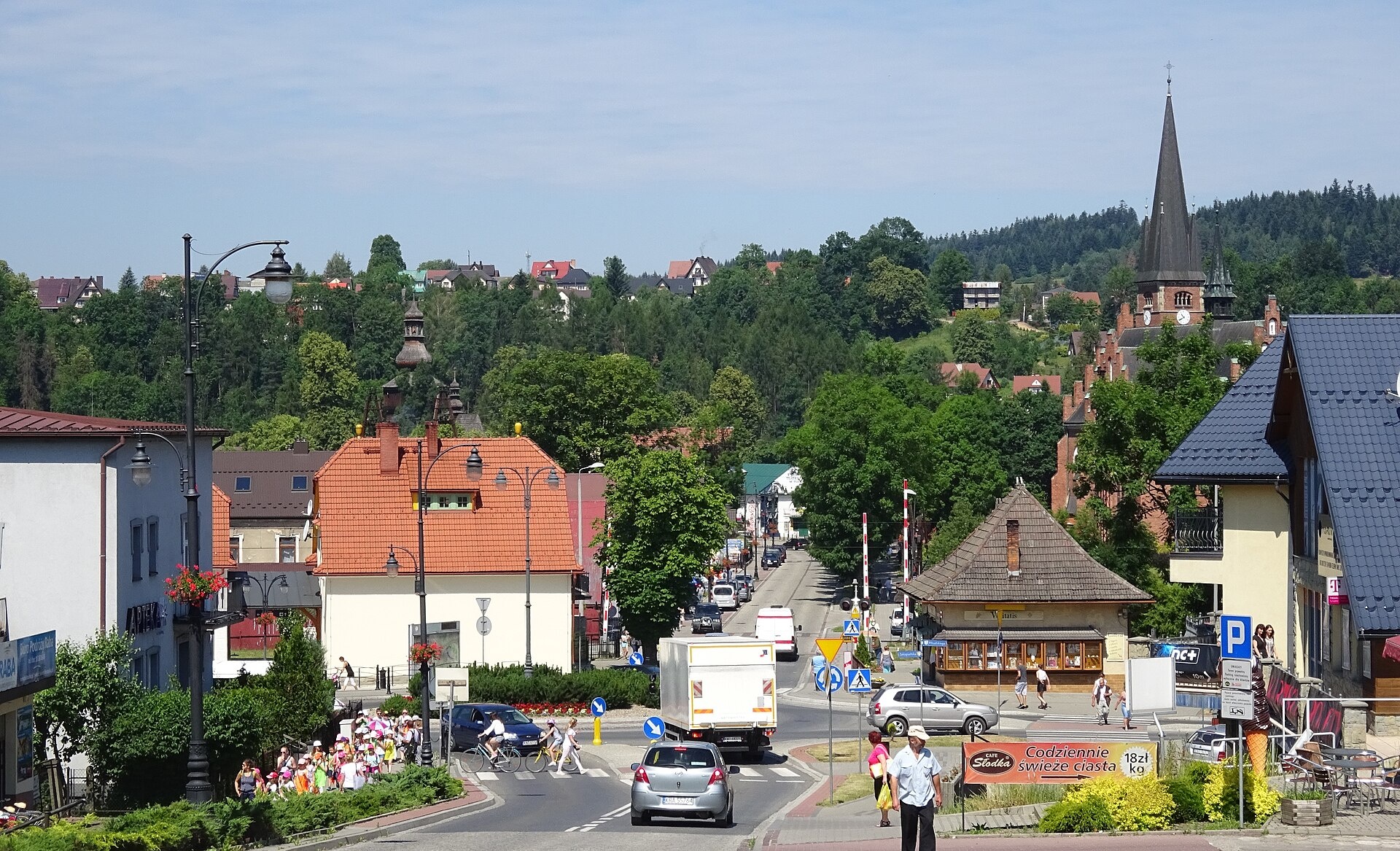
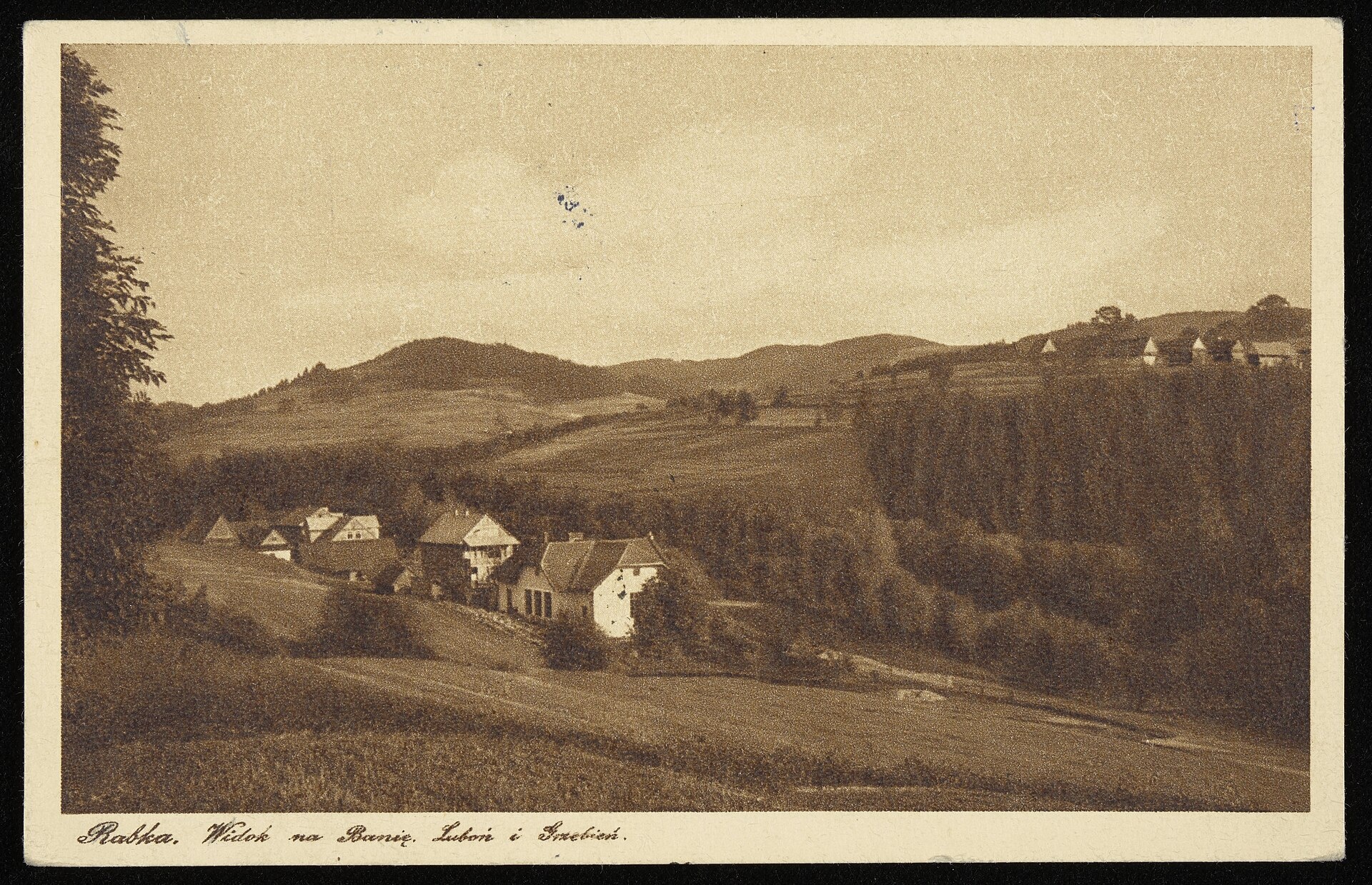
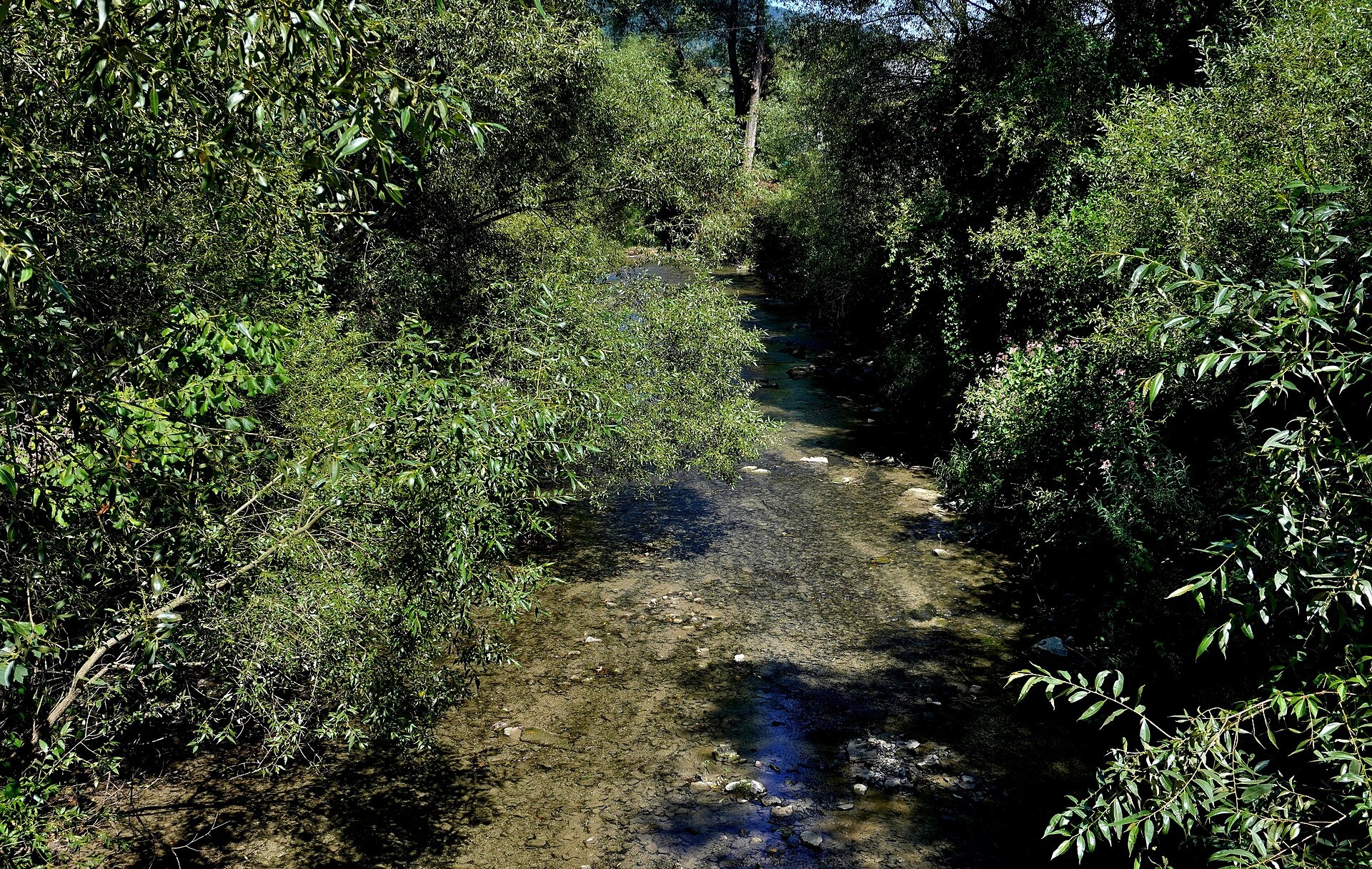
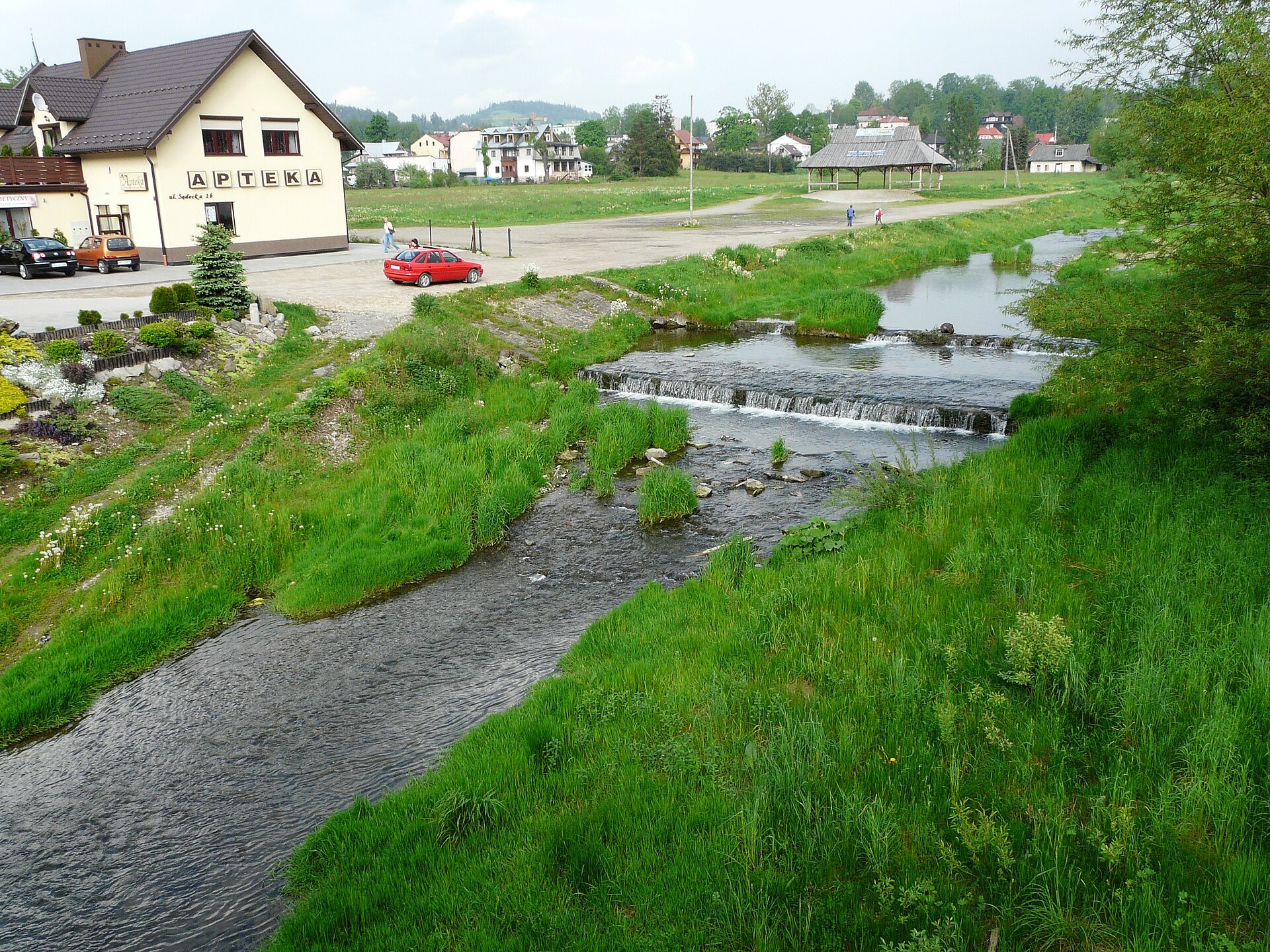

Photos: Mach240390, CC BY-SA 3.0 (Wikimedia Commons); Unknown authorUnknown author, Public domain (Wikimedia Commons); Mach240390, CC BY 4.0 (Wikimedia Commons); User:Piotrus, CC BY-SA 3.0 (Wikimedia Commons); Jerzy Opioła, CC BY-SA 4.0 (Wikimedia Commons); Hipolit Lipiński, Public domain (Wikimedia Commons)
Rabka-Zdrój is a spa town in Nowy Targ County, Lesser Poland Voivodeship, Poland. It lies in a valley on the northern slopes of the Western Carpathians (Gorce Mountains), at the confluence of the Poniczanka and Słonka rivers with the Raba. The town is situated between Kraków and Zakopane, at an elevation of about 500 m, and has a population of over 12,000.
The name Rabka was first mentioned in 1254, when its brine springs were already known and likely used by the Cistercian monastery. In 1595, the village belonged to Anna Jordanowa. In the 19th century, local brine springs were found to be among the strongest iodine-bromine waters in Europe. The first therapeutic establishment opened in 1864, and by 1872 Rabka had become a renowned children's spa. During World War II, a ghetto and a Nazi police school operated here.
Rabka-Zdrój is known as a family and children's resort, famous for its healing brine springs, unique microclimate, and the cultural heritage of the Gorals. The Władysław Orkan Museum, housed in a 17th-century wooden church, and the Order of the Smile Museum are notable cultural sites. The town is surrounded by scenic mountains and forests, attracting nature lovers and outdoor enthusiasts.
Visitors can explore numerous trails such as the Mały Beskidzki Trail, Szczebel – Turbacz – Kowaniec, Koninki – Stare Wierchy – Kowaniec, or hike to the peaks of Turbacz and Luboń Wielki. Attractions include the Władysław Orkan Museum, the rolling stock skansen in Chabówka, and the Gorce National Park nature exhibition in Poręba Wielka. For wellness, there are the brine graduation tower and Gorce thermal baths. The educational farm "Oravskie Ranch" in Harkabuz offers craft workshops. Mountain shelters are available on Maciejowa, Turbacz, and Luboń Wielki.
Getting there from Ukraine
Lviv – Zakopane ≈421 km, ≈5 h 10 min without border queues. Route: M-10 Lviv – Krakovets → Krakovets – Korczowa checkpoint → A4 motorway (Rzeszów – Tarnów – Kraków) → Kraków southern bypass → S7/DK7 → DK47 ('Zakopianka') via Nowy Targ → Zakopane. The A4 Katowice – Kraków section (Balice and Mysłowice toll plazas) is tolled, but this route does not use it. In summer and at weekends the DK47 near Zakopane is often congested.
Sources: Wikipedia, Wikidata, OpenStreetMap, Karpaty.rocks data. More on Wikipedia
Trails nearby
All trails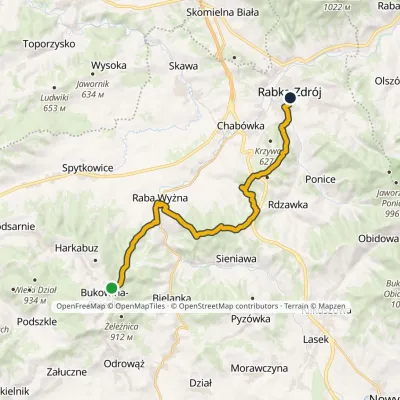 ModerateTwo-dayMarkedRaba Wyżna RabkaElevation profile491–836 m18.5 kmascent 442 m≈ 5.5 h walkingunder 1 km from the centre
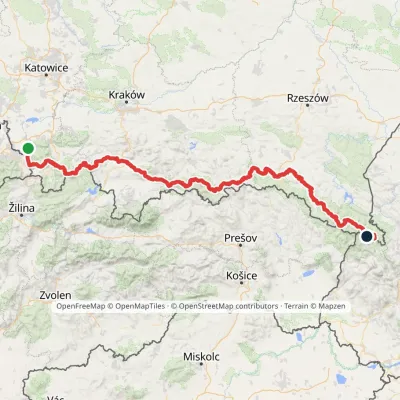 HardMulti-dayMarkedMain Trail of BeskidyElevation profile309–1 723 m499.9 kmascent 19 519 munder 1 km from the centre
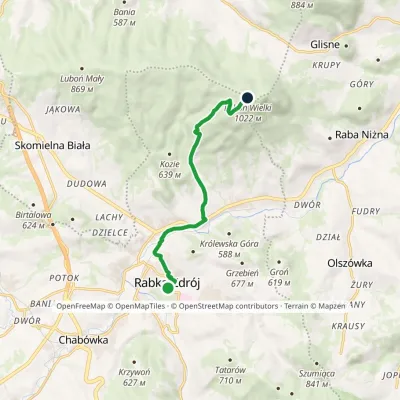 EasyOne-dayMarkedRabka LubońElevation profile462–1 022 m8.2 kmascent 562 m≈ 3 h walkingunder 1 km from the centre
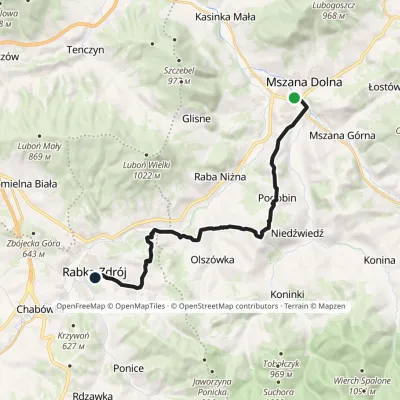 ModerateTwo-dayMarkedMszana Dolna Rabka-ZdrójElevation profile396–746 m17.5 kmascent 685 m≈ 5.5 h walkingunder 1 km from the centre
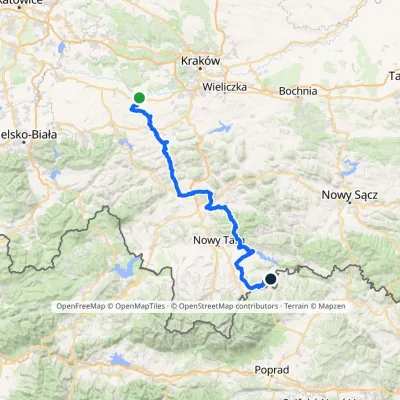 HardMulti-dayMarkedBrzeźnica KacwinElevation profile220–1 289 m143 kmascent 4 206 munder 1 km from the centre
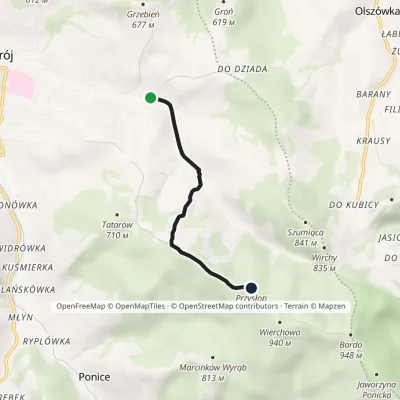 EasyOne-dayMarkedRabka Słone MaciejowaElevation profile545–852 m3.4 kmascent 307 m≈ 1.5 h walking2.1 km from the centre
Peaks nearby
All peaks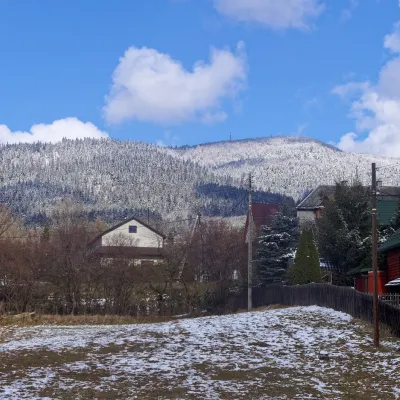 PeakLuboń WielkiGlisnealtitude 1 022 m5.5 km from the centreLuboń Wielki is a 1,022 m summit and the most prominent mountain of the Island Beskids, rising about 512 m above its key col.
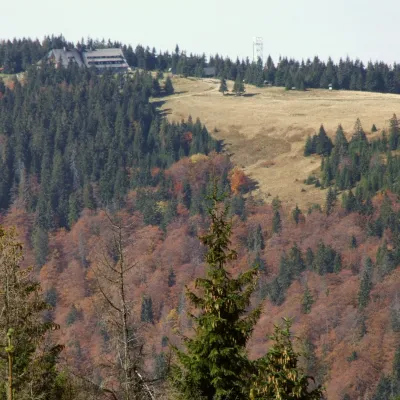 PeakTurbaczObidowaaltitude 1 310 m13 km from the centreTurbacz is the highest peak of the Gorce Mountains, 1,310 m high, lying at the very centre of the range in southern Lesser Poland, about 30 km north of Zakopane.
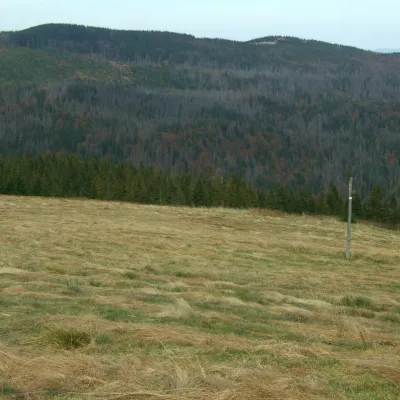 PeakKudłońLubomierzaltitude 1 274 m16 km from the centreKudłoń is a 1,274 m summit, the fourth-highest in the Gorce. It lies north-east of Turbacz on the ridge that links Turbacz with the Island Beskids via the Przysłop...
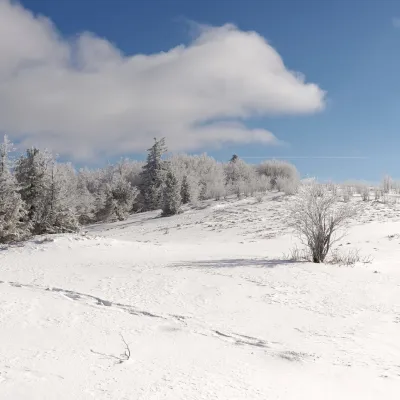 PeakĆwilinGruszowiecaltitude 1 072 m19 km from the centreĆwilin is a 1,072 m summit, the second-highest mountain of the Island Beskids. Its name was given in the 14th century by German settlers in Tymbark and Jurków: it...
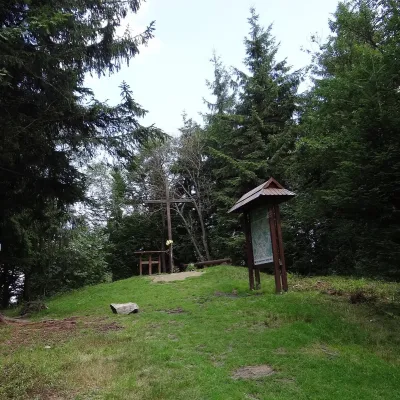 PeakŚnieżnicaGruszowiecaltitude 1 007 m20 km from the centreŚnieżnica is a 1007 m mountain in the Island Beskids (Beskid Wyspowy) in Lesser Poland Voivodeship, southern Poland.
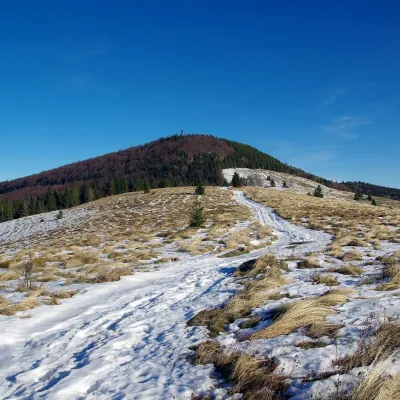 PeakMogielicaChyszówkialtitude 1 171 m23 km from the centreMogielica is the highest summit of the Island Beskids (Beskid Wyspowy), 1,171 m high, and one of the mountains of the Crown of Polish Mountains.
What to visit
All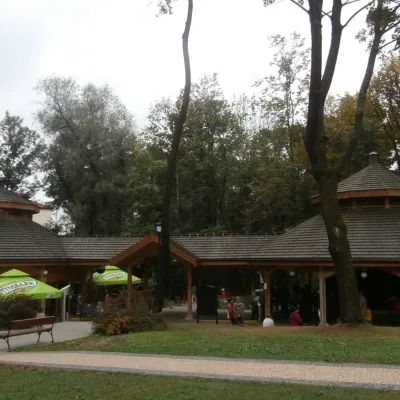 Water parks & thermal poolsRabka-Zdrój spa: brine graduation tower, pump rooms, treatmentsRabka-Zdrójunder 1 km from the centreRabka-Zdrój is a spa in the Raba valley between the Gorce, the Beskid Wyspowy and the Beskid Makowski, halfway from Kraków to Zakopane.
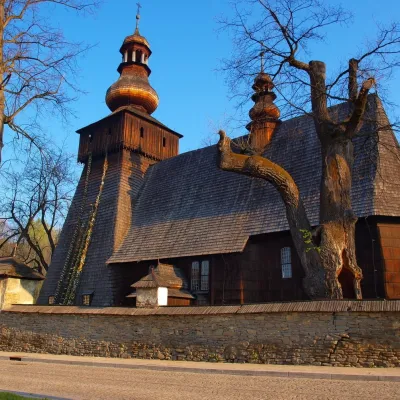 MuseumWładysław Orkan Museum in Rabka-ZdrójRabka-Zdrój1.2 km from the centreThe Władysław Orkan Museum (Muzeum im. Władysława Orkana) in the spa town of Rabka-Zdrój is one of the oldest regional museums in the Polish Beskids.
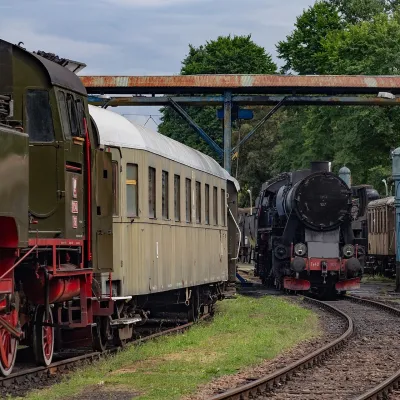 MuseumChabówka Railway Open-Air MuseumChabówka2.9 km from the centreThe Chabówka Railway Rolling Stock Open-Air Museum (Skansen Taboru Kolejowego) is an open-air museum of railway history.
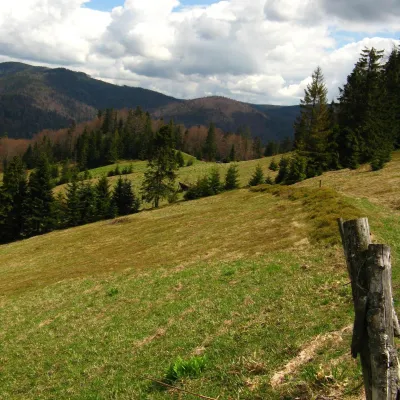 Mountain meadowTurbaczyk GladeKoninaaltitude 1 025 m11 km from the centreTurbaczyk is a summit meadow on the mountain of the same name in the Gorce, on the northern side of the Turbacz massif.
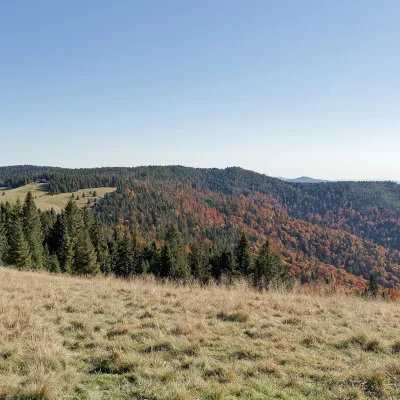 Mountain meadowHala Długa below TurbaczKoninkialtitude 1 202 m14 km from the centreHala Długa is a large mountain glade on the ridge of Turbacz, the highest peak of the Gorce (1,310 m).
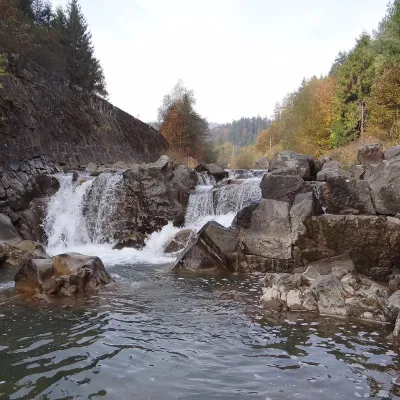 WaterfallSpad Waterfall, SzczawaSzczawa22 km from the centreSpad is a natural waterfall on the Kamienica Gorczańska, a left tributary of the Dunajec, in the village of Szczawa on the border of the Gorce and the Island Beskids ...
Craft nearby
All craft places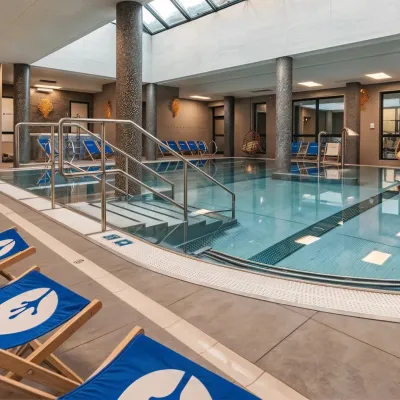 Water parks & thermal poolsTermy Gorce thermal bathsNiedźwiedź8 km from the centreTermy Gorce is a small, cosy thermal complex in the village of Poręba Wielka, in the municipality of Niedźwiedź, at the foot of the Gorce Mountains.
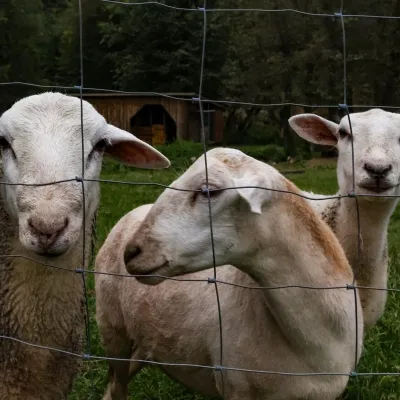 Eco farmsOrawskie Ranczo Educational Farm, Harkabuz: animals and craft workshopsHarkabuz12 km from the centreOrawskie Ranczo is a small family educational farm (zagroda edukacyjna) in the village of Harkabuz near Raba Wyżna, where Orawa meets Podhale.
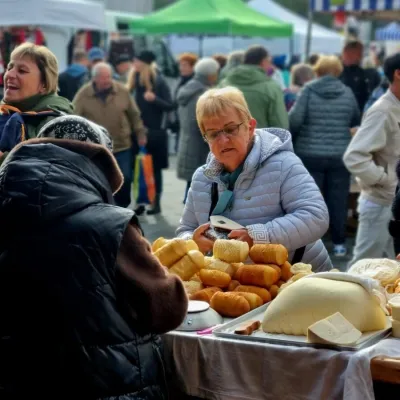 Markets & fairsNowy Targ Fair (Nowa Targowica)Nowy Targ15 km from the centreThe fair in Nowy Targ is the largest and oldest market in Podhale. On Thursdays and Saturdays highlanders from the surrounding villages, Slovaks from across the border...
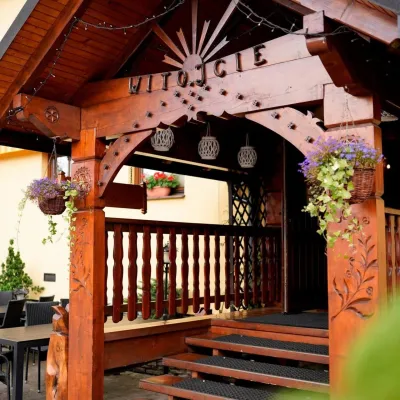 Koliby & Hutsul cuisineKarcma u Borzanka, Nowy Targ: highland food in an 18th-century innNowy Targ15 km from the centreKarcma u Borzanka is a highland tavern in the oldest coaching inn of Nowy Targ, the capital of Podhale.
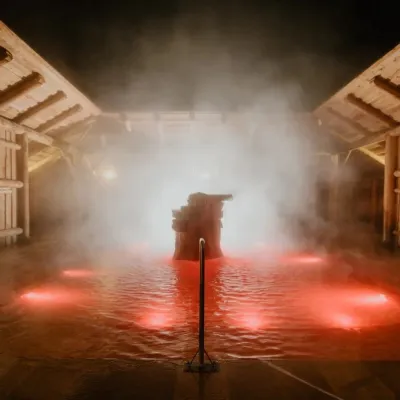 Water parks & thermal poolsTermy Gorący Potok (Szaflary)Bańska Niżna24 km from the centreTermy Gorący Potok is a complex of outdoor thermal pools in Szaflary, between Nowy Targ and Zakopane, about 15 km from Zakopane.
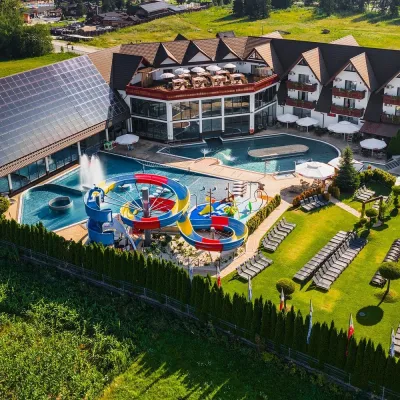 Water parks & thermal poolsTermy Szaflary (Termy Podhalańskie)Bańska Niżna24 km from the centreTermy Szaflary is a thermal complex in the village of Szaflary, between Nowy Targ and Zakopane. It used to be known as Termy Podhalańskie, a name still found in older...
Spas and thermal pools nearby
Water parks & thermal poolsRabka-Zdrój spa: brine graduation tower, pump rooms, treatmentsRabka-Zdrójunder 1 km from the centreRabka-Zdrój is a spa in the Raba valley between the Gorce, the Beskid Wyspowy and the Beskid Makowski, halfway from Kraków to Zakopane.Water parks & thermal poolsTermy Gorce thermal bathsNiedźwiedź8 km from the centreTermy Gorce is a small, cosy thermal complex in the village of Poręba Wielka, in the municipality of Niedźwiedź, at the foot of the Gorce Mountains.Water parks & thermal poolsTermy Gorący Potok (Szaflary)Bańska Niżna24 km from the centreTermy Gorący Potok is a complex of outdoor thermal pools in Szaflary, between Nowy Targ and Zakopane, about 15 km from Zakopane.Huts, shelters and springs nearby
Getting there from Ukraine
Border crossings
- Krakovets – Korczowa — road, 24/7
- Shehyni – Medyka — road, 24/7 Pedestrian crossing is not confirmed by the Ukrainian border service — check dpsu.gov.ua before the trip.
- Smilnytsia – Krościenko — road, 24/7
- Hrushiv – Budomierz — road, 24/7
- Mostyska – Przemyśl (rail) — rail, 24/7
By car
Lviv – Zakopane ≈421 km, ≈5 h 10 min without border queues. Route: M-10 Lviv – Krakovets → Krakovets – Korczowa checkpoint → A4 motorway (Rzeszów – Tarnów – Kraków) → Kraków southern bypass → S7/DK7 → DK47 ('Zakopianka') via Nowy Targ → Zakopane. The A4 Katowice – Kraków section (Balice and Mysłowice toll plazas) is tolled, but this route does not use it. In summer and at weekends the DK47 near Zakopane is often congested.
Checked 23.10.2026; border crossing hours and timetables change — check before you travel.
