Coral tooth fungus
Never identify a mushroom from a photo alone. If in doubt, leave it. In case of poisoning call 112 (103 in Ukraine) at once.
About
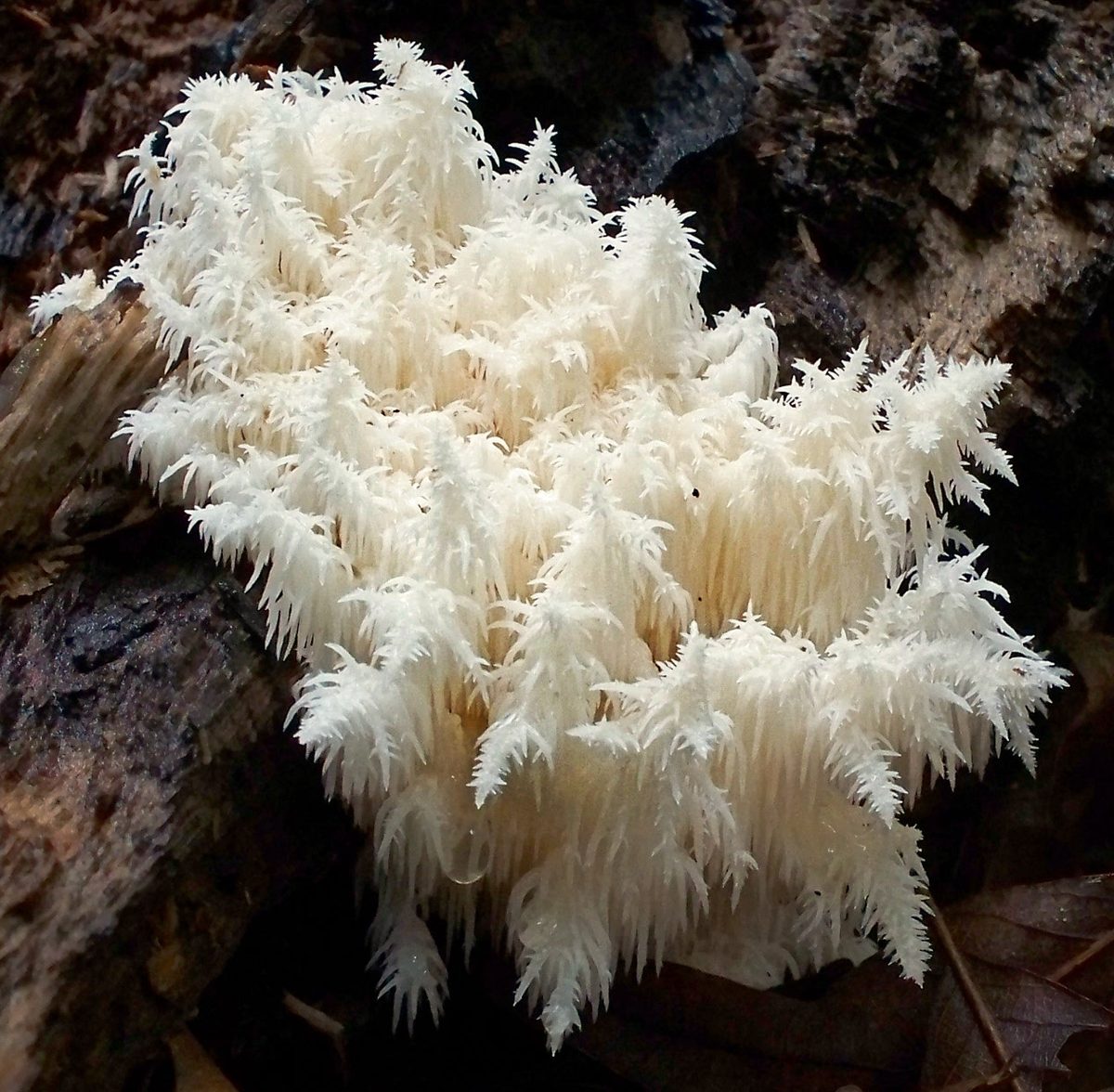
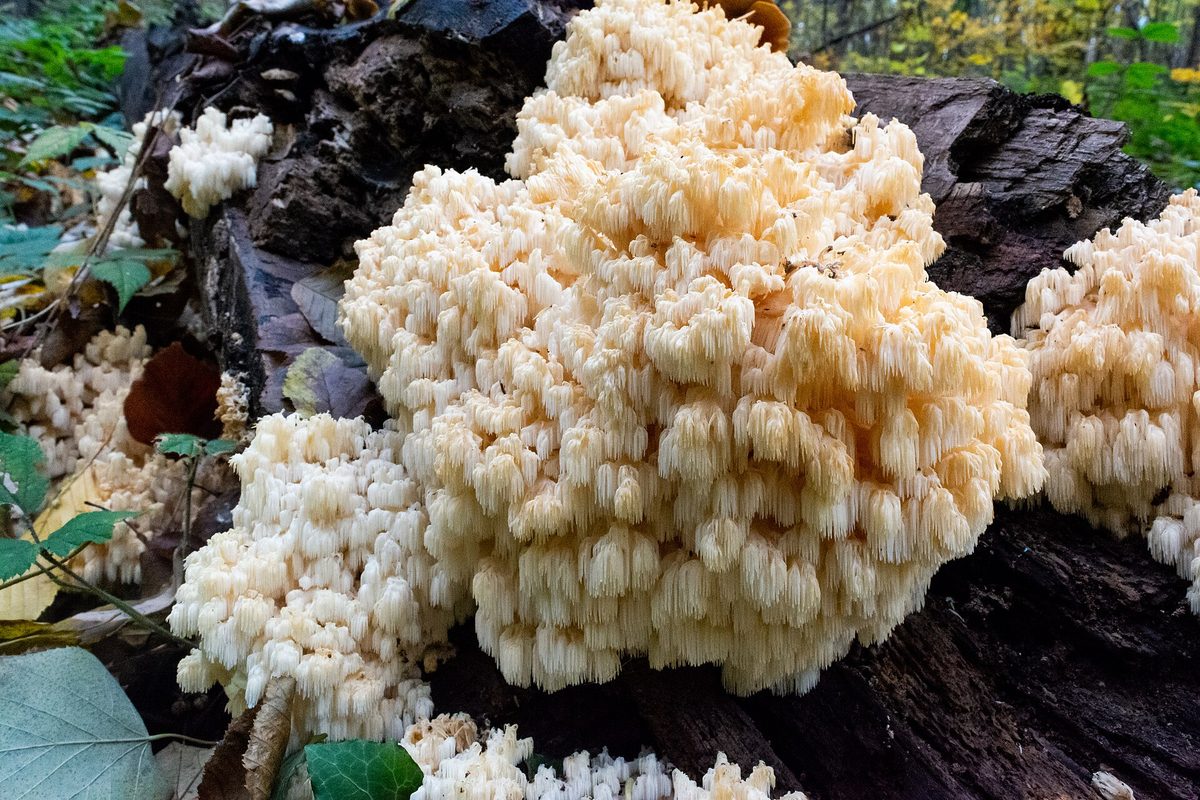
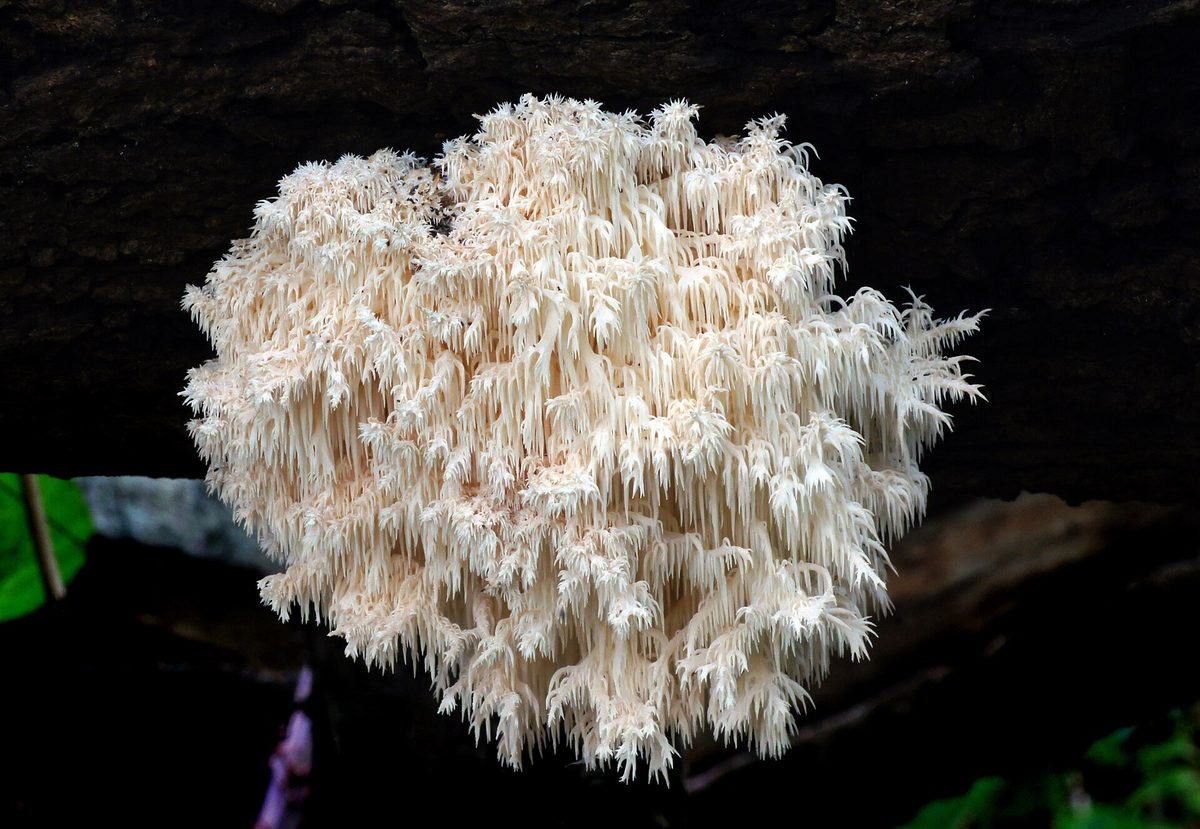
Hericium coralloides resembles not a typical mushroom, but a white sea coral or icicles. It grows on dead trunks, stumps, and fallen wood of broadleaf trees, less often conifers, from summer to autumn. It is most often seen where old and dead trees are left in the forest — in reserves and old beech or oak forests.
The fruiting body is highly branched, generally rounded, usually 10–30 cm in diameter, white or cream. The branches are densely covered underneath and on the sides with thin pointed spines about 1–1.5 cm long, hanging downwards. With age, the fungus turns yellow and brown, and the branches become brittle. The flesh is white, brittle, with a weak smell.
The fungus causes white rot in wood and depends on whether dead trees remain in the forest. In Ukraine, the species is listed in the Red Book with a status of 'vulnerable', so collecting it is prohibited. It is also protected in several neighboring countries, including Poland.
Young fruiting bodies are described in guides as edible, and in Poland, only Hericium from plantations is allowed to be sold. So if you come across a white 'coral' on a beech log, just take a photo of it without breaking it off. A similar species, Hericium erinaceus, has one compact 'pillow' of long spines, rather than a branched body; it is even rarer and has a status of 'endangered' in the Red Book.
Where in the Carpathians

The map shows where naturalists recorded the species (GBIF, CC0 and CC BY records), not every place it lives. The Ukrainian Carpathians are less studied, so a blank area does not mean the species is absent.
- Countries
- Ukraine · Slovakia · Hungary · Romania · Poland · Czechia
- Mountain ranges
- Pokuttia-Bukovina Carpathians, Rivna Polonyna, Bieszczady, Mátra, Polonynian Ridge, Strážov Mountains, Gorgany
- Altitude belts
- Foothills (below 600 m) · Beech forests (600–1200 m)
When to see it
| Jan | Feb | Mar | Apr | May | Jun | Jul | Aug | Sep | Oct | Nov | Dec | |
|---|---|---|---|---|---|---|---|---|---|---|---|---|
| Sightings |
From naturalists’ observations in the Carpathians (iNaturalist, research grade): the darker the cell, the more often the species is seen that month.
Safety
A species from the Red Book of Ukraine: collecting is prohibited.
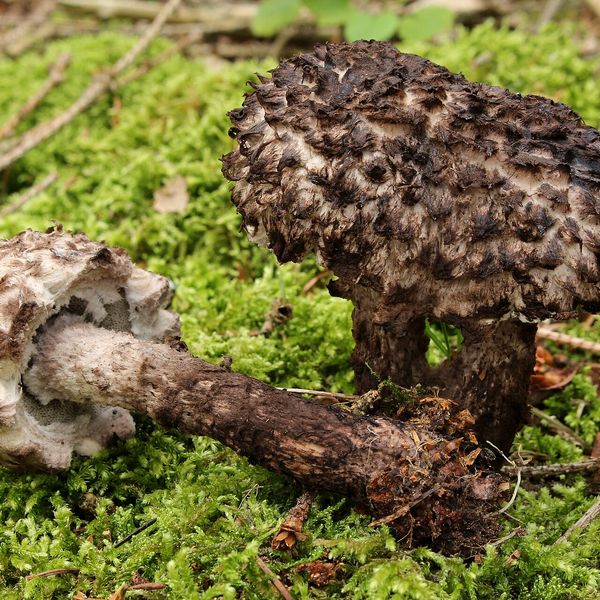
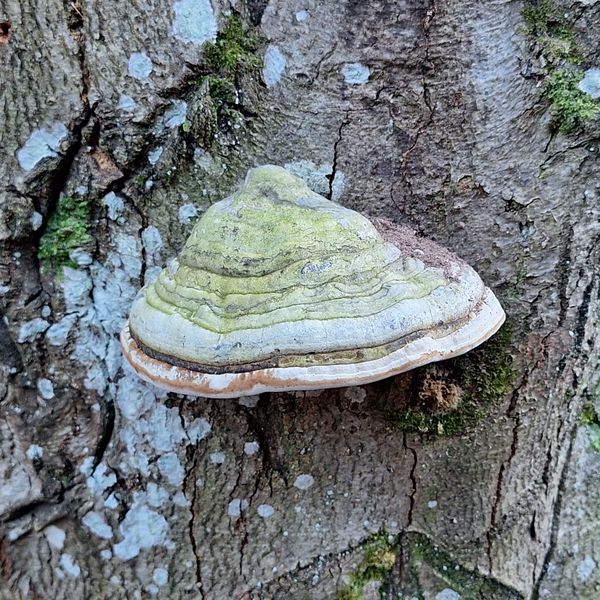
Look-alikes — how to tell them apart
One compact rounded body without branches, with long (up to several centimeters) hanging spines. A species from the Red Book of Ukraine (endangered) — do not collect.
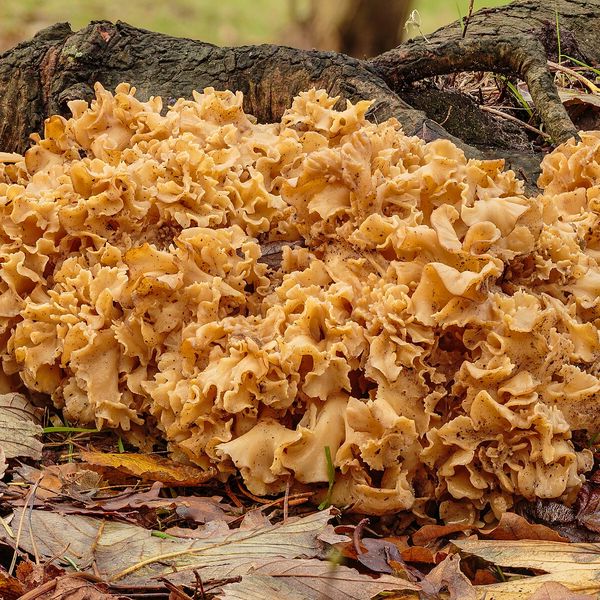
Body made of wavy flat lobes, resembling a sponge or cauliflower, without spines; grows at the base of pines. A species from the Red Book of Ukraine (endangered).
Protection and rules
Listed in the Red Book of Ukraine (vulnerable). Collecting is prohibited — take a photo and leave it on the wood.
Admire, don’t pick: plants listed in the Red Data Book of Ukraine — and any plants in nature reserves and strictly protected zones of national parks — must not be collected.
FAQ
Can I collect Hericium coralloides?
No. The species is listed in the Red Book of Ukraine with a status of 'vulnerable', so collecting it is prohibited.
What white coral fungus grows on a log?
Most likely, it is Hericium coralloides: a branched white body with thin hanging spines. It is rare and protected.
Similar species
Where to meet it
Trails
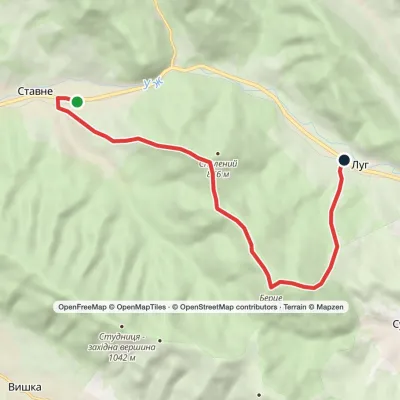 ModerateOne-dayStavne village to Luh villagevia Mount BertseElevation profile386–1 014 m10.1 kmascent 689 m≈ 4 h walking
 ModerateTwo-dayLybokhora village to Bilasovytsia villagevia Mount Velykyi Verkh, Mount PikuiElevation profile593–1 408 m21.1 kmascent 882 m≈ 7 h walking
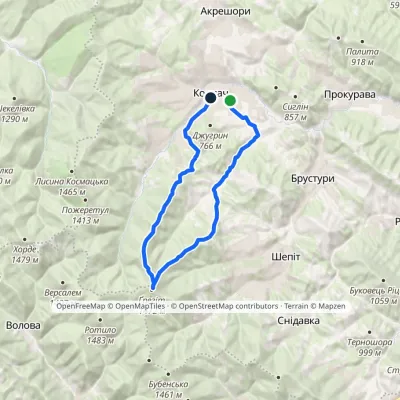 HardTwo-dayMarkedKosmach village loopvia Mount HrehitElevation profile584–1 470 m22 kmascent 936 m≈ 7.5 h walking
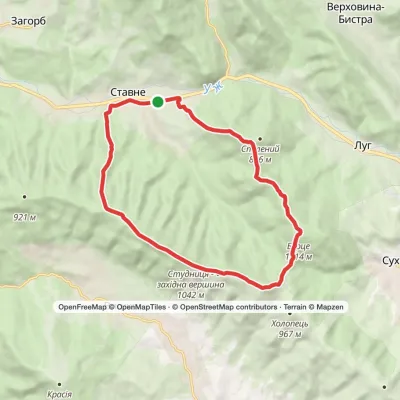 ModerateTwo-dayStavne village loopvia Mount Studnytsia, Mount SpalenyiElevation profile382–1 042 m17.6 kmascent 981 m≈ 6.5 h walking
 EasyOne-dayBilasovytsia village Mount PikuiElevation profile594–1 334 m5.3 kmascent 779 m≈ 3 h walking
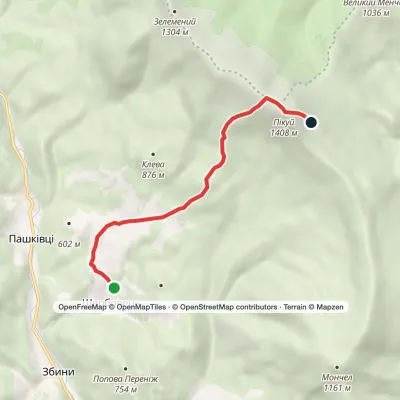 ModerateOne-dayMarkedShcherbovets village Mount PikuiElevation profile511–1 408 m6.1 kmascent 897 m≈ 3.5 h walking
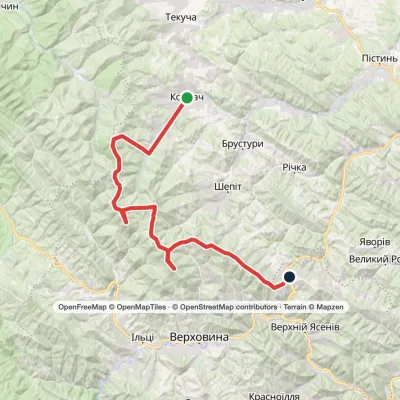 HardMulti-dayKosmach village to Bukovets villagevia Mount Rotylo, Mount Hrehit +1Elevation profile615–1 474 m40.2 kmascent 2 290 m
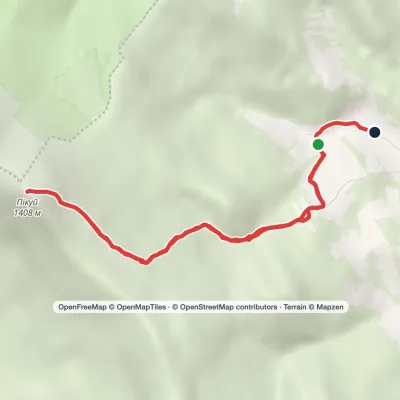 ModerateOne-dayMarkedBilasovytsia village loopvia Mount PikuiElevation profile622–1 408 m8.9 kmascent 750 m≈ 3.5 h walking
 HardTwo-dayMarkedBilasovytsia village to Mount Starostynavia Mount Pikui, Mount Velykyi VerkhElevation profile804–1 408 m22.1 kmascent 1 246 m≈ 8 h walking
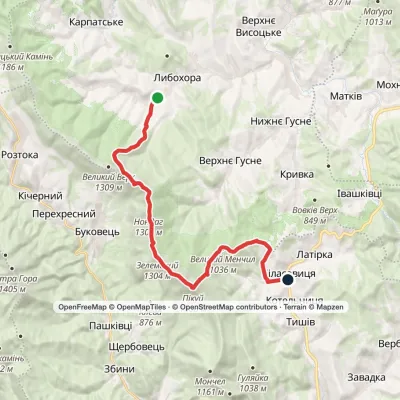 HardTwo-dayLybokhora village to Bilasovytsia villagevia Mount PikuiElevation profile557–1 408 m23 kmascent 917 m≈ 7.5 h walking
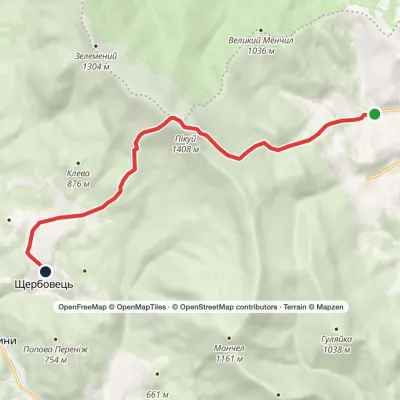 ModerateOne-dayMarkedBilasovytsia village to Shcherbovets villagevia Mount PikuiElevation profile513–1 408 m9.9 kmascent 822 m≈ 4 h walking
 ModerateTwo-dayMarkedVelykyi Bereznyi village to Chornoholova villagevia Ruskyi Mochar village, Mount YavirnykElevation profile195–1 019 m20.7 kmascent 846 m≈ 7 h walking
Mountain ranges: Pokuttia-Bukovina Carpathians, Rivna Polonyna, Bieszczady, Polonynian Ridge, Gorgany. In other countries: 🇭🇺 Mátra, 🇸🇰 Strážov Mountains
Trails and peaks near which naturalists recorded the species (GBIF, iNaturalist), matched by altitude and habitat. Sightings are not guaranteed.
Sources
- Вікіпедія: Герицій коралоподібний
- Wikipedia (en): Hericium coralloides
- Наказ Міндовкілля від 15.02.2021 № 111: Перелік видів рослин та грибів, що заносяться до Червоної книги України
- GBIF: список рослин і грибів Червоної книги України за наказом № 111 (з категоріями)
- Rozporządzenie Ministra Zdrowia z 17.05.2011, t.j. Dz.U. 2023 poz. 2237: wykaz grzybów dopuszczonych do obrotu (Польща)
- iNaturalist: Hericium coralloides (спостереження в Карпатах)
GBIF · iNaturalist · Wikidata · Distribution data: GBIF.org (CC0 and CC BY records), iNaturalist; names and identifiers: Wikidata (CC0). Text: Karpaty.rocks, checked 09.11.2026.
