Old man of the woods
Never identify a mushroom from a photo alone. If in doubt, leave it. In case of poisoning call 112 (103 in Ukraine) at once.
About
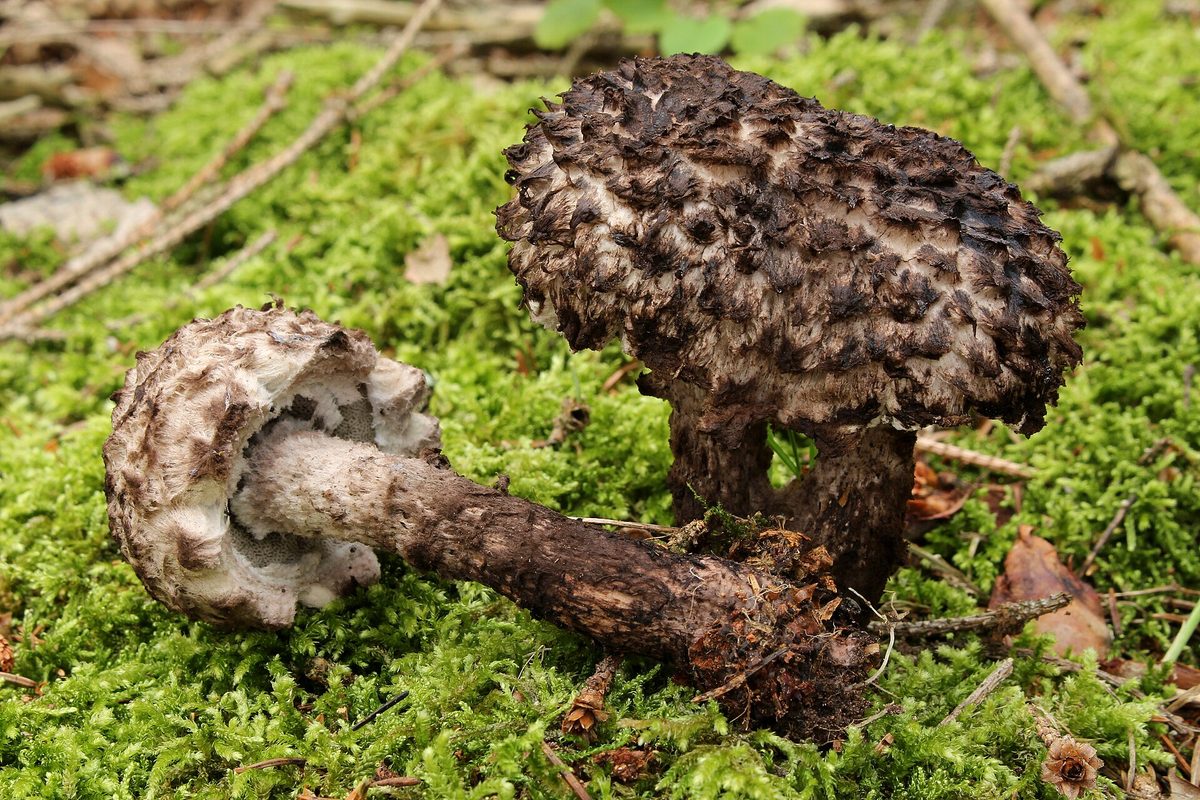
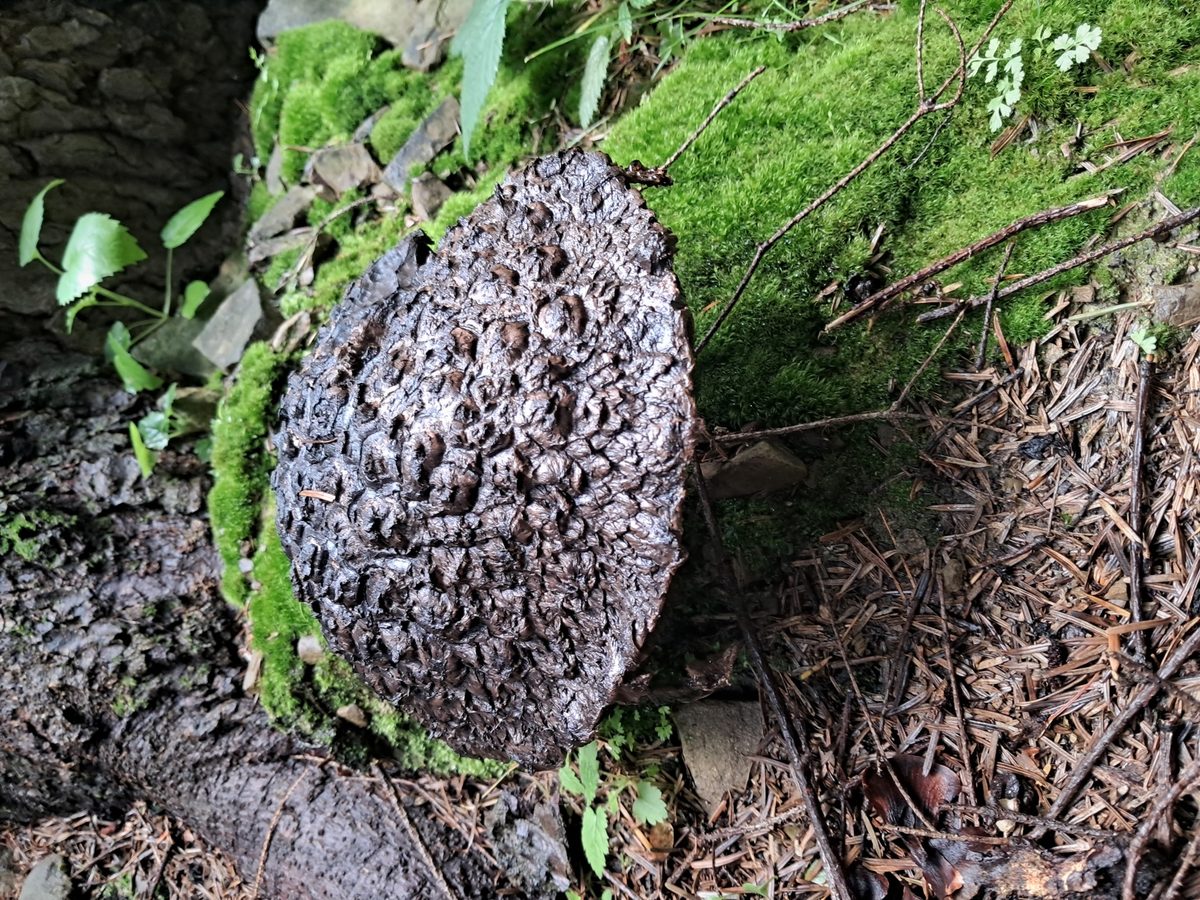
The Old man of the woods is easy to recognize: its cap is covered with large dark scaly flakes that overlap like scales on a cone. In Ukraine, it is rare and known only from the west: from the Carpathians, Transcarpathia, Roztocze, and the forests of Lviv and Ternopil regions. It grows singly or in small groups in deciduous, coniferous, and mixed forests, more often in spruce forests, on the ground or on decayed wood submerged in it.
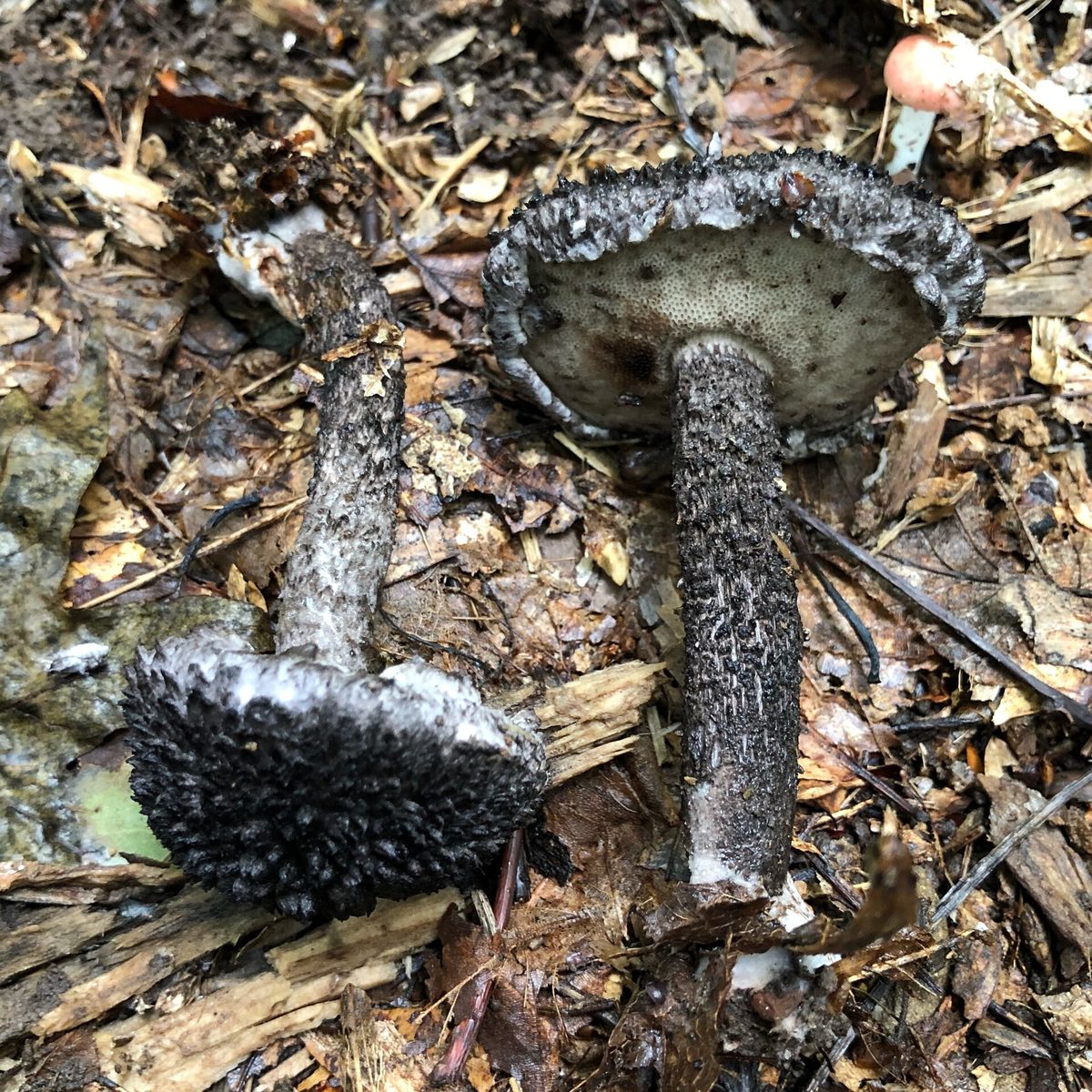
The cap is 4–10 cm, gray-brown to black-brown, with woolly scales, and the edges have flaps of the veil hanging down. The tubes are whitish, darkening with age, and the pores are large and angular. The stem is 4–15 cm, the color of the cap, fibrous-scaly, with a ring that quickly disappears. The flesh is whitish, reddening when cut, and later turning black, with an earthy smell. Fruiting bodies appear from July to October.
In guides, young Old man of the woods are described as edible. However, in Ukraine, this species is listed in the Red Book with the status of 'vulnerable', so collecting it is prohibited. It is protected, in particular, in the Carpathian Biosphere Reserve and the Roztocze Reserve.
Encountering the Old man of the woods is a true stroke of luck for nature lovers. Photograph it from above and the side, without cutting it, and leave it in the forest: this way, the mushroom will have time to disperse its spores. Observations with photos can be added to the iNaturalist platform — this helps scientists monitor the status of rare species.
Where in the Carpathians

The map shows where naturalists recorded the species (GBIF, CC0 and CC BY records), not every place it lives. The Ukrainian Carpathians are less studied, so a blank area does not mean the species is absent.
- Countries
- Ukraine · Poland · Slovakia · Serbia · Romania
- Mountain ranges
- Pokuttia-Bukovina Carpathians, Rivna Polonyna, Bieszczady, Skole Beskids, Vihorlat-Gutin Volcanic Ridge, Gorgany, Low Tatras, Borzhava, Island Beskids
- Altitude belts
- Foothills (below 600 m) · Beech forests (600–1200 m)
When to see it
| Jan | Feb | Mar | Apr | May | Jun | Jul | Aug | Sep | Oct | Nov | Dec | |
|---|---|---|---|---|---|---|---|---|---|---|---|---|
| Sightings |
From naturalists’ observations in the Carpathians (iNaturalist, research grade): the darker the cell, the more often the species is seen that month.
Safety
A species in the Red Book of Ukraine: collecting is prohibited, even if the mushroom is edible.
Protection and rules
Listed in the Red Book of Ukraine (vulnerable). Collecting is prohibited — photograph and leave it in the forest.
Admire, don’t pick: plants listed in the Red Data Book of Ukraine — and any plants in nature reserves and strictly protected zones of national parks — must not be collected.
FAQ
Can I collect Old man of the woods?
No. In Ukraine, it is listed in the Red Book with the status of 'vulnerable', so collecting it is prohibited. Photograph the mushroom and leave it in place.
Where does Old man of the woods grow in Ukraine?
Only in the west: in the Carpathians, Transcarpathia, Roztocze, and in the forests of Lviv and Ternopil regions, mainly in spruce and mixed forests.
Similar species
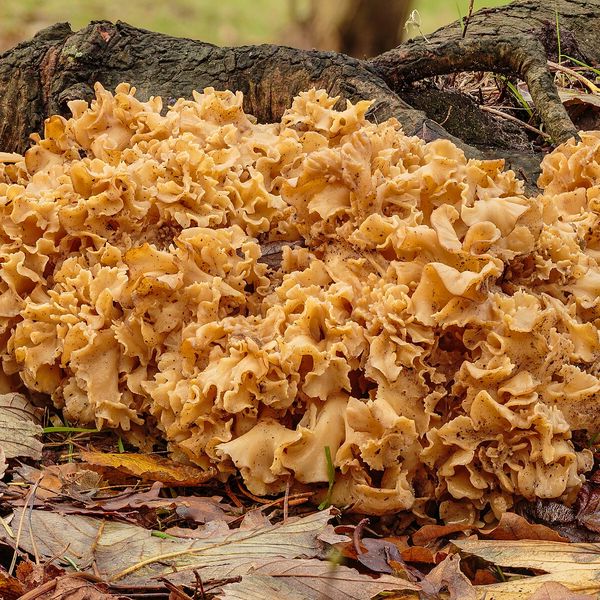
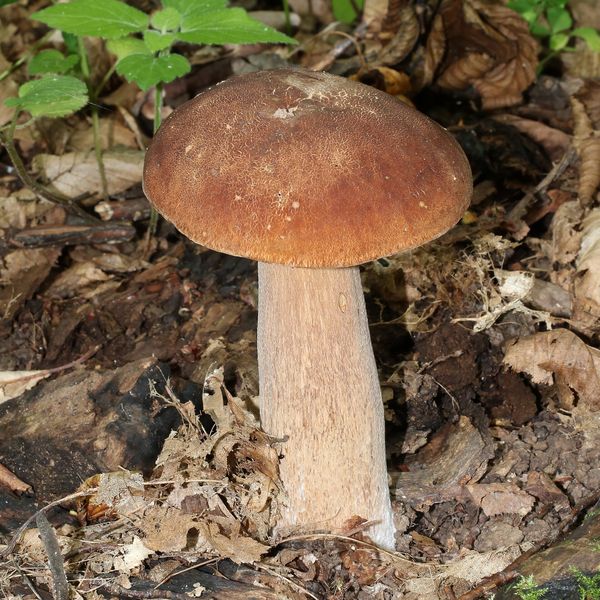
Where to meet it
Trails
 HardMulti-dayKushnytsia village to Volovetsvia Kuk polonyna, Mount Shyrokyi Verkh +3Elevation profile228–1 574 m47.1 kmascent 2 740 m
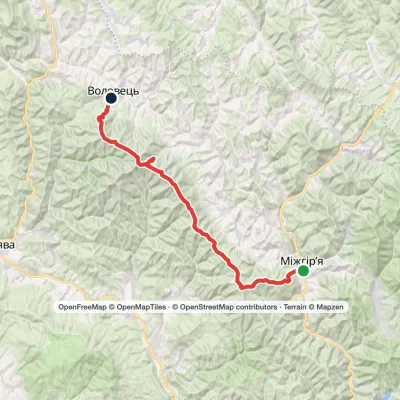 HardMulti-dayMarkedMizhhiria to Volovets villagevia Mount Zhyd-Mahura, Mount Hemba +1Elevation profile427–1 598 m55.2 kmascent 2 595 m
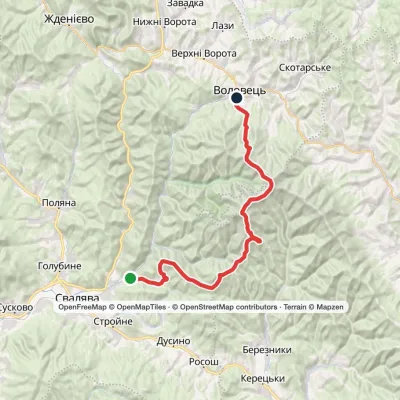 HardMulti-daySasivka village to Volovetsvia Mount Ivolove, Mount Stiy +2Elevation profile249–1 647 m36.6 kmascent 1 932 m≈ 13 h walking
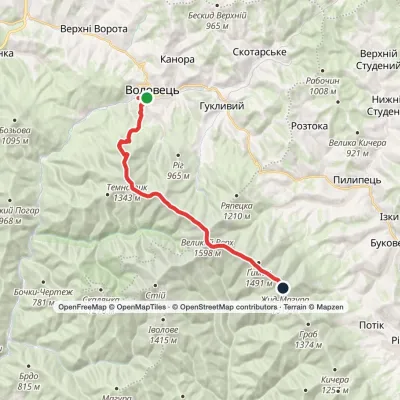 HardTwo-dayMarkedVolovets to Mount Zhyd-Mahuravia Mount Temnatyk, Mount Plai +2Elevation profile488–1 598 m20.2 kmascent 1 474 m≈ 8 h walking
 ModerateOne-dayMarkedPylypets village loopvia Mount Hemba, Mount Velykyi VerkhElevation profile706–1 598 m10.6 kmascent 583 m≈ 4 h walking
 HardMulti-dayMarkedPylypets village to Mizhhiriavia Shypit Waterfall, Mount Hemba +1Elevation profile427–1 517 m38.1 kmascent 1 660 m≈ 13 h walking
 HardTwo-dayMarkedVovchyi village to Mount Velykyi Verkhvia Mount StiyElevation profile288–1 681 m19.8 kmascent 1 538 m≈ 8 h walking
 HardMulti-dayMarkedVolovets to Vovchyi villagevia Mount Tsytska, Mount Temnatyk +3Elevation profile288–1 681 m50.4 kmascent 2 099 m
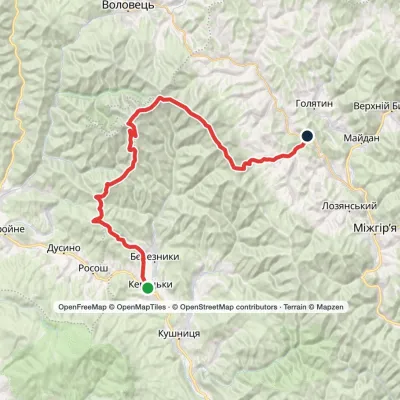 HardMulti-dayKerechky village to Rychka villagevia Mount Stiy, Mount Velykyi Verkh +2Elevation profile266–1 681 m48.3 kmascent 2 244 m
 HardMulti-dayVolovets to Mizhhiriavia Mount Velykyi Verkh, Shypit Waterfall +2Elevation profile405–1 598 m51 kmascent 2 834 m
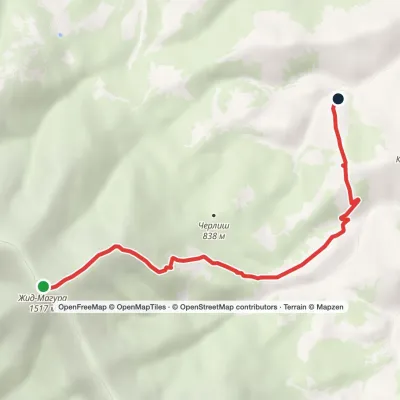 EasyOne-dayMount Zhyd-Mahura Izky villageElevation profile619–1 517 m6.9 kmascent 103 m≈ 2 h walking
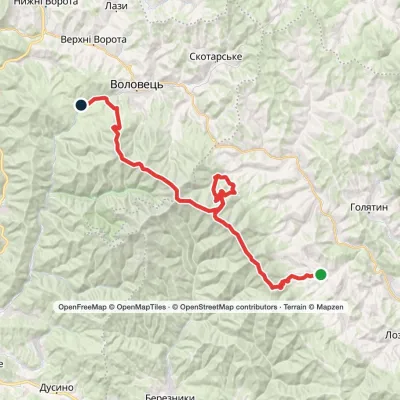 HardMulti-dayRychka village to Volovetsvia Mount Zhyd-Mahura, Mount Hemba +2Elevation profile450–1 598 m40.3 kmascent 2 201 m
Mountain ranges: Pokuttia-Bukovina Carpathians, Rivna Polonyna, Bieszczady, Skole Beskids, Vihorlat-Gutin Volcanic Ridge, Gorgany, Borzhava. In other countries: 🇸🇰 Low Tatras, 🇵🇱 Island Beskids
Trails and peaks near which naturalists recorded the species (GBIF, iNaturalist), matched by altitude and habitat. Sightings are not guaranteed.
Sources
- Вікіпедія: Шишкогриб лускатий
- Wikipedia (en): Strobilomyces strobilaceus
- Наказ Міндовкілля від 15.02.2021 № 111: Перелік видів рослин та грибів, що заносяться до Червоної книги України
- GBIF: список рослин і грибів Червоної книги України за наказом № 111 (з категоріями)
- iNaturalist: Strobilomyces strobilaceus (спостереження в Карпатах)
GBIF · iNaturalist · Wikidata · Distribution data: GBIF.org (CC0 and CC BY records), iNaturalist; names and identifiers: Wikidata (CC0). Text: Karpaty.rocks, checked 09.11.2026.
