Cauliflower fungus
Never identify a mushroom from a photo alone. If in doubt, leave it. In case of poisoning call 112 (103 in Ukraine) at once.
About
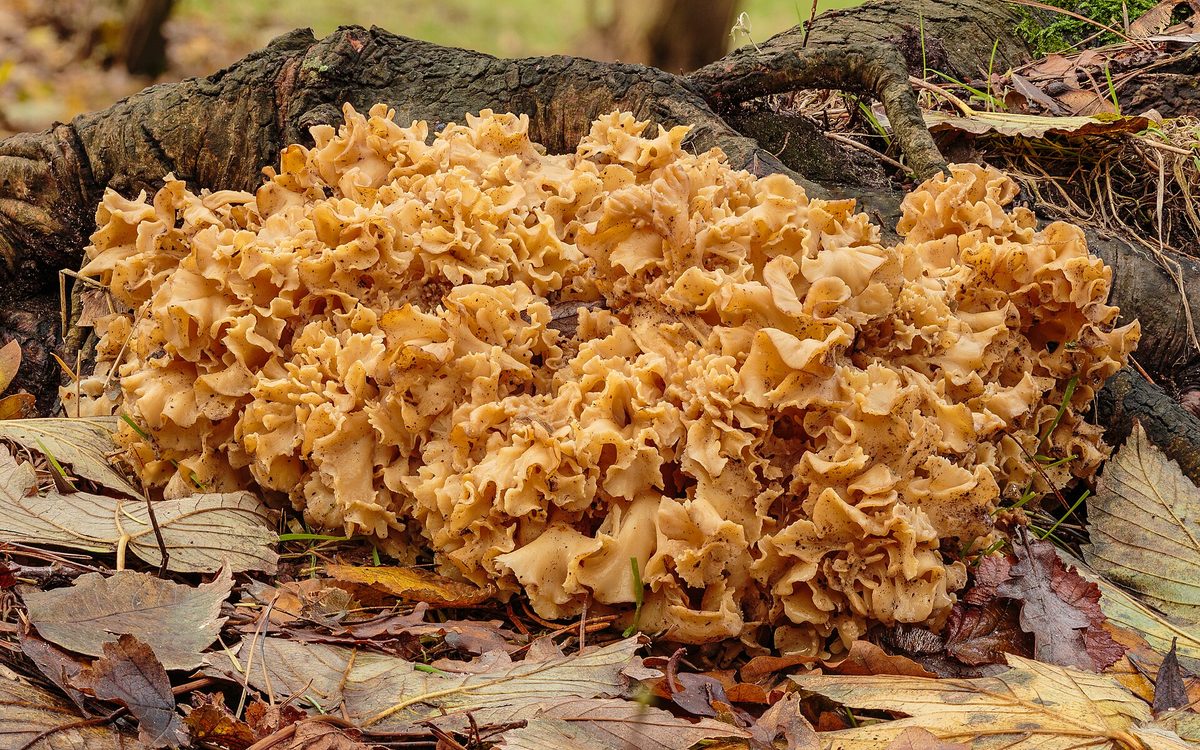
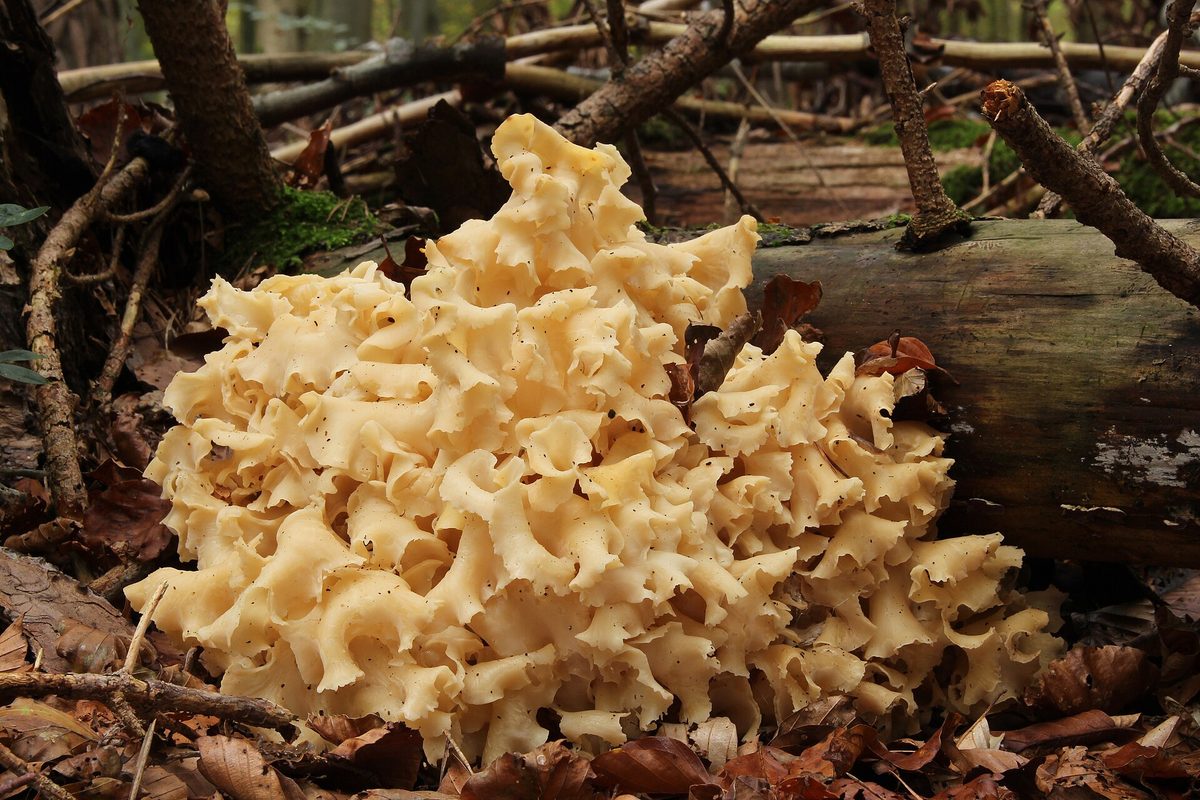
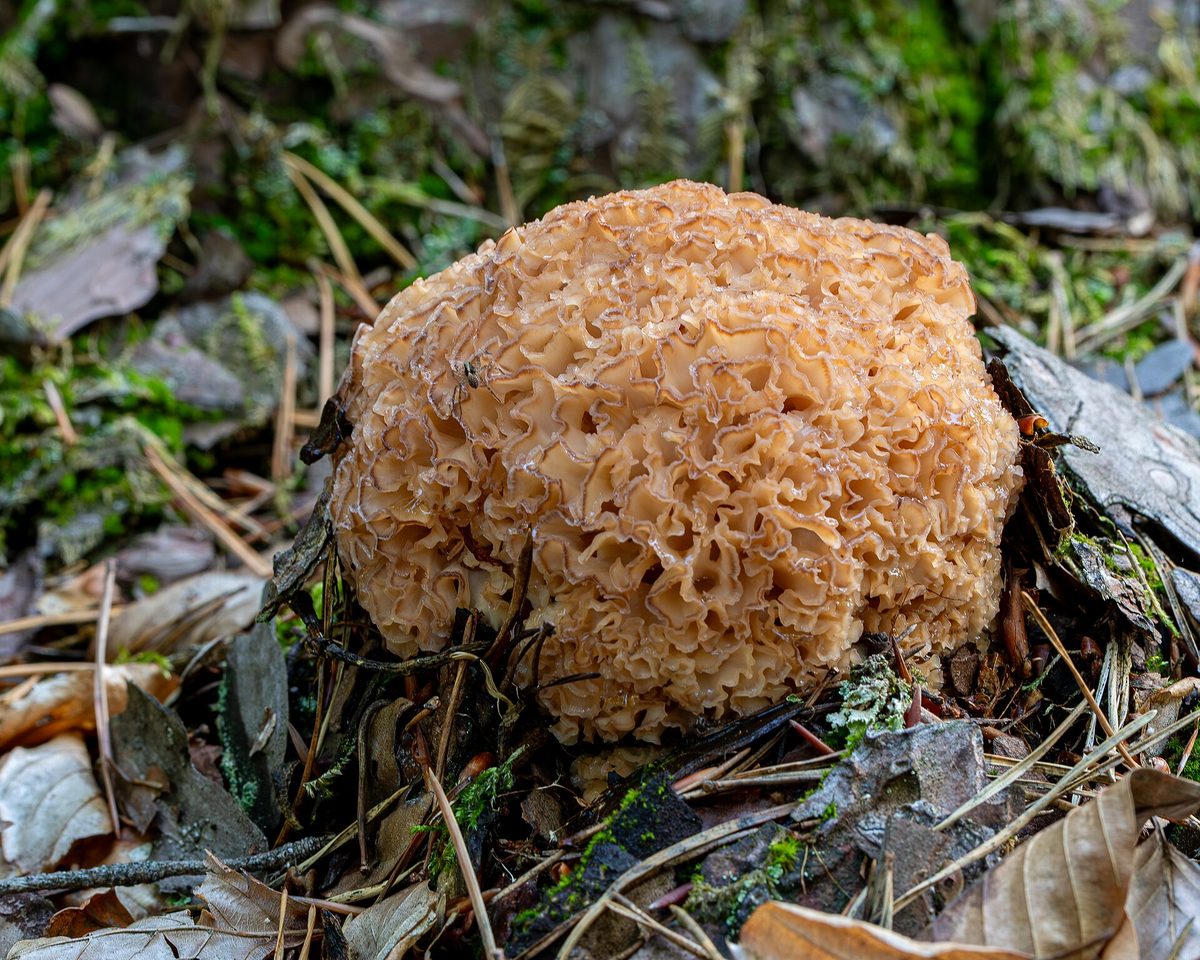
Cauliflower fungus is a mushroom that is hard to confuse with any other. Its fruiting body consists of numerous wavy, twisted lobes that extend from a thick base, resembling creamy-yellow cauliflower or a sea sponge. One mushroom can weigh several kilograms.
It grows at the base of the trunks or on the roots of coniferous trees, mainly pine, less often spruce or fir, and causes wood rot. In Ukraine, it occurs sporadically: in the Carpathians, Polissya, Forest-Steppe, and in the mountainous Crimea. It is protected, particularly in the Carpathian Biosphere Reserve and in the Skole Beskids National Nature Park.
It is a saprotroph and a weak parasite: the fungus lives off the wood of the roots and trunk, causing brown rot. Therefore, cauliflower fungus is more often found in old pine and mixed forests where there are mature trees. The color of the fruiting body changes from whitish in young mushrooms to creamy-ochre in older ones, and the edges of the lobes brown over time. The mushroom has a pleasant nutty smell.
Fruiting bodies appear in late summer and autumn. The mushroom often grows on the same tree for several consecutive years.
In Poland, cauliflower fungus (siedzuń) is allowed to be sold as an edible mushroom, but in Ukraine, it is a rare species listed in the Red Book with the status of "endangered." Therefore, collecting it is prohibited: if you are lucky enough to find it, photograph the mushroom and leave it in the forest. Your observation with a photo and date, added to iNaturalist, will help scientists. The Red Book of Ukraine protects the species throughout the country, not just in reserves. Destroying or collecting red-listed mushrooms without special permission is prohibited by law.
Where in the Carpathians

The map shows where naturalists recorded the species (GBIF, CC0 and CC BY records), not every place it lives. The Ukrainian Carpathians are less studied, so a blank area does not mean the species is absent.
- Countries
- Poland · Ukraine · Slovakia · Austria
- Mountain ranges
- Štiavnica Mountains, Pokuttia-Bukovina Carpathians, Low Beskids, Chornohora, Bieszczady, Maramureș Mountains
- Altitude belts
- Foothills (below 600 m) · Beech forests (600–1200 m)
When to see it
| Jan | Feb | Mar | Apr | May | Jun | Jul | Aug | Sep | Oct | Nov | Dec | |
|---|---|---|---|---|---|---|---|---|---|---|---|---|
| Sightings |
From naturalists’ observations in the Carpathians (iNaturalist, research grade): the darker the cell, the more often the species is seen that month.
Safety
The species is protected: collecting is prohibited, even if the mushroom is edible.
Protection and rules
Listed in the Red Book of Ukraine (endangered). Collecting is prohibited — photograph it and leave it in the forest.
Admire, don’t pick: plants listed in the Red Data Book of Ukraine — and any plants in nature reserves and strictly protected zones of national parks — must not be collected.
FAQ
Can cauliflower fungus be collected?
In Ukraine — no. The species is listed in the Red Book of Ukraine with the status of "endangered," so collecting it is prohibited.
Where does cauliflower fungus grow?
At the base of the trunks and on the roots of coniferous trees, most often pine. In Ukraine, it occurs sporadically, particularly in the Carpathians.
Similar species
Where to meet it
Trails
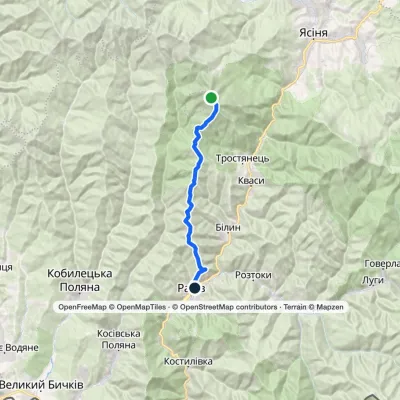 ModerateTwo-dayMarkedRakhiv Mount BlyznytsiaElevation profile442–1 883 m23.2 kmascent 343 m≈ 6.5 h walking
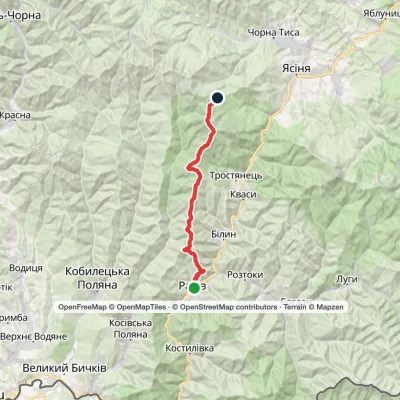 HardMulti-dayRakhiv to Dragobratvia Mount BlyznytsiaElevation profile443–1 883 m29.7 kmascent 1 842 m≈ 11 h walking
 HardTwo-dayMarkedRakhiv Mount BlyznytsiaElevation profile431–1 472 m18.8 kmascent 1 165 m≈ 7 h walking
 HardMulti-dayRakhiv to Yasiniavia Mount Blyznytsia, Mount Troiaska +4Elevation profile430–1 883 m67.3 kmascent 3 568 m
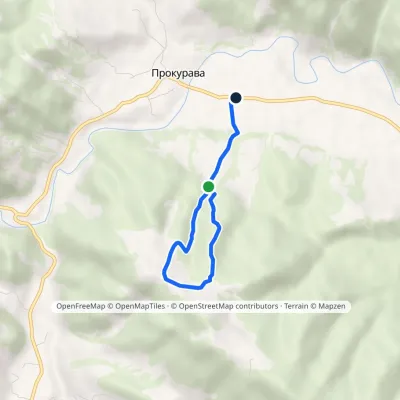 EasyOne-dayMarkedUp Brusnyi ridge to Dovbush RockElevation profile510–856 m3.5 kmascent 233 m≈ 1.5 h walking
 HardMulti-dayRakhiv to Yasiniavia Mount Blyznytsia, Mount Stih +3Elevation profile431–1 883 m65 kmascent 2 859 m
 HardMulti-dayKrasna village to Rakhivvia Mount Tempa, Mount Troiaska +1Elevation profile428–1 883 m62.5 kmascent 2 932 m
 HardMulti-dayDragobrat to Rakhivvia Mount BlyznytsiaElevation profile446–1 883 m37 kmascent 696 m≈ 10.5 h walking
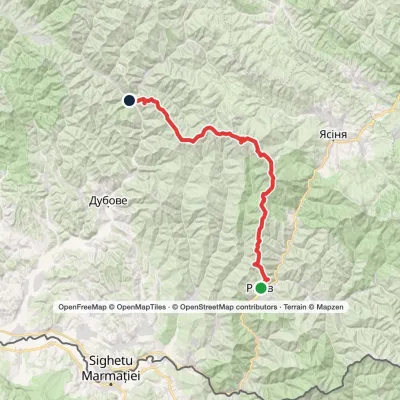 HardMulti-dayMarkedRakhiv to Ust-Chorna villagevia Mount Blyznytsia, Mount Unhariaska +1Elevation profile527–1 883 m63 kmascent 2 430 m
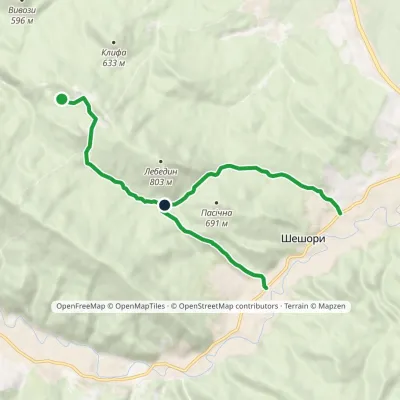 EasyOne-dayMarkedNature trail «To Lake Lebedyn»Elevation profile414–706 m9.2 kmascent 265 m≈ 3 h walking
 HardMulti-dayDilove village to Rakhivvia Mount Zherban, Mount Pip Ivan MarmaroskyiElevation profile437–1 936 m31.3 kmascent 1 849 m≈ 11.5 h walking
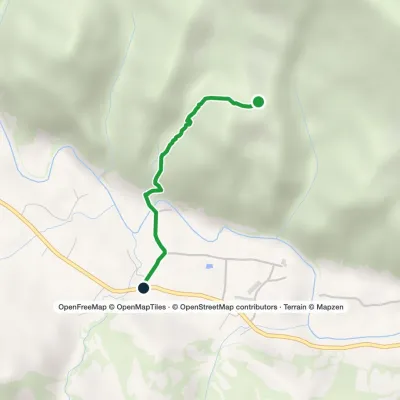 EasyOne-dayMarkedSheshory RosokhataElevation profile466–685 m1.6 kmascent 19 m≈ 30 min walking
Mountain ranges: Pokuttia-Bukovina Carpathians, Chornohora, Bieszczady, Maramureș Mountains. In other countries: 🇸🇰 Štiavnica Mountains, 🇵🇱 Low Beskids
Trails and peaks near which naturalists recorded the species (GBIF, iNaturalist), matched by altitude and habitat. Sightings are not guaranteed.
Sources
- Вікіпедія: Листочня кучерява
- Wikipedia (en): Sparassis crispa
- Наказ Міндовкілля від 15.02.2021 № 111: Перелік видів рослин та грибів, що заносяться до Червоної книги України
- GBIF: список рослин і грибів Червоної книги України за наказом № 111 (з категоріями)
- Rozporządzenie Ministra Zdrowia z 17.05.2011, t.j. Dz.U. 2023 poz. 2237: wykaz grzybów dopuszczonych do obrotu (Польща)
GBIF · iNaturalist · Wikidata · Distribution data: GBIF.org (CC0 and CC BY records), iNaturalist; names and identifiers: Wikidata (CC0). Text: Karpaty.rocks, checked 09.11.2026.
