Tinder fungus
Never identify a mushroom from a photo alone. If in doubt, leave it. In case of poisoning call 112 (103 in Ukraine) at once.
About
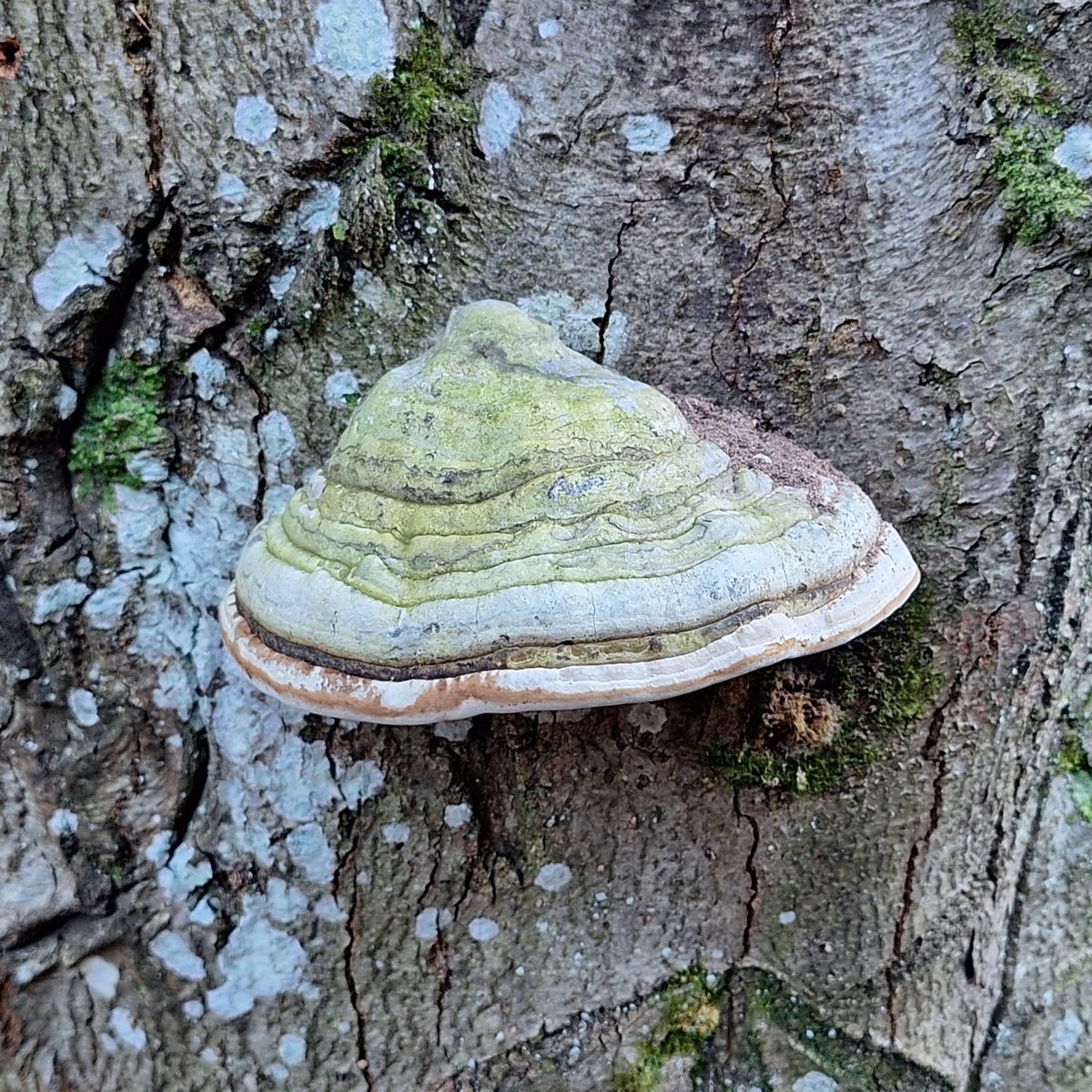
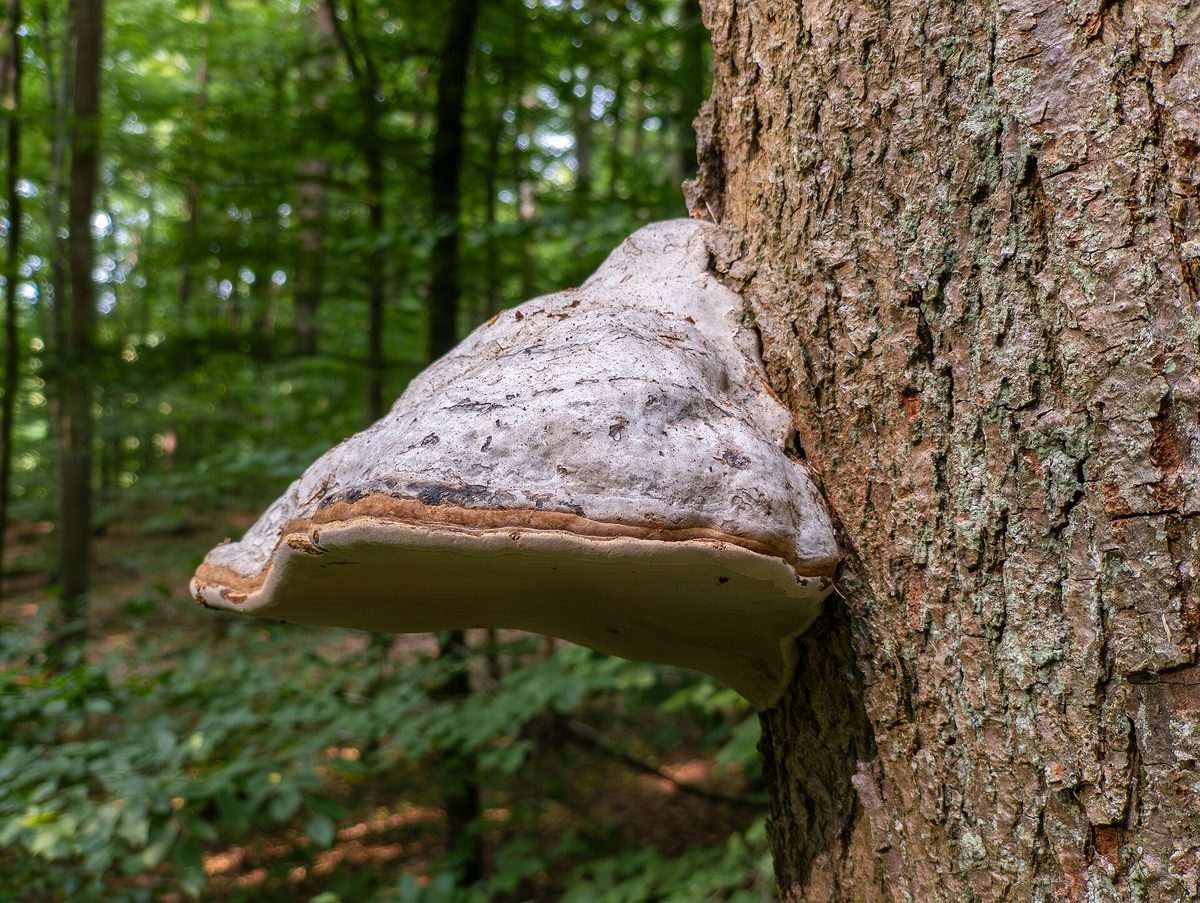
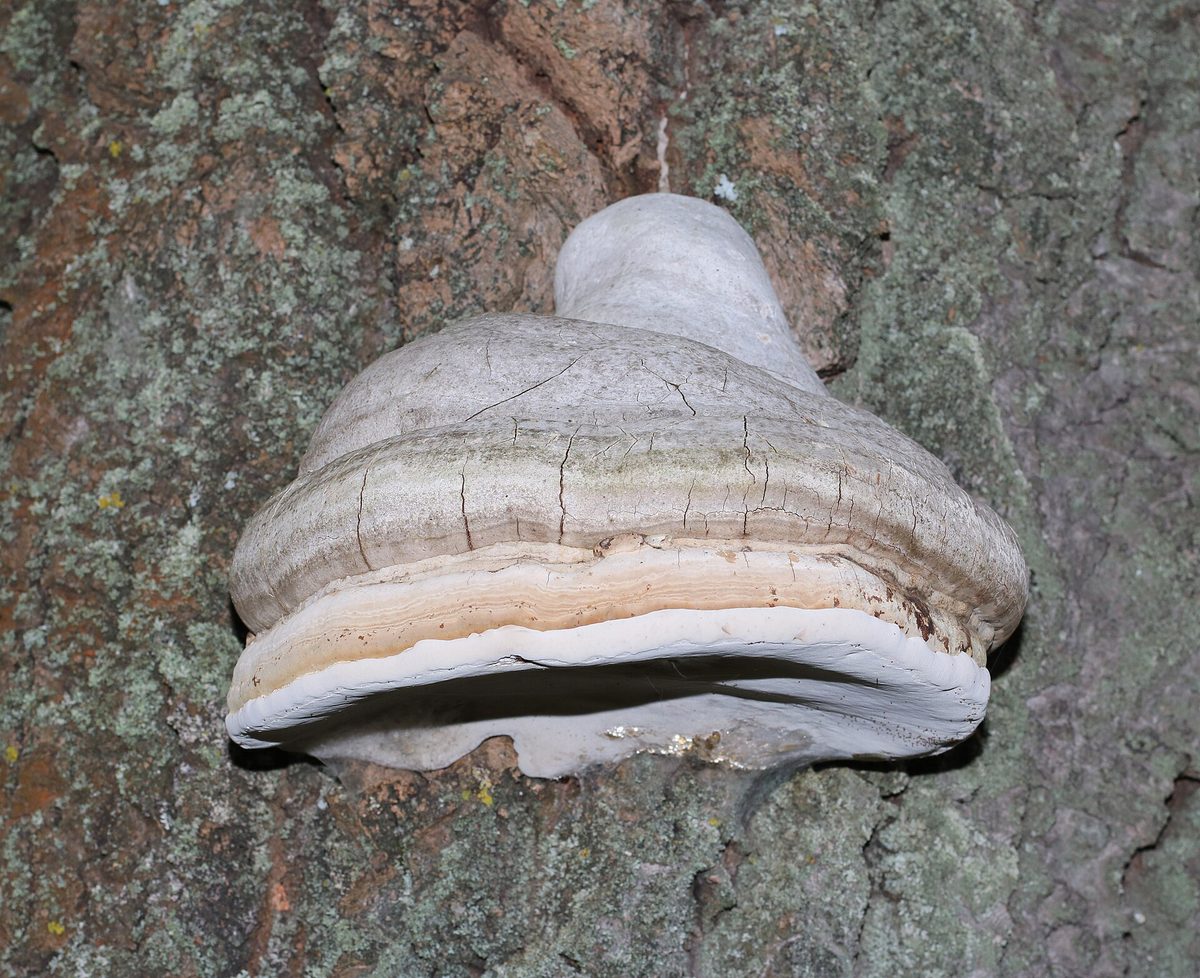
The Tinder fungus is a mushroom that everyone who has walked through the Carpathian beech forests has seen. Its gray 'hooves' sit on the trunks of old and dead beeches, often several stacked on top of each other. In the northern part of its range, it primarily grows on birches, while further south, it grows on beeches, as well as on oaks, linden, maples, poplars, and willows. It is rarely found on coniferous trees.
The fruiting body is perennial, very hard, hoof-shaped, 5–45 cm wide. The top is gray or gray-brown, with concentric growth rings, each corresponding to a year of growth. The underside is porous, gray-brown. The fungus penetrates the wood through damaged bark and causes white rot, thus devaluing the wood, but at the same time, it accelerates the decomposition of dead trunks and the return of nutrients to the soil.
The history of this fungus is ancient. For thousands of years, it was used to make tinder—a soft, felt-like material that easily ignites from a spark. Four pieces of Tinder fungus were found with Ötzi, the man whose mummy was discovered in the Alps and is over 5000 years old. The same material was used to make hats and other products.
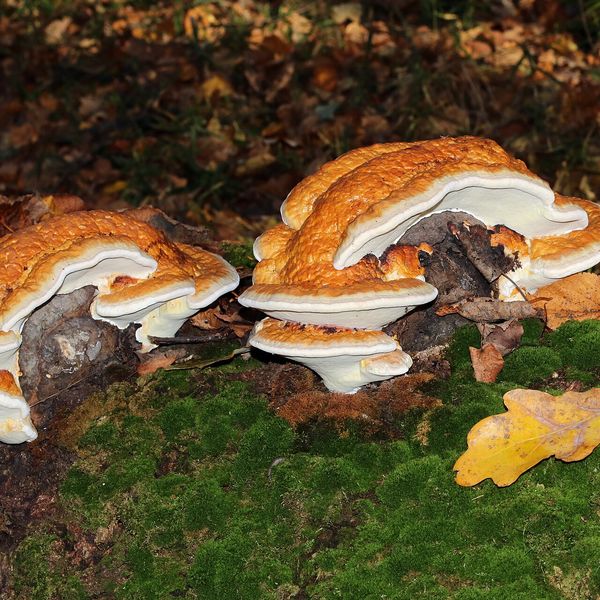
The Tinder fungus is not suitable for food: its flesh is woody and has a bitter taste. It can easily be confused with the Fomitopsis pinicola, which mostly grows on spruces and has an orange margin at the edge, or with the Phellinus igniarius, which has a dark, almost black cracked top. On the trail, just take a photo of it: old beeches with Tinder fungi are part of the natural forest that should be preserved.
Where in the Carpathians

The map shows where naturalists recorded the species (GBIF, CC0 and CC BY records), not every place it lives. The Ukrainian Carpathians are less studied, so a blank area does not mean the species is absent.
- Countries
- Slovakia · Austria · Hungary · Ukraine · Poland · Czechia · Romania · Serbia
- Mountain ranges
- Slovak Ore Mountains, Považský Inovec, Gorgany, Polonynian Ridge, Mátra, White Carpathians, Skole Beskids, Krasna Polonyna, Strážov Mountains, Maramureș Mountains
- Altitude belts
- Foothills (below 600 m) · Beech forests (600–1200 m)
When to see it
| Jan | Feb | Mar | Apr | May | Jun | Jul | Aug | Sep | Oct | Nov | Dec | |
|---|---|---|---|---|---|---|---|---|---|---|---|---|
| Sightings |
From naturalists’ observations in the Carpathians (iNaturalist, research grade): the darker the cell, the more often the species is seen that month.
Look-alikes — how to tell them apart
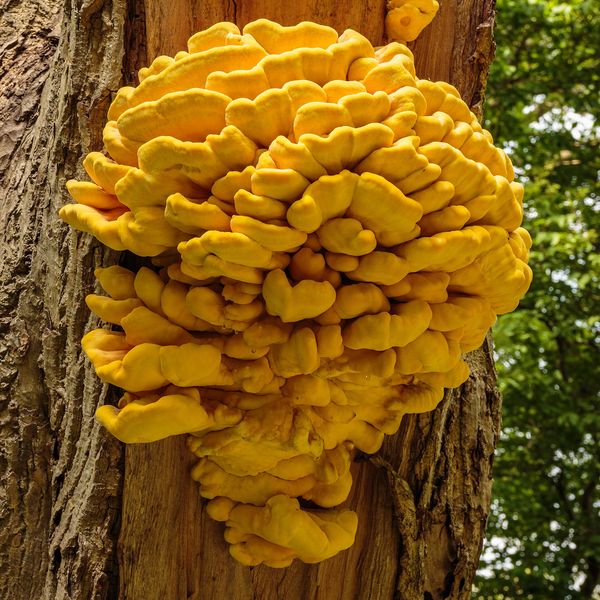
Grows mainly on spruces, with a dark top featuring a reddish-orange band and a white edge.
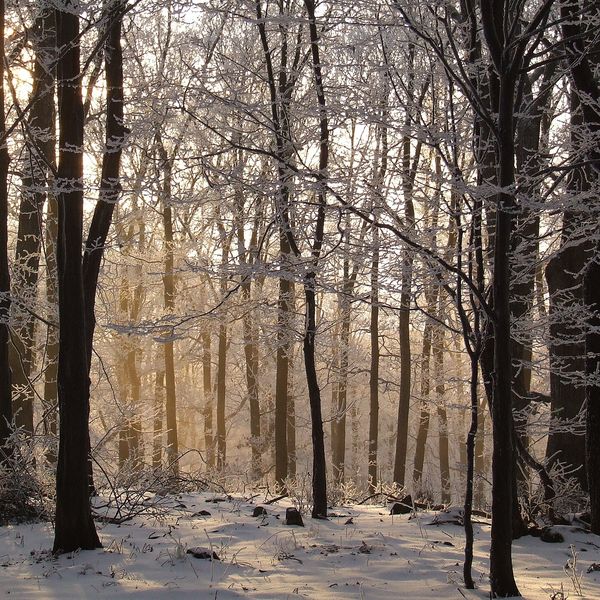
The top is dark gray to black, often cracked; the flesh is very hard and rusty-brown. Experts distinguish them with a drop of a lye solution (potassium hydroxide): on a piece of Tinder fungus, it turns dark blood-red.
Protection and rules
Not protected.
FAQ
What are the gray mushrooms growing on beeches?
Most often, these are Tinder fungi: hard gray 'hooves' with concentric growth rings. They are inedible.
How was tinder made from the Tinder fungus?
The middle, soft layer of the fungus was used to make a felt-like material that easily ignited from a spark. Such tinder was even found in Ötzi's equipment—a man who lived over 5000 years ago.
Similar species
Where to meet it
Trails
 ModerateOne-dayMarkedPashkivtsi village Mount Hostra HoraElevation profile482–1 345 m5.8 kmascent 872 m≈ 3 h walking
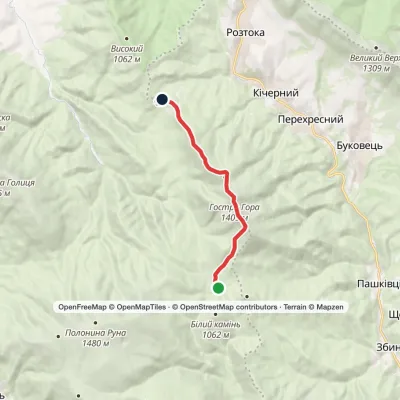 ModerateOne-dayMarkedPreluka tract to Roztoka villagevia Mount Ostra HoraElevation profile839–1 405 m9.5 kmascent 567 m≈ 3.5 h walking
 EasyOne-dayTuria Poliana village Voievodyn WaterfallElevation profile431–878 m7 kmascent 447 m≈ 2.5 h walking
 HardMulti-dayMarkedPashkivtsi village loopvia Mount Hostra, Preluka tract +1Elevation profile463–1 393 m32.5 kmascent 1 431 m≈ 11 h walking
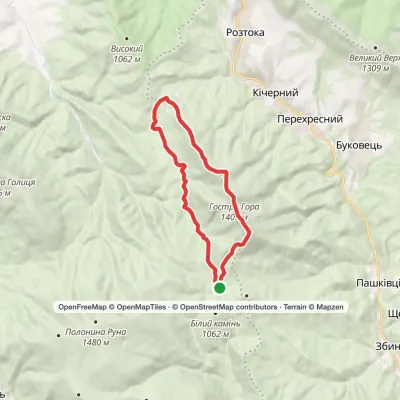 ModerateTwo-dayPreluka tract loopvia Mount Ostra Hora, Mount Lysyna +1Elevation profile752–1 405 m18.1 kmascent 874 m≈ 6.5 h walking
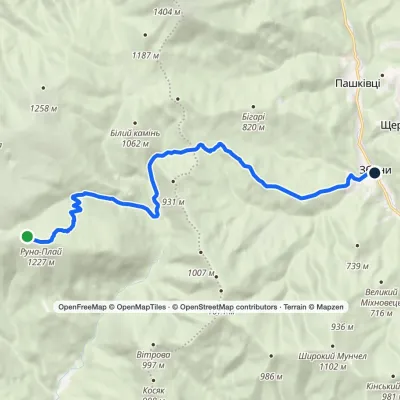 ModerateOne-dayMarkedZbyny VoievodynElevation profile438–1 227 m13.7 kmascent 236 m≈ 4 h walking
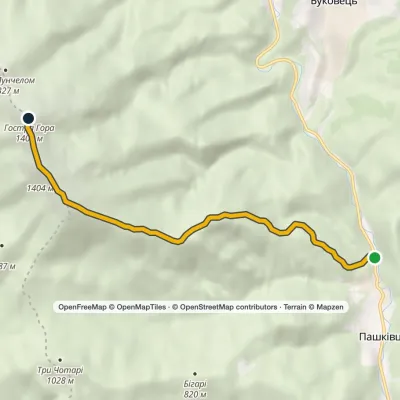 ModerateOne-dayMarkedPashkivtsi Mount HostraElevation profile482–1 405 m6.6 kmascent 979 m≈ 3.5 h walking
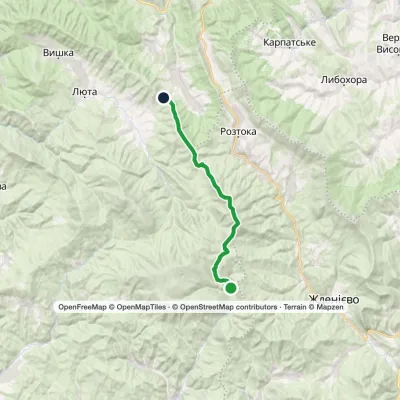 ModerateTwo-dayMarkedMount Hostra PrelukyElevation profile660–1 405 m19.4 kmascent 1 038 m≈ 7 h walking
 ModerateTwo-dayTuria Poliana village loopvia Voievodyn WaterfallElevation profile471–979 m14.3 kmascent 506 m≈ 4.5 h walking
 HardMulti-dayDragobrat to Krasna villagevia Mount Stih, Mount Velykyi Kotel +2Elevation profile421–1 762 m35.3 kmascent 871 m≈ 10.5 h walking
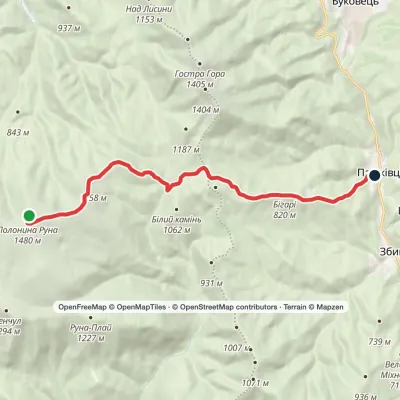 EasyOne-dayMarkedRuna polonyna to Pashkivtsi villagevia Preluka tractElevation profile472–1 480 m13.1 kmascent 88 m≈ 3.5 h walking
 HardMulti-dayMarkedPashkivtsi village loopvia Mount Hostra Hora, Voievodyn WaterfallElevation profile465–1 472 m29.9 kmascent 1 817 m≈ 11 h walking
Mountain ranges: Gorgany, Polonynian Ridge, Skole Beskids, Krasna Polonyna, Maramureș Mountains. In other countries: 🇸🇰 Slovak Ore Mountains, 🇸🇰 Považský Inovec, 🇭🇺 Mátra, 🇨🇿 White Carpathians, 🇸🇰 Strážov Mountains, 🇷🇴 Bihor-Vlădeasa Mountains, 🇭🇺 Zemplén Mountains, 🇵🇱 Pieniny, 🇵🇱 Babia Góra
Trails and peaks near which naturalists recorded the species (GBIF, iNaturalist), matched by altitude and habitat. Sightings are not guaranteed.
Sources
- Вікіпедія: Трутовик справжній
- Wikipedia (en): Fomes fomentarius
- Wikipedia (en): Phellinus igniarius
- iNaturalist: Fomes fomentarius (спостереження в Карпатах)
GBIF · iNaturalist · Wikidata · Distribution data: GBIF.org (CC0 and CC BY records), iNaturalist; names and identifiers: Wikidata (CC0). Text: Karpaty.rocks, checked 09.11.2026.
