Chicken of the woods
Never identify a mushroom from a photo alone. If in doubt, leave it. In case of poisoning call 112 (103 in Ukraine) at once.
About
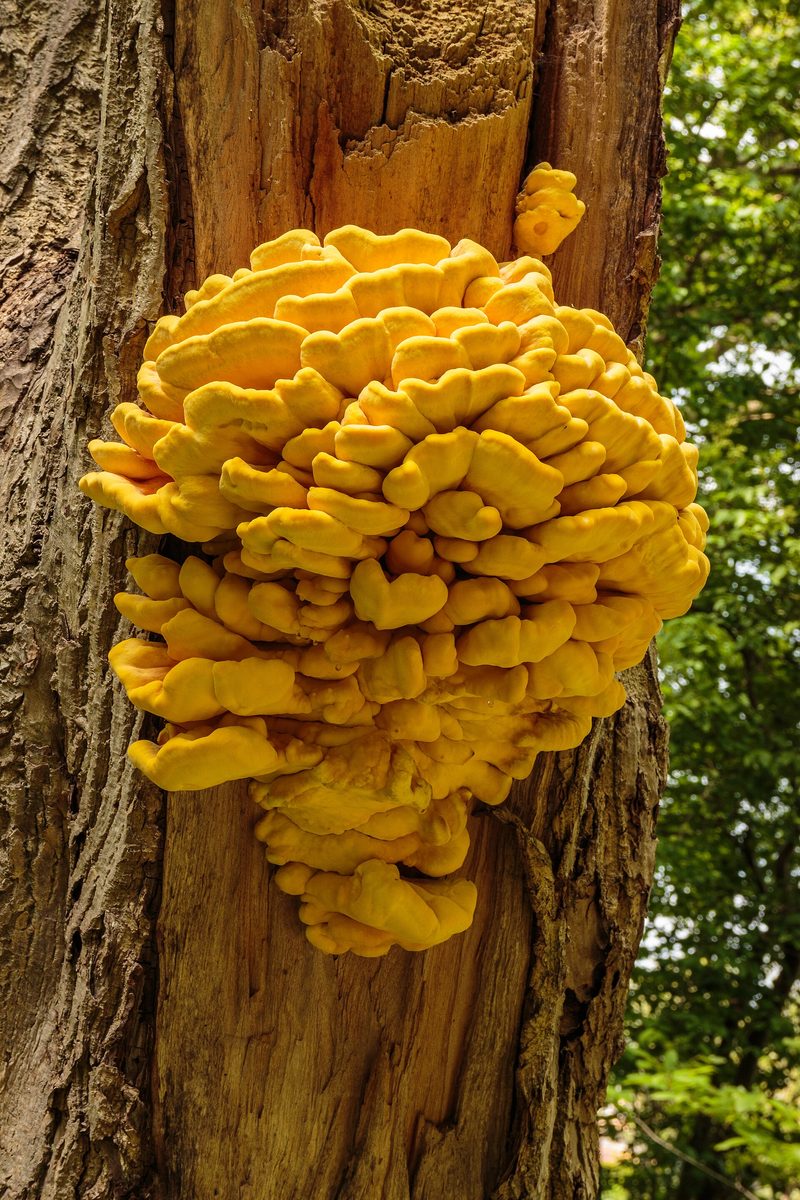
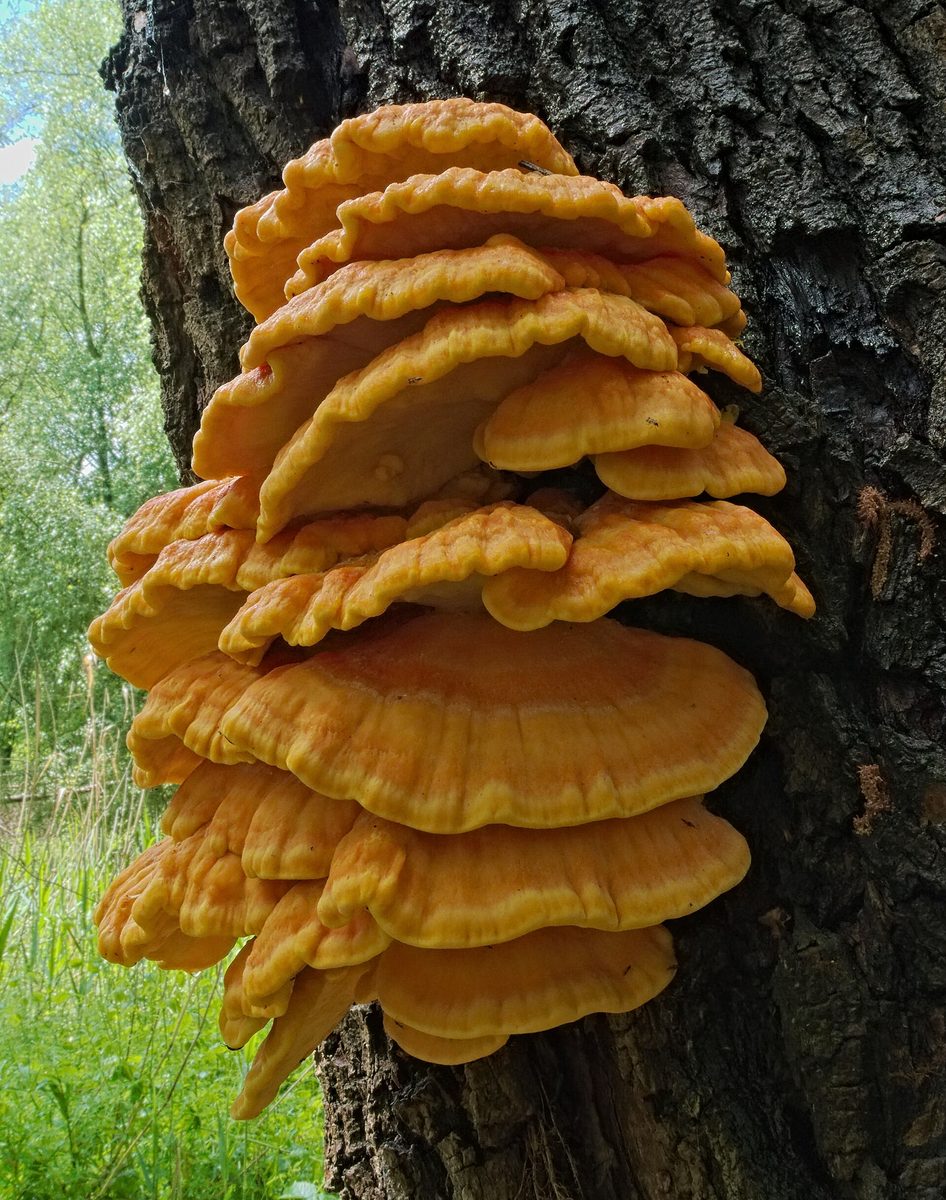
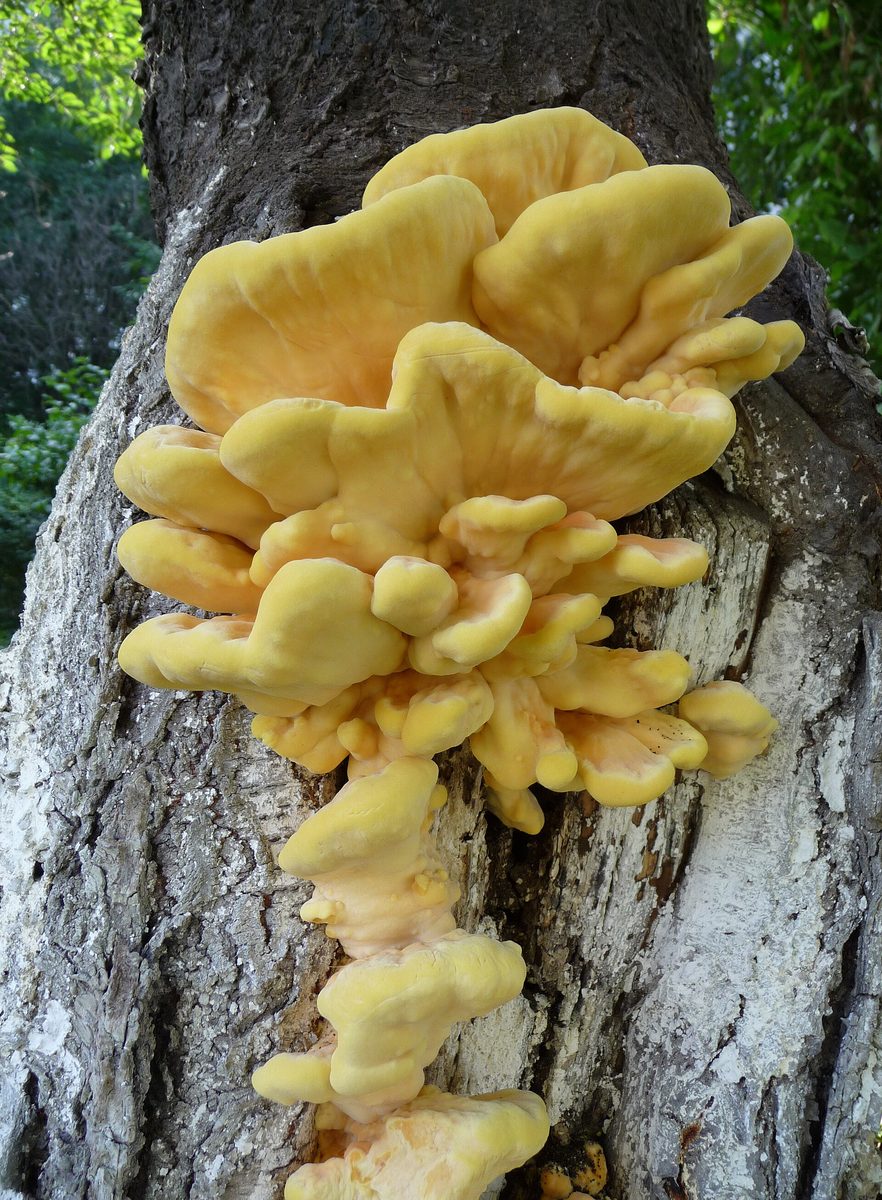
Laetiporus sulphureus is impossible to miss: its shingled yellow-orange "shelves" are visible from afar. It grows on living and dead trunks of deciduous trees, particularly oaks, poplars, pears, cherries, and plums, occasionally on conifers. It is most abundant in old overgrown forests, reserves, and protected areas. It is widespread throughout Ukraine and is also found in the Carpathians. In Europe, fruiting bodies appear from April to November.
Individual caps measure 10–40 cm in diameter and 1–4 cm thick, fan-shaped, with a wavy edge. Young mushrooms are juicy, soft, sulfur-yellow with an orange or pinkish tint, and the underside is finely porous, also yellow. With age, the mushroom fades, becoming whitish, dry, and brittle, and the smell becomes unpleasant, "mousy." The mushroom causes brown rot of the tree's heartwood.
Young fruiting bodies, or rather their soft edges, are eaten in many countries, and in English, the mushroom is called "Chicken of the woods" for its taste and texture. However, it is not consumed raw, and some people experience digestive upset even after cooking. Old, woody mushrooms are completely unsuitable.
In Poland, Laetiporus sulphureus is included in the official list of mushrooms allowed for sale. However, if you see a large mushroom on an old tree in a national park or reserve, photograph it and leave it: such trees are habitats for many insects and birds.
Where in the Carpathians

The map shows where naturalists recorded the species (GBIF, CC0 and CC BY records), not every place it lives. The Ukrainian Carpathians are less studied, so a blank area does not mean the species is absent.
- Countries
- Austria · Slovakia · Poland · Romania · Czechia · Hungary · Ukraine
- Mountain ranges
- Buzău Mountains, Żywiec Beskids, Polonynian Ridge, Poiana Ruscă Mountains, Little Carpathians
- Altitude belts
- Foothills (below 600 m)
When to see it
| Jan | Feb | Mar | Apr | May | Jun | Jul | Aug | Sep | Oct | Nov | Dec | |
|---|---|---|---|---|---|---|---|---|---|---|---|---|
| Sightings |
From naturalists’ observations in the Carpathians (iNaturalist, research grade): the darker the cell, the more often the species is seen that month.
Safety
Do not eat raw. Only young soft edges are collected; old mushrooms are unsuitable. In some people, the mushroom causes digestive upset even after cooking. Mushroom dishes should not be given to children under 12 years old.
Look-alikes — how to tell them apart
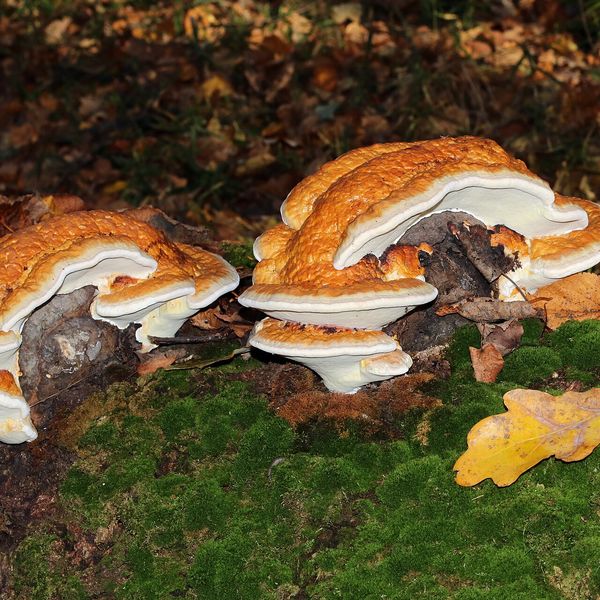
Hard, woody, with a dark top and only a narrow orange band at the edge; mostly grows on spruces.
Protection and rules
Not protected. In reserves and protected areas of national parks, collecting mushrooms is prohibited.
FAQ
Is Laetiporus sulphureus edible?
Conditionally: only young soft edges are eaten after heat treatment. The mushroom is not consumed raw, and in some people, it causes digestive upset.
Why is Laetiporus sulphureus called "Chicken of the woods"?
It is called this in English due to the taste and texture of young fruiting bodies, which resemble chicken.
Similar species
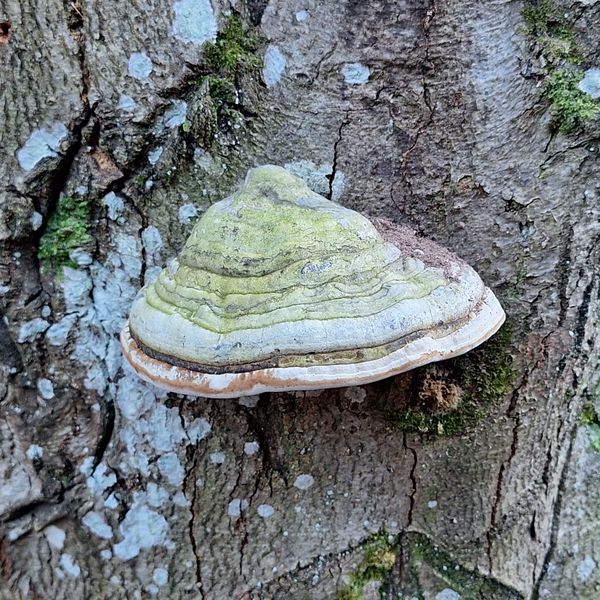
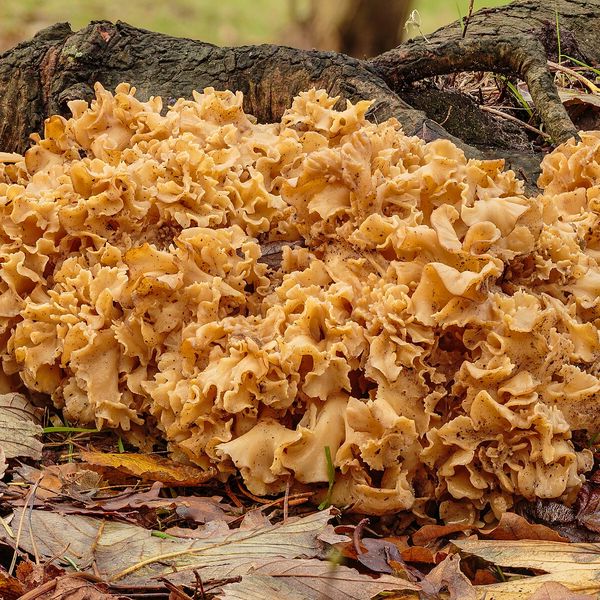
Where to meet it
Mountain ranges: Polonynian Ridge. In other countries: 🇷🇴 Buzău Mountains, 🇵🇱 Żywiec Beskids, 🇷🇴 Poiana Ruscă Mountains, 🇸🇰 Little Carpathians
Trails and peaks near which naturalists recorded the species (GBIF, iNaturalist), matched by altitude and habitat. Sightings are not guaranteed.
Sources
- Вікіпедія: Трутовик сірчано-жовтий
- Wikipedia (en): Laetiporus sulphureus
- Rozporządzenie Ministra Zdrowia z 17.05.2011, t.j. Dz.U. 2023 poz. 2237: wykaz grzybów dopuszczonych do obrotu (Польща)
- Лісовий кодекс України, ст. 69: загальне використання лісових ресурсів (збирання грибів і ягід для власних потреб)
- iNaturalist: Laetiporus sulphureus (спостереження в Карпатах)
GBIF · iNaturalist · Wikidata · Distribution data: GBIF.org (CC0 and CC BY records), iNaturalist; names and identifiers: Wikidata (CC0). Text: Karpaty.rocks, checked 09.11.2026.
