Red-belted conk
Never identify a mushroom from a photo alone. If in doubt, leave it. In case of poisoning call 112 (103 in Ukraine) at once.
About
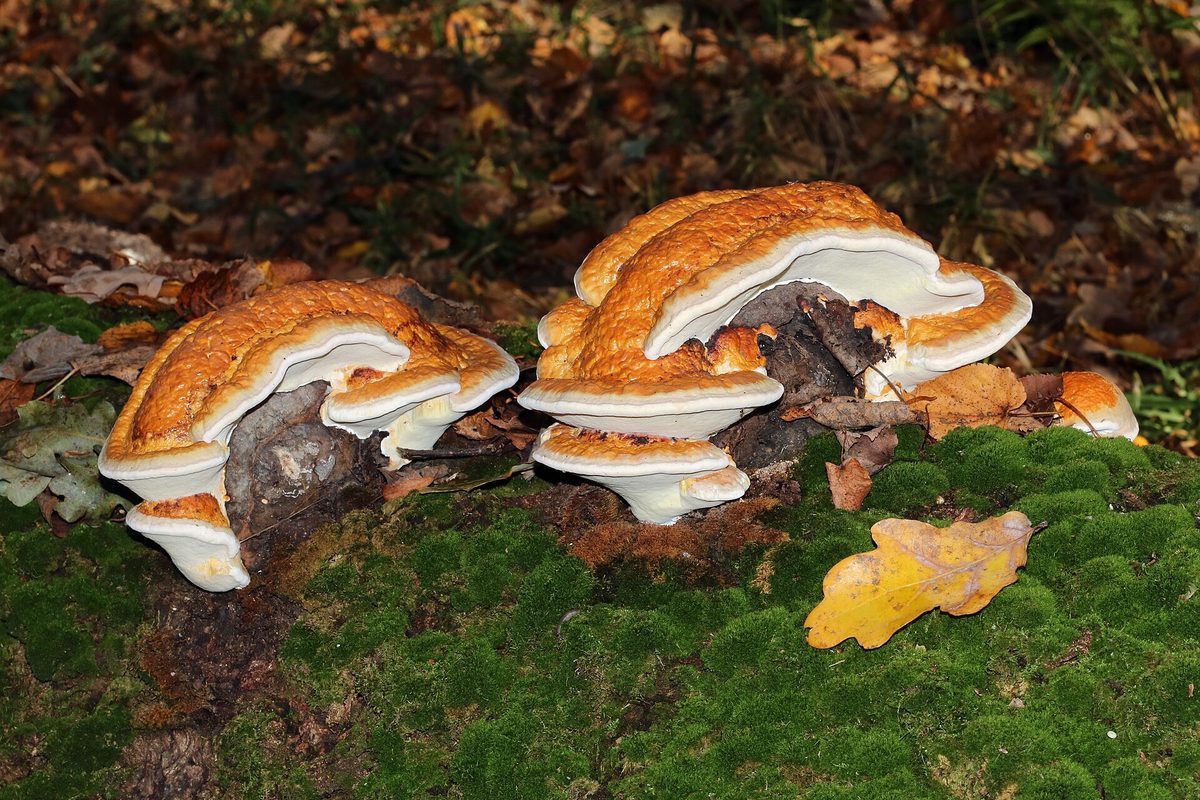
The Red-belted conk is one of the most conspicuous fungi in the Carpathian forests. It grows on living weakened and dead trees, stumps, and fallen wood, most often on spruce and other conifers, but it can also be found on deciduous species. The fungus is perennial, so its fruiting bodies can be seen at any time of the year, even in winter.
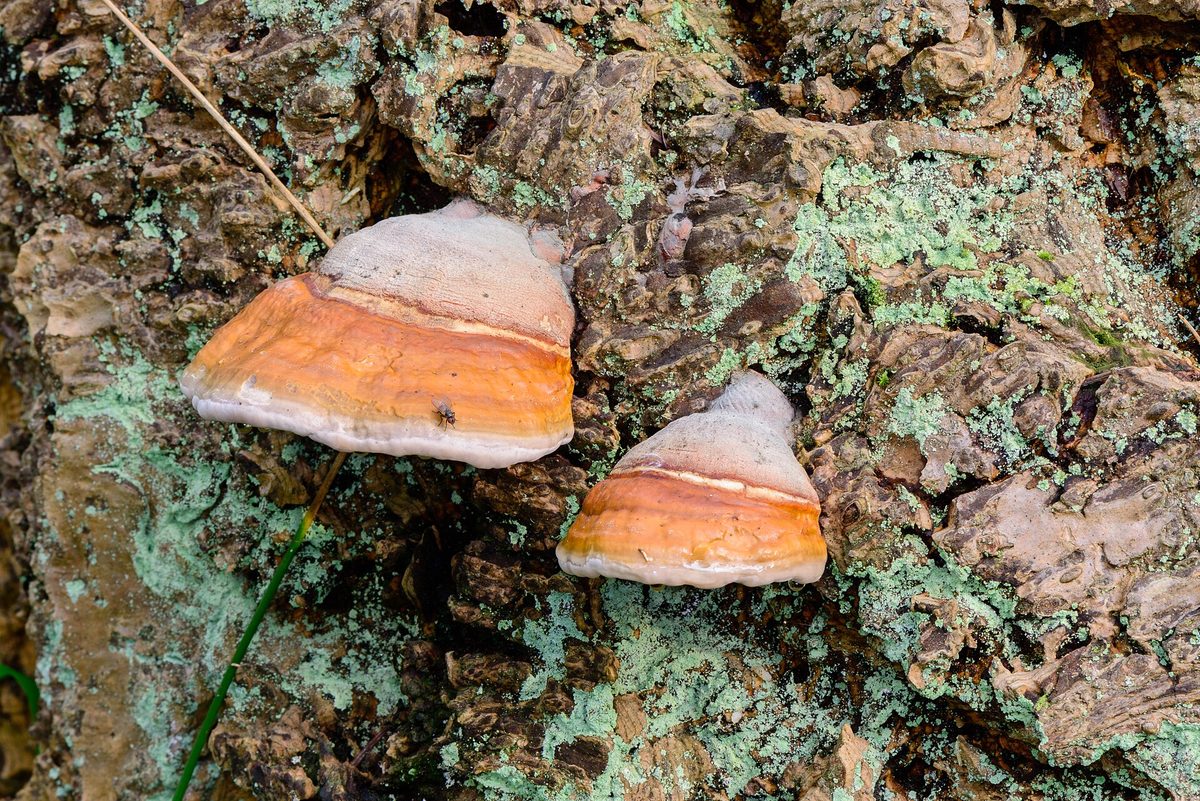
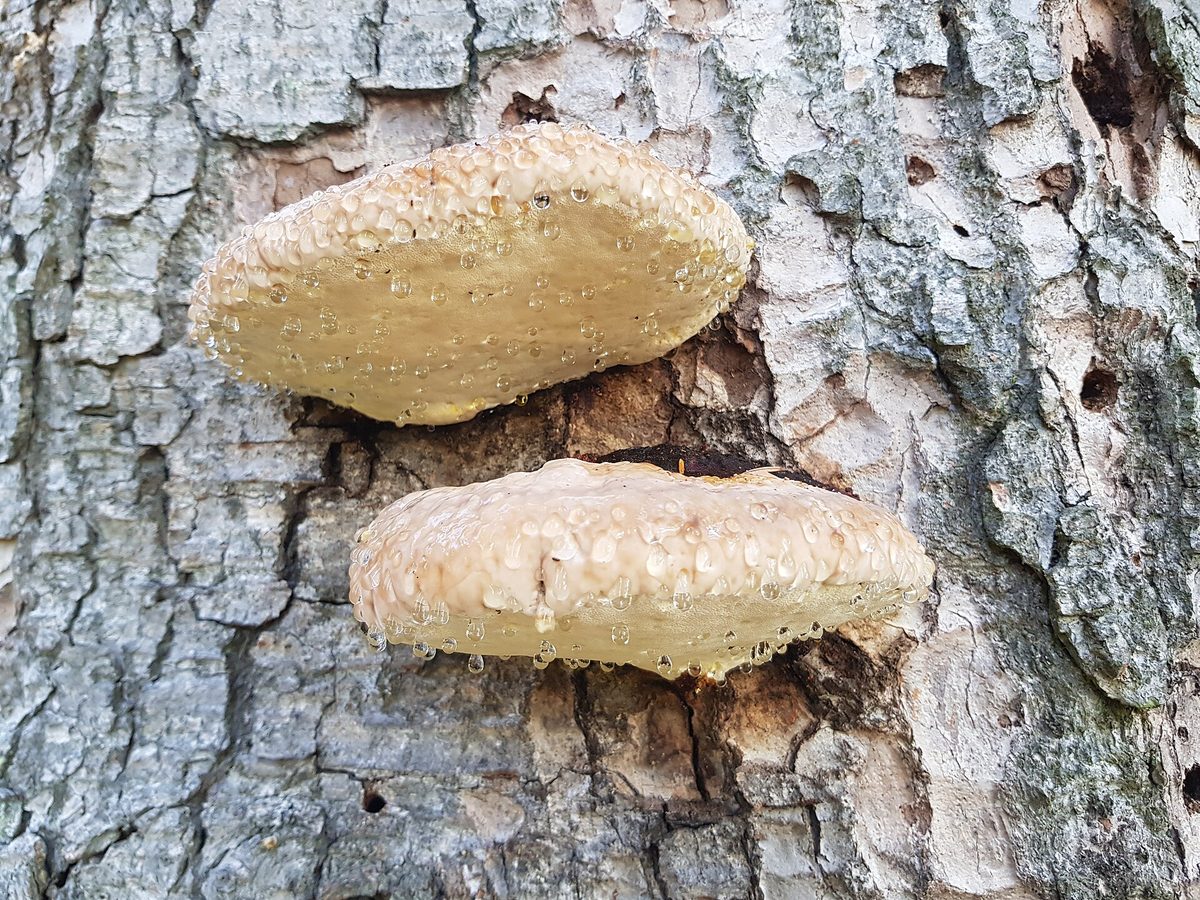
The fruiting body is hard, woody, hoof-shaped or shelf-like, up to 30 cm wide and up to 15 cm thick. The top is striped: dark brown or almost black at the base, reddish or orange closer to the edge, and the edge itself is white or yellowish. It is this bright margin that gives the fungus its name. The underside is porous, pale yellow or creamy.
The Red-belted conk causes brown rot of wood: it decomposes cellulose, and the affected wood turns brown and crumbles. This is an important job for the forest — the fungus returns nutrients to the soil, and brown rot becomes part of the forest litter in coniferous forests. At the same time, it devalues commercial timber.
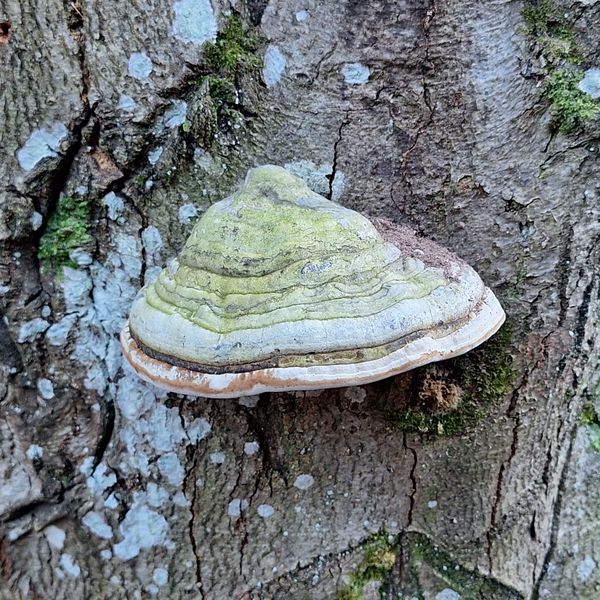
The fungus is not suitable for food due to its woody consistency. Once, conks were used as tinder for starting fires. It is most often confused with the true conk, which primarily grows on beech and birch: its top is gray, without an orange margin. On the trail, the Red-belted conk is a beautiful object for photos, so just take a picture of it and leave it in place.
Where in the Carpathians

The map shows where naturalists recorded the species (GBIF, CC0 and CC BY records), not every place it lives. The Ukrainian Carpathians are less studied, so a blank area does not mean the species is absent.
- Countries
- Slovakia · Ukraine · Poland · Romania · Austria · Czechia · Hungary
- Mountain ranges
- Gorgany, Western Tatras, High Tatras, Low Tatras, Lesser Fatra, Krasna Polonyna, Gorce, Harghita and Gurghiu Mountains, Slovak Ore Mountains, Piatra Craiului
- Altitude belts
- Foothills (below 600 m) · Beech forests (600–1200 m) · Conifer forests (1200–1600 m)
When to see it
| Jan | Feb | Mar | Apr | May | Jun | Jul | Aug | Sep | Oct | Nov | Dec | |
|---|---|---|---|---|---|---|---|---|---|---|---|---|
| Sightings |
From naturalists’ observations in the Carpathians (iNaturalist, research grade): the darker the cell, the more often the species is seen that month.
Look-alikes — how to tell them apart
The top is gray or gray-brown, concentrically striped, without a reddish-orange margin; primarily grows on beech and birch.
Protection and rules
Not protected.
FAQ
What kind of fungus grows on spruces with an orange stripe?
Most likely, it is the Red-belted conk: a hard hoof-shaped fungus with a dark top and a reddish-orange margin near the white edge. It is inedible.
Can you eat the Red-belted conk?
No, the fruiting body is hard, woody, and not suitable for food.
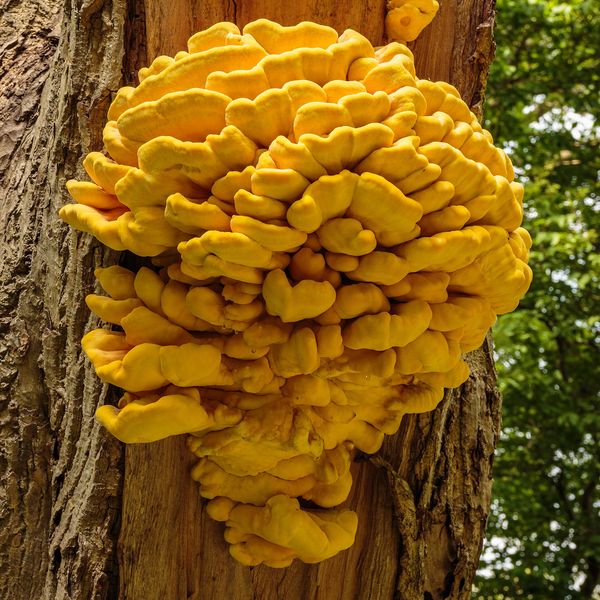
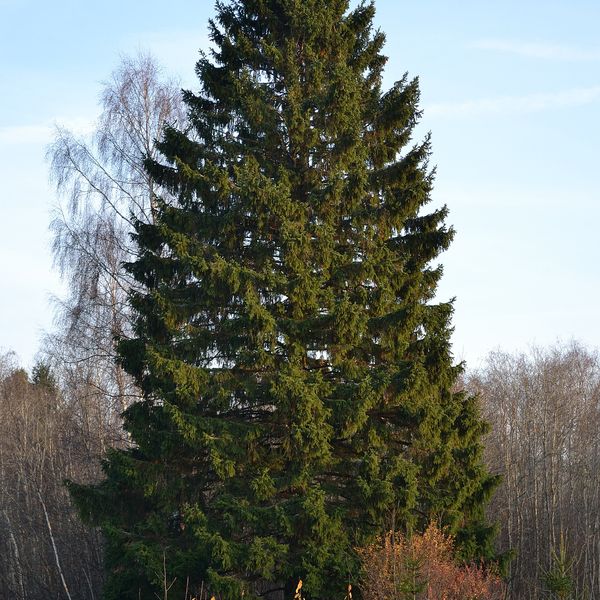
Similar species
Where to meet it
Trails
 ModerateOne-dayYaremche to Zhenetskyi Huk Waterfallvia Mount Yavirnyk-HorhanElevation profile746–1 467 m7.5 kmascent 729 m≈ 3.5 h walking
 HardTwo-dayPolianytsia village to Yaremchevia Mount Syniak, Mount YavirnykElevation profile522–1 665 m21.2 kmascent 1 198 m≈ 7.5 h walking
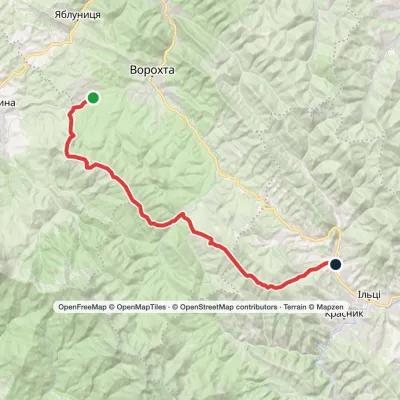 HardMulti-dayMarkedVoronenko village to Staishche villagevia Mount KukulElevation profile698–1 586 m31.1 kmascent 1 667 m≈ 11 h walking
 HardMulti-dayMarkedMyslivka village to Osmoloda villagevia Mount Velykyi Pustushak, Nimetska polonyna +1Elevation profile654–1 587 m35 kmascent 1 359 m≈ 11.5 h walking
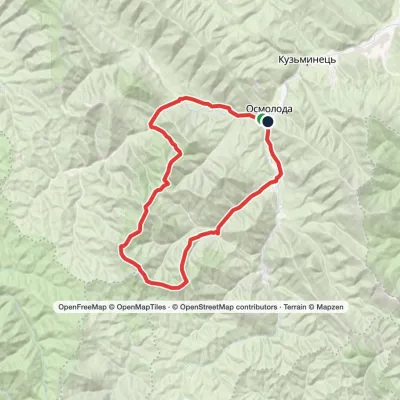 HardMulti-dayMarkedOsmoloda village loopvia Mount Grofa, Mount Koretvyna +1Elevation profile717–1 748 m40.6 kmascent 1 974 m
 ModerateOne-dayMarkedPolianytsia village loopvia Mount SyniakElevation profile971–1 665 m11.9 kmascent 845 m≈ 4.5 h walking
 ModerateOne-dayMarkedVoronenko village Mount KukulElevation profile832–1 539 m13.4 kmascent 779 m≈ 5 h walking
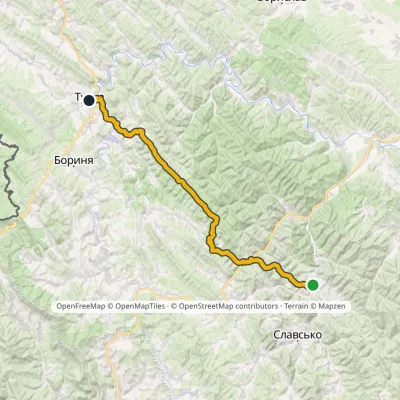 HardMulti-dayMarkedNo. 505 Tukhlia TurkaElevation profile530–1 177 m56.9 kmascent 1 764 m
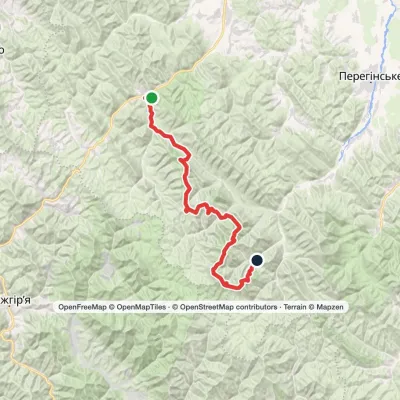 HardMulti-dayMarkedMyslivka village to Osmoloda villagevia Mount Yayko-Ilemske, Mount Moloda +2Elevation profile649–1 748 m61.3 kmascent 3 718 m
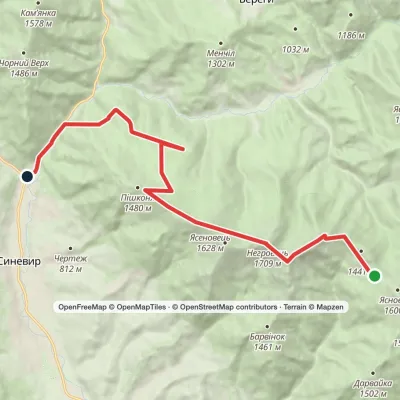 ModerateTwo-dayMount Nehrovets Synevyr villageElevation profile665–1 707 m17.1 kmascent 621 m≈ 5.5 h walking
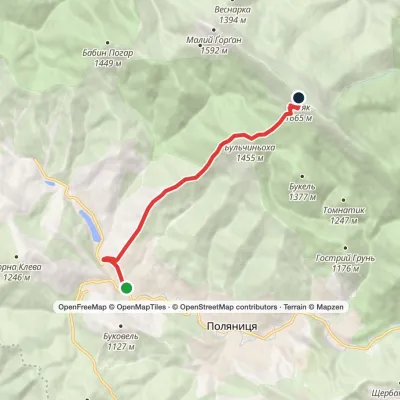 ModerateOne-dayMarkedPolianytsia village Mount SyniakElevation profile886–1 665 m6.4 kmascent 871 m≈ 3.5 h walking
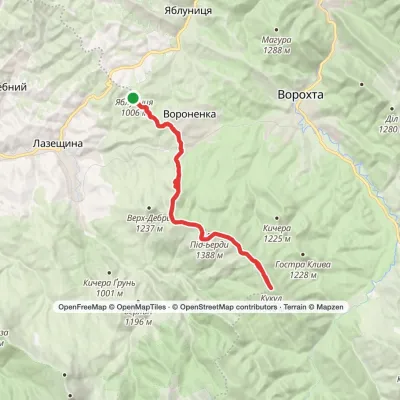 HardMulti-dayVoronenko village loopvia Mount KukulElevation profile880–1 539 m29.5 kmascent 959 m≈ 9.5 h walking
Mountain ranges: Gorgany, Krasna Polonyna, Maramureș Mountains. In other countries: 🇸🇰 Western Tatras, 🇸🇰 High Tatras, 🇸🇰 Low Tatras, 🇸🇰 Lesser Fatra, 🇵🇱 Gorce, 🇷🇴 Harghita and Gurghiu Mountains, 🇸🇰 Slovak Ore Mountains, 🇷🇴 Piatra Craiului, 🇵🇱 Babia Góra, 🇸🇰 Kysuce Beskids, 🇷🇴 Făgăraș Mountains
Trails and peaks near which naturalists recorded the species (GBIF, iNaturalist), matched by altitude and habitat. Sightings are not guaranteed.
Sources
- Вікіпедія: Fomitopsis pinicola
- Wikipedia (en): Fomitopsis pinicola
- Wikipedia (en): Fomes fomentarius
- iNaturalist: Fomitopsis pinicola (спостереження в Карпатах)
GBIF · iNaturalist · Wikidata · Distribution data: GBIF.org (CC0 and CC BY records), iNaturalist; names and identifiers: Wikidata (CC0). Text: Karpaty.rocks, checked 09.11.2026.
