Blackthorn
Never eat berries you are not sure about and never give unknown berries to children. In case of poisoning call 112 (103 in Ukraine).
About
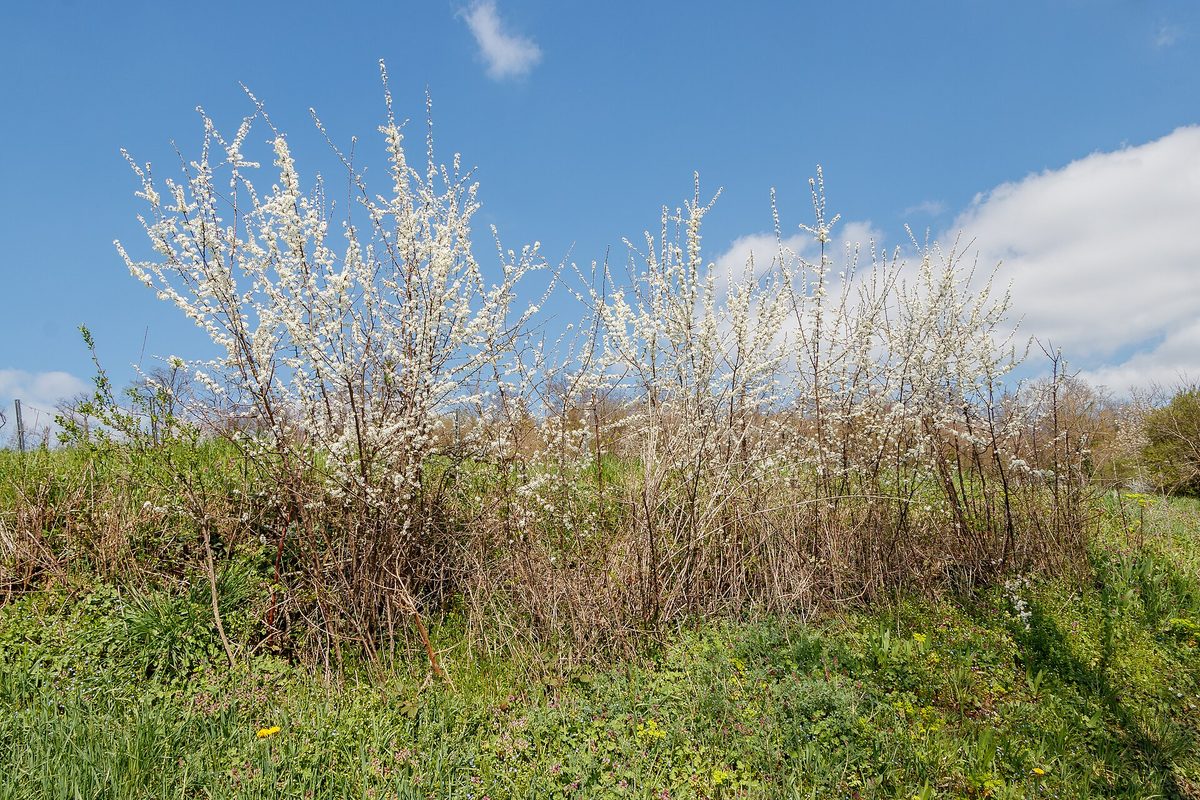
Blackthorn is a dense sprawling bush 1–4 m tall. The branches are dark, almost black, spreading and ending in strong thorns. Thanks to root suckers, blackthorn forms impenetrable thickets at the forest edges, slopes, and boundaries.
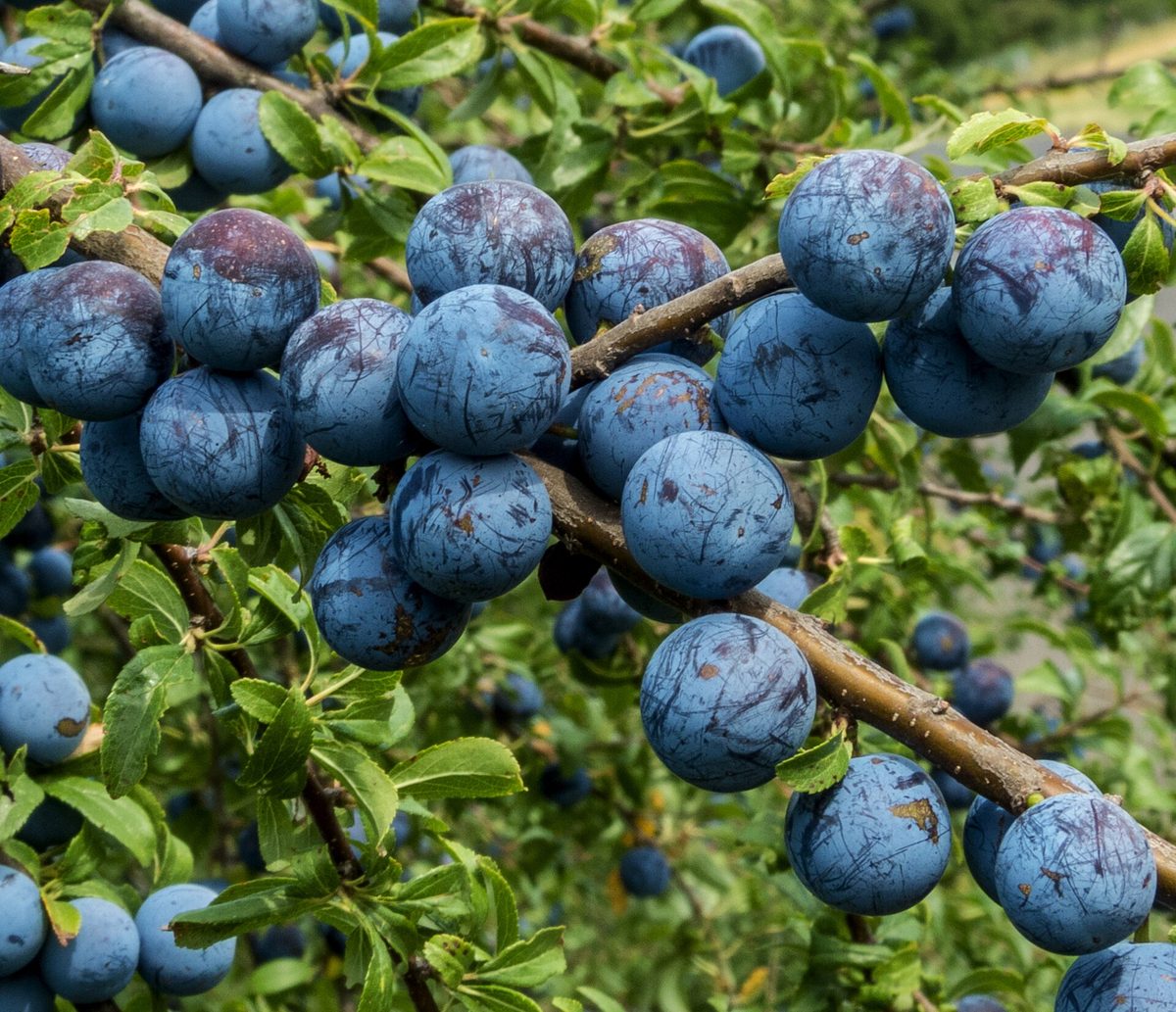
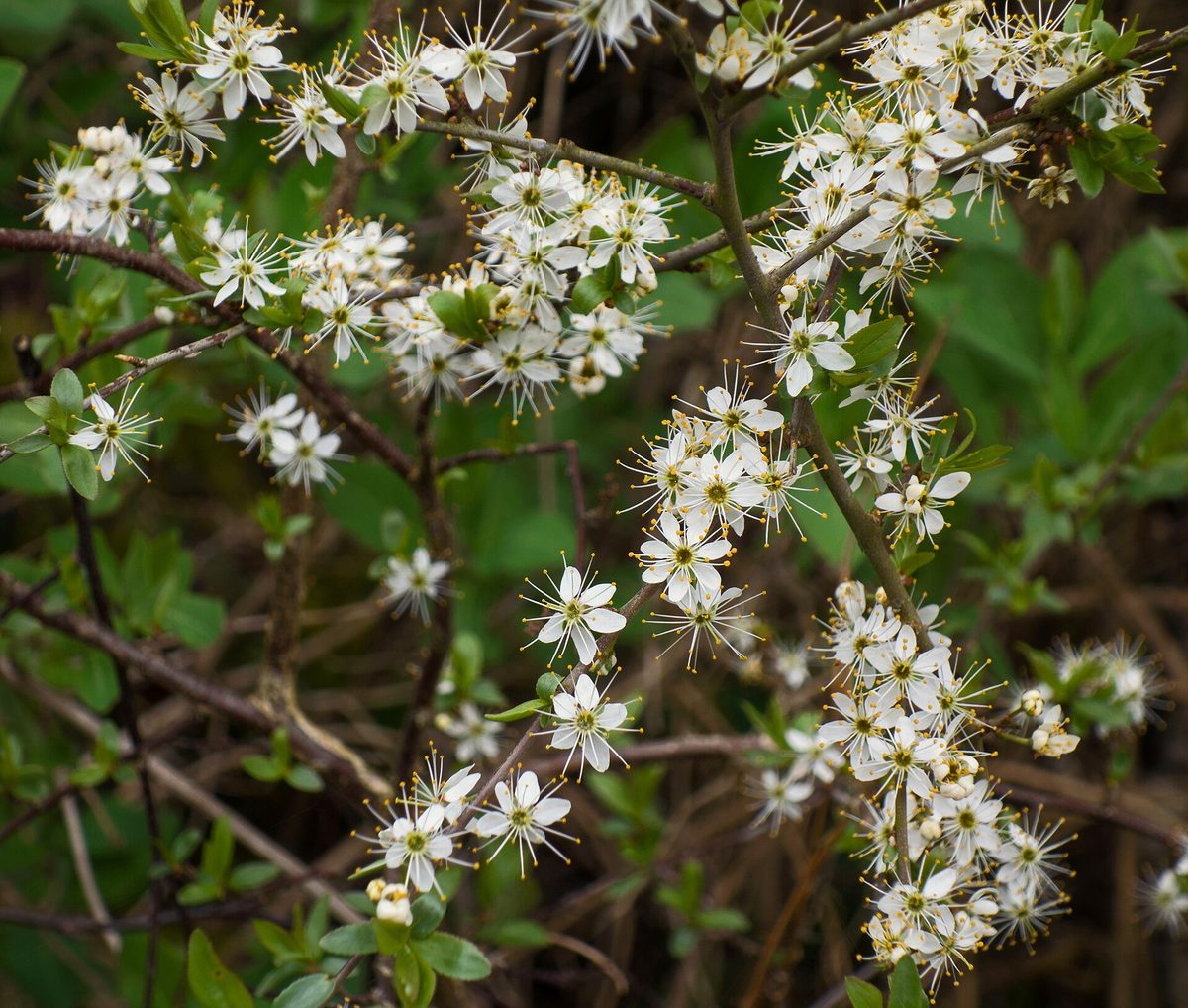
It blooms in April, before the leaves unfold, and then the bare black branches are completely covered with small white flowers. The leaves are small, oval, and finely serrated. The fruits are round drupes 10–15 mm in diameter, blue-black with a grayish waxy coating, on a short stem. The flesh is green, and the stone does not separate from it.
The fruits ripen in September – October and remain on the branches for a long time. Fresh, they are very tart and sour, astringent in the mouth. After the first frosts, the astringency weakens, and blackthorn becomes sweeter – that is when they are harvested.
In the Carpathian region, blackthorn grows in the foothills and lower mountain belt: on dry sunny slopes, pastures, forest edges, and along field roads. It does not enter dense mountain forests or high up into the mountains.
Thickets of blackthorn are home to many animals. In the thorny bushes, shrikes and warblers nest, and shrikes impale their prey on the thorns, while thrushes feed on the fruits in winter.
Only the flesh is edible. The stones contain substances that form cyanide, so they should not be chewed or swallowed.
Where in the Carpathians

Teal — the species' natural range within its elevation belt; orange — where naturalists recorded it (GBIF, CC0/CC BY).
Range: Caudullo, Welk & San-Miguel-Ayanz 2017, CC BY 4.0; elevation belt and the countries where it is known — our model (AWS Terrain Tiles)
- Countries
- Ukraine · Slovakia · Czechia · Hungary · Poland · Romania · Austria · Serbia
- Mountain ranges
- nearly all Carpathian ranges, within its elevation belt
- Altitude belts
- Foothills (below 600 m) · Beech forests (600–1200 m)
When to see it
| Jan | Feb | Mar | Apr | May | Jun | Jul | Aug | Sep | Oct | Nov | Dec | |
|---|---|---|---|---|---|---|---|---|---|---|---|---|
| Flowering | ||||||||||||
| Fruit |
From naturalists’ observations in the Carpathians (iNaturalist, research grade): the darker the cell, the more often the species is seen that month.
Safety
Only the flesh of the fruits is edible. Do not chew or swallow the stones: they contain compounds that form cyanide.
In folk tradition
Traditionally, the fruits are used to make jams and compotes, they are dried and infused.
Protection and rules
Not listed in the Red Book of Ukraine.
FAQ
When to harvest blackthorn?
In October, best after the first frosts: then the fruits become less tart and sweeter.
Can blackthorn be eaten raw?
Yes, the flesh is edible, although very tart. The stones should not be swallowed or chewed.
Comments
Travellers’ experience: reports, tips, questions.
No one has written here yet. Be the first — your experience helps others.
Similar species
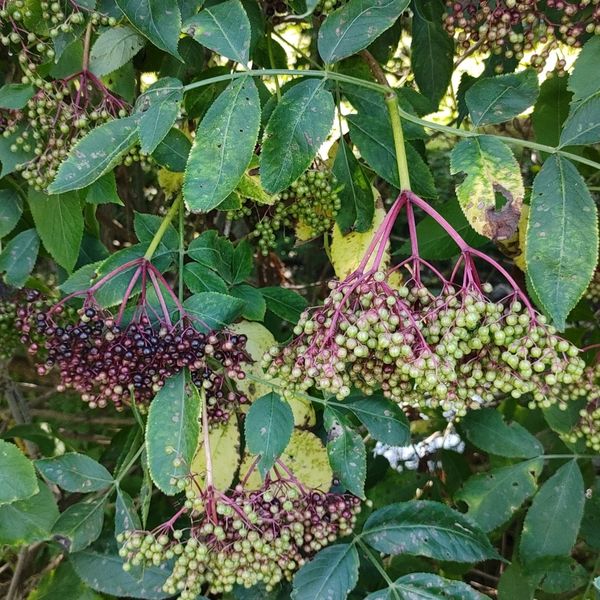
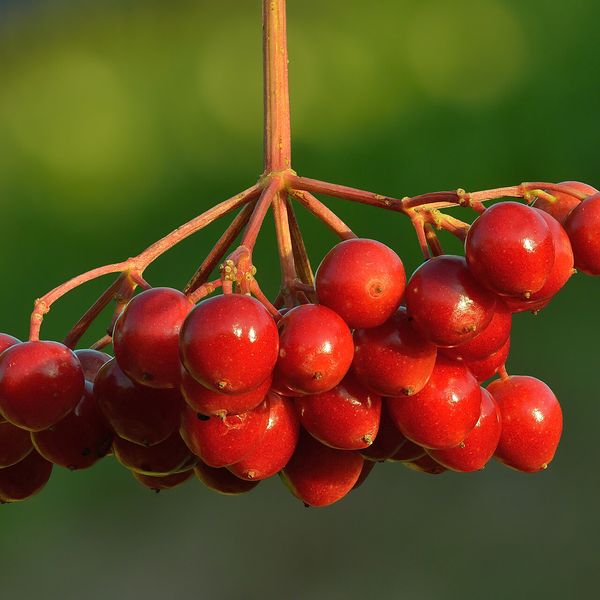
Where to meet it
Waters and waterfalls
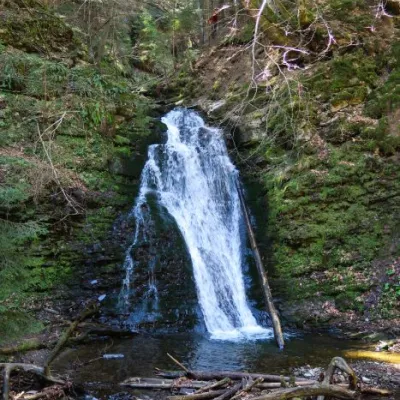 WaterfallSopit waterfallSopitSopit (Sopitsky ) is a waterfall in the Ukrainian Carpathians on the territory of the Skole Beskydy National Nature...
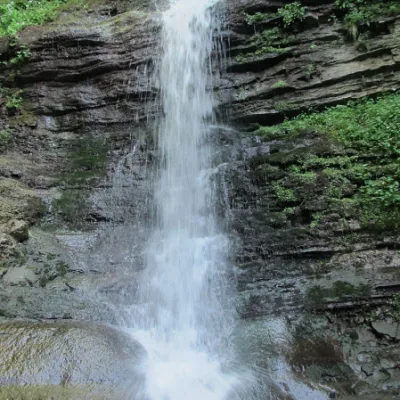 WaterfallLazny waterfallDrohobych districtLaznyi is a waterfall in the Ukrainian Carpathians (in the Skole Beskydy massif), a hydrological natural monument of...
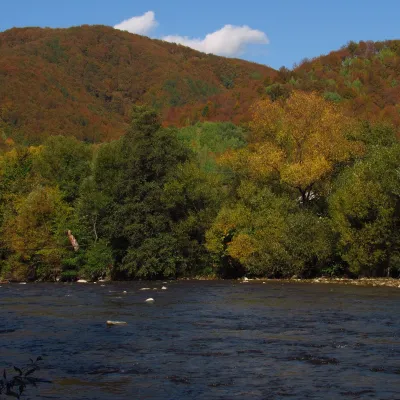 RiverUzh RiverVelykyi BereznyiAbove the Uzh near Kamianytsia stand the ruins of Nevytsky Castle, and in Uzhhorod the Masaryk Bridge offers a good...
Mountain ranges: In other countries: 🇸🇰 Strážov Mountains, 🇸🇰 Slovak Ore Mountains, 🇸🇰 Greater Fatra, 🇸🇰 Slovak Central Mountains, 🇸🇰 Lesser Fatra, 🇸🇰 Low Tatras, 🇸🇰 Kysuce Beskids, 🇨🇿 White Carpathians, 🇵🇱 Low Beskids, 🇸🇰 Štiavnica Mountains, 🇸🇰 Volovec Mountains, 🇵🇱 Sądecki Beskids, 🇸🇰 Považský Inovec, 🇸🇰 Čergov Mountains
Trails and peaks near which naturalists recorded the species (GBIF, iNaturalist), matched by altitude and habitat. Sightings are not guaranteed.
Sources
- Вікіпедія: Терен колючий
- Wikipedia (en): Prunus spinosa
- iNaturalist: Prunus spinosa (спостереження в Карпатах)
GBIF · iNaturalist · Wikidata · Distribution data: GBIF.org (CC0 and CC BY records), iNaturalist; names and identifiers: Wikidata (CC0). Text: Karpaty.rocks, checked 11.11.2026.
