Dog rose
Never eat berries you are not sure about and never give unknown berries to children. In case of poisoning call 112 (103 in Ukraine).
About
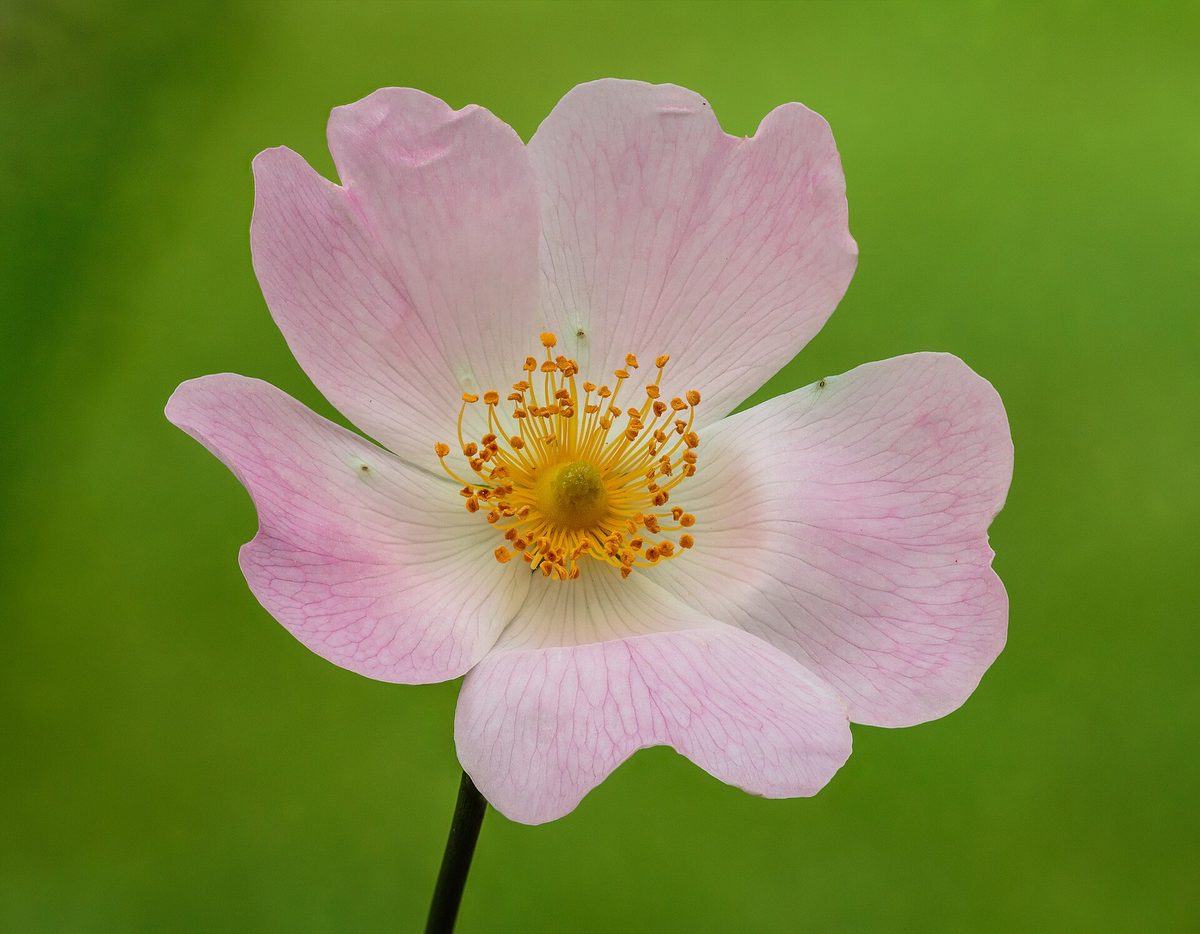
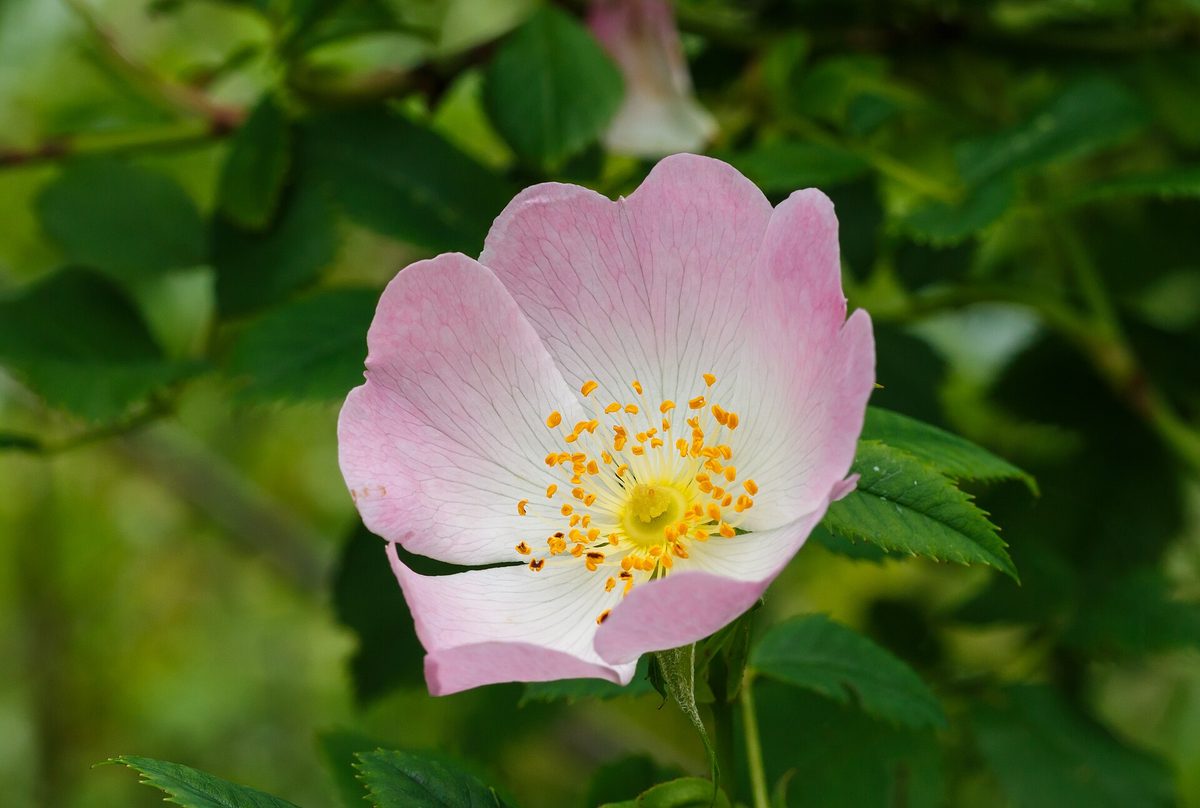
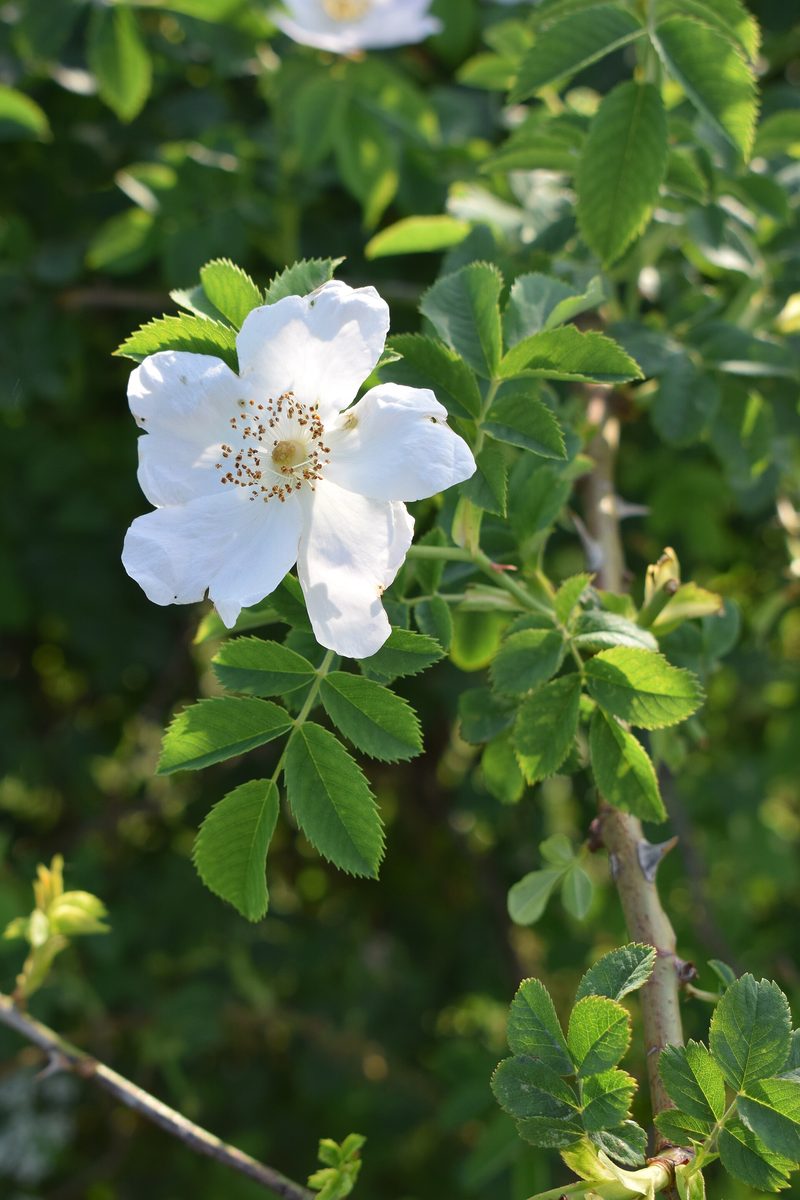
Dog rose is a bush 1.5–3 m tall with long arching shoots. The thorns are strong, curved downwards. The leaf consists of five to seven oval serrated leaflets. In June, the bush is covered with pale pink or nearly white flowers 4–6 cm in diameter with five petals and a light fragrance.
The fruits are smooth oval "berries" 1.5–2.5 cm long, orange-red, ripening from August to October. The sepals bend downwards and fall off before ripening. Inside the fleshy shell are hard nuts among stiff hairs that irritate the skin and mucous membranes — hence the folk name "itchy bush."
In the Carpathian region, dog rose is common in forest edges, pastures, dry slopes, along roads, and borders in the foothills and lower mountain belt. Several dozen species of dog rose grow here, and distinguishing them is difficult even for botanists: fruits, sepals, and thorns are needed. Higher in the mountains, in forests and krivolissia, alpine dog rose grows — almost thornless, with dark pink flowers and elongated drooping fruits.
The fruits of dog rose are rich in vitamin C. They are collected when ripe but still firm, before strong frosts, and dried.
Dense thorny bushes provide good shelter for birds: the shrike nests here, and in winter, thrushes feed on the fruits.
Where in the Carpathians

Teal — roughly where the species can occur, by elevation and habitat; orange — where naturalists recorded it (GBIF, CC0/CC BY).
Range: elevation belt and the countries where it is known — our model (AWS Terrain Tiles)
- Countries
- Ukraine · Slovakia · Czechia · Hungary · Poland · Romania · Austria · Serbia
- Mountain ranges
- nearly all Carpathian ranges, within its elevation belt
- Altitude belts
- Foothills (below 600 m) · Beech forests (600–1200 m)
When to see it
| Jan | Feb | Mar | Apr | May | Jun | Jul | Aug | Sep | Oct | Nov | Dec | |
|---|---|---|---|---|---|---|---|---|---|---|---|---|
| Flowering | ||||||||||||
| Fruit |
From naturalists’ observations in the Carpathians (iNaturalist, research grade): the darker the cell, the more often the species is seen that month.
Safety
Hairs inside the fruits irritate the skin and mucous membranes: for tea, the fruits are taken whole or the infusion is strained. In protected areas, collecting fruits is not allowed.
In folk tradition
Dried fruits are traditionally brewed as a vitamin tea, and the pulp is used to make jam and syrup.
Protection and rules
Not listed in the Red Book of Ukraine. For personal use, fruits can be collected outside protected areas.
FAQ
When to collect dog rose in the Carpathians?
From late August to October, when the fruits have turned orange-red but are still firm. After strong frosts, they soften and do not store well.
Are all dog roses the same?
No, many species of dog rose grow in the Carpathians, and distinguishing them is difficult. The fruits of all our dog roses are edible, but they differ in size and shape.
Comments
Travellers’ experience: reports, tips, questions.
No one has written here yet. Be the first — your experience helps others.
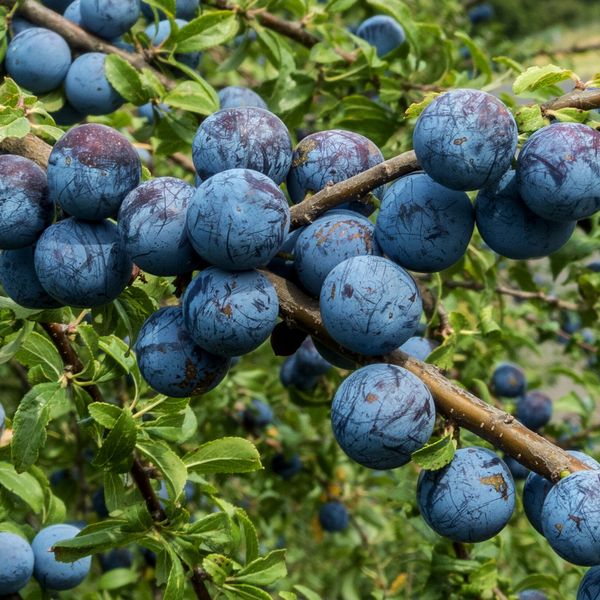
Similar species
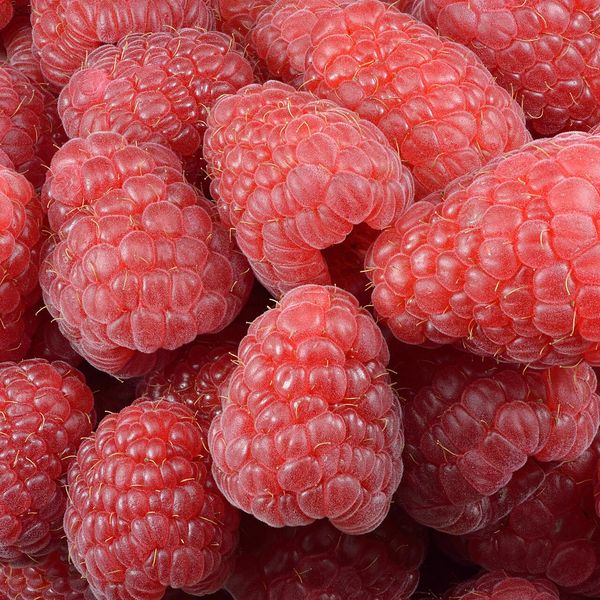
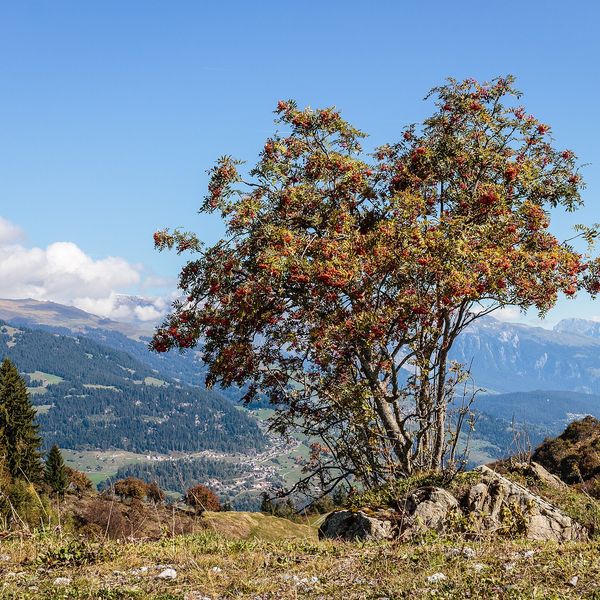
Where to meet it
Waters and waterfalls
 LakeCity lake in KolomyiaKolomyiaAfter touring the city, it's a good idea to relax and unwind by the water.
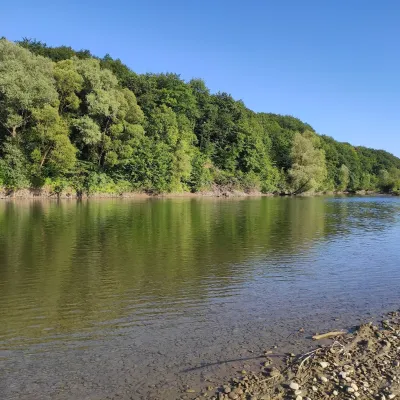 RiverBystrytsia Solotvynska RiverSolotvynThe Bystrytsia Solotvynska rises at about 1,390 m at the foot of Mala Syvulia and Bystryk, near the Peklo cliffs in...
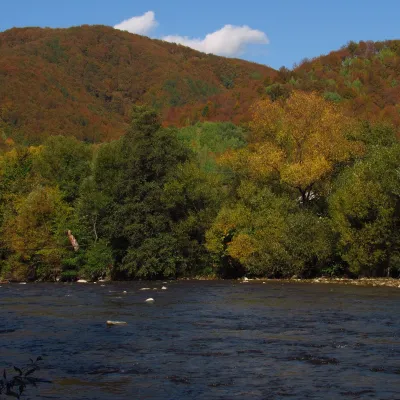 RiverUzh RiverVelykyi BereznyiAbove the Uzh near Kamianytsia stand the ruins of Nevytsky Castle, and in Uzhhorod the Masaryk Bridge offers a good...
Mountain ranges: In other countries: 🇸🇰 Strážov Mountains, 🇸🇰 Slovak Ore Mountains, 🇸🇰 Low Tatras, 🇸🇰 Slovak Central Mountains, 🇨🇿 White Carpathians, 🇸🇰 Lesser Fatra, 🇸🇰 Kysuce Beskids, 🇸🇰 Greater Fatra, 🇸🇰 Volovec Mountains, 🇵🇱 Low Beskids, 🇸🇰 Štiavnica Mountains, 🇸🇰 Považský Inovec, 🇸🇰 Čergov Mountains, 🇸🇰 Vtáčnik Mountains
Trails and peaks near which naturalists recorded the species (GBIF, iNaturalist), matched by altitude and habitat. Sightings are not guaranteed.
Sources
- Вікіпедія: Шипшина звичайна
- Wikipedia (en): Rosa canina
- Лісовий кодекс України, ст. 69: загальне використання лісових ресурсів (збирання грибів і ягід для власних потреб)
- iNaturalist: Rosa canina (спостереження в Карпатах)
GBIF · iNaturalist · Wikidata · Distribution data: GBIF.org (CC0 and CC BY records), iNaturalist; names and identifiers: Wikidata (CC0). Text: Karpaty.rocks, checked 11.11.2026.
