Raspberry
Never eat berries you are not sure about and never give unknown berries to children. In case of poisoning call 112 (103 in Ukraine).
About
Wild Raspberry is a plant of open, bright places. In the Carpathians, it is the first to colonize clearings, windfalls, and burnt areas, growing along forest roads, on rocky slopes, at forest edges, and near Kolibas. It can be found from the foothills up to the upper forest boundary, and dense raspberry thickets often stretch for dozens of meters along paths.
It is a bush 1–2 m tall with biennial shoots: in the first year, the shoot grows, and in the second, it flowers, bears fruit, and dies. The stems are covered with small thin thorns. The leaves are compound, with three to five leaflets, and are whitish-felted underneath. The flowers are white, inconspicuous, appearing in June–July and attracting bees, which beekeepers appreciate.
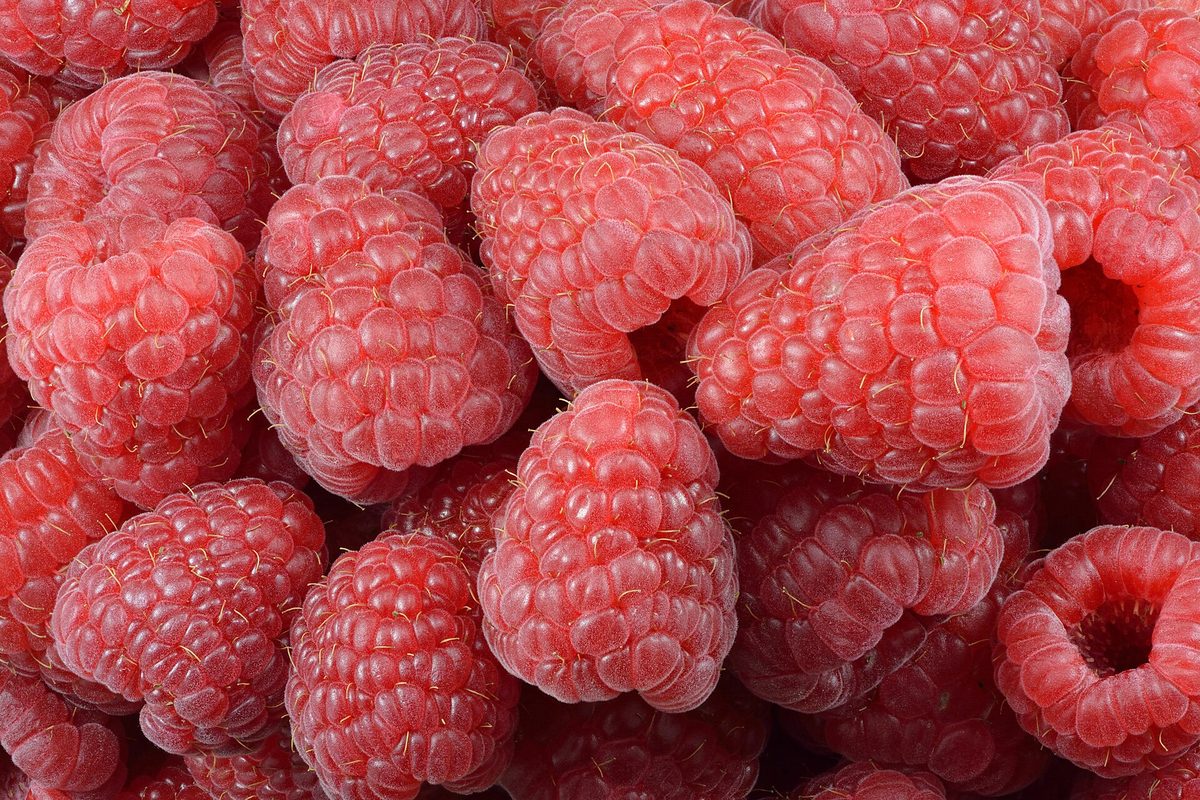
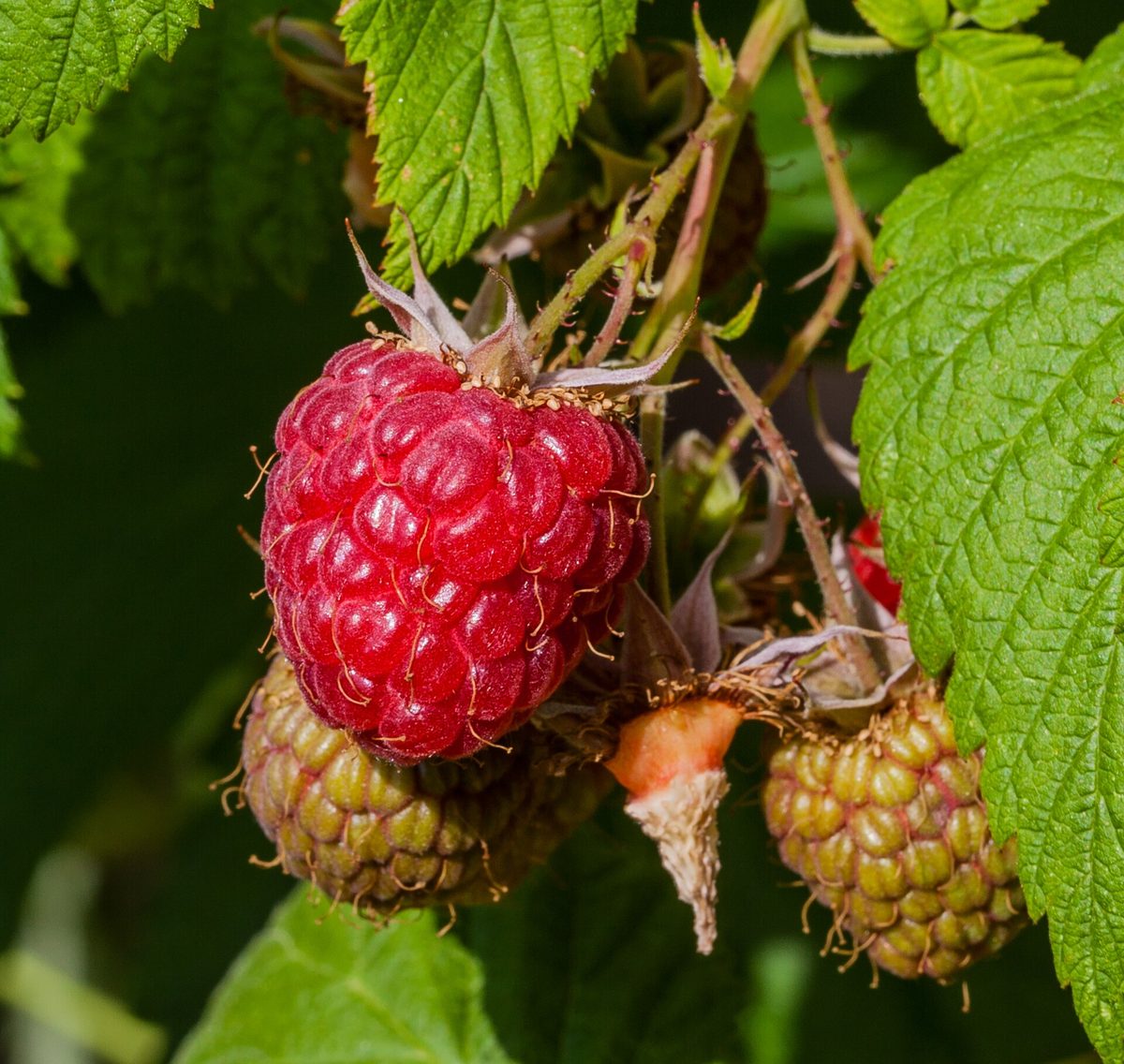
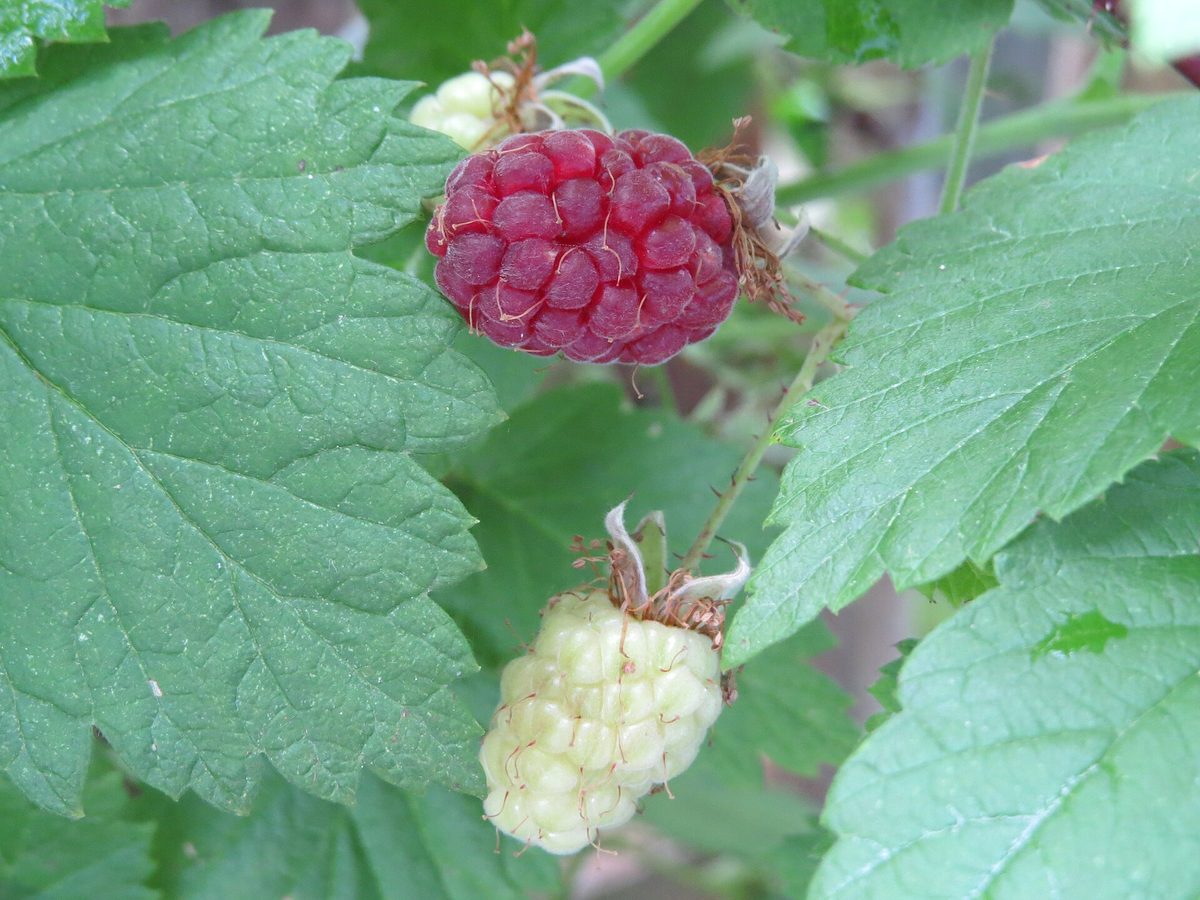
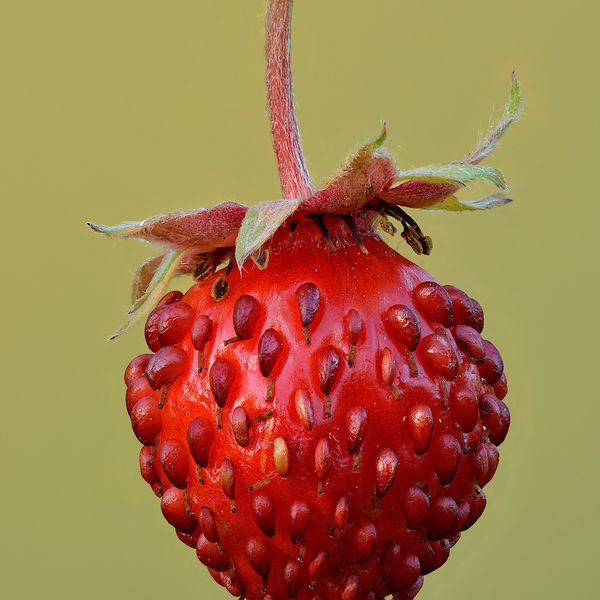
The berries are aggregate drupes, red, aromatic, and smaller than garden varieties. Ripe berries easily detach from the whitish receptacle, like a cap. Raspberry ripens in July–August, and higher in the mountains and on shady slopes, the harvest lasts until September.
There are no dangerous lookalikes for Raspberry. Its closest relatives, blackberries, have dark berries that do not detach from the receptacle and are also edible. Remember that bears are often found in raspberry thickets: make noise on the path, do not venture deep into dense thickets, and do not leave food there.
Where in the Carpathians

The map shows where naturalists recorded the species (GBIF, CC0 and CC BY records), not every place it lives. The Ukrainian Carpathians are less studied, so a blank area does not mean the species is absent.
- Countries
- Slovakia · Czechia · Poland · Ukraine · Romania · Hungary · Austria
- Mountain ranges
- Lesser Fatra, Slovak Ore Mountains, Greater Fatra, Low Tatras, Moravian-Silesian Beskids, Western Tatras, High Tatras, Strážov Mountains, Volovec Mountains, Żywiec Beskids
- Altitude belts
- Foothills (below 600 m) · Beech forests (600–1200 m) · Conifer forests (1200–1600 m)
When to see it
| Jan | Feb | Mar | Apr | May | Jun | Jul | Aug | Sep | Oct | Nov | Dec | |
|---|---|---|---|---|---|---|---|---|---|---|---|---|
| Flowering | ||||||||||||
| Fruit |
From naturalists’ observations in the Carpathians (iNaturalist, research grade): the darker the cell, the more often the species is seen that month.
Safety
In raspberry and blueberry thickets, bears feed: make noise on the path and do not venture deep into dense thickets. Do not pick berries near roads. Forest berries are better washed.
In folk tradition
The berries are eaten fresh and made into jam; leaves and twigs are traditionally dried and brewed as tea.
Protection and rules
Not protected. For personal use, gathering is allowed in state and communal forests; prohibited in nature reserves and protected areas of national parks.
FAQ
When does wild raspberry ripen in the Carpathians?
In July – August; higher in the mountains and on shady slopes – until September.
Where to look for wild raspberry?
In clearings, windfalls, forest edges, along forest roads, and on rocky slopes – everywhere there is plenty of light.
Recorded nearby
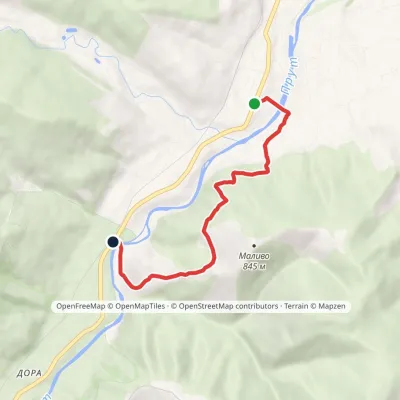 EasyOne-dayMarkedBaron's Trail: Deliatyn Dora villageElevation profile421–701 m5.3 kmascent 277 m≈ 2 h walking
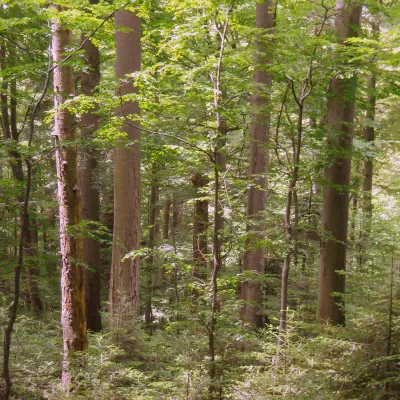 PeakMount KalnytsiaStuzhytsiaaltitude 1 004 mKalnytsia (Slovak: Kalnica) is a 1,004 m mountain on the state border between Ukraine and Slovakia, in the Bukovské...
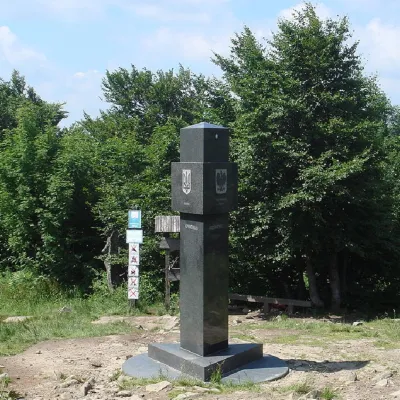 PeakMount KremenetsStuzhytsiaaltitude 1 221 m4 trails to the topKremenets (also known as Kreminets) is a mountain in the Ukrainian Carpathians, one of the highest peaks of the...
 ModerateOne-dayMarkedStuzhytsia village Mount KremenetsElevation profile450–1 144 m7.4 kmascent 694 m≈ 3 h walking
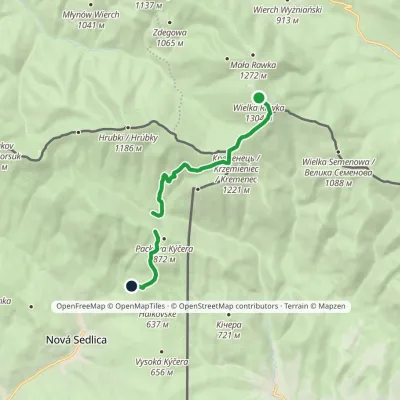 EasyOne-dayMarkedCross-border trail «Brown Bear»: Mount Velyka Ravka Nova SedlytsiaElevation profile586–1 303 m7.9 kmascent 226 m≈ 2.5 h walking
 ModerateTwo-dayStuzhytsia village loopvia Mount KremenetsElevation profile423–1 299 m17 kmascent 1 013 m≈ 6.5 h walking
Trails and peaks near which naturalists recorded the species (GBIF, iNaturalist), matched by altitude and habitat. Sightings are not guaranteed.
Similar species
Sources
- Вікіпедія: Малина звичайна
- Wikipedia (en): Rubus idaeus
- EMA/HMPC: монографія Rubi idaei folium
- Лісовий кодекс України, ст. 69: загальне використання лісових ресурсів (збирання грибів і ягід для власних потреб)
GBIF · iNaturalist · Wikidata · Distribution data: GBIF.org (CC0 and CC BY records), iNaturalist; names and identifiers: Wikidata (CC0). Text: Karpaty.rocks, checked 09.11.2026.
