Black grouse
About
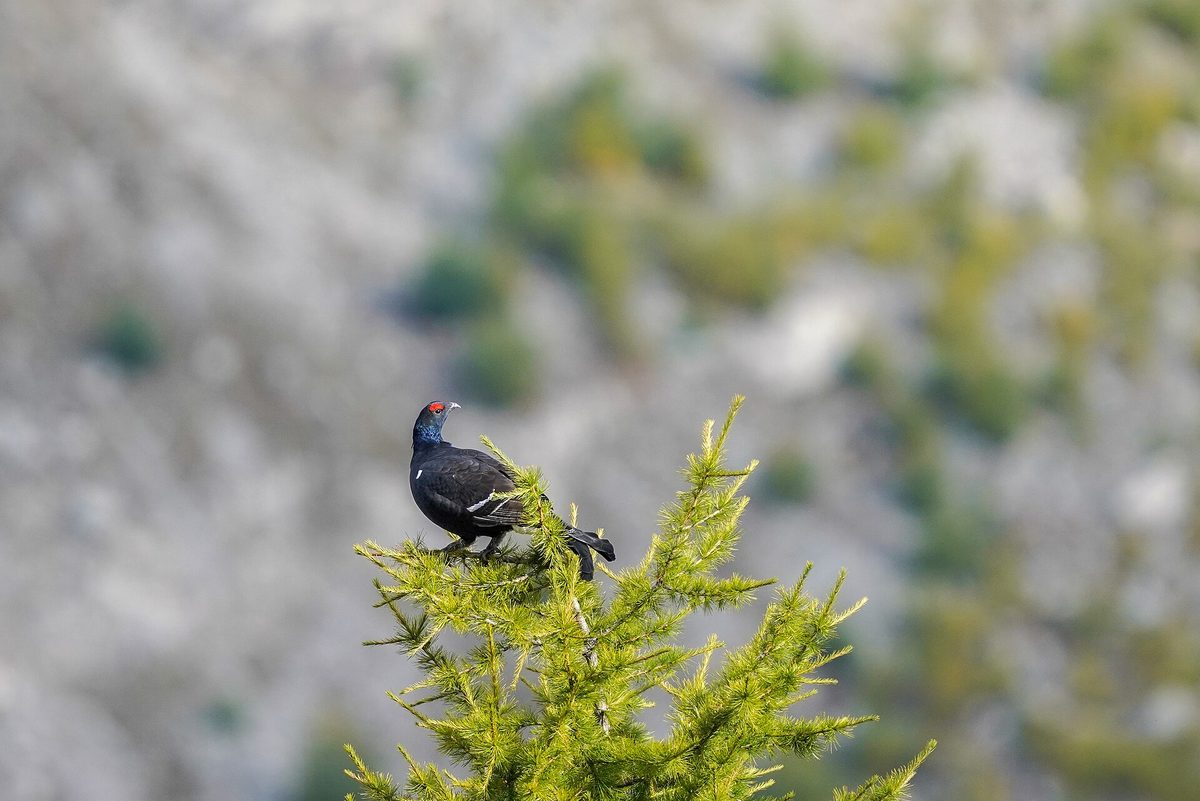
The Black grouse is a relative of the capercaillie, but smaller and more light-loving. It lives at the edge of forests and open spaces: in clearings, overgrown clearcuts, swamps, and in the mountains — near the upper forest limit, where the forest transitions to krivolissia and polonyna. In Ukraine, the Black grouse has been exterminated in most of its former range, and in the Carpathians, it has survived only in some areas. There are more Black grouse in Poland, Slovakia, and Romania, although the species is also declining there.
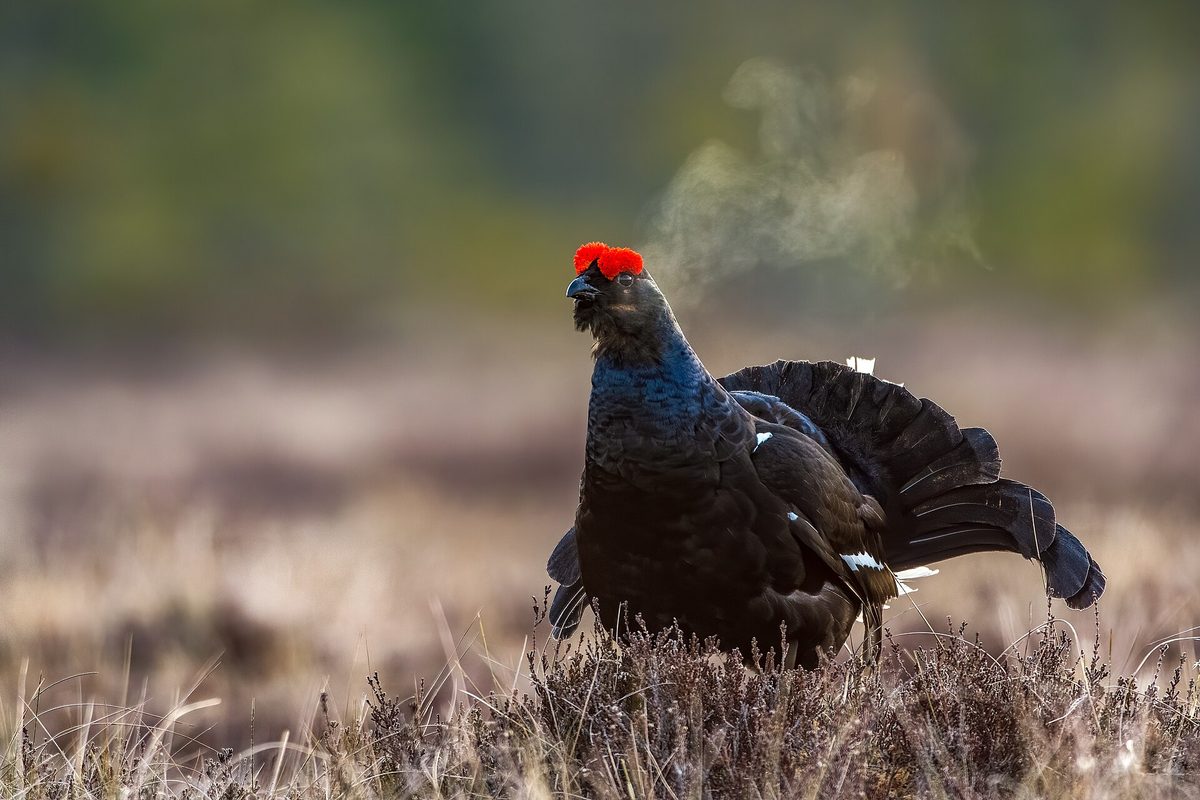
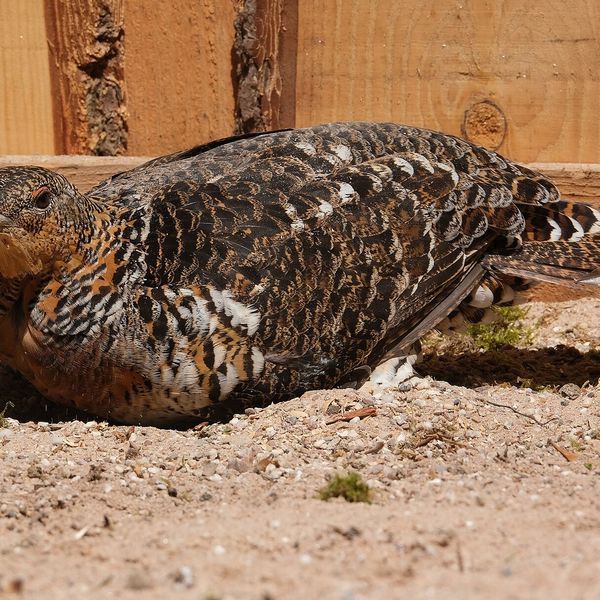
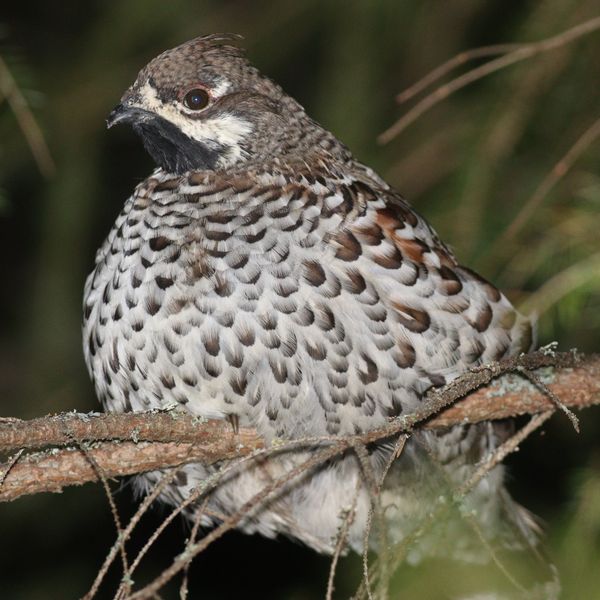
The male is bluish-black, with white spots on the wings, a white undertail, red 'eyebrows,' and a luxurious tail, the outer feathers of which are curved to the sides like a lyre. It measures up to 60 cm in length and weighs 1.2–1.4 kg. The female is smaller, grayish-brown, and mottled.
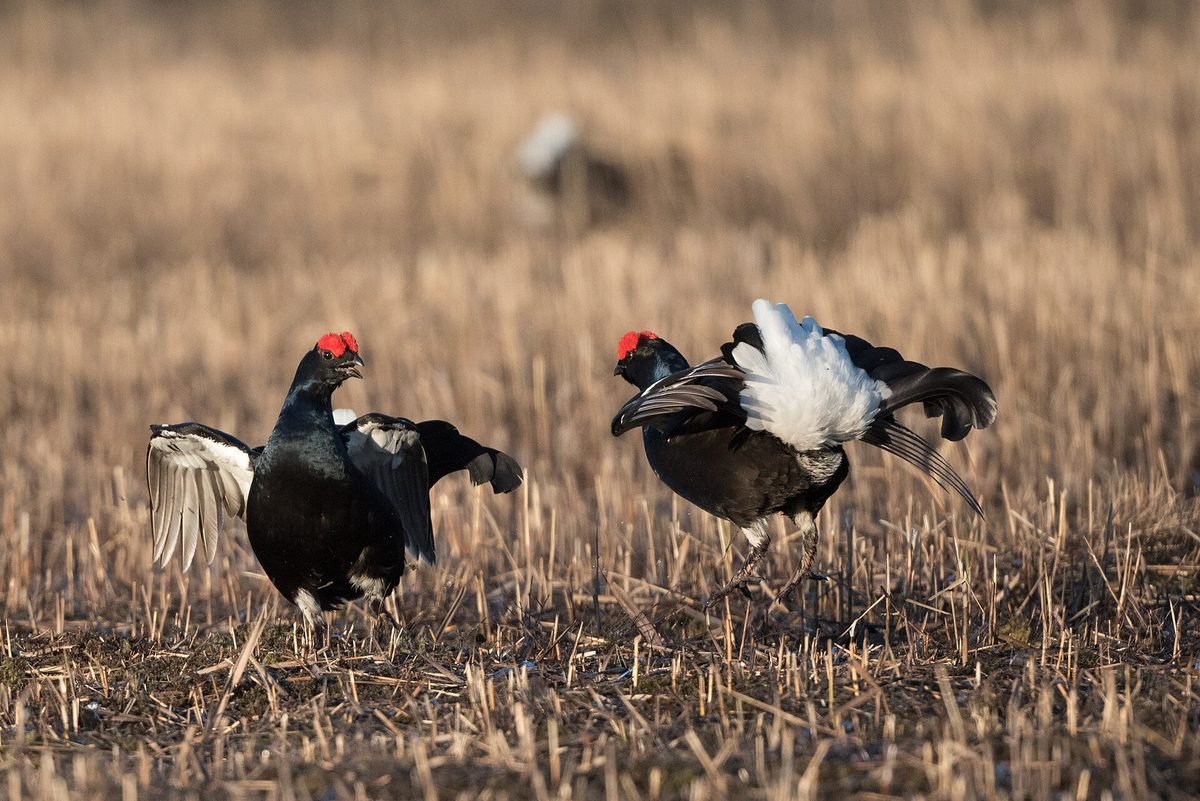
Black grouse display in groups. The first 'gurgling' of males can be heard as early as March, and the actual display lasts from the second half of April to early May, when open areas are freed from snow. Males gather at the display ground still in darkness, spreading their tails, jumping, and fighting, while their cooing can be heard from afar. Usually, there are 5–12 males at one display.
The Black grouse is listed in the Red Data Book of Ukraine as a threatened species. Display grounds are very sensitive to disturbance, so their locations are not published; in April–May, do not walk at dawn in open glades and polonynas off the trails.
Where in the Carpathians

The map shows where naturalists recorded the species (GBIF, CC0 and CC BY records), not every place it lives. The Ukrainian Carpathians are less studied, so a blank area does not mean the species is absent. For rare and vulnerable species the map is deliberately coarse (hexagons of ~250 km² or more) so that it never points to dens, nests or growing sites.
- Countries
- Ukraine · Slovakia · Romania
- Mountain ranges
- Chornohora, Maramureș Mountains, Low Tatras, High Tatras, Svydovets, Chyvchyn Mountains, Rodna Mountains, Borzhava, Gorgany, Pokuttia-Bukovina Carpathians
- Altitude belts
- Beech forests (600–1200 m) · Conifer forests (1200–1600 m) · Subalpine belt (1600–1900 m)
When to see it
| Jan | Feb | Mar | Apr | May | Jun | Jul | Aug | Sep | Oct | Nov | Dec | |
|---|---|---|---|---|---|---|---|---|---|---|---|---|
| Sightings |
From naturalists’ observations in the Carpathians (iNaturalist, research grade): the darker the cell, the more often the species is seen that month.
Protection and rules
Hunting is prohibited: the species is listed in the Red Data Book of Ukraine.
FAQ
Are there Black grouse in the Ukrainian Carpathians?
The Black grouse has survived in the Carpathians only in some areas — near the upper forest limit, in clearings, and swamps. It is a threatened species in the Red Data Book of Ukraine.
How does the Black grouse differ from the capercaillie?
The Black grouse is smaller, with the male being bluish-black with a lyre-shaped tail and a white undertail; the male capercaillie is significantly larger, dark gray, with a broad fan-shaped tail.
Similar species
Where to meet it
Ranges where it occurs: Chornohora, Maramureș Mountains, Svydovets, Chyvchyn Mountains, Borzhava, Gorgany, Pokuttia-Bukovina Carpathians, Krasna Polonyna. In other countries: 🇸🇰 Low Tatras, 🇸🇰 High Tatras, 🇷🇴 Rodna Mountains, 🇸🇰 Slovak Ore Mountains, 🇸🇰 Slovak Paradise, 🇸🇰 Greater Fatra
Trails and peaks near which naturalists recorded the species (GBIF, iNaturalist), matched by altitude and habitat. Sightings are not guaranteed.
Sources
- Вікіпедія: Тетерук
- Wikipedia (en): Black grouse
- Перелік видів тварин, що заносяться до Червоної книги України (наказ Міндовкілля від 19.01.2021 № 29, зареєстровано в Мін'юсті 01.03.2021 за № 260/35882)
- Міндовкілля: текст переліку видів тварин Червоної книги України (PDF)
- GBIF: таксон і категорія МСОП
- Директива 2009/147/ЄС про збереження диких птахів
GBIF · iNaturalist · Wikidata · Distribution data: GBIF.org (CC0 and CC BY records), iNaturalist; names and identifiers: Wikidata (CC0). Text: Karpaty.rocks, checked 09.11.2026.
