Church of the Intercession of the Holy Virgin, Kostryna
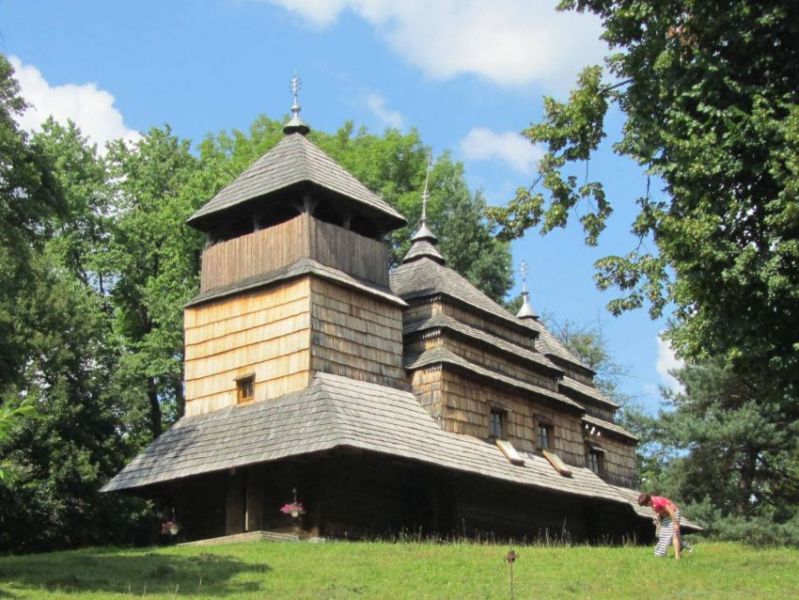
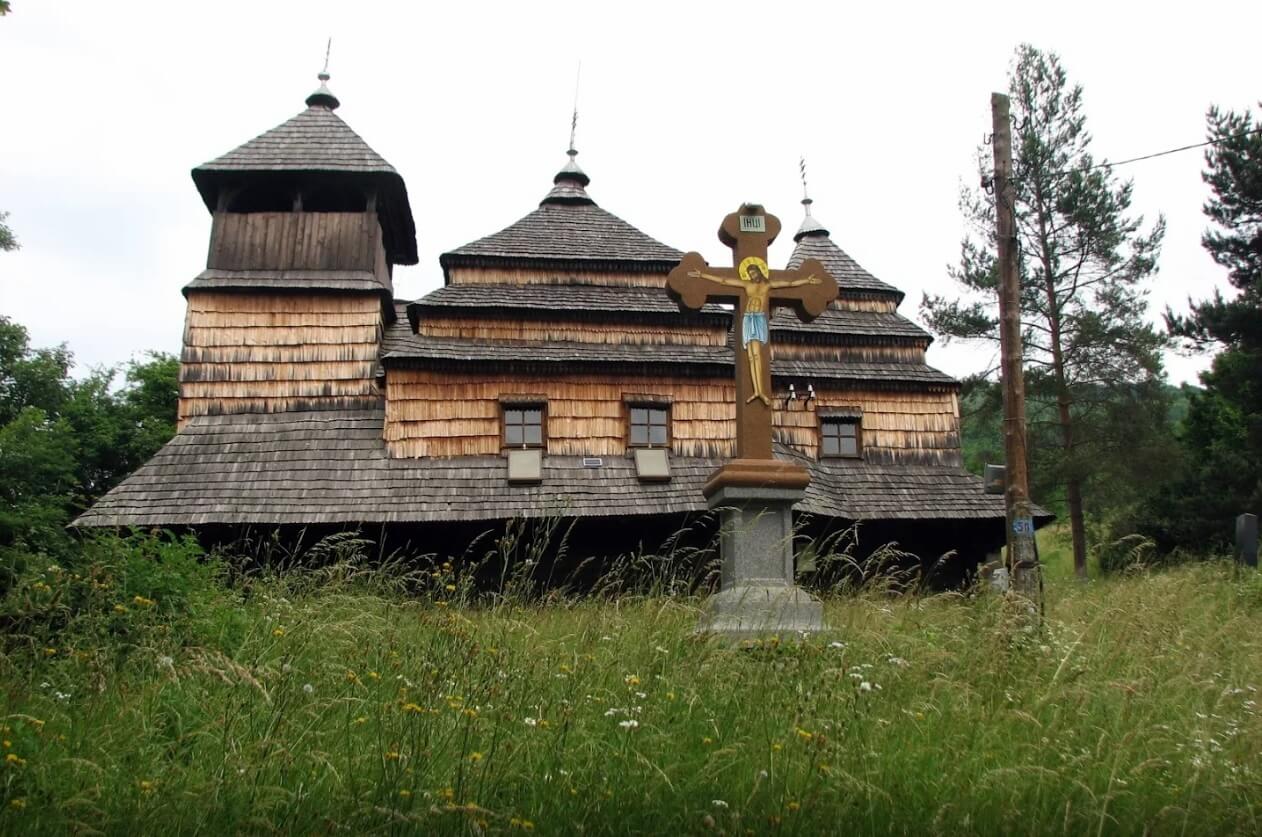
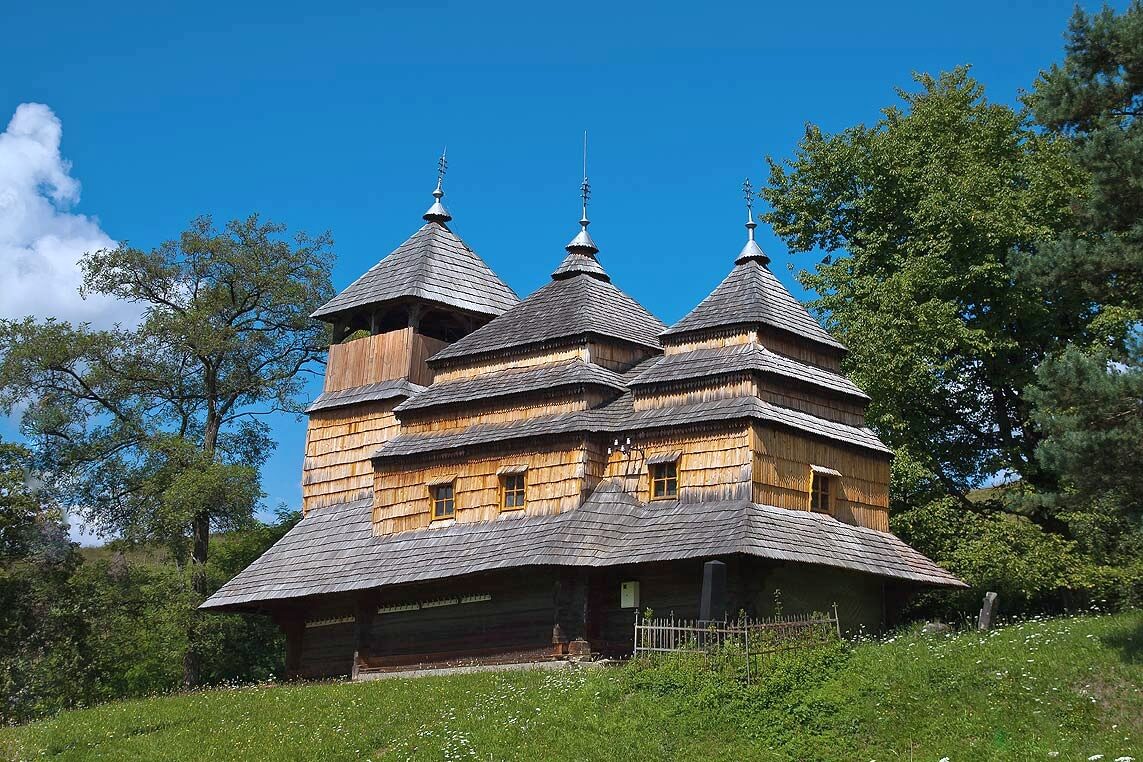
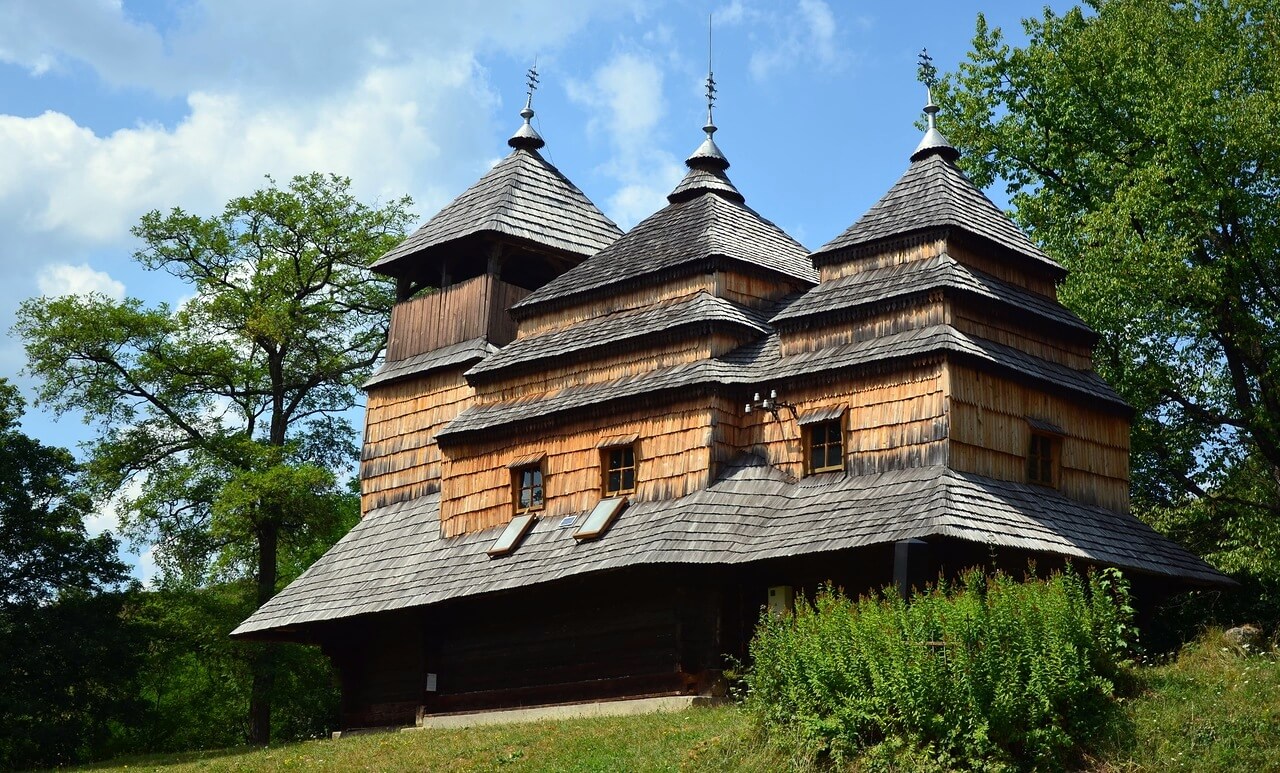
Church of the Intercession of the Holy Virgin - a wooden church located in the village of Kostryna, in the Velykobereznyanskyi district of the Zakarpattia region, a monument of national architectural significance (No. 192).
In the village of Kostryna, on a hill, in an exceptionally beautiful location stands a masterpiece of folk architecture - the wooden Church of the Intercession of the Holy Virgin, which belongs to the outstanding monuments of Ukrainian folk architecture. The Kostryna church is not inferior in beauty to the Uzhok church, but it is 100 years older, and its beauty is somewhat different. The charm of the building lies in the secrets of proportions, in the dimensions of the church, in the lines of its silhouette. From every side, the church is perceived as a perfectly completed artistic work, ideally integrated into the surrounding luxurious landscape. The temple was built without a single nail and modern fittings, and the wooden structure is an authentic hallmark of Velykobereznyanshchyna.
In the center of the village, on a hill, there is an original monument of Boyko wooden architecture - the Church of the Intercession. The church is of great interest as a transitional type from Boyko to Lemko architecture. The latter is characterized by a very peculiar dynamic composition of volumes, gradually increasing from a small altar through a central multi-faceted dome to a high western-type bell tower. In the Kostryna temple, this tendency is still only outlined, and its builders still preserve the form of tented tops of Boyko churches in the bell tower. The strict geometricism of architectural forms, the observation gallery of the bell tower connects it with wooden defensive architecture.
The Church of the Intercession of the Holy Virgin was transported and placed in its current location in 1703 from the village of Syanky in the Lviv region. Above the log structure of the narthex, a frame bell tower was added in 1761. The corner connections are made with simple locks with hidden straight tenons. In plan, all three log structures are close to a square, with the central log being wider than the others. All three volumes of the church are covered with tented roofs with two slopes. Above the narthex, there are galleries. Surrounded by a canopy on the log protrusions. Built from spruce logs. The roofs, canopies, and walls above the eaves are covered with shingles. The wooden carving from the 18th century has been preserved. The monument gravitates towards the Boyko architectural school. However, the addition of the bell tower over the western part, which exceeded the height of the central log, disrupted the balance of architectural masses and gave the building features typical of Lemko architecture.
The length of the church is 15 meters, the width is 7, and the height of the tower from the foundation is 14. As a result of the addition of the frame bell tower, the church acquired a certain dynamism with the increasing forms from east to west, which brought it closer to churches of the Lemko style.
Throughout its history, the village has been fortunate several times. First, in 1703, the community purchased an extraordinarily beautiful church built in 1645 in the village of Syanky in the neighboring Turka district of Lviv region. The wooden temple was transported by oxen from Syanky all night. Folk tradition states that, while choosing a place for the church, the villagers hesitated for a long time and moved the wood from the Kosharka area to the Doroshavitsya area and vice versa until they finally placed the temple on Doroshavitsya. Secondly, the church did not undergo radical reconstructions, and the added tower did not diminish its charm. Thirdly, as early as 1865, the community ordered a plan for a new stone church and selected a plot. Apparently, due to a lack of funds, the stone basilica church was not built for a long time. Finally, they decided to build it on the site of the wooden one and began work in 1914, but World War I began. After the war, the money raised for construction depreciated, and the wooden beauty was saved.
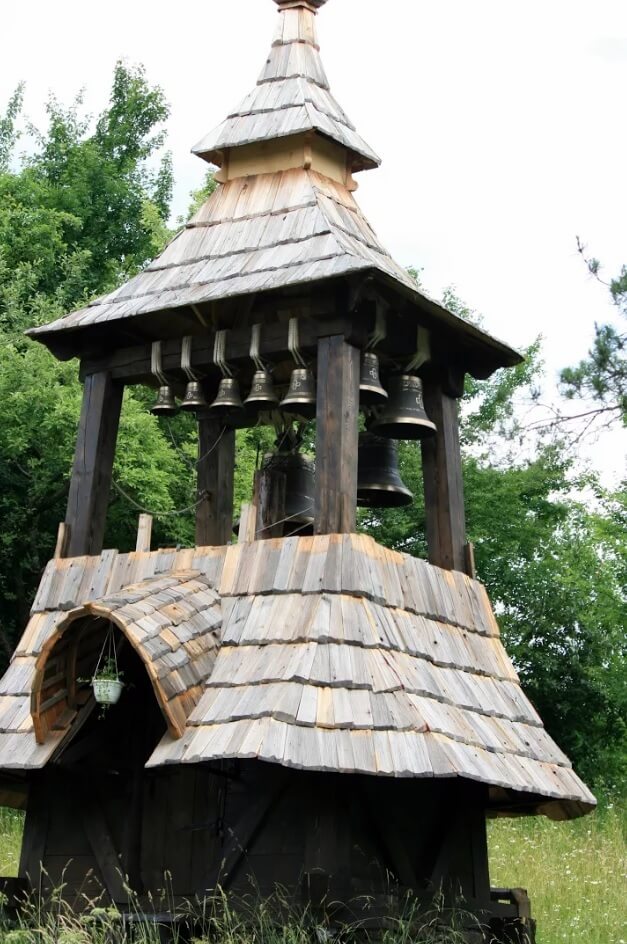
Finally, it was fortunate for the fourth time. From 1891 to 1901, a Greek Catholic priest, Mykhailo Lendiel, served in Kostryna, who during these 10 years very skillfully and in detail wrote a chronicle of the spiritual and economic life of the villages of Kostryna and Sil. Many facts of local history were recorded by the unique Kostryna man, the centenarian Hryhorii Churiy, who lived for 130 years (died in 1897) and, according to the priest, was the Hutsul Nestor-Chronicler. From these records, we learn that the first spruce church in Kostryna was built in 1451, the second was erected in 1602, and the current one is already the third. As in many other villages, the largest bell was confiscated for military needs during the liberation war of the Hungarians led by Lajos Kossuth in 1848-1849. A new batch of bells was made in 1899 by the foundryman Shandor Laszlo in Malyi Geivtsi near Uzhhorod.
Near the church, the graves of priests are visible, among which the zealous and tireless Oleksandr Danylovych (served from 1848 to 1853), who mainly at his own expense built the rectory, planted a fruit orchard, and introduced progressive farming methods; Vasyl Legeza (1855-1893), who developed the parish, Augustyn Hulovych (1874-1884), who founded a beekeeping farm, built stone schools in Kostryna and Sil, and of course, Mykhailo Lendiel (1891-1901), who left a priceless chronicle of the villages of Kostryna and Sil.
The doors leading to the narthex of the church have a frame, the center of which has a sharp outline reminiscent of Gothic shape. The master interestingly resolves the interior of the temple. The low dark narthex, as if in contrast, enhances the spaciousness and brightness of the high open space of the central room, accentuating attention on the iconostasis with its shimmering brilliance of gilding.
The iconostasis dates back to 1645, although Father M. Lendiel also mentions the year 1596. The icons are painted on linden boards, which have darkened from lacquer coating over the centuries, with lacquering noted in 1832 and 1894. A richly decorated Gospel, which was purchased in 1871, and an old Gospel dated 1691.
Currently, the Church of the Holy Intercession belongs to the Orthodox diocese and has been renamed the Kostryna Monastery. The Monastery of the Holy Intercession is considered an architectural monument of Zakarpattia, as it is built entirely of wood. Inside, the iconostases and gilded holy chalices have been preserved. The old bell tower in the attic of the monastery is also impressive. The monastery is mainly cared for by monks and local residents. Iryna Belyo has been taking care of the spiritual monument of her native village for fifty years. During the Soviet era, there were several attempts to destroy the monastery. However, the villagers defended the wooden monument, and fortunately, it survived. The old-timer Iryna Belyo tells the story of how her husband was almost fired from his job for taking on the reconstruction of the church. Now the monastery looks majestic: a foundation has been laid for the temple, locks have been replaced on the doors, and the roof has been varnished. However, the style of the building has not been disrupted at all, but rather harmonizes with spring and nature.
Video
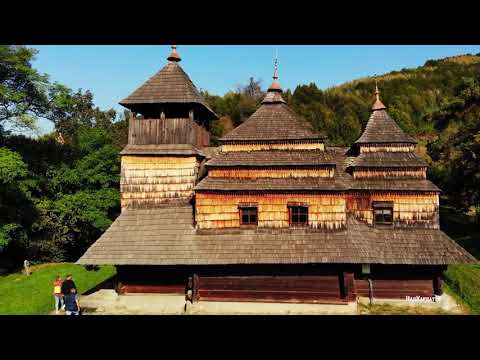 Дерев'яна церква Покрови Пресвятої Богородиці — села Кострина, Великоберезнянського району, ЗакарпатСергій Кузнєв
Location on the map
Comments
Places to stay nearby
All stays HotelMini-Hotel "Verkhovynskyi Dvir" KostrynaKostryna1.7 km from Church of the Intercession of the Holy Virgin, KostrynaSaunaBBQKitchenNearby: Mt Judah Top 5.4 kmMt Yavirnyk 5.6 km12 trails
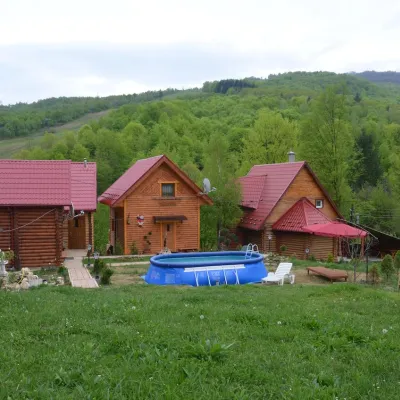 HomesteadPrivate Homestead "Teremok" VyshkaVyshka3.2 km from Church of the Intercession of the Holy Virgin, KostrynaPoolSaunaFireplaceNearby: Mt Krasiia 1.5 kmMt Yavirnyk 8.7 km4 trails
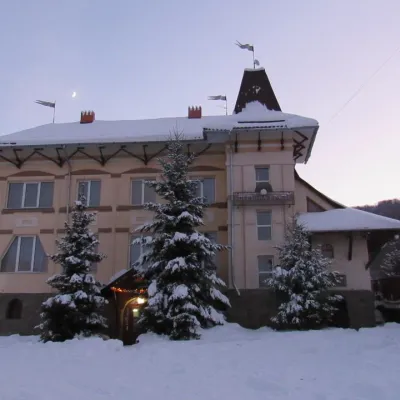 HotelHotel "Perlyna Krasyi" VyshkaVyshka3.8 km from Church of the Intercession of the Holy Virgin, KostrynaSaunaParkingWi‑FiNearby: Mt Krasiia 2.1 kmMt Yavirnyk 9.7 km2 trails
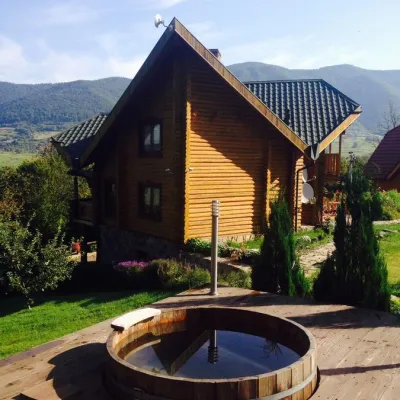 HomesteadHomestead "Ertash" VyshkaVyshka4 km from Church of the Intercession of the Holy Virgin, KostrynaPoolSaunaBreakfastNearby: Mt Krasiia 2.1 kmMt Yavirnyk 9.8 km2 trails
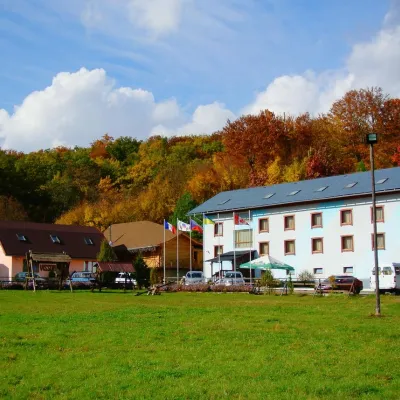 HotelHotel Complex "Klub Visson"Kostryna4.3 km from Church of the Intercession of the Holy Virgin, KostrynaPoolSaunaSPANearby: Mt Judah Top 4.2 kmMt Yavirnyk 5.1 km15 trails
 HomesteadHomestead "U Povara" Vyshka (1 km to the Krasiya ski lift)Vyshka4.6 km from Church of the Intercession of the Holy Virgin, KostrynaSaunaBBQParkingNearby: Mt Krasiia 2.5 km1 trail
Trails nearby
All trails ModerateOne-dayKostryno village Mount KrasiiaElevation profile293–1 016 m9.2 kmascent 759 m≈ 4 h walkingunder 1 km from Church of the Intercession of the Holy Virgin, Kostryna
 HardMulti-dayKostryno village loopvia Mount Yavirnyk, Mount Krasiia +1Elevation profile278–1 033 m26.8 kmascent 1 373 m≈ 9.5 h walkingunder 1 km from Church of the Intercession of the Holy Virgin, Kostryna
 HardMulti-dayKostryno village to Pastilky villagevia Vyshka village, Liuta village +2Elevation profile167–1 477 m79.8 kmascent 2 973 munder 1 km from Church of the Intercession of the Holy Virgin, Kostryna
Nearby attractions
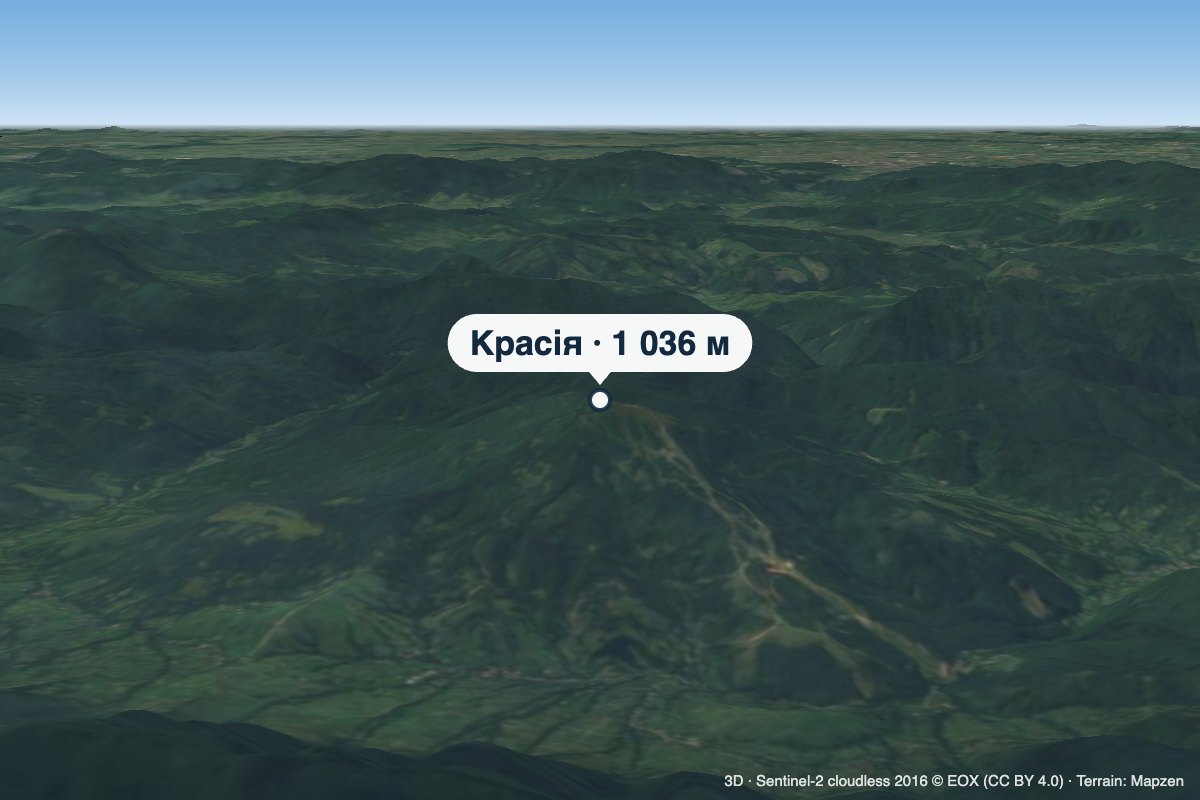 PeakMount KrasiiaVyshkaaltitude 1 036 m4 km from Church of the Intercession of the Holy Virgin, KostrynaKrasiia is a 1,036 m mountain in the Eastern Beskids above the village of Vyshka in the Uzhhorod (formerly Velykyi Bereznyi) district of Zakarpattia Oblast.
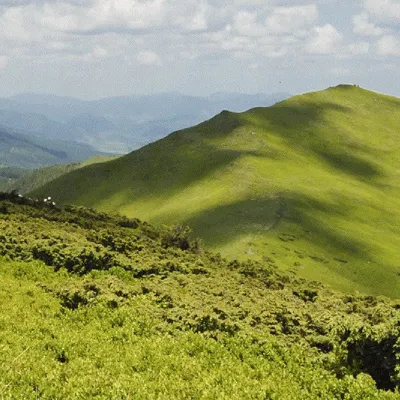 Mountain meadowMount Liutianska HolytsiaLiutaaltitude 1 375 m15 km from Church of the Intercession of the Holy Virgin, Kostryna8 trails to the topLiutianska Holytsia (also known as Lautanska Holytsia and Liutanska Holytsia) is a 1375-meter peak in the Ukrainian Carpathians, located in the northwestern part of...
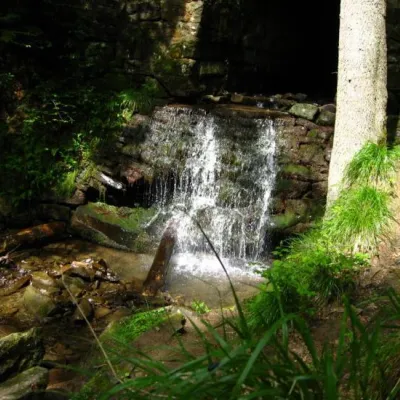 WaterfallLumshory waterfallsLumshory17 km from Church of the Intercession of the Holy Virgin, KostrynaLumshory waterfalls are a group of waterfalls in the Ukrainian Carpathians, a hydrological natural monument of local importance (called "Waterfall on the Turytsia...
Craft nearby
All craft places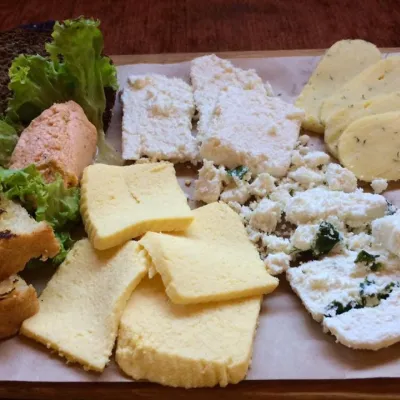 Eco farmsCsiga-Biga “Merry Stable” Farm, Velykyi BereznyiVelykyi Bereznyi14 km from Church of the Intercession of the Holy Virgin, KostrynaVesela Stainia Csiga-Biga (“The Merry Stable”) is a small family farm in the town of Velykyi Bereznyi in the Uzh valley.
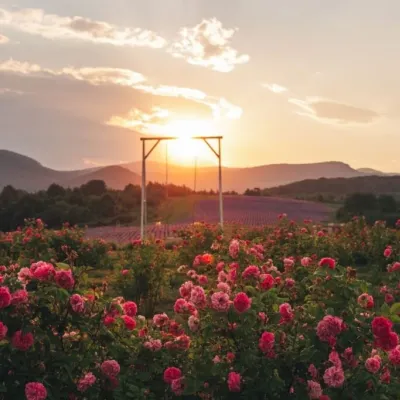 Eco farmsLavandova Hora lavender farm, PerechynPerechyn25 km from Church of the Intercession of the Holy Virgin, KostrynaLavandova Hora (“Lavender Hill”) is a family farm on the edge of Perechyn that in just a few years has turned an ordinary hill above the town into one of the most...
 Honey & meaderiesTurianskyi Med Apiary, Turia RemetaTuri Remety25 km from Church of the Intercession of the Holy Virgin, KostrynaTurianskyi Med («Turia Honey») is the family apiary of Myroslava and Viktor Minkovych in Turia Remeta, a picturesque village in the Turia river valley near Perechyn.
 Craft producersKarpaty Nasolodzhuisia juices & jams, PerechynPerechyn26 km from Church of the Intercession of the Holy Virgin, Kostryna“Karpaty Nasolodzhuisia” (Carpathians, Enjoy) is a brand of the company Dzherela Karpat from Perechyn, a small town in the Uzh valley.
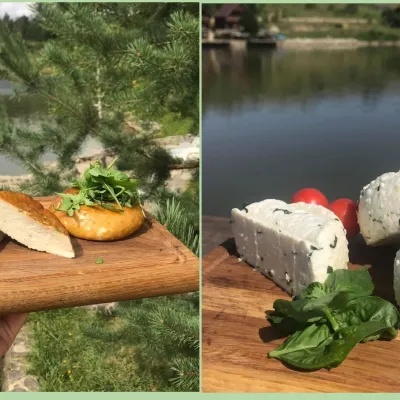 Cheese dairies & pasturesTurianskyi Dvir Estate Cheese Dairy, Turia PolianaTurya Polyana32 km from Church of the Intercession of the Holy Virgin, KostrynaTurianskyi Dvir is a private country estate on the shore of a mountain lake in the village of Turia Poliana in the Perechyn area, about 50 kilometres from Uzhhorod.
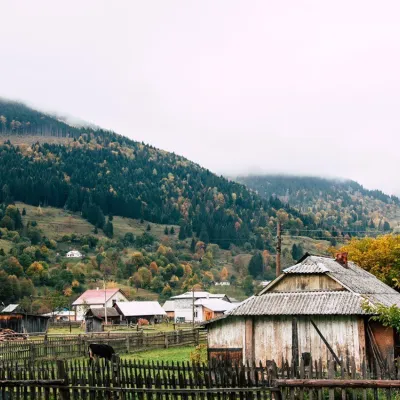 Cheese dairies & pasturesBilasovytsi Cheese Dairy, BilasovytsiaBilasovytsia35 km from Church of the Intercession of the Holy Virgin, KostrynaBilasovytsi Cheese Dairy is a small family dairy in the Transcarpathian village of Bilasovytsia, set at about 600 metres above sea level at the foot of Mount Pikui.
