Kasova Hora, Bovshiv
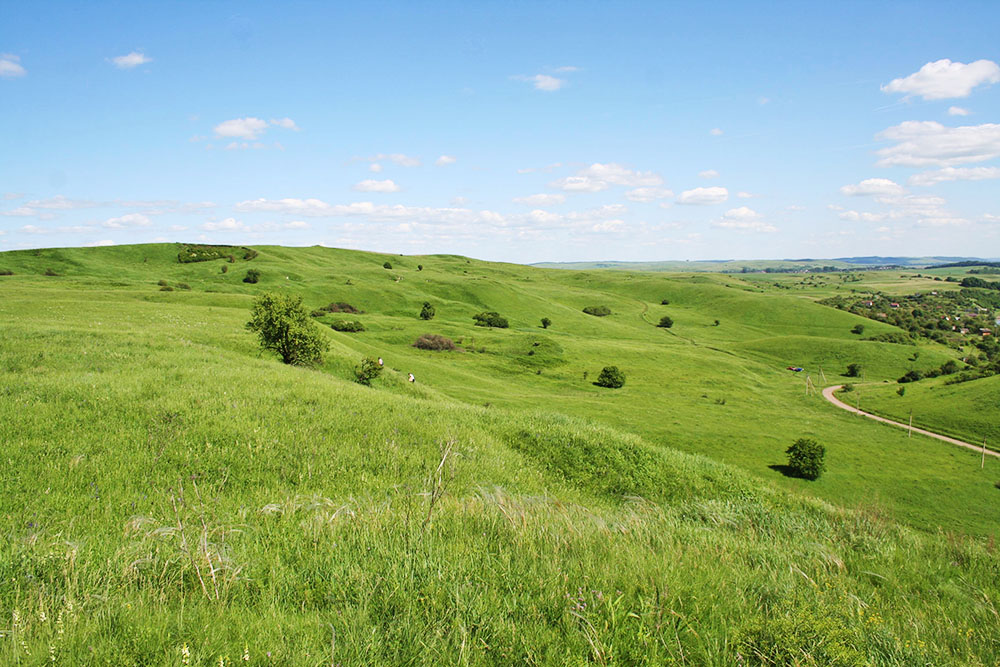
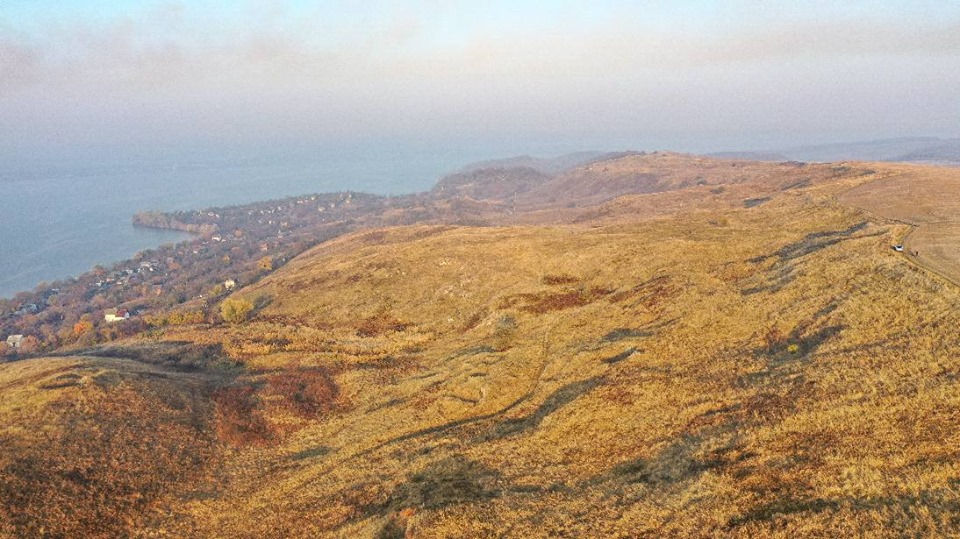
Located to the northwest of the village of Bovshiv on several hills (maximum height – 340 m), which adjoin the Burshtyn Reservoir in the Halych district of Ivano-Frankivsk region. The area is 65 hectares. Scientists claim that some species of plants from the late Tertiary period have survived here. More than 300 species of plants grow in the reserve area. Folk tradition has preserved a number of legends and tales about Kasova Hora, shrouded in the mysteries of past centuries. According to one of them, Prince Danylo of Halych kept money, gold, and jewels in the natural hideouts of the mountain. A more plausible version suggests that a Bovshiv nobleman hid his treasury in the labyrinths of karst caves. However, the entrance to the cave was blocked, and as a result, the valuables and money remained inside the mountain forever, thus it received its name – Kasova.
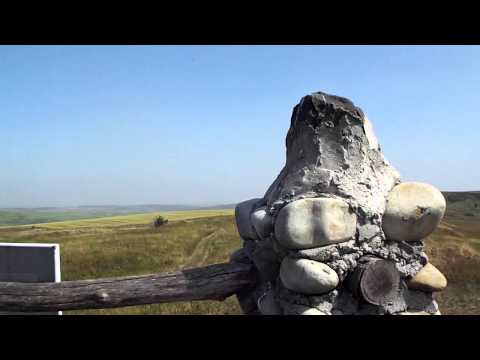
Some researchers believed that an ancient Russian monastery stood on the plateau located on one of the slopes of the mountain. Some researchers believed that an ancient Russian monastery stood on the plateau located on one of the slopes of the mountain. The assumption of its existence is based on a publication in the journal "Slovo" (1879.- 4.3-6), as well as on topographical and toponymic studies by local historians L. Chachkovsky and Ya. Khmilevsky. In their book "Knyazhy Halych" they wrote: "On Kasova Hora near Bolshiv, there stood an ancient monastery of the Order of Saint Basil. It was built from the side of the forest, where the ridge of the mountain is flatter. On the semicircular plateau, there rose a small hill. According to the testimonies of the residents of Boyashiv, a church once stood on this hill." Stairs led to the monastery, the remnants of which were discovered in the 1930s. About 30 years ago, a teacher from Bovshiv, I. Kalytchuk, wrote about Kasova Hora: "Even now, giant stones and rocks that form caves and shelters can be found here. Often, one can come across places where a strange emptiness is felt, and even under careful steps, the ground hums, as if warning those who visit here not to destroy its riches. Both the caves and this unusual feeling are like the first exhibits of nature, and they cannot all be listed."
Since ancient times, the entire mountain range of Kasova Hora has been strewn with rare stones with a lace of thin veins, which are called alabaster. Even in the 1930s, one of the owners of Burshtyn drew attention to it and initiated alabaster production. However, mass processing of this stone began only a hundred years later. In addition to a few private craftsmen, artistic products made of alabaster were also produced by a local cooperative that had its own workshop. Alabaster was used to make candlesticks, ashtrays, vases, inkpots, powder boxes, and sculptures of animals, fish, and birds. The products were sold partly on-site and partly exported abroad. Alabaster items gained great popularity in the mid-1930s. Many peasants engaged in the sale and delivery of raw materials to famous sculptors. This industry greatly depleted the natural reserves of the mineral. During World War I, trenches were dug on Kasova Hora by the Russians. Fierce battles took place here, during which the mountain was densely covered with bullet and shell casings.
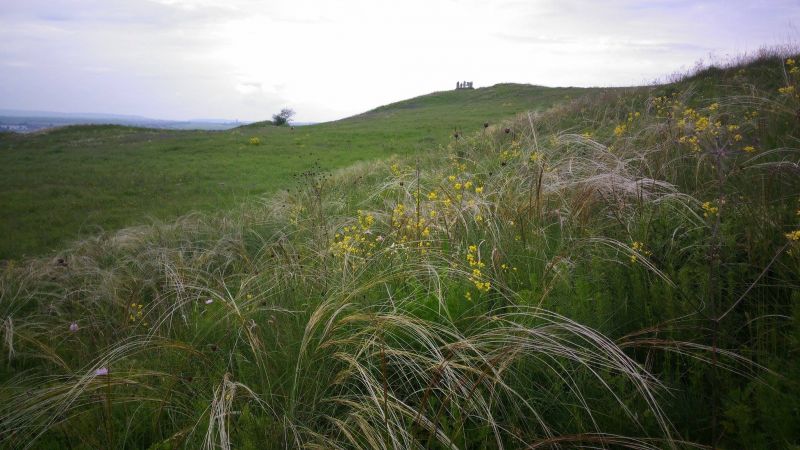
The greatest value of Kasova Hora is its vegetation. It has long attracted the attention of doctors, botanists, and geologists. The relict herbaceous cover of this area of Opillia has been the subject of research by nearly fifty expeditions. Scientists claim that some species of plants from the late Tertiary period have survived here. Similar plants can only be found in the Askania-Nova Reserve and the Streltsky Steppe of the Kursk region.
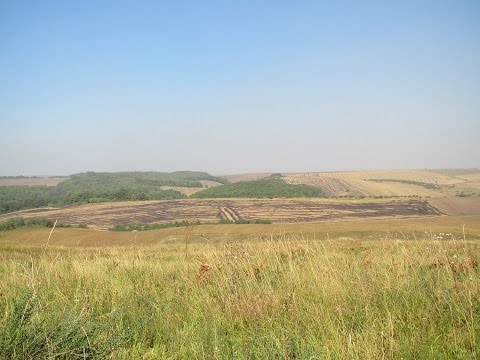
According to the stories of the old-timers from the surrounding villages, the rare vegetation has survived in this area because the lands of Kasova Hora were not used by peasants for agricultural crops for some mystical reasons in past centuries. Perhaps the noise of underground waters frightened the peasants. Several springs with clean, cold water indicate their presence in the thickness of the mountain. It is not excluded that it is precisely due to the underground rivers that the vegetation of ancient geological epochs has been preserved. More than 300 species of plants grow on Kasova Hora. Among them are rare relict species such as Danish astragalus, common asparagus, Besser's oatgrass, low sedge, Zapalovych buttercup, spring adonis, black sleepwort, large sleepwort, Hungarian iris, red clover, Ternopil cornflower, dressed thyme, white anemone, long-leaved sugaynik, low almond, and three species of wavering feather grass. About ten species of plants are listed in the Red Book of Ukraine. In the forest that stretches between the mountain and the sea, cherries, dogwood, hawthorn, viburnum, blackthorn, and rosehip grow. In summer and autumn, one can gather birch mushrooms, aspen mushrooms, and honey mushrooms, while the meadows are home to chanterelles and champignons.
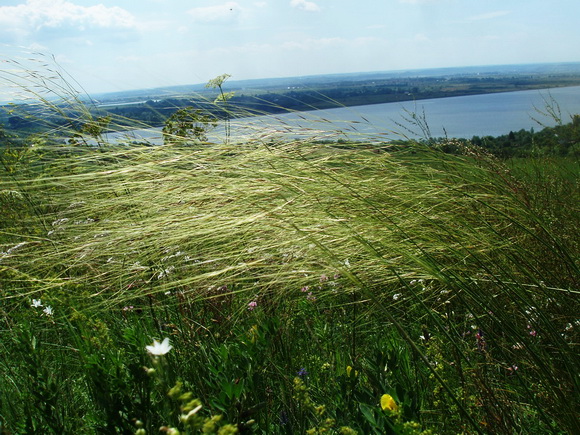
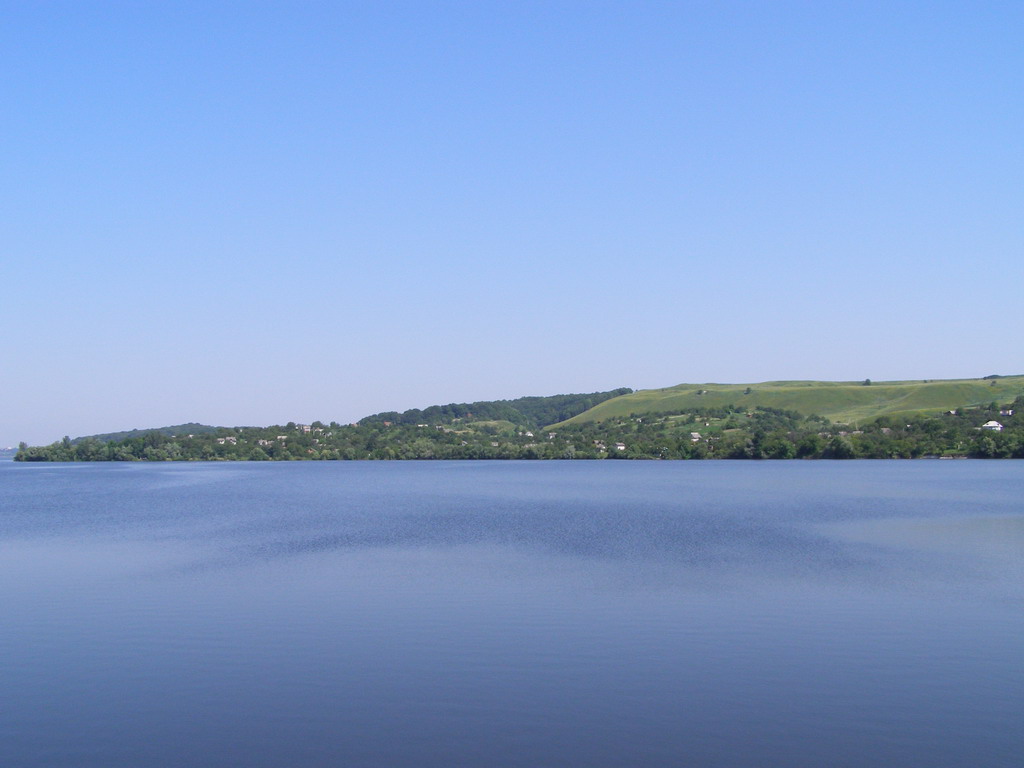
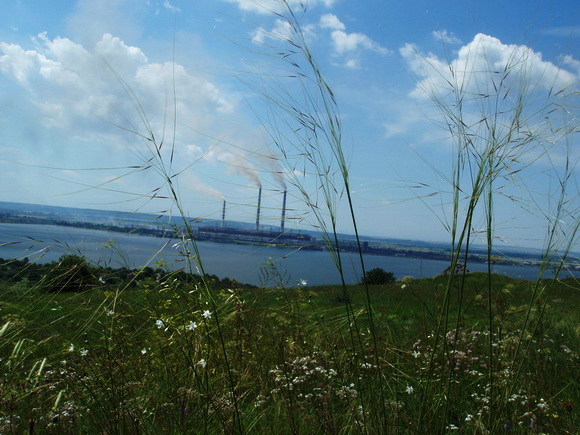
From the top of Kasova Hora, a beautiful landscape opens up - the Dniester River, Halych, Bilshivtsi, surrounding villages, and the Burshtyn Reservoir can be seen.
On May 15, 1936, Professor Vsevolod Levytsky – the head of the Scientific Society named after Taras Shevchenko in Lviv – addressed a letter to the Metropolitan of the Ukrainian Greek Catholic Church Andrey Sheptytsky with a request to create the "Kasova Hora" reserve on the church lands. The Metropolitan supported the scientists' aspirations, agreeing to the reservation.
The decision to reserve "Kasova Hora" was supported on August 18, 1936, by the resolution of the nature conservation conference at Yasna Vilya in Pidlyutyy in Stanislavivshchyna, organized by the Scientific Society named after Taras Shevchenko and the Ukrainian Greek Catholic Church. At that time, the creation of two reserves "Kasova Hora" in the vicinity of the village of Bovshiv and "Chortova Hora" near Rohatyn was discussed. That same year, scientists from the Scientific Society named after Taras Shevchenko conducted research on Chortova Hora, and it was reserved, while the study and reservation of Kasova Hora were planned to be completed in 1939. However, these plans were not destined to be realized – the red occupiers invaded and seized Eastern Galicia, implementing a communist regime, terrorizing the population, arresting and shooting scientists and clergy. This was the beginning of World War II…
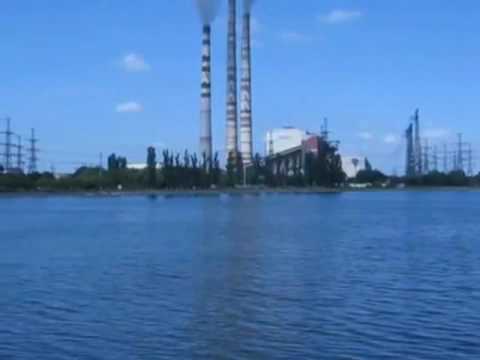
With the establishment of another totalitarian regime in 1944, the reservation had to be forgotten for a long 35 years… The Communist Party and its leaders took a course for ruthless exploitation of natural resources. Kasova Hora fell victim to their insatiable appetite – its larger southeastern part was plowed and lost forever; in 1965, a dam was built at its foot, which blocked the Hnyla Lypa River and an industrial monster – the Burshtyn Power Plant was erected. The lower part of "Kasova Hora" was flooded by the Burshtyn Reservoir. But this was not enough, and Soviet officials began a dacha offensive on this natural wonder, under their auspices, active afforestation of the slopes of the "useless mountain" also took place… In addition, what remained unspoiled was allocated for pastures and hayfields… But the idea of reserving Kasova Hora lingered in the minds of many scientists, including Academician Yuriy Shelyah-Sosonk, who made great efforts to study and reserve "Kasova Hora". This significant event occurred in 1975, when a nature monument of republican significance was created, and a small area of the mountain – only 7 hectares of the western Podilian feather grass steppe was reserved… Researchers tried for a long time to expand the boundaries of the reserve, but they did not succeed until 1988, when another 58 hectares were added to the existing reserve area (a total of 65 hectares – ed.). In 2004, Kasova Hora became part of the Halych National Park. In 2011, Bovshiv Village Council, to whose lands Kasova Hora belongs, agreed to add another 100 hectares to the reserve, so soon the entire mountain will have reserve status.
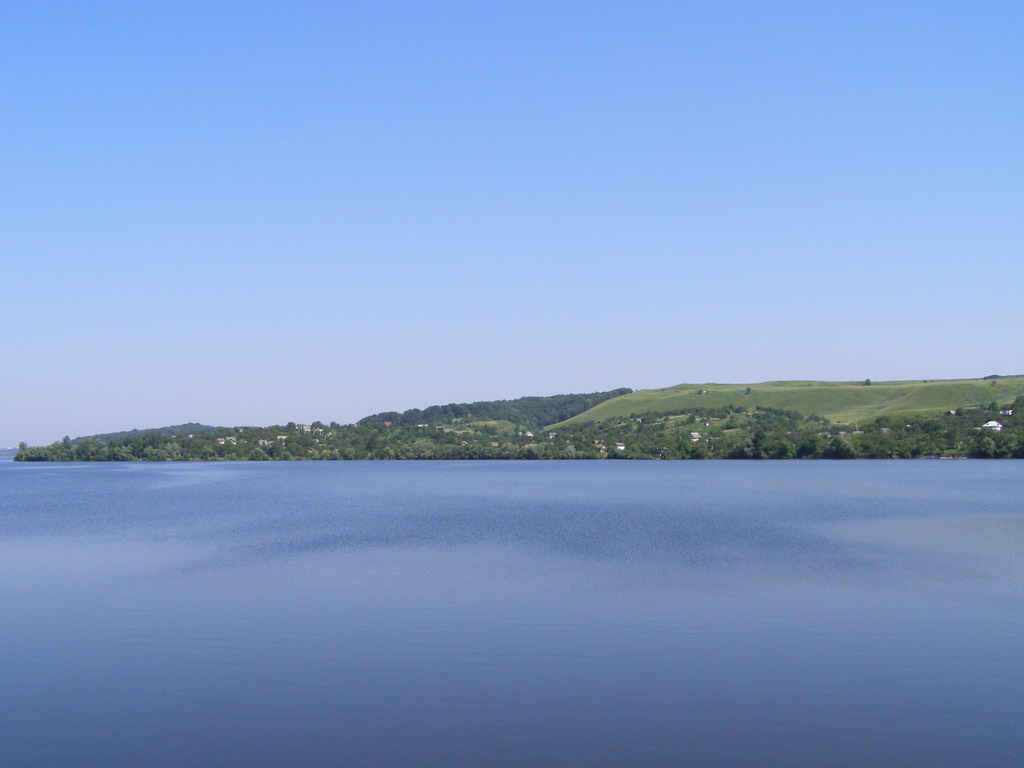
"The extraordinary value of Kasova Hora – says Ms. Nadiya Shumska, candidate of biological sciences, an employee of the Halych National Park – lies in its size. After all, this is the largest area of Tertiary, pre-glacial, relict Opilian steppes that have survived to this day in Galicia…" Indeed, the total area of Kasova Hora is about 160 hectares. It stretches along the left bank of the Hnyla Lypa and the Burshtyn Reservoir (the latter, since 2011, has received the status of a Ramsar site – ed.) for 4 kilometers, and at its widest point reaches 1200 m. It rises to 340 meters above sea level and 100 meters above the valley of the Hnyla Lypa.
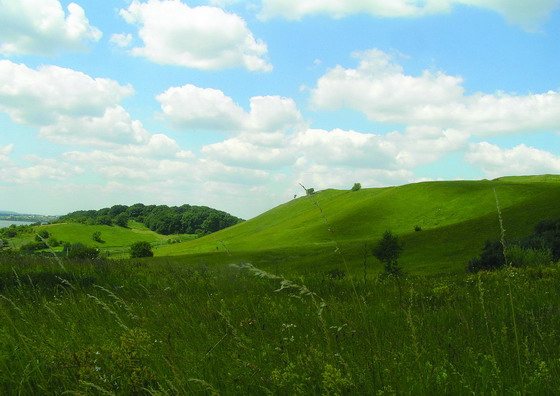
Kasova Hora is just a system of rocky hills, which in geological terms is the western edge of the Podilian Upland. These uniform hills stretch from north to south for more than 200 kilometers from Lviv to Snyatyn, sometimes forming fantastic karst forms of relief, including caves and sinkholes. And along the edge of Podillia, small areas of steppes are scattered, the largest of which is Kasova Hora, and this is where its uniqueness lies. "The conservation importance of this object – continues Ms. Nadiya Shumska – is very hard to overestimate, as the largest populations of disappearing steppe plants have survived here in the region, for example, four species of feather grass, three species of sleepwort, adonis, about a dozen orchids, among which are extremely valuable the burnt lady's slipper (Neotinea ustulata (L.) R.M. Bateman, Pridgeon et M.W. Chase) and the lady's slipper (Cypripedium calceolus L.) and many others – listed in the Red Book of Ukraine. In addition, the plant cover of Kasova Hora contains very rare plant communities of steppes, in particular, of feather grass (Stipa cpillatae) and low sedge (Cariceta humilis), which are listed in the Green Book of Ukraine."
In total, more than 300 species of vascular plants grow on Kasova Hora – this is about 10% of all plants in Ukraine. The southwestern slopes of the reserve are covered with drought-resistant steppe vegetation, where feather grasses prevail: hairy (Stipa capillata L.), the most beautiful (Stipa majalis Klokov), feathery (Stipa pennata L.), narrow-leaved (Stipa tirsa Steven), sage (Salvia L.), Austrian (Chamaecytisus austriacus (L.) Link) Lindeman (Chamaecytisus lindemannii (V. Krecz.) Klaskova), Block (Chamaecytisus blockianus (Pawl.) Klaskova), Podolian (Chamaecytisus podolicus (Blocki) Klaskova) and Russian (Chamaecytisus ruthenica (Fisch. ex Woloszcz.) Klaskova), stemless Hungarian irises (Iris aphylla subsp. hungarica (Waldst. et Kit.) Hegi), forest anemones (Anemone sylvestris L.), steppe asters (Aster amellus L.), and sword-leaved inula (Inula salicina L.), the Tatar catran (Crambe tataria Sebeók) – the only tumbleweed in Galicia; and many other plants.
The northeastern slopes of Kasova Hora are more humid, and surprisingly, some mountain species feel good here, for example, the narcissus-flowered anemone (Anemone narcissiflora L), European or tallest trollius (Trollius altissimus Crantz), white lobelia chemeritsa (Veratrum album subsp. lobelianum (Bernh.) Arcang.), Phyteuma bells (Phyteuma L.), and Siberian irises (Iris sibirica L.) and others.
Kasova Hora has perhaps the largest population of the rare Carlina cirsioides Klokov – a western Podolian endemic, which, however, is also known from one of the relict habitats in Poland. This population is spread over several hills that, unfortunately, are currently not included in the protected area.
Kasova Hora is a unique place in Galicia, as it is home to the westernmost habitat of the rare Amanita solitaria (Bull.) Fr., which is protected by law. In Ukraine, this mushroom was known only from its center and Crimea!
Among the animals of Kasova Hora, a number of rare species are distinguished, which are listed in the Red Book of Ukraine and international conservation lists. In particular, the westernmost population of the steppe locust (Saga pedo (Pallas, 1771) – a large wingless predatory grasshopper has survived here in Ukraine. In addition to the steppe locust, the rare Bombus pomorum Panzer, 1805 is numerous here, while the "red book" Bombus muscorum (Linnaeus, 1758) is occasionally found. The Podalirian swallowtail (Iphiclides podalirius (Linnaeus, 1758) and the Swallowtail (Papilio machaon Linnaeus, 1758), and the Dispar Lycaena (Lycaena dispar (Haworth, 1802) are also common here. Insects on Kasova Hora are represented by a whole complex of steppe species.
One of the most interesting species of vertebrates on Kasova Hora is the Podolian mole (Spalax zemni (Erxleben, 1777), which was repeatedly found here during the Polish rule in Galicia, however, unfortunately, there are no modern findings. However, scientists from the Halych National Park do not lose hope of discovering it. The biggest problem is that the mole leads a hidden underground lifestyle, revealing itself only by the curtains of finely crushed soil on the surface. Such curtains are very often found on Kasova Hora, but the animals themselves have not been found.
In general, Kasova Hora is an extremely valuable natural complex that requires comprehensive protection, which is provided by the Halych National Park.
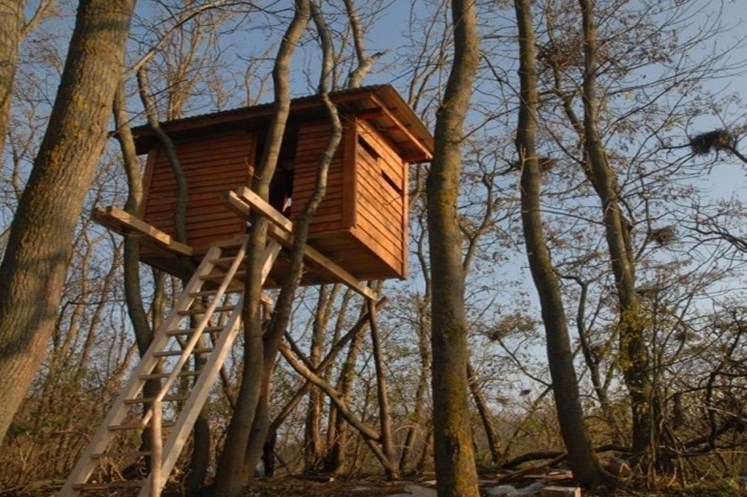
To promote ecotourism and improve its development, on November 29, 2017, a new eco-educational route "Along the Reservoir – to Kasova Hora" was opened in the Halych National Nature Park (Ornithological route to Kasova Hora). As reported by the NGO "Eko – Halych", this new eco-educational and tourist attraction will allow local residents and guests of the region to better understand the beauty and wealth of Opillia's nature. The eco-educational route begins near the parking lot of the Burshtyn TPP, on the shore of the reservoir, where a significant number of waterfowl of various species gather during migration and wintering. An observation platform with information stands and benches for short-term rest has been equipped here. Tourists can use optical devices.
The next tourist stop is an observation tower near the colony of gray herons in the forest massif of the park. The journey ends at the top of Kasova Hora, where an observation platform has also been built and information stands have been installed.
To add a comment you can: login or register.
Which trails pass by Kasova Hora, Bovshiv?
We suggest these hiking trails through or near Kasova Hora, Bovshiv: Pasichna village, via Maniava village, Maniava Waterfall and Mount Velyka Syvulia to Bystrytsia village, Maniava village - Monastyretska polonyna, Maniava village – Maniava Waterfall, Huta village – Pasichna village, Pasichna village, via Mount Syniachka to Yaremche, Pasichna village – Pereslop Pass
Photos

Video
Map
The nearest routes
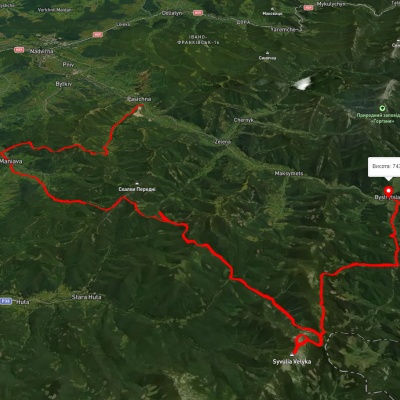
Three days or more
Pasichna village, via Maniava village, Maniava Waterfall and Mount Velyka Syvulia to Bystrytsia village
Length: 69.7км
Total ascent: 3340м
Total descent: 3114м
Min. elevation: 497м
Max. elevation: 1835м
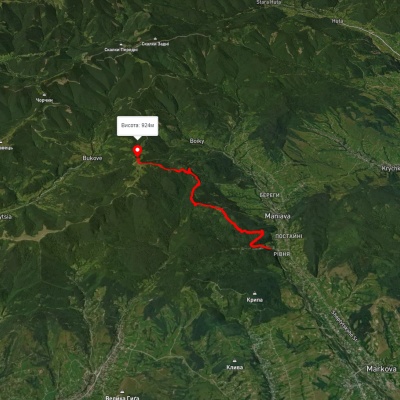
One-day routes
Maniava village - Monastyretska polonyna
Length: 7.3км
Total ascent: 776м
Total descent: 367м
Min. elevation: 514м
Max. elevation: 940м
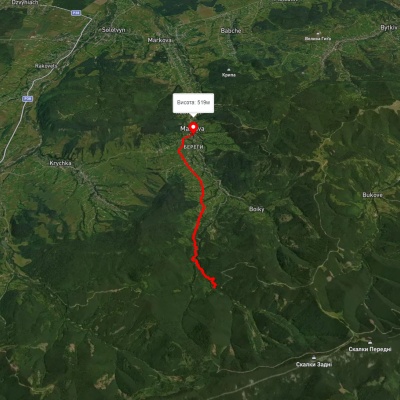
One-day routes
Maniava village – Maniava Waterfall
Length: 7км
Total ascent: 170м
Total descent: 392м
Min. elevation: 515м
Max. elevation: 740м
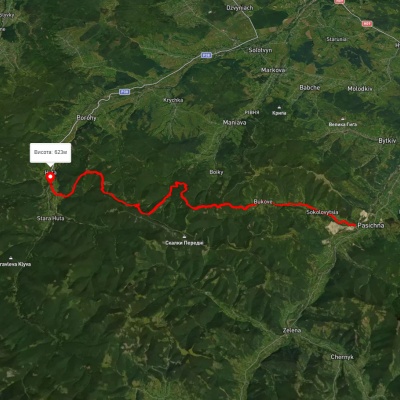
Three days or more
Huta village – Pasichna village
Length: 26.4км
Total ascent: 2293м
Total descent: 2190м
Min. elevation: 524м
Max. elevation: 1217м
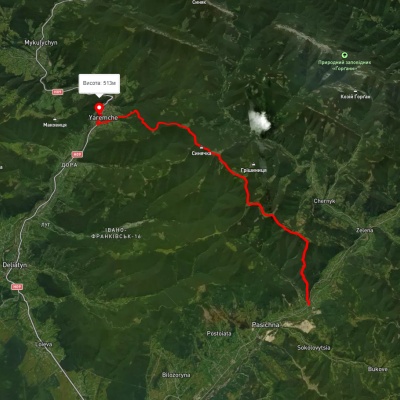
Three days or more
Pasichna village, via Mount Syniachka to Yaremche
Length: 26.7км
Total ascent: 1206м
Total descent: 1234м
Min. elevation: 514м
Max. elevation: 1404м
