Josaphat Kobrynsky National Museum of Folk Art of Hutsulshchyna and Pokuttya


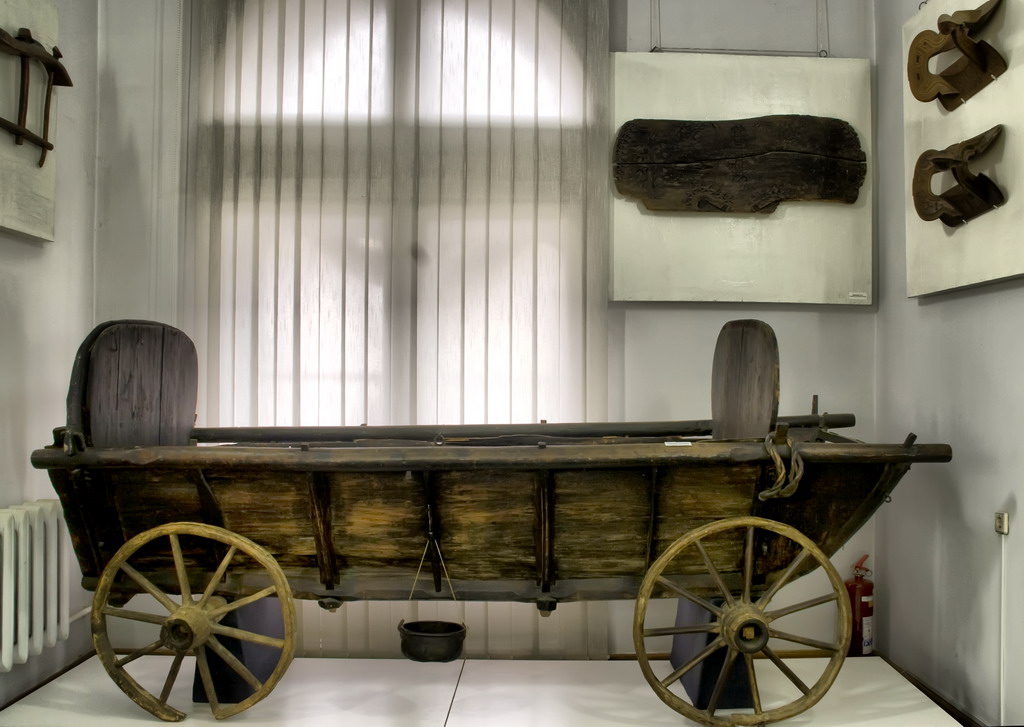

The Yosafat Kobrynsky National Museum of Folk Art of Hutsulshchyna and Pokuttya was founded in 1926. It is located in the central part of Kolomyia, in the former People's House, built at the expense of the Ukrainian public. Its collections include more than 50,000 items and represent all types of traditional folk art of Hutsuls and Pokutians, from the seventeenth century to the present day. However, some exhibits date back to the fourth millennium BC and represent the agricultural culture known in archaeological and historical science as "Trypillian". The authors of these highly artistic works were the Hutsuls, who inhabited the highlands of the Ukrainian Carpathians in Ivano-Frankivsk, Zakarpattia, and Chernivtsi regions, as well as the Pokutians, whose territory is located between the Prut, Dniester, and Cheremosh rivers.
The creation and formation of the museum's collections was carried out in rather difficult conditions of historical confrontation, when the Galician lands were still owned by the imperial family of the Austrian Habsburgs, and the opening of its contents occurred in the midst of the original oppression and discontent on the part of the Polish-Lithuanian Commonwealth (1935). However, political obstacles could not hinder the process of self-expression of the Ukrainian people of Galicia and the restoration of their status in European equality. Thanks to public figures, in particular Josaphat and Volodymyr Kobrynsky, progress was made in the development of museums in Galicia, which later became a national phenomenon. Thus, the Union of Ukrainian Museums of the Commonwealth was formed.
Since that time, the united Ukrainian museums have been conducting educational work among the public, organizing and holding scientific conferences and professional congresses, defining the main directions and goals of their activities. This activity of the Ukrainian museum and its employees irritated the Polish and later Soviet authorities. The Poles closed this Ukrainian institution several times, and Soviet ideologues continuously conducted various "inspections" looking for reasons to destroy historical monuments, while harassing and persecuting museum workers who, in their opinion, were potential "Ukrainian bourgeois nationalists." Thus, according to the resolution of the Council of People's Commissars of the Ukrainian SSR No. 268 of 27.02.1945, the museum was transferred to the system of the Committee for Arts under the Council of People's Commissars of the Ukrainian SSR and was named the State Museum of Folk Art of the Hutsul Region.
In the same year, having further strengthened their rights, the Soviet authorities officially confiscated the sfragist collection (about 500 rare seals and stamps from the national liberation struggle of 1918-1919), a unique library collection (10,000 rare old books), as well as a collection of weapons and other historical documents as "non-core and politically harmful exhibits." However, despite numerous obstacles, the efforts of museum staff and the director of the institution, Volodymyr Kobrynsky, managed to save many exhibits. Today , they are all presented in 18 halls of the museum's exposition with a total area of about 1 thousand square meters and are grouped by types of folk art based on historical, chronological, and monographic principles. These include such types of folk art as artistic woodworking (carving, inlay, burning), artistic metal and leather processing, pottery, decorative weaving, carpet weaving, embroidery, and clothing. This principle of exhibiting makes it possible to trace the stages of development, stylistic artistic features of folk art, and to see the search for new principles in the interpretation of tradition. The museum's exhibition activities play an important role in the study of these issues.
The museum's exhibition halls are arranged in an amphiladic fashion and cover a total area of over 200 square meters. 8 to 12 exhibitions are held here annually, two of which traditionally reveal the museum's stock collections, which are not available to regular visitors due to limited exhibition space. This methodology of exhibition activity makes it possible to open unique museum collections to the general public and to acquaint it with contemporary folk and professional art of Ukraine and abroad.
Since 2000, the museum has had a permanent exhibition of sacred art, featuring works of iconography and folk images. Their harmonious complement is wooden sacred plastic. In 2002, the memorial room of the public and political figure, writer Andriy Tchaikovsky, whose political and literary heritage was banned in Soviet times, was recreated in the museum's exposition.
In 2006, the institution received its current name, the Yosafat Kobrynsky National Museum of Folk Art of Hutsulshchyna and Pokuttia. In late 2006, the museum opened a department of traditional Carpathian furniture. And since 2008, visitors have been able to get acquainted with the artistic heritage of Ukrainian painters. The museum's structure includes three departments that operate as separate museums. Since 1970, the KosivMuseum of Hutsul Folk Art and Life has been a part of the museum, founded on the basis of the private collection of the talented artist, sculptor, art historian, and ethnographer Yevhen Sahaidachnyi.
The life-giving power of the pysanka, its unique beauty, richness of ornaments, and finally, the customs and rituals associated with it, formed the basis for the construction of the exposition of the world's only museum of pysankas, which was opened for the first time in the fall of 1987 in the Church of the Annunciation, a sixteenth-century architectural monument. 13 years later, the museum received its own premises. The architectural structure is made in the form of a pysanka egg (13 meters high) as an original and peculiar advertisement for the museum. Today, the museum's collection includes more than 12 thousand pieces. The exhibition features Easter eggs from all regions of Ukraine, as well as Poland, the Czech Republic, Slovakia, Romania, Belarus, France, Canada, the United States, Pakistan, India, Sri Lanka, China, Egypt, and Algeria.
In January 2007, the Yaremche Museum of Ethnography and Ecology of the Carpathian Region (formerly the Museum of Partisan Glory and Liberation Movement) was added to the base museum in Kolomyia. An important part of the museum's work is the organization of festivals, seminars, conferences, and roundtables that raise issues related to the development of folk traditions in accordance with the requirements of the times. Museums are concerned with issues related to the state of contemporary professional art, its tasks and popularization. Therefore, the museum collections are systematically replenished with the best examples of works of fine art.
The museum has restoration workshops that allow it to carry out conservation and restoration work on its own. Important structural support units include the museum library (over 10,000 books), archive, video and audio libraries. Their services are used not only by museum scholars, but also by students and teachers of higher education institutions, for whom the museum serves as a powerful scientific and artistic base.
The Museum is visited by guests from both Ukraine and abroad, whose geography is expanding every year. Their number is 200-250 thousand annually. An important part of the museum's work, in addition to research and education, is museum publishing and popularization work with the media, as well as the creation of films on topics such as folk art, folk craftsmen, rituals, history of the region, etc. Today, as in the beginning of its creation, the museum expands its "usual" functions of a preservation institution, becoming an open, multifunctional center of culture, science, education and upbringing. The organizational and functional form is changing from a repository of ethnic and universal values and rarities to a kind of complex model of the spiritual and material life of the family and nation.
All the museum's activities are dominated by the assertion of the importance of preserving traditional folk culture as part of the world heritage of mankind, which is a powerful means of uniting different peoples and cultures, among which the traditional folk art of the Hutsul and Pokuttya regions occupies its own and interesting place.
Permanent exhibitions of the Kolomyia Museum of Folk Art: Sacred Art, Hutsul Clothing, Hutsul Furniture, Interior of a Hutsul House, Tapestries by Mykhailo Bilas, Memorial Room of Andriy Tchaikovsky, a Ukrainian public figure and writer.
The National Museum of Hutsul and Pokuttya Folk Art in Kolomyia can be found at 25 Teatralna Street. Opening hours: daily from 10:00 to 18:00 (except Monday). The drama theater and the Cathedral of the Transfiguration of the Lord are located near the museum.
(Director General of the museum Yaroslava Tkachuk)
Ticket prices for the exhibition: for adults: 30 UAH, for pupils, students, pensioners: 15 UAH.
Tickets for the exhibition: for adults: 5 UAH, for pupils, students, pensioners: 3 UAH. Photography in the museum lobby is free, photography in the exhibition: 20 UAH, video shooting: 50 UAH. Professional photography (up to 1 hour): 200 UAH, professional video shooting (up to 1 hour): 500 UAH. Flash photography is strictly prohibited!
Excursion service
- I. Sightseeing tour: for adults: 100 UAH, for pupils, students, pensioners: 60 UAH, family (up to 10 people): 50 UAH, individual: 80 UAH.
- II. Thematic tour: for adults: 120 UAH, for pupils, students, pensioners: 70 UAH, for children of preschool and primary school age: 50 UAH.
- individual: 80 UAH.
- III. Sightseeing tour in a foreign language: for all categories of visitors: 200 UAH.
- IV. City tour: for all categories of visitors: 150 UAH.
Museum opening hours: Tuesday-Sunday: 10:00-18:00, Monday is a day off.
Location on the map
Comments
Places to stay nearby
All stays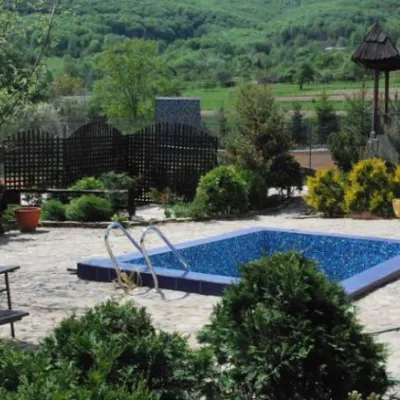 HotelPrivate Homestead "Marko"Kolomyiaunder 1 km from Josaphat Kobrynsky National Museum of Folk Art of Hutsulshchyna and PokuttyaPoolSaunaKitchenNearby: Pysanka Museum in Kolomyia 200 mCity lake in Kolomyia 1.0 km
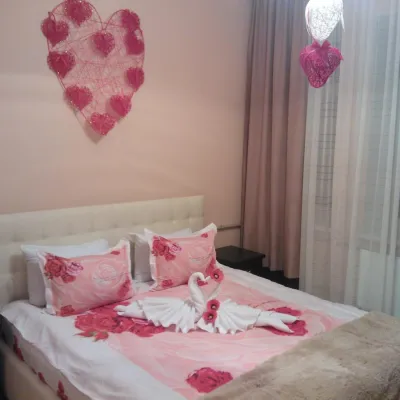 HotelHotel "Pysanka" KolomyiaKolomyiaunder 1 km from Josaphat Kobrynsky National Museum of Folk Art of Hutsulshchyna and PokuttyaParkingWi‑FiTransferNearby: Pysanka Museum in Kolomyia 100 mCity lake in Kolomyia 900 m
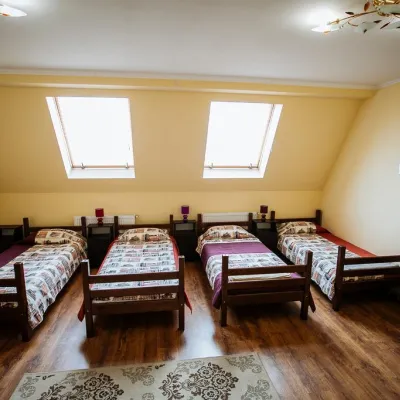 HostelHostel "Hetman"Kolomyiaunder 1 km from Josaphat Kobrynsky National Museum of Folk Art of Hutsulshchyna and PokuttyaKitchenTransferNearby: Pysanka Museum in Kolomyia 200 mCity lake in Kolomyia 1.1 km
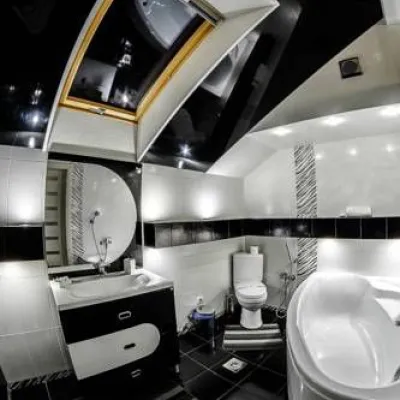 HotelHotel "Diamond De Luxe" MykulychynKolomyiaunder 1 km from Josaphat Kobrynsky National Museum of Folk Art of Hutsulshchyna and PokuttyaParkingWi‑FiPetsNearby: Pysanka Museum in Kolomyia 300 mCity lake in Kolomyia 1.1 km
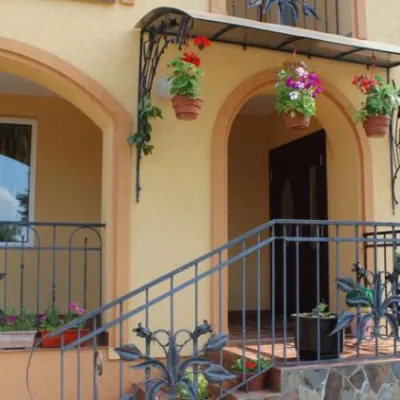 HotelHotel "Vorota Karpat"Kolomyia2.5 km from Josaphat Kobrynsky National Museum of Folk Art of Hutsulshchyna and PokuttyaSaunaBBQKitchenNearby: Pysanka Museum in Kolomyia 2.5 kmCity lake in Kolomyia 3.4 km
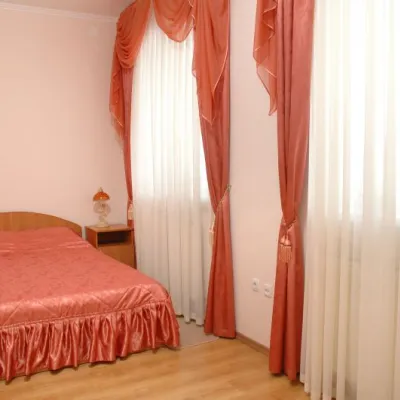 HotelHotel Complex "Verbizh"Verkhnyi Verbizh4.2 km from Josaphat Kobrynsky National Museum of Folk Art of Hutsulshchyna and PokuttyaPoolSaunaParkingNearby: Pysanka Museum in Kolomyia 4.3 kmCity lake in Kolomyia 5.0 km
Trails nearby
All trails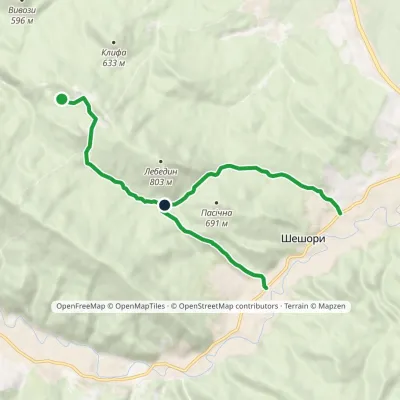 EasyOne-dayMarkedNature trail «To Lake Lebedyn»Elevation profile414–706 m9.2 kmascent 245 m≈ 3 h walking20 km from Josaphat Kobrynsky National Museum of Folk Art of Hutsulshchyna and Pokuttya
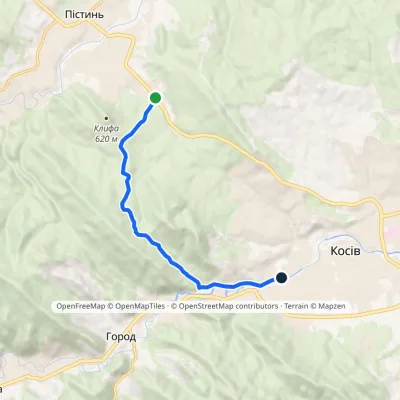 EasyOne-dayMarkedSt Nicholas Estate Huk Kosivskyi WaterfallElevation profile368–637 m6.9 kmascent 203 m≈ 2 h walking20 km from Josaphat Kobrynsky National Museum of Folk Art of Hutsulshchyna and Pokuttya
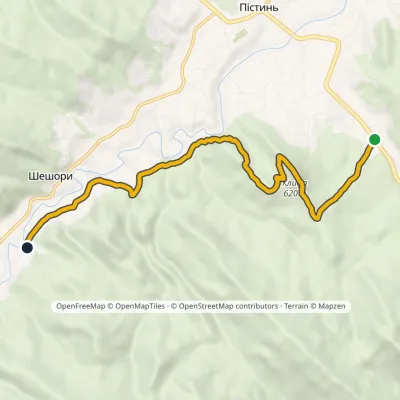 EasyOne-dayMarkedSt Nicholas Estate Malyi Huk Waterfall (Sheshory)Elevation profile407–627 m7.2 kmascent 233 m≈ 2.5 h walking20 km from Josaphat Kobrynsky National Museum of Folk Art of Hutsulshchyna and Pokuttya
Nearby attractions
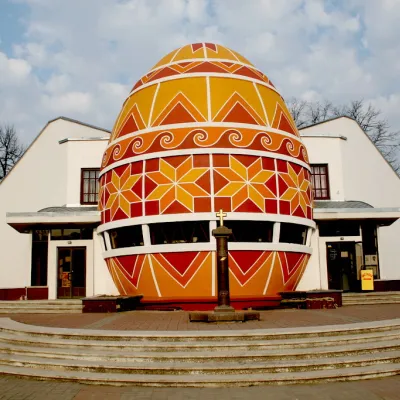 MuseumPysanka Museum in KolomyiaKolomyiaunder 1 km from Josaphat Kobrynsky National Museum of Folk Art of Hutsulshchyna and PokuttyaThe collection of Easter eggs in the Kolomyia Museum of Hutsul Folk Art has been formed for many decades, and gradually the idea to create a separate department - the...
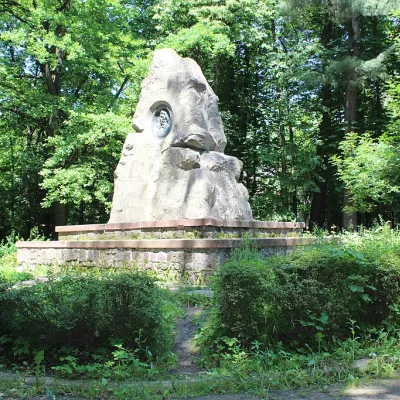 NatureCity Park of Culture and Recreation named after Kyrylo Tryliovskyi, KolomyiaKolomyiaunder 1 km from Josaphat Kobrynsky National Museum of Folk Art of Hutsulshchyna and PokuttyaThe Park (Kyrylo Trillivskyi Park) is a park-monument of landscape art of local importance in Ukraine.
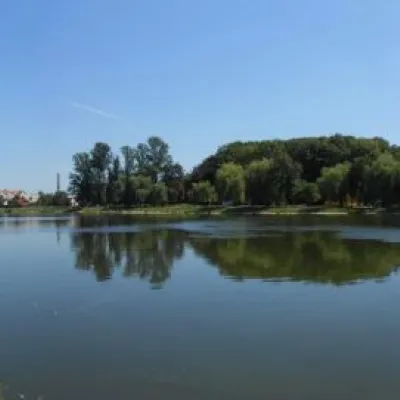 LakeCity lake in KolomyiaKolomyiaunder 1 km from Josaphat Kobrynsky National Museum of Folk Art of Hutsulshchyna and PokuttyaAfter touring the city, it's a good idea to relax and unwind by the water. The city lake is a good place for this.
Craft nearby
All craft places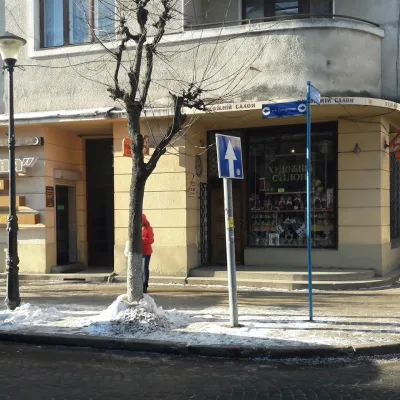 Craft shopsSkrynia antique and souvenir shop, KolomyiaKolomyiaunder 1 km from Josaphat Kobrynsky National Museum of Folk Art of Hutsulshchyna and PokuttyaSkrynia (“The Chest”) is an antique and souvenir shop in the historic centre of Kolomyia, at 23 Teatralna Street.
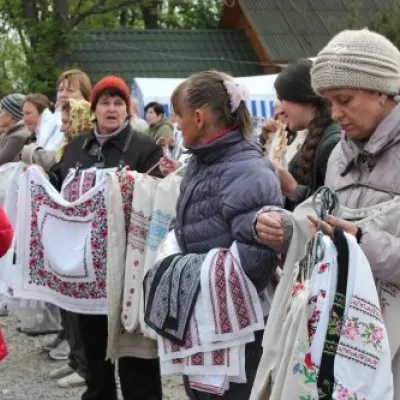 Markets & fairsKolomyia embroidery marketKolomyia1.4 km from Josaphat Kobrynsky National Museum of Folk Art of Hutsulshchyna and PokuttyaIt is one of the most unique and inimitable night markets in Ukraine andthe largest in Prykarpattia. The night market of embroidered shirts in Kolomyia is incomparable...
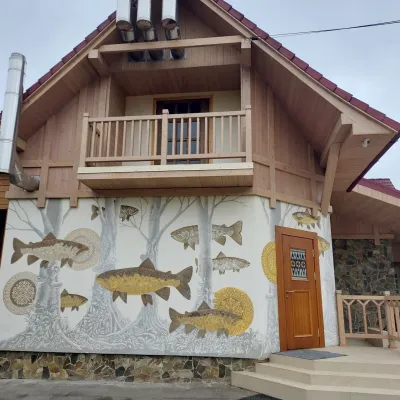 Koliby & Hutsul cuisineArkan Restaurant, SheshorySheshory22 km from Josaphat Kobrynsky National Museum of Folk Art of Hutsulshchyna and PokuttyaThe Arkan restaurant in Sheshory is one of the best-known places for Hutsul food in the Kosiv area. It sits right in the centre of the village on a ledge above the...
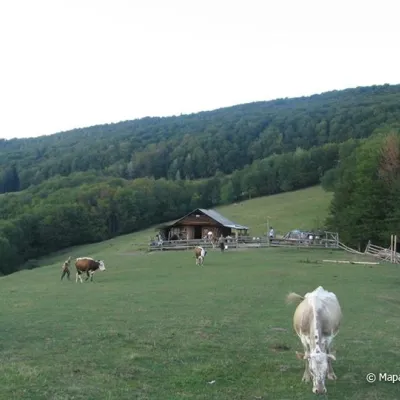 Mountain meadowPolonyna Rosokhata (Sheshory)Sheshoryaltitude 860 m23 km from Josaphat Kobrynsky National Museum of Folk Art of Hutsulshchyna and PokuttyaWhy is the meadow called "Rosokhata"? The two parts of the field that form the branches look like dewdrops.
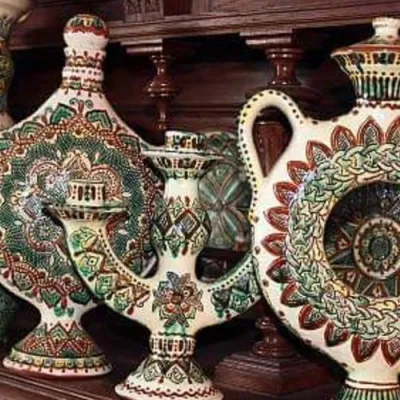 Crafts & workshopsKosiv Painted Ceramics Masterclass, KosivKosiv24 km from Josaphat Kobrynsky National Museum of Folk Art of Hutsulshchyna and PokuttyaYellow deer, green birds, riders and flowers on a warm white background — Kosiv painted ceramics are recognisable at a glance.
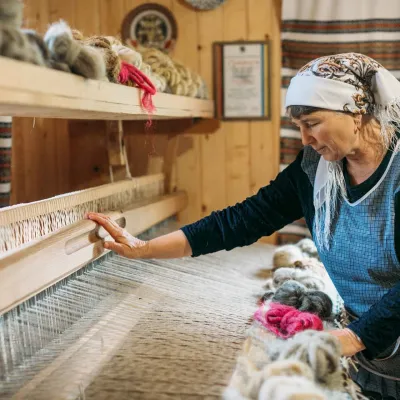 Crafts & workshopsLizhnyk Weaving Masterclass, KosivKosiv24 km from Josaphat Kobrynsky National Museum of Folk Art of Hutsulshchyna and PokuttyaA lizhnyk of your own: what the masterclass is The Kosiv area is one of the main centres of Hutsul lizhnyk weaving, and the best way to understand the craft is to sit...
