Tree lungwort
Never identify a mushroom from a photo alone. If in doubt, leave it. In case of poisoning call 112 (103 in Ukraine) at once.
About
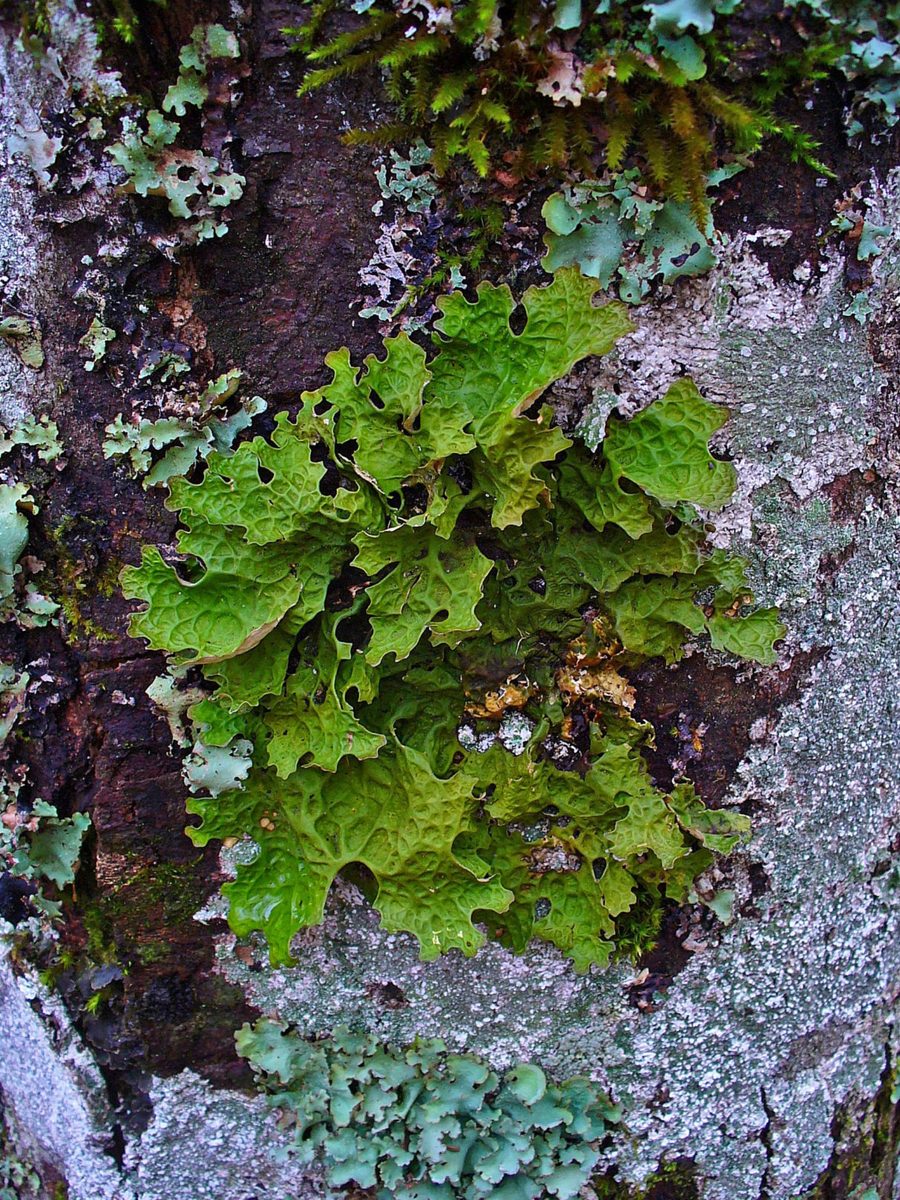
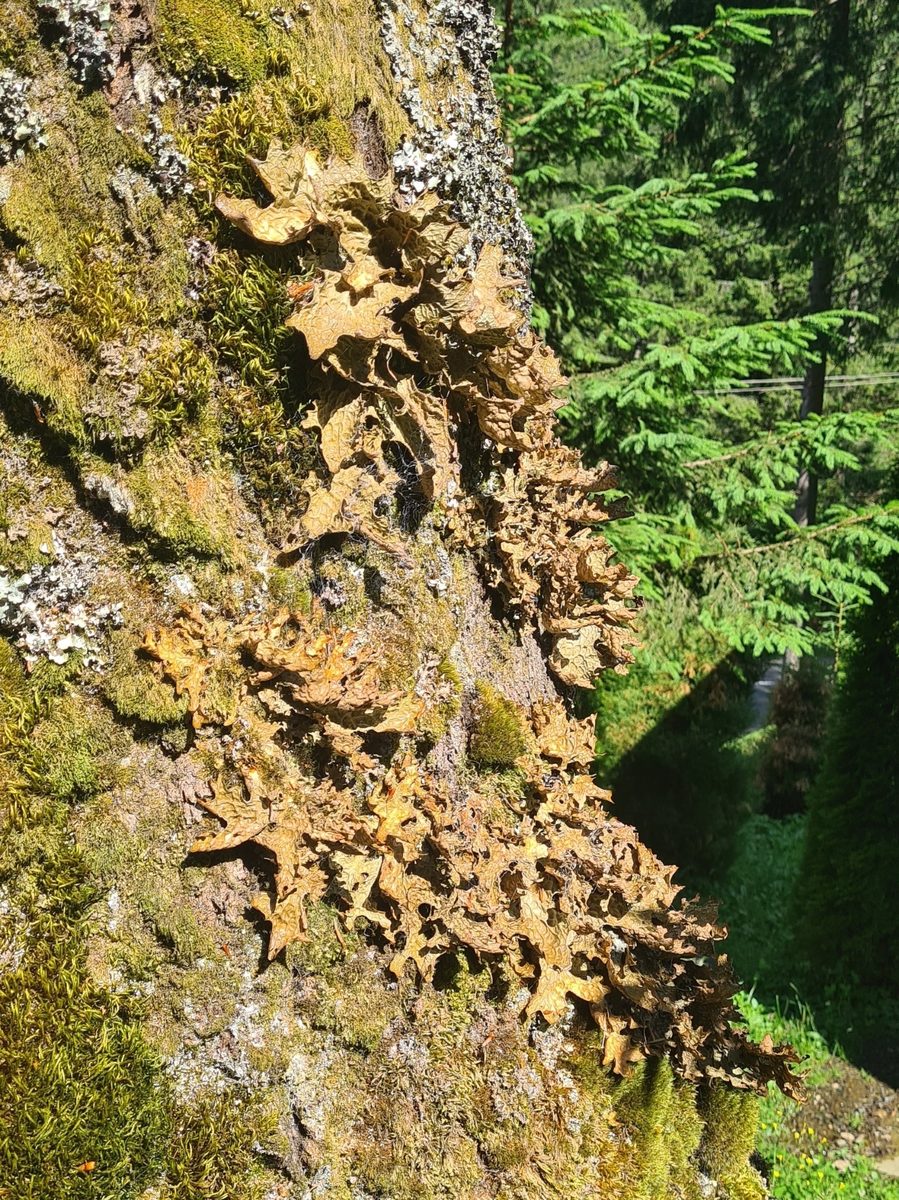
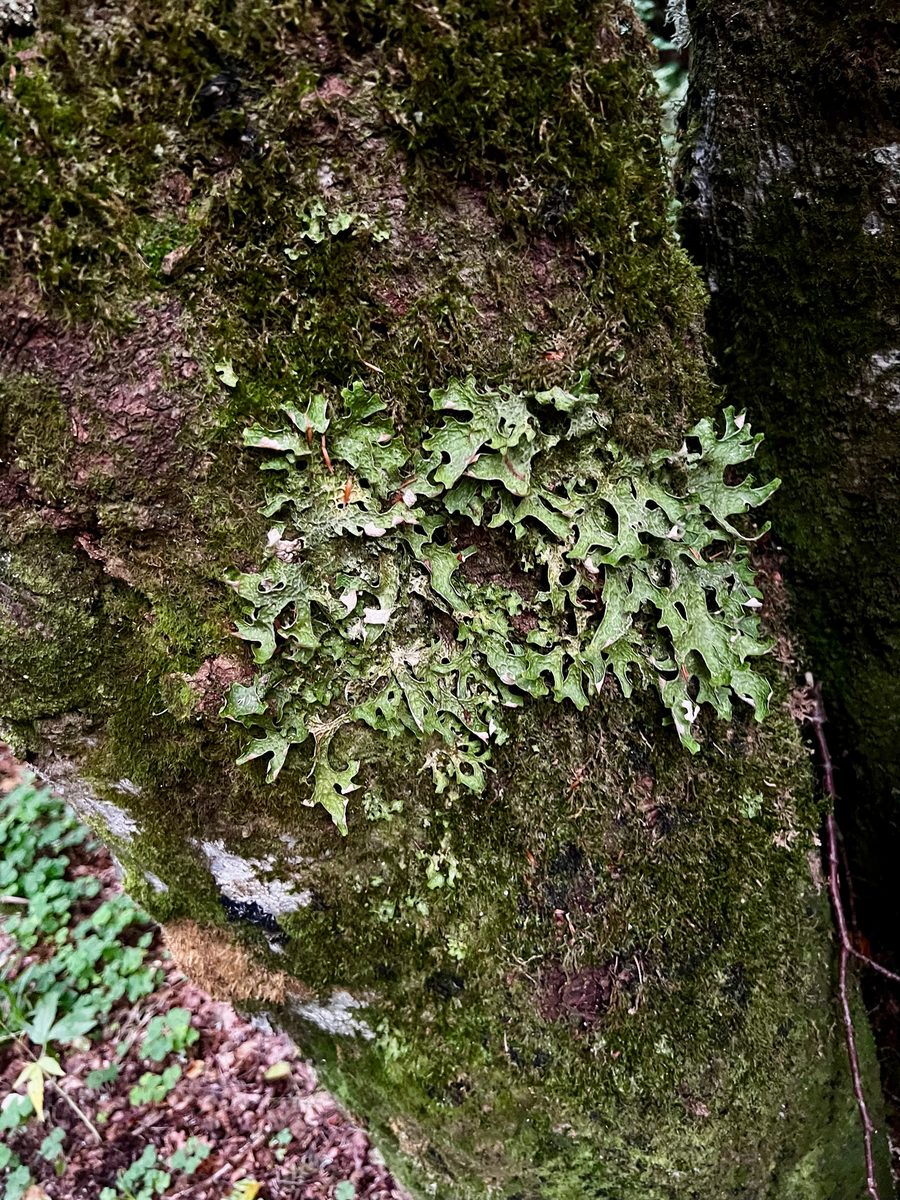
Lobaria pulmonaria is one of the largest lichens in Europe. Its broad leathery lobes can grow on the trunk up to 20–30 cm or more. In wet weather, the lichen is bright green, while in dry conditions, it appears olive-brown and brittle. The upper side is covered with a network of ridges and pits, resembling lung tissue; hence the name. The underside is light, with a brown, woolly covering.
Lobaria is not a plant but a symbiosis of a fungus with two partners: a green alga and cyanobacteria, which assimilate nitrogen from the air. In our catalog, we present lichens among fungi.
It grows on the bark of old deciduous trees — beech, sycamore, ash, and elm — in moist forests that have long been untouched by axes. It grows very slowly, only a few millimeters per year, and begins to reproduce at the age of several decades. Lobaria cannot withstand polluted air and harsh lighting after logging, which is why it has disappeared from most of lowland Europe. Where it exists, the forest is truly old and the air is clean — it is one of the most well-known indicator species of primeval forests.
In Ukraine, the largest populations of Lobaria are preserved in the Carpathians, primarily in beech primeval forests and old forests of protected areas.
The species is listed in the Red Data Book of Ukraine with the status of 'vulnerable'. It is forbidden and pointless to detach the lichen from the bark: outside its tree, it dies. We show its distribution only at the level of massifs.
Where in the Carpathians

The map shows where naturalists recorded the species (GBIF, CC0 and CC BY records), not every place it lives. The Ukrainian Carpathians are less studied, so a blank area does not mean the species is absent. For rare and vulnerable species the map is deliberately coarse (hexagons of ~250 km² or more) so that it never points to dens, nests or growing sites.
- Countries
- Ukraine · Romania · Poland · Slovakia
- Mountain ranges
- Bieszczady, Gorgany, Krasna Polonyna, Maramureș Mountains, Făgăraș Mountains, Bihor-Vlădeasa Mountains, Vihorlat-Gutin Volcanic Ridge, Borzhava, Chornohora, Semenic Mountains
- Altitude belts
- Beech forests (600–1200 m) · Conifer forests (1200–1600 m)
When to see it
| Jan | Feb | Mar | Apr | May | Jun | Jul | Aug | Sep | Oct | Nov | Dec | |
|---|---|---|---|---|---|---|---|---|---|---|---|---|
| Sightings |
From naturalists’ observations in the Carpathians (iNaturalist, research grade): the darker the cell, the more often the species is seen that month.
Protection and rules
Listed in the Red Data Book of Ukraine (vulnerable). Collecting is prohibited.
Admire, don’t pick: plants listed in the Red Data Book of Ukraine — and any plants in nature reserves and strictly protected zones of national parks — must not be collected.
FAQ
What does Lobaria on a tree indicate?
It indicates clean air and an ancient, minimally disturbed forest. Lobaria grows very slowly and cannot withstand pollution and logging.
Is it possible to collect Lobaria?
No. The species is listed in the Red Data Book of Ukraine; moreover, a lichen detached from the bark dies.
Similar species
Where to meet it
Ranges where it occurs: Bieszczady, Gorgany, Krasna Polonyna, Maramureș Mountains, Vihorlat-Gutin Volcanic Ridge, Borzhava, Chornohora. In other countries: 🇷🇴 Făgăraș Mountains, 🇷🇴 Bihor-Vlădeasa Mountains, 🇷🇴 Semenic Mountains
Trails and peaks near which naturalists recorded the species (GBIF, iNaturalist), matched by altitude and habitat. Sightings are not guaranteed.
Sources
- Вікіпедія: Лобарія легеневоподібна
- Wikipedia (en): Lobaria pulmonaria
- Наказ Міндовкілля від 15.02.2021 № 111: Перелік видів рослин та грибів, що заносяться до Червоної книги України
- GBIF: список рослин і грибів Червоної книги України за наказом № 111 (з категоріями)
- iNaturalist: Lobaria pulmonaria (спостереження в Карпатах)
GBIF · iNaturalist · Wikidata · Distribution data: GBIF.org (CC0 and CC BY records), iNaturalist; names and identifiers: Wikidata (CC0). Text: Karpaty.rocks, checked 11.11.2026.
