Small cranberry
Never eat berries you are not sure about and never give unknown berries to children. In case of poisoning call 112 (103 in Ukraine).
About
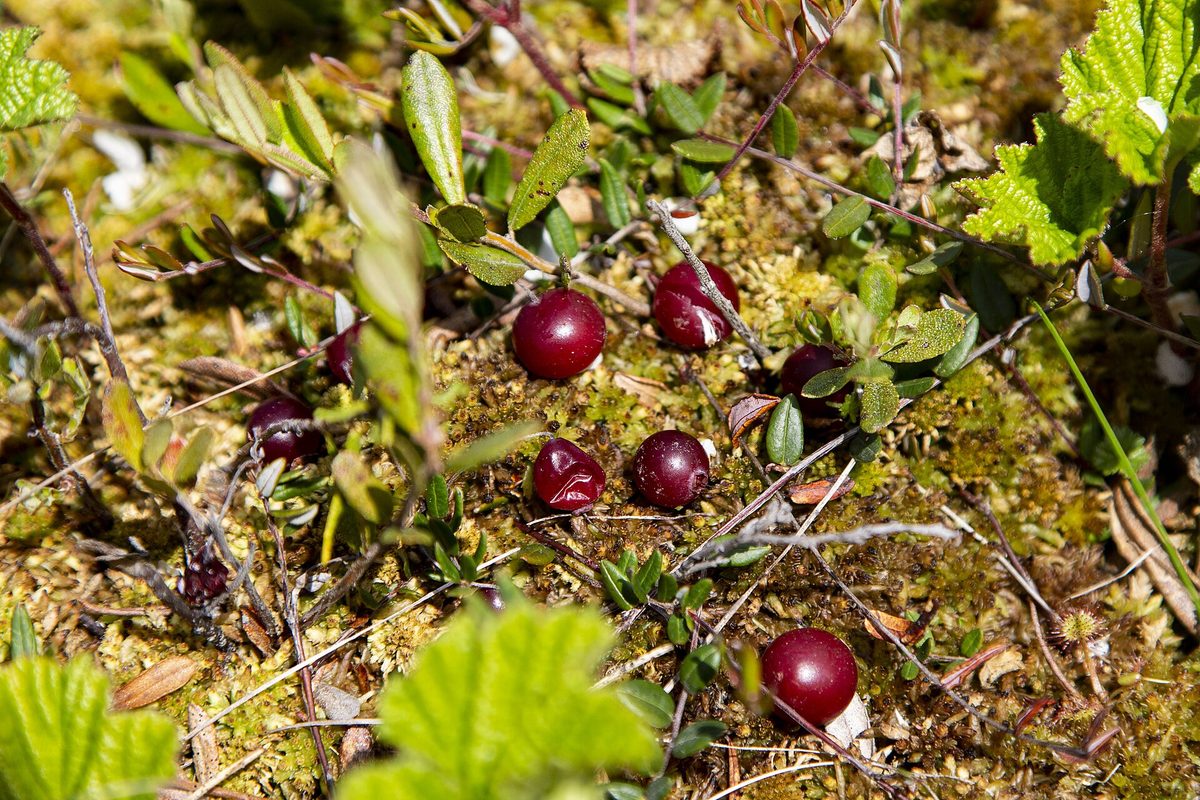
The Small cranberry is an evergreen creeping shrub, with thin shoots that spread across a carpet of sphagnum moss. In Ukraine, its main reserves are in Polissia, while in the Carpathians and Prykarpattia, it is found rarely — only in acidic peat bogs, mainly oligotrophic ones, which are nourished by rainwater. The plant is light-loving and prefers cold and moist conditions.
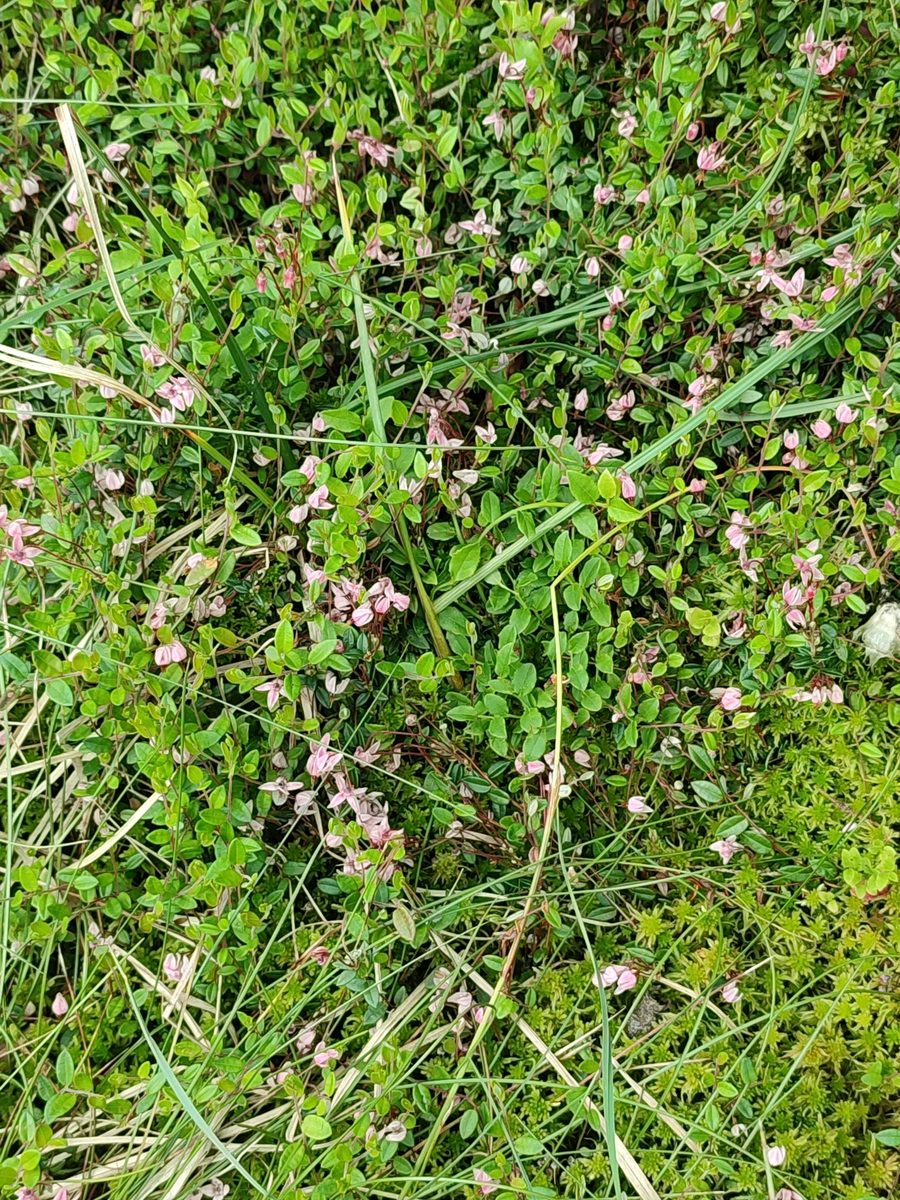
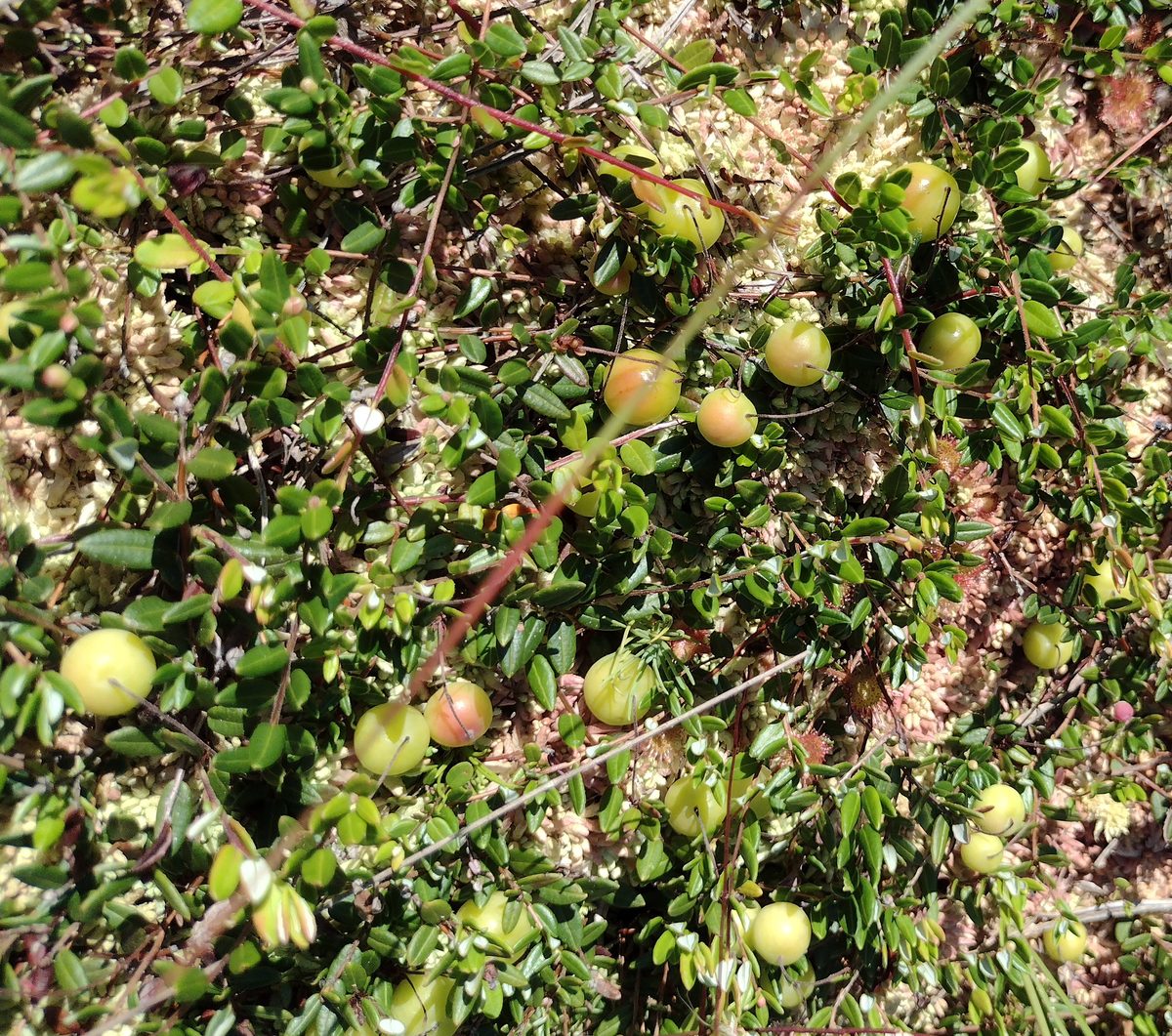
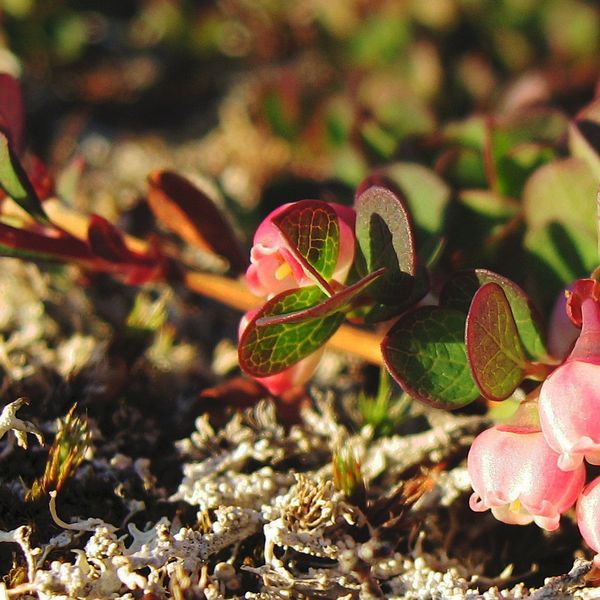
The leaves are small, 5–16 mm, leathery, shiny, dark green on top and bluish below, with rolled edges. It blooms in May — June: on long thin flower stalks hang drooping pink flowers with backward-curved petals, resembling small lanterns. The berries are dark red, spherical or pear-shaped, 8–18 mm in diameter, ripening in September and can survive under snow.
The berries are edible and very sour. They are traditionally harvested in autumn to make drinks, jellies, and jams. However, bogs are fragile habitats: the area of cranberry bogs in Ukraine is decreasing due to drainage, and trampling damages the moss and peat. If the bog is located in a nature reserve or protected area of a national park, collecting berries there is prohibited.
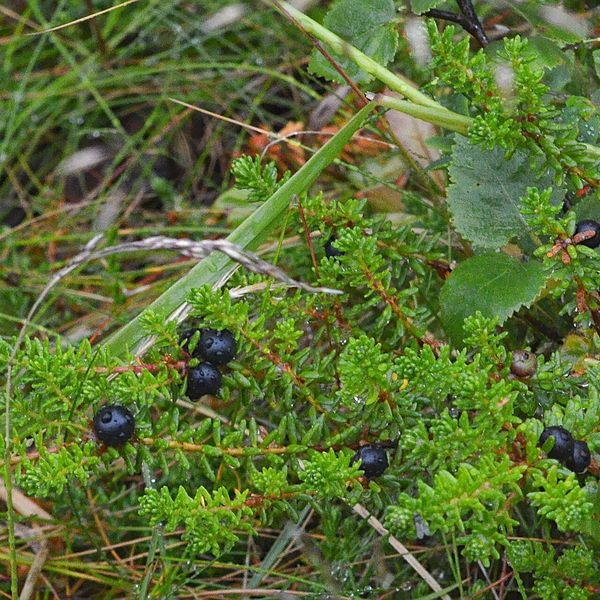
Nearby, the small-fruited cranberry may grow, which has even smaller pointed leaves and berries only 4–6 mm. It is listed in the Red Book of Ukraine with a status of 'vulnerable', so if you are unsure which cranberry you are looking at, it is better not to collect the berries. Walk through the bog only on paths and boardwalks.
Where in the Carpathians

Orange — where naturalists recorded the species (GBIF, CC0/CC BY). It occurs only locally, so we draw no approximate range; a blank area does not mean it is absent.
- Countries
- Ukraine · Slovakia · Poland · Romania · Czechia
- Mountain ranges
- Skole Beskids, Krasna Polonyna. In other countries: 🇸🇰 High Tatras, 🇵🇱 Żywiec Beskids, 🇸🇰 Western Tatras, 🇸🇰 Lesser Fatra, 🇸🇰 Slovak Ore Mountains, 🇸🇰 Vihorlat Mountains, 🇸🇰 Greater Fatra, 🇸🇰 Kysuce Beskids, 🇸🇰 Skorušina Mountains, 🇸🇰 Low Tatras, 🇸🇰 Volovec Mountains
- Altitude belts
- Beech forests (600–1200 m) · Conifer forests (1200–1600 m)
When to see it
| Jan | Feb | Mar | Apr | May | Jun | Jul | Aug | Sep | Oct | Nov | Dec | |
|---|---|---|---|---|---|---|---|---|---|---|---|---|
| Flowering | ||||||||||||
| Fruit |
From naturalists’ observations in the Carpathians (iNaturalist, research grade): the darker the cell, the more often the species is seen that month.
Safety
Walk through the bogs only on paths and boardwalks: you can fall into the peat. Do not collect berries in reserves and protected areas of national parks.
Look-alikes — how to tell them apart
Leaves are even smaller (2–3 mm), pointed; berries only 4–6 mm. Listed in the Red Book of Ukraine (vulnerable) — do not collect.
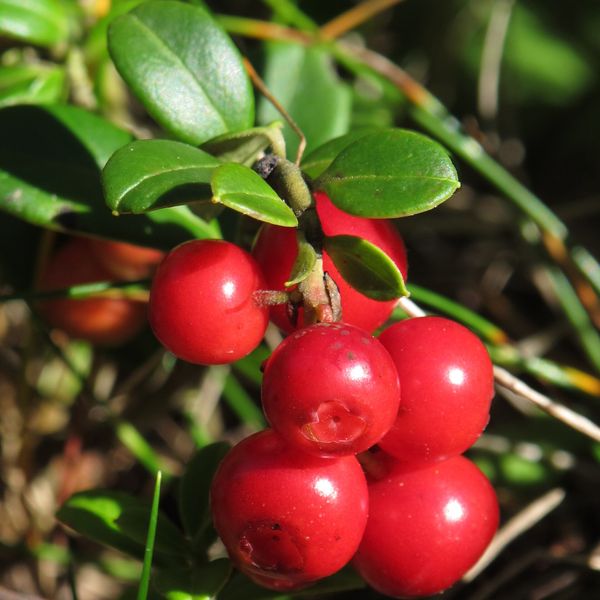
Upright shrub with leathery leaves with dark spots underneath; berries bright red, clustered at the tops of shoots; grows in forests and on polonynas, not in wet sphagnum.
In folk tradition
Berries are traditionally harvested in autumn to make drinks, jellies, and jams.
Protection and rules
Not listed in the Red Book of Ukraine (unlike the small-fruited cranberry). Collecting in reserves and national parks is prohibited; protect the moss — do not trample.
FAQ
Does the cranberry grow in the Carpathians?
Yes, but rarely: only in acidic sphagnum bogs. The main reserves of cranberries in Ukraine are in Polissia.
Is the cranberry protected?
The Small cranberry is not listed in the Red Book of Ukraine, while the similar small-fruited cranberry is listed (vulnerable). Collecting berries in bogs of reserves and national parks is prohibited.
Comments
Travellers’ experience: reports, tips, questions.
No one has written here yet. Be the first — your experience helps others.
Similar species
Where to meet it
Trails
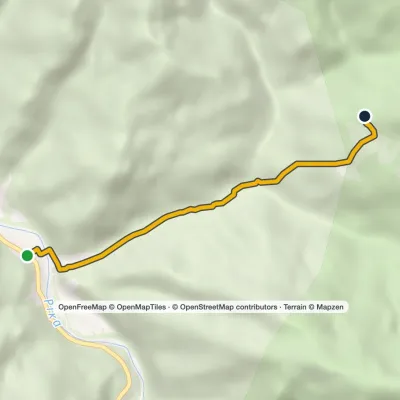 EasyOne-dayMarkedCarpathian Tourist TrailElevation profile342–823 m4.2 kmascent 480 m≈ 2 h walking
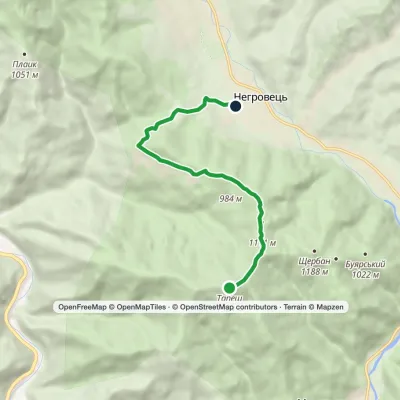 EasyOne-dayMarkedNehrovets Tapeshvia Kosiv VerkhElevation profile598–1 324 m7.6 kmascent 3 m≈ 2 h walking
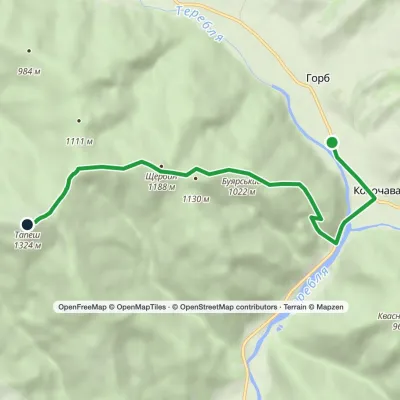 ModerateOne-dayMarkedKolochava TapeshElevation profile544–1 324 m6.7 kmascent 837 m≈ 3 h walking
Mountain ranges: Skole Beskids, Krasna Polonyna. In other countries: 🇸🇰 High Tatras, 🇵🇱 Żywiec Beskids, 🇸🇰 Western Tatras, 🇸🇰 Lesser Fatra, 🇸🇰 Slovak Ore Mountains, 🇸🇰 Vihorlat Mountains, 🇸🇰 Greater Fatra, 🇸🇰 Kysuce Beskids, 🇸🇰 Skorušina Mountains, 🇸🇰 Low Tatras, 🇸🇰 Volovec Mountains
Trails and peaks near which naturalists recorded the species (GBIF, iNaturalist), matched by altitude and habitat. Sightings are not guaranteed.
Sources
- Вікіпедія: Журавлина болотяна
- Wikipedia (en): Vaccinium oxycoccos
- Наказ Міндовкілля від 15.02.2021 № 111: Перелік видів рослин та грибів, що заносяться до Червоної книги України
- GBIF: список рослин і грибів Червоної книги України за наказом № 111 (з категоріями)
- Лісовий кодекс України, ст. 69: загальне використання лісових ресурсів (збирання грибів і ягід для власних потреб)
- iNaturalist: Vaccinium oxycoccos (спостереження в Карпатах)
GBIF · iNaturalist · Wikidata · Distribution data: GBIF.org (CC0 and CC BY records), iNaturalist; names and identifiers: Wikidata (CC0). Text: Karpaty.rocks, checked 09.11.2026.
