Royal fly agaric
Never identify a mushroom from a photo alone. If in doubt, leave it. In case of poisoning call 112 (103 in Ukraine) at once.
About
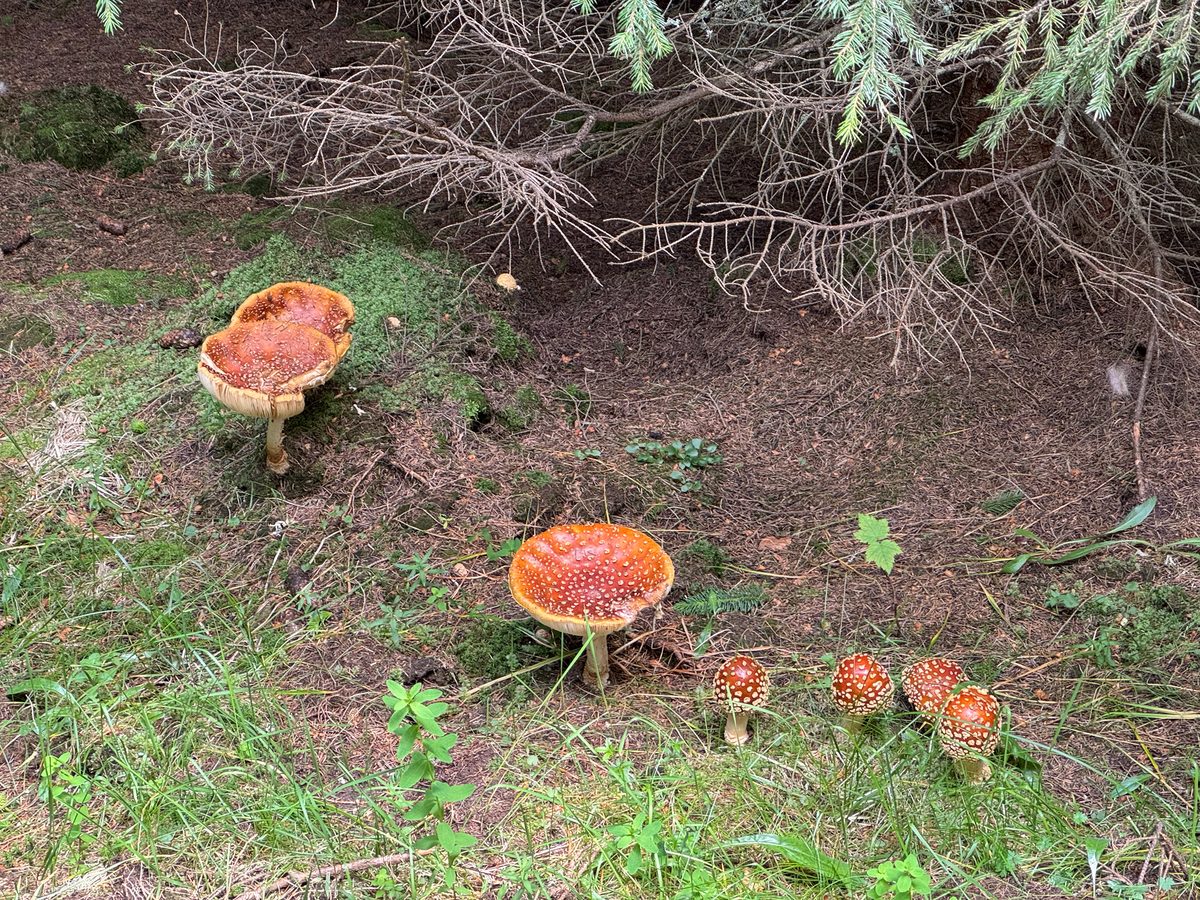
Royal fly agaric is a northern and mountain relative of the red fly agaric. It forms mycorrhiza with coniferous trees, primarily with spruce and pine, and is less commonly found in mixed forests with birch. It is widespread in Scandinavia, northern and eastern Europe; in the Ukrainian Carpathians, it is mostly photographed in spruce forests.
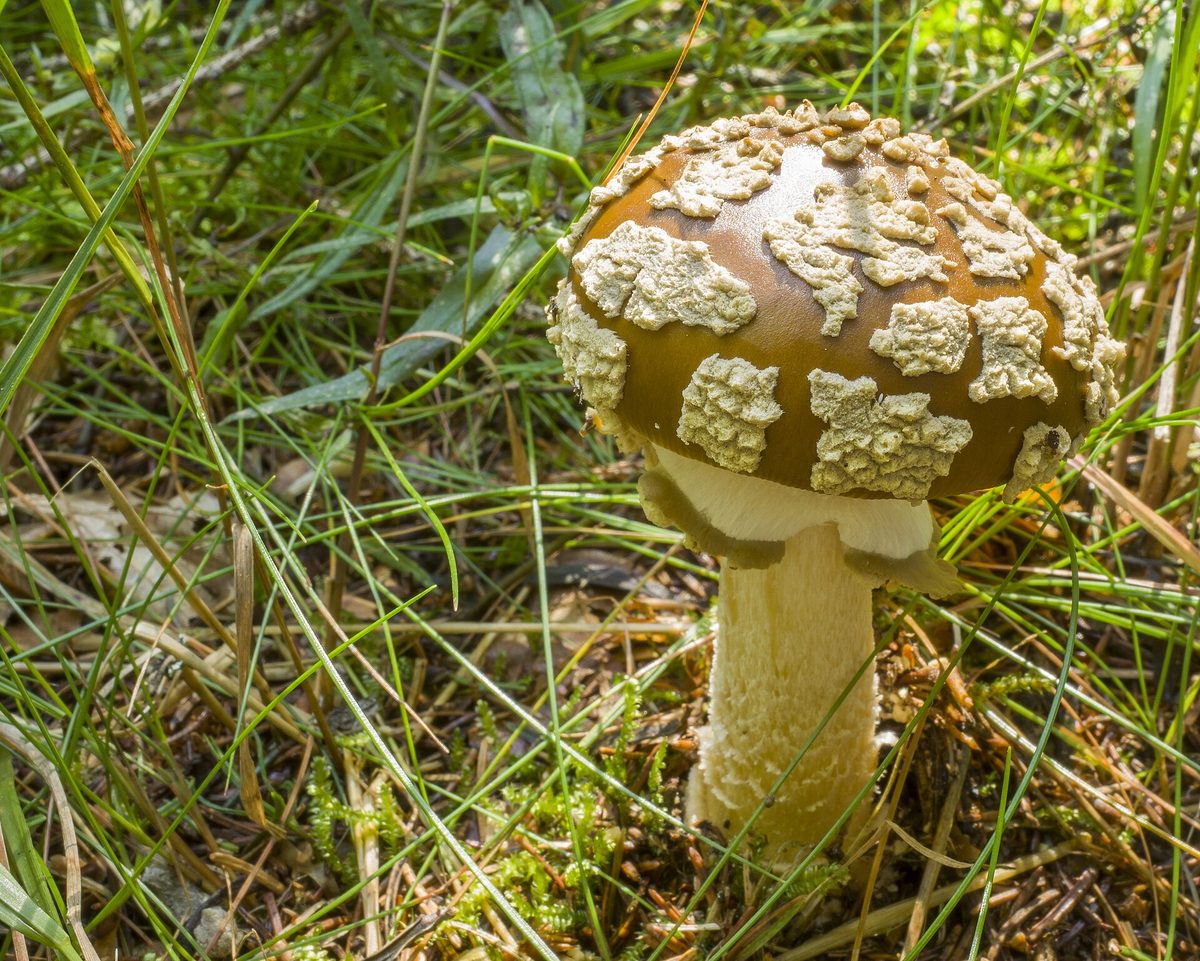
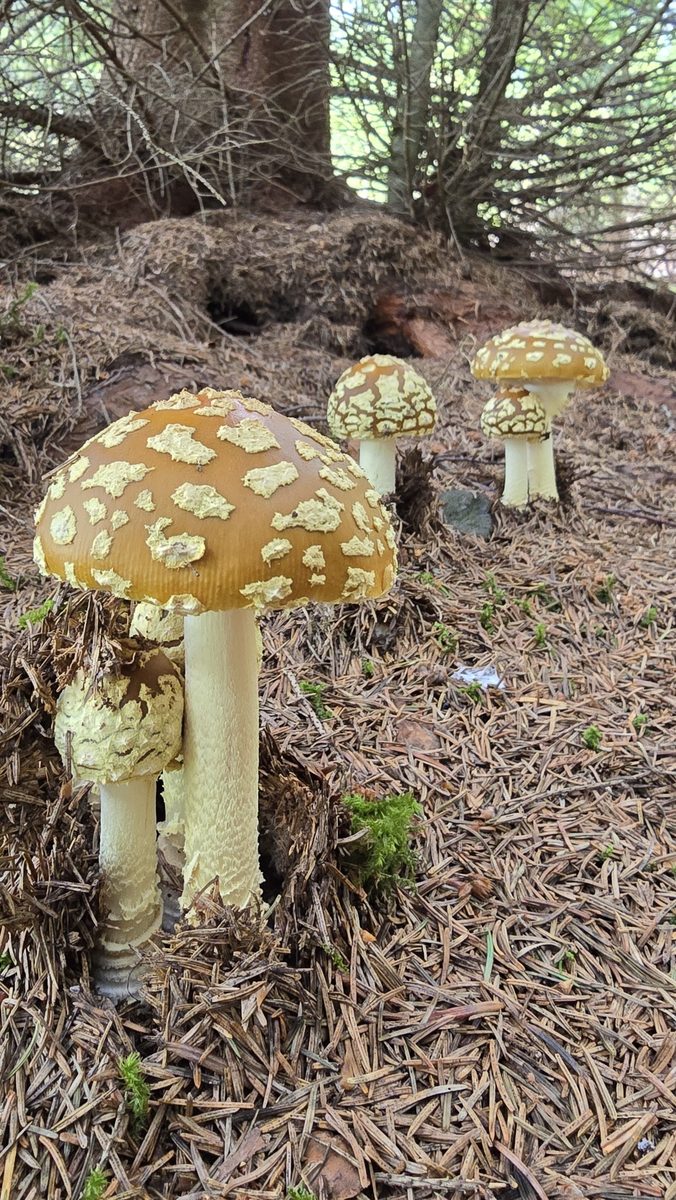
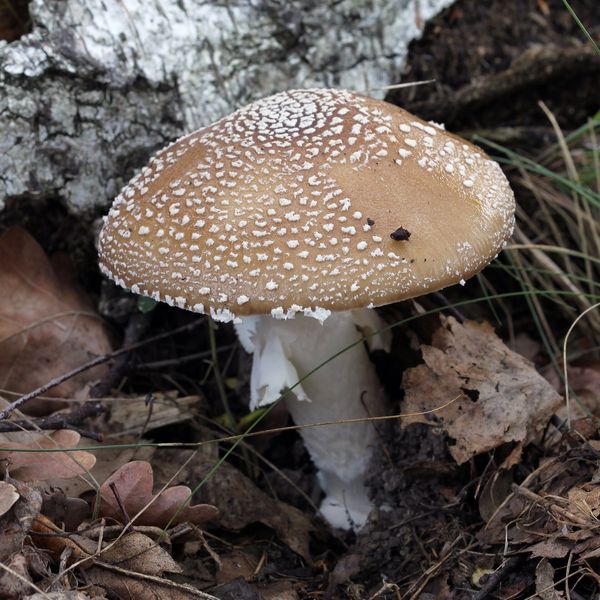
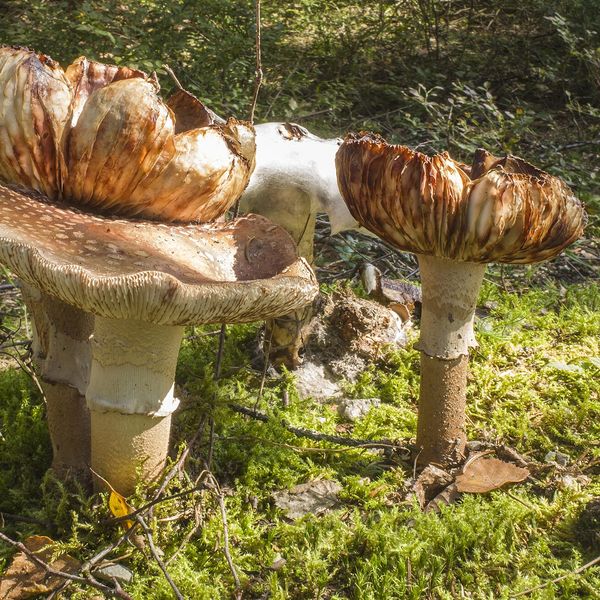
The cap is large, 7–16 cm, sometimes up to 20 cm, initially hemispherical, then almost flat, with a ribbed edge. The coloration ranges from dark umber and brown to ochre or gray-yellow. It is covered with yellowish scales that turn white in the sun and are easily washed off by rain. The gills are creamy, the stem is white with a white ring, and at the base is a bulb, above which remain rings of yellowish-ochre fragments of the veil.
The mushroom is poisonous and, like the red fly agaric, contains the psychoactive substance muscimol. Poisoning has been reported when people confused it with the parasol mushroom: within one to two hours, severe vomiting, confusion, hallucinations, profuse salivation, and sweating began.
It is distinguished from the red fly agaric by the complete absence of red color. Pale yellowish-brown mushrooms are sometimes confused with the blushing fly agaric, which is conditionally edible. However, in the blushing fly agaric, the flesh at the break and in damaged areas slowly turns pink, and the flesh under the cap skin is white, while in the royal fly agaric it is yellowish. The simplest rule for mushroom pickers is to not collect any fly agarics.
Where in the Carpathians

The map shows where naturalists recorded the species (GBIF, CC0 and CC BY records), not every place it lives. The Ukrainian Carpathians are less studied, so a blank area does not mean the species is absent.
- Countries
- Slovakia · Romania · Ukraine · Poland
- Mountain ranges
- Piatra Craiului, Low Tatras, Western Tatras, Slovak Central Mountains, Gorgany, Maramureș Mountains, Kysuce Beskids, High Tatras, Lesser Fatra
- Altitude belts
- Beech forests (600–1200 m) · Conifer forests (1200–1600 m)
When to see it
| Jan | Feb | Mar | Apr | May | Jun | Jul | Aug | Sep | Oct | Nov | Dec | |
|---|---|---|---|---|---|---|---|---|---|---|---|---|
| Sightings |
From naturalists’ observations in the Carpathians (iNaturalist, research grade): the darker the cell, the more often the species is seen that month.
Safety
Poisonous, affects the nervous system. Do not collect fly agarics for food or 'microdosing'. In case of suspected poisoning, call 103 (or 112).
Look-alikes — how to tell them apart
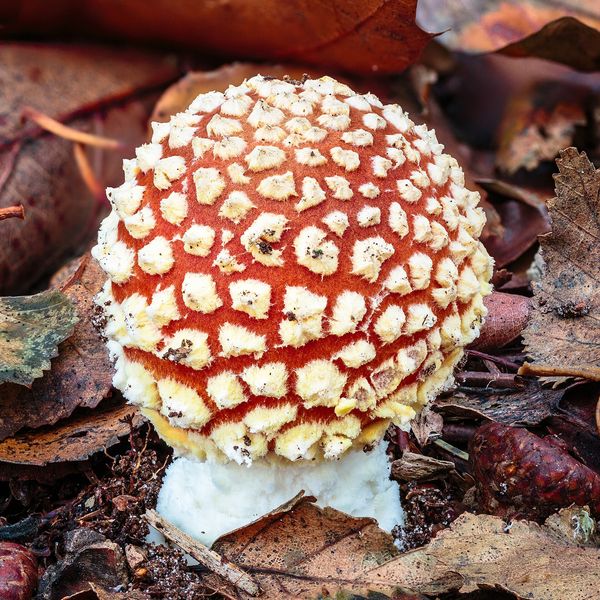
The flesh and damaged areas slowly turn pink, the flesh under the cap skin is white, and the ring on the stem is ribbed. However, it is also a fly agaric and is only edible after cooking — beginners should not collect it.
The stem is tall, thin, and patterned, with a movable ring, without a bulb with scales; the cap has a brown bump and scales that do not wash off.
Protection and rules
Not protected.
FAQ
Is there a brown fly agaric in the Carpathians?
Yes, the royal fly agaric occurs in spruce forests: the cap is brown or ochre with yellowish scales. It is poisonous, like the red fly agaric.
What makes the royal fly agaric poisonous?
It contains muscimol, like the red fly agaric. Poisoning causes vomiting, confusion, and hallucinations.
Similar species
Where to meet it
Trails
 HardMulti-dayRakhiv to Yasiniavia Mount Blyznytsia, Mount Stih +3Elevation profile431–1 883 m65 kmascent 2 859 m
 HardMulti-dayRakhiv to Yasiniavia Mount Blyznytsia, Mount Troiaska +4Elevation profile430–1 883 m67.3 kmascent 3 568 m
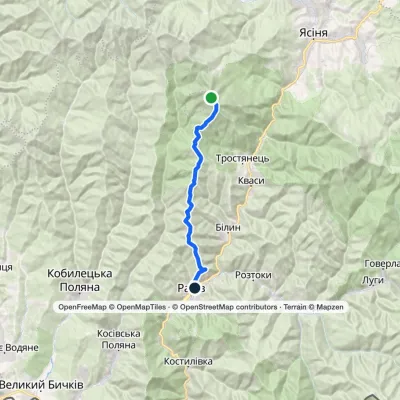 ModerateTwo-dayMarkedRakhiv Mount BlyznytsiaElevation profile442–1 883 m23.2 kmascent 343 m≈ 6.5 h walking
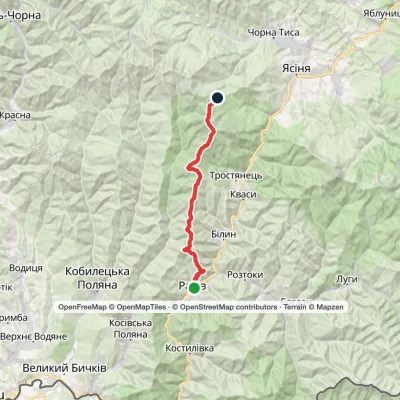 HardMulti-dayRakhiv to Dragobratvia Mount BlyznytsiaElevation profile443–1 883 m29.7 kmascent 1 842 m≈ 11 h walking
 HardTwo-dayMarkedRakhiv Mount BlyznytsiaElevation profile431–1 472 m18.8 kmascent 1 165 m≈ 7 h walking
 HardMulti-dayDragobrat to Rakhivvia Mount BlyznytsiaElevation profile446–1 883 m37 kmascent 696 m≈ 10.5 h walking
 HardMulti-dayKrasna village to Rakhivvia Mount Tempa, Mount Troiaska +1Elevation profile428–1 883 m62.5 kmascent 2 932 m
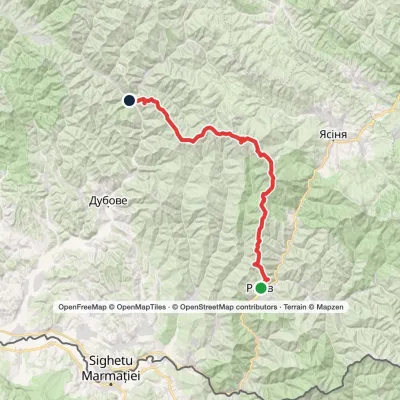 HardMulti-dayMarkedRakhiv to Ust-Chorna villagevia Mount Blyznytsia, Mount Unhariaska +1Elevation profile527–1 883 m63 kmascent 2 430 m
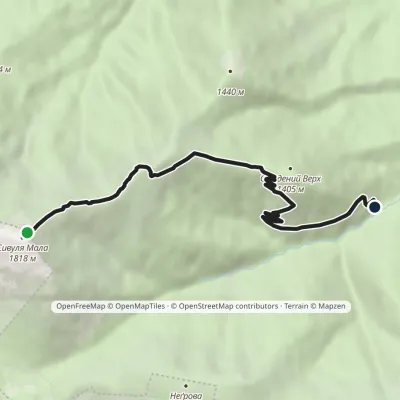 EasyOne-dayMarkedMount Syvulia Mala Mount Studenyi VerkhElevation profile989–1 815 m5.7 kmascent 20 m≈ 1.5 h walking
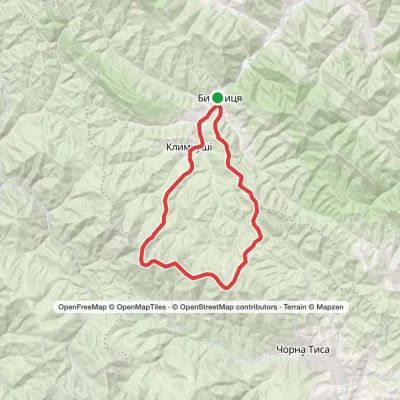 HardMulti-dayBystrytsia village loopvia Mount Chorna Kleva, Mount Ruska +1Elevation profile734–1 788 m36.8 kmascent 1 971 m≈ 13 h walking
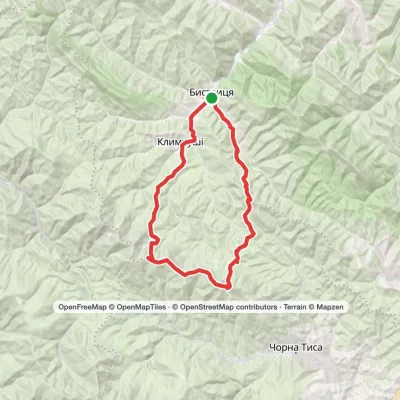 HardMulti-dayBystrytsia village loopvia Klympushi village, Mount Ruska +1Elevation profile737–1 719 m42.5 kmascent 1 786 m
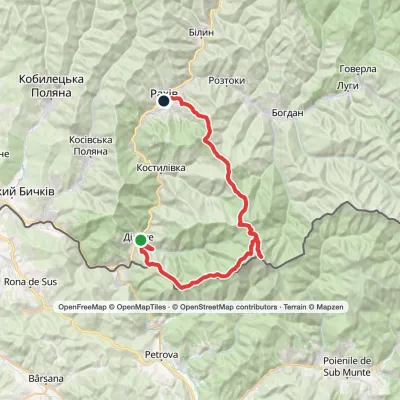 HardMulti-dayDilove village to Rakhivvia Mount Zherban, Mount Pip Ivan MarmaroskyiElevation profile346–1 936 m44.9 kmascent 1 990 m
Mountain ranges: Gorgany, Maramureș Mountains. In other countries: 🇷🇴 Piatra Craiului, 🇸🇰 Low Tatras, 🇸🇰 Western Tatras, 🇸🇰 Slovak Central Mountains, 🇸🇰 Kysuce Beskids, 🇸🇰 High Tatras, 🇸🇰 Lesser Fatra
Trails and peaks near which naturalists recorded the species (GBIF, iNaturalist), matched by altitude and habitat. Sightings are not guaranteed.
Sources
- Вікіпедія: Мухомор королівський
- Wikipedia (en): Amanita regalis
- Wikipedia (en): Amanita rubescens
- МОЗ України: отруєння грибами — профілактика та перша допомога
- iNaturalist: Amanita regalis (спостереження в Карпатах)
GBIF · iNaturalist · Wikidata · Distribution data: GBIF.org (CC0 and CC BY records), iNaturalist; names and identifiers: Wikidata (CC0). Text: Karpaty.rocks, checked 09.11.2026.
