Red-brown longhorn beetle
About
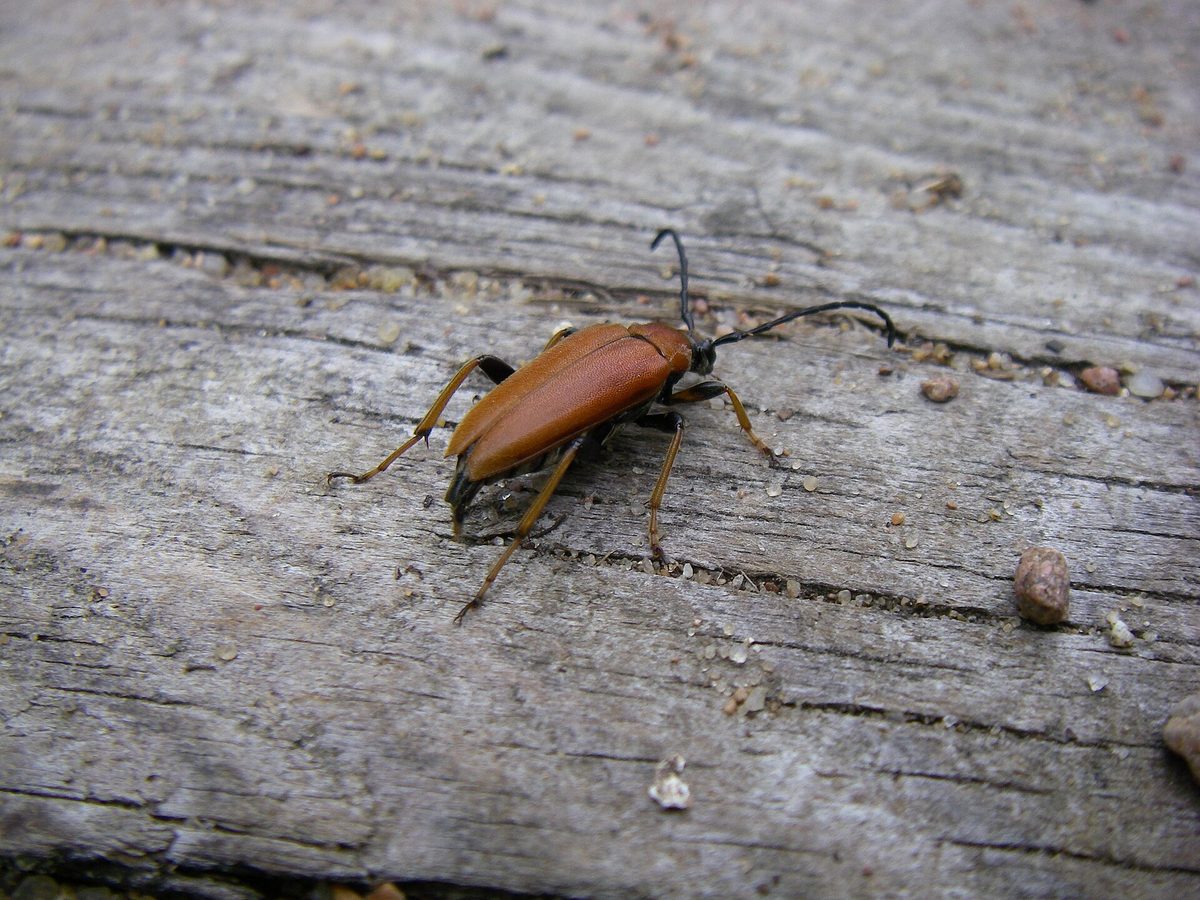
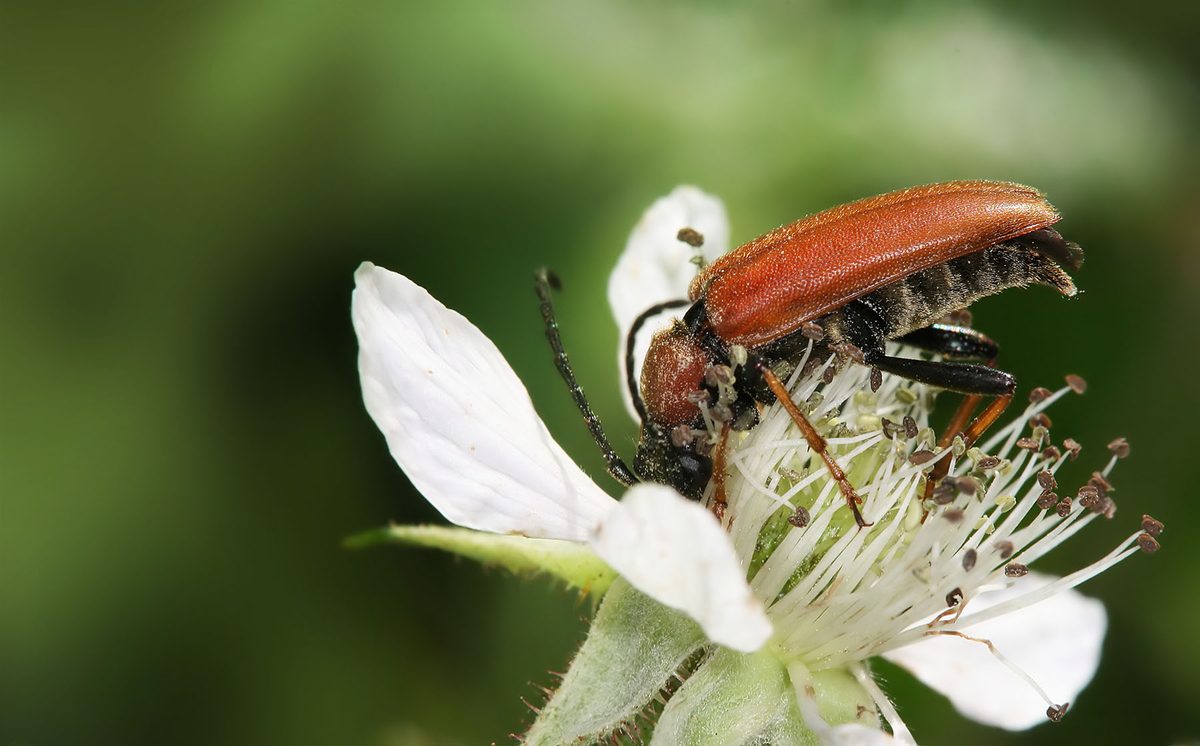
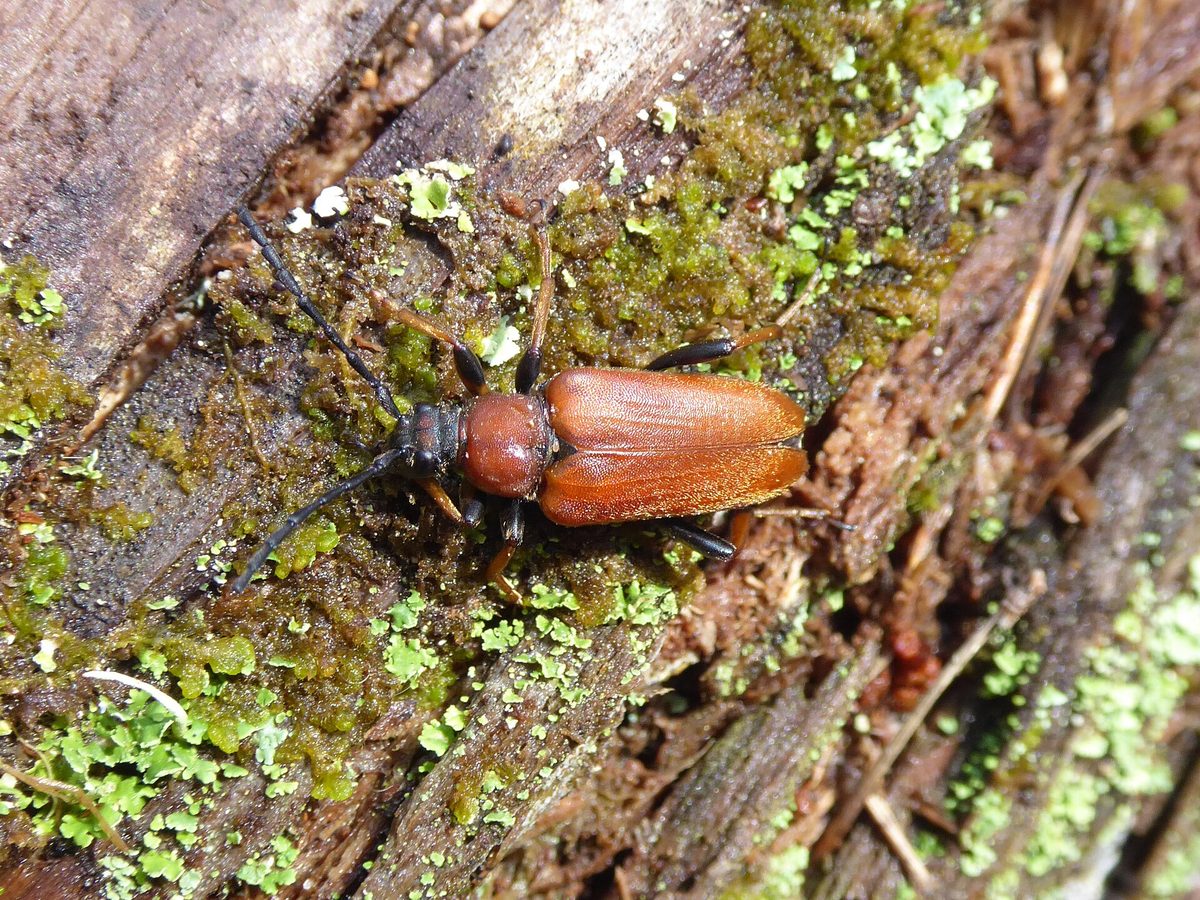
The Red-brown longhorn beetle is one of the most noticeable longhorn beetles in coniferous forests. Its body length is 10–20 mm. The male and female can easily be mistaken for different species. The female is larger, stockier, with brick-red elytra and the same red pronotum. The male is smaller and more slender: his elytra are yellowish-brown, and the pronotum is black. The antennae and legs are partially black.
Adult beetles fly from June to September, with the highest numbers in July and August. During the day, they sit on the inflorescences of cow parsnip, hogweed, yarrow, meadowsweet, and thistles, where they feed on pollen and nectar. On a sunny forest road or clear-cut, several beetles can be found on one umbrella flower at the same time.
The larvae develop in dead wood of coniferous species — spruce, pine, fir, and less frequently larch. The female lays eggs in the crevices of old stumps, fallen trunks, and even untreated wooden fences. The larva bores into moist decayed wood for two to three years. The beetle does not damage living trees, and by decomposing stumps, it returns nutrients to the soil.
In the Carpathians, the Red-brown longhorn beetle is common in spruce and mixed forests, in clearings and glades from the foothills to the upper limit of the forest.
The beetle is safe for humans. When held in hand, it squeaks — this is a common defensive reaction of longhorn beetles.
Where in the Carpathians

The map shows where naturalists recorded the species (GBIF, CC0 and CC BY records), not every place it lives. The Ukrainian Carpathians are less studied, so a blank area does not mean the species is absent.
- Countries
- Hungary · Slovakia · Romania · Poland · Ukraine · Czechia
- Mountain ranges
- High Tatras, Bükk, Mátra, Zemplén Mountains, Western Tatras, Low Beskids, Low Tatras, Vrancea Mountains, Gorgany, Krasna Polonyna
- Altitude belts
- Foothills (below 600 m) · Beech forests (600–1200 m)
When to see it
| Jan | Feb | Mar | Apr | May | Jun | Jul | Aug | Sep | Oct | Nov | Dec | |
|---|---|---|---|---|---|---|---|---|---|---|---|---|
| Sightings |
From naturalists’ observations in the Carpathians (iNaturalist, research grade): the darker the cell, the more often the species is seen that month.
Protection and rules
Not listed in the Red Data Book of Ukraine.
FAQ
Does the Red-brown longhorn beetle harm the forest?
No. The larvae live only in dead, already decayed wood of conifers — stumps and fallen trunks. They do not inhabit living trees.
Why do red and yellowish longhorn beetles sit on the same flower?
This is the female and male of the same species. The female is red, and the male is yellowish-brown with a black pronotum.
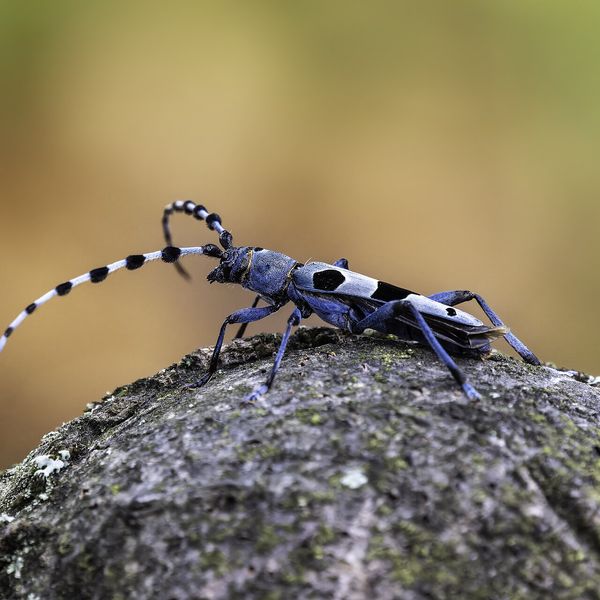
Similar species
Where to meet it
Trails
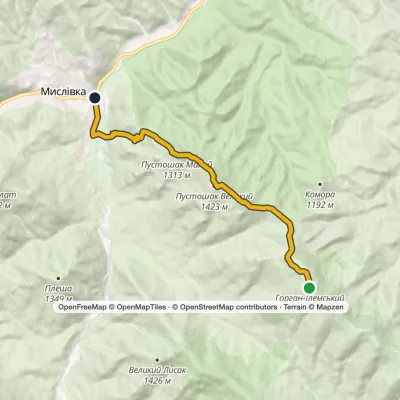 ModerateOne-dayMarkedTo Mount Horhan IlemskyiElevation profile654–1 587 m11.6 kmascent 271 m≈ 3.5 h walking
 Hard1–2 daysMarkedMyslivka village to Osmoloda villagevia Mount Velykyi Pustushak, Nimetska polonyna +1Elevation profile654–1 587 m35 kmascent 1 359 m≈ 11 h walking
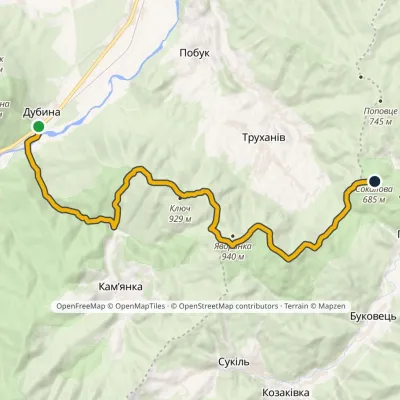 ModerateOne-dayMarkedNo. 500 Dubyna Dovbush Rocksvia Mount KliuchElevation profile418–929 m18.7 kmascent 778 m≈ 6 h walking
 Hard1–2 daysDubyna village to Tukhlia villagevia Kamianka Waterfall, Mount Lopata +1Elevation profile418–1 233 m38.8 kmascent 1 600 m≈ 12.5 h walking
 ModerateOne-dayMarkedPashkivtsi village Mount Hostra HoraElevation profile482–1 345 m5.8 kmascent 872 m≈ 3 h walking
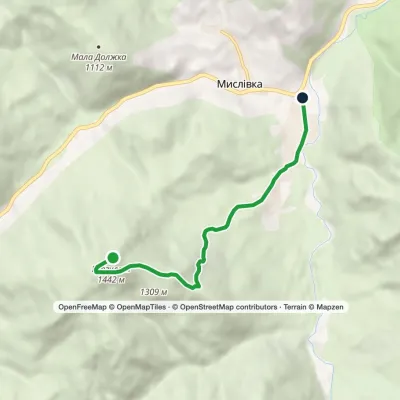 EasyOne-dayMarkedMyslivka GurgulatElevation profile656–1 442 m6.1 kmascent 7 m≈ 1.5 h walking
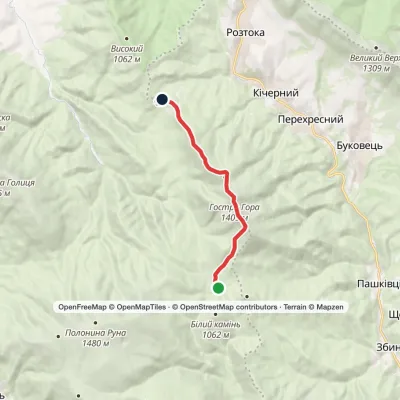 ModerateOne-dayMarkedPreluka tract to Roztoka villagevia Mount Ostra HoraElevation profile839–1 405 m9.5 kmascent 567 m≈ 3.5 h walking
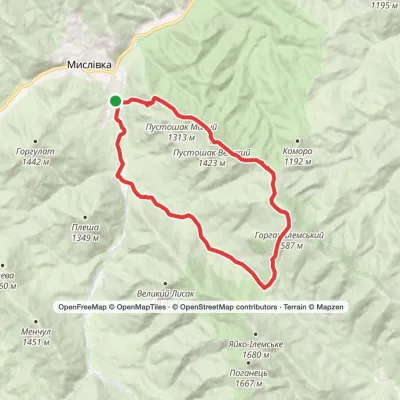 HardOne-dayMarkedMyslivka village loopvia Mount Horhan-IlemskyiElevation profile663–1 587 m24 kmascent 1 188 m≈ 8 h walking
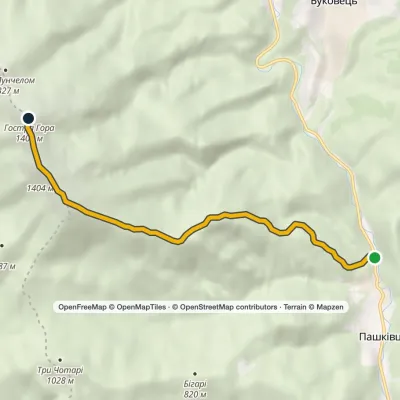 ModerateOne-dayMarkedPashkivtsi Mount HostraElevation profile482–1 405 m6.6 kmascent 979 m≈ 3.5 h walking
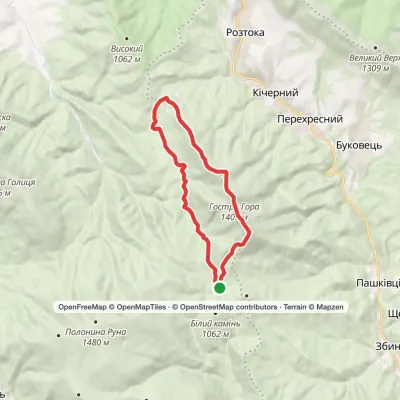 ModerateOne-dayPreluka tract loopvia Mount Ostra Hora, Mount Lysyna +1Elevation profile752–1 405 m18.1 kmascent 874 m≈ 6 h walking
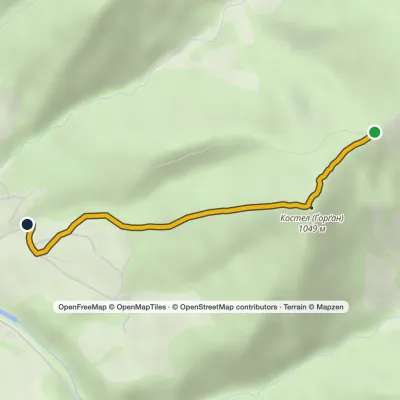 EasyOne-dayMarkedTo Mount KostelElevation profile682–1 049 m2.5 kmascent 367 m≈ 1 h walking
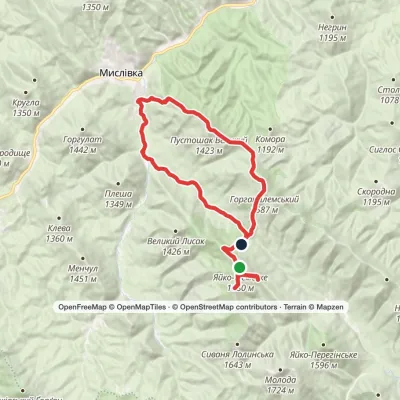 Hard1–2 daysMarkedMyslivka village loopvia Mount Yayko Ilemske, Mount Horhan IlemskyiElevation profile667–1 680 m36.3 kmascent 1 618 m≈ 12 h walking
Peaks and meadows
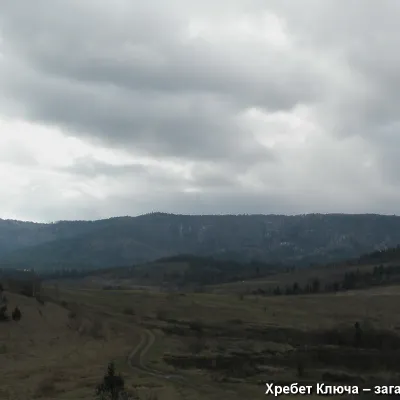 PeakMount YavorinkaTrukhanivaltitude 940 m3 trails to the topThe top of Mount Yavorinka is 940 meters above sea level. Mount Yavorinka is the highest peak of the Klyucha ridge,...
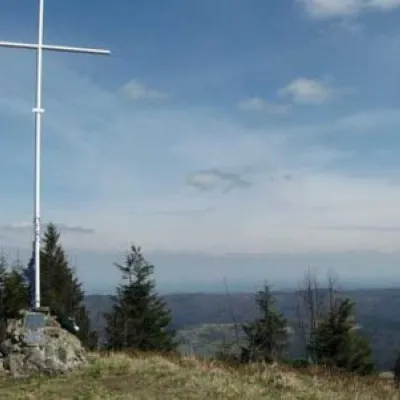 PeakMount LopataKorostivaltitude 1 211 m14 trails to the topThe mountain is located on the Zelemyanka ridge at a distance of 8 km south of the town of Skole.
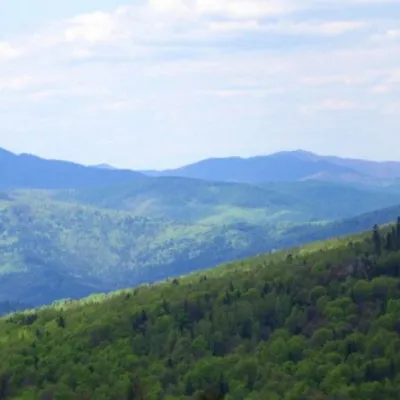 PeakMount KlyuchKamiankaaltitude 927 m · Skole Beskids range2 trails to the topMount Klyuch is one of the peaks of the ridge in the Skole Beskydy, which starts from the Sukel River (Bukivets...
Waters and waterfalls
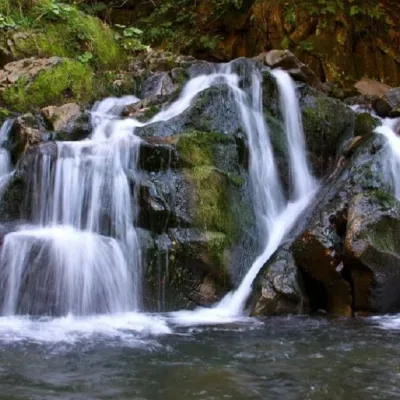 WaterfallKamianka waterfallDubyna"Kamianka Waterfall or Kamianka Waterfall is the most famous waterfall located on the mountain river of the same name...
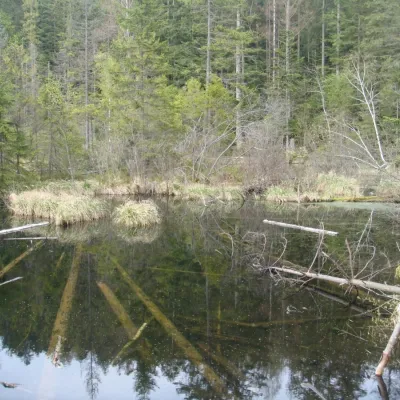 LakeLake Zhuravlyne (Dead Lake)KamiankaThere is one mysterious place in the Skole Beskydy National Nature Park - Zhuravlyne Lake, also called Dead Lake.
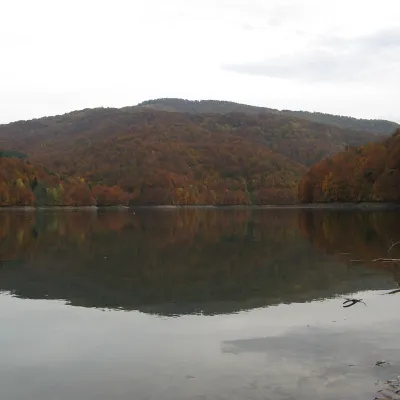 LakeVilshany ReservoirVilshanyThe Vilshany Reservoir, also called the Tereblia-Rika Reservoir, is a narrow mountain lake in the Tereblia valley...
Mountain ranges: Gorgany, Krasna Polonyna, Skole Beskids. In other countries: 🇸🇰 High Tatras, 🇭🇺 Bükk, 🇭🇺 Mátra, 🇭🇺 Zemplén Mountains, 🇸🇰 Western Tatras, 🇵🇱 Low Beskids, 🇸🇰 Low Tatras, 🇷🇴 Vrancea Mountains, 🇷🇴 Bihor-Vlădeasa Mountains, 🇸🇰 Lesser Fatra, 🇷🇴 Hășmaș Mountains
Trails and peaks near which naturalists recorded the species (GBIF, iNaturalist), matched by altitude and habitat. Sightings are not guaranteed.
Sources
- Вікіпедія: Лептура-коримбія червона
- Wikipedia (en): Stictoleptura rubra
- iNaturalist: Stictoleptura rubra (спостереження в Карпатах)
GBIF · iNaturalist · Wikidata · Distribution data: GBIF.org (CC0 and CC BY records), iNaturalist; names and identifiers: Wikidata (CC0). Text: Karpaty.rocks, checked 11.11.2026.
