Red-backed shrike
About
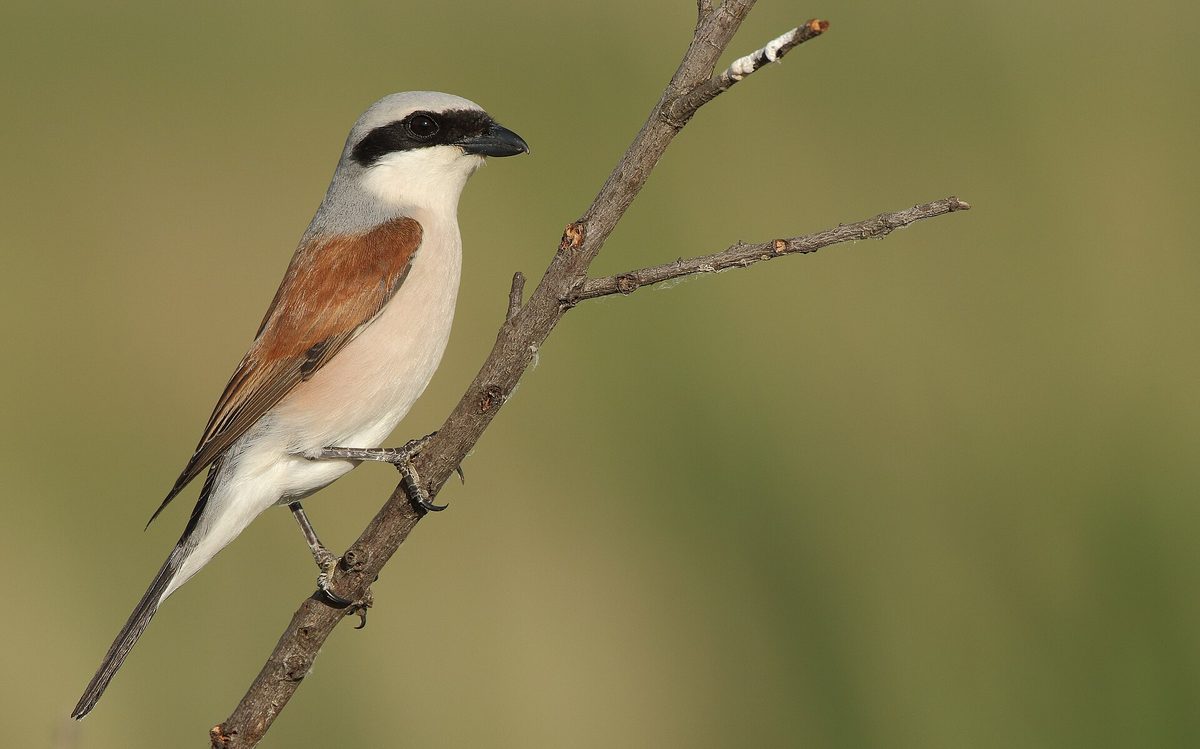
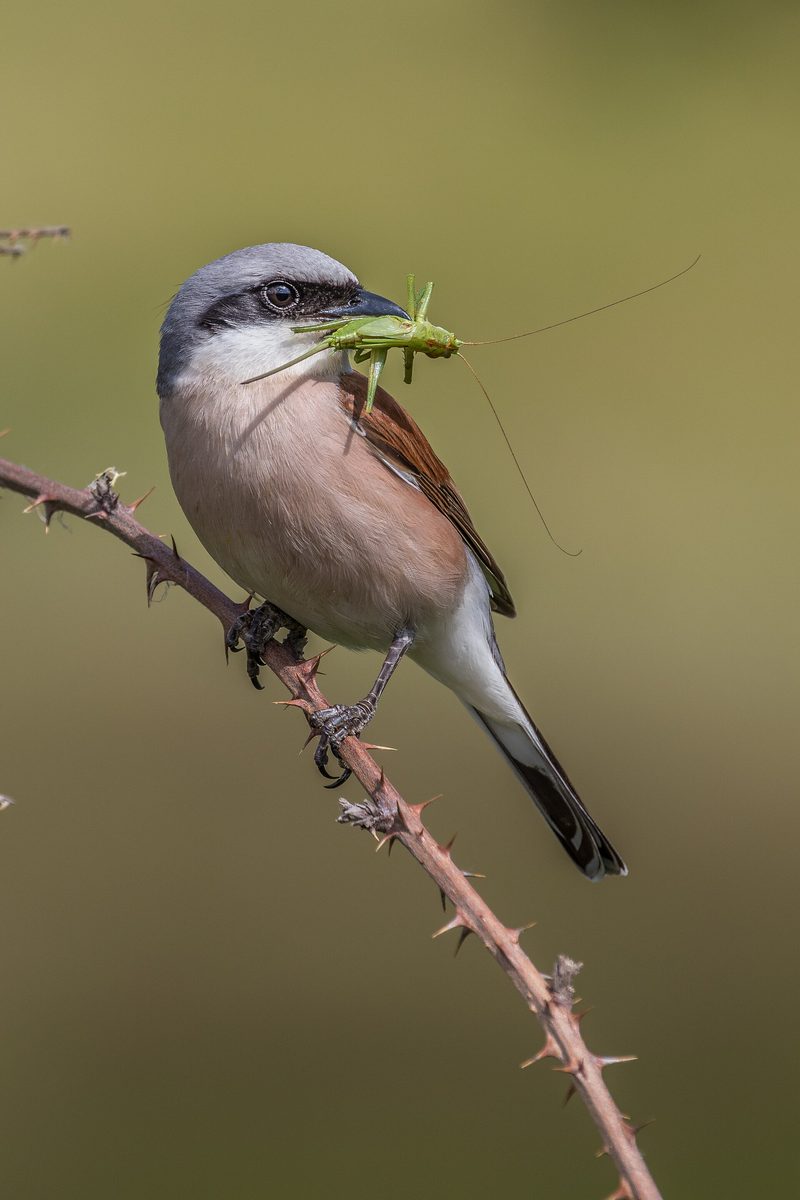
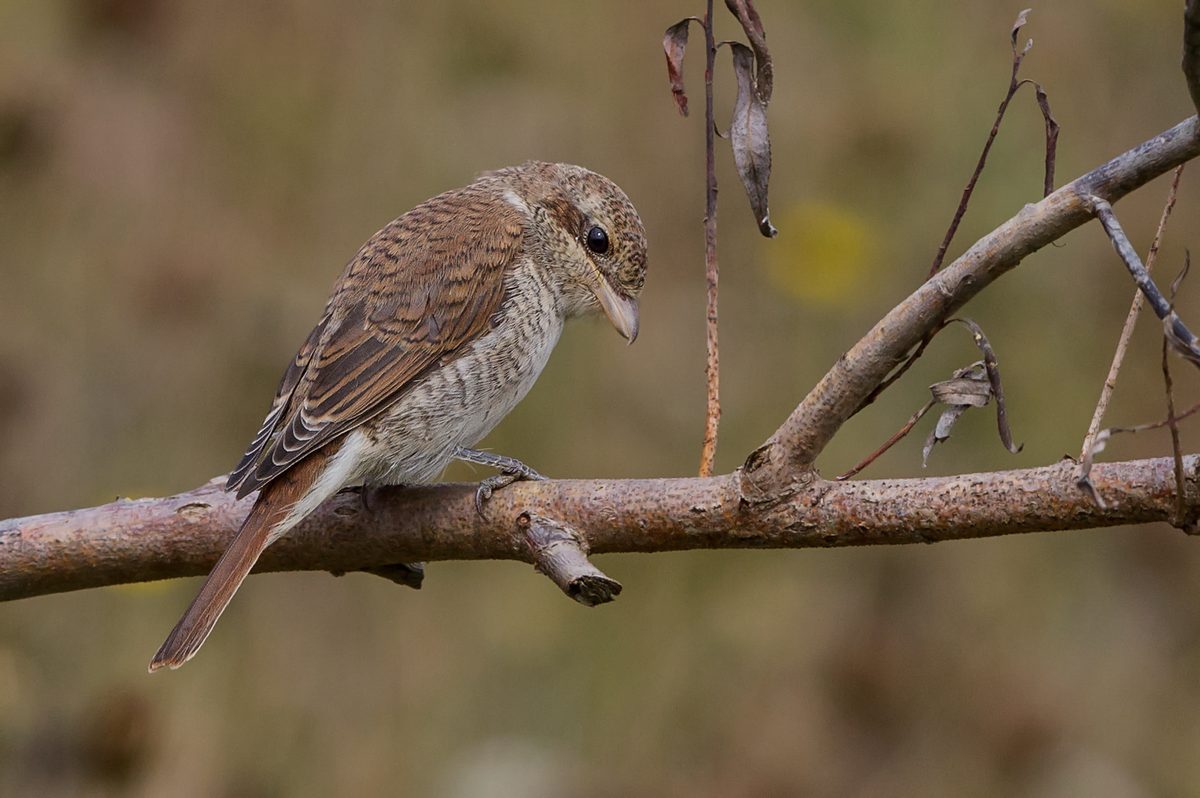
The Red-backed shrike is a bird slightly larger than a sparrow, about 17 cm long. The male is easy to recognize: gray head, wide black stripe across the eye, chestnut-brown back, and pinkish breast. The female is brown, with a fine scaly pattern on the breast. The shrike's beak is strong, with a hook at the end, like a small predator.
It hunts from a perch: sitting on the top of a bush, fence post, or wire, it looks around, twitching its tail, and pounces on its prey. It catches beetles, grasshoppers, bumblebees, and occasionally lizards, mice, and nestlings. It impales excess prey on the thorns of blackthorn, hawthorn, rosehip, or on barbed wire—this way, it divides it into pieces and makes a reserve for bad weather.
In the Carpathians, this bird inhabits open areas with bushes: pastures, meadows, forest edges, abandoned gardens, and hedges along field roads. It occurs from the foothills to mountain meadows, provided there are thorny shrubs for nesting.
The shrike arrives late, in May, and by August-September it departs for wintering in Africa south of the equator. It builds its nest in dense thorny bushes not far from the ground.
In many countries of Western Europe, the species has become rare due to the disappearance of hedges and large insects. Therefore, it is included in Annex I of the EU Birds Directive. In the Carpathians, where pastures with shrubs have been preserved, the shrike is still common.
Where in the Carpathians

Orange — where naturalists recorded the species (GBIF, CC0/CC BY); a blank area does not mean it is absent.
- Countries
- Ukraine · Slovakia · Czechia · Poland · Romania · Hungary · Serbia · Austria · BG
- Mountain ranges
- Skole Beskids, Bieszczady. In other countries: 🇷🇴 Piatra Craiului, 🇭🇺 Bükk, 🇨🇿 Moravian-Silesian Beskids, 🇷🇴 Trascău and Metaliferi Mountains, 🇵🇱 Żywiec Beskids, 🇸🇰 Slovak Ore Mountains, 🇭🇺 Zemplén Mountains, 🇸🇰 Western Tatras, 🇸🇰 Low Tatras, 🇷🇴 Bucegi Mountains, 🇸🇰 Slovak Central Mountains, 🇭🇺 Börzsöny and Cserhát
- Altitude belts
- Foothills (below 600 m) · Beech forests (600–1200 m)
When to see it
| Jan | Feb | Mar | Apr | May | Jun | Jul | Aug | Sep | Oct | Nov | Dec | |
|---|---|---|---|---|---|---|---|---|---|---|---|---|
| Sightings |
From naturalists’ observations in the Carpathians (iNaturalist, research grade): the darker the cell, the more often the species is seen that month.
Protection and rules
Not listed in the Red Data Book of Ukraine. Included in Annex I of the EU Birds Directive.
FAQ
Why does the shrike impale its prey on thorns?
It makes it easier to tear the prey into pieces, and it also serves as a food reserve for rainy days when insects do not fly.
Where can I see the Red-backed shrike in the Carpathians?
In meadows and pastures with thorny bushes like blackthorn, hawthorn, or rosehip. Males sit openly—on the tops of bushes, posts, and wires.
Comments
Travellers’ experience: reports, tips, questions.
No one has written here yet. Be the first — your experience helps others.
Similar species


Where to meet it
Trails
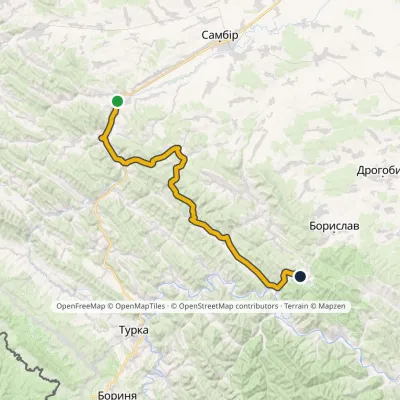 HardTwo-dayMarkedNo. 503-1 Staryi Sambir SkhidnytsiaElevation profile340–826 m57 kmascent 1 054 m
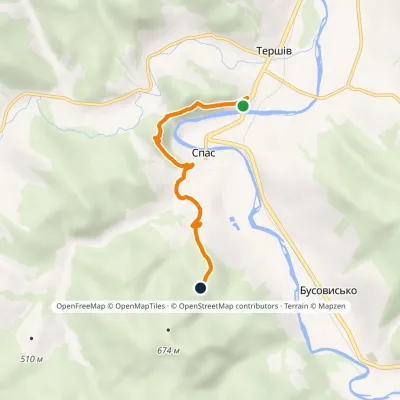 EasyOne-dayMarkedNo. 5015 In the Footsteps of Prince Lev: Tershiv village Spas RockElevation profile369–536 m4.6 kmascent 274 m≈ 1.5 h walking
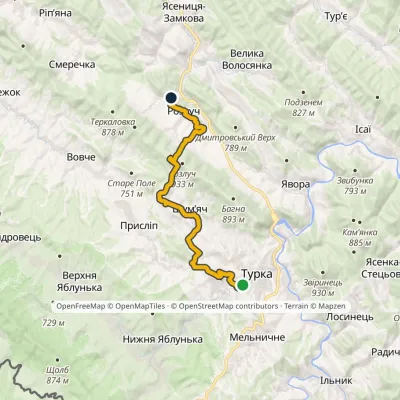 ModerateOne-dayMarkedNo. 5001-1 Turka Rozluchvia source of the DniesterElevation profile539–907 m19 kmascent 568 m≈ 5.5 h walking
 HardOne-dayTukhlia village to Slavskevia Mount MakivkaElevation profile521–1 090 m23.2 kmascent 1 065 m≈ 7.5 h walking
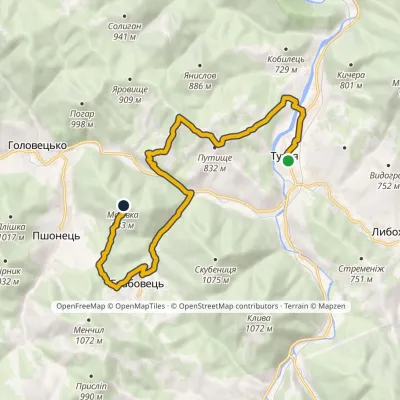 ModerateOne-dayMarkedNo. 5014 «To Zakhar Berkut»: Tukhlia Mount MakivkaElevation profile525–958 m14.4 kmascent 743 m≈ 5 h walking
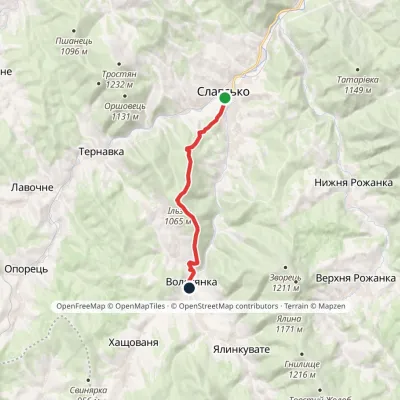 ModerateOne-dayMarkedNo. 5001 Slavske Volosianka villagevia Mount IlzaElevation profile599–1 065 m9.1 kmascent 492 m≈ 3 h walking
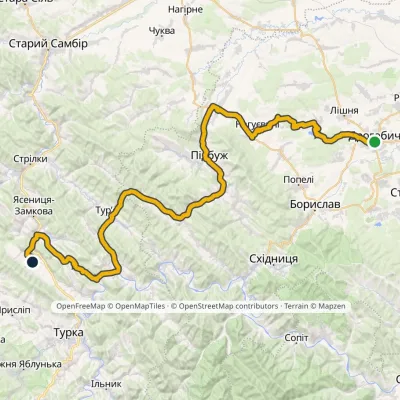 HardMulti-dayMarkedNo. 502-1 Drohobych RozluchElevation profile292–733 m78.1 kmascent 921 m
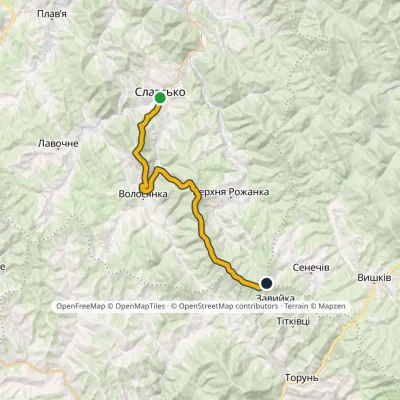 HardOne-dayMarkedNo. 5011 Slavsko «Where Three Regions Meet»Elevation profile592–1 287 m24.5 kmascent 1 326 m≈ 8.5 h walking
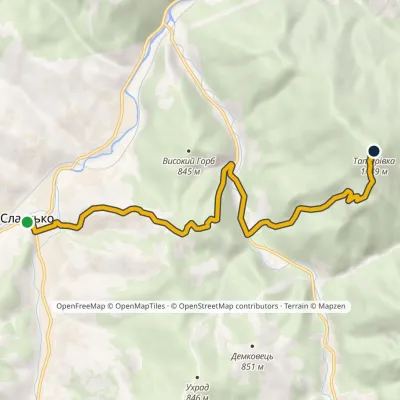 ModerateOne-dayMarkedNo. 5013 Slavsko Mount Tatarivka (Teterivka)Elevation profile587–1 149 m8.6 kmascent 775 m≈ 3.5 h walking
 ModerateOne-dayStavne village loopvia Mount Cheremkha, Lubnia villageElevation profile386–1 130 m18.6 kmascent 847 m≈ 6 h walking
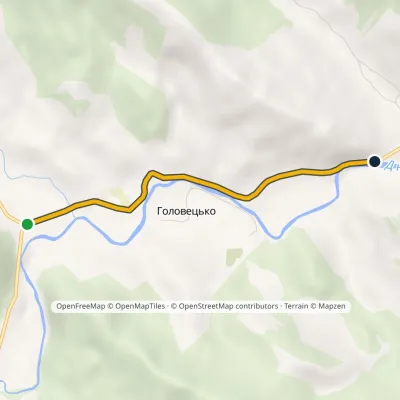 EasyOne-dayMarkedNo. 5018 Nature trail in Holovetsko villageElevation profile443–456 m3.2 kmascent 3 m≈ 45 min walking
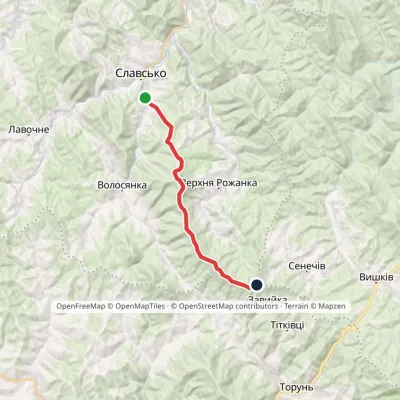 ModerateOne-dayMarkedSlavske Obnoha tractvia Mount Chorna RipaElevation profile603–1 287 m17.2 kmascent 883 m≈ 6 h walking
Waters and waterfalls
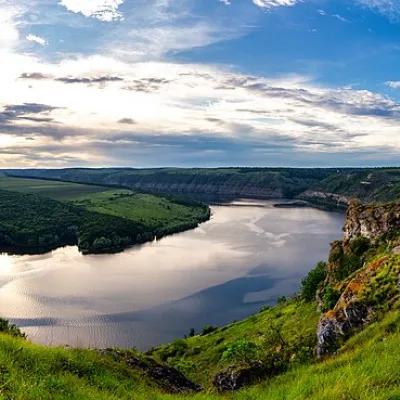 RiverDniesterVovcheThe Dniester is one of the most famous and largest rivers in Ukraine. The Dniester has been used as an important...
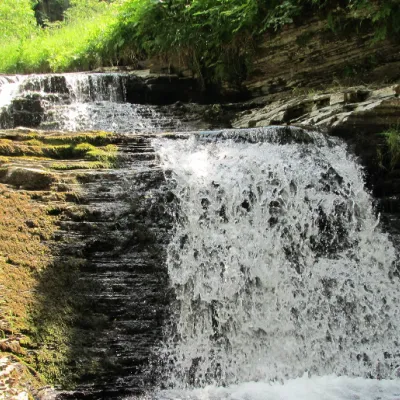 WaterfallSukil WaterfallsSukilNear the village of Sukil in the Bohorodchany urban hromada, the Sukil Waterfalls are truly a paradise for tourists...
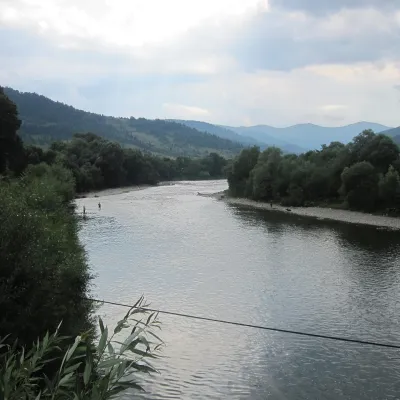 RiverStryi RiverTurkaThe Stryi is one of the largest Carpathian tributaries of the Dniester: 232 km from its source between Mount Yavirnyk...
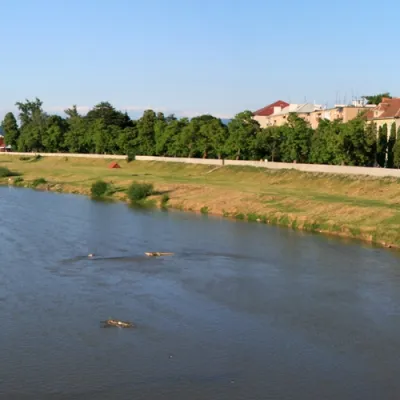 RiverLatorytsiaRoztokaLatorytsia River - Latorytsia and its surroundings are a popular destination for eco-tourism.
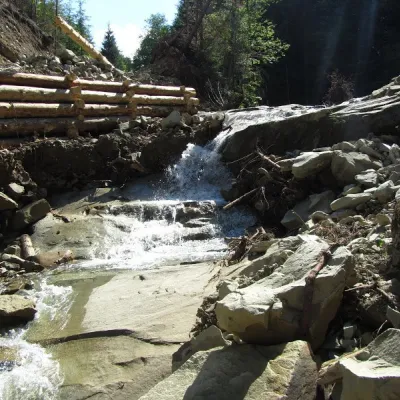 WaterfallSiruchok waterfallTovarnytsiaSiruchok is a waterfall located in the Putyla district of the Chernivtsi region of Ukraine. its height reaches about...
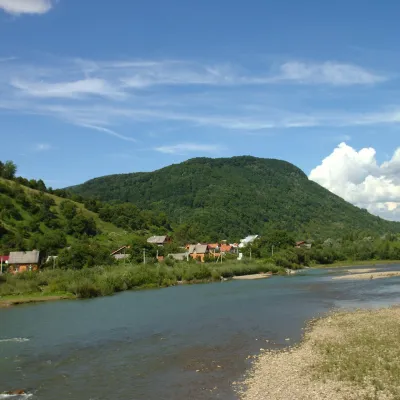 RiverRika RiverMizhhiriaThe Rika rises near the village of Torun on the south-western slopes of the Verkhovyna Range, where the Pryslip and...
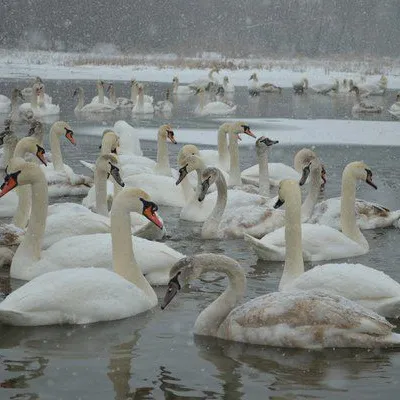 LakeSwan Lake, ChortoryaChortoriaHe is associated with a story about swans on the lake that come here with the onset of cold weather.
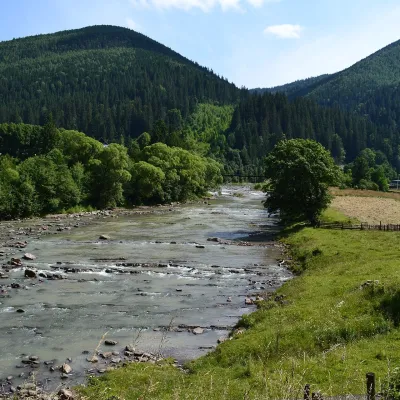 RiverChorna Tysa RiverYasinyaThe Chorna Tysa is a mountain river in eastern Zakarpattia. It rises on the northern spurs of the Svydovets massif...
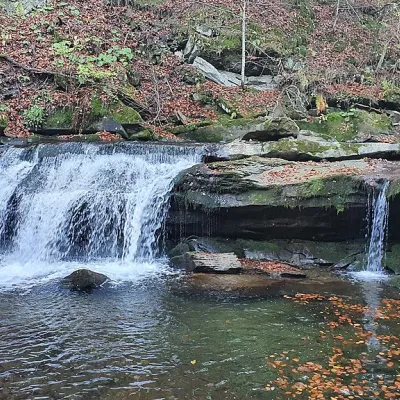 WaterfallKrushelnytskyi waterfallKrushelnytsiaThe real decoration of the mighty Carpathian Mountains is its numerous picturesque waterfalls.
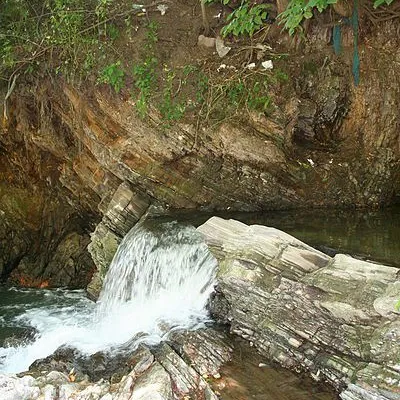 WaterfallBoryslav waterfallBoryslavThe Young Boryslav Waterfall is a small waterfall (falling height is about two meters).
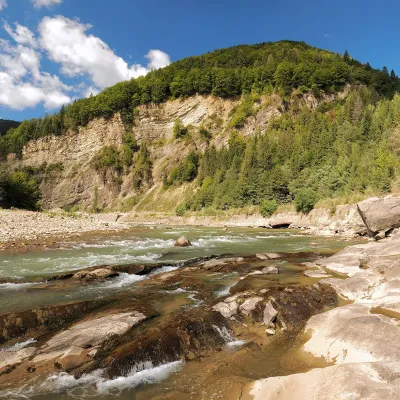 RiverCheremosh RiverVyzhnytsiaThe Cheremosh is born near Usteriky, where the Chornyi Cheremosh and the Bilyi Cheremosh meet.
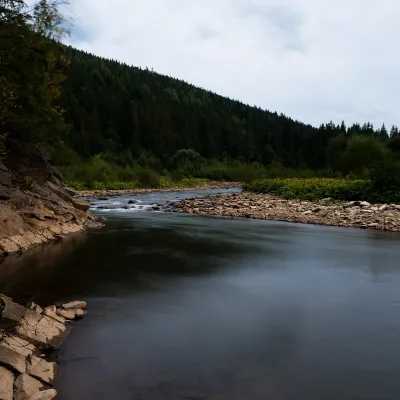 RiverSvicha RiverVyhodaThe Svicha is a 107-km right-bank tributary of the Dniester. It rises on the northern slopes of the main Gorgany...
Mountain ranges: Skole Beskids, Bieszczady. In other countries: 🇷🇴 Piatra Craiului, 🇭🇺 Bükk, 🇨🇿 Moravian-Silesian Beskids, 🇷🇴 Trascău and Metaliferi Mountains, 🇵🇱 Żywiec Beskids, 🇸🇰 Slovak Ore Mountains, 🇭🇺 Zemplén Mountains, 🇸🇰 Western Tatras, 🇸🇰 Low Tatras, 🇷🇴 Bucegi Mountains, 🇸🇰 Slovak Central Mountains, 🇭🇺 Börzsöny and Cserhát
Trails and peaks near which naturalists recorded the species (GBIF, iNaturalist), matched by altitude and habitat. Sightings are not guaranteed.
Sources
- Вікіпедія: Сорокопуд терновий
- Wikipedia (en): Red-backed shrike
- Директива 2009/147/ЄС про охорону диких птахів (додаток I)
- iNaturalist: Lanius collurio (спостереження в Карпатах)
GBIF · iNaturalist · Wikidata · Distribution data: GBIF.org (CC0 and CC BY records), iNaturalist; names and identifiers: Wikidata (CC0). Text: Karpaty.rocks, checked 11.11.2026.
