Purple emperor
About
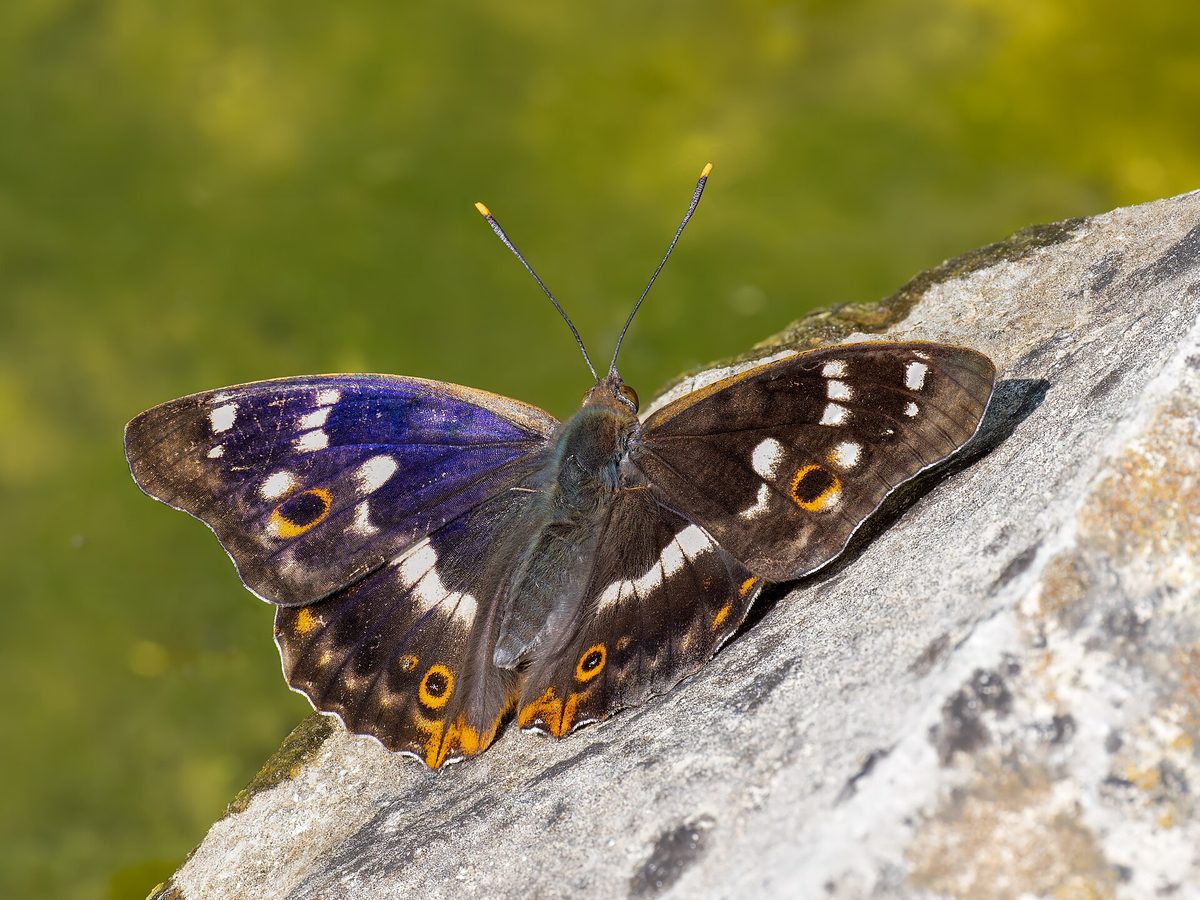
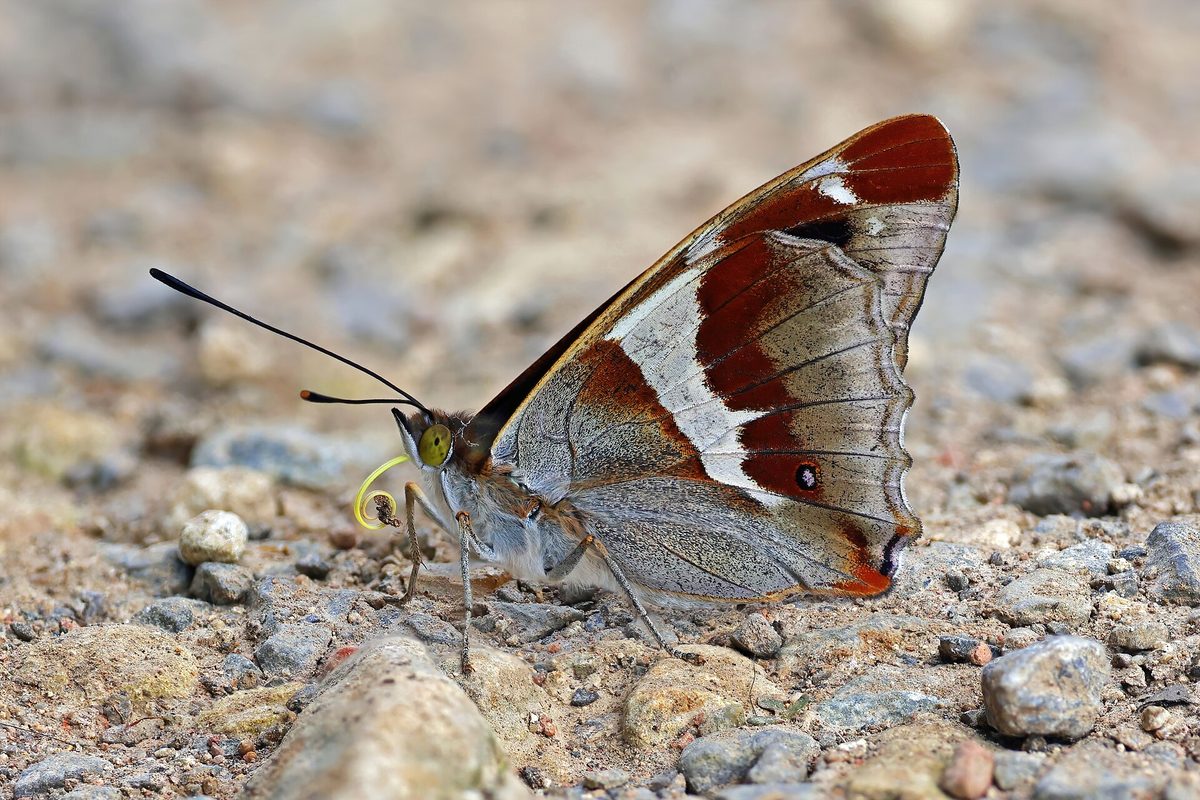
The Purple emperor is one of the most spectacular butterflies in our forests. Wingspan is 6–8 cm. The wings are dark brown with white spots and a white band on the hindwings, with an eye spot in an orange ring near the hind corner. The male's scales refract light, so at a certain angle, the wings suddenly flash blue-purple. The female is larger and lacks this sheen.
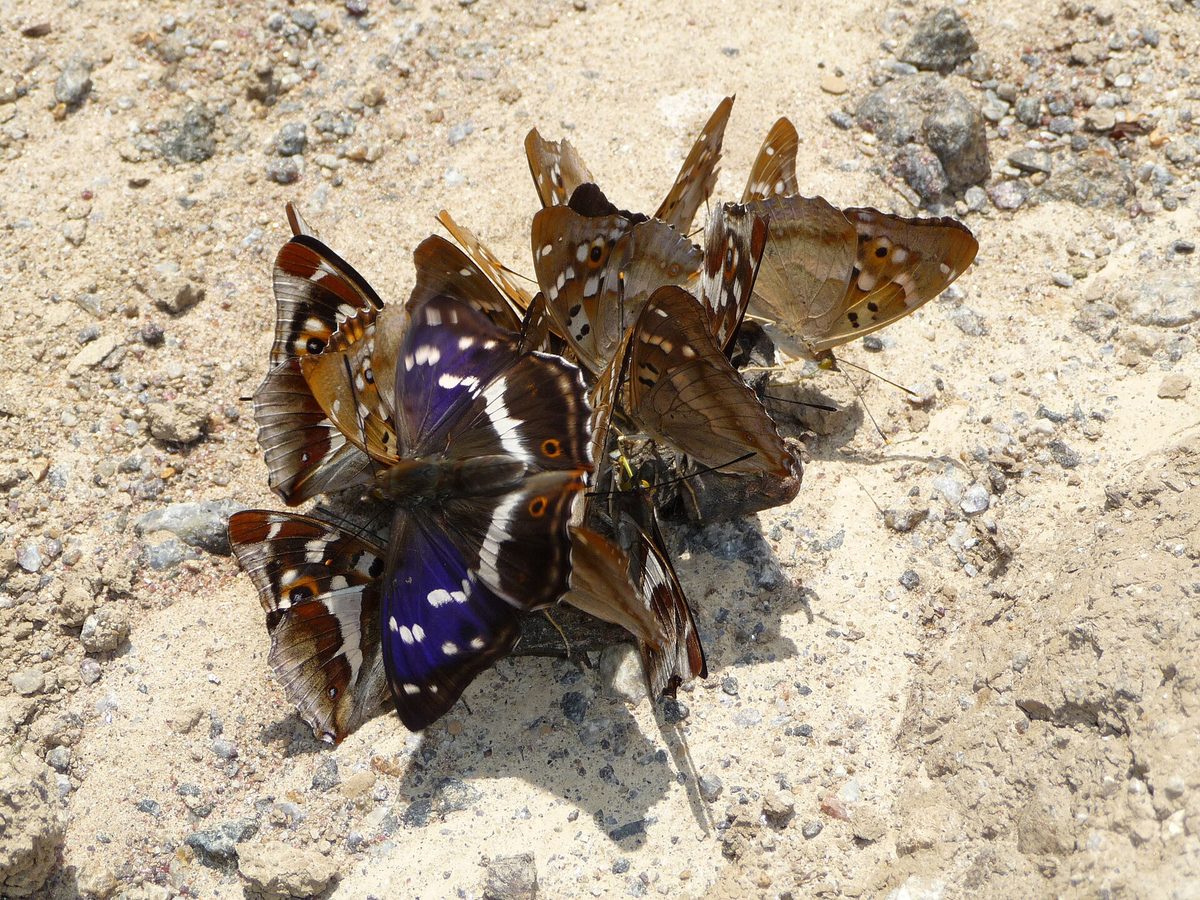
Butterflies fly from late June to August, with one generation. They spend most of their time in the treetops, making them difficult to see. The Purple emperor does not visit flowers. Males descend to forest roads in the morning: they drink from puddles and moist soil, land on animal droppings, and even on sweaty backpacks. It is easiest to encounter them on dirt roads in deciduous forests.
In the Carpathians, the species lives in deciduous and mixed forests of the valleys and lower mountain belt, primarily along rivers and streams where goat willow grows—the main food plant for the caterpillars. The caterpillar is green, with two 'horns' on its head, and overwinters on a branch.
The similar Lesser purple emperor has another dark eye spot on the forewing in a reddish ring, and the white band on the hindwing lacks a sharp tooth.
The species is listed in the Red Data Book of Ukraine (vulnerable). Catching butterflies is prohibited. It is harmed by the logging of riparian forests and the destruction of willows on forest edges. Distribution on the website is shown only at the level of massifs.
Where in the Carpathians

Orange — where naturalists recorded the species (GBIF, CC0/CC BY). It occurs only locally, so we draw no approximate range; a blank area does not mean it is absent. For rare and vulnerable species the map is deliberately coarse (hexagons of ~250 km² or more) so that it never points to dens, nests or growing sites.
- Countries
- Ukraine · Romania · Hungary · Slovakia · Poland · Serbia · Austria
- Mountain ranges
- Gorgany, Pokuttia-Bukovina Carpathians, Chornohora, Maramureș Mountains, Vihorlat-Gutin Volcanic Ridge, Krasna Polonyna. In other countries: 🇭🇺 Mátra, 🇷🇴 Bihor-Vlădeasa Mountains, 🇭🇺 Bükk, 🇸🇰 High Tatras, 🇷🇴 Mehedinți and Cerna Mountains, 🇭🇺 Börzsöny and Cserhát, 🇷🇴 Făgăraș Mountains, 🇭🇺 Zemplén Mountains
- Altitude belts
- Foothills (below 600 m) · Beech forests (600–1200 m)
When to see it
| Jan | Feb | Mar | Apr | May | Jun | Jul | Aug | Sep | Oct | Nov | Dec | |
|---|---|---|---|---|---|---|---|---|---|---|---|---|
| Sightings |
From naturalists’ observations in the Carpathians (iNaturalist, research grade): the darker the cell, the more often the species is seen that month.
Protection and rules
Listed in the Red Data Book of Ukraine (vulnerable). Catching and collecting is prohibited.
FAQ
Where can I see the Purple emperor?
On dirt forest roads in deciduous and mixed forests near rivers, in the mornings on sunny days in July. Males land on moist soil and puddles.
Why do the wings of the Purple emperor change color?
The scales on the male's wings refract light. At one angle, the wings appear brown, at another — bright blue-purple.
Comments
Travellers’ experience: reports, tips, questions.
No one has written here yet. Be the first — your experience helps others.
Similar species
Where to meet it
Ranges where it occurs: Gorgany, Pokuttia-Bukovina Carpathians, Chornohora, Maramureș Mountains, Vihorlat-Gutin Volcanic Ridge, Krasna Polonyna. In other countries: 🇭🇺 Mátra, 🇷🇴 Bihor-Vlădeasa Mountains, 🇭🇺 Bükk, 🇸🇰 High Tatras, 🇷🇴 Mehedinți and Cerna Mountains, 🇭🇺 Börzsöny and Cserhát, 🇷🇴 Făgăraș Mountains, 🇭🇺 Zemplén Mountains
Trails and peaks near which naturalists recorded the species (GBIF, iNaturalist), matched by altitude and habitat. Sightings are not guaranteed.
Sources
- Вікіпедія: Мінливець великий
- Wikipedia (en): Apatura iris
- Наказ Міндовкілля від 19.01.2021 № 29: Перелік видів тварин, що заносяться до Червоної книги України
- iNaturalist: Apatura iris (спостереження в Карпатах)
GBIF · iNaturalist · Wikidata · Distribution data: GBIF.org (CC0 and CC BY records), iNaturalist; names and identifiers: Wikidata (CC0). Text: Karpaty.rocks, checked 11.11.2026.
