Silver-washed fritillary
About
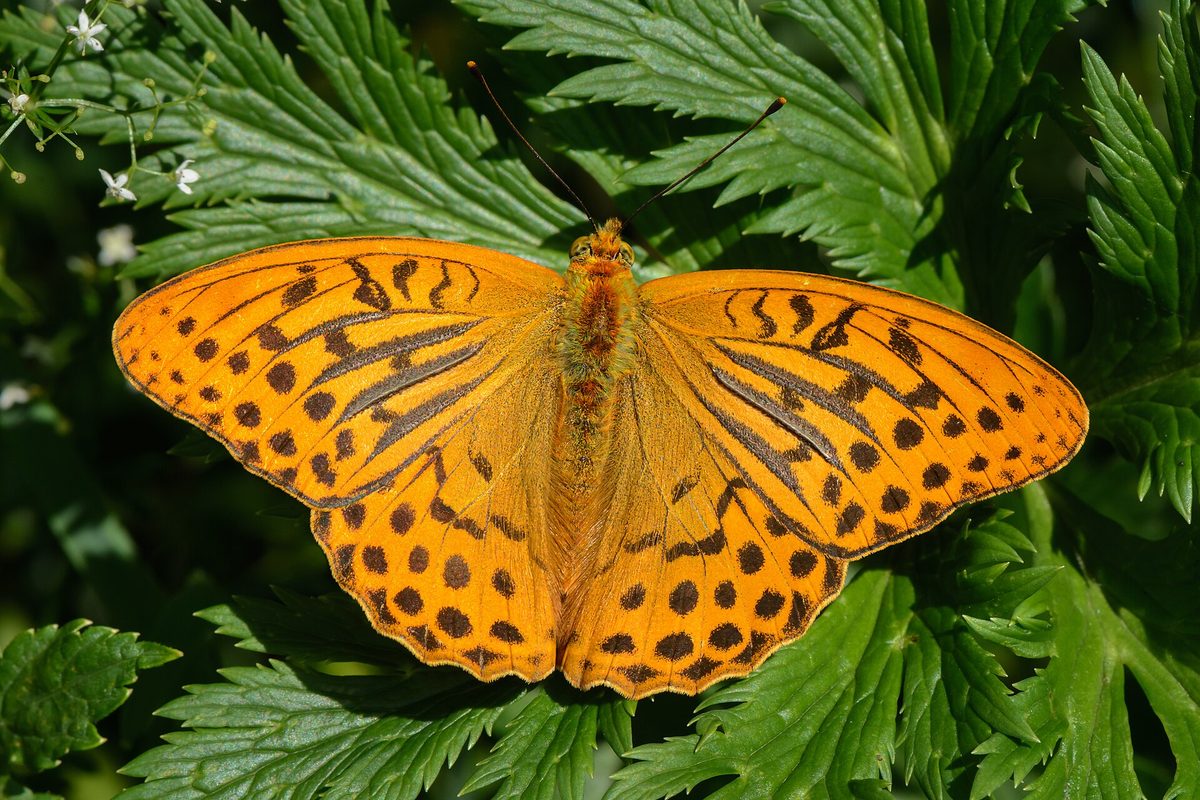
The Silver-washed fritillary is one of the largest and most noticeable butterflies of the summer forest. In Ukraine, it is found almost everywhere, except for the treeless areas in the southern steppe, and in the Carpathians, it is easiest to see in sunny forest clearings, edges, and along forest roads, where brambles, thistles, cornflowers, and other nectar-rich plants bloom — the adults feed on their nectar.
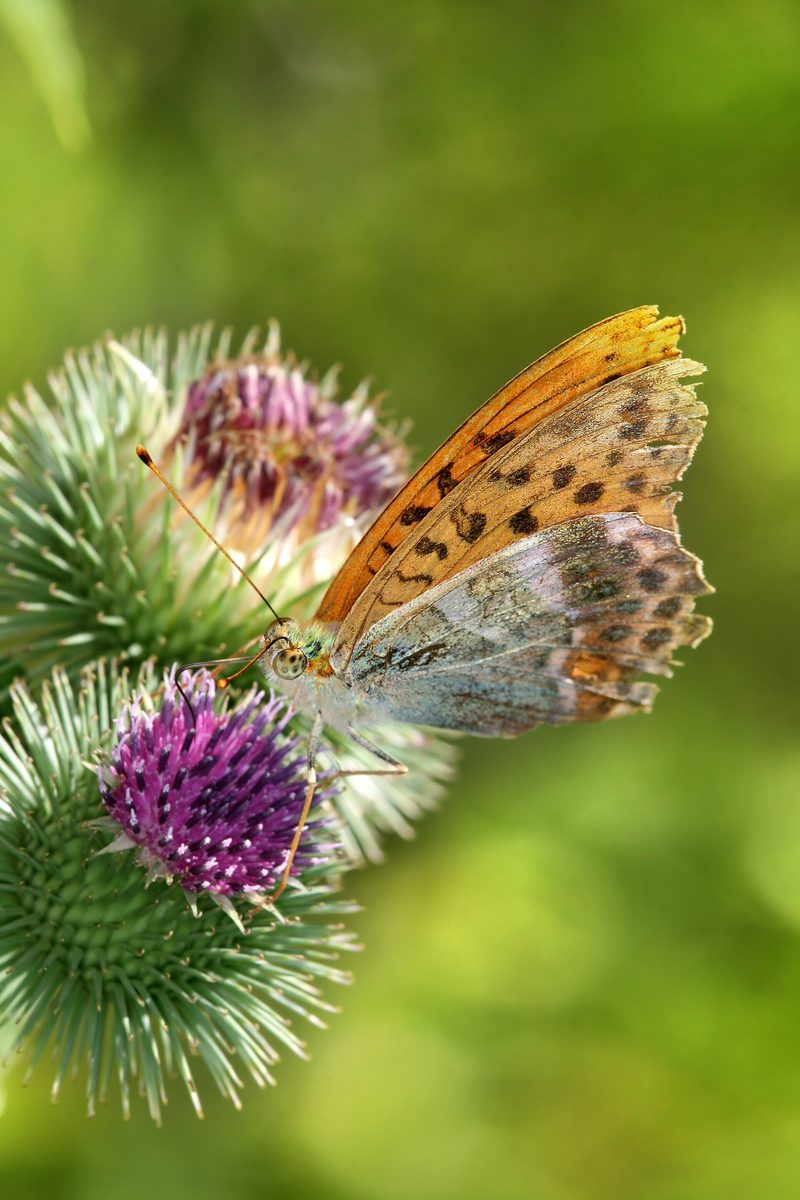
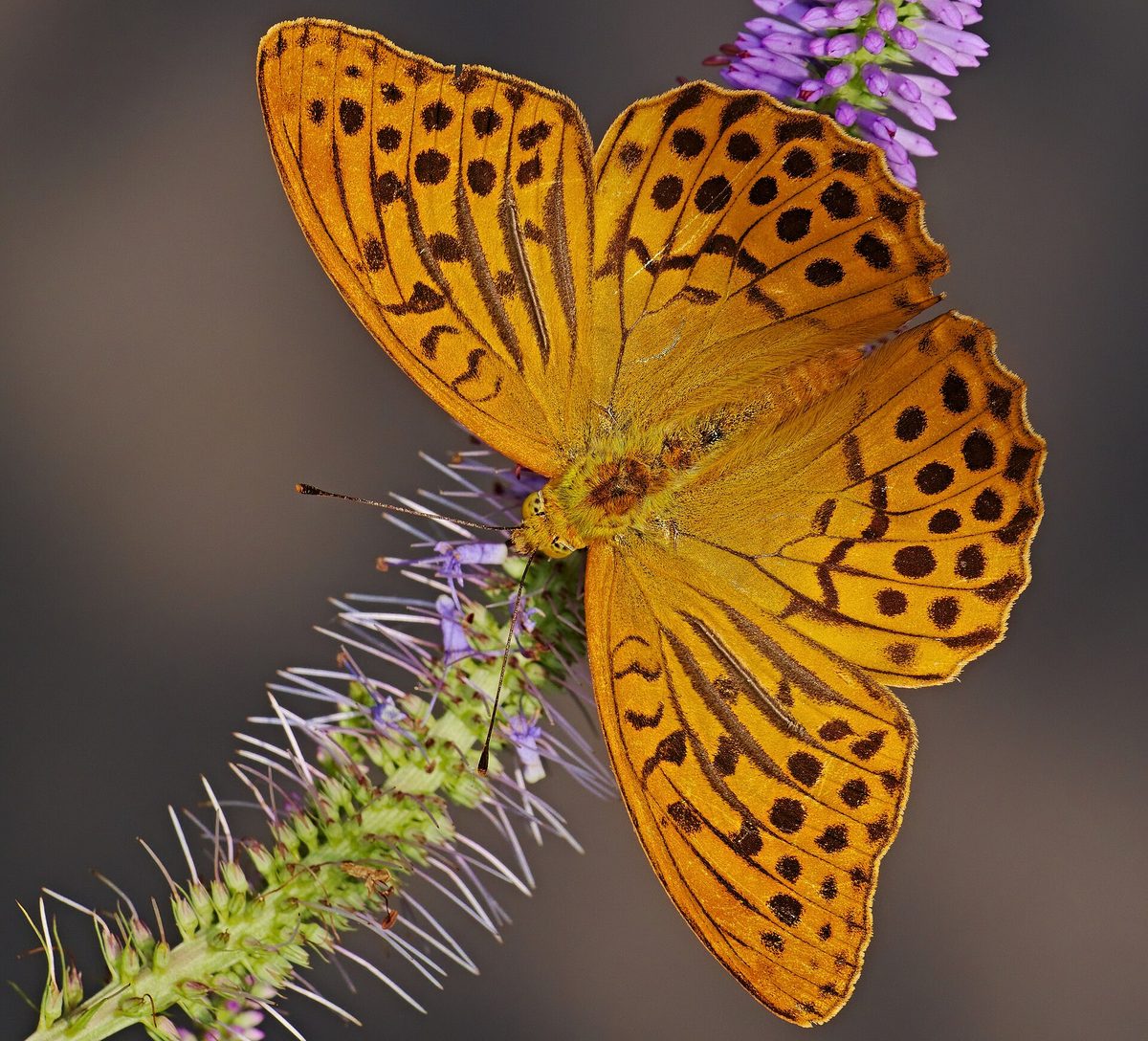
Wingspan is 55–70 mm; males are smaller and lighter than females. The upper side of the wings is bright orange with black spots, and males have three dark stripes along the veins of the forewings with fragrant scales, the scent of which attracts females. The butterfly gets its name from the underside of the hindwings: it is greenish with wide silvery stripes that shimmer when the butterfly folds its wings.
Interestingly, the Silver-washed fritillary takes care of its offspring. The caterpillar feeds on the leaves of violets, but the female lays eggs not on them, but in the crevices of tree bark at a height of one to two meters above the forest floor, near places where violets grow. The caterpillar that hatches in August immediately goes into hibernation and only descends to the ground in spring to search for food. It is black-brown, with two yellow stripes along its back and long reddish-brown spines; it mostly feeds at night and hides during the day.
The Silver-washed fritillary is not listed in the Red Book of Ukraine. Its most important habitats are light forests with clearings where violets grow for the caterpillars and nectar-bearing flowers for the butterflies.
Where in the Carpathians

The map shows where naturalists recorded the species (GBIF, CC0 and CC BY records), not every place it lives. The Ukrainian Carpathians are less studied, so a blank area does not mean the species is absent.
- Countries
- Hungary · Romania · Slovakia · Austria · Ukraine · Poland · Czechia
- Mountain ranges
- Bükk, Mátra, Börzsöny and Cserhát, Zemplén Mountains, High Tatras, Piatra Craiului, Slovak Ore Mountains, Vrancea Mountains, Western Tatras, Bihor-Vlădeasa Mountains
- Altitude belts
- Foothills (below 600 m) · Beech forests (600–1200 m)
When to see it
| Jan | Feb | Mar | Apr | May | Jun | Jul | Aug | Sep | Oct | Nov | Dec | |
|---|---|---|---|---|---|---|---|---|---|---|---|---|
| Sightings |
From naturalists’ observations in the Carpathians (iNaturalist, research grade): the darker the cell, the more often the species is seen that month.
Protection and rules
Not listed in the Red Book of Ukraine.
FAQ
What is the large orange butterfly in the forest clearings?
Often it is the Silver-washed fritillary: orange wings with black spots, and silvery stripes on the underside of the hindwings.
What does the caterpillar of the Silver-washed fritillary feed on?
On the leaves of violets. The female lays eggs in the crevices of tree bark nearby, and the caterpillar descends to the violets in spring.
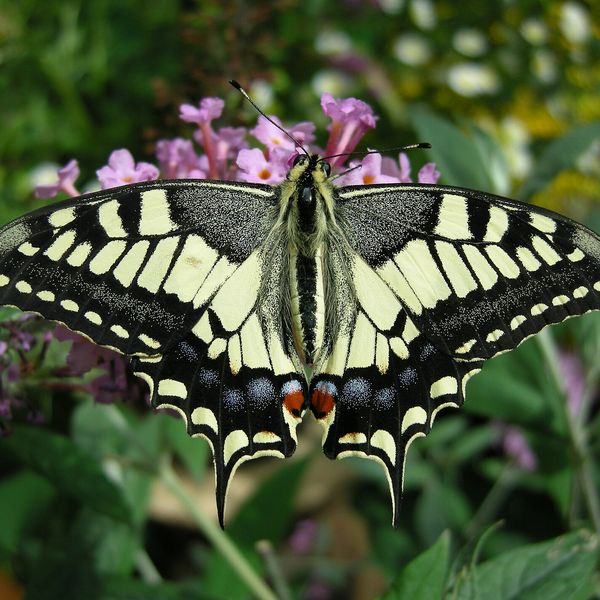
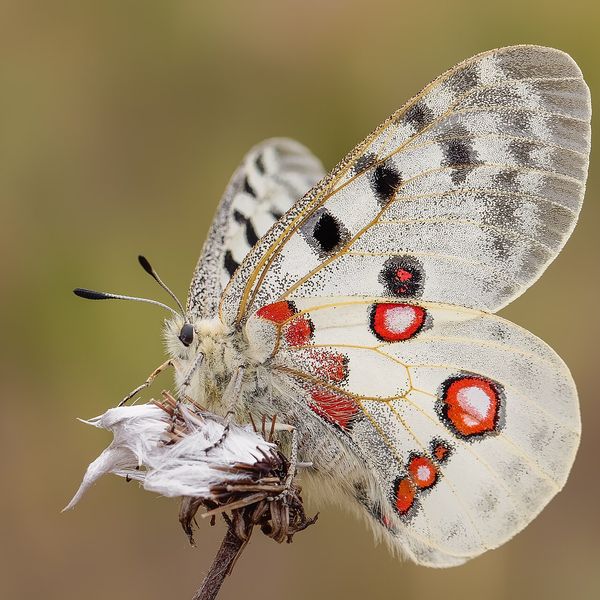
Similar species
Where to meet it
Trails
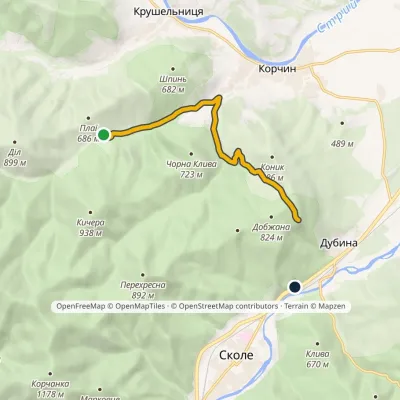 EasyOne-dayMarkedNo. 500 Skole Hurkalo waterfallElevation profile424–816 m7.5 kmascent 428 m≈ 2.5 h walking
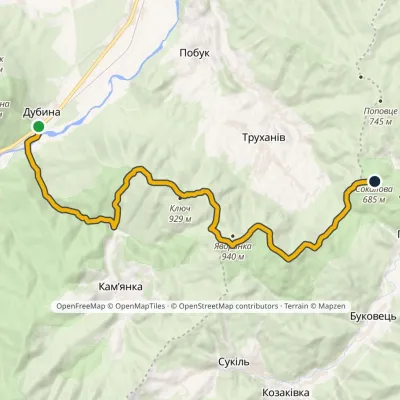 ModerateTwo-dayMarkedNo. 500 Dubyna Dovbush Rocksvia Mount KliuchElevation profile418–929 m18.7 kmascent 778 m≈ 6 h walking
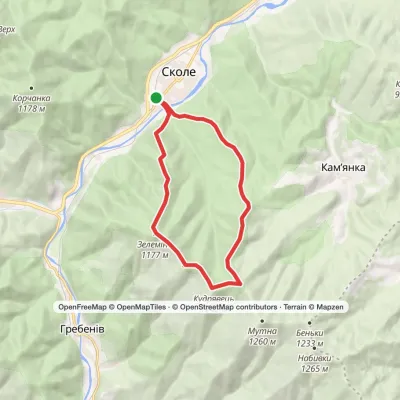 ModerateTwo-daySkole loopvia Mount LopataElevation profile437–1 242 m14.9 kmascent 972 m≈ 5.5 h walking
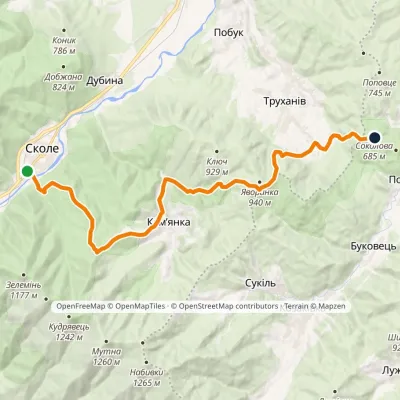 HardTwo-dayMarkedNo. 501 Skole Dovbush RocksElevation profile437–921 m20.4 kmascent 987 m≈ 7 h walking
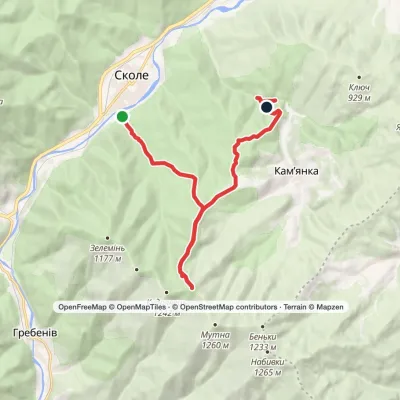 ModerateTwo-daySkole to Kamianka Waterfallvia Mount LopataElevation profile447–1 211 m18 kmascent 823 m≈ 6 h walking
 ModerateTwo-dayMarkedSkole loopvia Mount LopataElevation profile437–1 211 m17.3 kmascent 766 m≈ 6 h walking
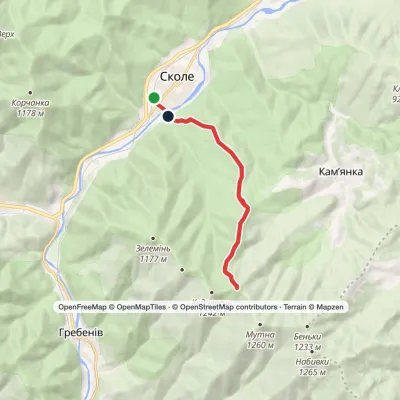 ModerateTwo-dayMarkedSkole loopvia Mount LopataElevation profile437–1 211 m15.2 kmascent 771 m≈ 5.5 h walking
 HardMulti-dayDubyna village to Tukhlia villagevia Kamianka Waterfall, Mount Lopata +1Elevation profile418–1 233 m38.8 kmascent 1 600 m≈ 13 h walking
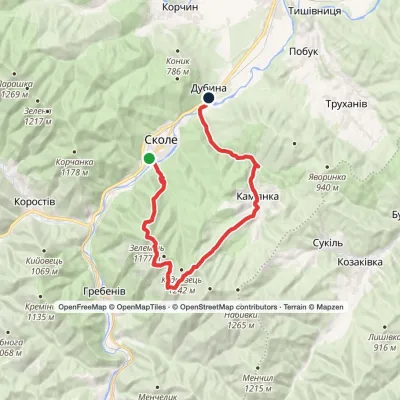 HardMulti-daySkole to Dubyna villagevia Mount Lopata, Kamianka WaterfallElevation profile418–1 211 m25.7 kmascent 986 m≈ 8.5 h walking
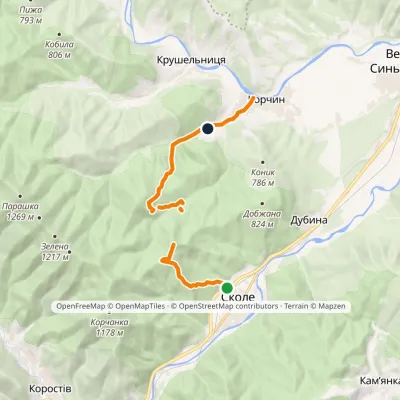 ModerateOne-dayMarkedNo. 5010 «To the bunker of the OUN-UPA propaganda centre»Elevation profile399–906 m10.5 kmascent 704 m≈ 4 h walking
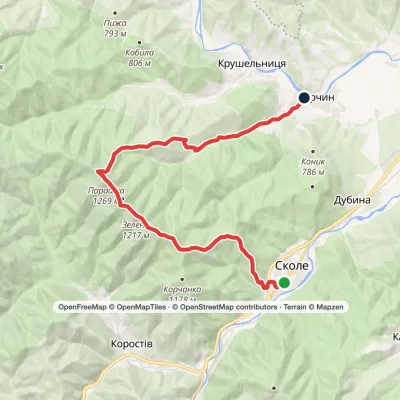 HardTwo-dayMarkedSkole to Korchyn villagevia Mount Parashka, Hurkalo WaterfallElevation profile400–1 268 m22 kmascent 964 m≈ 7.5 h walking
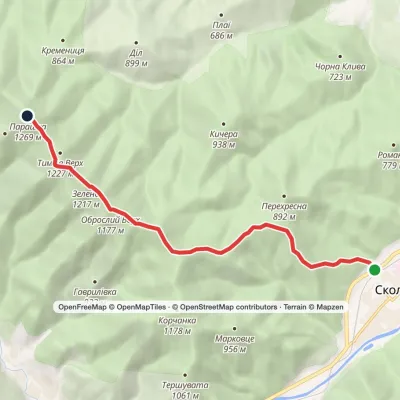 ModerateOne-dayMarkedSkole Mount ParashkaElevation profile450–1 268 m9.1 kmascent 930 m≈ 4 h walking
Waters and waterfalls
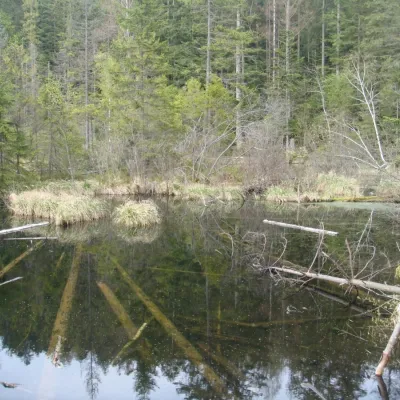 LakeLake Zhuravlyne (Dead Lake)KamiankaThere is one mysterious place in the Skole Beskydy National Nature Park - Zhuravlyne Lake, also called Dead Lake.
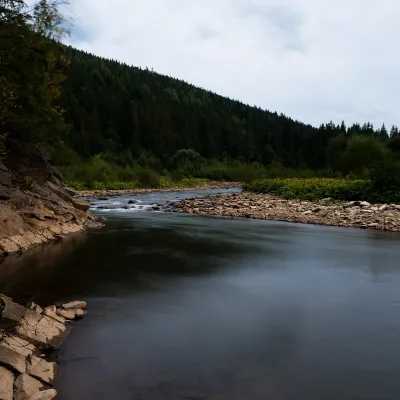 RiverSvicha RiverVyhodaThe Svicha is a 107-km right-bank tributary of the Dniester. It rises on the northern slopes of the main Gorgany...
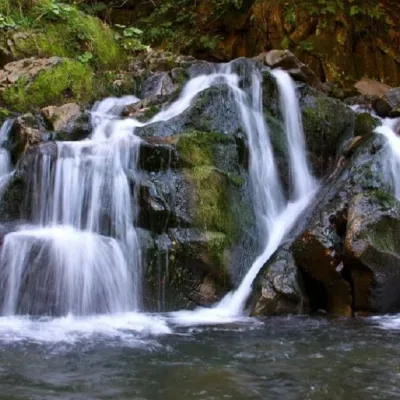 WaterfallKamianka waterfallDubyna"Kamianka Waterfall or Kamianka Waterfall is the most famous waterfall located on the mountain river of the same name...
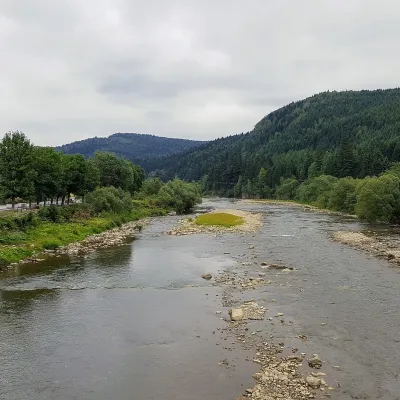 RiverOpir RiverSkoleThe Opir is a 58-km mountain river of the Skole Beskids. It rises on the eastern slope of Mount Velykyi Yavirnyk,...
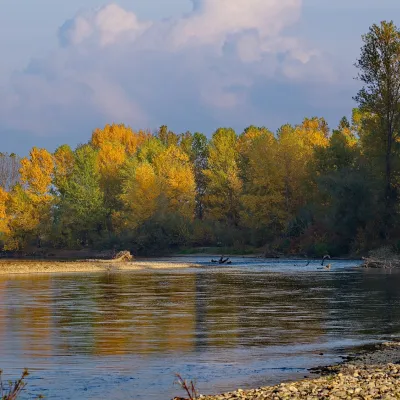 RiverTysa River (Tisza)RakhivThe Tysa (Tisza) is the main river of Zakarpattia. It begins on the north-eastern edge of Rakhiv, where the Chorna...
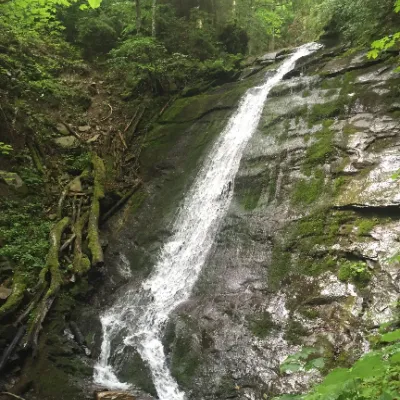 WaterfallNarinetskyi waterfall, MykulychynMykulychynNarinetskyi Waterfall is a waterfall in the Ukrainian Carpathians, on the Noretskyi Stream (a left tributary of the...
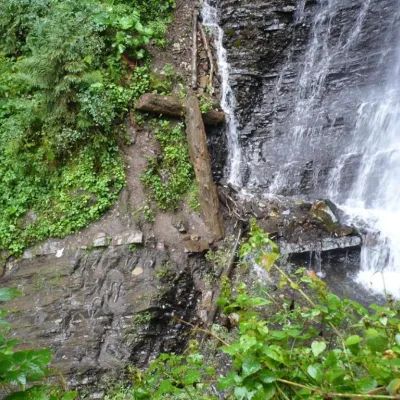 WaterfallZhenetsky Hook waterfallMykulychynZhenetskyi Huk is one of the most convenient Carpathian waterfalls for tourists, as it is accessible by a direct,...
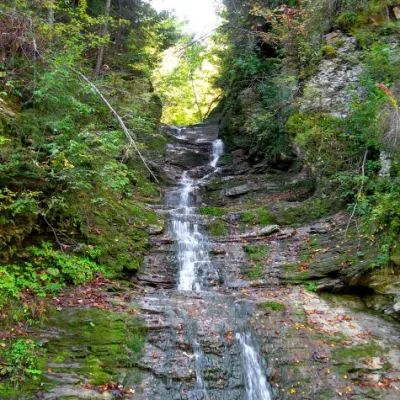 WaterfallBukovinian (Smugar) waterfallsRoztokyA picturesque chain of waterfalls, up to two kilometers long, stretches along the Smuhariv River in Bukovyna, in the...
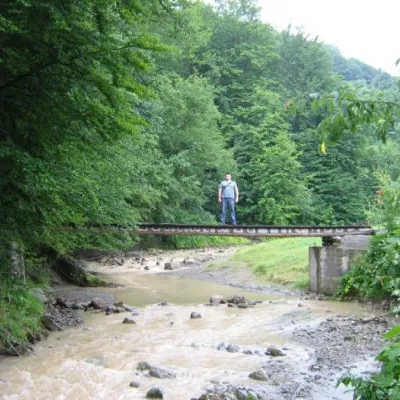 WaterfallMikva waterfallVyzhenkaThe Mykva Waterfall is a small but very picturesque waterfall located in the village of Vyzhenka, Chernivtsi region.
Mountain ranges: Maramureș Mountains. In other countries: 🇭🇺 Bükk, 🇭🇺 Mátra, 🇭🇺 Börzsöny and Cserhát, 🇭🇺 Zemplén Mountains, 🇸🇰 High Tatras, 🇷🇴 Piatra Craiului, 🇸🇰 Slovak Ore Mountains, 🇷🇴 Vrancea Mountains, 🇸🇰 Western Tatras, 🇷🇴 Bihor-Vlădeasa Mountains, 🇷🇴 Mehedinți and Cerna Mountains, 🇷🇴 Harghita and Gurghiu Mountains, 🇷🇴 Nemira and Bodoc Mountains
Trails and peaks near which naturalists recorded the species (GBIF, iNaturalist), matched by altitude and habitat. Sightings are not guaranteed.
Sources
- Вікіпедія: Підсрібник великий
- Wikipedia (en): Silver-washed fritillary
- Перелік видів тварин, що заносяться до Червоної книги України (наказ Міндовкілля від 19.01.2021 № 29, зареєстровано в Мін'юсті 01.03.2021 за № 260/35882)
- Міндовкілля: текст переліку видів тварин Червоної книги України (PDF)
- GBIF: таксон і категорія МСОП
GBIF · iNaturalist · Wikidata · Distribution data: GBIF.org (CC0 and CC BY records), iNaturalist; names and identifiers: Wikidata (CC0). Text: Karpaty.rocks, checked 09.11.2026.
