Apollo
About
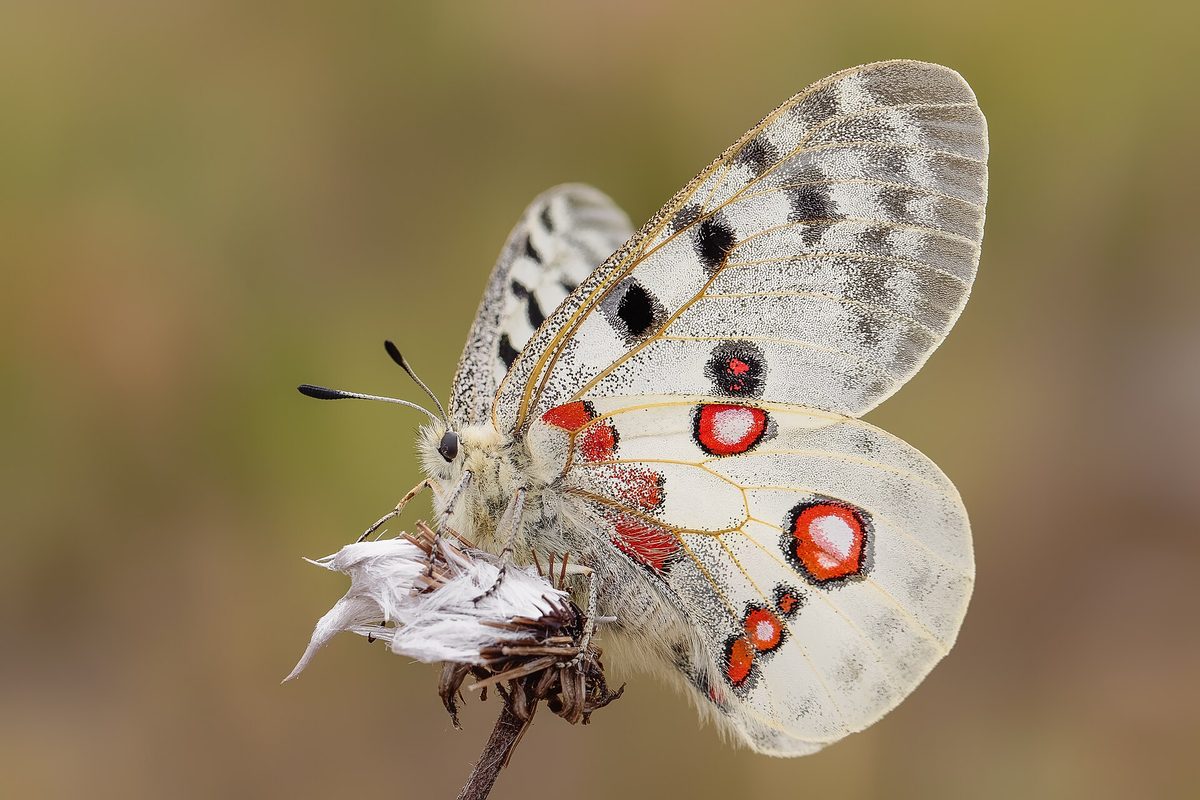
Apollo is one of the most famous butterflies in Europe and a symbol of mountain nature. Once, it was found in Ukraine in the Carpathians, Precarpathia, Podillia, and Polissia, but today it is almost impossible to find it here. The last confirmed sighting in Ivano-Frankivsk Oblast was made by Maksymilian Nowicki in 1865; in the Ukrainian Carpathians, the species has likely disappeared, and there are only unconfirmed assumptions about the population in the Dniester Canyon. Apollo is listed in the Red Book of Ukraine as a disappearing species.
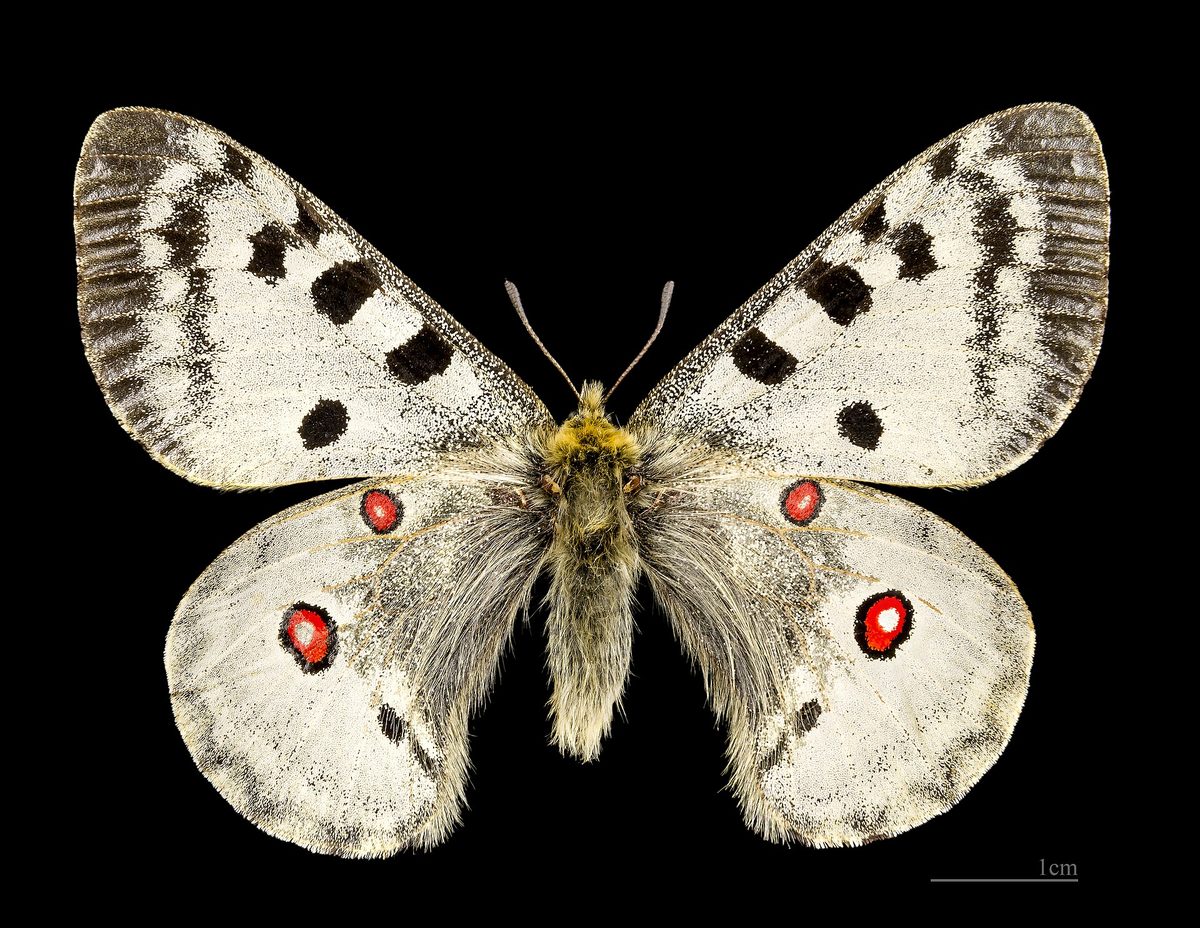
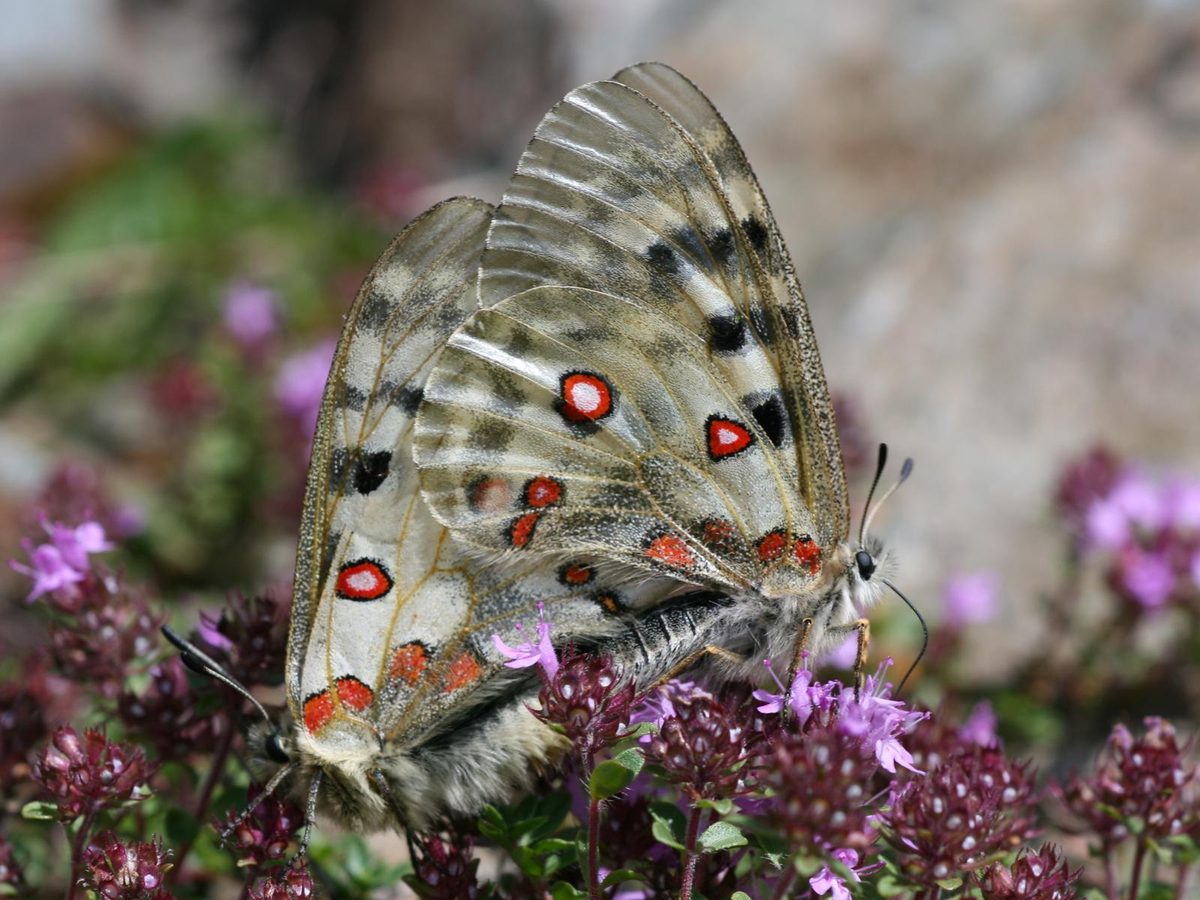
The butterfly is large, with a wingspan of about 7–8 cm. The wings are white or cream, semi-transparent at the edges, with black spots on the front wings and large red 'eyes' bordered in black on the hindwings. Apollo flies slowly and smoothly, almost lazily, and is easy to spot from a distance.
Adult butterflies fly in July–August, most actively in sunny weather after noon. The caterpillars are black with orange spots and feed on sedums and stonecrops—plants of sunny rocky slopes and cliffs. Therefore, Apollo needs open, sun-warmed limestone slopes that are not overgrown with forests and bushes.
You can see Apollo in the Carpathians in neighboring areas. In the Polish Pieniny, the species has been restored thanks to a restitution program: butterflies were bred and released, and overgrown slopes were cleared. Apollo is also found on sunny limestone slopes in Slovakia. Why is Apollo disappearing? It is harmed by the overgrowth of mountain slopes with forests and bushes when livestock grazing stops, and previously, by mass collection by collectors: the large beautiful butterfly has always been a desired trophy. Individual populations are isolated from one another, so once it disappears from a certain area, it almost never returns there without human assistance.
In the Ukrainian Carpathians, you can meet Apollo's close relative—the mnemosyne (Parnassius mnemosyne). It is smaller, with white wings and semi-transparent edges, and only a few black spots, without red 'eyes'. Mnemosyne flies in spring and early summer in forest edges and mountain meadows and is also listed in the Red Book of Ukraine as a vulnerable species. In the EU, Apollo is protected as a species of Annex IV of the Habitats Directive. Catching butterflies, collecting caterpillars, and tearing their food plants is prohibited—enjoy and photograph them.
Where in the Carpathians

The map shows where naturalists recorded the species (GBIF, CC0 and CC BY records), not every place it lives. The Ukrainian Carpathians are less studied, so a blank area does not mean the species is absent. For rare and vulnerable species the map is deliberately coarse (hexagons of ~250 km² or more) so that it never points to dens, nests or growing sites.
- Countries
- Romania · Slovakia · Czechia · Ukraine
- Mountain ranges
- Bihor-Vlădeasa Mountains, Bistrița Mountains, Călimani and Bârgău Mountains, Hășmaș Mountains, Strážov Mountains, Pokuttia-Bukovina Carpathians, Slovak Paradise
- Altitude belts
- Foothills (below 600 m) · Beech forests (600–1200 m) · Conifer forests (1200–1600 m)
When to see it
| Jan | Feb | Mar | Apr | May | Jun | Jul | Aug | Sep | Oct | Nov | Dec | |
|---|---|---|---|---|---|---|---|---|---|---|---|---|
| Sightings |
From naturalists’ observations in the Carpathians (iNaturalist, research grade): the darker the cell, the more often the species is seen that month.
Protection and rules
Catching and collecting is prohibited: the species is listed in the Red Book of Ukraine.
Admire, don’t pick: plants listed in the Red Data Book of Ukraine — and any plants in nature reserves and strictly protected zones of national parks — must not be collected.
FAQ
Does the Apollo butterfly live in the Ukrainian Carpathians?
Most likely not: the last confirmed sighting in Ivano-Frankivsk Oblast dates back to 1865. Apollo can be seen in the Polish Pieniny, where it has been restored, as well as on the limestone slopes of Slovakia.
Is Apollo listed in the Red Book of Ukraine?
Yes, as a disappearing species.
Similar species
Sources
- Вікіпедія: Аполлон (метелик)
- Wikipedia (en): Parnassius apollo
- Wikipedia (pl): Niepylak apollo
- Перелік видів тварин, що заносяться до Червоної книги України (наказ Міндовкілля від 19.01.2021 № 29, зареєстровано в Мін'юсті 01.03.2021 за № 260/35882)
- Міндовкілля: текст переліку видів тварин Червоної книги України (PDF)
- GBIF: таксон і категорія МСОП
- Директива Ради 92/43/ЄЕС про збереження природних оселищ (консолідована редакція)
GBIF · iNaturalist · Wikidata · Distribution data: GBIF.org (CC0 and CC BY records), iNaturalist; names and identifiers: Wikidata (CC0). Text: Karpaty.rocks, checked 09.11.2026.
