European peacock
About
The European peacock is one of the most well-known butterflies in Ukraine, and in the Carpathians, you can find it everywhere: on forest edges, meadows, in gardens, and near villages, especially where nettles grow. It is widespread throughout Ukraine.
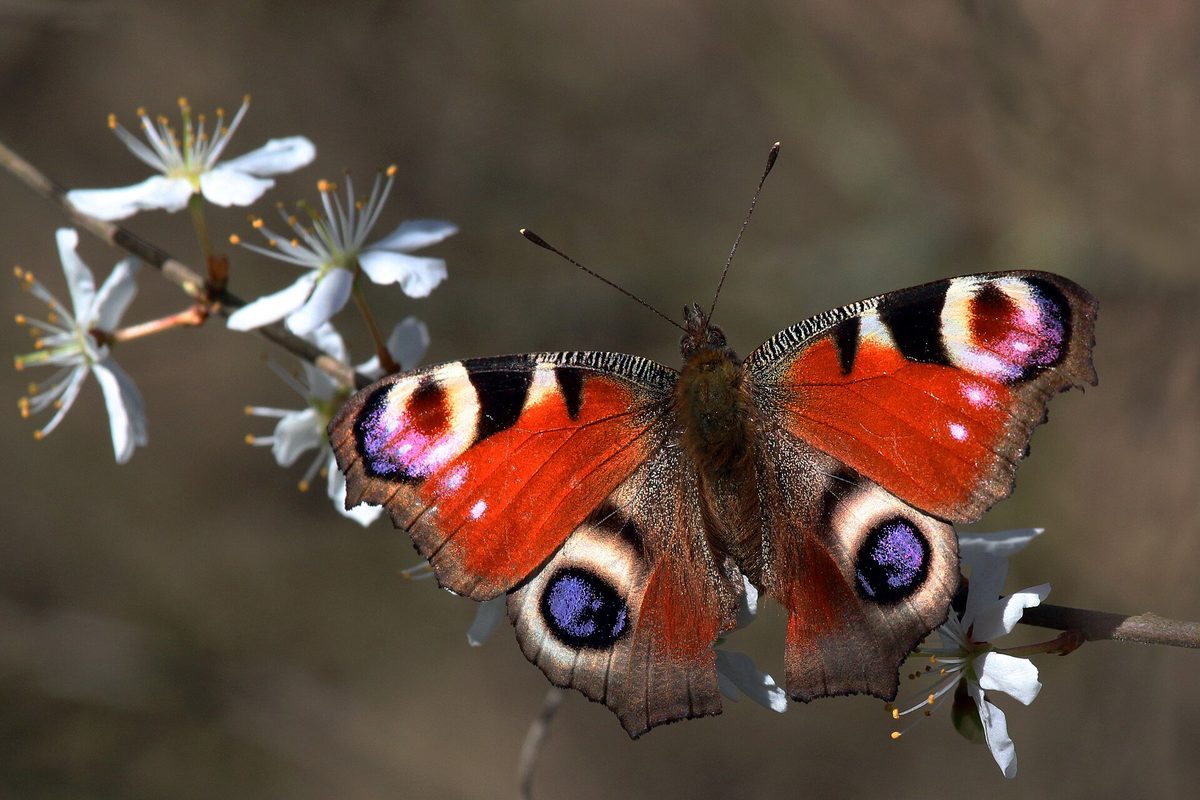
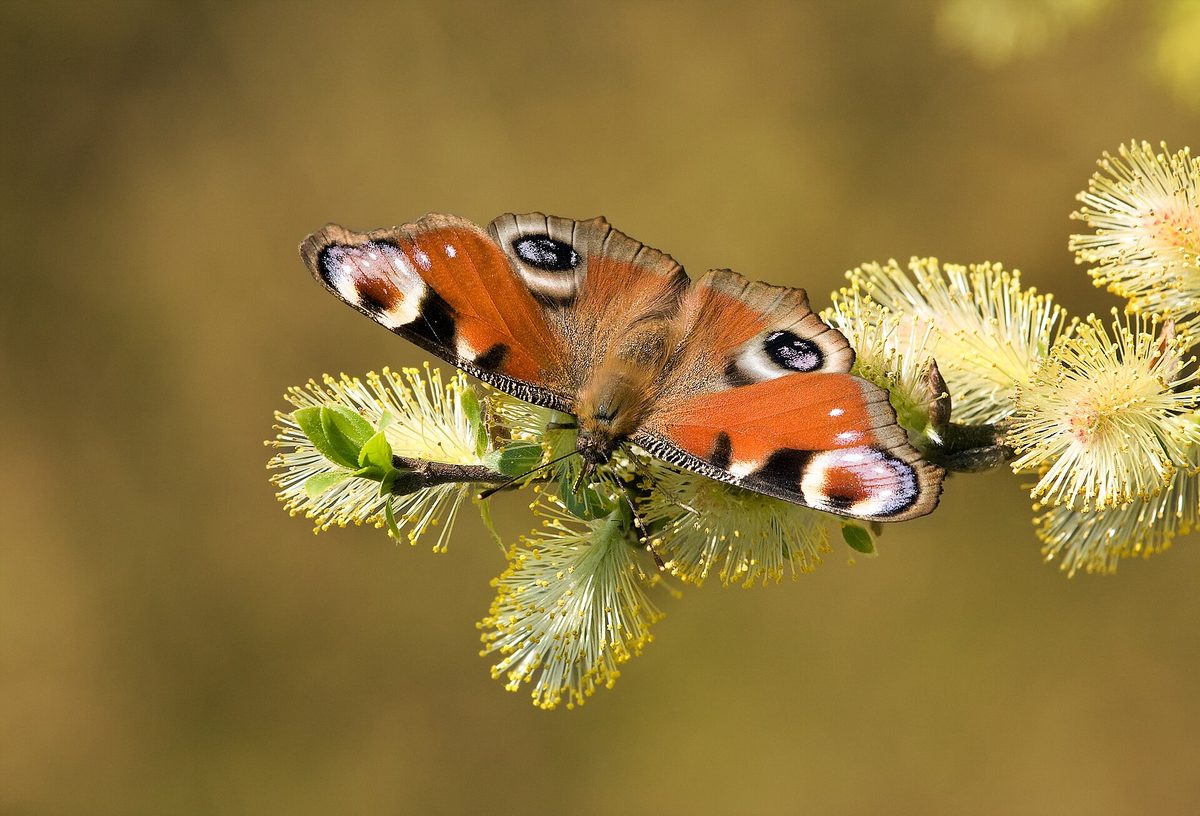
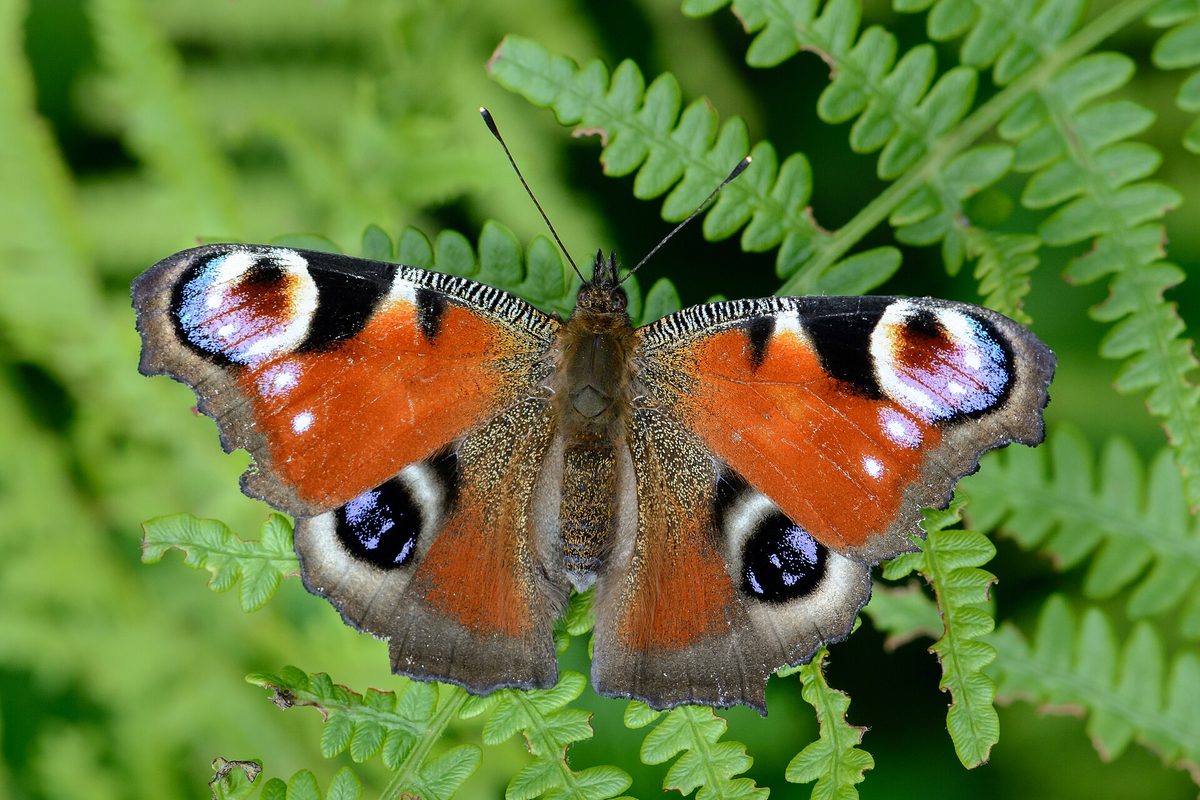
Wingspan is about 45–62 mm. The wings are reddish-brown, and on each of the four, there is a large colorful 'eye' made up of blue, yellow, and black spots, resembling peacock feathers. However, the underside of the wings is almost black, so the butterfly with its wings closed looks like a dry leaf.
These 'eyes' are the butterfly's main defense. Sitting still, it hides thanks to the dark underside of its wings, and when a bird or mouse attacks, it suddenly opens its wings and shows its 'eyes'. Moreover, when opening its wings, the butterfly makes a quiet rustling sound. Studies have shown that the eye spots are the most effective at deterring birds.
The European peacock hibernates as an adult butterfly in cozy dark places—such as basements, caves, and attics. Therefore, it can be seen as early as the beginning of spring, as soon as the sun warms up: the hibernated butterflies emerge from their hiding places and lay eggs in clusters, up to 400 at a time. The caterpillar is black with small white dots, lives in colonies of several dozen individuals in a shared silken nest, and feeds on nettles and hops. In the south, two generations develop over the summer.
The European peacock is not listed in the Red Book of Ukraine. If you find a sleeping butterfly in the attic during winter, do not wake it or take it to warmth: it needs to wait for spring.
Where in the Carpathians

The map shows where naturalists recorded the species (GBIF, CC0 and CC BY records), not every place it lives. The Ukrainian Carpathians are less studied, so a blank area does not mean the species is absent.
- Countries
- Hungary · Romania · Ukraine · Slovakia · Austria · Poland · Czechia · Serbia
- Mountain ranges
- Bükk, Mátra, Nemira and Bodoc Mountains, High Tatras, Maramureș Mountains, Bucegi Mountains, Börzsöny and Cserhát, Bihor-Vlădeasa Mountains, Zemplén Mountains, Low Tatras
- Altitude belts
- Foothills (below 600 m) · Beech forests (600–1200 m)
When to see it
| Jan | Feb | Mar | Apr | May | Jun | Jul | Aug | Sep | Oct | Nov | Dec | |
|---|---|---|---|---|---|---|---|---|---|---|---|---|
| Sightings |
From naturalists’ observations in the Carpathians (iNaturalist, research grade): the darker the cell, the more often the species is seen that month.
Protection and rules
Not listed in the Red Book of Ukraine.
FAQ
Why do butterflies appear as early as spring?
The European peacock and some other butterflies hibernate as adults in cozy places and wake up on the first warm days.
Why does the European peacock have 'eyes' on its wings?
To deter predators: the butterfly suddenly opens its wings, and birds are frightened by the large eye spots.
Similar species
Where to meet it
Trails
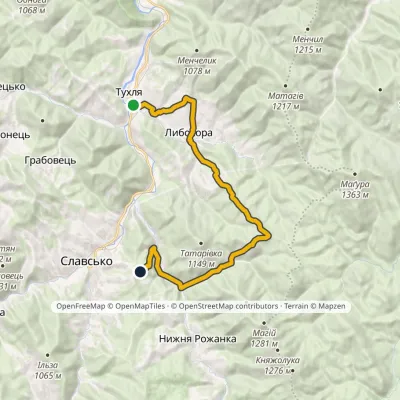 ModerateTwo-dayMarkedNo. 5002 Tukhlia Slavskovia LybokhoraElevation profile542–951 m20.3 kmascent 815 m≈ 6.5 h walking
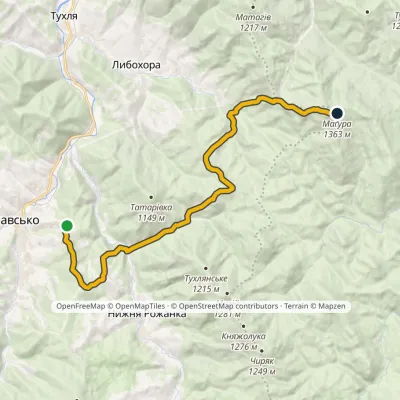 HardTwo-dayMarkedNo. 5012 Slavsko Mount MaguraElevation profile617–1 368 m18.6 kmascent 1 151 m≈ 7 h walking
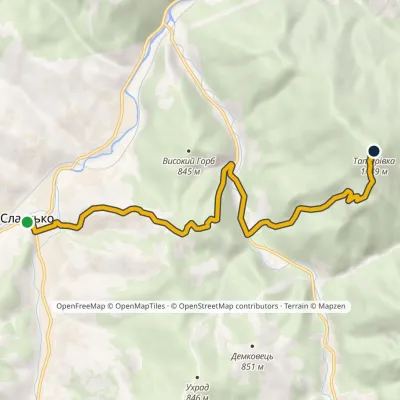 ModerateOne-dayMarkedNo. 5013 Slavsko Mount Tatarivka (Teterivka)Elevation profile587–1 149 m8.6 kmascent 775 m≈ 3.5 h walking
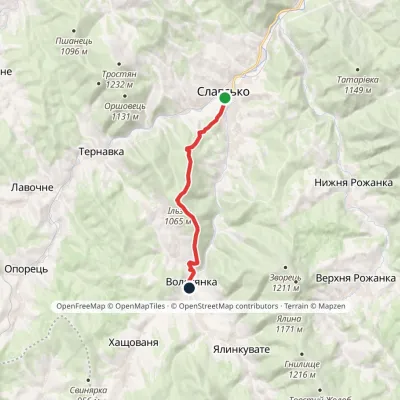 ModerateOne-dayMarkedNo. 5001 Slavske Volosianka villagevia Mount IlzaElevation profile599–1 065 m9.1 kmascent 492 m≈ 3.5 h walking
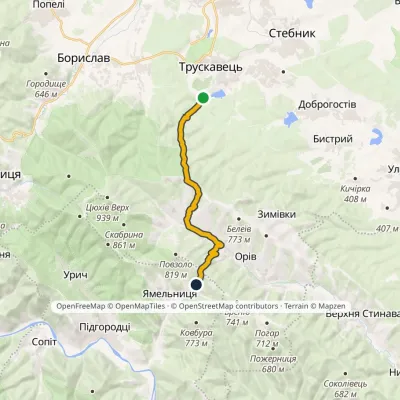 ModerateOne-dayMarkedTruskavets Gotar campsite (Yamelnytsia)Elevation profile377–776 m14.5 kmascent 675 m≈ 5 h walking
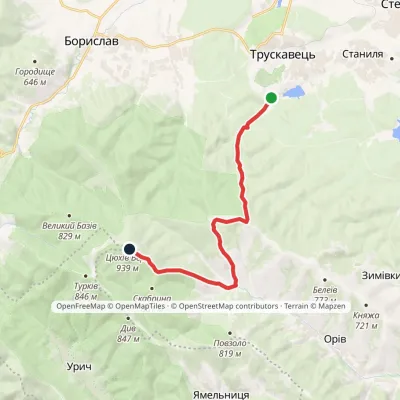 ModerateOne-dayMarkedHealth Path: Truskavets Tsiukhiv Dil (VeloBeskydy)Elevation profile377–938 m13.1 kmascent 770 m≈ 5 h walking
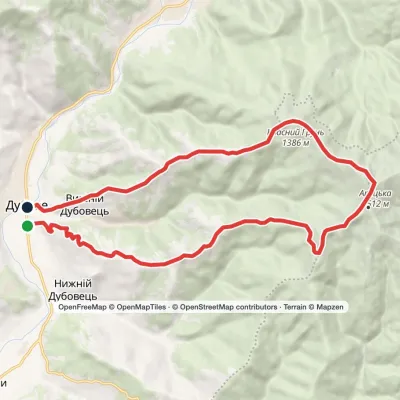 HardTwo-dayDubove village loopvia Mount ApetskaElevation profile386–1 512 m21.2 kmascent 1 213 m≈ 7.5 h walking
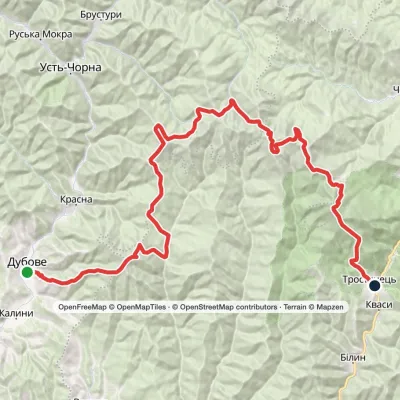 HardMulti-dayDubove village to Kvasy villagevia Mount Apetska, Mount Dohiaska +2Elevation profile387–1 883 m69.1 kmascent 4 794 m
 HardTwo-dayMarkedLazeshchyna village to Mount Hoverlavia KozmeshchykElevation profile717–2 061 m17.4 kmascent 1 356 m≈ 7 h walking
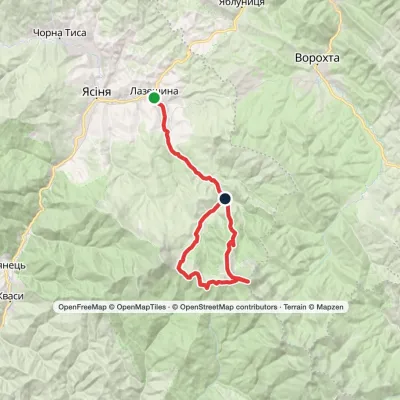 HardMulti-dayMarkedLazeshchyna village to Kozmeshchykvia Kozmeshchyk, Mount HoverlaElevation profile718–2 061 m30.7 kmascent 1 460 m≈ 10.5 h walking
 HardMulti-dayMarkedLazeshchyna village loopvia Kozmeshchyk, Mount HoverlaElevation profile715–2 061 m39.4 kmascent 1 408 m≈ 12.5 h walking
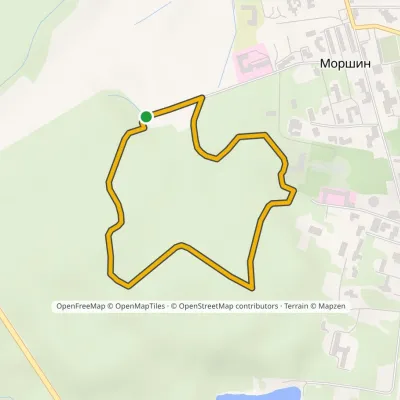 EasyOne-dayMarkedNo. 5007 Morshyn: Nordic walkingElevation profile347–381 m3.2 kmascent 31 m≈ 45 min walking
Waters and waterfalls
 LakeTruskavets ReservoirTruskavetsTruskavets Reservoir, known locally as Lake Solonytsia, lies on the south-eastern edge of Truskavets, next to the...
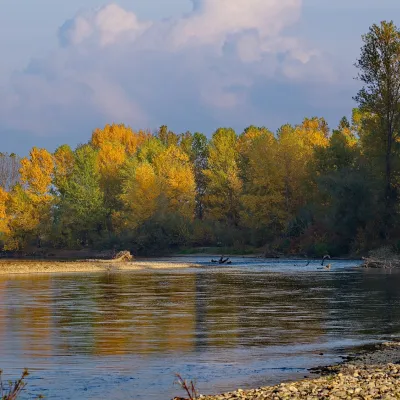 RiverTysa River (Tisza)RakhivThe Tysa (Tisza) is the main river of Zakarpattia. It begins on the north-eastern edge of Rakhiv, where the Chorna...
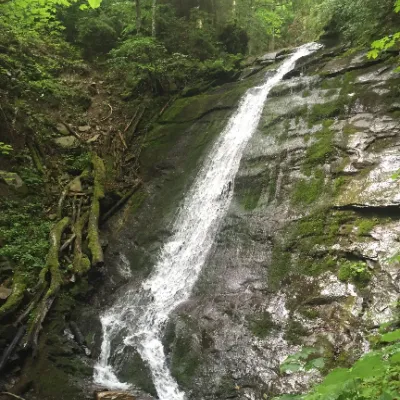 WaterfallNarinetskyi waterfall, MykulychynMykulychynNarinetskyi Waterfall is a waterfall in the Ukrainian Carpathians, on the Noretskyi Stream (a left tributary of the...
Mountain ranges: Maramureș Mountains, Chornohora. In other countries: 🇭🇺 Bükk, 🇭🇺 Mátra, 🇷🇴 Nemira and Bodoc Mountains, 🇸🇰 High Tatras, 🇷🇴 Bucegi Mountains, 🇭🇺 Börzsöny and Cserhát, 🇷🇴 Bihor-Vlădeasa Mountains, 🇭🇺 Zemplén Mountains, 🇸🇰 Low Tatras, 🇷🇴 Vrancea Mountains, 🇷🇴 Ciucaș Mountains, 🇸🇰 Slovak Ore Mountains
Trails and peaks near which naturalists recorded the species (GBIF, iNaturalist), matched by altitude and habitat. Sightings are not guaranteed.
Sources
- Вікіпедія: Сонцевик павиче око
- Wikipedia (en): Aglais io
- Перелік видів тварин, що заносяться до Червоної книги України (наказ Міндовкілля від 19.01.2021 № 29, зареєстровано в Мін'юсті 01.03.2021 за № 260/35882)
- Міндовкілля: текст переліку видів тварин Червоної книги України (PDF)
- GBIF: таксон і категорія МСОП
GBIF · iNaturalist · Wikidata · Distribution data: GBIF.org (CC0 and CC BY records), iNaturalist; names and identifiers: Wikidata (CC0). Text: Karpaty.rocks, checked 09.11.2026.
