Larch bolete
Never identify a mushroom from a photo alone. If in doubt, leave it. In case of poisoning call 112 (103 in Ukraine) at once.
About
The Larch bolete is a mushroom faithful to one tree. It forms mycorrhiza with larch and does not grow without it, so it should only be sought where larches are present: in larch forests and plantations, parks, and on forest edges, particularly in the Carpathians. Fruiting bodies appear from July to October, often in whole groups.
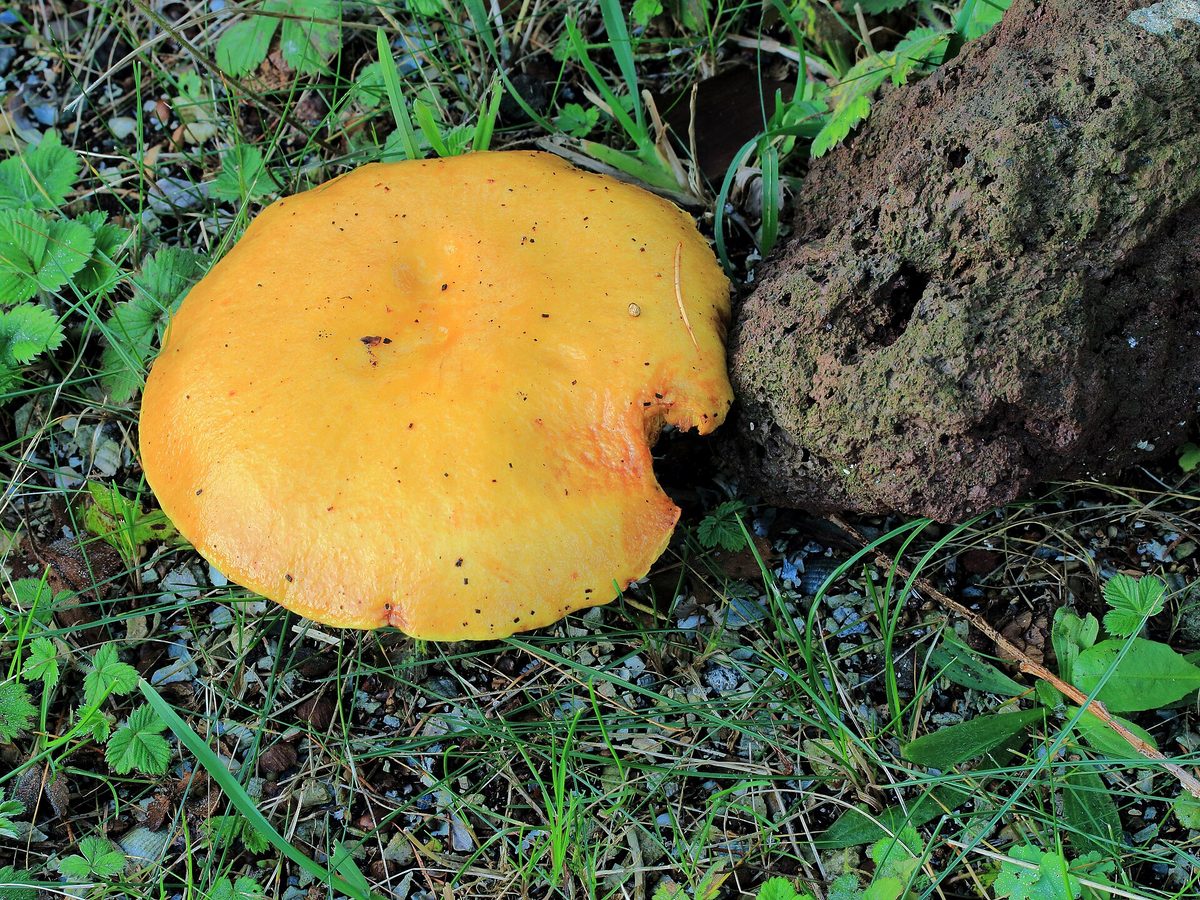
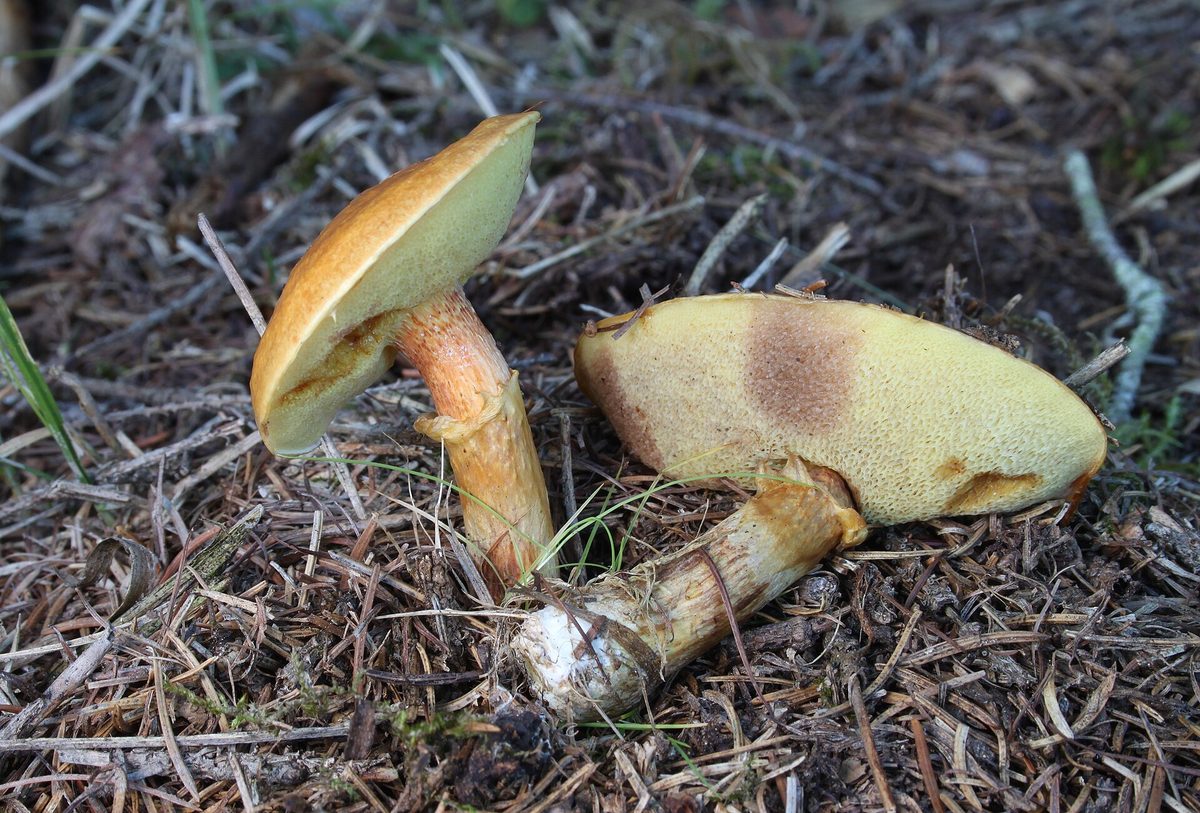
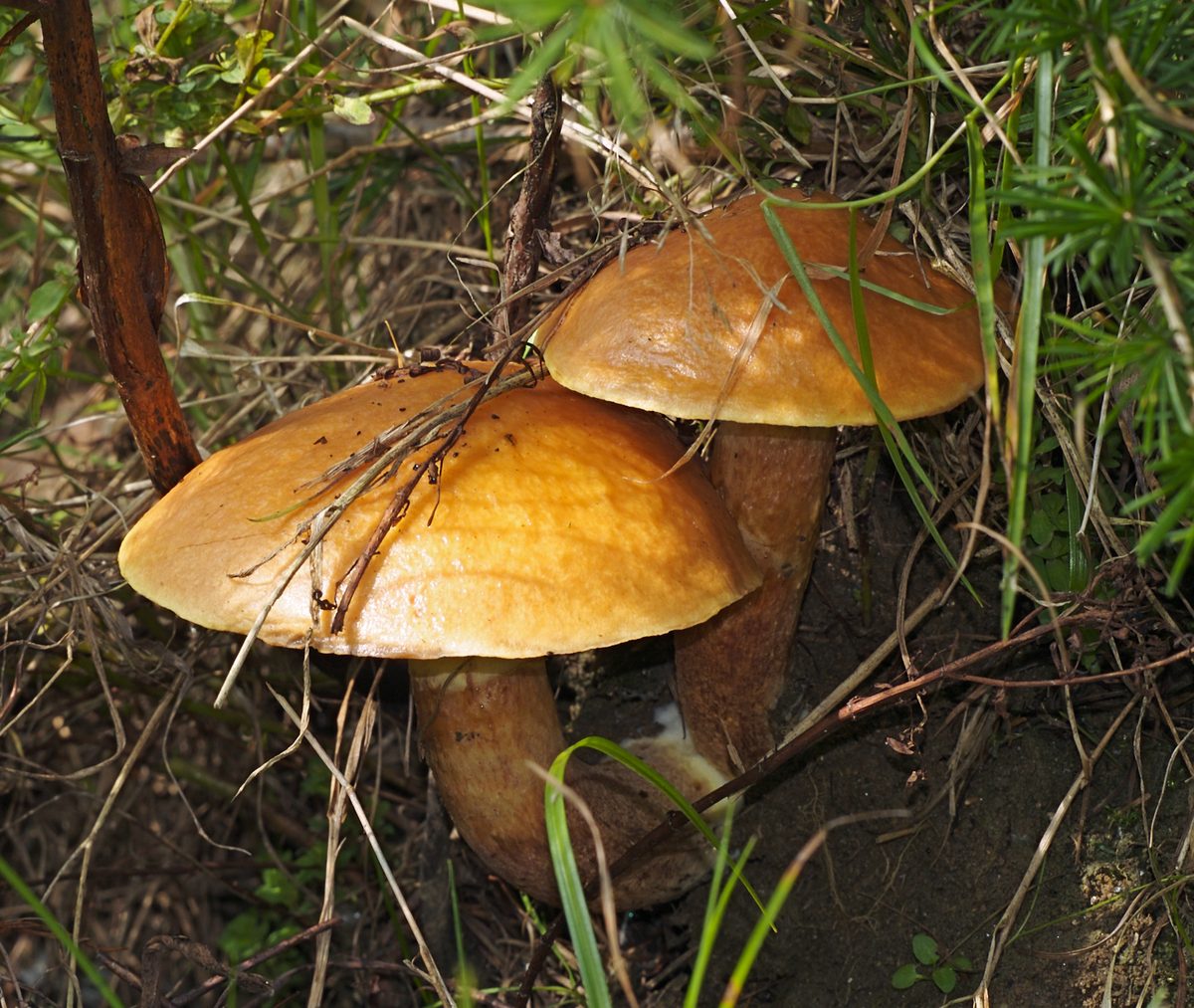
The cap is 4–10 cm, sometimes up to 15 cm, initially convex, later flattened, golden-yellow, orange, or yellow-brown, covered with a thick layer of slime, giving it a shiny and wet appearance. The skin is easily removed. The tubes and pores are small, yellow, turning pink upon touch, and then browning. The stem is solid, with a whitish or yellowish membranous ring, yellow above the ring, and browner below. The flesh is yellow, slightly turning pink on the cut surface of the cap.
The Larch bolete is a good edible mushroom, also included in the Polish list of mushrooms permitted for sale. Before cooking, the slimy skin is removed from the cap. The mushrooms are consumed fresh, pickled, or dried. Like other boletes, they quickly become wormy, so it's better to pick young ones.
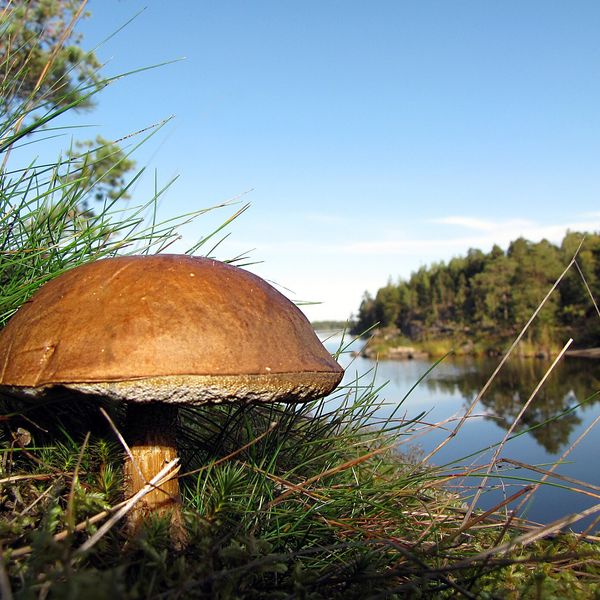
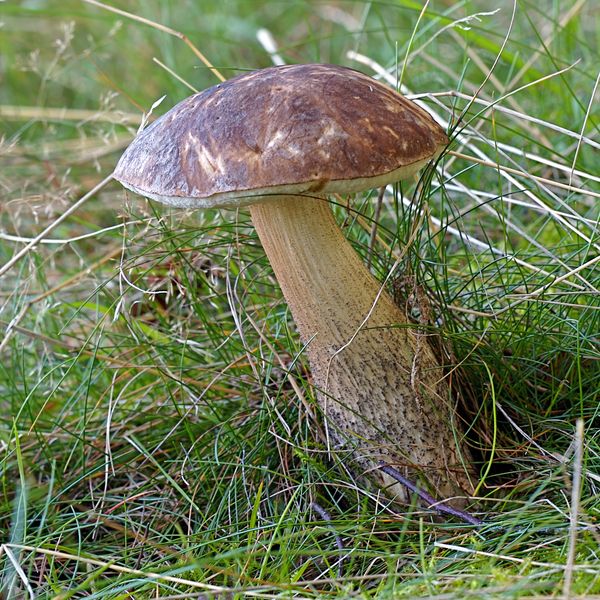
Among lookalikes, there are almost no dangerous ones, but the yellow color and ring should not be the only clues. Check that there are tubes under the cap, not gills, and that larches are indeed growing nearby. Similar boletes under pines are the Common bolete and the Grainy bolete, which are also edible.
Where in the Carpathians

The map shows where naturalists recorded the species (GBIF, CC0 and CC BY records), not every place it lives. The Ukrainian Carpathians are less studied, so a blank area does not mean the species is absent.
- Countries
- Poland · Slovakia · Czechia · Ukraine
- Mountain ranges
- Low Tatras, High Tatras, Bieszczady, Lesser Fatra, Island Beskids, Chornohora, Kremnica Mountains, Little Carpathians, Low Beskids, Silesian Beskids
- Altitude belts
- Foothills (below 600 m) · Beech forests (600–1200 m)
When to see it
| Jan | Feb | Mar | Apr | May | Jun | Jul | Aug | Sep | Oct | Nov | Dec | |
|---|---|---|---|---|---|---|---|---|---|---|---|---|
| Sightings |
From naturalists’ observations in the Carpathians (iNaturalist, research grade): the darker the cell, the more often the species is seen that month.
Safety
Collect only young, undamaged mushrooms that you can confidently identify; remove the slimy skin. Do not give mushroom dishes to children under 12 years old.
Look-alikes — how to tell them apart
The cap is brown, and the ring below has a brown-violet tint; it grows under pines, not under larches. Also edible.
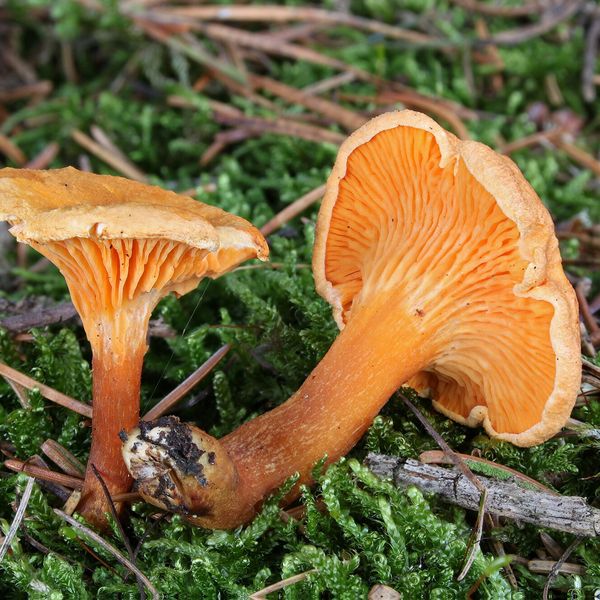
An orange mushroom with thin, branched gills under the cap, without tubes and without a ring.
Protection and rules
Not protected.
FAQ
Where do larch boletes grow?
Only under larches: in larch forests and plantations, in parks, and on forest edges. Without larch, this mushroom does not grow.
Should larch boletes be cleaned?
Yes, the slimy skin of the larch bolete is removed from the cap before cooking — it separates easily.
Similar species
Where to meet it
Trails
 ModerateTwo-dayStavne village loopvia Mount Cheremkha, Lubnia villageElevation profile386–1 130 m18.6 kmascent 847 m≈ 6.5 h walking
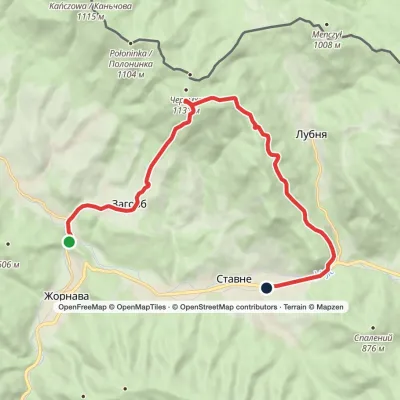 ModerateTwo-dayZahorb village to Stavne villagevia Mount CheremkhaElevation profile342–1 132 m14.7 kmascent 798 m≈ 5.5 h walking
 ModerateTwo-dayMarkedZhornava village to Stavne villagevia Zahorb village, Mount Cheremkha +1Elevation profile342–1 133 m17.3 kmascent 763 m≈ 6 h walking
Mountain ranges: Bieszczady, Chornohora. In other countries: 🇸🇰 Low Tatras, 🇸🇰 High Tatras, 🇸🇰 Lesser Fatra, 🇵🇱 Island Beskids, 🇸🇰 Kremnica Mountains, 🇸🇰 Little Carpathians, 🇵🇱 Low Beskids, 🇵🇱 Silesian Beskids
Trails and peaks near which naturalists recorded the species (GBIF, iNaturalist), matched by altitude and habitat. Sightings are not guaranteed.
Sources
- Вікіпедія: Маслюк модриновий
- Wikipedia (en): Suillus grevillei
- Wikipedia (en): Suillus luteus
- Rozporządzenie Ministra Zdrowia z 17.05.2011, t.j. Dz.U. 2023 poz. 2237: wykaz grzybów dopuszczonych do obrotu (Польща)
- iNaturalist: Suillus grevillei (спостереження в Карпатах)
GBIF · iNaturalist · Wikidata · Distribution data: GBIF.org (CC0 and CC BY records), iNaturalist; names and identifiers: Wikidata (CC0). Text: Karpaty.rocks, checked 09.11.2026.
