Jersey tiger
About
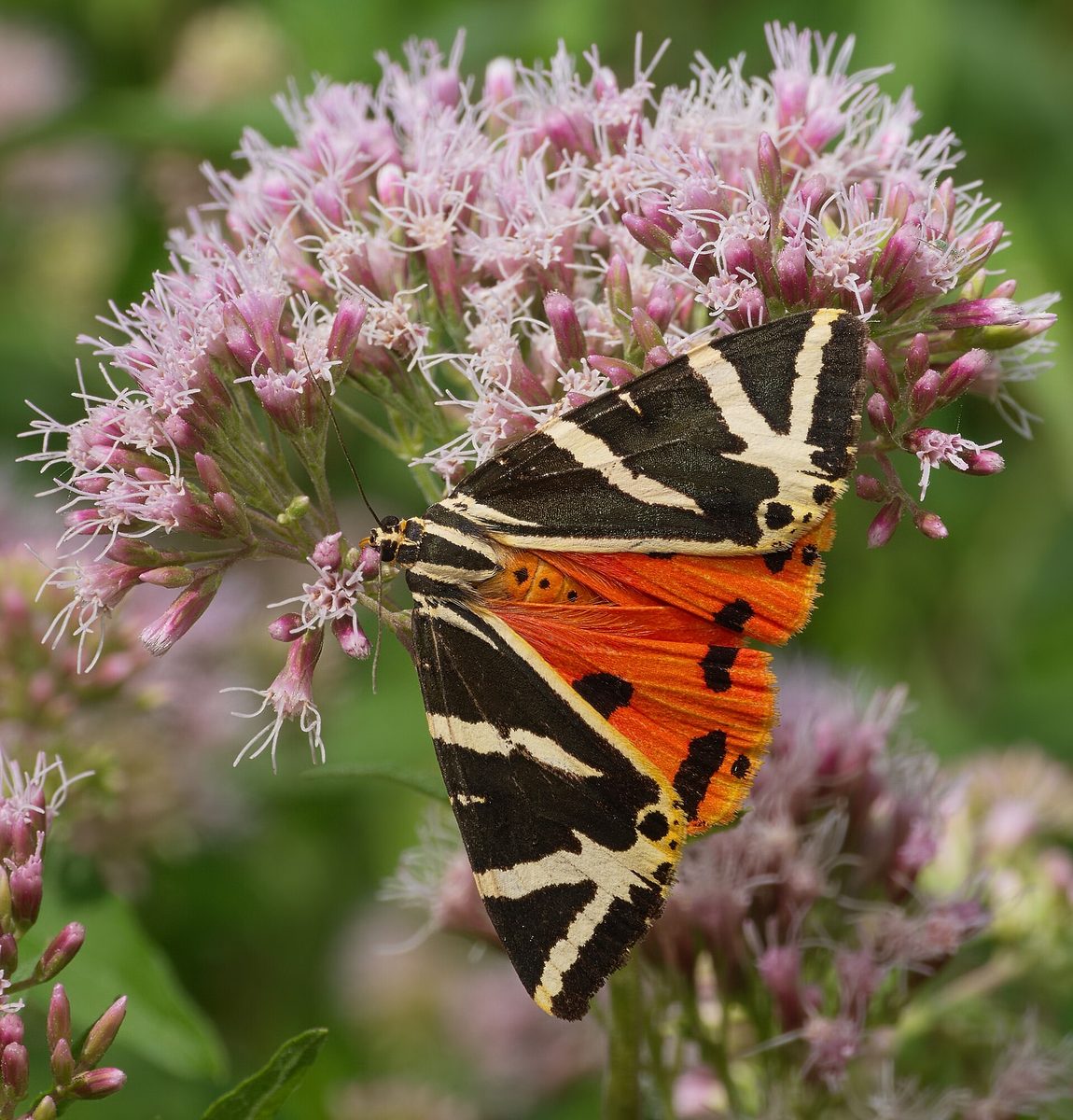
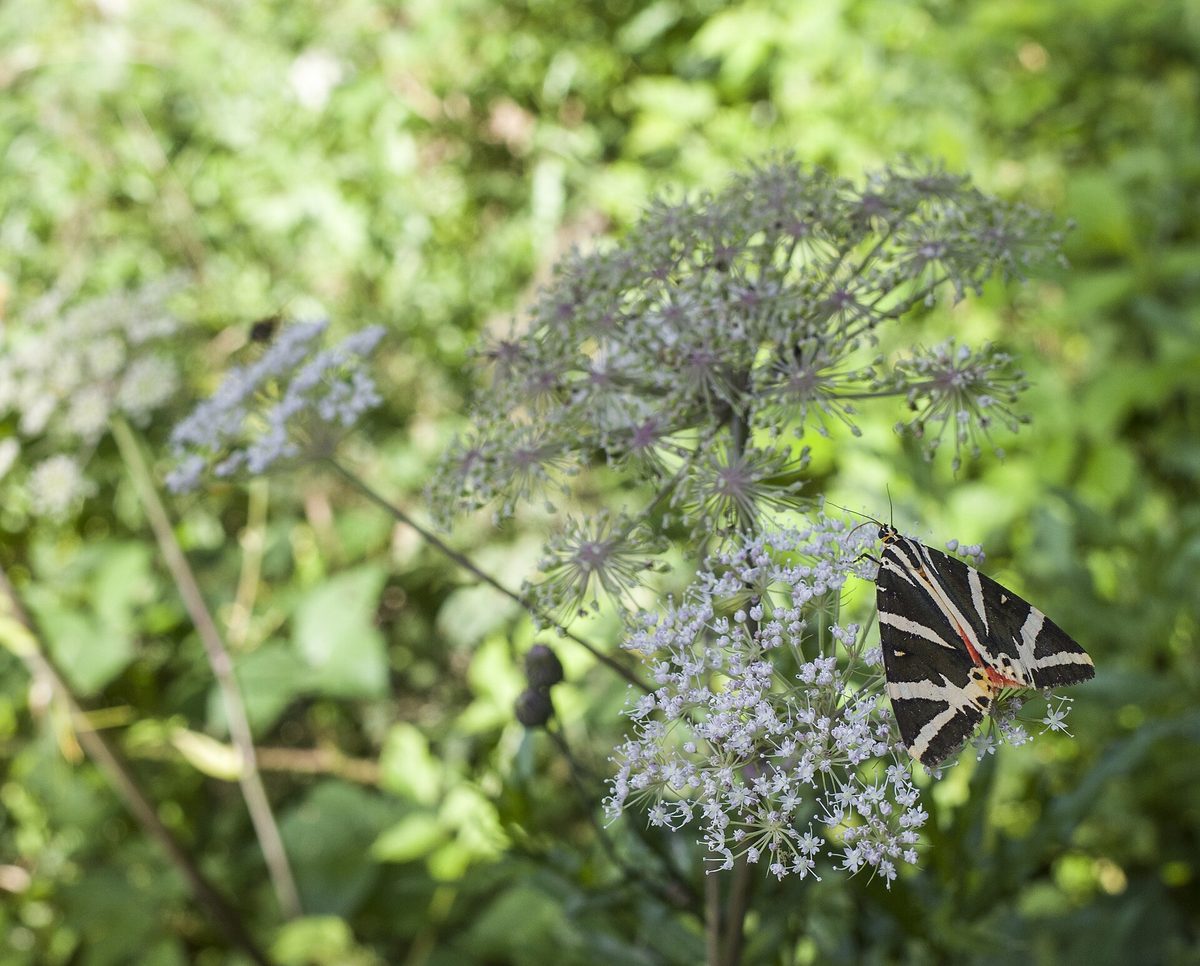
The Jersey tiger is a moth that can easily be confused with a day-flying species, although it belongs to the nocturnal tiger moths. It flies during the day and feeds on nectar from flowers. In Ukraine, the Jersey tiger is found locally throughout the territory. In places where it has settled, during peak flight, one can count 5–50 moths per hectare in a small area. It is worth searching for it in forest edges, sparse forests, and shrubs, especially near flowering hemp agrimony.
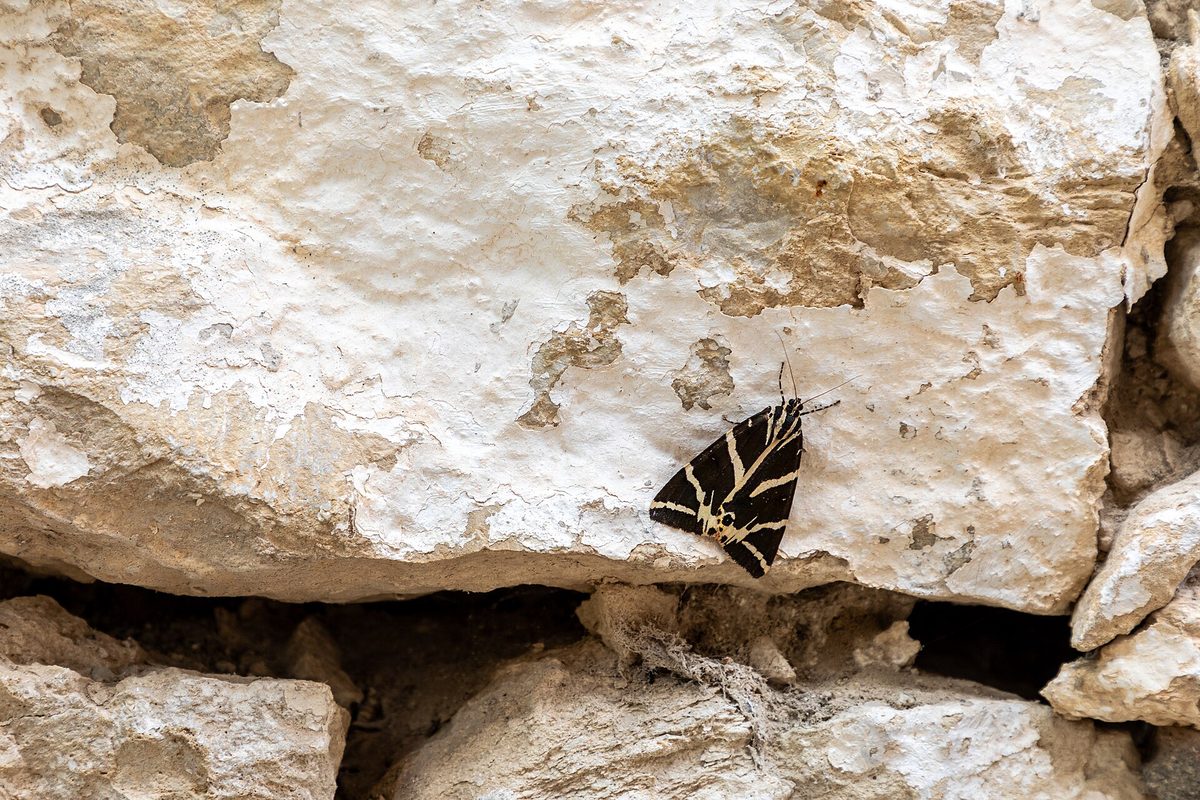
Wingspan is 52–65 mm. The forewings are black with a green metallic sheen and three oblique cream stripes, while the hindwings are bright red with two to three black spots. The bright coloration warns birds that the moth is inedible: it is protected by substances harmful to them.
Moths fly from July to September, depending on the area. The caterpillar is up to 5 cm long, dark gray with a yellow stripe on its back and white spots on the sides, covered with reddish warts with short bristles. It lives from September to May and feeds on various plants — nettle, raspberry, dandelion, dead-nettle, plantain.
In the EU, the Jersey tiger is the only moth marked as a priority species in Annex II of the Habitats Directive, thus territories of Natura 2000 are created for its sake. In Ukraine, in 1994, the species was in the Red Book, but in 2009 it was removed from there, and it is not included in the 2021 list either. The main threats are the destruction of sparse forests and shrubs, grazing, and pesticides.
Where in the Carpathians

The map shows where naturalists recorded the species (GBIF, CC0 and CC BY records), not every place it lives. The Ukrainian Carpathians are less studied, so a blank area does not mean the species is absent.
- Countries
- Hungary · Slovakia · Austria · Romania · Ukraine · Poland · Czechia
- Mountain ranges
- Mátra, Bükk, Börzsöny and Cserhát, Zemplén Mountains, Harghita and Gurghiu Mountains, Slovak Ore Mountains, Vrancea Mountains, Bihor-Vlădeasa Mountains, Pokuttia-Bukovina Carpathians, Vtáčnik Mountains
- Altitude belts
- Foothills (below 600 m) · Beech forests (600–1200 m)
When to see it
| Jan | Feb | Mar | Apr | May | Jun | Jul | Aug | Sep | Oct | Nov | Dec | |
|---|---|---|---|---|---|---|---|---|---|---|---|---|
| Sightings |
From naturalists’ observations in the Carpathians (iNaturalist, research grade): the darker the cell, the more often the species is seen that month.
Protection and rules
Not included in the Red Book of Ukraine (removed in 2009); in the EU — a priority species of Annex II of the Habitats Directive.
FAQ
What moth with red hindwings flies during the day?
Most likely, the Jersey tiger: black forewings with cream stripes and bright red hindwings. Despite belonging to nocturnal moths, it is active during the day.
Is the Jersey tiger protected?
In the EU — yes, it is a priority species of Annex II of the Habitats Directive. It is currently not included in the Red Book of Ukraine.
Similar species
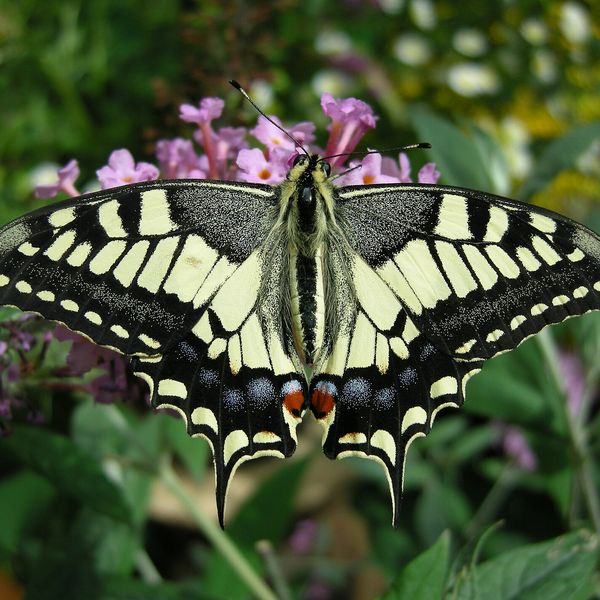
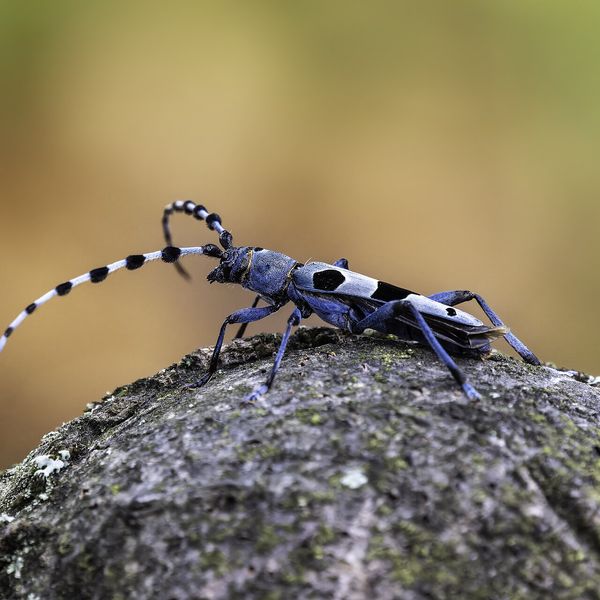
Where to meet it
Trails
 ModerateTwo-dayMarkedZhornava village to Stavne villagevia Zahorb village, Mount Cheremkha +1Elevation profile342–1 133 m17.3 kmascent 763 m≈ 6 h walking
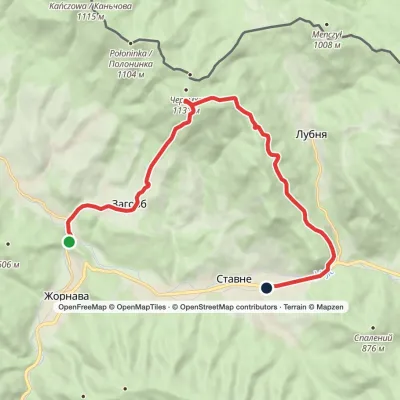 ModerateTwo-dayZahorb village to Stavne villagevia Mount CheremkhaElevation profile342–1 132 m14.7 kmascent 798 m≈ 5.5 h walking
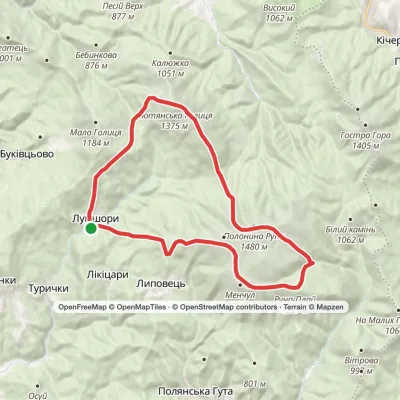 HardMulti-dayLumshory village loopvia Voievodyn WaterfallElevation profile441–1 474 m30.6 kmascent 2 256 m≈ 12 h walking
 HardMulti-dayMarkedTuria Poliana village to Lumshory villagevia Voievodyn Waterfall, Runa polonynaElevation profile415–1 480 m32.8 kmascent 1 284 m≈ 11 h walking
 ModerateTwo-dayTuria Poliana village loopvia Voievodyn WaterfallElevation profile471–979 m14.3 kmascent 506 m≈ 4.5 h walking
 EasyOne-dayTuria Poliana village Voievodyn WaterfallElevation profile431–878 m7 kmascent 447 m≈ 2.5 h walking
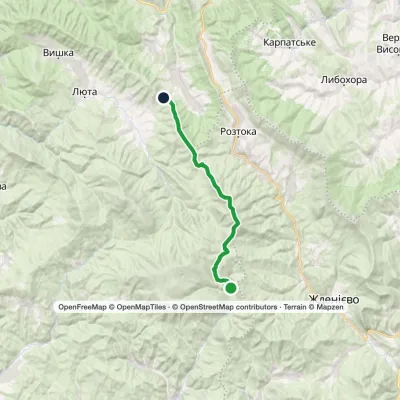 ModerateTwo-dayMarkedMount Hostra PrelukyElevation profile660–1 405 m19.4 kmascent 1 038 m≈ 7 h walking
 ModerateOne-dayMarkedStuzhytsia village Mount KremenetsElevation profile450–1 144 m7.4 kmascent 694 m≈ 3 h walking
 HardMulti-dayMarkedPashkivtsi village loopvia Mount Hostra, Preluka tract +1Elevation profile463–1 393 m32.5 kmascent 1 431 m≈ 11 h walking
 HardMulti-dayLumshory village to Zhdeniievo villagevia Runa polonyna, Preluka tract +2Elevation profile404–1 480 m30 kmascent 1 502 m≈ 10.5 h walking
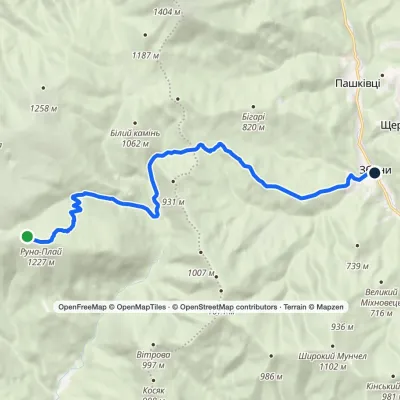 ModerateOne-dayMarkedZbyny VoievodynElevation profile438–1 227 m13.7 kmascent 236 m≈ 4 h walking
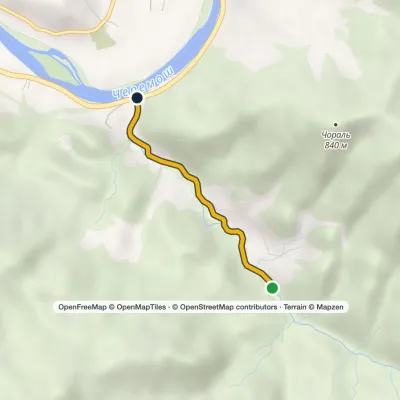 EasyOne-dayMarkedSmuharski WaterfallsElevation profile398–488 m4 km≈ 1 h walking
Waters and waterfalls
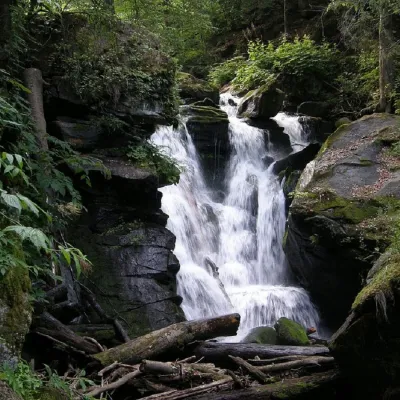 WaterfallVojvodyn waterfallPolianska HutaThe Voyevodyn Waterfall is located on the stream of the same name near the village of Zhdeniyevo in Zakarpattia...
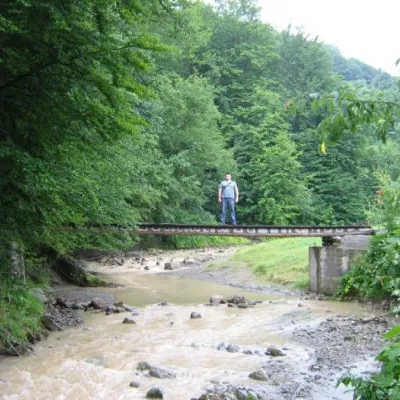 WaterfallMikva waterfallVyzhenkaThe Mykva Waterfall is a small but very picturesque waterfall located in the village of Vyzhenka, Chernivtsi region.
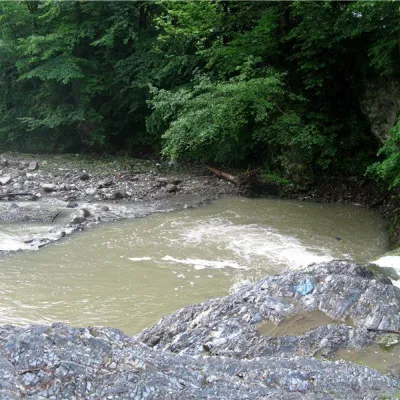 RiverVyzhenka RiverVyzhenkaTheriver Vyzhenka is located in the village of the same name in the Chernivtsi region.
Mountain ranges: Pokuttia-Bukovina Carpathians, Vihorlat-Gutin Volcanic Ridge. In other countries: 🇭🇺 Mátra, 🇭🇺 Bükk, 🇭🇺 Börzsöny and Cserhát, 🇭🇺 Zemplén Mountains, 🇷🇴 Harghita and Gurghiu Mountains, 🇸🇰 Slovak Ore Mountains, 🇷🇴 Vrancea Mountains, 🇷🇴 Bihor-Vlădeasa Mountains, 🇸🇰 Vtáčnik Mountains, 🇨🇿 Moravian-Silesian Beskids, 🇵🇱 Low Beskids, 🇸🇰 Western Tatras
Trails and peaks near which naturalists recorded the species (GBIF, iNaturalist), matched by altitude and habitat. Sightings are not guaranteed.
Sources
- Вікіпедія: Ведмедиця Гера
- Wikipedia (en): Euplagia quadripunctaria
- Перелік видів тварин, що заносяться до Червоної книги України (наказ Міндовкілля від 19.01.2021 № 29, зареєстровано в Мін'юсті 01.03.2021 за № 260/35882)
- Міндовкілля: текст переліку видів тварин Червоної книги України (PDF)
- GBIF: таксон і категорія МСОП
- Директива Ради 92/43/ЄЕС про збереження природних оселищ (консолідована редакція)
GBIF · iNaturalist · Wikidata · Distribution data: GBIF.org (CC0 and CC BY records), iNaturalist; names and identifiers: Wikidata (CC0). Text: Karpaty.rocks, checked 09.11.2026.
