Grass snake
About
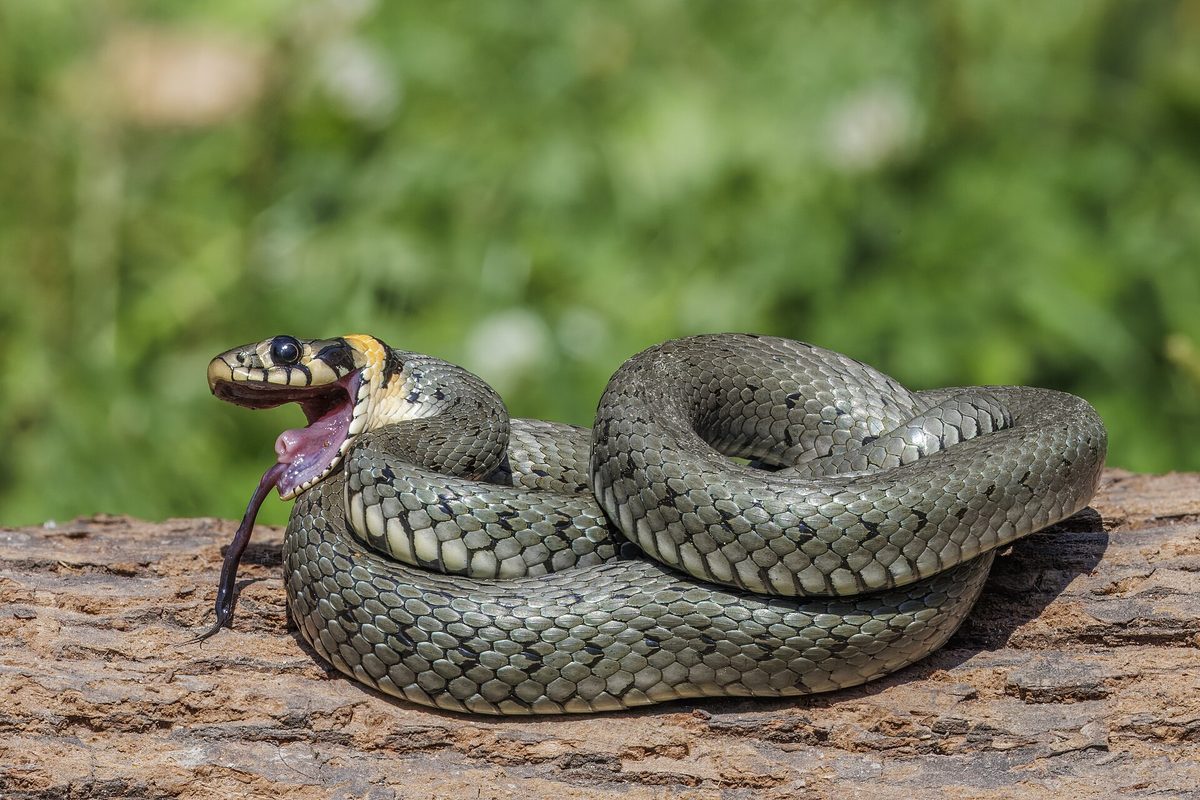
The Grass snake is the most common snake in the Carpathian valleys and foothills. It prefers to stay near water: rivers, ponds, swamps, ditches, as well as in gardens, fields, and near farm buildings in villages. The Grass snake is completely non-venomous and safe for humans.
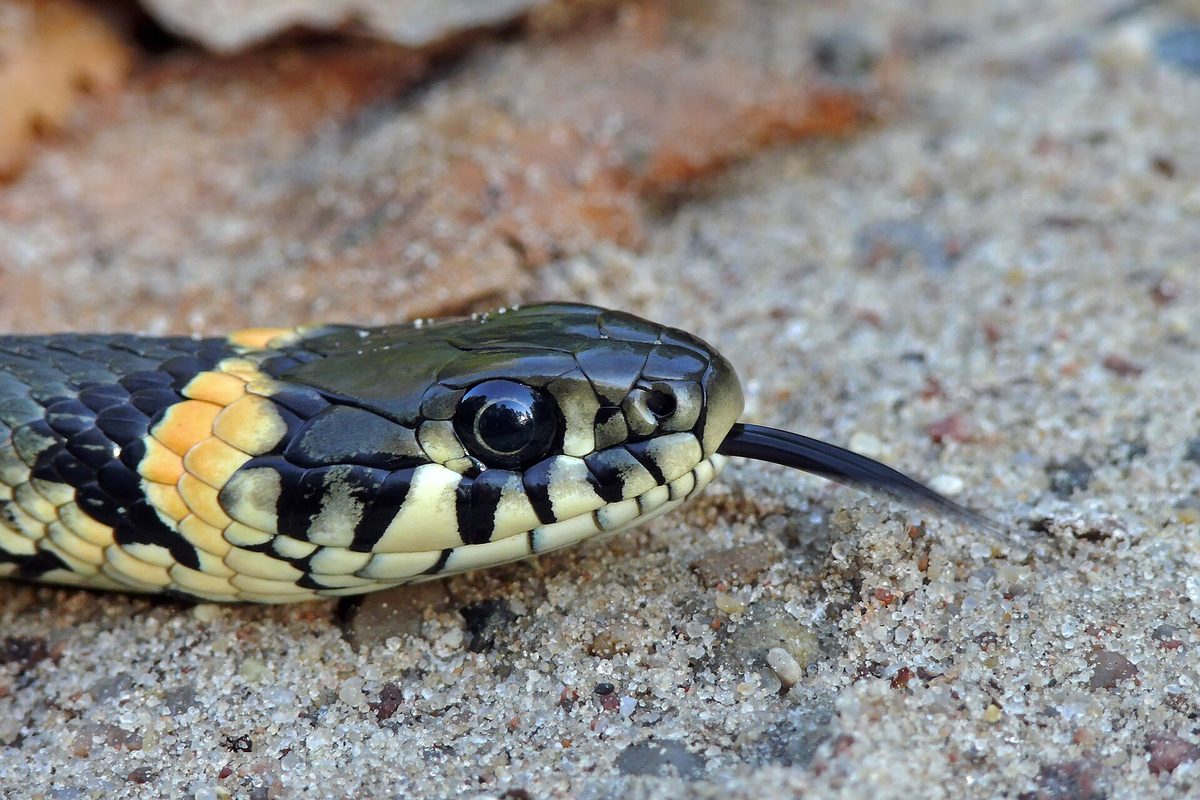
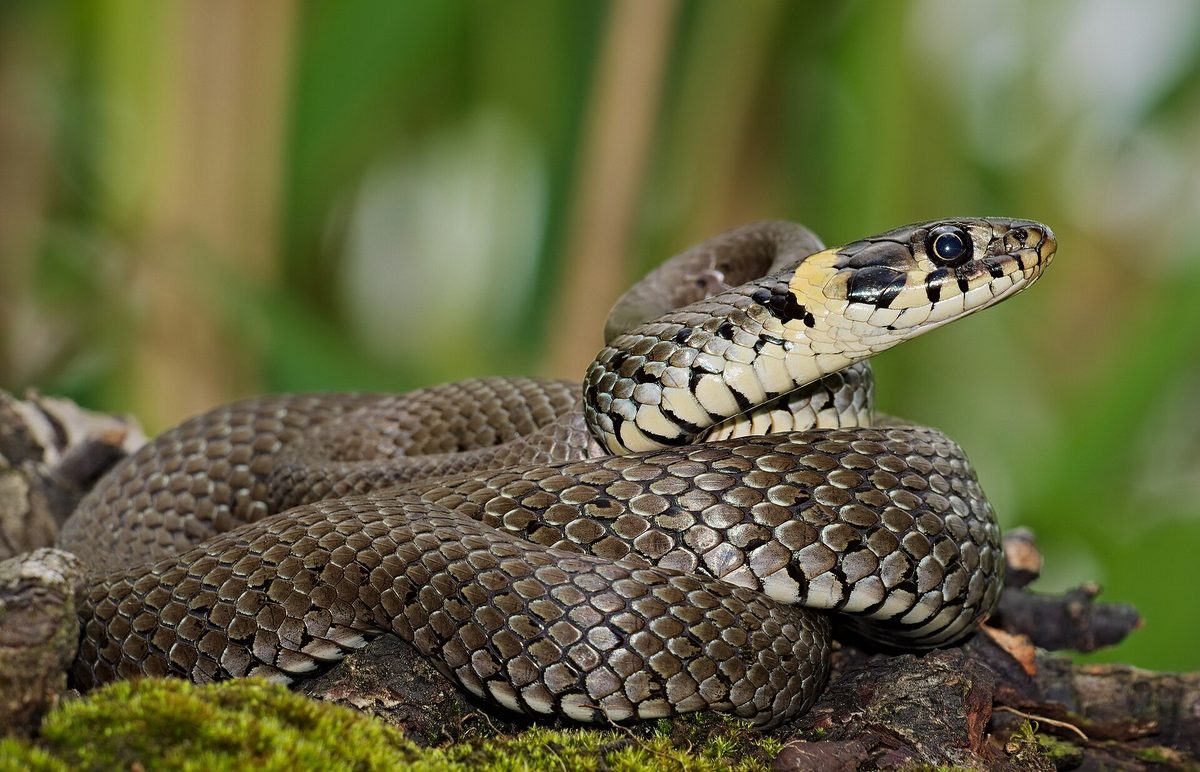
The best identifying feature is the two yellow, orange, or whitish spots on the nape, resembling 'ears'. The back is gray, olive, or black, often with small dark spots, and the pupil is round. Adult Grass snakes usually reach up to one meter in length, with large females being longer.
The Grass snake swims and dives excellently. Its main diet consists of frogs, newts, and fish. In spring, after hibernation, Grass snakes mate, and in summer, females lay eggs in piles of manure, compost, decaying leaves, or sawdust, where the heat from decomposition helps them develop. Young Grass snakes hatch at the end of summer.
When frightened, the Grass snake hisses, plays dead by rolling onto its back, or emits an unpleasant smell. It rarely bites, and such a bite is safe.
The Grass snake is not listed in the Red Book of Ukraine, but like all snakes, it should not be killed: many Grass snakes are destroyed, mistakenly thought to be vipers.
Where in the Carpathians

The map shows where naturalists recorded the species (GBIF, CC0 and CC BY records), not every place it lives. The Ukrainian Carpathians are less studied, so a blank area does not mean the species is absent.
- Countries
- Ukraine · Romania · Slovakia · Austria · Czechia · Poland · Hungary · Serbia
- Mountain ranges
- Pokuttia-Bukovina Carpathians, Almăj and Locva Mountains, Bieszczady, Gorgany, Skole Beskids, Krasna Polonyna, Vihorlat-Gutin Volcanic Ridge, Đerdap and Miroč, Codru-Moma and Zarand, Kysuce Beskids
- Altitude belts
- Foothills (below 600 m) · Beech forests (600–1200 m)
When to see it
| Jan | Feb | Mar | Apr | May | Jun | Jul | Aug | Sep | Oct | Nov | Dec | |
|---|---|---|---|---|---|---|---|---|---|---|---|---|
| Sightings |
From naturalists’ observations in the Carpathians (iNaturalist, research grade): the darker the cell, the more often the species is seen that month.
Look-alikes — how to tell them apart
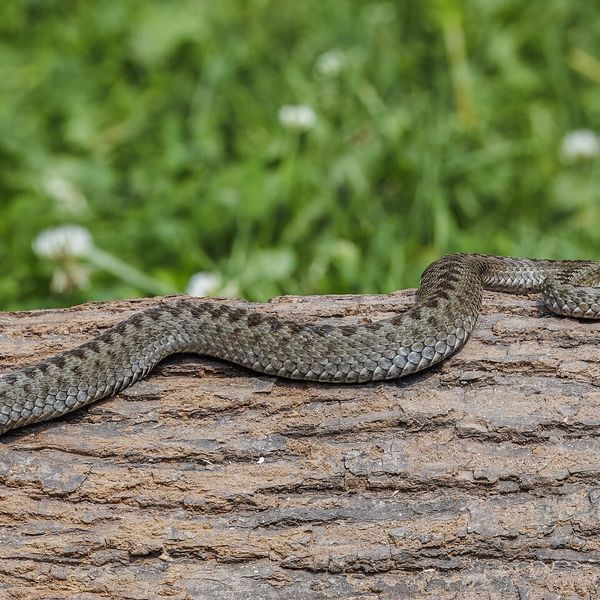
The adder does not have yellow spots on its nape, has a vertical pupil, and a dark zigzag on its back.
Protection and rules
Not listed in the Red Book of Ukraine.
FAQ
How to distinguish a Grass snake from an adder?
The Grass snake has two yellow or orange spots on its nape and a round pupil; the adder has a zigzag on its back and a vertical pupil.
Is the Grass snake dangerous?
No, the Grass snake is non-venomous. When scared, it hisses or plays dead, and it bites very rarely and safely.
Recorded nearby
 PeakMount TsetsynoChernivtsialtitude 537 mTsetsyno is the highest hill of the Chernivtsi Upland, 537 m high (538 m according to other data).
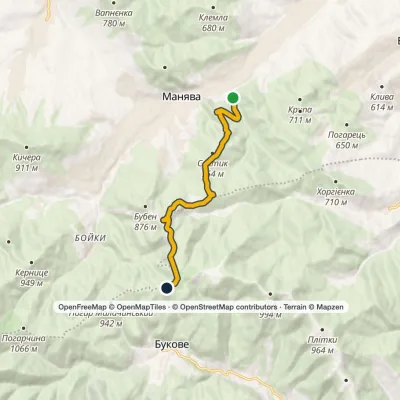 ModerateOne-dayMarkedManiava village Monastyretska polonynaElevation profile497–950 m12.1 kmascent 406 m≈ 4 h walking
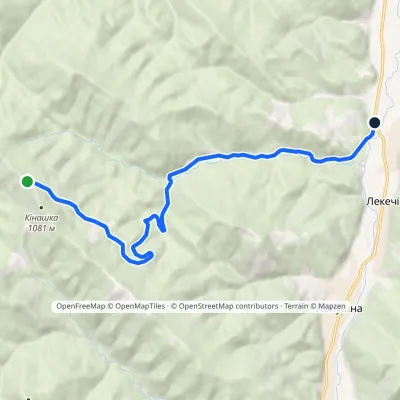 EasyOne-dayMarkedMount Kinashka Lekechi villageElevation profile521–1 043 m9.5 kmascent 4 m≈ 2.5 h walking
 EasyOne-dayMarkedManiava village Maniava WaterfallElevation profile519–711 m7 kmascent 213 m≈ 2 h walking
 ModerateOne-dayMarkedKuzmynets village Mount VysokaElevation profile686–1 803 m11.1 kmascent 1 122 m≈ 5 h walking
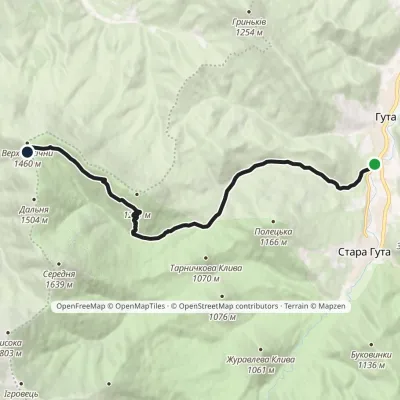 ModerateOne-dayMarkedHuta village Mount PasichnaElevation profile635–1 477 m11.4 kmascent 841 m≈ 4.5 h walking
Trails and peaks near which naturalists recorded the species (GBIF, iNaturalist), matched by altitude and habitat. Sightings are not guaranteed.
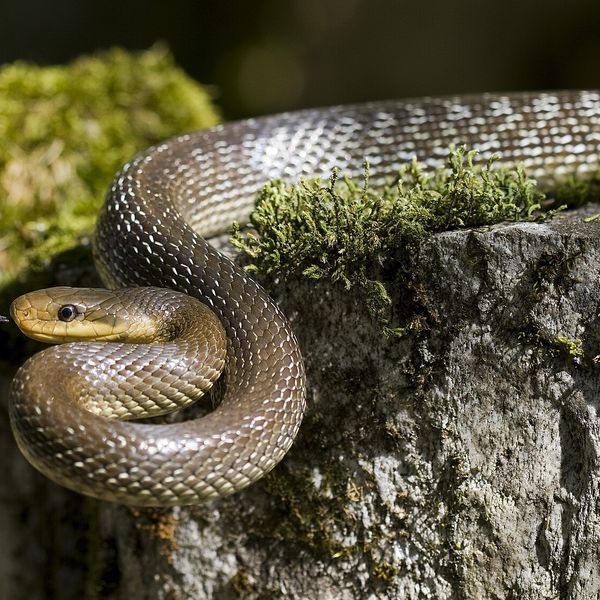
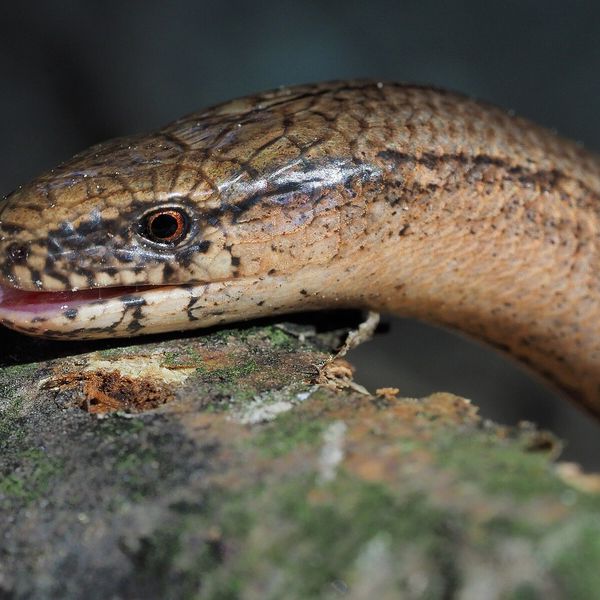
Similar species
Sources
- Вікіпедія: Вуж звичайний
- Wikipedia (en): Grass snake
- Перелік видів тварин, що заносяться до Червоної книги України (наказ Міндовкілля від 19.01.2021 № 29, зареєстровано в Мін'юсті 01.03.2021 за № 260/35882)
- Міндовкілля: текст переліку видів тварин Червоної книги України (PDF)
- GBIF: таксон і категорія МСОП
GBIF · iNaturalist · Wikidata · Distribution data: GBIF.org (CC0 and CC BY records), iNaturalist; names and identifiers: Wikidata (CC0). Text: Karpaty.rocks, checked 09.11.2026.
