Fir clubmoss
For information only, not medical advice. Do not self-medicate — consult a doctor. Many Carpathian medicinal plants are protected and must not be collected.
About
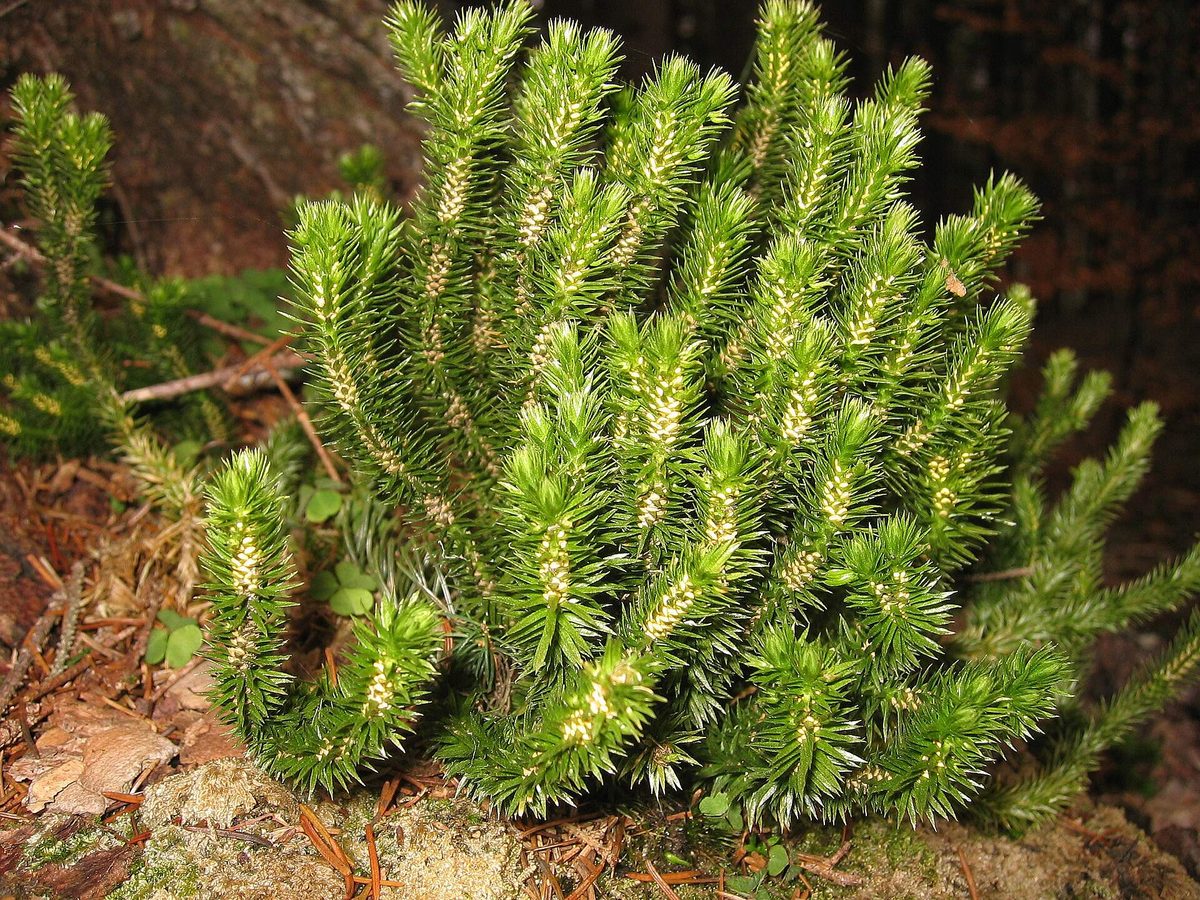
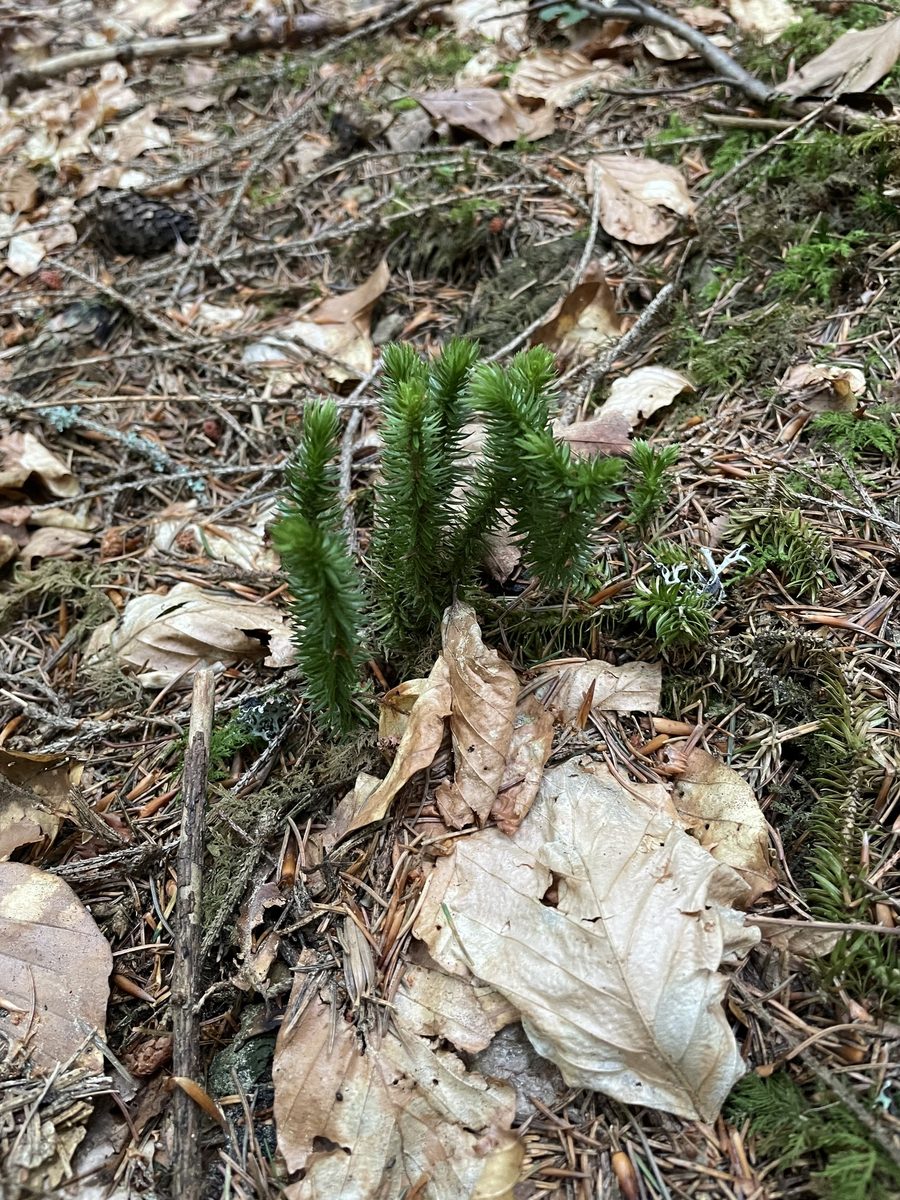
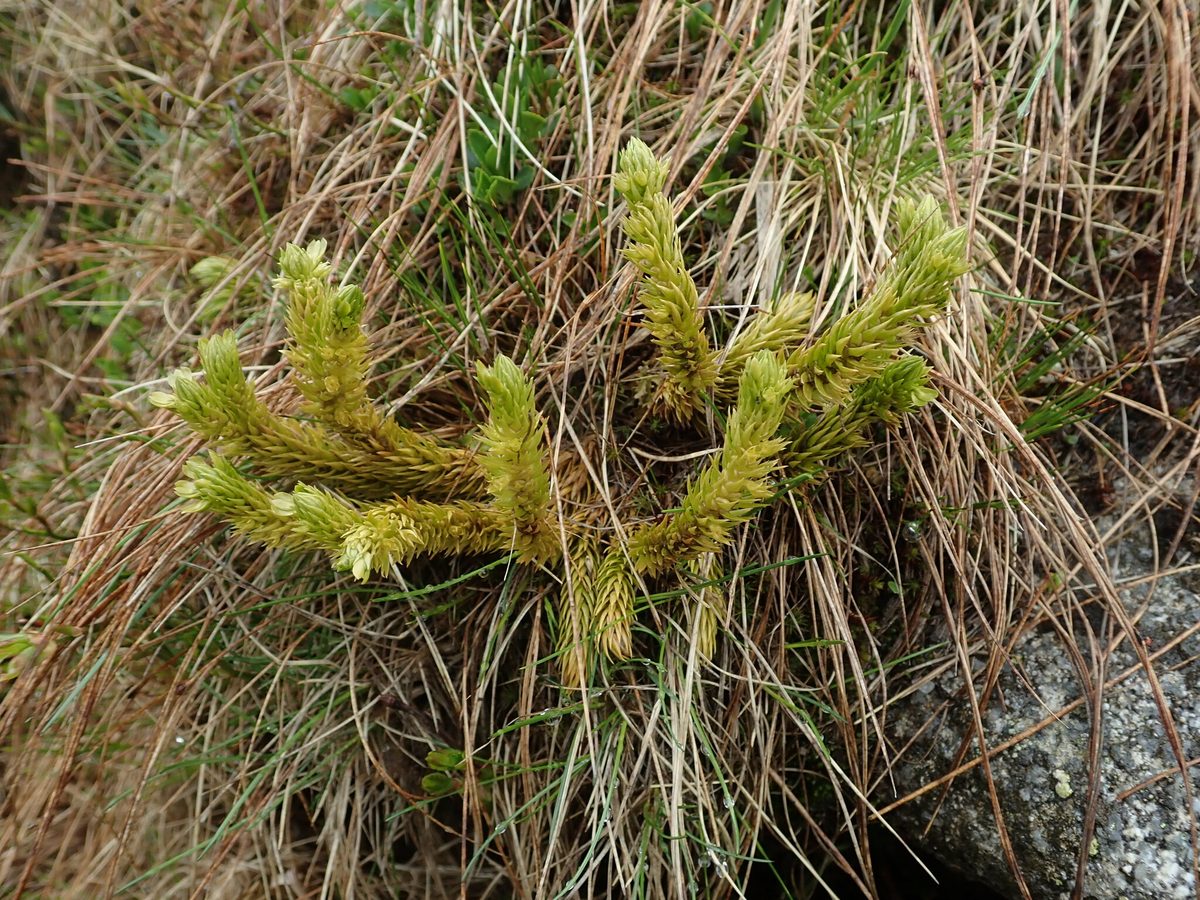
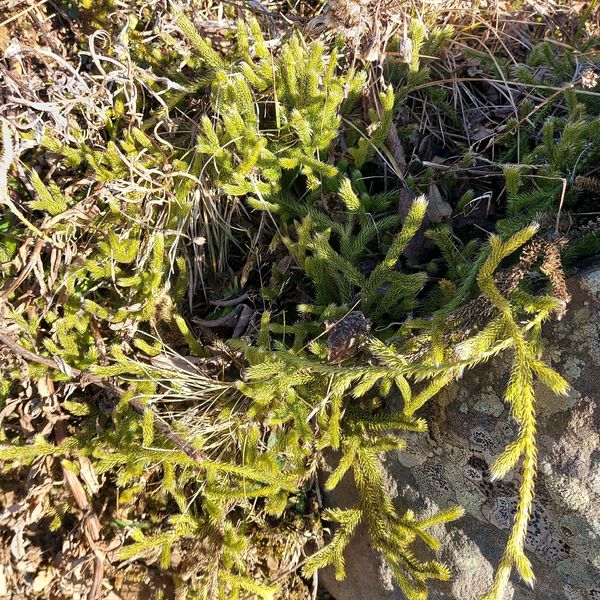
Fir clubmoss is a relative of clubmosses but looks different. It has no long creeping stems: the plant forms a dense bunch of upright shoots 5–25 cm tall, which fork several times. The shoots are densely covered with stiff dark green needle-like leaves and resemble small fir branches stuck into moss.
Fir clubmoss also has no spikes. The sporangia — small yellowish "buds" — sit in the axils of the ordinary leaves along the upper part of the shoot. Additionally, reproductive buds grow at the tips: they fall off and give rise to new plants. Fir clubmoss grows very slowly and lives for decades.
In the Carpathians, it occurs in moist spruce forests, on mossy rocks and stone debris, in crooked forests and on polonynas — from the forest to the alpine belt. In the Ukrainian Carpathians, naturalists often record it, but the plants are few everywhere.
Fir clubmoss is poisonous. It contains alkaloids that cause severe vomiting, disruption of heart function, and nervous system issues. In folk medicine, it was once used as an emetic, and this often ended in severe poisoning. Collecting and consuming the plant is prohibited.
The species is listed in the Red Book of Ukraine with the status of "not evaluated." Collecting it is forbidden, so we only show its distribution at the level of mountain ranges on the website.
Where in the Carpathians

Orange — where naturalists recorded the species (GBIF, CC0/CC BY). It occurs only locally, so we draw no approximate range; a blank area does not mean it is absent. For rare and vulnerable species the map is deliberately coarse (hexagons of ~250 km² or more) so that it never points to dens, nests or growing sites.
- Countries
- Ukraine · Slovakia · Romania · Poland · Czechia
- Mountain ranges
- Chornohora, Pokuttia-Bukovina Carpathians, Gorgany, Maramureș Mountains, Bieszczady, Skole Beskids. In other countries: 🇸🇰 High Tatras, 🇸🇰 Western Tatras, 🇸🇰 Low Tatras, 🇸🇰 Lesser Fatra, 🇸🇰 Greater Fatra, 🇸🇰 Belianske Tatras, 🇵🇱 Żywiec Beskids, 🇸🇰 Slovak Ore Mountains
- Altitude belts
- Beech forests (600–1200 m) · Conifer forests (1200–1600 m) · Subalpine belt (1600–1900 m) · Alpine belt (above 1900 m)
When to see it
| Jan | Feb | Mar | Apr | May | Jun | Jul | Aug | Sep | Oct | Nov | Dec | |
|---|---|---|---|---|---|---|---|---|---|---|---|---|
| Flowering |
From naturalists’ observations in the Carpathians (iNaturalist, research grade): the darker the cell, the more often the species is seen that month.
Safety
The entire plant is poisonous: it causes severe vomiting and disruption of heart function. Do not collect or consume. In case of suspected poisoning, call 103 (or 112).
Protection and rules
Listed in the Red Book of Ukraine (not evaluated). Collecting is prohibited.
Admire, don’t pick: plants listed in the Red Data Book of Ukraine — and any plants in nature reserves and strictly protected zones of national parks — must not be collected.
FAQ
Is fir clubmoss poisonous?
Yes. The plant contains alkaloids that cause severe vomiting and disruption of heart function and the nervous system.
How to distinguish fir clubmoss from clubmosses?
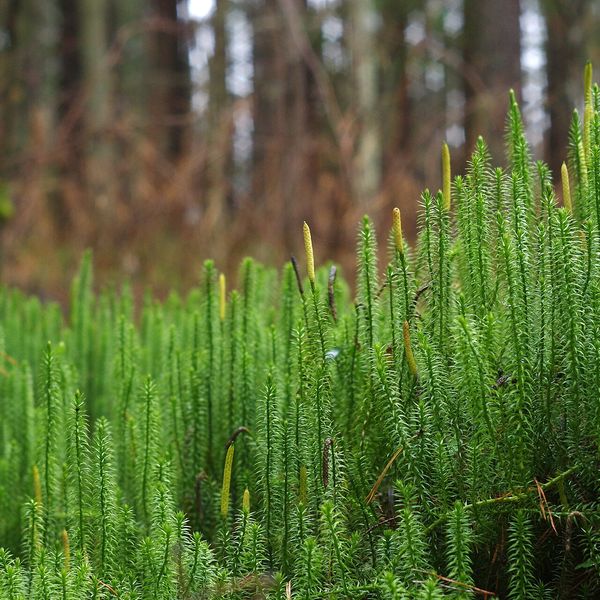
In fir clubmoss, the shoots stand in a bunch and fork, with no creeping stems or spikes. Clubmosses have long creeping stems and spikes at the tips of the shoots.
Comments
Travellers’ experience: reports, tips, questions.
No one has written here yet. Be the first — your experience helps others.
Similar species
Where to meet it
Ranges where it occurs: Chornohora, Pokuttia-Bukovina Carpathians, Gorgany, Maramureș Mountains, Bieszczady, Skole Beskids. In other countries: 🇸🇰 High Tatras, 🇸🇰 Western Tatras, 🇸🇰 Low Tatras, 🇸🇰 Lesser Fatra, 🇸🇰 Greater Fatra, 🇸🇰 Belianske Tatras, 🇵🇱 Żywiec Beskids, 🇸🇰 Slovak Ore Mountains
Trails and peaks near which naturalists recorded the species (GBIF, iNaturalist), matched by altitude and habitat. Sightings are not guaranteed.
Sources
- Вікіпедія: Баранець звичайний
- Wikipedia (en): Huperzia selago
- Наказ Міндовкілля від 15.02.2021 № 111: Перелік видів рослин та грибів, що заносяться до Червоної книги України
- GBIF: список рослин і грибів Червоної книги України за наказом № 111 (з категоріями)
- Директива Ради 92/43/ЄЕС про збереження природних оселищ (консолідований текст, додатки II, IV, V)
- iNaturalist: Huperzia selago (спостереження в Карпатах)
GBIF · iNaturalist · Wikidata · Distribution data: GBIF.org (CC0 and CC BY records), iNaturalist; names and identifiers: Wikidata (CC0). Text: Karpaty.rocks, checked 11.11.2026.
