European yew
This plant is poisonous: do not taste or pick it, and wash your hands after touching it. In case of poisoning call 112 (103 in Ukraine).
About
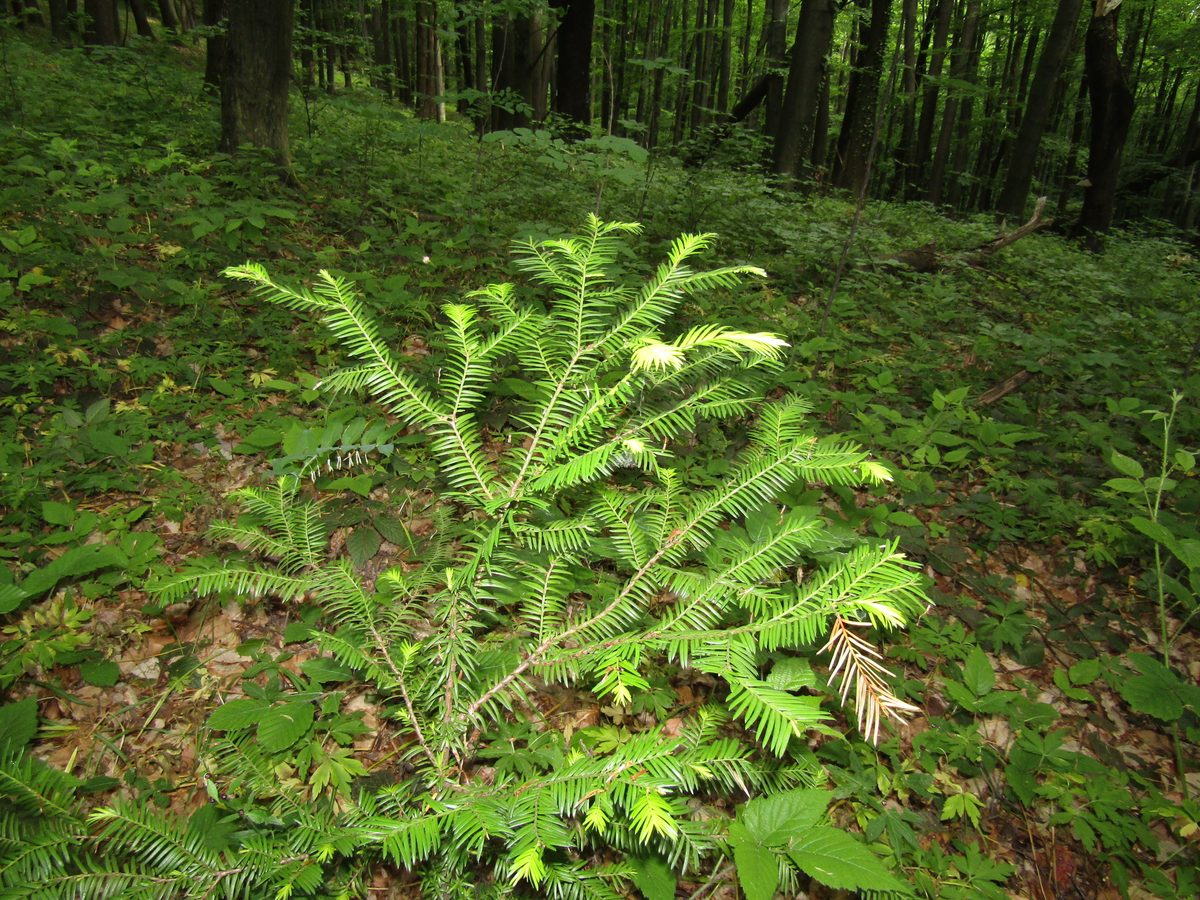
The European yew is one of the longest-lived trees in Europe: individual specimens can live for hundreds, and by some estimates even thousands of years. In the Carpathians, yew grows in the second layer of beech and fir-beech forests, in the shade of large trees, mainly on limestone soils. In the Ukrainian Carpathians, natural populations have survived only in a few locations: in Prykarpattia, Bukovina, and Transcarpathia. The largest of these is the Knyazhdvir Botanical Reserve, where over 22,000 yews grow; another important location is protected in the Uholsko-Myrolyubiv massif of the Carpathian Biosphere Reserve.
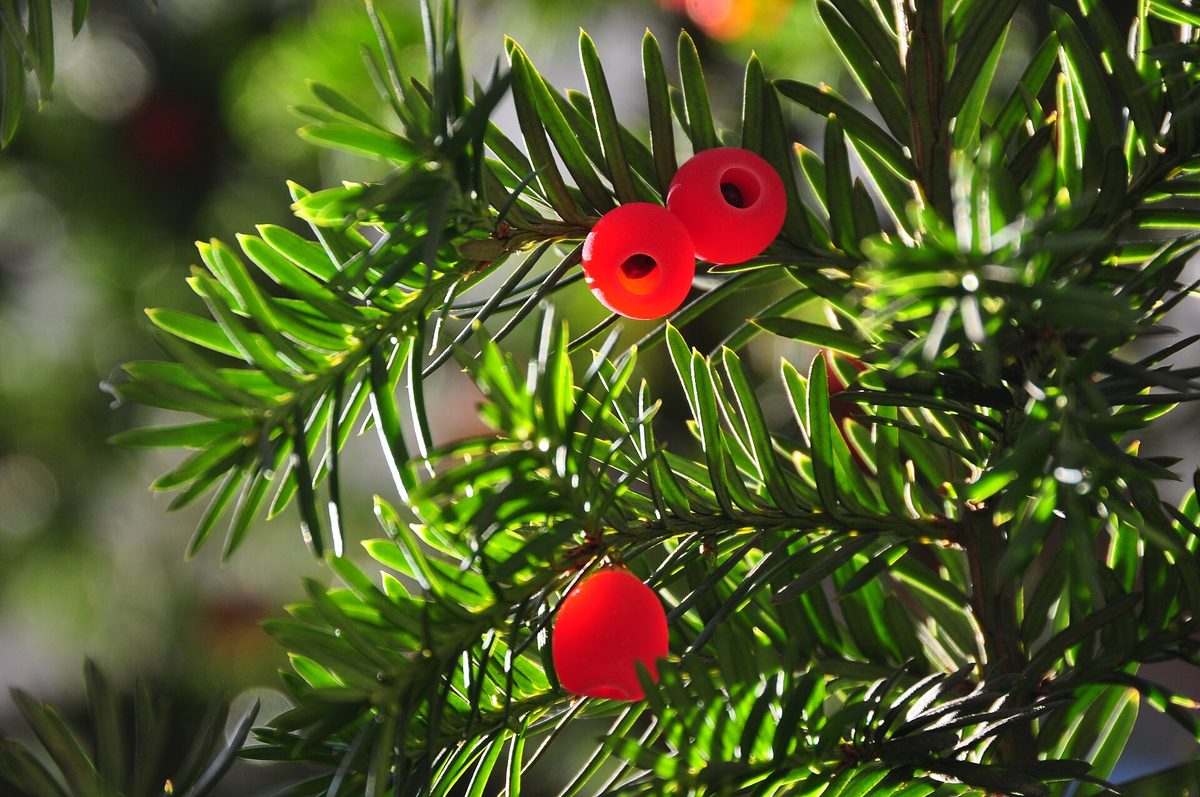
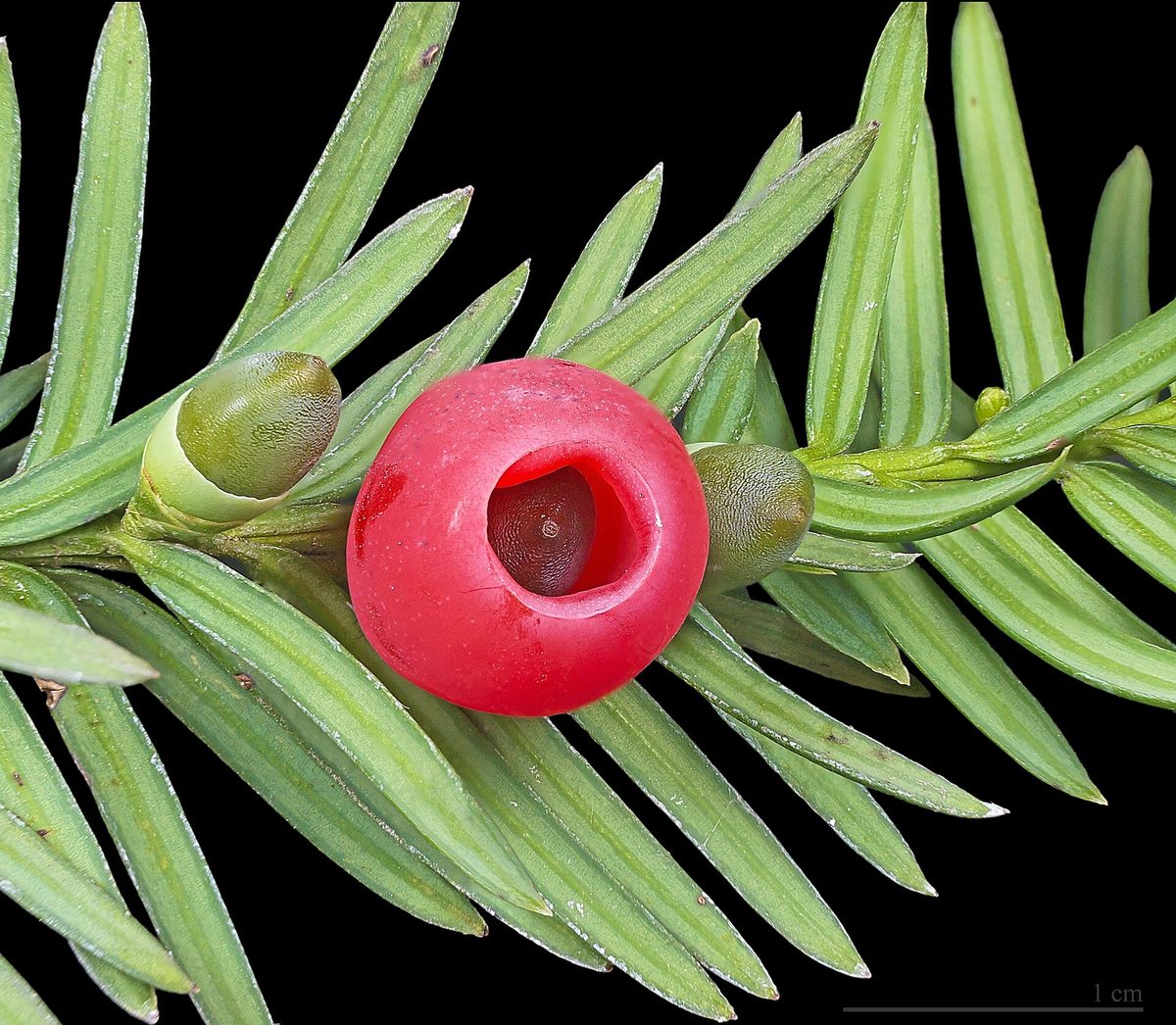
This evergreen tree or shrub has dark reddish-brown bark that peels off in flakes. The needles are flat, soft, dark green, with a sharp tip, arranged in two rows on the branches. The yew is dioecious: on female plants, seeds ripen in the fleshy bright red 'cup' — the aril, resembling a berry, in autumn.
The yew is mortally poisonous. Alkaloids called taxines are found in the needles, bark, wood, and seeds; they affect the heart and can cause death even in small amounts. The red aril contains almost no poison, but the seed inside it is toxic, so no 'berries' of the yew should be tasted. Pay special attention to children and animals: poisoning from the needles occurs in livestock and dogs.
Due to its valuable wood, yew has been cut down for centuries, and it is now listed in the Red Book of Ukraine with the status of 'vulnerable'. Breaking branches, digging up seedlings, or damaging trees is prohibited.
Where in the Carpathians

The map shows where naturalists recorded the species (GBIF, CC0 and CC BY records), not every place it lives. The Ukrainian Carpathians are less studied, so a blank area does not mean the species is absent. For rare and vulnerable species the map is deliberately coarse (hexagons of ~250 km² or more) so that it never points to dens, nests or growing sites.
- Countries
- Slovakia · Ukraine · Czechia · Romania · Hungary · Poland · Serbia
- Mountain ranges
- Lesser Fatra, Greater Fatra, Strážov Mountains, Slovak Ore Mountains, Low Tatras, Maramureș Mountains, Kysuce Beskids, Vtáčnik Mountains, Pieniny, Volovec Mountains
- Altitude belts
- Foothills (below 600 m) · Beech forests (600–1200 m)
When to see it
| Jan | Feb | Mar | Apr | May | Jun | Jul | Aug | Sep | Oct | Nov | Dec | |
|---|---|---|---|---|---|---|---|---|---|---|---|---|
| Sightings |
From naturalists’ observations in the Carpathians (iNaturalist, research grade): the darker the cell, the more often the species is seen that month.
Safety
Mortally poisonous: needles, bark, wood, and seeds. Do not taste the red 'berries' — the seed inside is toxic. Keep children and animals away from the needles. In case of suspected poisoning, call 103 (or 112).
Look-alikes — how to tell them apart
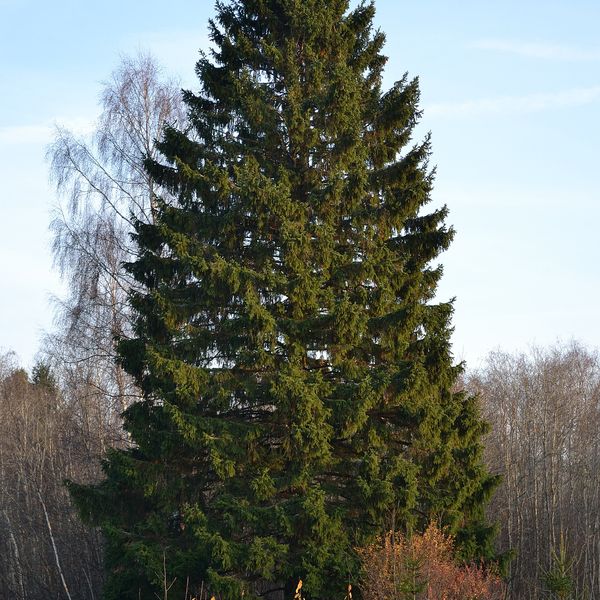
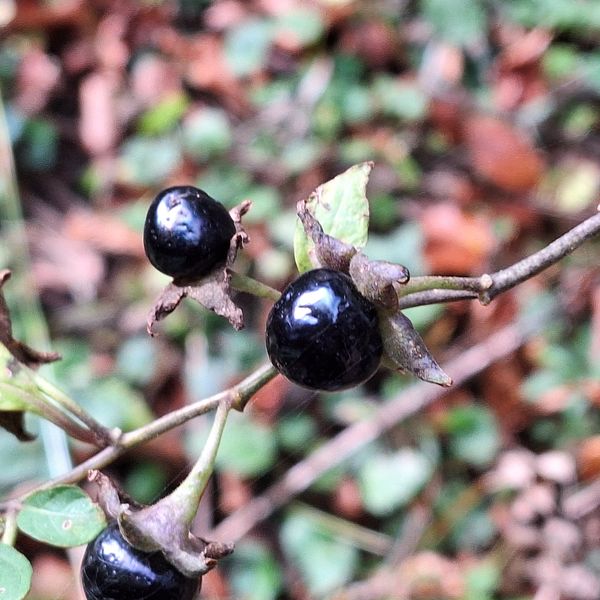
The needles are flat but have two white stripes underneath and a notch at the tip; cones stand upright; there are no red 'berries'. Yew has needles without white stripes and a sharp tip.
Protection and rules
Listed in the Red Book of Ukraine (vulnerable). Breaking branches, digging up, and damaging trees is prohibited.
Admire, don’t pick: plants listed in the Red Data Book of Ukraine — and any plants in nature reserves and strictly protected zones of national parks — must not be collected.
FAQ
Are yew berries poisonous?
The red flesh contains almost no poison, but the seed inside is mortally poisonous, as are the needles, bark, and wood. Therefore, yew should not be tasted at all.
Where does yew grow in the Carpathians?
In beech forests, in a few locations: the largest is the Knyazhdvir Botanical Reserve in Prykarpattia; another is protected in the Uholsko-Myrolyubiv massif of the Carpathian Biosphere Reserve.
Similar species
Where to meet it
Ranges where it occurs: Maramureș Mountains. In other countries: 🇸🇰 Lesser Fatra, 🇸🇰 Greater Fatra, 🇸🇰 Strážov Mountains, 🇸🇰 Slovak Ore Mountains, 🇸🇰 Low Tatras, 🇸🇰 Kysuce Beskids, 🇸🇰 Vtáčnik Mountains, 🇵🇱 Pieniny, 🇸🇰 Volovec Mountains, 🇸🇰 Choč Mountains, 🇸🇰 Belianske Tatras, 🇵🇱 Silesian Beskids, 🇷🇴 Bucegi Mountains
Trails and peaks near which naturalists recorded the species (GBIF, iNaturalist), matched by altitude and habitat. Sightings are not guaranteed.
Sources
- Вікіпедія: Тис звичайний
- Wikipedia (en): Taxus baccata
- Наказ Міндовкілля від 15.02.2021 № 111: Перелік видів рослин та грибів, що заносяться до Червоної книги України
- GBIF: список рослин і грибів Червоної книги України за наказом № 111 (з категоріями)
- Категорія IUCN (через GBIF Species API)
GBIF · iNaturalist · Wikidata · Distribution data: GBIF.org (CC0 and CC BY records), iNaturalist; names and identifiers: Wikidata (CC0). Text: Karpaty.rocks, checked 09.11.2026.
