Edelweiss
About
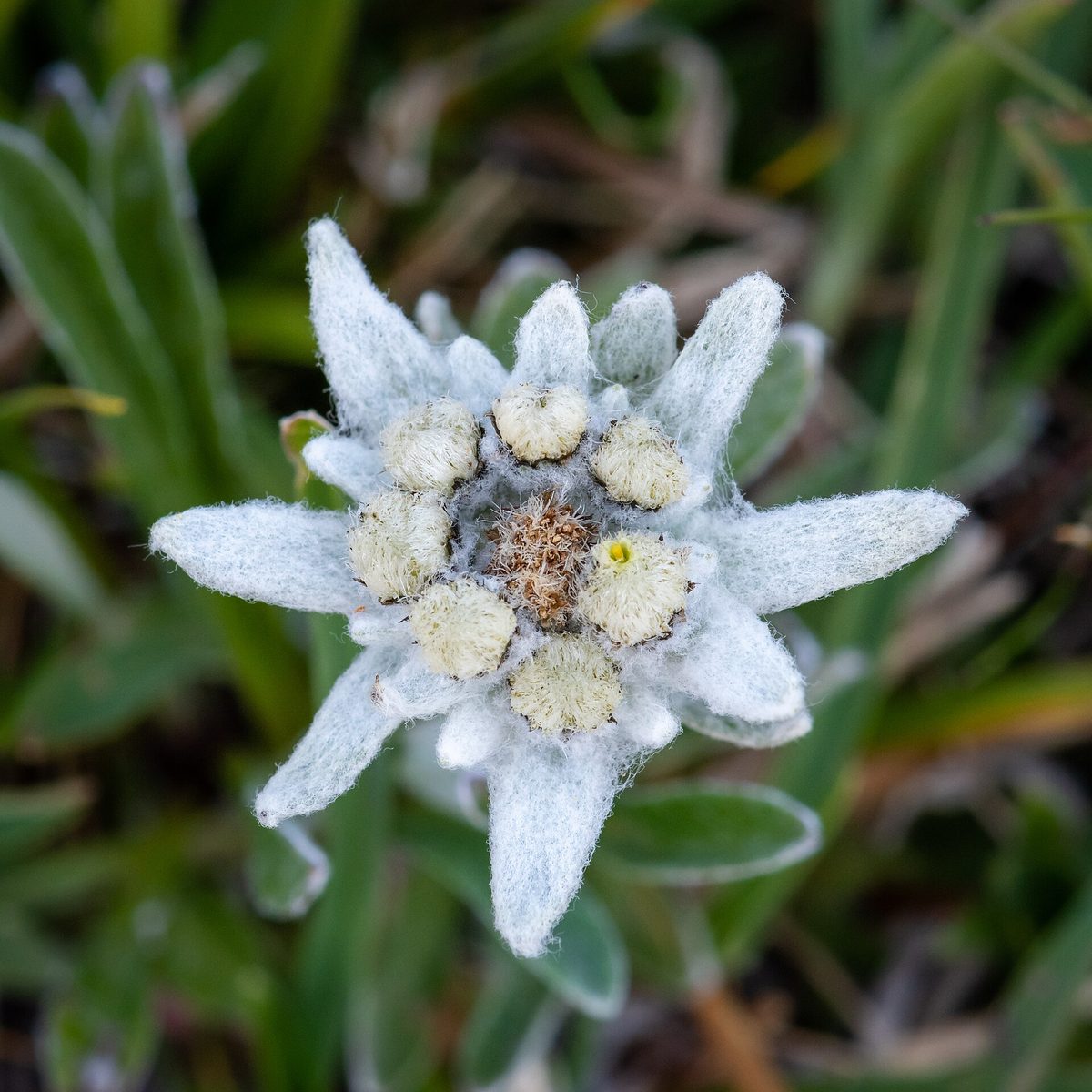
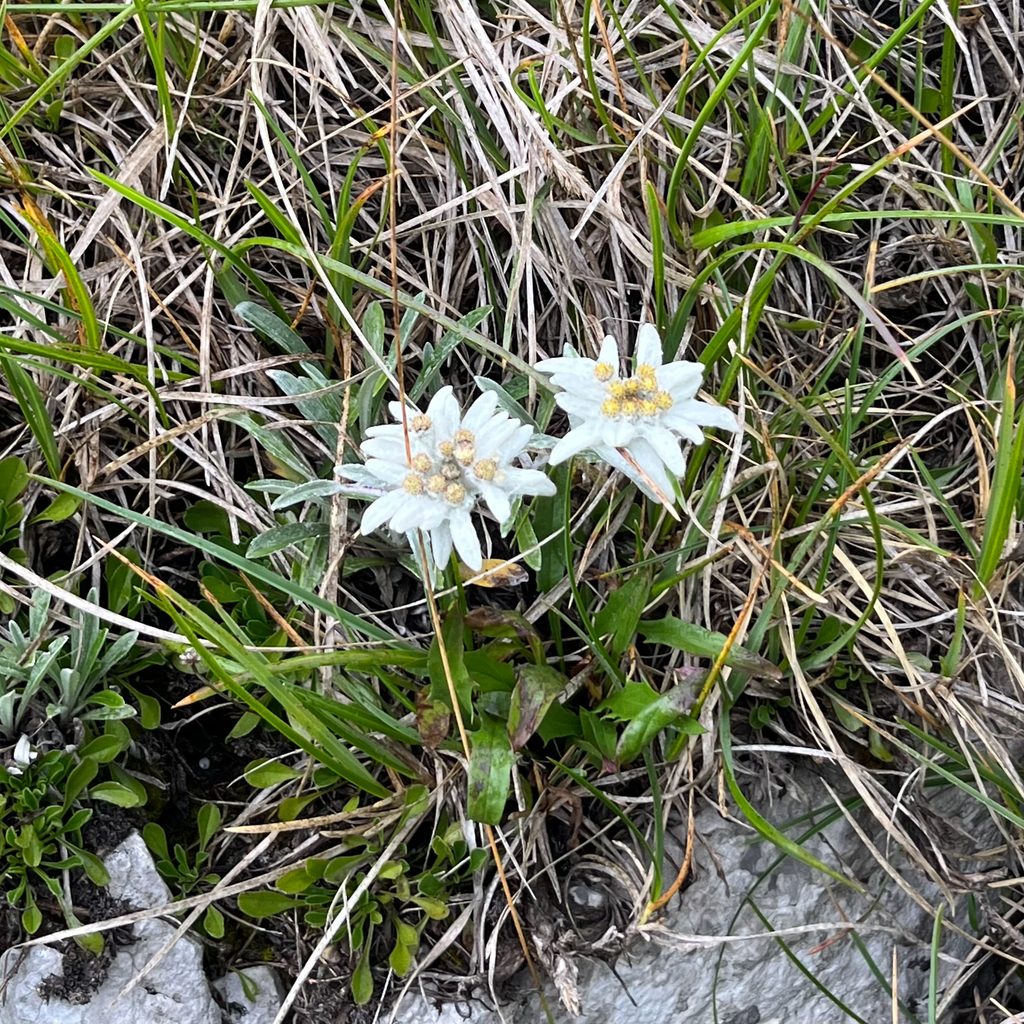
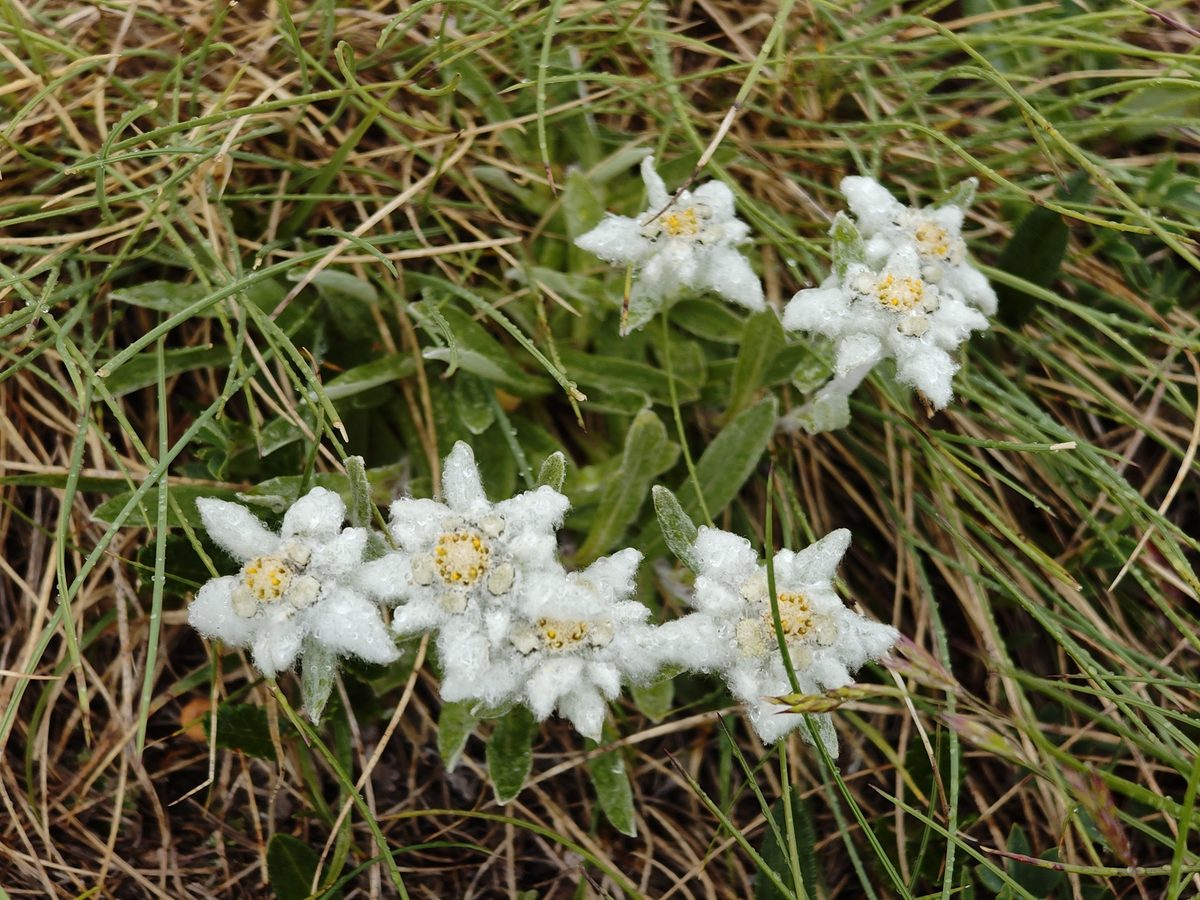
Edelweiss, known scientifically as Leontopodium alpinum, is a symbol of the high mountains of the Alps and the Carpathians. What appears to be a large fluffy flower is actually an inflorescence: several small yellowish flower heads surrounded by a star of densely woolly silvery-white leaves. The plant grows to a height of 5–20 cm, covered entirely with white woolly hairs that protect it from the sun, wind, and cold. It blooms in July – August.
Edelweiss grows on steep cliffs and rocky slopes, almost always on limestone. There are very few such places in the Ukrainian Carpathians, which is why the plant is extremely rare here. Researchers confirm recent findings in the Marmarosh Mountains and on the limestone cliffs of Chivchyn, and the literature also mentions Svydovets. During a survey of the Marmarosh Mountains in 2017, only about a dozen flowering plants were found in two locations.
The main reason for its disappearance is humans. According to forest rangers, edelweiss has been dug up for souvenirs for decades, and now it survives only in the most inaccessible places. Botanists also note that populations of high-altitude rock species, including edelweiss, are declining due to climate warming.
Edelweiss is listed in the Red Book of Ukraine with the status of 'disappearing'. It is much more abundant in the Tatra Mountains and in the Romanian Carpathians, where it is also strictly protected. If you are lucky enough to see edelweiss, just take a photo and do not tell anyone about the exact location.
Where in the Carpathians

The map shows where naturalists recorded the species (GBIF, CC0 and CC BY records), not every place it lives. The Ukrainian Carpathians are less studied, so a blank area does not mean the species is absent. For rare and vulnerable species the map is deliberately coarse (hexagons of ~250 km² or more) so that it never points to dens, nests or growing sites.
- Countries
- Poland · Romania · Ukraine · Slovakia
- Mountain ranges
- Western Tatras, Greater Fatra, Chornohora, Bucegi Mountains, Hășmaș Mountains, Ceahlău, Svydovets
- Altitude belts
- Beech forests (600–1200 m) · Conifer forests (1200–1600 m) · Subalpine belt (1600–1900 m)
When to see it
| Jan | Feb | Mar | Apr | May | Jun | Jul | Aug | Sep | Oct | Nov | Dec | |
|---|---|---|---|---|---|---|---|---|---|---|---|---|
| Flowering | ||||||||||||
| Fruit |
From naturalists’ observations in the Carpathians (iNaturalist, research grade): the darker the cell, the more often the species is seen that month.
Protection and rules
Listed in the Red Book of Ukraine (disappearing). Enjoy, collecting and digging up is prohibited. We do not publish exact locations.
Admire, don’t pick: plants listed in the Red Data Book of Ukraine — and any plants in nature reserves and strictly protected zones of national parks — must not be collected.
FAQ
Does edelweiss grow in the Ukrainian Carpathians?
Yes, but very rarely. Recent findings have been confirmed in the Marmarosh Mountains and on the limestone cliffs of Chivchyn; in 2017, only about a dozen flowering plants were counted in the Marmarosh Mountains.
Is edelweiss listed in the Red Book of Ukraine?
Yes, Leontopodium alpinum is in the current list of the Red Book of Ukraine with the status of 'disappearing'.
Where in the Carpathians can you see edelweiss?
It is easiest to see in the Tatra Mountains and in the Romanian Carpathians on limestone cliffs. In Ukraine, it has survived only in a few hard-to-reach places.
Similar species
Sources
- Вікіпедія: Білотка альпійська
- Wikipedia (en): Edelweiss
- Wikipedia (pl): Szarotka alpejska
- Наказ Міндовкілля від 15.02.2021 № 111: Перелік видів рослин та грибів, що заносяться до Червоної книги України
- GBIF: список рослин і грибів Червоної книги України за наказом № 111 (з категоріями)
- Kobiv Y. et al. Distribution and population status of rare plant species in the Marmarosh Mountains. Ukr. Bot. J., 2017, 74(2): 163–176
- Contribuţii Botanice 53 (2018): рідкісні види на вапнякових скелях Чивчин (Leontopodium alpinum)
- Kyyak N. et al. (2019): кліматично зумовлена динаміка популяцій рідкісних високогірних видів Українських Карпат
GBIF · iNaturalist · Wikidata · Distribution data: GBIF.org (CC0 and CC BY records), iNaturalist; names and identifiers: Wikidata (CC0). Text: Karpaty.rocks, checked 09.11.2026.
