Alpine pasqueflower
This plant is poisonous: do not taste or pick it, and wash your hands after touching it. In case of poisoning call 112 (103 in Ukraine).
About
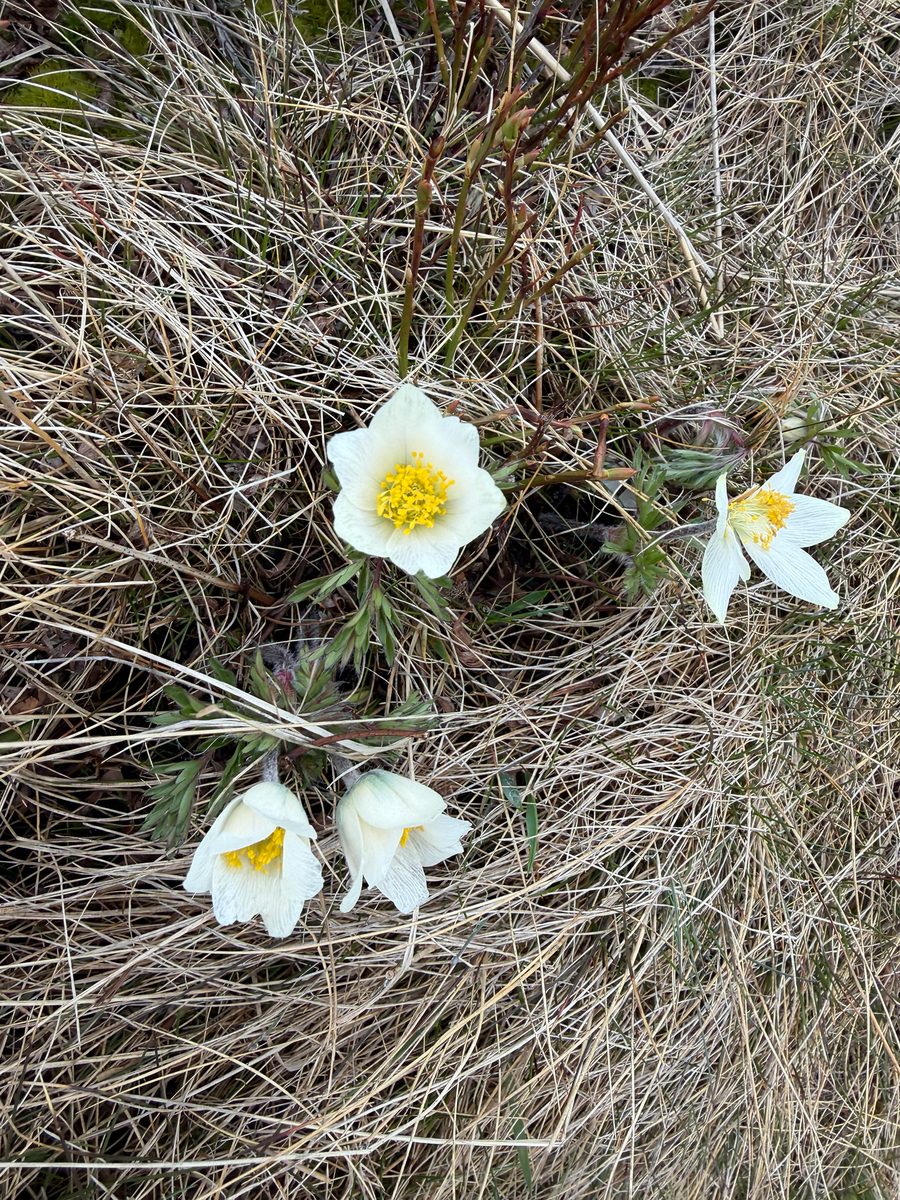
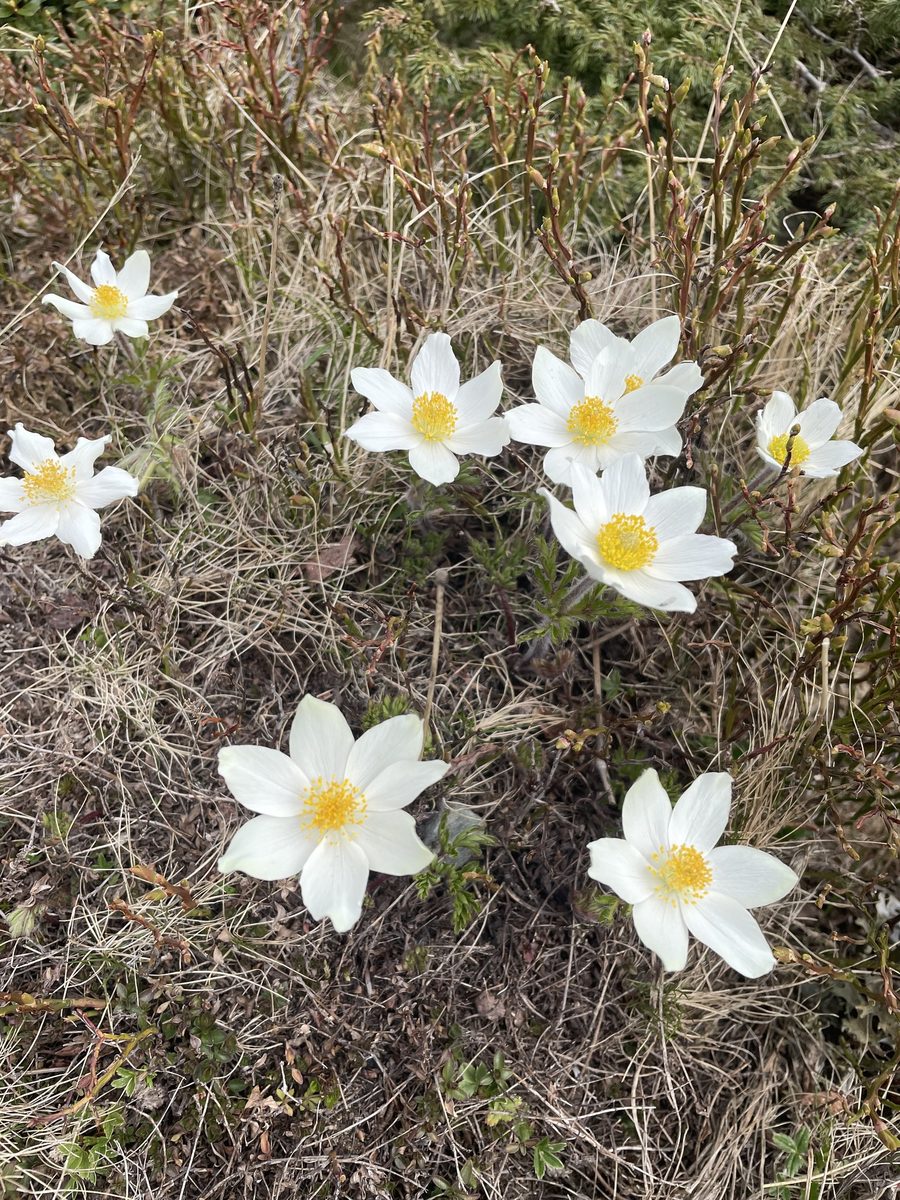
The Alpine pasqueflower is one of the first flowers of the high mountains. Its white cup-shaped flowers appear on subalpine and alpine meadows as soon as the snow melts, often breaking through its edge. It blooms in April to May, and on the highest peaks until mid-July. After flowering, fluffy silvery 'tufts' of seeds form, which remain on the plant for a long time.
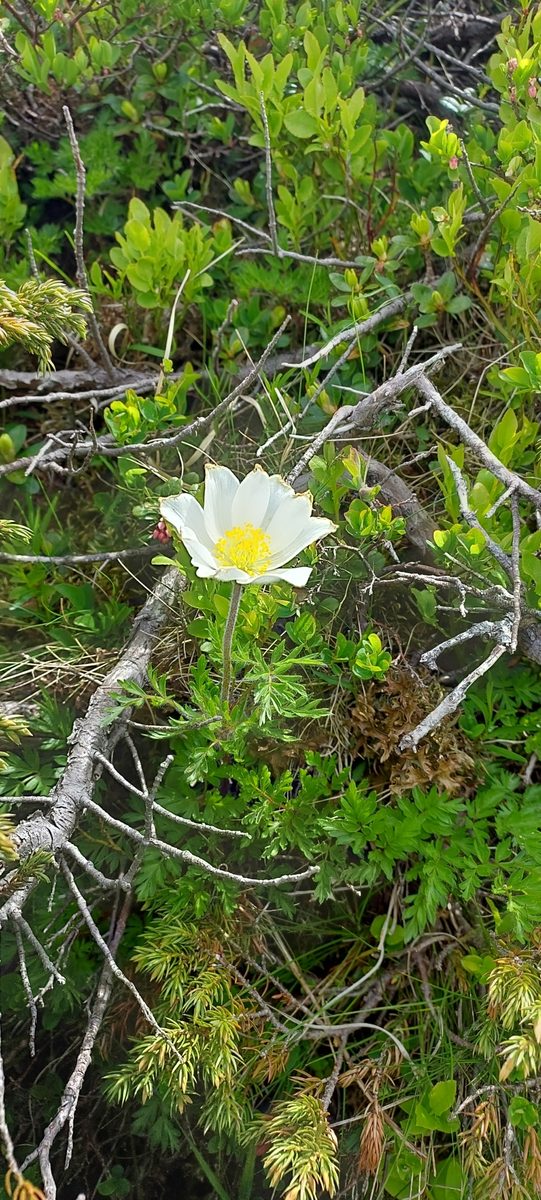
It is a perennial 7–25 cm tall with a powerful rhizome. The stem, leaves, and outer side of the petals are densely hairy. The flowers are solitary, upright, white, sometimes with a slight bluish tint on the outside, with yellow stamens in the center. The basal leaves are three-parted and appear at the end of flowering.
In the Ukrainian Carpathians, the Alpine pasqueflower grows at an altitude of approximately 1650–1960 m: on meadows, rocky outcrops, and scree, mainly on calcareous soils. Its most famous locations are Chornohora, as well as Świdowiec, Marmarosy, Chivchyny, and Gorgany. The blooming slopes of Chornohora at the end of May are one of the best rewards for early tourists.
Botanists refer to this Carpathian Alpine pasqueflower by several names: Pulsatilla alba, P. scherfelii, P. alpina subsp. alba. In the current list of the Red Book of Ukraine, it is recorded as Pulsatilla scherfelii with the status 'rare'. Therefore, collecting flowers and digging up plants is prohibited. Like other pasqueflowers, the plant is poisonous.
Where in the Carpathians

The map shows where naturalists recorded the species (GBIF, CC0 and CC BY records), not every place it lives. The Ukrainian Carpathians are less studied, so a blank area does not mean the species is absent. For rare and vulnerable species the map is deliberately coarse (hexagons of ~250 km² or more) so that it never points to dens, nests or growing sites.
- Countries
- Slovakia · Ukraine · Romania · Poland
- Mountain ranges
- Western Tatras, High Tatras, Low Tatras, Belianske Tatras, Chornohora, Slovak Paradise, Babia Góra, Făgăraș Mountains, Retezat Mountains, Maramureș Mountains
- Altitude belts
- Subalpine belt (1600–1900 m) · Alpine belt (above 1900 m)
When to see it
| Jan | Feb | Mar | Apr | May | Jun | Jul | Aug | Sep | Oct | Nov | Dec | |
|---|---|---|---|---|---|---|---|---|---|---|---|---|
| Flowering | ||||||||||||
| Fruit |
From naturalists’ observations in the Carpathians (iNaturalist, research grade): the darker the cell, the more often the species is seen that month.
Safety
Like all pasqueflowers, the plant is poisonous: fresh sap irritates the skin and mucous membranes.
Protection and rules
Listed in the Red Book of Ukraine as Pulsatilla scherfelii, status 'rare'. Enjoy, collecting is prohibited.
Admire, don’t pick: plants listed in the Red Data Book of Ukraine — and any plants in nature reserves and strictly protected zones of national parks — must not be collected.
FAQ
When does the Alpine pasqueflower bloom on Chornohora?
Right after the snow melts: in April to May, and on the highest peaks until mid-July.
Is the Alpine pasqueflower listed in the Red Book of Ukraine?
Yes, under the name Pulsatilla scherfelii with the status 'rare'. Collecting it is prohibited.
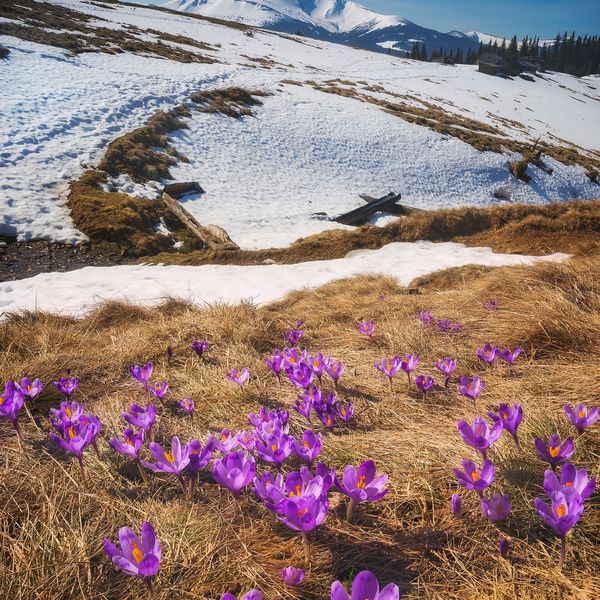
Similar species
Sources
- Вікіпедія: Сон білий
- Wikipedia (en): Pulsatilla alpina
- Наказ Міндовкілля від 15.02.2021 № 111: Перелік видів рослин та грибів, що заносяться до Червоної книги України
- GBIF: список рослин і грибів Червоної книги України за наказом № 111 (з категоріями)
- Kobiv Y. et al. Distribution and population status of rare plant species in the Marmarosh Mountains. Ukr. Bot. J., 2017, 74(2): 163–176
GBIF · iNaturalist · Wikidata · Distribution data: GBIF.org (CC0 and CC BY records), iNaturalist; names and identifiers: Wikidata (CC0). Text: Karpaty.rocks, checked 09.11.2026.
