Dwarf elder (danewort)
Never eat berries you are not sure about and never give unknown berries to children. In case of poisoning call 112 (103 in Ukraine).
About
Dwarf elder grows throughout Ukraine: on hills, forest edges, and slopes, and is also found in the Carpathians. Spreading through rhizomes, it forms dense thickets that are visible from afar.
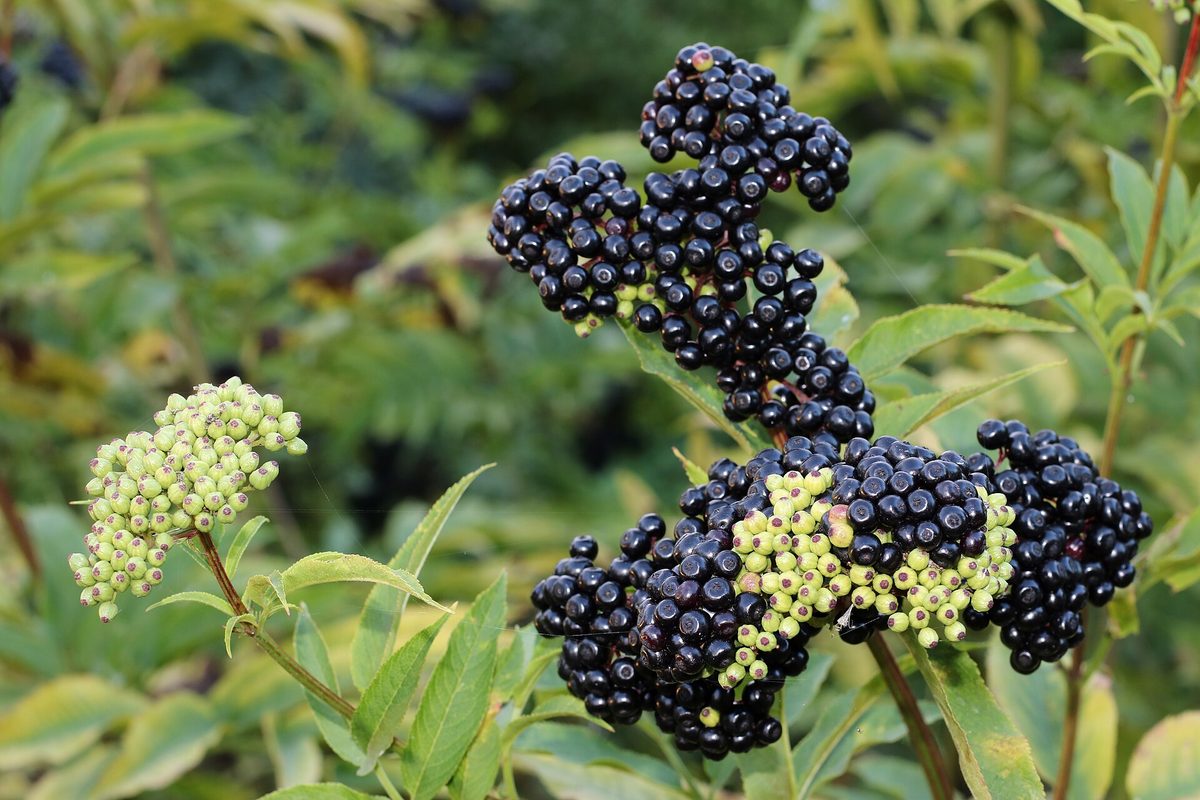
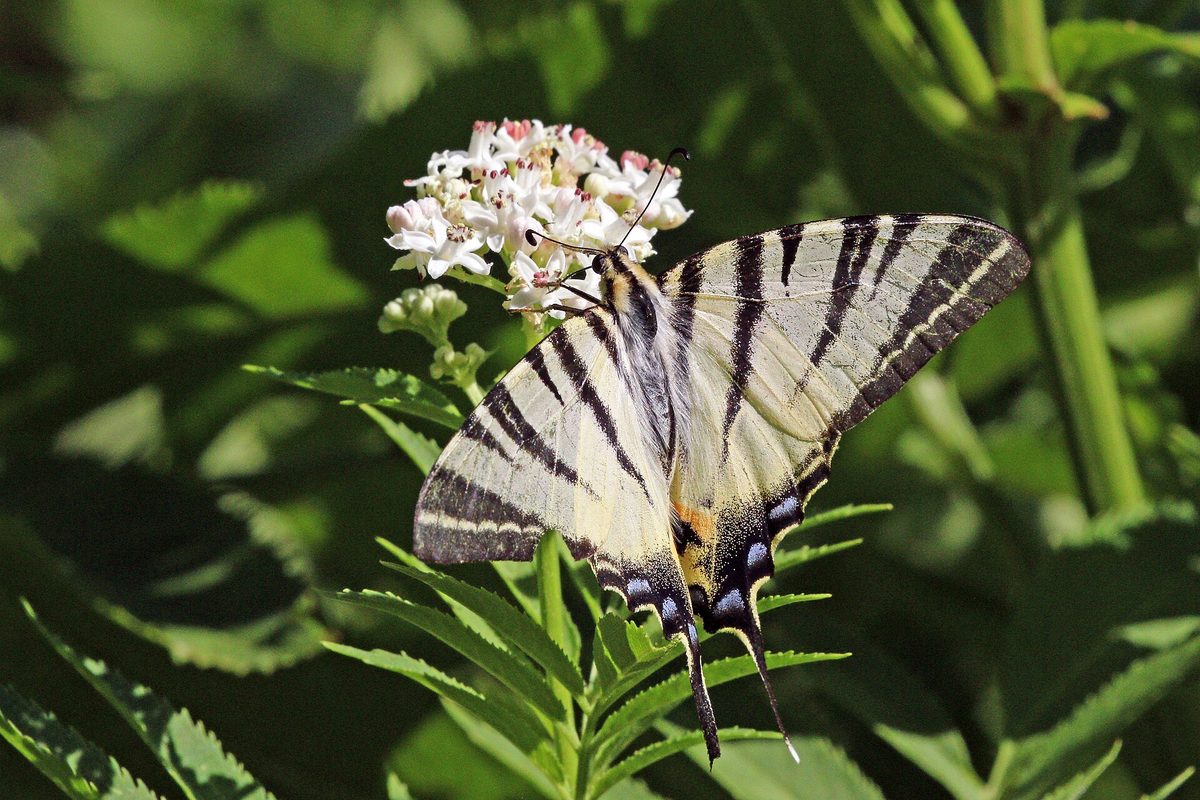
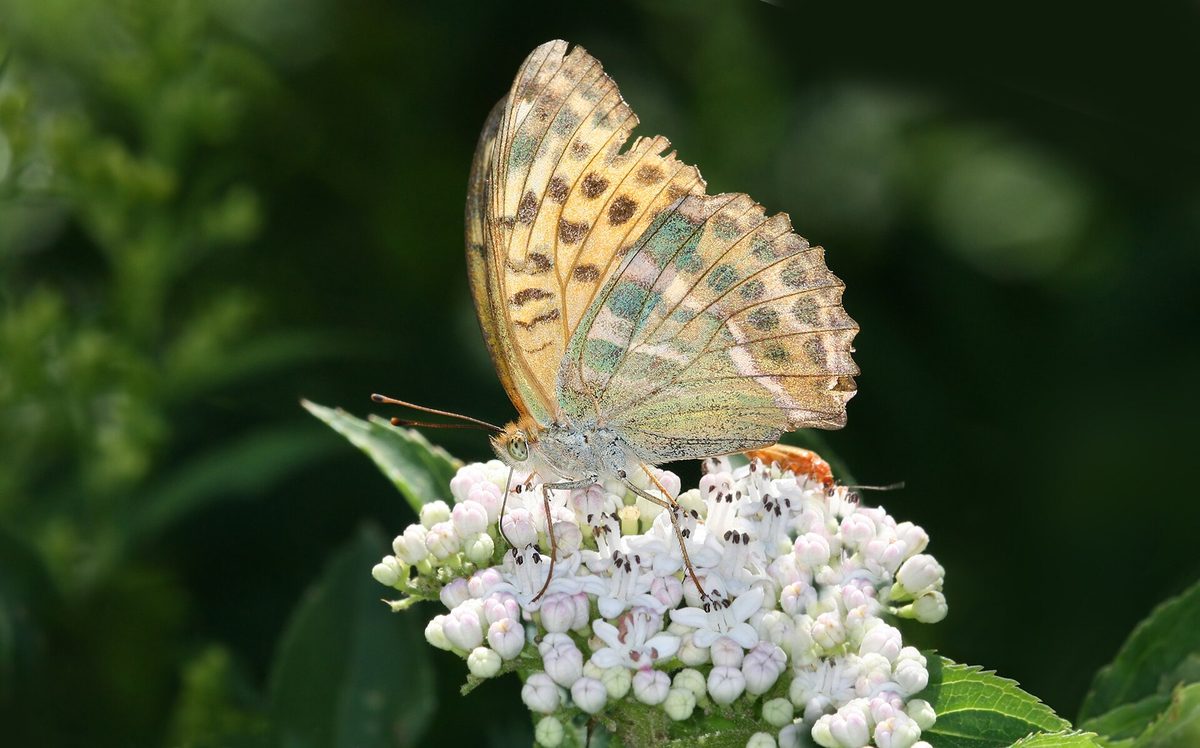
Despite its similarity to black elder, it is not a bush but a perennial herb 50–150 cm tall, sometimes up to 2 m. Every winter, the stems die back to the ground, and in spring they regrow from the rhizome. The stems are upright, usually unbranched. The leaves are opposite, pinnate, with 5–9 pointed leaflets, and have a sharp unpleasant smell when crushed. It blooms in June — July, with small white flowers having a pinkish tint, gathered in flat umbels. The berries are small shiny black drupes that ripen in autumn.
The entire plant is poisonous, especially the seeds. The berries can cause poisoning, so they should not be eaten or added to jams, liqueurs, or syrups made from black elder. Special care should be taken with children: the berries are shiny and attractive in appearance.
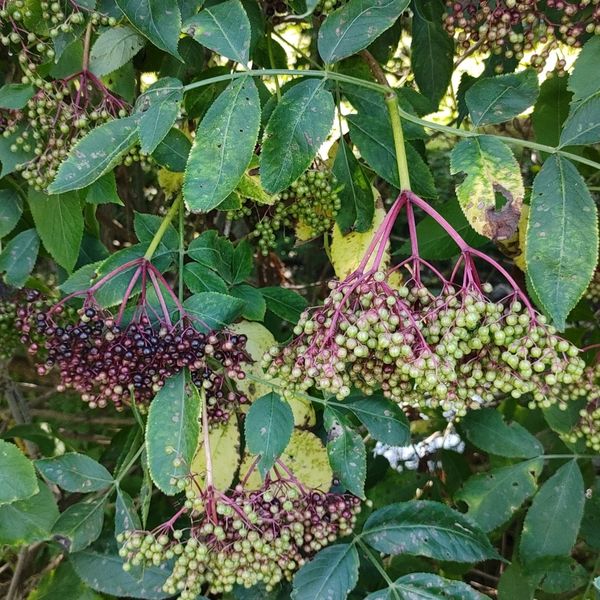
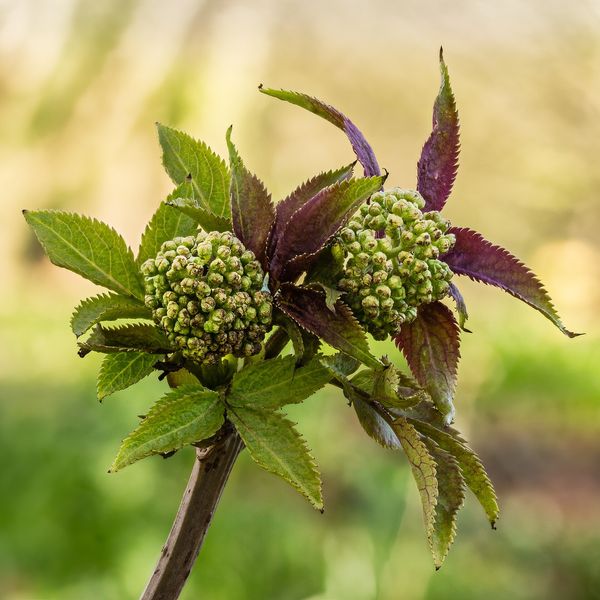
It is not difficult to distinguish between the two elders. Black elder is a true bush or small tree with woody trunks and light-colored bark with lenticels, and its ripe berries hang down in heavy clusters. Dwarf elder has a herbaceous stem without bark, which disappears in winter, while the umbels with black berries stand upright at the tops of the stems. The smell is also a warning: the leaves of dwarf elder stink when crushed.
Where in the Carpathians

The map shows where naturalists recorded the species (GBIF, CC0 and CC BY records), not every place it lives. The Ukrainian Carpathians are less studied, so a blank area does not mean the species is absent.
- Countries
- Slovakia · Hungary · Czechia · Romania · Ukraine · Poland · Austria · Serbia
- Mountain ranges
- Strážov Mountains, Slovak Ore Mountains, Slovak Central Mountains, Low Tatras, White Carpathians, Lesser Fatra, Kremnica Mountains, Považský Inovec, Kysuce Beskids, Sądecki Beskids
- Altitude belts
- Foothills (below 600 m) · Beech forests (600–1200 m)
When to see it
| Jan | Feb | Mar | Apr | May | Jun | Jul | Aug | Sep | Oct | Nov | Dec | |
|---|---|---|---|---|---|---|---|---|---|---|---|---|
| Flowering | ||||||||||||
| Fruit |
From naturalists’ observations in the Carpathians (iNaturalist, research grade): the darker the cell, the more often the species is seen that month.
Safety
The entire plant is poisonous, especially the berries and seeds. Do not collect berries for food or jam. Do not give unfamiliar berries to children. In case of suspected poisoning, call 103 (or 112).
Look-alikes — how to tell them apart
A bush or small tree with woody trunks; ripe berries hang down in heavy clusters; leaves do not have a strong odor. Only flowers and ripe berries are edible after cooking.
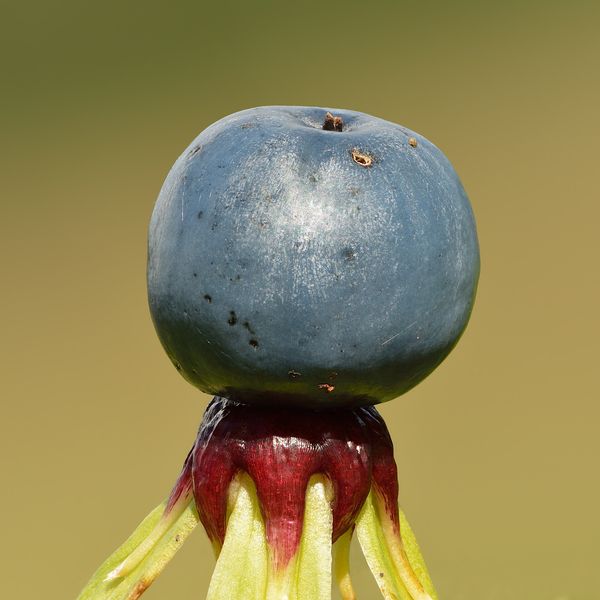
A bush with bright red berries in dense conical clusters, ripening already in summer.
Protection and rules
Not protected.
FAQ
How to distinguish dwarf elder from black elder?
Dwarf elder is a herb without bark that dies back every winter, and its umbels with berries stand upright. Black elder is a bush or small tree, and its ripe berries hang down. The leaves of dwarf elder have an unpleasant smell when crushed.
Is dwarf elder poisonous?
Yes, the entire plant is poisonous, especially the berries and seeds. Jam and drinks are not made from it.
Similar species
Where to meet it
Trails
 ModerateTwo-dayMarkedVelykyi Bereznyi village to Chornoholova villagevia Ruskyi Mochar village, Mount YavirnykElevation profile195–1 019 m20.7 kmascent 846 m≈ 7 h walking
 HardTwo-dayKamianytsia village loopvia Antalovetska PolianaElevation profile172–968 m22.8 kmascent 933 m≈ 7.5 h walking
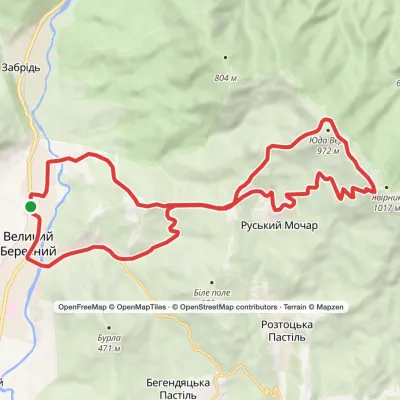 HardTwo-dayVelykyi Bereznyi village loopvia Mount Yavirnyk, Ruskyi Mochar villageElevation profile195–1 006 m22.8 kmascent 861 m≈ 7.5 h walking
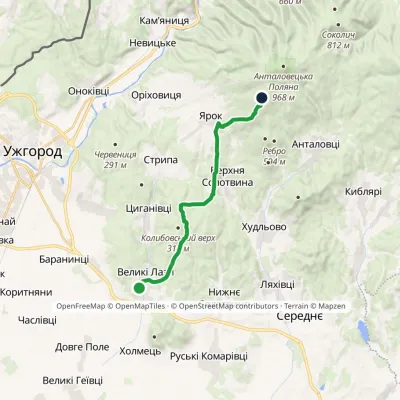 ModerateTwo-dayMarkedPlotenia Trail: Velyki Lazy village Mount Dil YarotskyiElevation profile120–796 m16.3 kmascent 748 m≈ 5.5 h walking
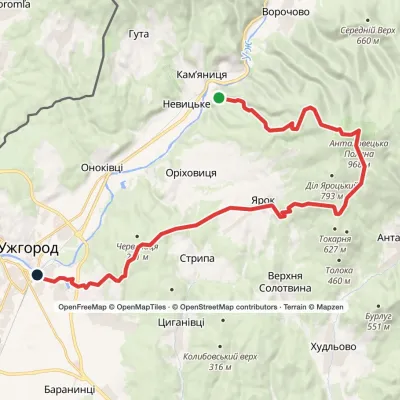 HardMulti-dayKamianytsia village to Uzhhorodvia Antalovetska Poliana, Yarok villageElevation profile117–968 m28.9 kmascent 909 m≈ 9 h walking
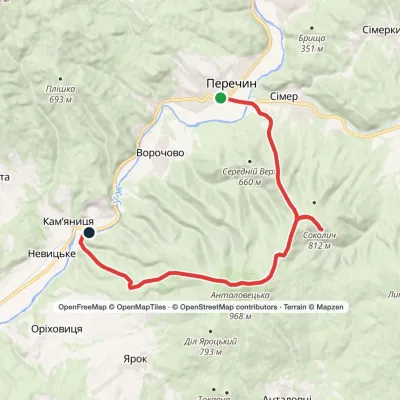 ModerateTwo-dayPerechyn village to Kamianytsia villagevia Antalovetska PolianaElevation profile145–968 m20.6 kmascent 905 m≈ 7 h walking
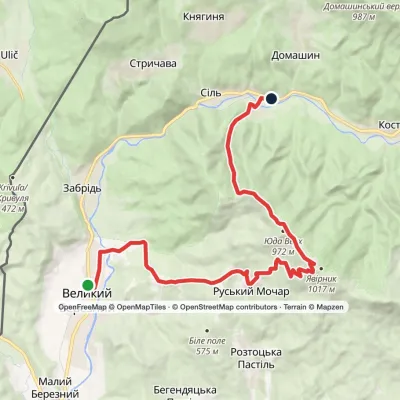 ModerateTwo-dayVelykyi Bereznyi to Sil villagevia Ruskyi Mochar village, Mount YavirnykElevation profile203–1 013 m20 kmascent 888 m≈ 7 h walking
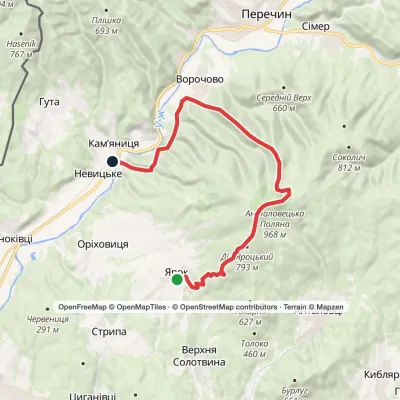 ModerateTwo-dayYarok village to Nevytske villagevia Antalovetska PolianaElevation profile131–968 m19.9 kmascent 996 m≈ 7 h walking
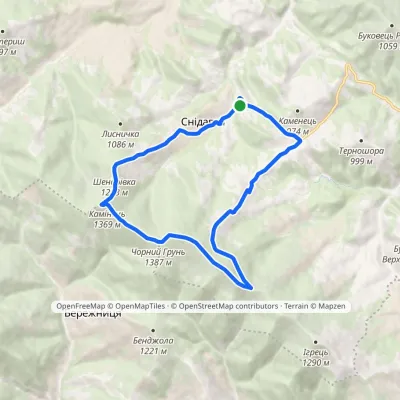 ModerateOne-dayMarkedSnidavka village loopvia Chornyi HrunElevation profile767–1 387 m13.6 kmascent 728 m≈ 5 h walking
Waters and waterfalls
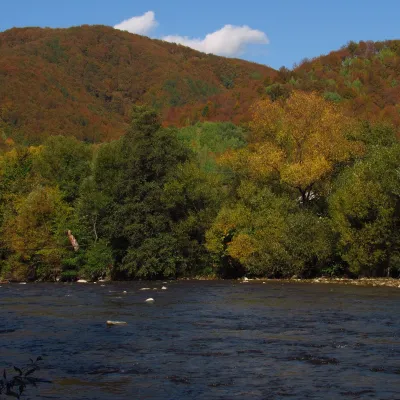 RiverUzh RiverVelykyi BereznyiAbove the Uzh near Kamianytsia stand the ruins of Nevytsky Castle, and in Uzhhorod the Masaryk Bridge offers a good...
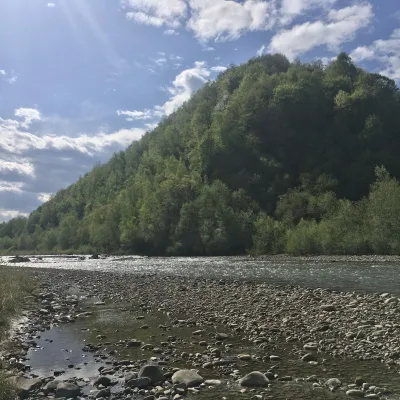 RiverBystrytsia Nadvirnianska RiverNadvirnaThe Bystrytsia Nadvirnianska rises on the northern slope of Mount Chorna Kleva in the Gorgany, at about 1,280 m.
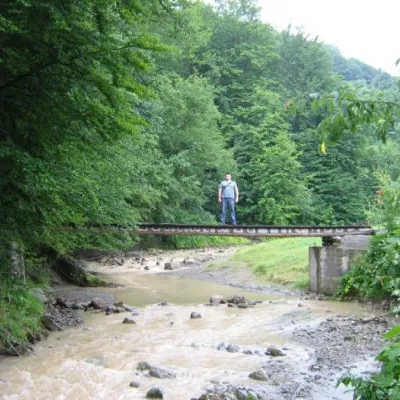 WaterfallMikva waterfallVyzhenkaThe Mykva Waterfall is a small but very picturesque waterfall located in the village of Vyzhenka, Chernivtsi region.
Mountain ranges: In other countries: 🇸🇰 Strážov Mountains, 🇸🇰 Slovak Ore Mountains, 🇸🇰 Slovak Central Mountains, 🇸🇰 Low Tatras, 🇨🇿 White Carpathians, 🇸🇰 Lesser Fatra, 🇸🇰 Kremnica Mountains, 🇸🇰 Považský Inovec, 🇸🇰 Kysuce Beskids, 🇵🇱 Sądecki Beskids, 🇸🇰 Štiavnica Mountains, 🇭🇺 Zemplén Mountains, 🇸🇰 Greater Fatra, 🇸🇰 Vtáčnik Mountains
Trails and peaks near which naturalists recorded the species (GBIF, iNaturalist), matched by altitude and habitat. Sightings are not guaranteed.
Sources
- Вікіпедія: Бузина трав'яна
- Wikipedia (en): Sambucus ebulus
- Wikipedia (en): Sambucus nigra
- iNaturalist: Sambucus ebulus (спостереження в Карпатах)
GBIF · iNaturalist · Wikidata · Distribution data: GBIF.org (CC0 and CC BY records), iNaturalist; names and identifiers: Wikidata (CC0). Text: Karpaty.rocks, checked 09.11.2026.
