Common puffball
Never identify a mushroom from a photo alone. If in doubt, leave it. In case of poisoning call 112 (103 in Ukraine) at once.
About
The Common puffball is one of the most common mushrooms found on all continents except Antarctica, and throughout Ukraine. It can be seen in deciduous and coniferous forests, in clearings, meadows, and along the edges of paths and roads, often in groups. It also occurs in the Carpathians. Fruiting bodies appear from spring to autumn.
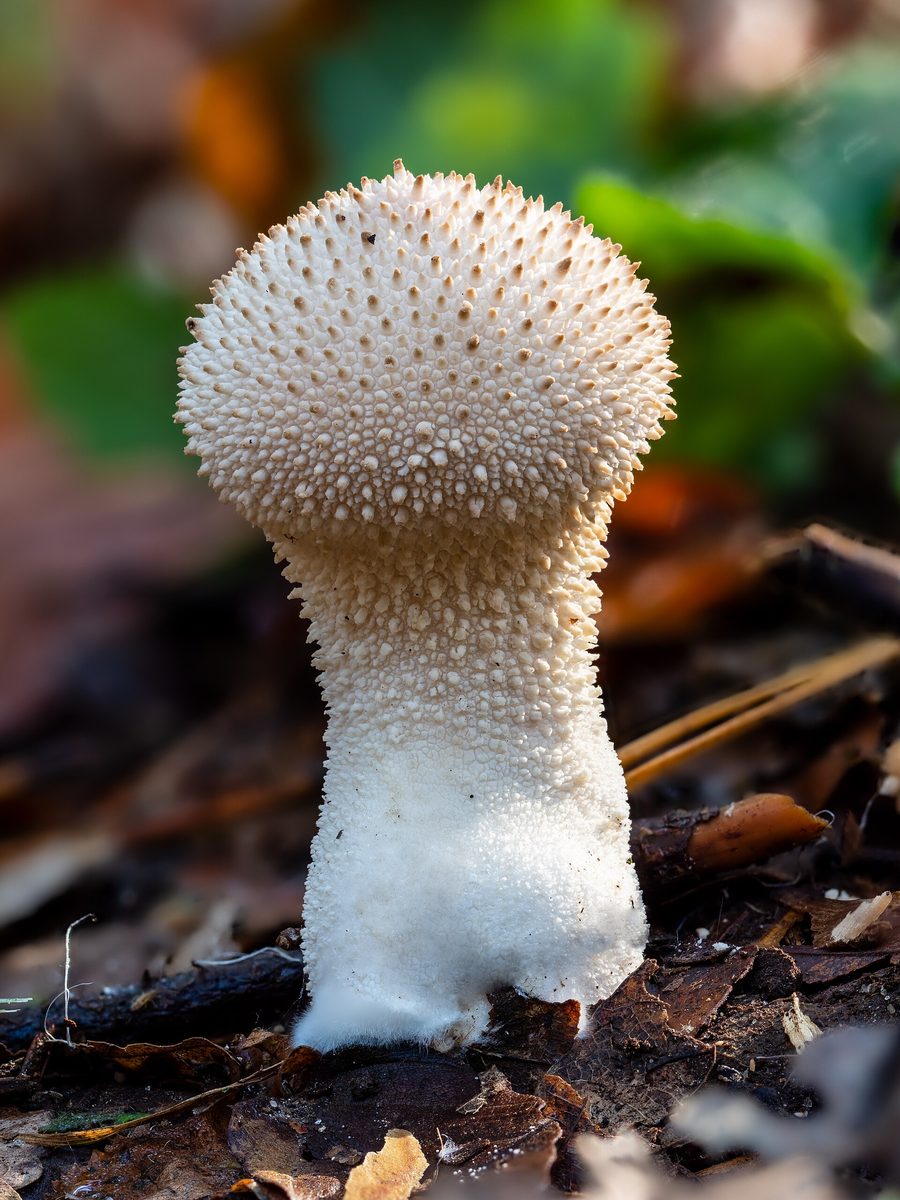
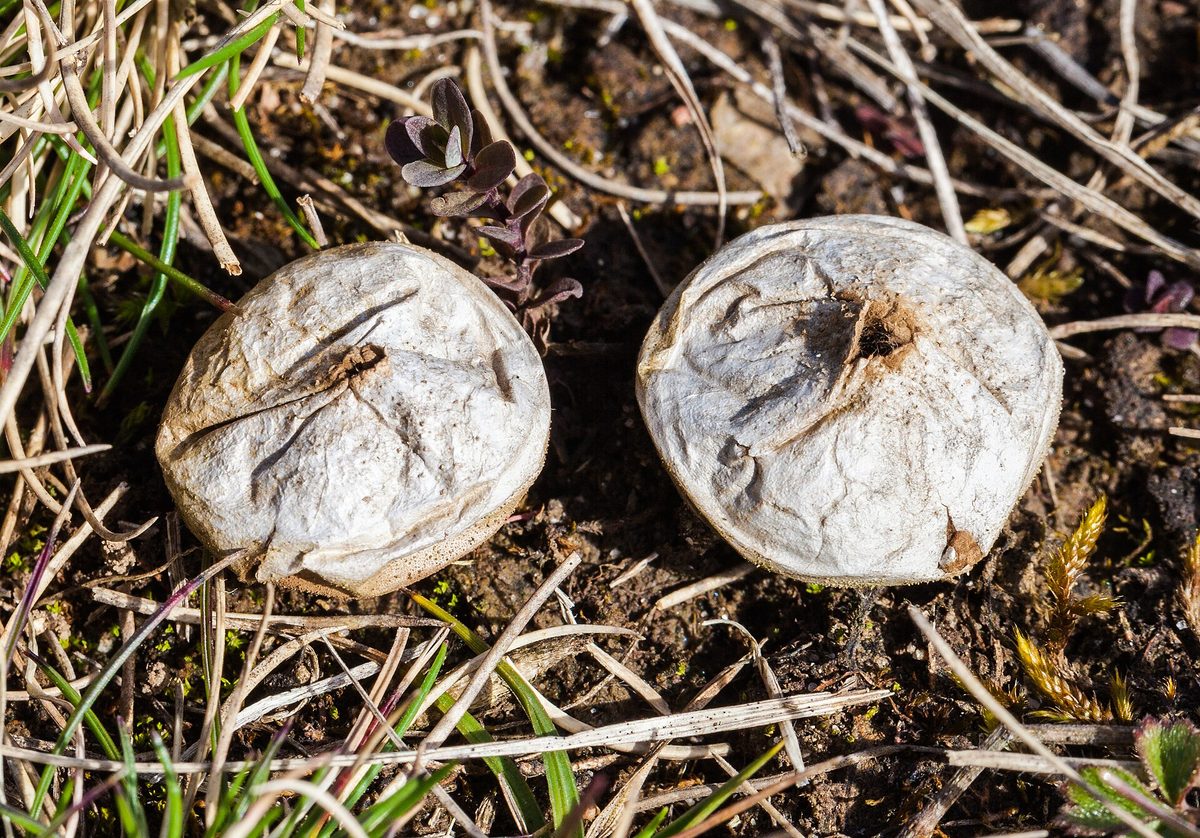
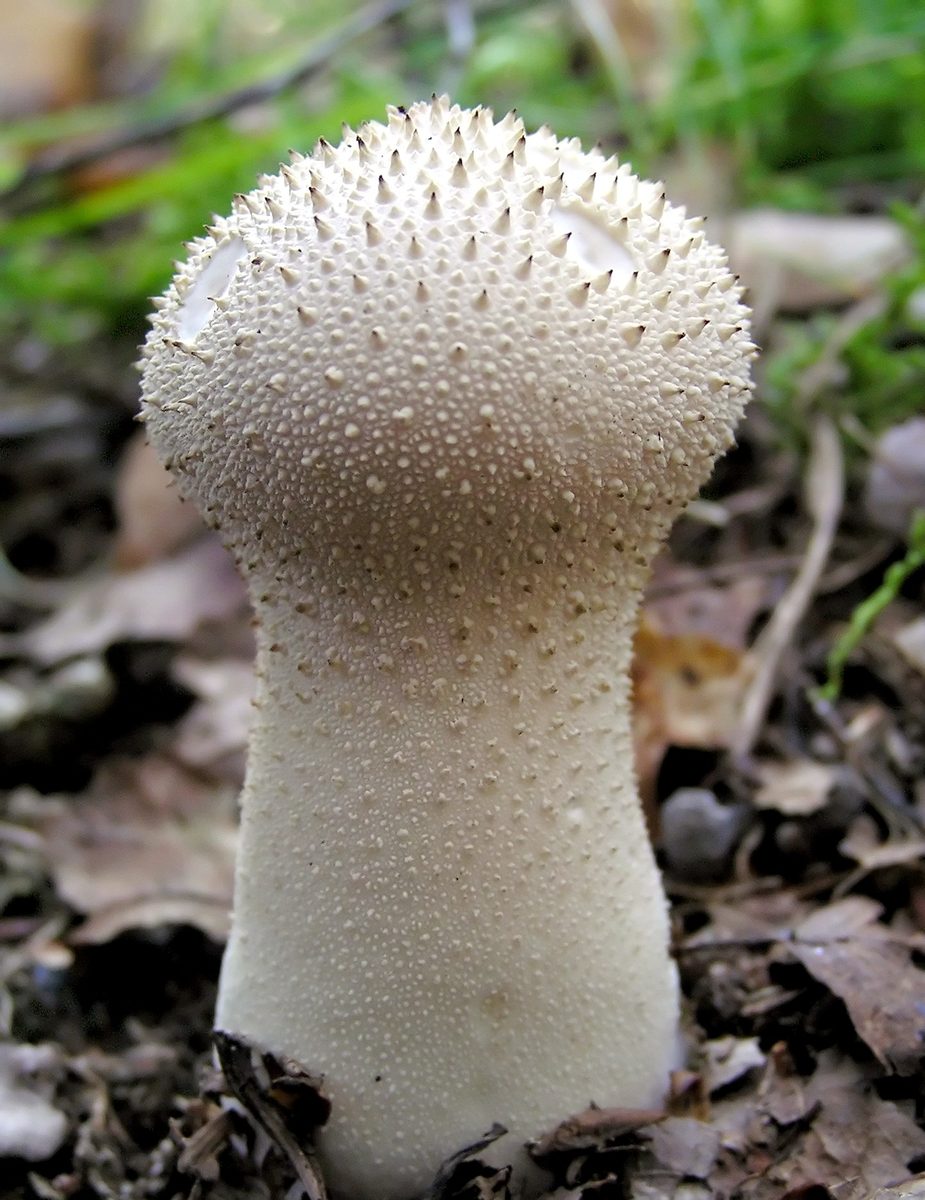
The fruiting body is 2–8 cm tall, initially almost spherical, then pear-shaped, with a narrower 'stem' at the bottom. Externally, it is white or grayish-white, covered with small conical spines that easily wear off, leaving a net-like pattern. Inside, the young mushroom is white, dense, like cotton. With age, the flesh turns yellow, olive, and transforms into a brown-olive powder with spores that bursts out in a cloud through the opening at the top.
Young puffballs with pure white homogeneous flesh are considered a good edible mushroom. They should be cooked on the day of collection; as soon as the flesh begins to yellow, the mushroom is no longer suitable.
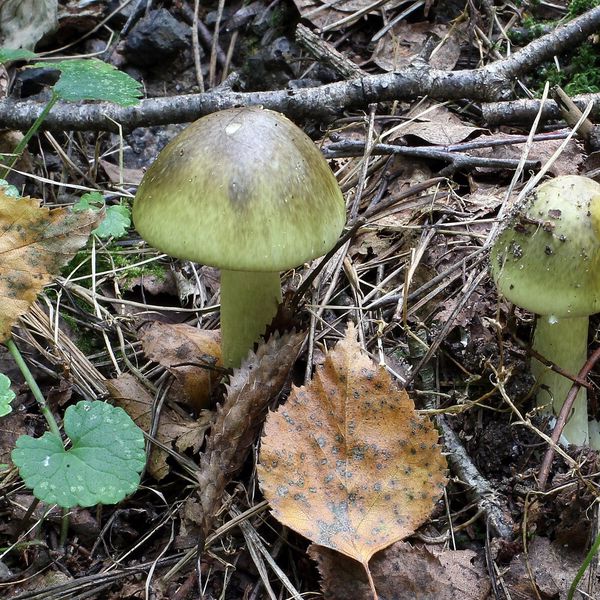
The most dangerous mistake is to confuse the puffball with the 'egg' of a fly agaric, such as the death cap, while it has not yet broken through its shell. Therefore, cut each puffball lengthwise in half. Inside the puffball, there is a homogeneous white mass without any structure. If the cut reveals the outline of a cap, gills, and stem, it is a young fly agaric—discard such a mushroom and wash your knife and hands. Also, do not collect mushrooms with a dark mass inside: this is how poisonous false puffballs appear.
Where in the Carpathians

The map shows where naturalists recorded the species (GBIF, CC0 and CC BY records), not every place it lives. The Ukrainian Carpathians are less studied, so a blank area does not mean the species is absent.
- Countries
- Ukraine · Slovakia · Austria · Poland · Hungary · Czechia · Romania
- Mountain ranges
- Gorgany, Chornohora, Low Tatras, Maramureș Mountains, Lesser Fatra, Silesian Beskids
- Altitude belts
- Foothills (below 600 m) · Beech forests (600–1200 m)
When to see it
| Jan | Feb | Mar | Apr | May | Jun | Jul | Aug | Sep | Oct | Nov | Dec | |
|---|---|---|---|---|---|---|---|---|---|---|---|---|
| Sightings |
From naturalists’ observations in the Carpathians (iNaturalist, research grade): the darker the cell, the more often the species is seen that month.
Safety
Cut each mushroom lengthwise: only young puffballs with pure white homogeneous flesh are edible. The outline of a cap and gills inside indicates a young fly agaric, while a dark mass indicates a false puffball. Do not serve mushroom dishes to children under 12 years old. In case of suspected poisoning, call 103 (or 112).
Look-alikes — how to tell them apart
The longitudinal cut reveals the outline of the future cap, gills, and stem inside the shell. Externally smooth, without spines.
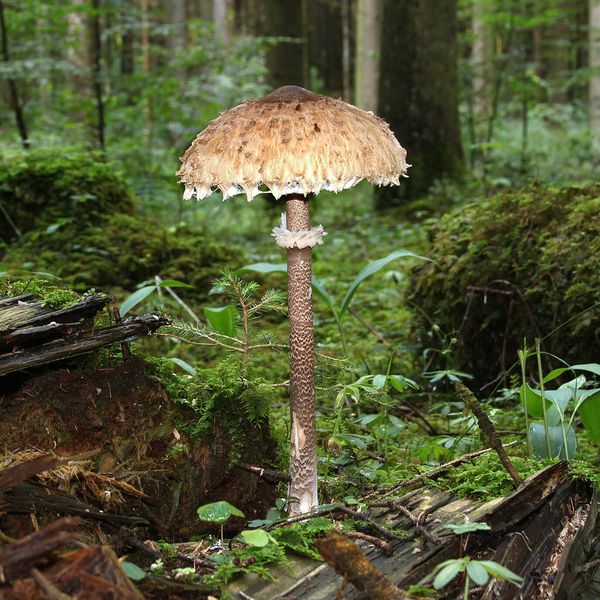
The shell is thick and hard, ochre-yellow, with uneven warts, without spines; the flesh is denser and darkens much earlier inside.
Protection and rules
Not protected.
FAQ
Can puffballs be eaten?
Yes, but only when young, while the flesh inside is pure white and homogeneous. Cut each mushroom lengthwise to avoid confusing it with a young fly agaric.
What is the powder that flies from the puffball?
These are spores. The mature puffball inside turns into a brown powder that bursts out through the opening at the top when a raindrop falls on the mushroom or someone steps on it.
Similar species
Where to meet it
Trails
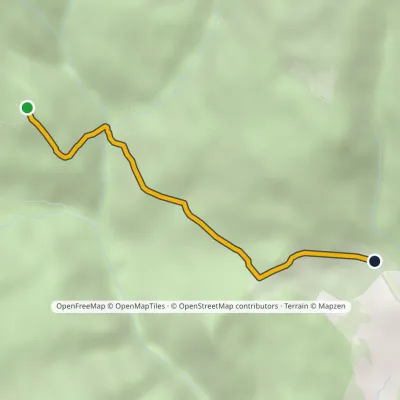 EasyOne-dayMarkedShesa polonyna Breska polonynaElevation profile871–1 028 m2.3 kmascent 33 m≈ 45 min walking
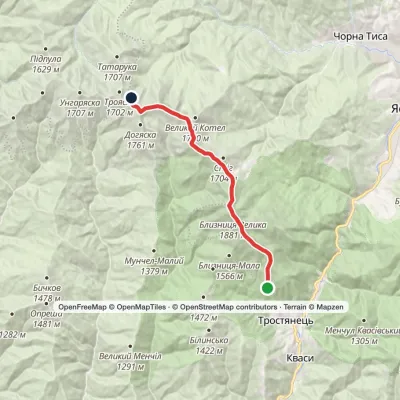 ModerateTwo-dayMarkedBraivka polonyna to Lake Apshynetsvia Mount BlyznytsiaElevation profile1 185–1 883 m16.2 kmascent 1 041 m≈ 6 h walking
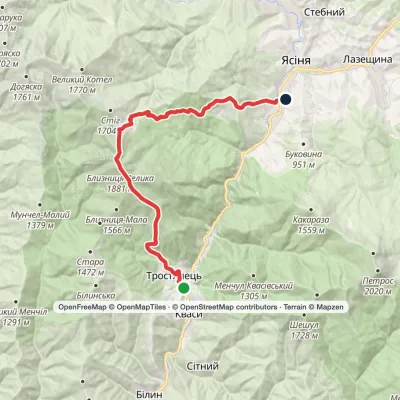 HardMulti-dayMarkedKvasy village to Yasiniavia Mount Blyznytsia, DragobratElevation profile541–1 883 m26.1 kmascent 1 470 m≈ 9.5 h walking
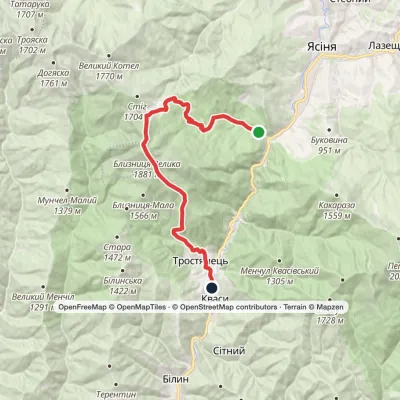 HardTwo-dayMarkedYasinia to Kvasy villagevia Dragobrat, Mount BlyznytsiaElevation profile540–1 883 m22.5 kmascent 1 382 m≈ 8.5 h walking
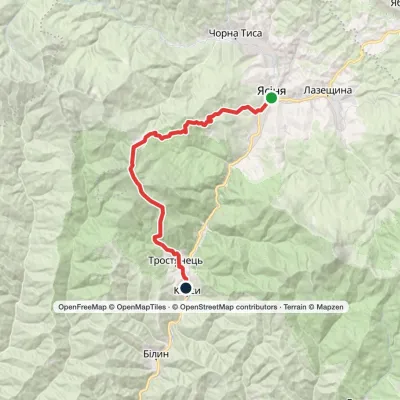 HardMulti-dayYasinia to Kvasy villagevia Dragobrat, Mount BlyznytsiaElevation profile539–1 883 m26.6 kmascent 1 588 m≈ 10 h walking
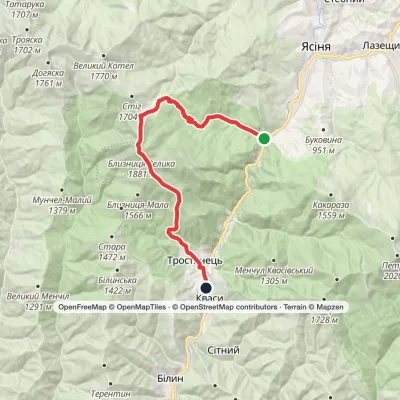 HardTwo-dayMarkedYasinia to Kvasy villagevia Dragobrat, Mount BlyznytsiaElevation profile544–1 883 m21.6 kmascent 1 356 m≈ 8 h walking
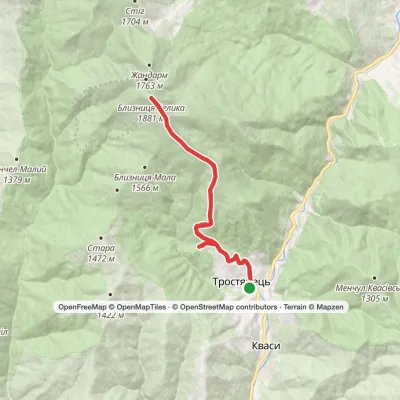 HardTwo-dayMarkedKvasy village loopvia Mount BlyznytsiaElevation profile577–1 883 m20.2 kmascent 1 454 m≈ 8 h walking
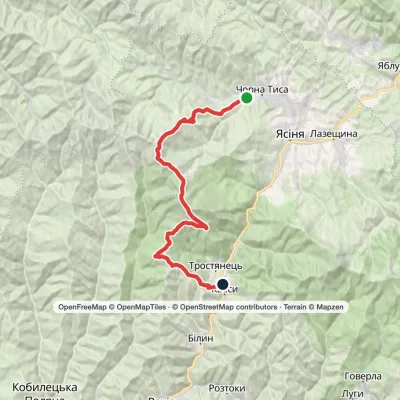 HardMulti-dayChorna Tysa village, Mount Velykyi Kotel and Mount Blyznytsia to Kvasy villageElevation profile552–1 883 m41.4 kmascent 1 768 m≈ 14 h walking
 HardMulti-dayYasinia to Kvasy villagevia Mount Tataruka, Mount Dohiaska +2Elevation profile535–1 883 m62.2 kmascent 2 728 m
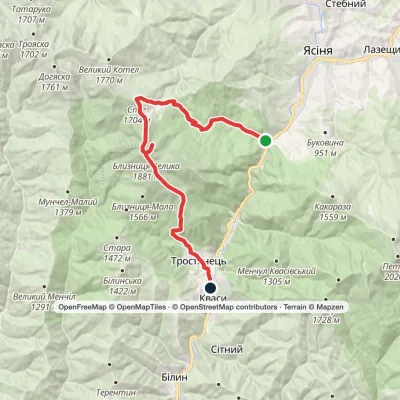 HardMulti-dayMarkedYasinia to Kvasy villagevia Dragobrat, Mount Blyznytsia +1Elevation profile540–1 883 m24.3 kmascent 1 688 m≈ 9.5 h walking
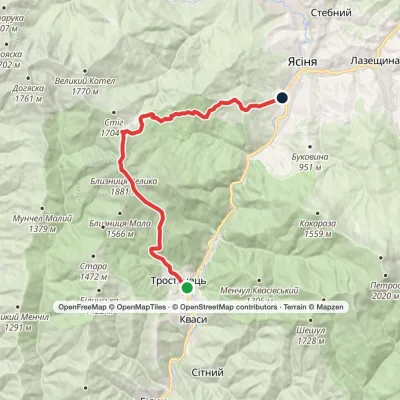 HardTwo-dayMarkedKvasy village to Yasiniavia Mount Blyznytsia, DragobratElevation profile544–1 883 m22.6 kmascent 1 450 m≈ 8.5 h walking
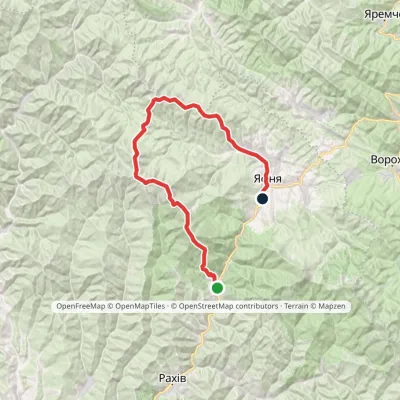 HardMulti-dayKvasy village to Yasiniavia Mount Blyznytsia, Mount Bratkivska +2Elevation profile535–1 883 m60.1 kmascent 2 883 m
Mountain ranges: Gorgany, Chornohora, Maramureș Mountains. In other countries: 🇸🇰 Low Tatras, 🇸🇰 Lesser Fatra, 🇵🇱 Silesian Beskids
Trails and peaks near which naturalists recorded the species (GBIF, iNaturalist), matched by altitude and habitat. Sightings are not guaranteed.
Sources
- Вікіпедія: Дощовик їстівний
- Wikipedia (en): Lycoperdon perlatum
- Wikipedia (en): Scleroderma citrinum
- МОЗ України: отруєння грибами — профілактика та перша допомога
- iNaturalist: Lycoperdon perlatum (спостереження в Карпатах)
GBIF · iNaturalist · Wikidata · Distribution data: GBIF.org (CC0 and CC BY records), iNaturalist; names and identifiers: Wikidata (CC0). Text: Karpaty.rocks, checked 09.11.2026.
