Saltworks, Dolyna
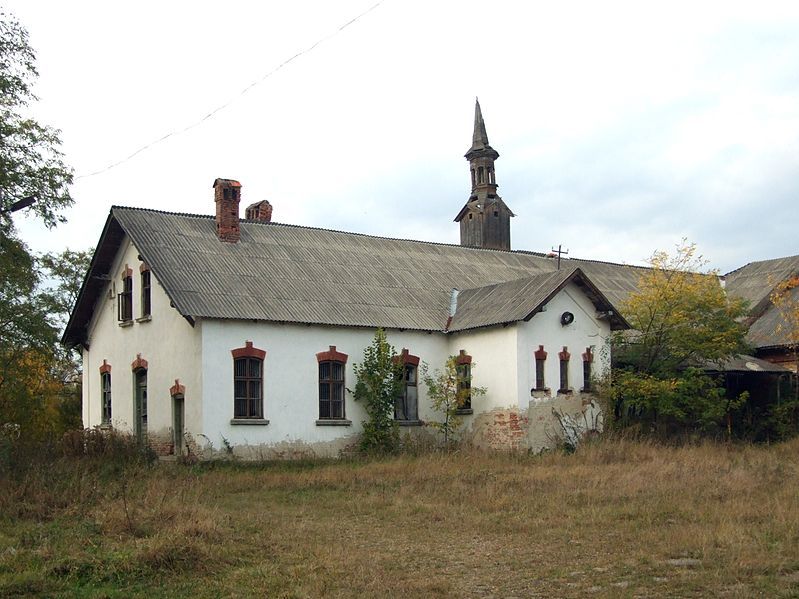
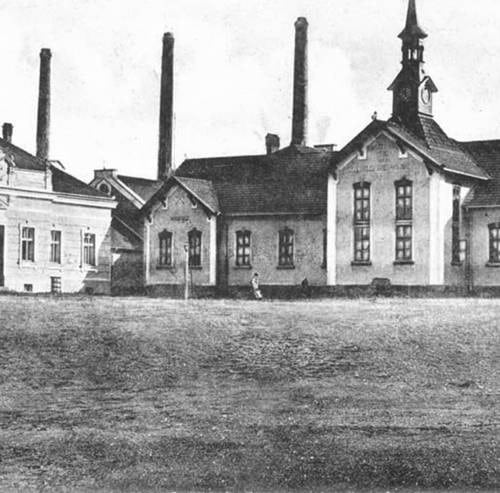
The old saltworks in Dolyna is a unique monument of industrial architecture in Ukraine from the 19th to early 20th centuries. It is perhaps the only example of such buildings that have survived to this day and are still used for their intended purpose. The discovery of salt springs in the vicinity of Dolyna is believed by some scholars to date back to 979 AD. The first written mentions of the industry date back to 1474.
The mention of salt production in Dolyna is found in a document in which King Sigismund I, in 1525, renewed the Magdeburg rights for the city, established fairs, and allowed the townspeople to produce salt in such quantities and quality as in Kolomyia, and sell it to the residents of those lands that had long consumed it, without harming the Kolomyia brine (M. Bieliński "Ancient Poland", Warsaw, 1884, vol. 2, p. 616).
In his monograph, F. Piestrak notes that according to the privileges of King Sigismund I (1537), the then salt deposits were royal property, but kings also allowed private individuals to evaporate salt. Thus, the industry developed, and by the early 19th century, the Dolyna saltworks was a large enterprise employing 82 workers: guards, haiduks, watermen, blacksmiths, evaporators, and coopers.
Water for the brine was supplied through a pipeline from the lake, with wooden pipes. In 1898, a large fire destroyed the complex, and in 1904, a new saltworks was opened, the ruins of which have survived to this day.
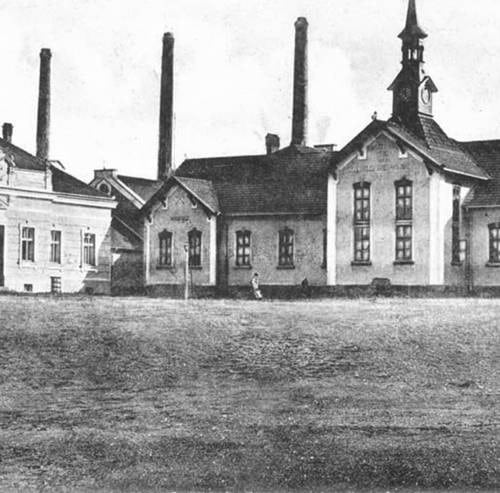
Building of the Saltworks
The saltworks is a whole complex of buildings: with a salt boiling room, a manipulation building, a room for salt storage, shafts, and other service and economic facilities for the factory workers. The complex includes three interconnected workshops. The storage room has been well preserved, but unfortunately, the boiling rooms have not. Only a miserable frame with a skeleton of reinforcement and a large furnace inside remain. The walls are broken, and the roof has almost completely collapsed.
The building of the saltworks is an unusual industrial monument of architecture. It is located in a place associated with the emergence of Dolyna. The structures of the salt factory formed a kind of town. All of them are in a single architectural style with characteristic red-tiled roof silhouettes.
Operation Scheme of the Saltworks
The salt storage building resembles a rectangle with a corridor layout. The brine from the wells flows through a trough into the boiling room, then is supplied in parts to the evaporator for 5-hour evaporation. Usually, a daily supply is stored in the boxes.
When the crystallization process begins, the premises are hermetically sealed, and the boiled brine is left until it solidifies. Then the obtained salt is dried and transferred to storage rooms for further storage as a finished product.
Today, the factory is in a semi-ruined state. However, in the future, the ancient Salina will be revitalized, as a large investment project is planned for the construction of a historical and wellness balneological complex. For centuries, Dolyna salt has been the local white gold – the main source of income for the local population. Now its purpose is seen in its use for health purposes.
Be sure to visit the museum of the insurgent victory and the Dolyna Local History Museum of Tetiana and Omelyan Antonovych "Boykivshchyna" - one of the youngest museums in the Carpathian region, founded in 1998. Experienced museum guides will help you organize excursion tours around Dolynshchyna, if you want to see the bunker where Ukrainian nationalists hid, the Carpathian tram in Vygoda, the Dovbush Rocks in Bubnyshche, or the Hoshiv Monastery, Ivan Franko Museum in the village of Lolyn.
Location on the map
Comments
Places to stay nearby
Trails nearby
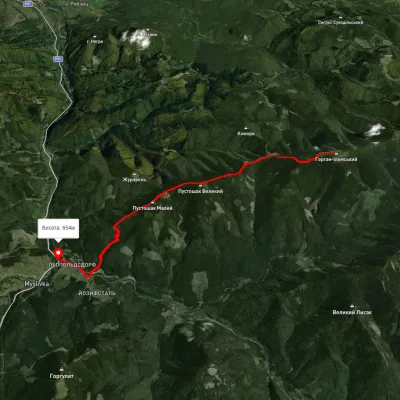 ModerateOne-dayMarkedTo Mount Horhan IlemskyiElevation profile651–1 568 m11.6 kmascent 535 m≈ 4 h walking27 km from Saltworks, Dolyna
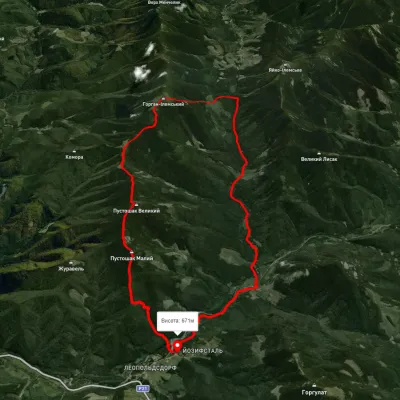 HardTwo-dayUnmarkedMyslivka village loopvia Mount Horhan-IlemskyiElevation profile662–1 574 m24 kmascent 1 214 m≈ 8.5 h walking27 km from Saltworks, Dolyna
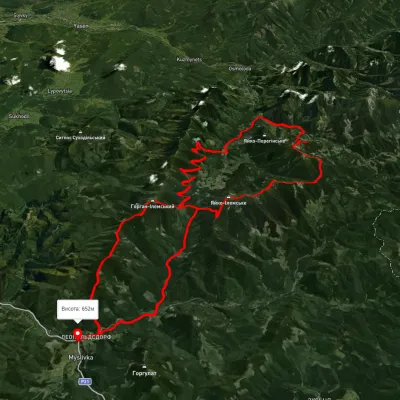 HardMulti-dayUnmarkedMyslivka village loopvia the Arshytsia ridge, Mount Moloda +1Elevation profile645–1 716 m68.8 kmascent 2 965 m27 km from Saltworks, Dolyna
Nearby attractions
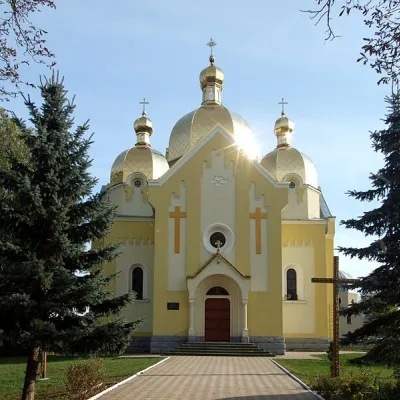 ChurchChurch of the Nativity of the Blessed Virgin Mary, Dolynaunder 1 km from Saltworks, DolynaIn the old part of the city of Dolyna is located the Church of the Nativity of the Blessed Virgin Mary, which recently celebrated its 100th anniversary.
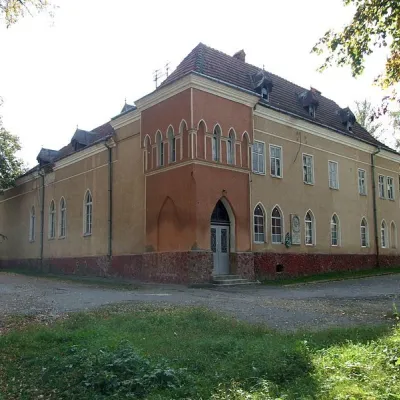 Historic siteHouse of the Sokol Society, Dolynaunder 1 km from Saltworks, DolynaThe current district house of culture in Dolyna used to be the Sokil Polish sports society, which boasted a large theater hall.
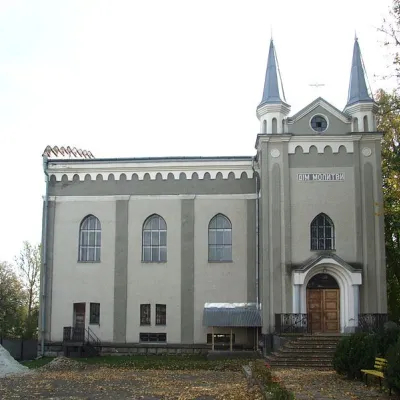 ArchitectureSynagogue, Dolynaunder 1 km from Saltworks, DolynaIn the nineteenth century, there was a small wooden synagogue in Dolyna. It stood between the present-day Sheptytskoho Street and the synagogue.