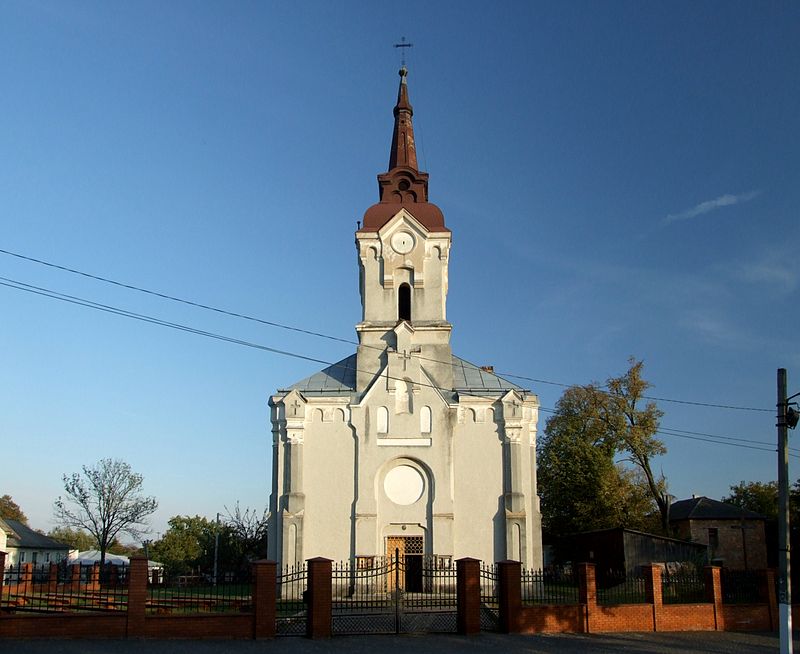
Church of the Nativity of the Virgin Mary, Dolyna
The oldest church in Dolyna, a landmark of the region - the Church of the Nativity of the Virgin Mary on Antonovych Street. After the establishment of the Roman Catholic parish in 1426, the locals built a wooden church in the suburbs, but modern historians do not know the exact location. It is assumed that today there is School No. 1. Beautiful views open from the hill where the building is located.
The church existed since 1426 but underwent numerous restorations and reconstructions, so today it looks completely different. The wooden church burned down in 1594 due to arson by Tatars. A new temple was rebuilt on the same site in 1674.
According to documents, the Dolyna church was in very poor condition, and until 1825 no one took care of its restoration, so it was decided to rebuild the building from scratch, but a location in another part of the city was chosen for this. The construction of the brick church named "Nativity of the Most Holy Virgin Mary," which can still be admired today, dates back to 1835. The construction was blessed by priest Tomas Lewandowski.
The church is a single-nave structure built in the Gothic style, with an overall length of 34 m and a width of 14 m. The interior space ends with an apse, where the altar is installed. The wall thickness is 0.95 m. Two rectangular rooms for the church servants, built in 1883, adjoin the apse. The interior walls are divided by pilasters, with a cross-section of 1.0 x 1.0 m. The height of the main hall is 8.0 m.
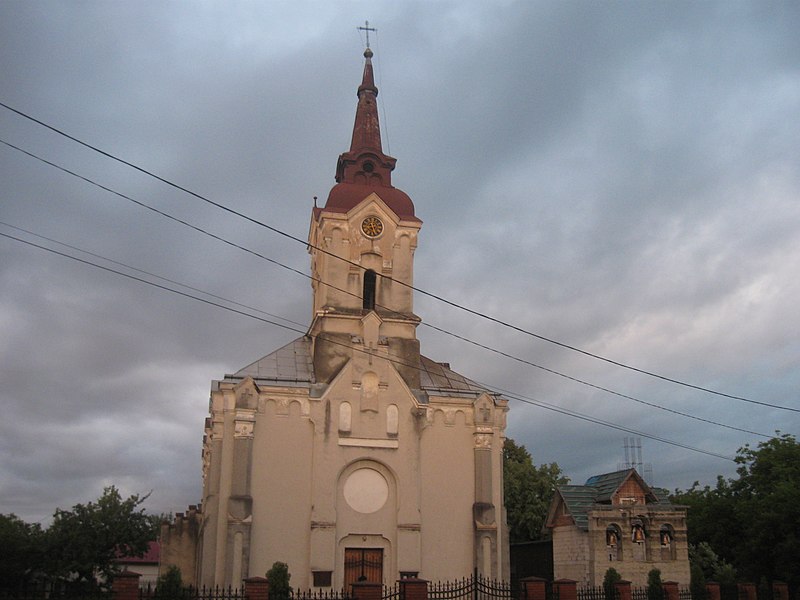
The entrance to the church is accentuated by a tower, which rests on two massive rectangular rooms. One houses the stairs to a spacious balcony where the organ was located, and the other contains a boiler room and storerooms. The stairs continue into the tower. They served to maintain the clock and bells. The outer walls are divided by half-columns of square cross-section, measuring 0.5 x 1.0 m in plan. At a height of 4.0 m, they narrow and end with a triangular roof that adjoins the main roof. The height of the building to the ridge of the roof is 14 m. The height of the tower is 28 m.
Who developed the church project and who was the master of its construction is unknown, but the fact that the project was unsuccessful, especially the foundation design, was shown by subsequent events. The inventory book of the church described the beginning of construction recorded from the memories of eyewitnesses.
The foundation of the building was laid with river stones, mainly round, which were placed in excavated trenches without any binding materials. The walls of the church and the vaults were built of brick. There is no waterproofing between the walls and the foundation. The construction was completed quite quickly, for such a large building, in three years. The altar in the church was large, as was the organ, which was moved from the old church. The organ was made in 1808, and in 1838 it was repaired by a resident of the village of Obolonia, Matviy Savytskyi. Unfortunately, the organ has been lost. The church was consecrated by priest Franciszek de Paul Pisztek, archbishop, metropolitan of Lviv.
The poor foundation reminded of itself already in the third year. The brick vault collapsed, and it was necessary to undertake repairs on the new building. To strengthen the walls inside the building, powerful pilasters were built, on which a new wooden ceiling rests, reinforced with metal anchors. But the troubles did not end there. In 1886, the bells were removed from the church tower and installed in a separate bell tower because large cracks appeared in the walls of the tower. A project for strengthening the tower was developed. By 1889, strengthening works were completed, the main tower was reinforced and extended, the windows of the church were enlarged, and a clock was installed.
Due to the construction of two side rooms, it was necessary to partially remodel the altar. The church fortunately survived the tragic events of World War I. With the occupation of Dolyna by the Poles in 1920 and the stabilization of public life, the Poles began to improve the appearance of the church.
In 1934, the wall paintings were restored, and at the initiative of priest Wojnarowicz, the parish priest of Dolyna, a brick bell tower was built with the help of the legate priest Zaremba on the site of the wooden one. It stood by Antonovych Street, to the right of the entrance. Its walls were made of hewn gray sandstone. The bell tower was 5 m long, 1.5 m wide, and had 4 bells. It was dismantled in 1965. The fate of the bells is unknown; perhaps they were taken by the Germans during the war.
In 1944, the Poles were resettled to Poland, and the church was closed. Initially, it was used as a grain storage facility by the local population (contingent), and then from 1948 it was handed over to the school for a gym.
With the collapse of the Soviet Union and the democratization of society, the Poles who remained in Dolyna raised a petition for the return of their sanctuary, which was done in 1990. They were given back a ruin. But perseverance and hard work changed the appearance of the building for the better day by day. The restoration of the interior began. In 1991, an old altar was brought from Ivano-Frankivsk. It was donated by dean Kazimir Halimurka. The church was consecrated on December 27, 1991, and on the same day, a service was held here.
In 1992, work began on the roof repair. The old metal sheeting was removed. The small, already almost ruined tower was dismantled. The roof was covered with new galvanized metal sheeting. New gutters were installed. In the building, due to roof leaks and lack of drainage, "mushrooms" appeared, which destroyed the floor and began to ruin the walls. To rectify the situation, it was decided to build drainage around the building. The drainage was built in 1993-1994. Trenches were dug to the depth of the foundation base, asbestos-cement and ceramic pipes were laid, and gravel was filled in. The water from the drainage system was led to Zelenaya Street.
Such work was very risky. The unreinforced foundation, exposed on one side to full height, could give new cracks. But everything turned out fine. The opening of the foundation confirmed the records in the church's inventory book, namely that the foundation was made of river stones with clay filling and is unreliable for such a large building. In 1994, a new terrazzo plaster was applied to the outer walls. The plastering was done by craftsmen from Transcarpathia. In 1995-1996, the metal sheeting on the main tower was painted brown. Restoration of the interior paintings in the church was carried out. A new altar was designed and installed. It was designed by Mr. M. Dekalski from Lviv, a worker of the restoration workshops. Together with the workers of this enterprise, the altar was installed in the church. The main image of the altar "Image of the Nativity of the Most Holy Virgin Mary" was created by a resident of Kalush, Ms. Maria Andriishyn. The bell for the church was brought from Poland from the city of Tacișeva. There is a workshop of Filchynskyi, who come from Kalush and have great experience in casting loud and ringing bells.
February 1998 was very warm, and the Poles decided to put the fence of the territory in order. The fence was destroyed by tree roots and past owners. The linden trees were already old, hollow, and often barbarically trimmed by electricians when clearing the power lines. They were cut down, and the stumps were dug out and removed. The old fence was dismantled and a new metal one was installed on brick pillars. The floor was laid with white and black marble. The tower inside still needs repairs, and if possible, the clock should be restored and installed in its place.
In the church, a hymn of praise to God sounds again. It entered the new millennium restored, in all its beauty.
Be sure to visit the museum-bunker of the insurgent victory and the Dolyna Local History Museum of Tetiana and Omelyan Antonovych "Boykivshchyna" - one of the youngest museums in the Carpathian region - founded in 1998. Experienced museum guides will help you organize excursion tours through Dolynshchyna, if you want to see the bunker where Ukrainian nationalists hid, the Carpathian tram in Vygoda, the Dovbush Rocks in Bubnyshche, or the Hoshiv Monastery, Ivan Franko Museum in the village of Lolyn.
Accommodation around Church of the Nativity of the Virgin Mary, Dolyna:


Which trails pass by Church of the Nativity of the Virgin Mary, Dolyna?
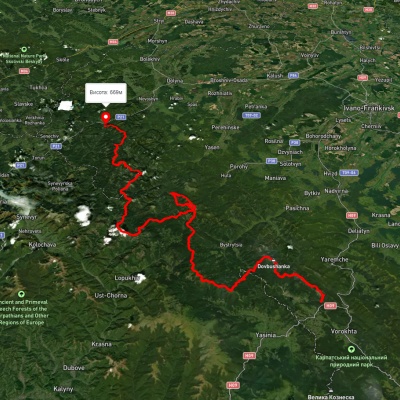
We suggest these hiking trails through or near Church of the Nativity of the Virgin Mary, Dolyna: Route to Mount Shchavna, To Mount Horhan Ilemskyi, Myslivka village – Mount Horhan-Ilemskyi – Myslivka village, Myslivka village, via the Arshytsia ridge, Mount Moloda and Mount Yayko-Ilemske to Myslivka village, Tatariv village, via Mount Syniak, Mount Dovbushanka, Mount Chorna Kleva, Mount Bratkivska, Mount Syvulia, Mount Kinets Horhanu, Mount Popadia and Mount Grofa to Myslivka village, Myslivka village, via Mount Yayko Ilemske and Mount Horhan Ilemskyi to Myslivka village


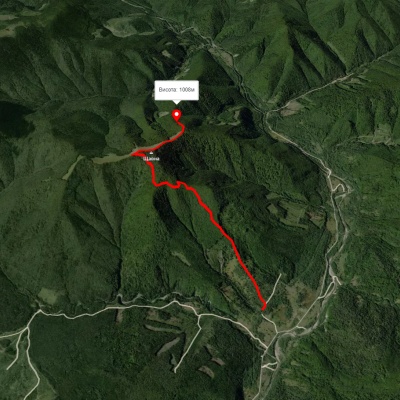
Route to Mount Shchavna
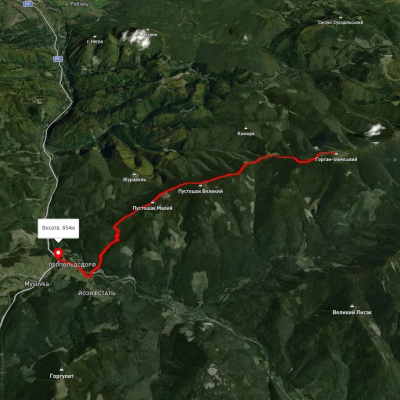
To Mount Horhan Ilemskyi
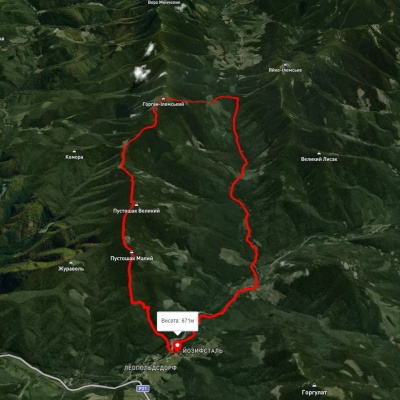
Myslivka village – Mount Horhan-Ilemskyi – Myslivka village
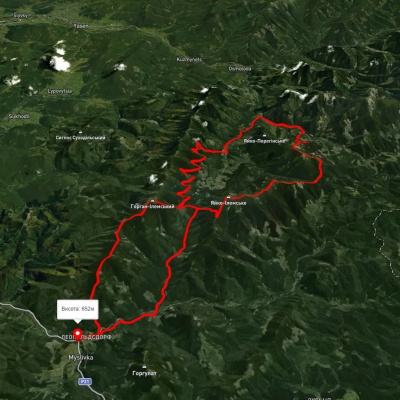
Myslivka village, via the Arshytsia ridge, Mount Moloda and Mount Yayko-Ilemske to Myslivka village