Museum of Lemko Culture in Zyndranowa
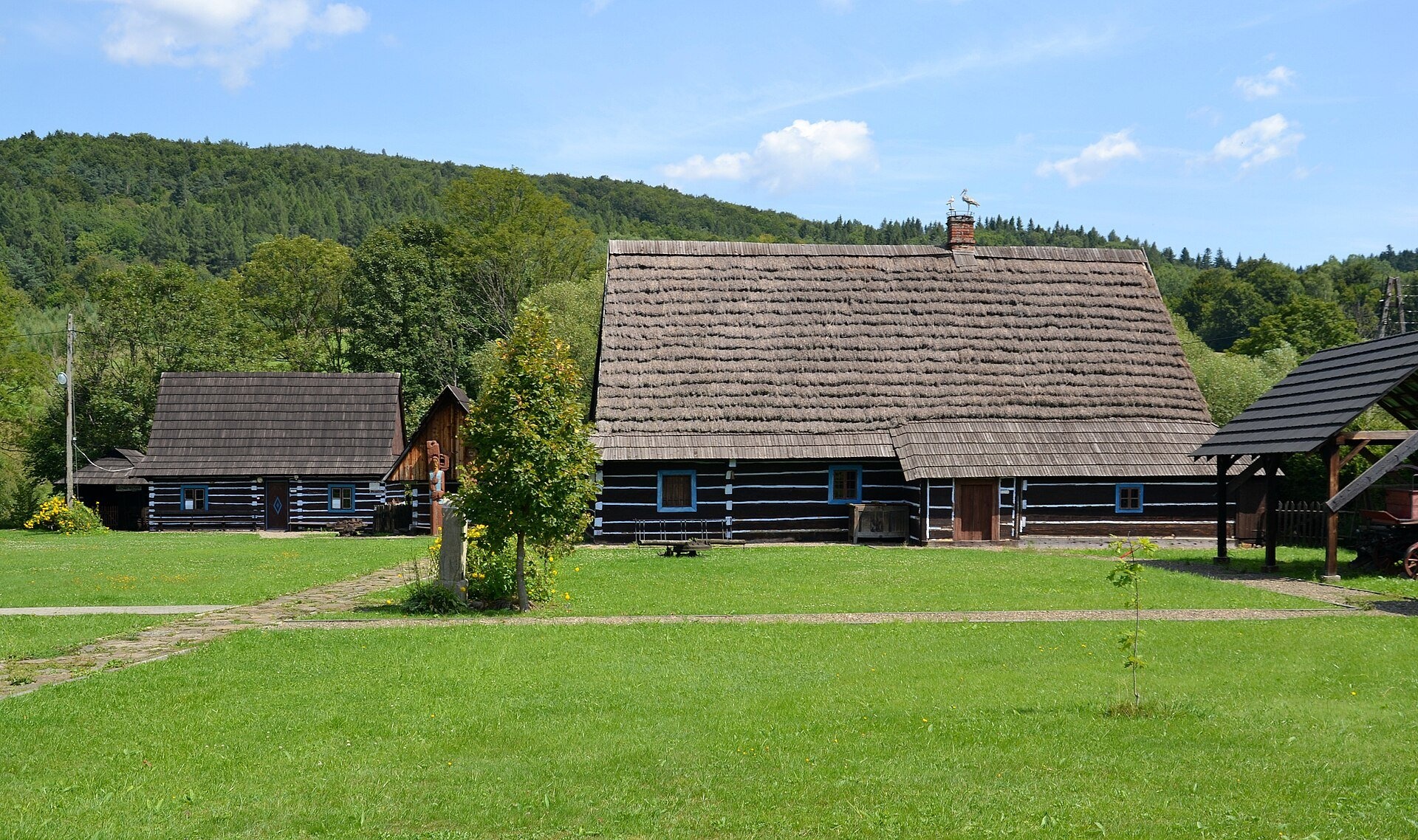
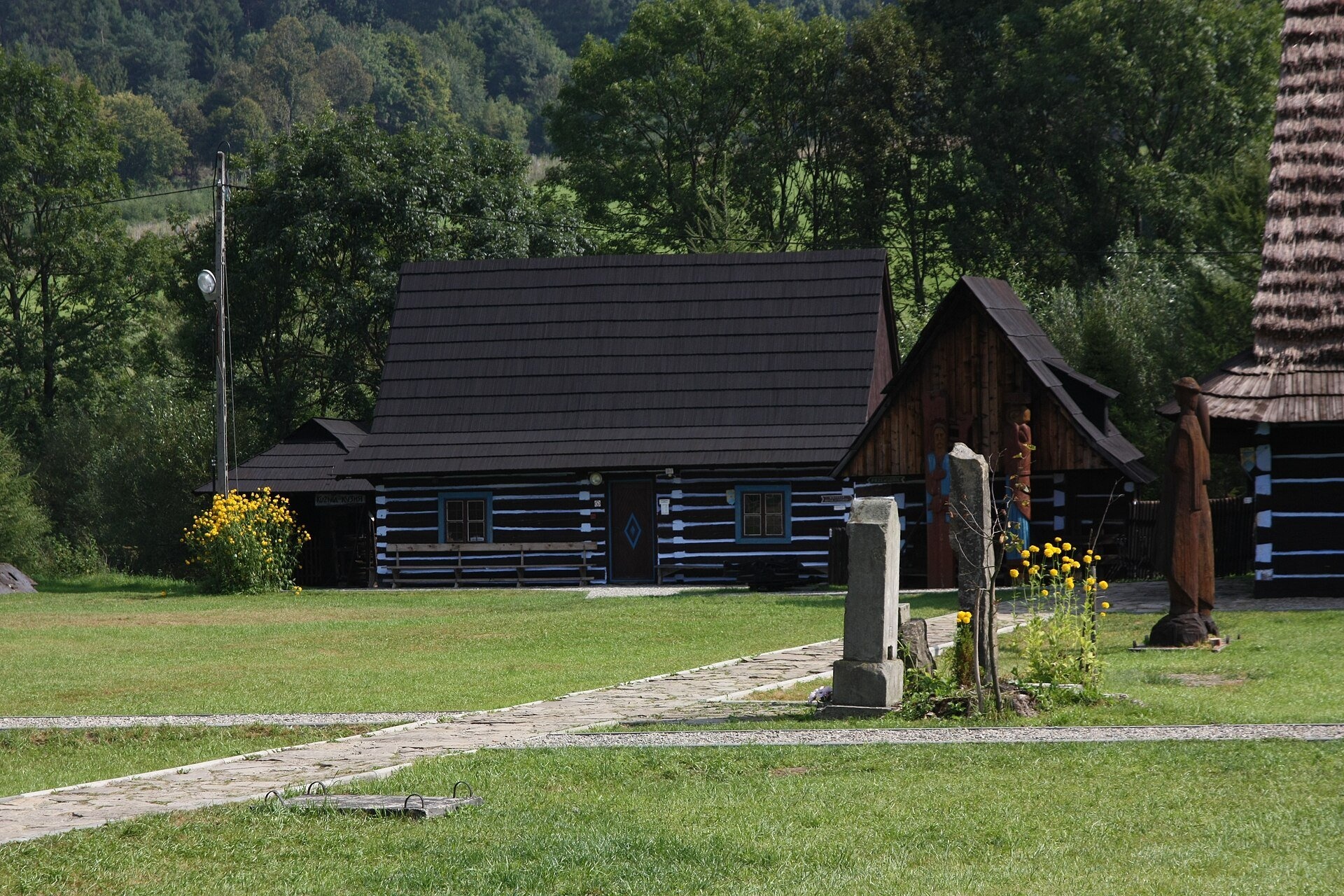
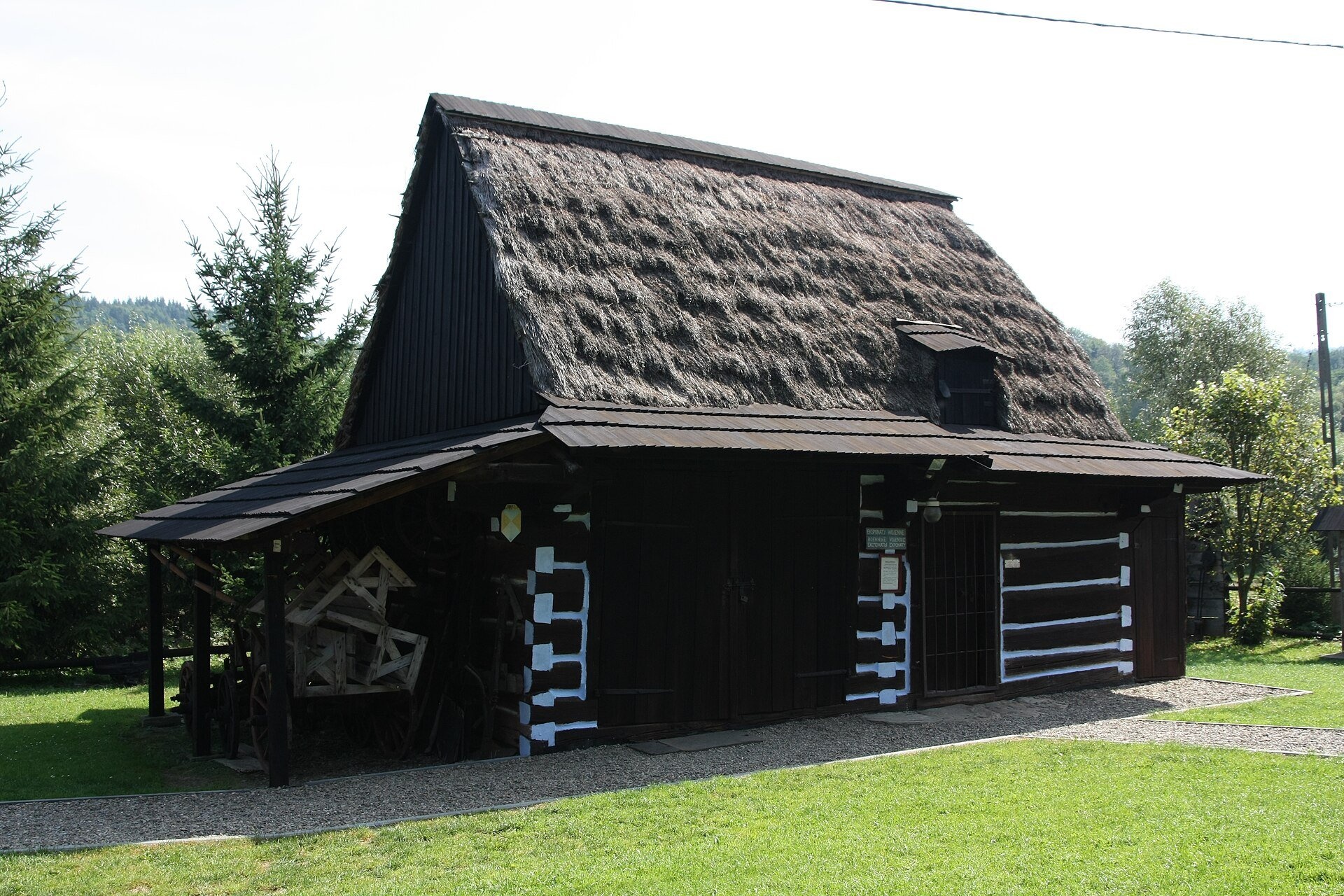
The Museum of Lemko Culture in Zyndranowa is a small open-air museum in the Low Beskids, a few kilometres from the Slovak border. It is one of the most important places of Lemko memory in Poland: it was created not by state institutions but by the Lemkos themselves, people who returned to their homeland after the deportations. The village of Zyndranowa stretches for 5 km along the Panna stream among the wooded hills of the Jaśliska Landscape Park.
In 1945–1946 part of the Lemko population of this area was resettled to the Soviet Union, and in 1947 the rest were deported to western Poland in Operation Vistula. Of Zyndranowa's 180 farmsteads only a few survived. In the late 1950s some families were able to return. Among them was Teodor Gocz, who settled on the farmstead of his great-grandfather, the village scribe Teodor Kukieła. After building a new house he began collecting Lemko objects and war relics in the old chyzha (cottage), and on 17 August 1968 the Room of Lemko Culture Memorabilia opened here. Since then the museum has survived many difficulties: changing custodians, lack of funds, and a monument to fallen soldiers that was to be unveiled in 1976 but which the authorities ordered to be blown up. Since 2002 the museum has been run by the Society for the Development of the Museum of Lemko Culture, with support from the Polish Ministry of the Interior and Administration.
What to see
- The chyzha of 1860 — a smoke cottage without a chimney until 1901. In the hallway are quern-stones, scales and carpentry tools; in the main room old furniture, a stove, clay and cast-iron pots; there are also a reconstructed village scribe's office, a shoemaker's workshop and a store room with a loom. The stable holds a shepherding and farming display, and the threshing floor farm implements.
- The horse stable with military items from the First and Second World Wars — the battles for the Dukla Pass took place very close by.
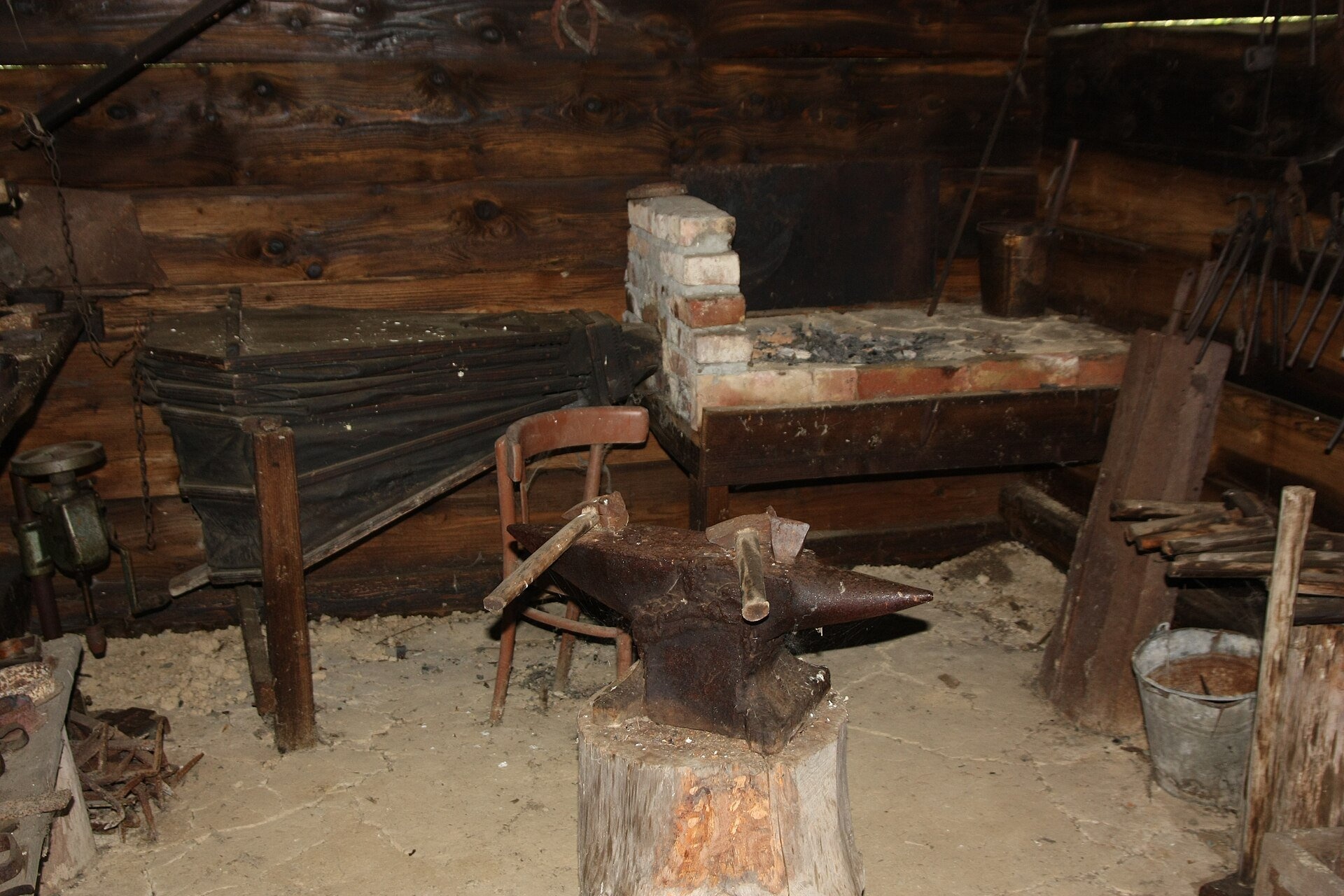
- A smithy, a chapel, a windmill from the village of Wapienne and a small inn with a hatch through which beer was sold.
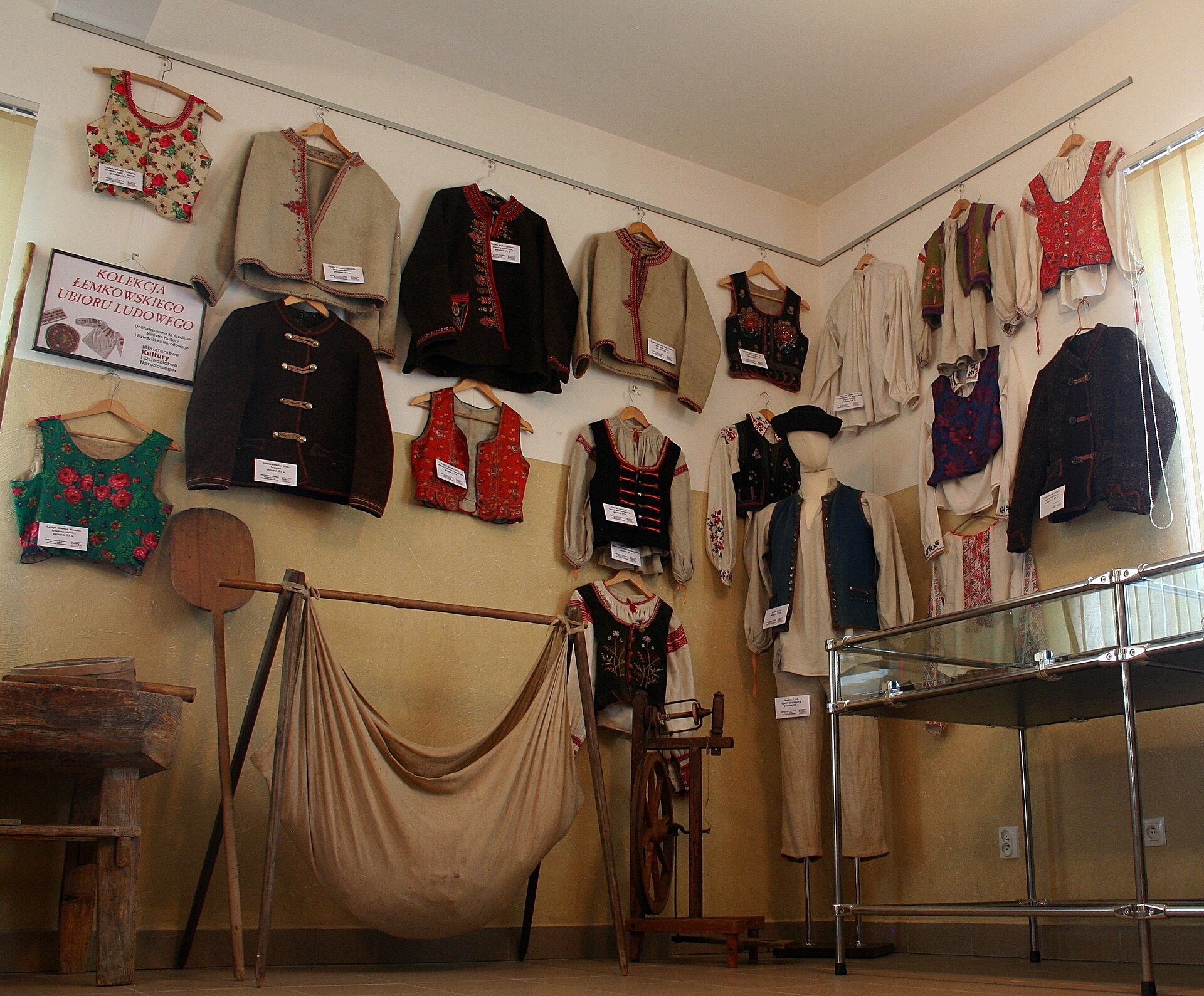
- The exhibition pavilion (2011) — Lemko folk costumes, carvings, Easter eggs, old photographs, paintings, works by Ivan Rusenko and church items; the library is here too.
- The Memorial Room of the Jewish Families of Zyndranowa — a reminder of the Jewish neighbours, of whom only one boy survived the Holocaust.
Every year at the end of July the museum hosts the festival of Lemko culture and traditions "From Rusalia to St John" ("Od Rusal do Jana"; in 2026 on 25–26 July), with concerts, folk costumes and crafts. The museum also runs workshops, for example on making wooden shingles.
Practical information
Address: Zyndranowa 1, 38-454 Tylawa (Dukla commune). The museum is 15 km from Dukla and 24 km from Bóbrka; the easiest way to get there is by car — turn off the Dukla–Barwinek road (the border crossing with Slovakia) near Tylawa. In 2026 the museum is open: January–March, Wednesday to Sunday 8:00–16:00; April–September, Tuesday to Sunday 9:00–17:00; October–December, Tuesday to Sunday 8:00–16:00. It is always closed on Mondays, and also on 5 and 12 April, 24 and 31 May, 4 June, 15 August, 1 and 11 November and 24–26 December. Ticket prices are not published on the official website — ask by phone on +48 13 433 07 12. A visit takes about an hour; the grounds are flat and grassy, the buildings have steps and thresholds. Information as of October 2026.
Nearby
24 km to the north is the oil museum in Bóbrka, the world's oldest working oil mine. Across the border in Slovakia, some 10–15 km away, are the UNESCO-listed wooden churches in Bodružal and in Ladomirová. To the east, near Sanok, the church in Turzańsk is well worth a stop.
Official website: zyndranowa.org
Photos: Pudelek, CC BY-SA 4.0, Wikimedia Commons; Yarl, CC BY-SA 3.0, Wikimedia Commons; Przykuta, CC BY-SA 3.0, Wikimedia Commons.
Getting there from Ukraine
Border crossings
- Krakovets – Korczowa — road, 24/7
- Shehyni – Medyka — road, 24/7 Pedestrian crossing is not confirmed by the Ukrainian border service — check dpsu.gov.ua before the trip.
- Smilnytsia – Krościenko — road, 24/7
- Hrushiv – Budomierz — road, 24/7
- Mostyska – Przemyśl (rail) — rail, 24/7
By car
Lviv – Sanok ≈168 km, ≈3 h 20 min without queues: road to Shehyni → Shehyni – Medyka checkpoint → Przemyśl → DK28 via Bircza to Sanok (≈83 km, ≈1 h 45 min from the border). Alternative via Krakovets – Korczowa: A4 to the Radymno exit, DK77 to Przemyśl and DK28 (≈185 km from Lviv, ≈3 h 25 min). For the Bieszczady proper, Smilnytsia – Krościenko is handier: Lviv – Sambir – Staryi Sambir – border, then DK84 via Ustrzyki Dolne to Sanok (≈203 km, ≈5 h; ≈57 km from the border). From Krościenko to Ustrzyki Górne by DW896 ≈53 km (≈1 h 40 min; ≈200 km and ≈4 h 50 min from Lviv), to Wetlina by DW896 and DW897 ≈69 km (≈216 km and ≈5 h from Lviv). From Sanok: Ustrzyki Górne ≈82 km (DK84 via Lesko, then DW896, ≈1 h 35 min), Wetlina ≈72 km (DK84 to Lesko, DW894 via Baligród and Cisna, DW897, ≈1 h 20 min).
Checked 23.10.2026; border crossing hours and timetables change — check before you travel.
Location on the map
Comments
Trails nearby
All trails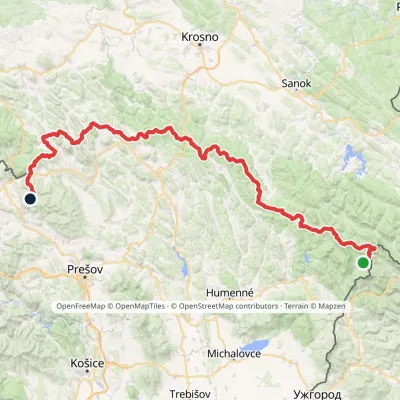 HardMulti-dayMarkedVýchodokarpatská magistrálaElevation profile390–1 209 m213.5 kmascent 7 991 m2.3 km from Museum of Lemko Culture in Zyndranowa
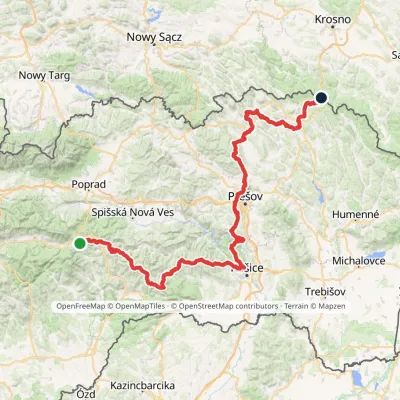 HardMulti-dayMarkedPred Čuntavou Dukliansky PassElevation profile227–1 293 m280.7 kmascent 8 346 m2.5 km from Museum of Lemko Culture in Zyndranowa
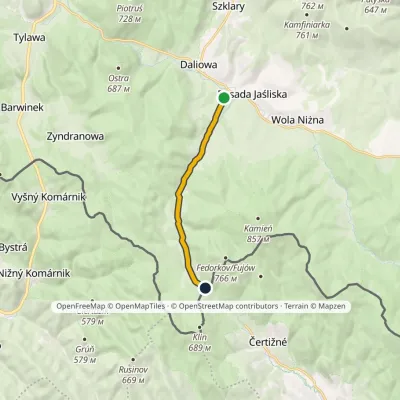 EasyOne-dayMarkedJaśliska Beskid Pass over CzeremchaElevation profile456–575 m8.6 kmascent 132 m≈ 2.5 h walking5.7 km from Museum of Lemko Culture in Zyndranowa
Nearby attractions
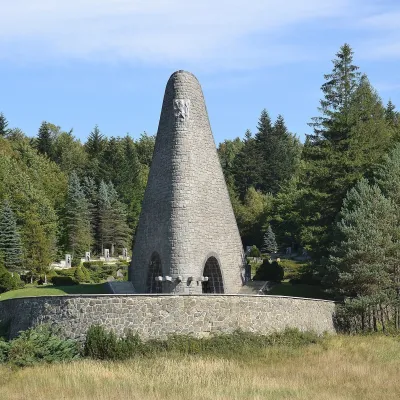 Historic siteDukla Pass: memorial, war cemetery and observation tower2.7 km from Museum of Lemko Culture in ZyndranowaRemembering the Carpathian–Dukla Operation In autumn 1944 the Dukla Pass (Duklianský priesmyk) on the Slovak–Polish border above the village of Vyšný Komárnik became...
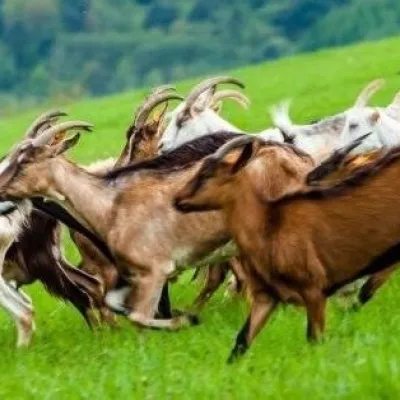 Cheese dairies & pasturesFIGA Organic Goat Cheese Farm, Mszana near Dukla6.2 km from Museum of Lemko Culture in ZyndranowaThe FIGA organic family farm in the Lemko village of Mszana near Dukla is one of Poland's oldest goat cheese dairies.
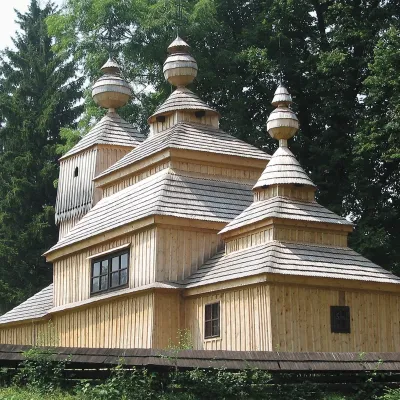 ChurchWooden Church of St Nicholas, Bodružal9.5 km from Museum of Lemko Culture in ZyndranowaOn the highest hill in the middle of the village stands the Greek Catholic Church of St Nicholas the Wonderworker — one of the oldest wooden churches in Slovakia,...
Craft nearby
All craft places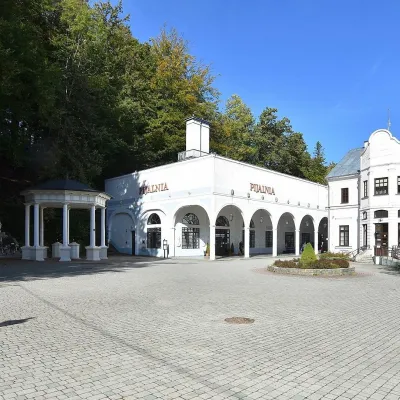 Water parks & thermal poolsIwonicz-Zdrój: mineral-water pump room, pool and salt cave15 km from Museum of Lemko Culture in ZyndranowaIwonicz-Zdrój is the largest and oldest spa in the Podkarpackie region, a quiet little town in wooded hills south of Krosno, on the threshold of the Low Beskids.
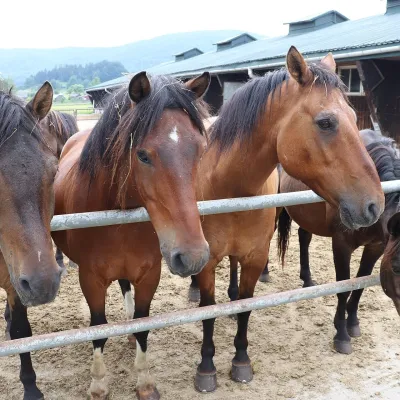 Horse ridingGładyszów Hucul Horse Stud, Regietów34 km from Museum of Lemko Culture in ZyndranowaThe "Gładyszów" Hucul Horse Stud (Stadnina Koni Huculskich „Gładyszów”) in the Lemko village of Regietów is one of the largest places in the world where Hucul ponies...
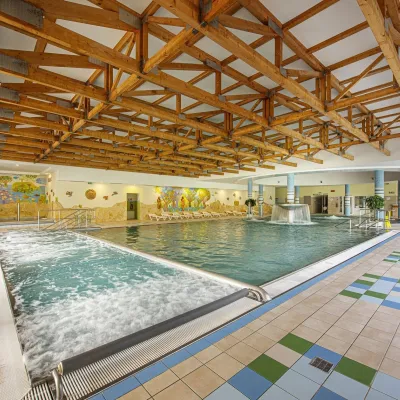 Water parks & thermal poolsBardejovské Kúpele: Wellness Spa Ozón and summer pool34 km from Museum of Lemko Culture in ZyndranowaBardejovské Kúpele is one of Slovakia’s oldest spas, a part of the town of Bardejov about 5 km from its centre, in a valley under the Magura massif that shelters it...
