Yellow stagshorn
Never identify a mushroom from a photo alone. If in doubt, leave it. In case of poisoning call 112 (103 in Ukraine) at once.
About
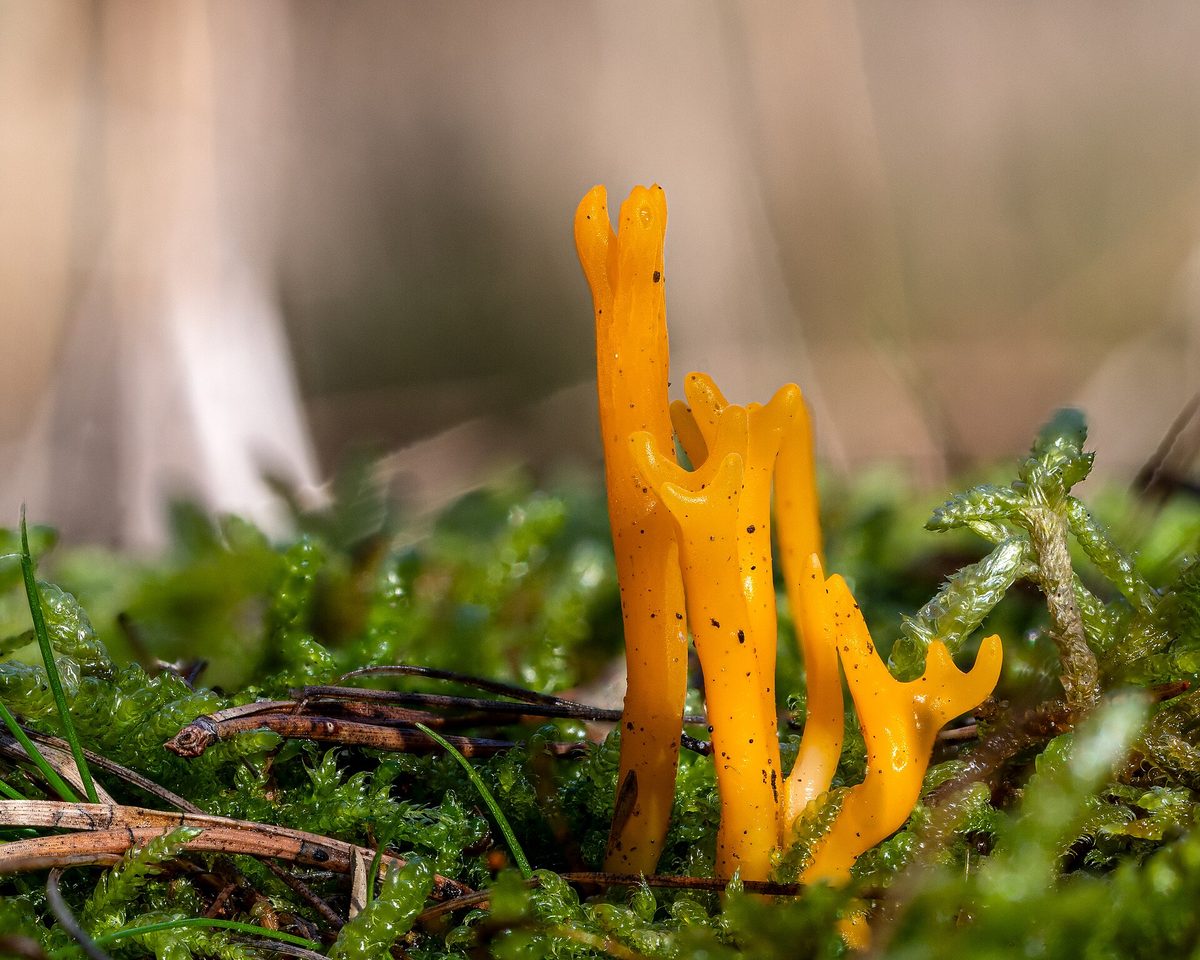
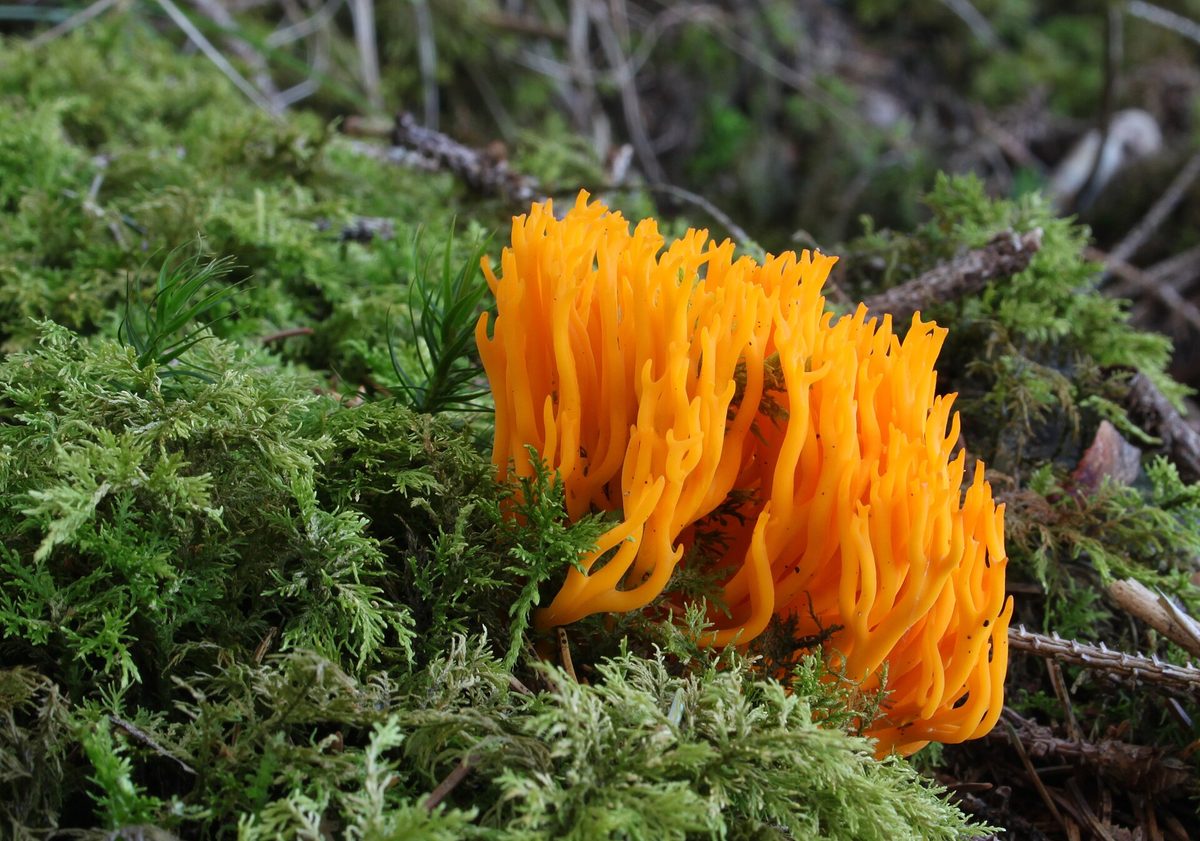
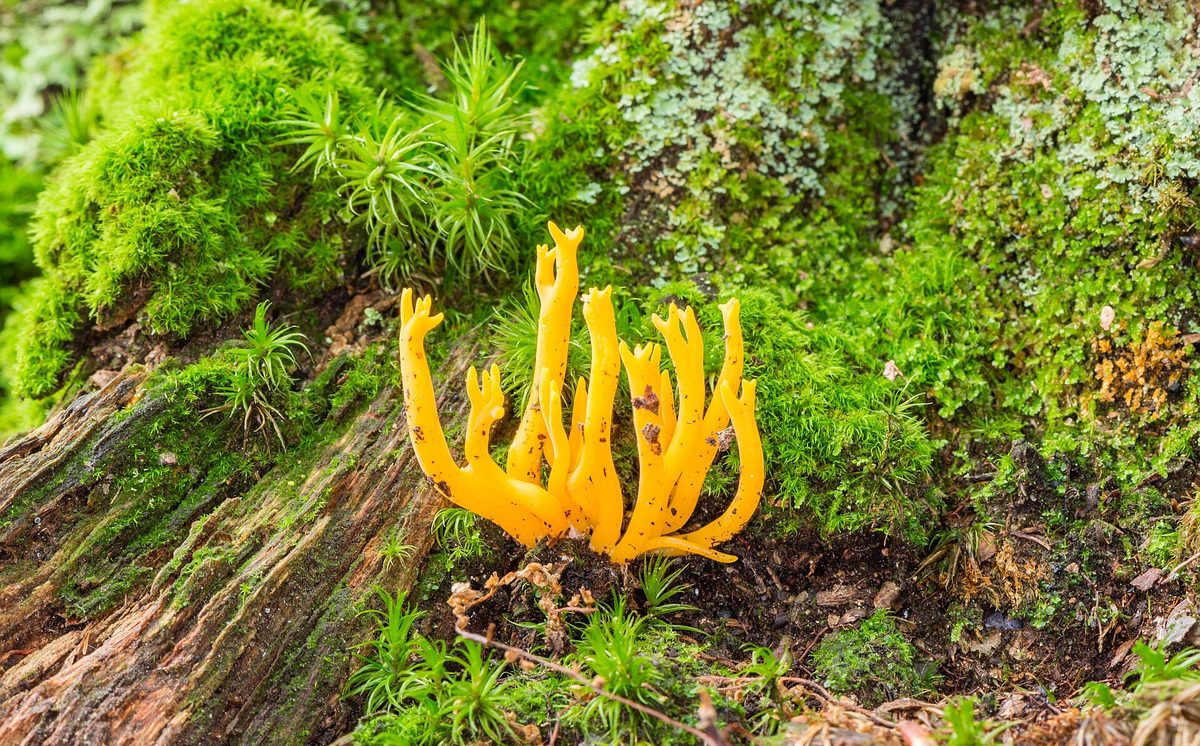
Calocera viscosa resembles a small yellow-orange coral or deer antlers protruding from a stump. The fruiting body is 2–10 cm tall, forked, with sharp tips. It feels elastic, cartilaginous-slimey, and is slippery and sticky in wet weather. As it dries, the mushroom hardens and darkens to orange-brown, and after rain, it swells again.
Calocera grows only on dead wood of coniferous species — on decayed stumps and roots of spruce, fir, and pine. Even when it seems that the mushroom has grown from the ground, its long whitish base is immersed in buried roots or a piece of wood. Fruiting bodies appear from June to November, most abundantly after rains.
In the Carpathians, this is one of the most common mushrooms in spruce and mixed forests, and in the observations of naturalists from the Ukrainian Carpathians, it is one of the most frequent. The yellow 'antlers' on the dark stump are clearly visible from a distance, so it is eagerly photographed.
It is not worth collecting the mushroom: the flesh is rubbery, tasteless, and odorless. It is not considered poisonous, but some guides classify it as an edible mushroom of low quality; we list it as inedible.
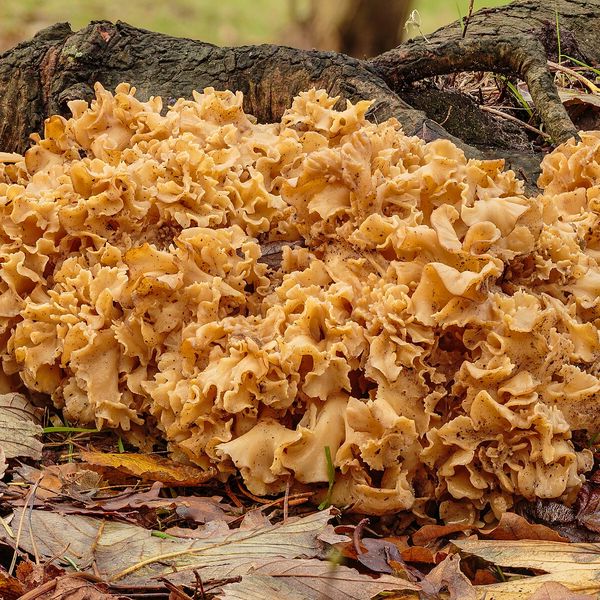
Do not confuse Calocera with ramarias — true 'coral' mushrooms. Ramarias grow on the ground or forest litter, their flesh is brittle and breaks, not elastic. Some species cause digestive disorders, so collecting 'corals' at random is not advisable.
Where in the Carpathians

Teal — roughly where the species can occur, by elevation and habitat; orange — where naturalists recorded it (GBIF, CC0/CC BY).
Range: elevation belt and forests — our model (AWS Terrain Tiles; © OpenStreetMap)
- Countries
- Ukraine · Slovakia · Poland · Romania · Hungary · Czechia · Austria
- Mountain ranges
- nearly all Carpathian ranges, in the forest belt
- Altitude belts
- Foothills (below 600 m) · Beech forests (600–1200 m) · Conifer forests (1200–1600 m)
When to see it
| Jan | Feb | Mar | Apr | May | Jun | Jul | Aug | Sep | Oct | Nov | Dec | |
|---|---|---|---|---|---|---|---|---|---|---|---|---|
| Sightings |
From naturalists’ observations in the Carpathians (iNaturalist, research grade): the darker the cell, the more often the species is seen that month.
Safety
Inedible. Similar 'coral' mushrooms, ramarias, can cause digestive disorders. Never identify a mushroom solely by photos. In case of suspected poisoning, call 103 (or 112).
Look-alikes — how to tell them apart
Grow on the ground or litter, larger and bushier; flesh is brittle, breaks, not elastic. Some species cause digestive disorders.
Protection and rules
Not listed in the Red Book of Ukraine.
FAQ
What yellow 'coral' grows on stumps in the Carpathians?
Most often, it is Calocera viscosa — an inedible slimy mushroom that grows on decayed wood of conifers.
Is Calocera viscosa edible?
No. It is not poisonous, but rubbery and tasteless, so it is not collected.
Comments
Travellers’ experience: reports, tips, questions.
No one has written here yet. Be the first — your experience helps others.
Similar species
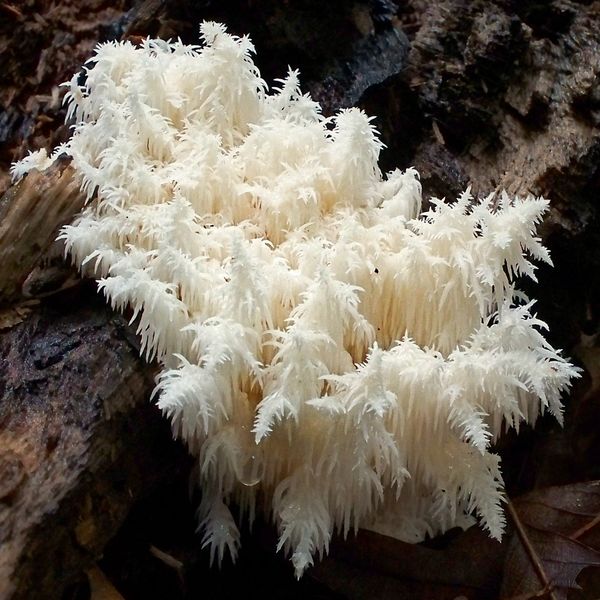
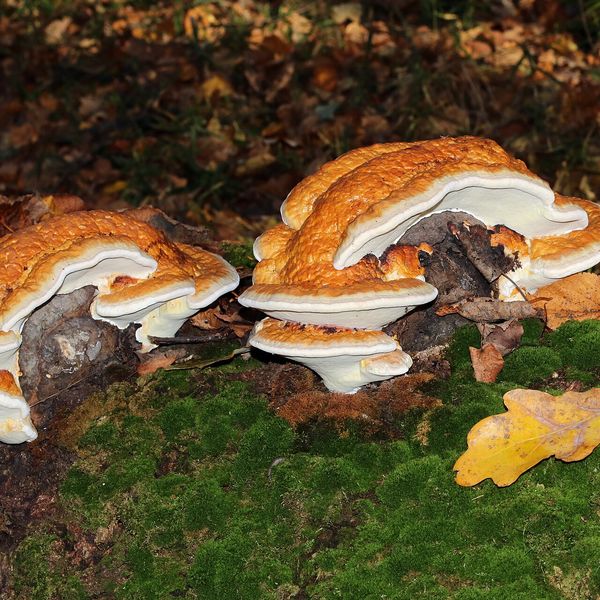
Where to meet it
Trails
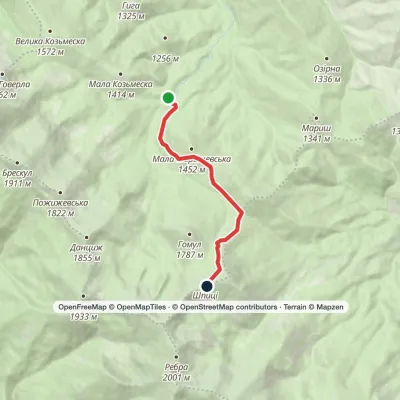 EasyOne-dayMarkedZaroslyak base Mount ShpytsiElevation profile1 128–1 863 m6.1 kmascent 758 m≈ 3 h walking
 ModerateOne-dayMarkedZaroslyak base Mount ShpytsiElevation profile1 134–1 863 m6.9 kmascent 743 m≈ 3 h walking
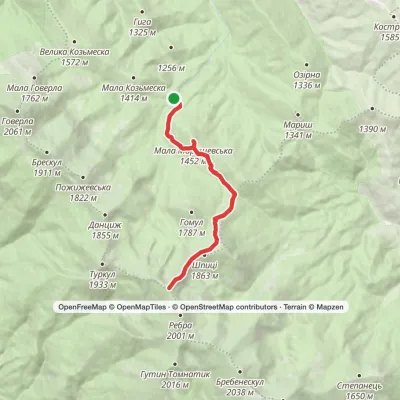 ModerateOne-dayMarkedZaroslyak base loopvia Mount Shpytsi, Mount RebraElevation profile1 130–1 931 m15.2 kmascent 870 m≈ 5.5 h walking
 ModerateOne-dayMarkedZaroslyak base loopvia Mount Hoverla, Mount PozhyzhevskaElevation profile1 257–2 061 m11.6 kmascent 937 m≈ 4.5 h walking
 ModerateOne-dayMarkedZaroslyak base loopvia Mount Hoverla, Lake Nesamovyte +1Elevation profile1 135–2 061 m17.6 kmascent 1 244 m≈ 6.5 h walking
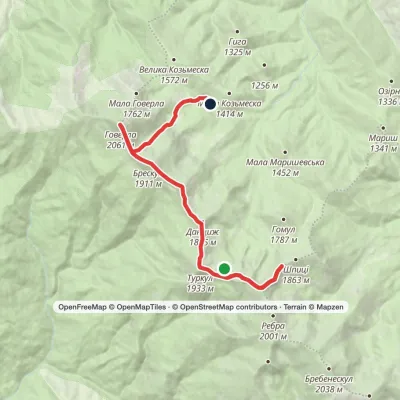 ModerateOne-dayLake Nesamovyte to Zaroslyak basevia Mount Shpytsi, Mount Hoverla +1Elevation profile1 285–2 061 m14.4 kmascent 886 m≈ 5 h walking
 Hard1–2 daysKryvopillia village to Zaroslyak basevia Mount Shpytsi, Mount HoverlaElevation profile885–2 061 m33.3 kmascent 2 291 m≈ 12 h walking
 EasyOne-dayMarkedZaroslyak base Mount HoverlaElevation profile1 266–2 061 m3.7 kmascent 795 m≈ 2.5 h walking
 ModerateOne-dayZaroslyak base loopvia Mount Hoverla, Hoverla WaterfallElevation profile1 263–2 061 m10.4 kmascent 897 m≈ 4 h walking
 ModerateOne-dayMarkedZaroslyak base loopvia Mount Hoverla, Lake NesamovyteElevation profile1 242–2 061 m16.9 kmascent 1 095 m≈ 6 h walking
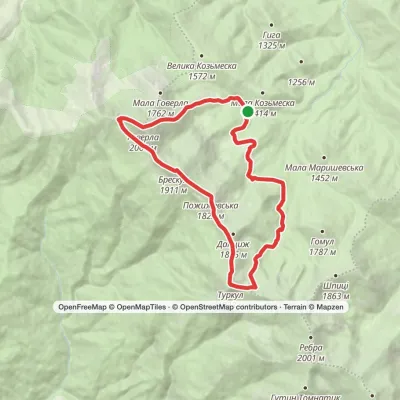 ModerateOne-dayMarkedZaroslyak base loopvia Lake Nesamovyte, Mount HoverlaElevation profile1 260–2 061 m17.6 kmascent 1 185 m≈ 6.5 h walking
 HardOne-dayMarkedZaroslyak base loopvia Mount Hoverla, Lake NesamovyteElevation profile1 261–2 061 m19.1 kmascent 1 192 m≈ 7 h walking
Mountain ranges: Gorgany, Chornohora, Maramureș Mountains, Vihorlat-Gutin Volcanic Ridge. In other countries: 🇸🇰 Lesser Fatra, 🇸🇰 Low Tatras, 🇵🇱 Silesian Beskids, 🇵🇱 Gorce, 🇷🇴 Cindrel Mountains, 🇷🇴 Bihor-Vlădeasa Mountains, 🇵🇱 Little Beskids, 🇸🇰 Vtáčnik Mountains, 🇸🇰 Kremnica Mountains, 🇸🇰 Western Tatras
Trails and peaks near which naturalists recorded the species (GBIF, iNaturalist), matched by altitude and habitat. Sightings are not guaranteed.
Sources
- Вікіпедія: Калоцера клейка
- Wikipedia (en): Calocera viscosa
- iNaturalist: Calocera viscosa (спостереження в Карпатах)
GBIF · iNaturalist · Wikidata · Distribution data: GBIF.org (CC0 and CC BY records), iNaturalist; names and identifiers: Wikidata (CC0). Text: Karpaty.rocks, checked 11.11.2026.
