Chesniki
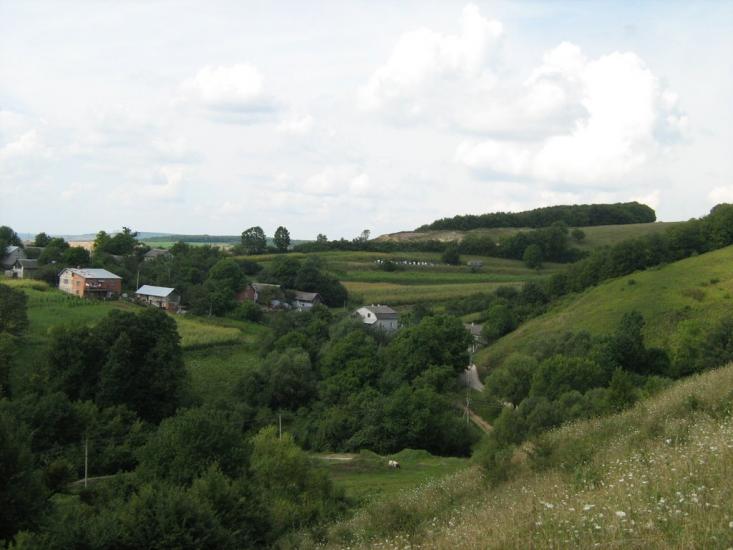
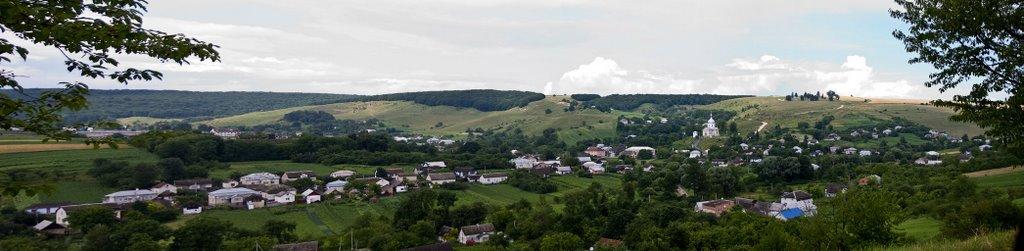
Chesnyky is an ancient village (first mentioned in 1368, a village of the princely era) located in the Rohatyn district of Ivano-Frankivsk region, in a hilly area near the sacred site of the pre-Christian era, the place of Power, the Devil's Mountain. It's very easy to get there: buses from Ternopil to Ivano-Frankivsk pass by the village. They really do pass by the village, but you have to walk a little bit to the village itself along a very picturesque winding road. When you walk along it to Chesnyky, you can see the whole village on your left: you can see the roofs of houses, vegetable gardens, and fields that resemble a colorful patchwork quilt, and in the center of the village, on a hill, stands a large St. Michael's Church (1911).
The first written mention of the village dates back to 1368. During the years of the Tatar troubles, churches of God were specially built to serve as defensive structures. The church in Chesnyky is exactly like that. It was built of stone and fenced with stone walls, earthen ramparts, and moats. It was mentioned on May 5, 1449, in the books of the Galician court. The tax register of 1515 documents a priest in the village (thus, there was a church even then) and 5 fields (about 125 hectares) of cultivated land.
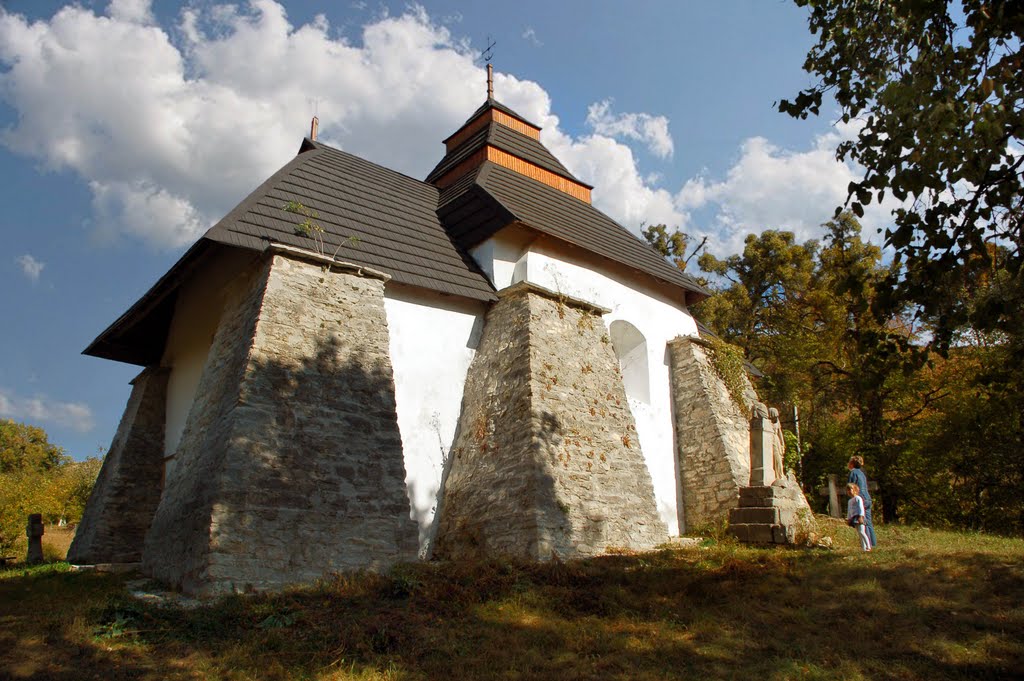
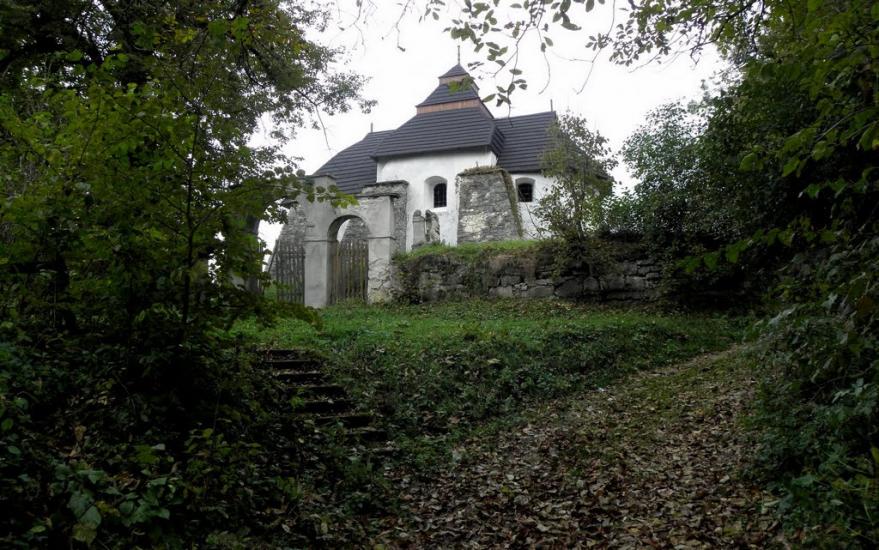
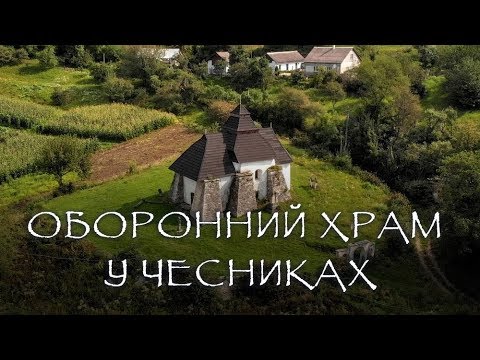
TheChurch of the Ascension, also called St. NicholasChurch, is the highlight of the village of Chesnyky. This temple is certainly one of the most interesting and beautiful in Ukraine, although in 2008 it was disfigured by a "European renovation". This is typical for architectural monuments in Western Ukraine.
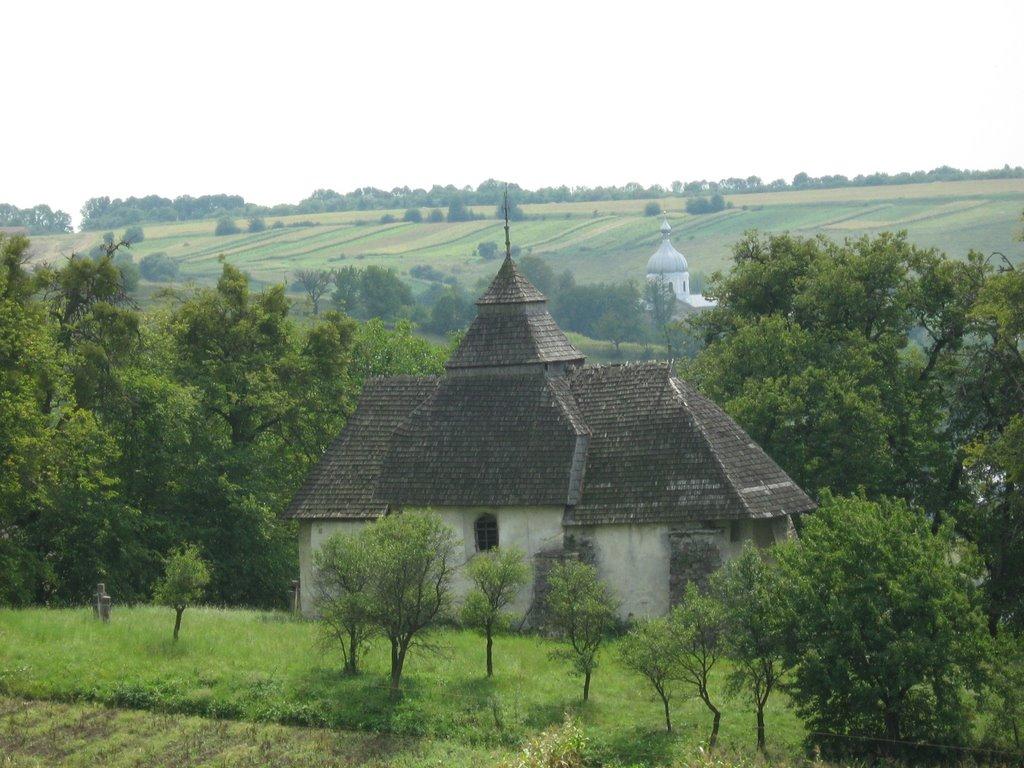
The church is located on a hill, and there is a kind of moat around it. The cross on the dome of the church has a crescent-shaped lower crossbar, a symbol of the fact that it successfully defended Christians from Muslims. In 1648, Khmelnytsky's Cossacks prayed here. The church had a very valuable iconostasis, which you will be lucky to see after the interior renovation. To see the Church of the Ascension, you have to go to the end of the village.
Not much is known about the events in Chesnyky in the 16th and 17th centuries, because it was a time of serfdom and increased exploitation of Galician lands by the Polish conquerors. There is evidence that in the first half of the seventeenth century there was a defensive castle in Chesnyky. The Geographical Dictionary notes that there was a castle in Chesniki, the seat of the Kazanowski family of Polish magnates.
As of August 1, 1934, it was a part of the Puków gmina of the Rohatyn district of the Stanisławski Voivodeship of the Polish Republic. In 1939, the village was home to 1650 inhabitants (1530 Ukrainians, 20 Poles, 60 Latin, 40 Jews).
On May 8, 1950, during a raid in the village of Chesnyky, Rohatyn district, MGB Major Avsiukov and another soldier entered a shop to buy cigarettes. Soon two "jumpers" ran up and fatally shot the drunken major through the door. This is how another honor board member and "hero of the cloak and dagger" died in an ignominious way.
We recommend visiting in Chesniki