Telemea
What it is
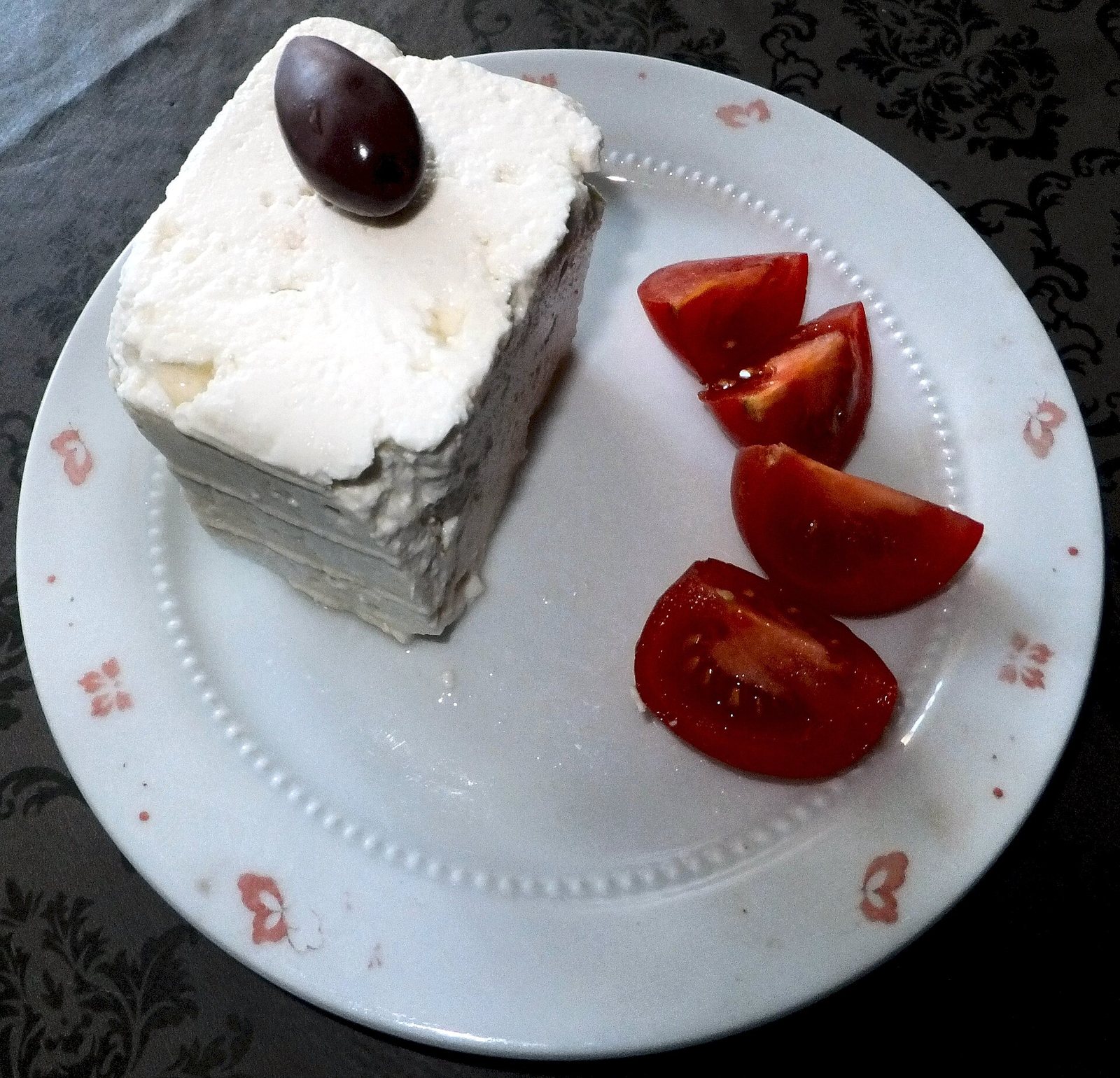
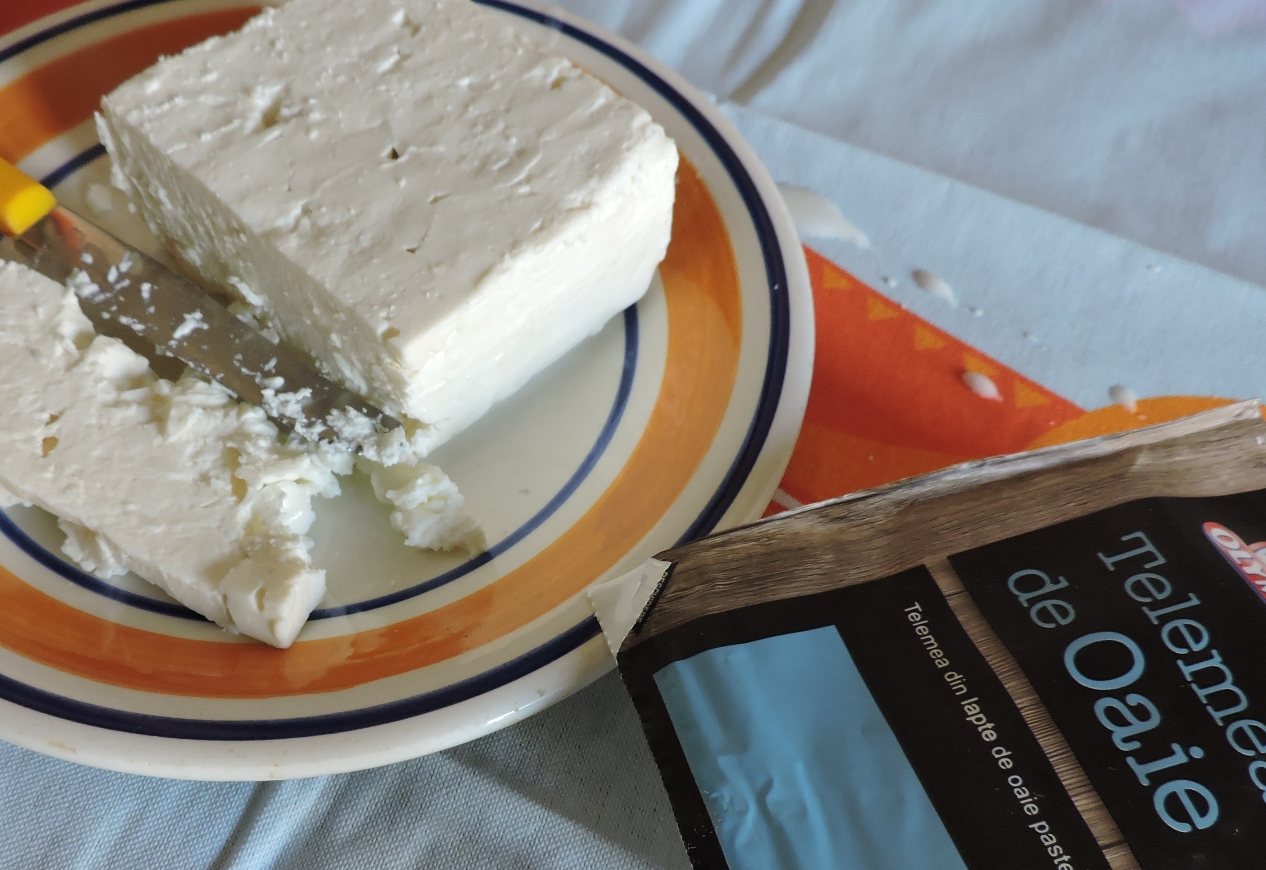
Telemea is a Romanian brined cheese similar to brined cheese or Greek feta: white blocks, salty, moist, with a slightly sour taste. It is made from sheep, cow, buffalo, or goat milk.
The cheese matures in brine and can be stored in it for several months. Young Telemea is soft and delicate, while aged Telemea is firmer and sharper.
Telemea is crumbled over mămăligă, added to salads, pies called plăcinte, and served on Easter tables. Among the recognized local varieties in Romania are Telemea from Argeș, Brașov, Harghita, Sibiu, Vâlcea, and Oaș.
When buying Telemea at the market, ask to taste: sheep's is fattier and sharper, while cow's is milder. The cheese is stored in its own brine; if a piece is wrapped in paper, it should be soaked in salted water at home.
History and name
The first Romanian product with a protected designation of origin in the EU in 2016 was 'Telemea de Ibănești' — cow's cheese from the Gurghiu Valley in Mureș County. In 2019, the protected geographical indication 'Telemea de Sibiu' was registered — sheep's cheese from Sibiu County, the land of hereditary shepherds.
In the EU register: protected designation of origin (PDO), registered name «Telemea de Ibăneşti», registered in 2016. Sources
Ingredients and allergens
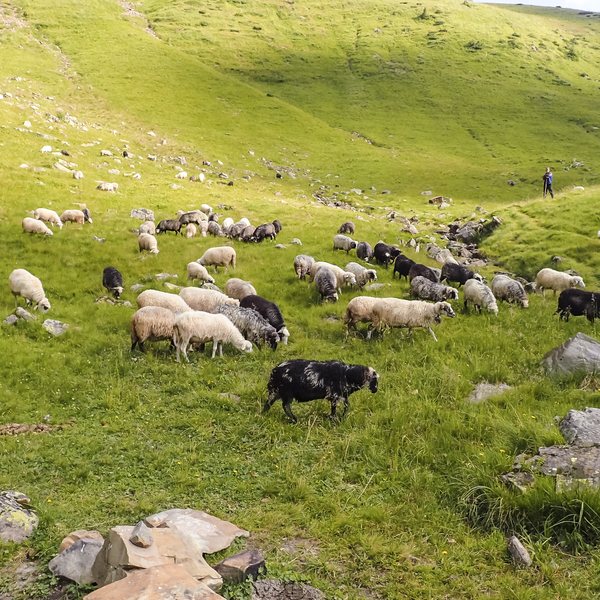
Variant: sheep's
Also: salt (brine)
Contains allergens: milk
Diet: gluten-free · no cooking
Variant: cow's
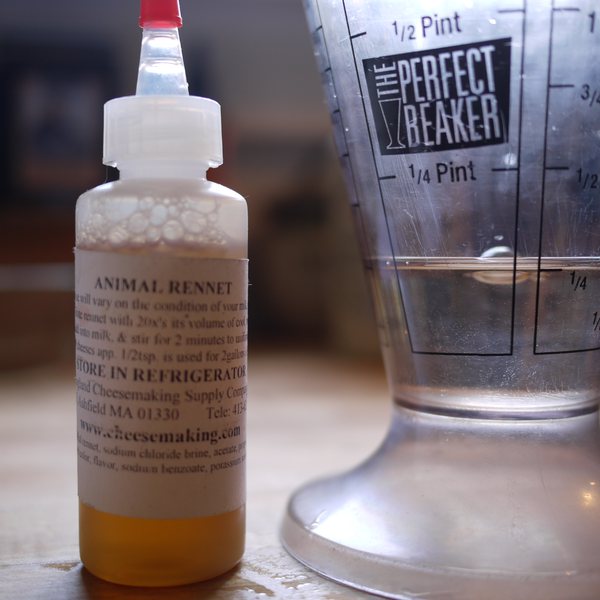
cow's milk, rennet (klyag), salt
Contains allergens: milk
Diet: gluten-free · no cooking
Ingredients of the traditional recipe; every cook and every place may do it differently — please ask when ordering. We cannot guarantee the absence of allergens or traces.
How it is made
Milk is mixed with rennet starter, the curd is placed in cloth and pressed until the whey drains. The block of cheese — the curd — is cut into pieces and placed in brine. After two to three weeks in the brine, the curd becomes Telemea.
Where it is eaten

The area is approximate and based on the sources below. The dish is cooked outside it too, and ethnographic borders are blurred.
Telemea is made throughout Romania. On the map are the counties of the two names protected in the EU: Mureș (Ibănești, Gurghiu Valley) and Sibiu.
When it is eaten
| Jan | Feb | Mar | Apr | May | Jun | Jul | Aug | Sep | Oct | Nov | Dec |
|---|---|---|---|---|---|---|---|---|---|---|---|
Occasions: Everyday food · Easter
Safety
Very salty cheese can be soaked in cold water or milk before eating.
FAQ
Is Telemea the same as feta?
The cheeses are similar — both are brined — but they are different products. The name 'feta' is protected in the EU for Greek cheese; Telemea is made not only from sheep's milk.
What varieties of Telemea are protected in the EU?
'Telemea de Ibănești' (protected designation of origin, 2016) and 'Telemea de Sibiu' (protected geographical indication, 2019).
Comments
Travellers’ experience: reports, tips, questions.
No one has written here yet. Be the first — your experience helps others.
Similar dishes and products


Relatives in the Carpathians and nearby
- bukovynska bryndza · Ukraine
a close tradition of brined cheese
Sources
- Реєстр географічних зазначень ЄС (eAmbrosia): Telemea de Ibăneşti, PDO-RO-01182
- Реєстр географічних зазначень ЄС (eAmbrosia): Telemea de Sibiu, PGI-RO-02473
- Вікіпедія (рум.): Telemea
- Вікіпедія: Телемя
Written by the Karpaty.rocks editors from the sources above. Checked 11.11.2026.
