Brânză de burduf
What it is
Brânză de burduf is a dense yet spreadable sheep cheese: salty, sharp, with an aroma that is unmistakable. 'Burduf' refers to a bag made from sheep skin or stomach, into which the cheese is packed and sewn shut.
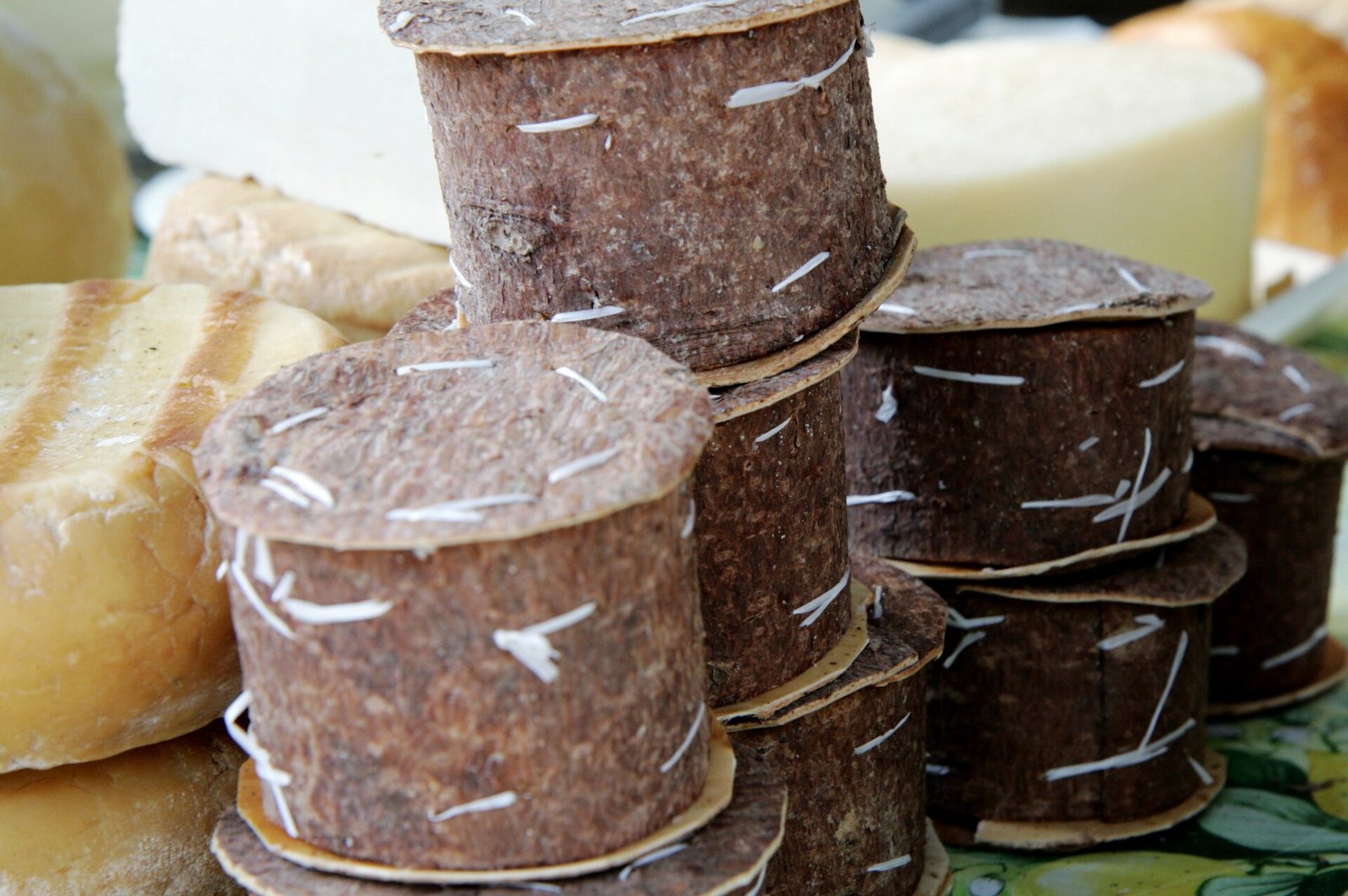
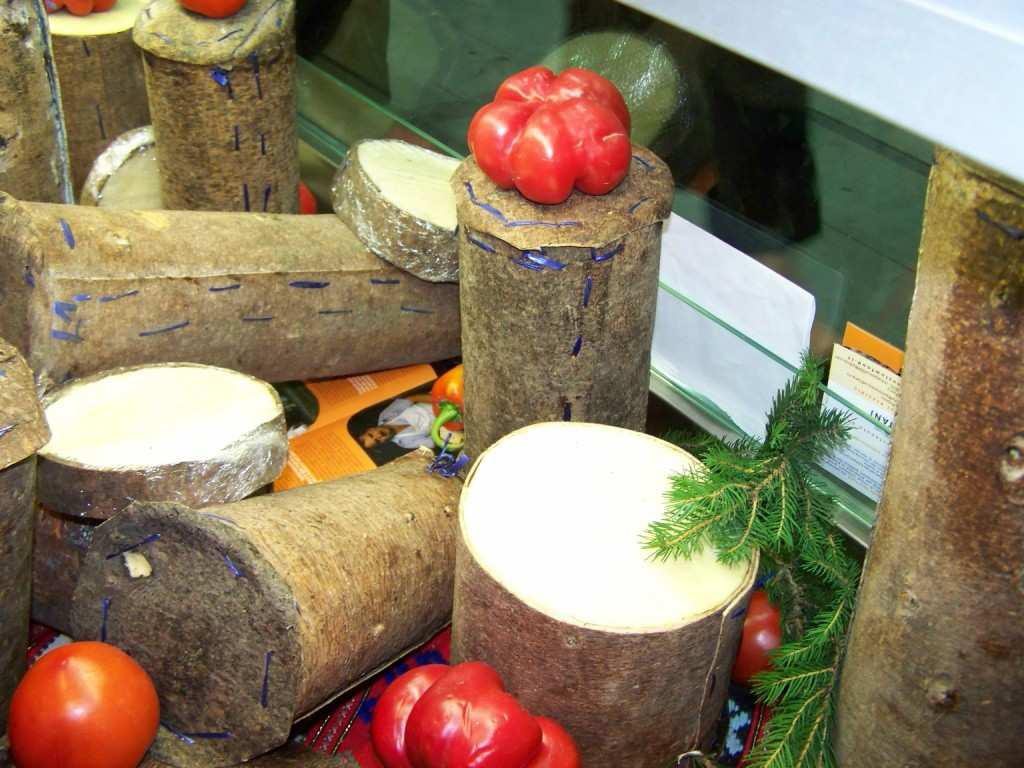
An even more famous version is made in fir bark. The bark is stripped from the tree, sewn into a cylinder, and filled with cheese; it absorbs a resinous coniferous scent. This type of cheese is called brânză de coșuleț — 'cheese in a basket.'
The cheese is eaten with mămăligă, placed in bulz, or spread on bread with onions. It is made in the mountain pastures throughout the entire grazing season and stored until late autumn when the flocks descend from the mountains.
History and name
This is a way to preserve summer milk without a cellar or refrigerator: sour mashed cheese with salt, tightly packed into the skin without air, can last for months. The same logic applies to Hutsul bryndza, Podhale and Slovak bryndza — a legacy of Carpathian shepherding.
Ingredients and allergens
Variant: in a bag (burduf)

Also: salt
Contains allergens: milk
Diet: gluten-free · no cooking
Variant: in fir bark
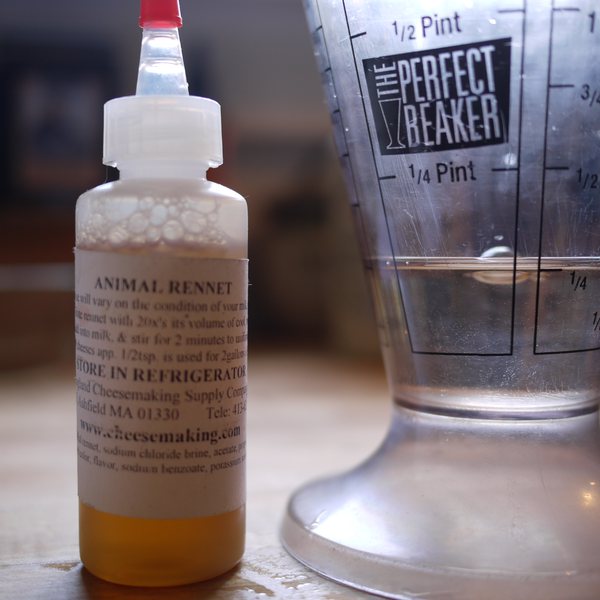
caș (fresh cheese), rennet (klyag), salt
Contains allergens: milk
Diet: gluten-free · no cooking
Ingredients of the traditional recipe; every cook and every place may do it differently — please ask when ordering. We cannot guarantee the absence of allergens or traces.
How it is made
First, a mash is made: milk from two or three ewes is strained into a fir barrel, heated, and mixed with lamb rennet. The curd is separated from the whey and well pressed — otherwise, the cheese will have an unpleasant acidity. This results in a round shape 50–60 cm in diameter.
The rounds of mash are placed in wooden chests with air holes and left to sour for 7–14 days, depending on the warmth. The matured mash is cut, crumbled, or ground, salted, and thoroughly mixed in large wooden troughs.
The finished mass is tightly packed into the burduf and sewn shut. One bag, sewn from several skins, holds 15–20 kg of cheese.
Where it is eaten

The area is approximate and based on the sources below. The dish is cooked outside it too, and ethnographic borders are blurred.
The mountainous counties of Romania along the Carpathian arc — from Maramureș and Bukovina to the Southern Carpathians. The counties are shown on the map in their entirety, along with their lowland parts, so the area is approximate.
When it is eaten
| Jan | Feb | Mar | Apr | May | Jun | Jul | Aug | Sep | Oct | Nov | Dec |
|---|---|---|---|---|---|---|---|---|---|---|---|
Occasions: Polonyna (May — September) · Everyday food
Safety
Traditionally, the cheese is made from raw, unpasteurized milk. Pregnant women, small children, and people with weakened immune systems should choose cheese made from pasteurized milk or consume it in hot dishes.
FAQ
What is burduf?
A bag made from sheep skin or stomach in which the cheese matures. Cylinders made from fir bark are also used instead.
What is the taste of cheese made in fir bark?
Sharp, salty, with a resinous coniferous note from the bark.
Comments
Travellers’ experience: reports, tips, questions.
No one has written here yet. Be the first — your experience helps others.
Similar dishes and products


Relatives in the Carpathians and nearby
- Hutsul sheep bryndza · Ukraine
a close tradition: matured budz, mixed with salt - Slovak and Podhale bryndza · Slovakia
a related name and technique
Sources
- Вікіпедія (рум.): Brânză de burduf
- Вікіпедія (англ.): Brânză de burduf
- Вікіпедія (рум.): Brânză de coșuleț
Written by the Karpaty.rocks editors from the sources above. Checked 11.11.2026.
