Austrian viaduct bridge, Vorokhta


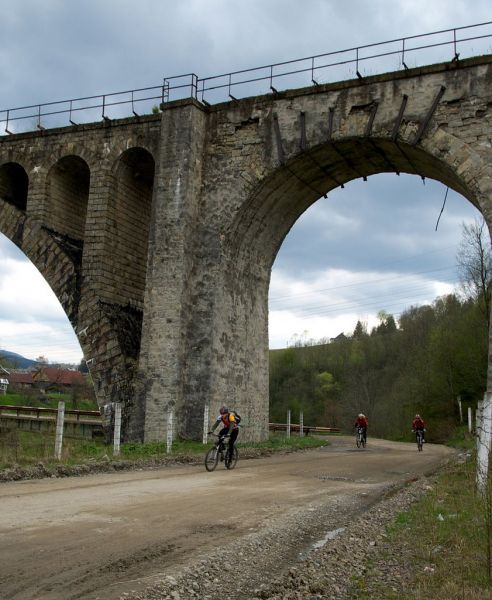
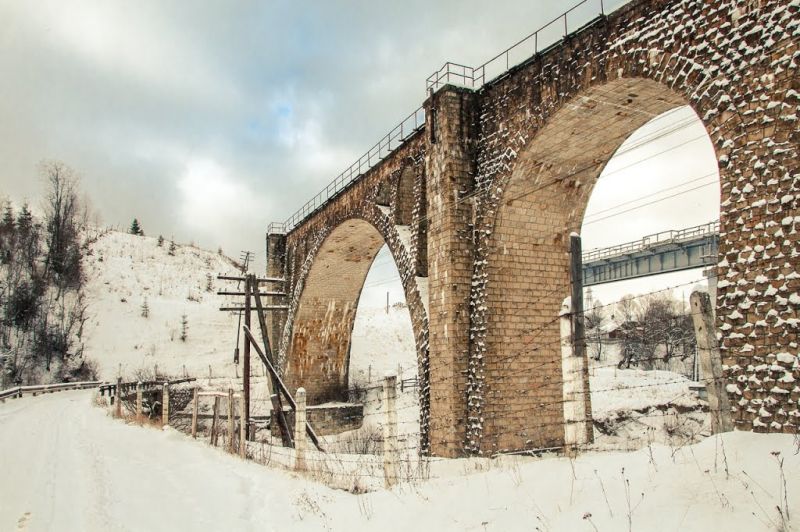
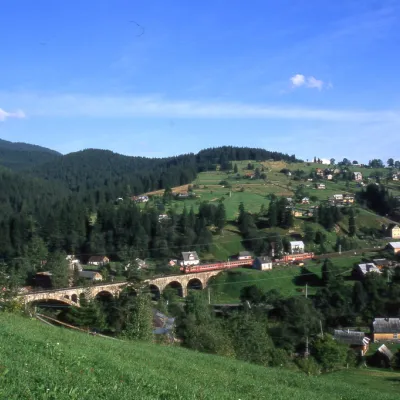
The Austrian Viaduct Bridge in Vorokhta is an engineering marvel that connects the two banks of the Prut River. Today, the bridge is a kind of open-air museum, a place for fabulous photo shoots and an observation deck with an incredible view.
The Austrian Viaduct in Vorokhta owes its appearance to the grandiose idea of the Austro-Hungarian government, which planned to connect the Adriatic and Black Seas by rail. This incredible structure was built in just one year, from 1894 to 1895, by Italian captured soldiers who were forced to change their swords for rala. They were also assisted by local workers who wanted to earn extra money.
In 1870, the Vienna Parliament discussed the need for a Trans-Carpathian railroad. The global nature of the project was to build an intermediate link between the Black Sea (Odesa) and the Adriatic Sea (Trieste). Due to Russia's reluctance to connect Iași and Chisinau by rail, the plan failed, but the regions rich in wood, iron, and salt found a way to the consumer.
In 1894, a track was laid along the route Stanislaviv - Nadvirna - Voronenka with an adjacent line Dilove - Yasinia - Voronenka from the Transcarpathian side. This created a track about 135 km long. This route was intended to become a direct main line through the Carpathian Mountains to the then capital of Vienna. The World War I and the next division of land between the states prevented the realization of this development option.
In August 2011, Ivano-Frankivsk artists Yurii and Marta Pitchuk painted the pillars of the Austrian Bridge with murals depicting Hutsuls, animals, and picturesque nature scenes.
One of the oldest and longest stone arch bridges-viaducts in Europe is made of huge stone blocks. The length of the bridge is 200 meters, the length of its central arch is 30 meters, and its width is 65 meters. There are more complex structures in Europe. For example, the Helchtalbruecke is a 574-meter-long, 78-meter-high brick viaduct in Germany. Or Glenfinnan, a 380-meter concrete arch bridge in Scotland, which is used by the Hogwarts Express in the Harry Potter films.
Today, the bridge is no longer a railroad bridge, as a backup bridge was built nearby in 2000 to preserve it. So now the Austrian masterpiece of bridge construction is a purely pedestrian architectural landmark, which is an ideal place for photo shoots. Its graceful arches and high spans create a fabulous atmosphere at any time of the year.
This architectural pearl of Vorokhta is known far beyond the village, as the Old Austrian Bridge is one of five such structures in Western Ukraine and one of the oldest and longest stone viaducts in Europe. Many visitors to Vorokhta come here to experience the romance of this Carpathian landmark. Among the ancient stone bridges in Vorokhta, the Old Austrian Bridge is the most famous, but not the only one. There are three other picturesque bridges in the village, each of which is about a century old.
As part of the Viaduct 2017 festival, a Frankivsk-based artist couple, Yurii Pitchuk and Marta Belmega-Pitchuk, created two murals on an old stone viaduct in Vorokhta. The artists depicted a woman and a man in Hutsul costumes. The organizers were granted permission by the village council and Ukrzaliznytsia. The artist noted that "the old Austrian stone was not touched," and they painted only on the concrete Soviet pillars.
In addition to this bridge, there are four other viaducts with railroad tracks in western Ukraine: two in the Ternopil region near Terebovlia, in the villages of Krovynka and Plebanivka, and two near Lavochne (Lviv region).
Vorokhta is rich in both natural and architectural sights, so you can also visit the wooden church of the Nativity of the Virgin Mary and the worship chapel, which has amazing architecture. And for those who like hiking in the mountains, the route to the highest alpine lake in Ukraine - Nesamovyty - will be ideal.
Vorokhta can be reached by direct buses from Ivano-Frankivsk, which depart every hour. Also, passenger trains "Lviv - Rakhiv" and "Odesa - Rakhiv" stop in Vorokhta. It will be easy to find the Austrian Bridge, as all transport routes pass by it, and it can be seen from almost every point of the village.
Video 4
 Віадук у Ворохті - один із найстаріших і найдовших аркових залізничних мостів у ЄвропіУкраїнська правда


Location on the map
Comments
Places to stay nearby
All stays HomesteadHomestead "Topirets" VorokhtaVorokhtaunder 1 km from Austrian viaduct bridge, VorokhtaSaunaBBQKitchenNearby: Austrian viaduct bridge 400 mMt Magura 3.9 km17 trails
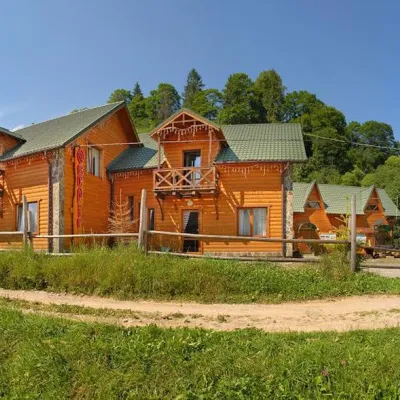 HotelHotel "Oberig" VorokhtaVorokhtaunder 1 km from Austrian viaduct bridge, VorokhtaHot tubSaunaSPANearby: Austrian viaduct bridge 700 mMt Magura 3.7 km17 trails
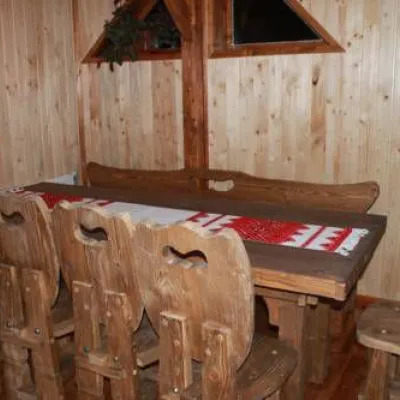 HotelGuest House "Barvy Karpat"Vorokhta1.3 km from Austrian viaduct bridge, VorokhtaSaunaBBQParkingNearby: Austrian viaduct bridge 1.3 kmMt Magura 3.4 km16 trails
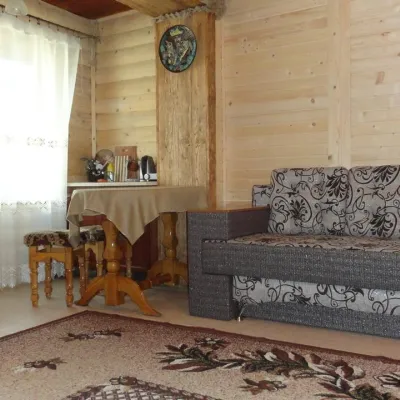 CottageCottage "Lisovychok" VorokhtaVorokhta1.4 km from Austrian viaduct bridge, VorokhtaTransferNearby: Austrian viaduct bridge 1.4 kmMt Magura 3.3 km16 trails
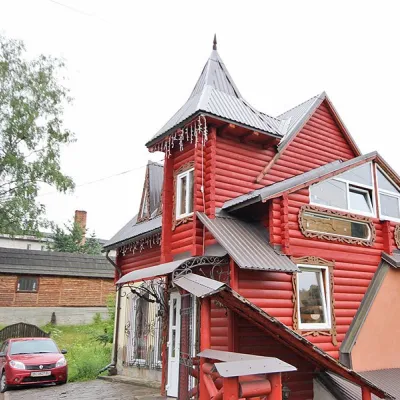 CottageCottage "KSIENIA"Vorokhta1.6 km from Austrian viaduct bridge, VorokhtaSaunaBBQKitchenNearby: Austrian viaduct bridge 1.6 kmMt Magura 3.2 km18 trails
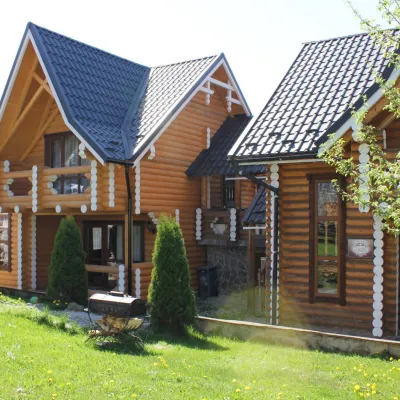 Cottage"Oberig" ApartmensVorokhta1.7 km from Austrian viaduct bridge, VorokhtaHot tubSaunaSPANearby: Austrian viaduct bridge 1.7 kmMt Magura 3.8 km16 trails
Trails nearby
All trails HardTwo-dayMarkedVoronenko village to Vorokhtavia Mount KukulElevation profile740–1 536 m22.7 kmascent 780 m≈ 7 h walkingunder 1 km from Austrian viaduct bridge, Vorokhta
 HardMulti-dayMarkedVoronenko village to Vorokhtavia Mount KukulElevation profile748–1 540 m24.8 kmascent 837 m≈ 8 h walkingunder 1 km from Austrian viaduct bridge, Vorokhta
 HardMulti-dayYasinia to Vorokhtavia Mount Petros, Mount Hoverla +1Elevation profile660–2 054 m46.4 kmascent 2 404 munder 1 km from Austrian viaduct bridge, Vorokhta
Nearby attractions
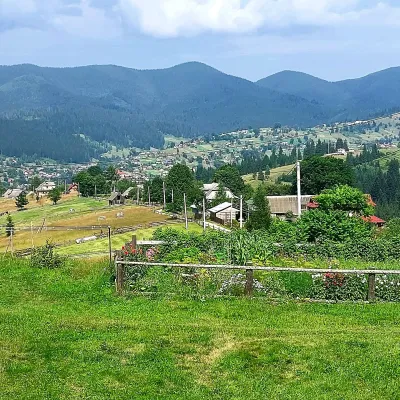
 MuseumMuseum of History and Local Lore, VorokhtaVorokhta1.2 km from Austrian viaduct bridge, VorokhtaThe museum was inaugurated on January 21, 2007. The museum reveals the processes of the settlement's emergence, the Oprishka movement in the Vorokhta neighborhood, and...
 PeakMount OseredokVorokhtaaltitude 915 m · Chornohora range1.2 km from Austrian viaduct bridge, Vorokhta1 trail to the topOseredok is a modest 915 m summit right above Vorokhta (about 2 km), north of the Chornohora range, in Ivano-Frankivsk Oblast.
 Mountain meadowPolonyna BorsuchynaVorokhtaaltitude 1 136 m5.2 km from Austrian viaduct bridge, VorokhtaPolonyna Borsuchyna is located in Vorokhta, Ivano-Frankivsk region, at an altitude of 1136 meters in the Carpathians.
Craft nearby
All craft places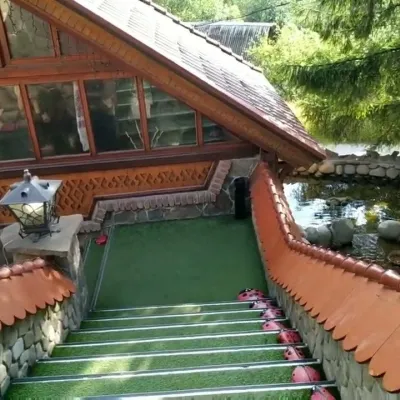 Koliby & Hutsul cuisineStara Vorokhta Restaurant, VorokhtaVorokhta1.1 km from Austrian viaduct bridge, VorokhtaStara Vorokhta restaurant ("Old Vorokhta") is one of the best-known places for Hutsul food in Vorokhta: on Google Maps it is rated 4.6 from more than 6,300 reviews, a...
 Markets & fairsSouvenir Bazaar by the Ski Jumps, VorokhtaVorokhta2.5 km from Austrian viaduct bridge, VorokhtaThe souvenir bazaar in Vorokhta is one of the busiest little trading spots in the mountain Hutsul region.
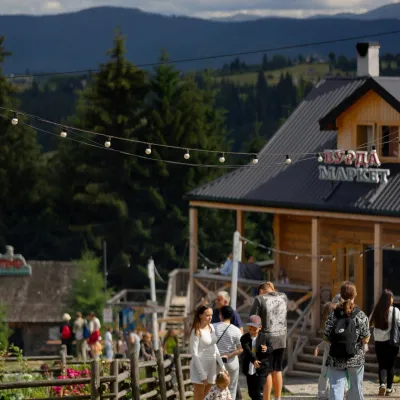 Mountain meadowPolonyna Pertsi Ethno Park, YablunytsiaYablunytsiaaltitude 940 m · Kukul range7.8 km from Austrian viaduct bridge, VorokhtaPolonyna Pertsi (“Pepper Meadow”) is an ethno park of Hutsul traditions in Yablunytsia, close to the Yablunytsia Pass.
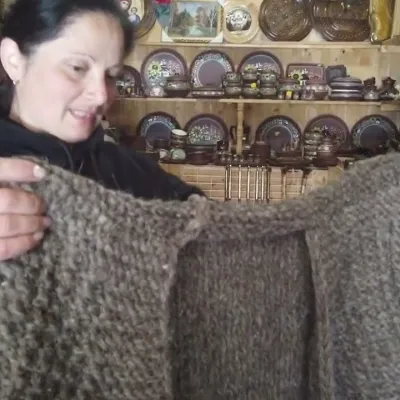 Markets & fairsSouvenir Market on the Yablunytsia Pass, YablunytsiaYablunytsia8.1 km from Austrian viaduct bridge, VorokhtaThe souvenir market on the Yablunytsia Pass is one of the best-known roadside bazaars in the Carpathians.
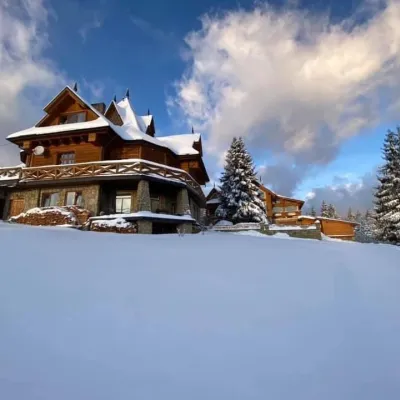 Koliby & Hutsul cuisineVysokyi Pereval Koliba, YablunytsiaYablunytsia8.5 km from Austrian viaduct bridge, VorokhtaVysokyi Pereval Koliba ("High Pass") stands in Yablunytsia, on the new road to Bukovel, in the Horishkiv area.
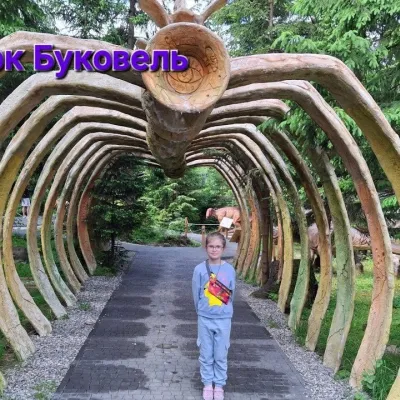 Theme parksDinoPark, Polianytsia (Bukovel)Yablunytsia8.9 km from Austrian viaduct bridge, VorokhtaDinoPark in Polianytsia is an open-air dinosaur theme park at the entrance to Bukovel resort. It is easy to spot from the road: a huge dinosaur figure stands right by...
