Smrdáky: a hydrogen-sulphide spa for skin diseases
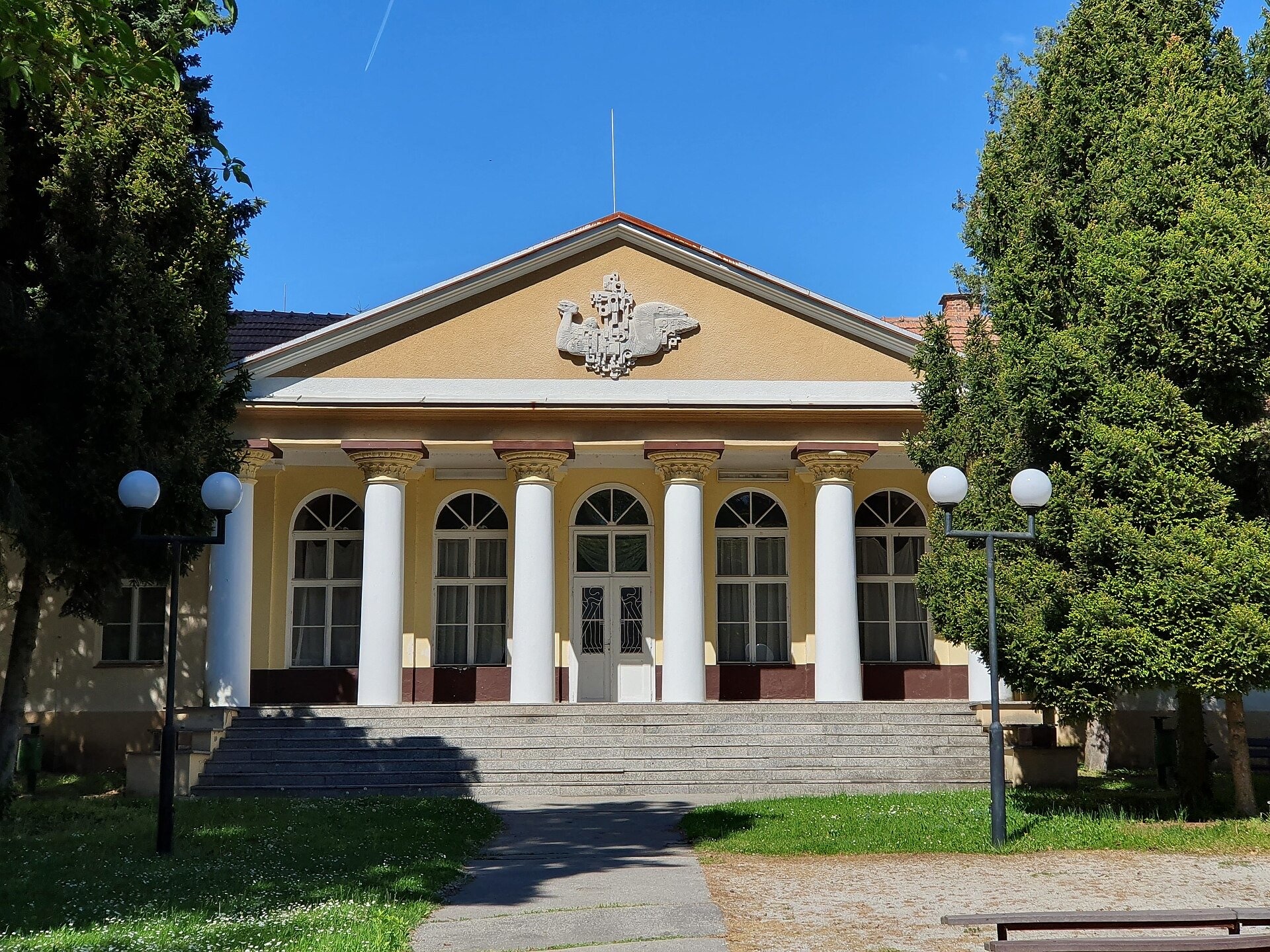
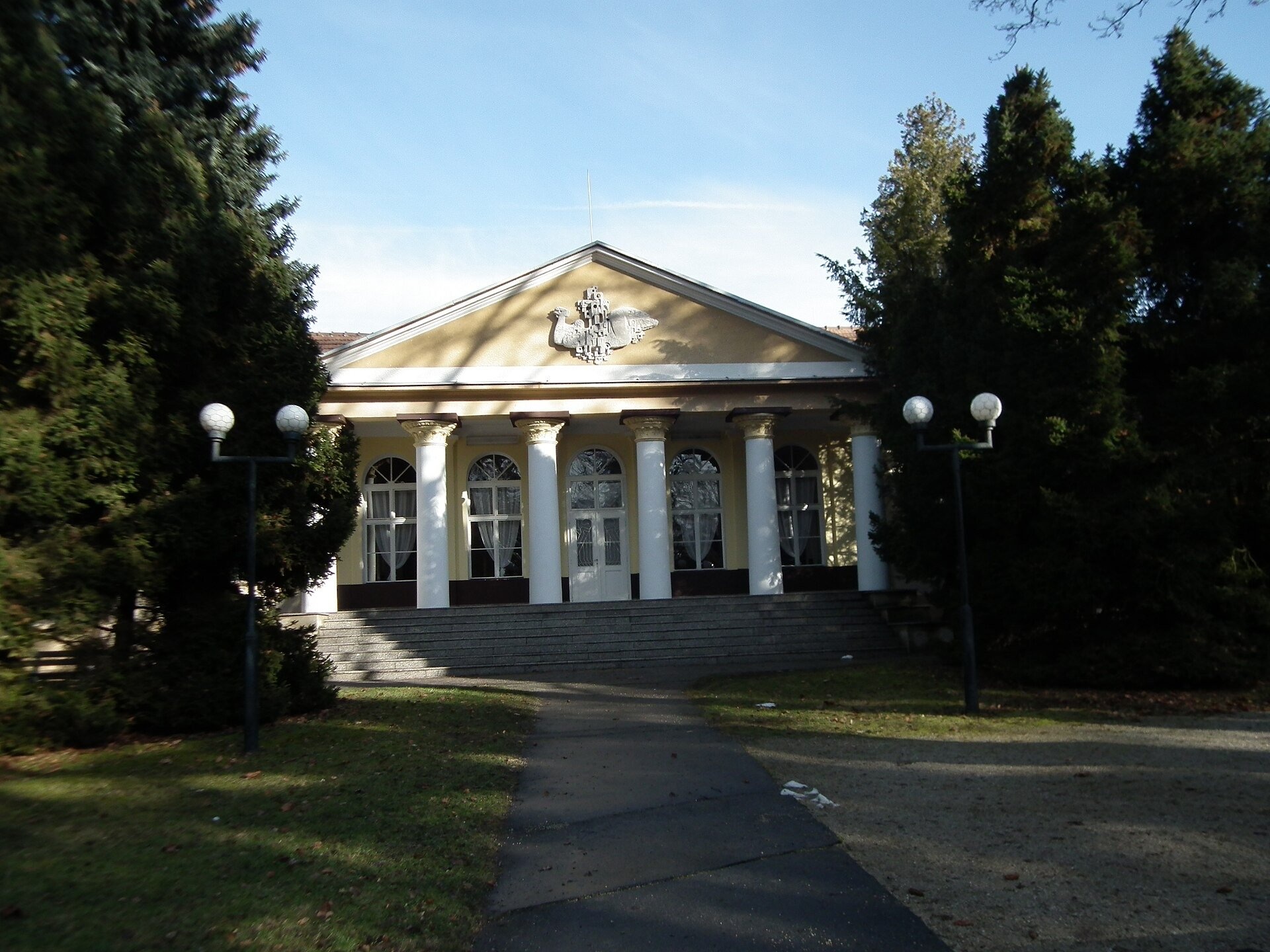
Smrdáky is a small spa village in western Slovakia, on the edge of the Záhorie Lowland and the foothills of the White Carpathians, about 7 km from Senica and 80 km from Bratislava. The name comes from the smell: the local springs reek of hydrogen sulphide so strongly that neighbours nicknamed the people of the former village of Nová Ves (Villa Nova) "smrdáci" – the stinkers – and the nickname became the name. That very water made Smrdáky one of Europe's best-known spas for skin diseases. The baths are first mentioned in an urbarium of 1617; Matej Bel described them in 1740 and in 1763 the physician Ján Gottmann made the first analysis of the water. The first spa house was built in 1832–1833 by the owner of the land around the springs, the Nitra deputy county head Jozef Vietoris, and in 1839 a manor house for his family went up next to it. Today the spa belongs to the Ensana group.
Mineral waters and natural resources
Smrdáky water is a chloride-bicarbonate calcium hypotonic water whose main active substance is sulphur in the form of free and bound hydrogen sulphide. According to the operator it contains 680 mg of hydrogen sulphide per litre and 3,400 mg/l of minerals in total, which is why it is considered the most concentrated sulphur water in Slovakia and Central Europe. It has an anti-inflammatory effect, eases itching and pain and improves blood flow in the skin. The second natural resource is healing sulphur mud: it forms as the sulphide water seeps through loess soils, matures for a year in layers with the healing water and before use is saturated with mineral water and heated to 45 °C. The mud cools four times more slowly than water and warms deep tissues, so it is also used for joints.
What is treated
According to the spa, about 80 per cent of patients come with atopic dermatitis or psoriasis. The official list of indications covers skin diseases – psoriasis, atopic eczema, chronic dermatoses, seborrhoeic dermatitis, prurigo, ichthyosis, rosacea, conditions after burns and chemical injuries, acne and scleroderma – and musculoskeletal diseases: psoriatic and rheumatoid arthritis, osteoarthritis, vertebrogenic pain syndrome and ankylosing spondylitis. The main procedures are mineral-water baths, full and partial mud wraps, underwater massage, pearl baths, phototherapy, magnetic and electrotherapy, massages and therapeutic exercise. Children have their own spa, Eva, with lessons at the local school. Treatment is prescribed by a doctor, and some procedures require a prior examination.
Procedures for visitors
The spa has 39 treatment cabins: 20 for individual mineral baths, 10 for mud wraps, massage and physiotherapy rooms and a phototherapy and laser room. The regeneration centre has a Finnish sauna and a whirlpool, a gym and a sports hall. Procedures are also sold to people who are not taking a cure here: book at the procedure-scheduling desk or online, and arrive 20 minutes early. Mineral baths and wraps are given after a medical examination valid for six weeks; the sauna and whirlpool can be booked without one. The spa also offers comprehensive outpatient treatment with three procedures a day.
Practical information
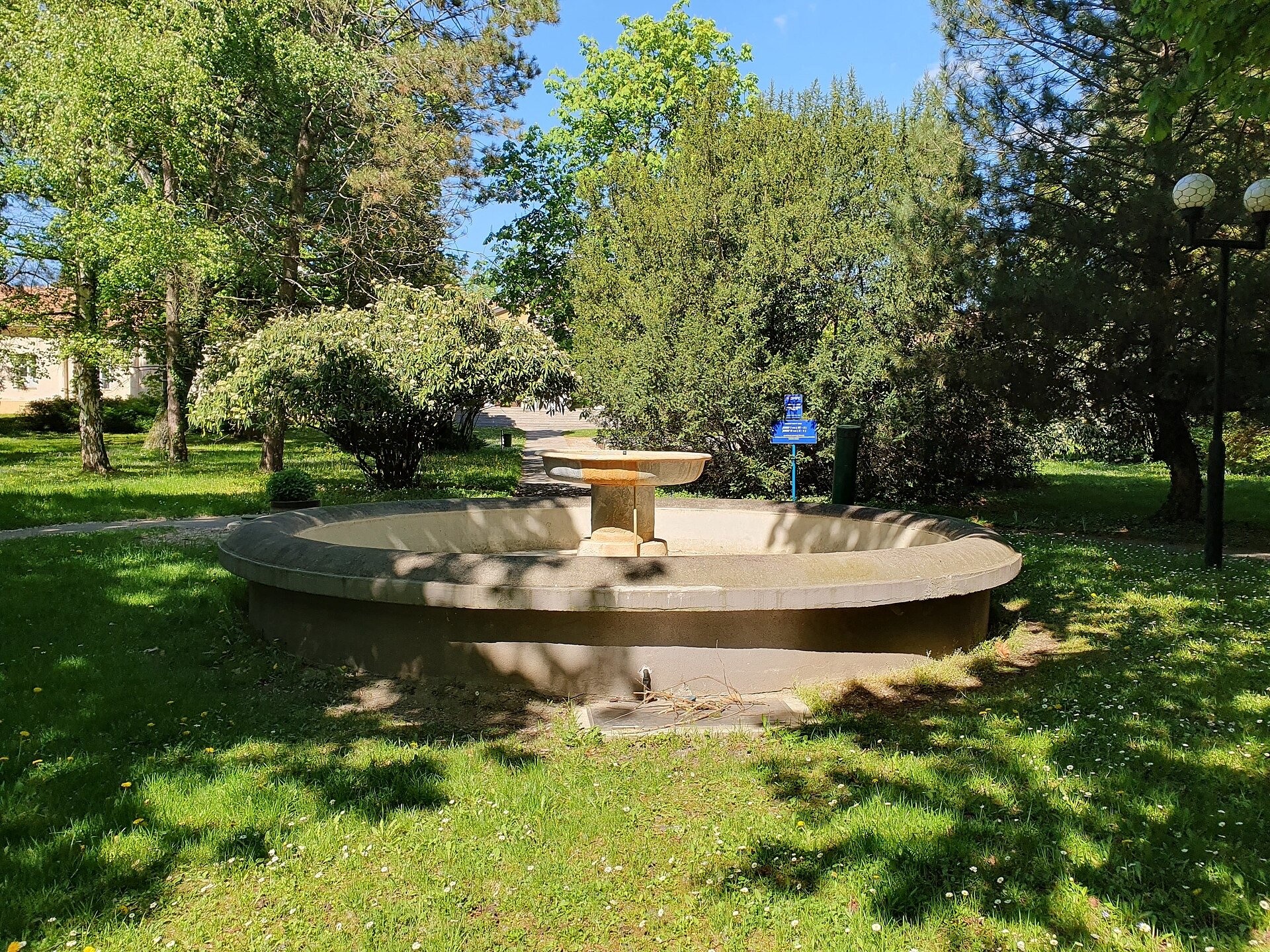
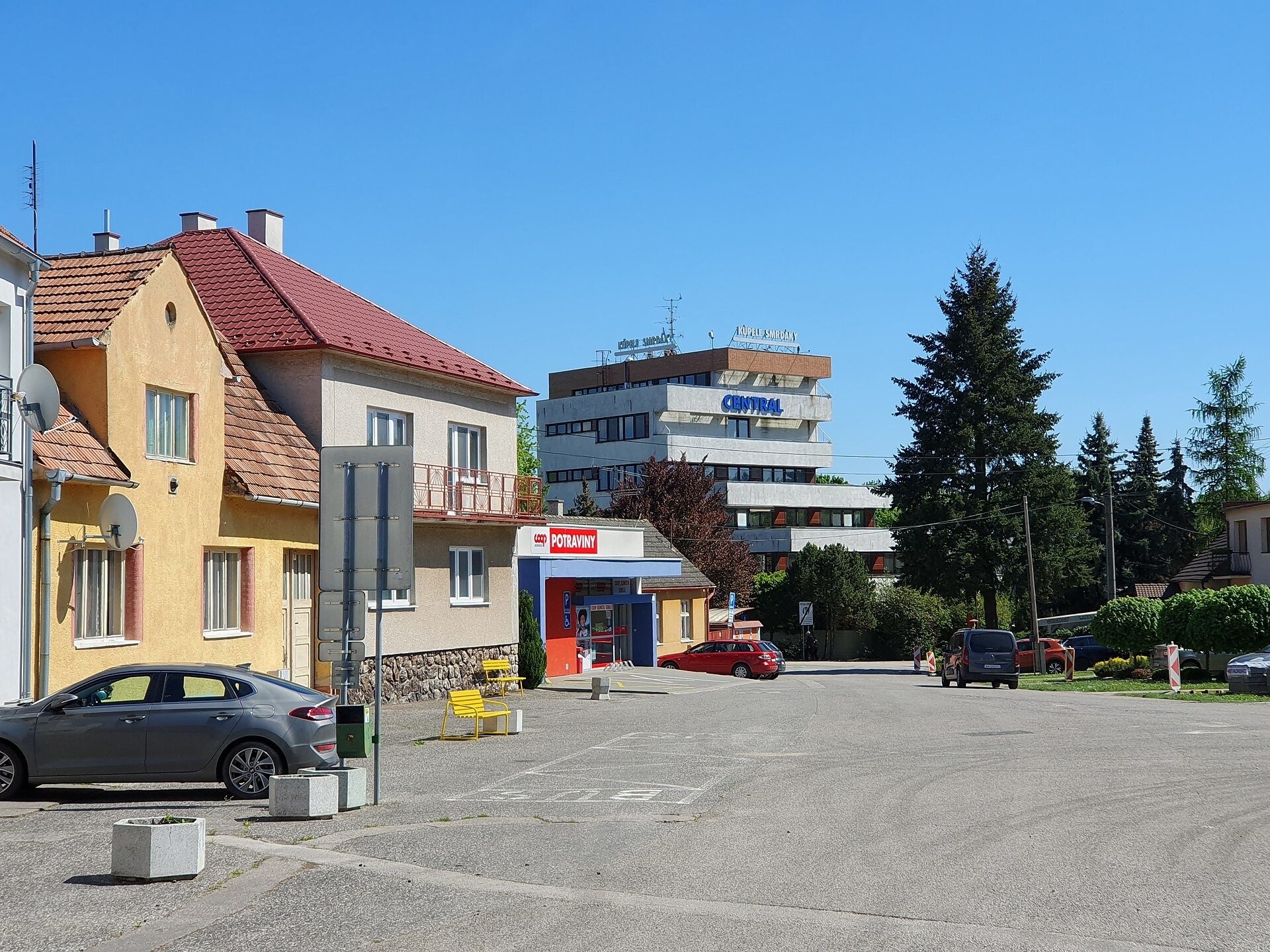
The easiest way to get here is by car or by bus from Senica, which has train and bus connections with Bratislava and Trnava. The spa quarter is compact: the old spa house with its five-column portico, the Centrál, Vietoris and Morava spa houses and a 16-hectare 19th-century landscape park with the neoclassical chapel of St John of Nepomuk (1831) and a fountain. Allow two to three hours for a visit with a procedure; a walk in the park combines well with a bike ride around Záhorie – bikes can be borrowed at the Centrál reception. Contraindications include acute and infectious diseases, pregnancy, microbial eczema and unhealed skin defects. Sample prices are listed in the summary block.
Nearby: trails and other spas
The nearest long-distance hiking route is the Záhorácka magistrála, which runs through the hills and forests of Záhorie. If you are touring Slovak spas, the next stop is Piešťany: the Spa Island, sulphur mud and thermal baths in the Váh valley.
Official website: ensanahotels.com
Photos: Akul59, CC BY-SA 4.0, Wikimedia Commons; ManseLubo, CC BY-SA 4.0, Wikimedia Commons.
Getting there from Ukraine
Border crossings
- Uzhhorod – Vyšné Nemecké — road, 24/7
- Malyi Bereznyi – Ubľa — road, 24/7 For cars and buses; pedestrians not confirmed by the Ukrainian border service, lorries up to 3.5 t.
- Mali Selmentsi – Veľké Slemence (pedestrian) — pedestrian, 09:00–21:00 Kyiv time Pedestrians and cyclists only; inconvenient for the Tatras without onward transport.
- Chop – Čierna nad Tisou (rail) — rail, 24/7
By car
From Uzhhorod to Žilina ≈330 km, ≈4 h 20 min without queues: Uzhhorod – Vyšné Nemecké → I/19 to Košice → D1 via Prešov, Poprad, Liptovský Mikuláš and Ružomberok (≈17 km on I/18 between D1 sections) → Žilina. To Terchová ≈314 km, ≈4 h 15 min: from the D1 onto I/70 and II/583. From Lviv through Poland: M-10 → Krakovets – Korczowa → A4 to Kraków → S7/DK7 to Chyżne – Trstená → R3, I/59 to Dolný Kubín → II/583 via Terchová to Žilina: to Terchová ≈493 km (≈6 h 30 min), to Žilina ≈518 km (≈7 h). Via the tolled A4 Kraków – Katowice, S1 and D3: ≈533 km, ≈6 h 35 min. The D1 requires an e-vignette (eznamka.sk).
Checked 23.10.2026; border crossing hours and timetables change — check before you travel.
Location on the map
Comments
Trails nearby
All trails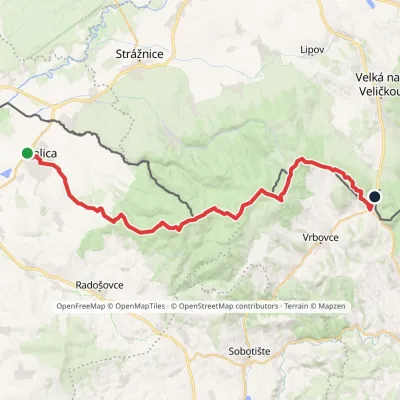 HardMulti-dayMarkedZáhorácka magistrálaElevation profile171–618 m32.5 kmascent 763 m≈ 9.5 h walking9.5 km from Smrdáky: a hydrogen-sulphide spa for skin diseases
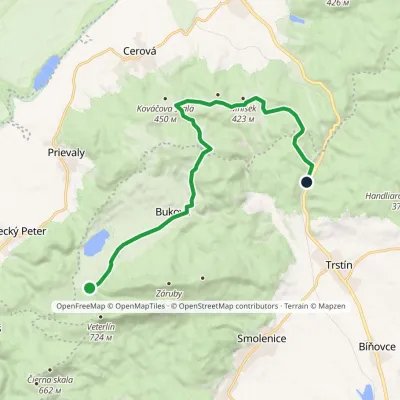 ModerateOne-dayMarkedBrezinky, hut Buková, stopElevation profile243–424 m15.2 kmascent 276 m≈ 4.5 h walking18 km from Smrdáky: a hydrogen-sulphide spa for skin diseases
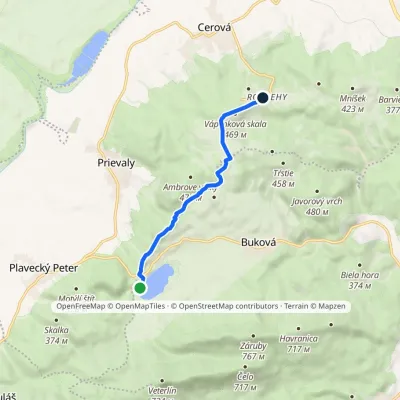 EasyOne-dayMarkedRozbehy Buková Reservoir, damElevation profile288–469 m6.4 kmascent 243 m≈ 2 h walking18 km from Smrdáky: a hydrogen-sulphide spa for skin diseases
Nearby attractions
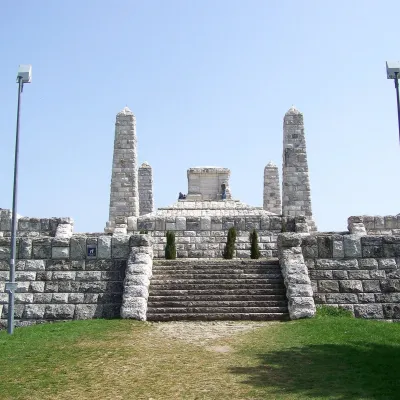 PeakBradloPriepasnéaltitude 543 m20 km from Smrdáky: a hydrogen-sulphide spa for skin diseasesBradlo (Hungarian Bradló) is a 543 m limestone summit, the highest point of the Myjava Hills (Myjavská pahorkatina) in western Slovakia.
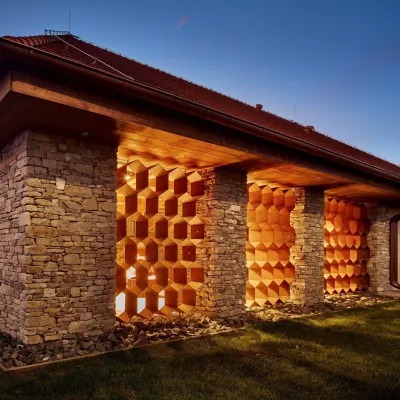 Honey & meaderiesVčelovina meadery, Smolenice: mead and honey beerSmolenice25 km from Smrdáky: a hydrogen-sulphide spa for skin diseasesThis is where the Včelovina meadery works — “a small production with a big heart”, as its founders put it.
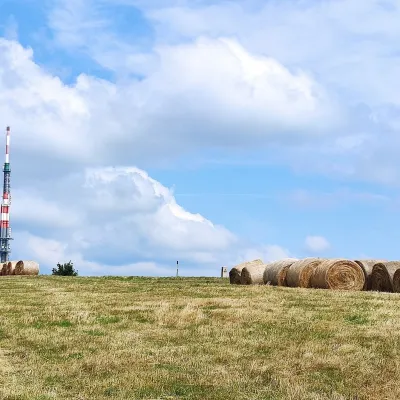 Mountain meadowThe meadows of Veľká Javorina, the highest peak of the White CarpathiansLubinaaltitude 970 m31 km from Smrdáky: a hydrogen-sulphide spa for skin diseasesVeľká Javorina (Czech Velká Javořina, 969.8 m) is the highest mountain of the White Carpathians (Biele Karpaty) on the Slovak–Czech border, about 8 km north of the...
Craft nearby
All craft places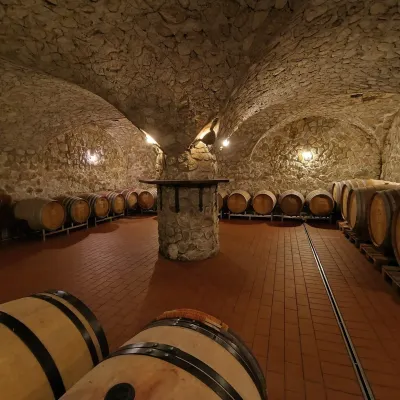 Wine & tastingsMagula Winery, Suchá nad Parnou: biodynamic wines and a farmSuchá nad Parnou36 km from Smrdáky: a hydrogen-sulphide spa for skin diseasesSuchá nad Parnou is a wine village on the south-eastern slopes of the Little Carpathians, near Trnava.
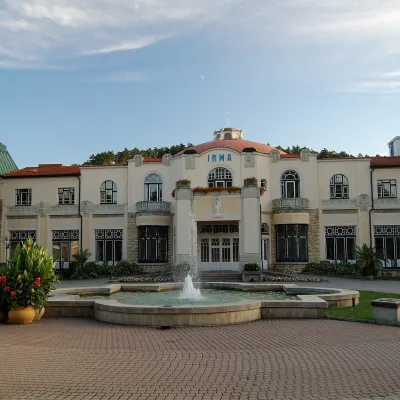 Water parks & thermal poolsPiešťany: the Spa Island, sulphur mud and thermal bathsPiešťany42 km from Smrdáky: a hydrogen-sulphide spa for skin diseasesPiešťany is Slovakia's best-known spa, spread out in the Váh valley between the Považský Inovec and the Little Carpathians.
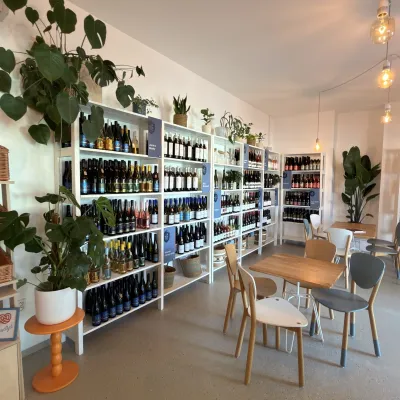 Wine & tastingsJuran z Modry winery: tastings in a Modra wine shopModra43 km from Smrdáky: a hydrogen-sulphide spa for skin diseasesModra is one of the main wine towns of the Little Carpathians: every other courtyard has its own cellar, and rows of vines climb the slopes above the town.
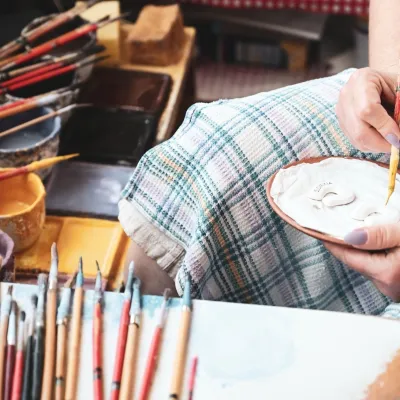 Crafts & workshopsSlovak Folk Majolica in Modra: pottery tour and paintingModra44 km from Smrdáky: a hydrogen-sulphide spa for skin diseasesModra is a small wine town on the eastern slopes of the Little Carpathians, half an hour’s drive from Bratislava.
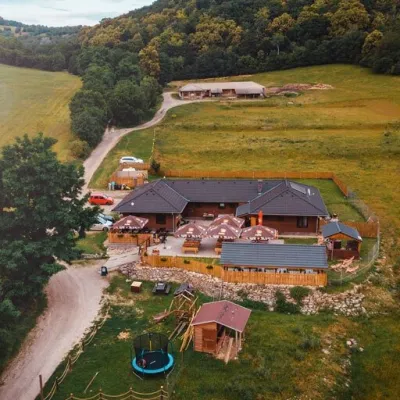 Cheese dairies & pasturesSalaš Beckov: 100% sheep’s cheese and bryndza dumplingsBeckov44 km from Smrdáky: a hydrogen-sulphide spa for skin diseasesA sheep salaš beside one of the Váh valley’s finest castles Beckov is a village in the Váh valley between Nové Mesto nad Váhom and Trenčín, overlooked by the ruins of...
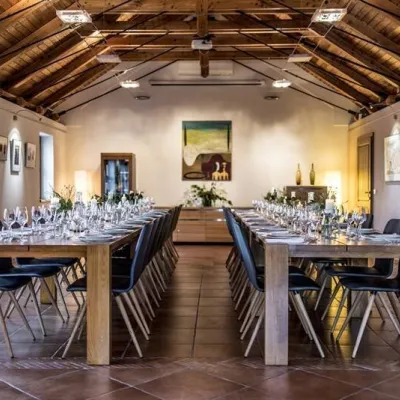 Wine & tastingsKarpatská Perla winery in Šenkvice: tastings and cellarŠenkvice47 km from Smrdáky: a hydrogen-sulphide spa for skin diseasesFrom a home cellar to Winery of the Year Šenkvice is a wine village on the plain below the eastern slopes of the Little Carpathians, between Pezinok and Modra.
