Novyi Rozdil: the town that grew out of sulphur. History, sights and how to get there

Novyi Rozdil is one of the youngest towns in Lviv region. It is just over seventy years old, and it owes its existence not to princes or merchants but to geologists: in 1950 large deposits of native sulphur were found near Rozdil. Within a few years a mining and chemical works, a workers' settlement and then a town with an avenue, schools, a Palace of Culture and its own technical college grew up among the fields and hay meadows. Today about 29,600 people live here (community data for 2023), and the town is the centre of the Novyi Rozdil territorial community in Stryi district.
Here is where Novyi Rozdil came from, what is worth seeing in and around it, how to get there and what the town offers in education.
Where it is, and is it the Carpathians?
To be honest: Novyi Rozdil is not in the mountains. The town lies on the left slope of the Dniester valley, about 3 km from the river, where the Opillia upland meets the Carpathian Foredeep. The landscape is flat to rolling, not mountainous. But the Carpathians are not far: Stryi is about 30 km away as the crow flies, and Skole and the Skole Beskydy National Nature Park about 65 km (further by road). Think of Novyi Rozdil as the Carpathians' front porch, a convenient place to set off for a weekend in the mountains.
Lviv is about 54 km away, Zhydachiv 27 km, and Khodoriv and the Mykolaiv-Dnistrovskyi railway station in Rozvadiv about 18 km each. The Mykolaiv to Khodoriv road runs through the town.
Where the town came from: history
Old Rozdil and the new town
The town took its name from neighbouring Rozdil, an old market town 5 km to the west. A field called «Rozdil» is mentioned in a royal charter of 1462; the word meant a boundary between two villages. In 1569 permission was given to found a town here, and in 1745 King Augustus III granted Rozdil Magdeburg rights and a coat of arms. Today Rozdil is a settlement within the Novyi Rozdil community.
Novyi Rozdil, by contrast, was built on a new site. Construction of the mining and chemical works and the workers' settlement began in 1953, which is considered the year the town was founded. In May 1955 the first residents moved into three apartment blocks, and the first school opened in 1956.
The Sirka works
In 1958 the Rozdil Mining and Chemical Works «Sirka» (Ukrainian for «sulphur») began open-pit mining. On 28 December 1958 the first trainload of products left the works station. A freight railway branch to Khodoriv was built together with the plant. According to the college, in the 1980s the works was one of the largest in Europe.
The town grew with the plant: 2,748 people lived here in 1959 and about 9,400 by 1964. In 1959 it became an urban-type settlement, the Palace of Culture opened on 18 July 1964, and on 7 June 1965 Novyi Rozdil became a town of district significance. In 1972 the village of Malekhiv was added to the town.
A new name and new times
On 13 July 1990 the town council restored the Ukrainian name Novyi Rozdil (instead of Novyi Rozdol), and on 24 March 1992 the Verkhovna Rada confirmed it. On 26 December 2002 Novyi Rozdil became a town of regional significance. It celebrated its 50th anniversary on 25 May 2003 and its 70th in 2023.
In the early 1990s the chemical plants cut production, and later the main sulphur mining stopped. The works left behind quarries, tailings ponds and other sites that need reclamation and environmental monitoring: in 2021, for example, the western dam of tailings pond No. 1 was repaired to keep waste out of the Dniester basin. So we do not recommend swimming in the former quarries; for a day by the water there is Lake Barvinok (see below). The railway branch to Khodoriv closed in the early 2000s and was dismantled in 2011. In 2026 the property of the state enterprise «Sirka» was put up for privatisation.
What to see in Novyi Rozdil
Novyi Rozdil is not a museum town, and it is fair to know that in advance. But it is enough for half a day's walk, especially combined with the palace in Rozdil.
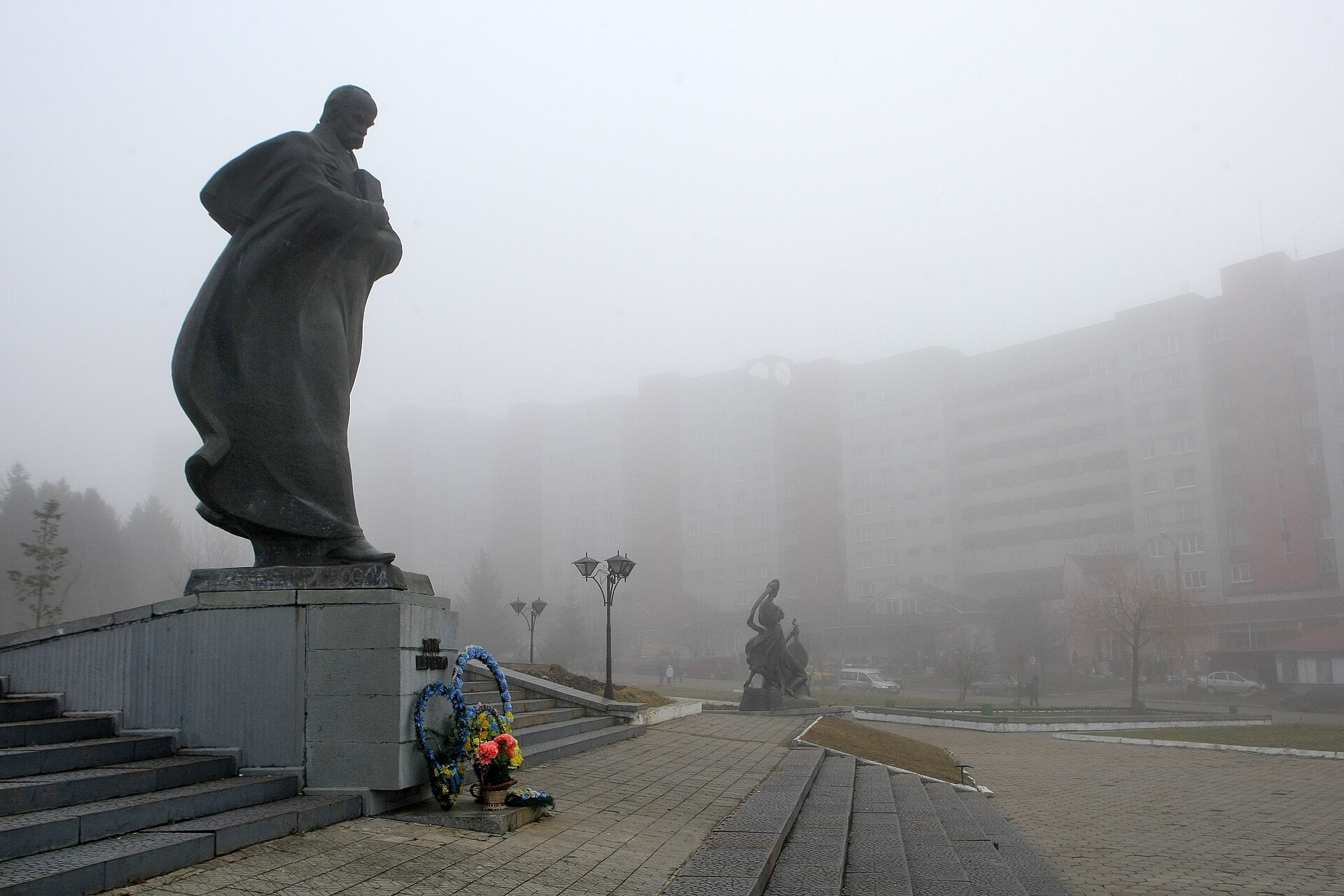
- Monument to Taras Shevchenko. The monumental ensemble was unveiled on 30 November 1997; the sculptors were Vasyl and Volodymyr Odrekhivskyi. It is a listed monument of local significance. According to the local newspaper «Visti Rozdillia», on 29 May 1988, at the unveiling of an earlier monument to the poet, «Glory to Ukraine!» was proclaimed here publicly for the first time in the town.
- The «Song» sculpture, the chapel-monument to the Fighters for Ukraine's Freedom (1993) and a memorial sign to the Heroes of the Heavenly Hundred.
- Monument to Ivan Franko, unveiled on 17 September 2006, when a park was also laid out next to it.
- Churches. The Greek Catholic churches of the Nativity of the Blessed Virgin Mary (construction began in 1989) and of the Protection of the Blessed Virgin Mary, the chapel of St Volodymyr, and the Orthodox Church of St Nicholas (Orthodox Church of Ukraine), built from 1992 and opened on 19 December 2010.
- Halychyna Stadium and the «Football» sculpture: the town loves football, and the legendary Andriy Bal started training at its youth sports school.
- Lake Barvinok. An artificial lake near the town and the village of Hranky-Kuty, created in the 1960s when the Barvinok stream was dammed. It stretches for 2–3 km and is surrounded by forest on three sides; on its shore there is a sandstone outcrop that locals call the «Rock of Love». There is also a forest park and suburban woods around the town, and two small artificial ponds in the centre.
The palace in Rozdil: the main sight nearby
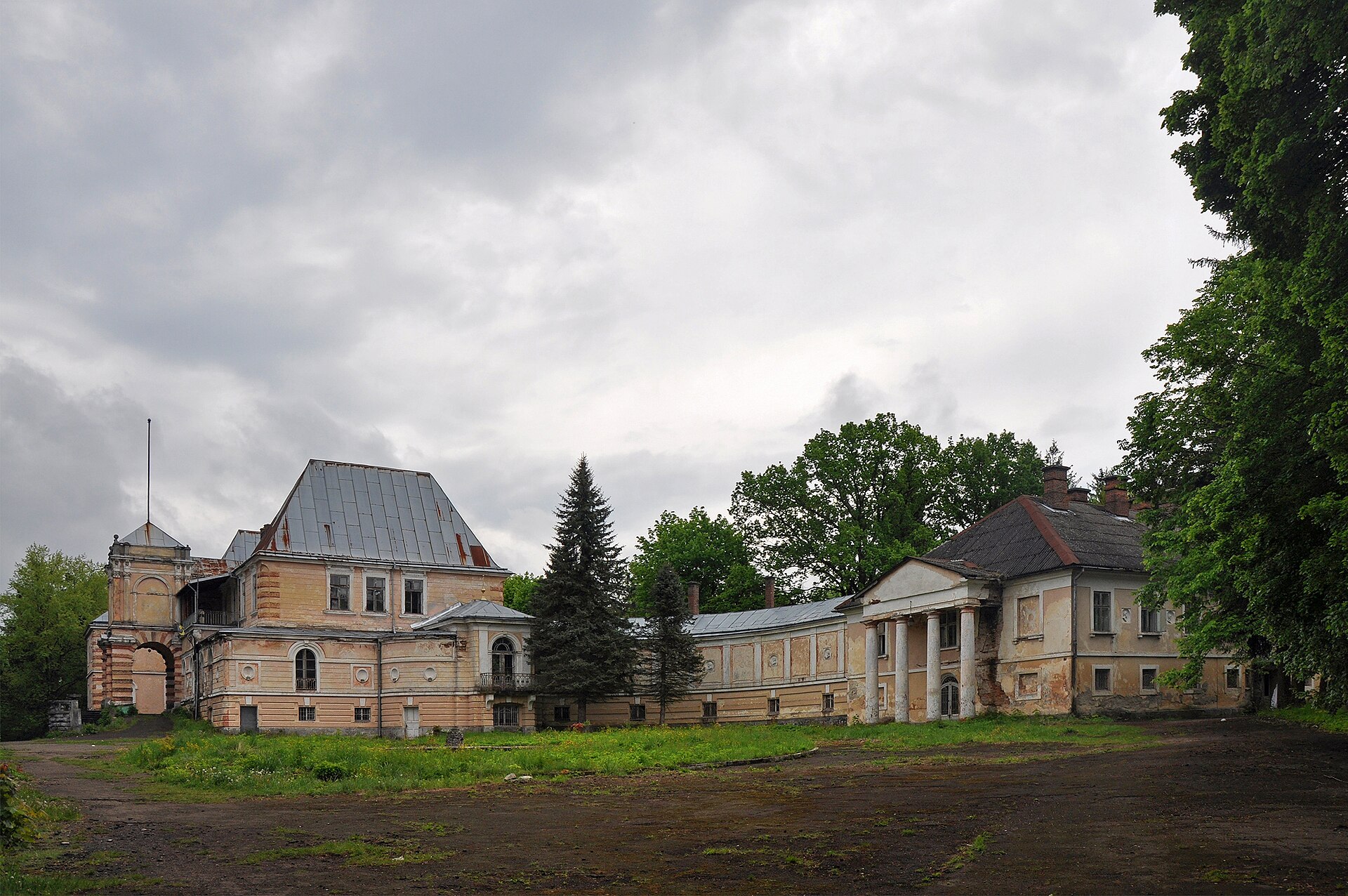
The Rzewuski-Lanckoroński Palace in Rozdil. Photo: Rbrechko (Roman Brechko), CC BY-SA 4.0, Wikimedia Commons
Five kilometres from Novyi Rozdil, in the settlement of Rozdil, stands the Rzewuski-Lanckoroński Palace, also known as Frankopil. Around 1740 the owner of Rozdil, Michał Józef Rzewuski, built it and named it after his wife Franciszka. The architect Bernard Meretyn, the sculptor known in the sources as «Jan Getner» and the painter Szymon Jaremkiewicz worked on its decoration — names associated with Galician Baroque.
The estate later passed to the Lanckoroński family, who owned it until 1939. Under Karol Lanckoroński, a noted art collector, the palace was rebuilt in the Neo-Renaissance style to a design by the Lviv architect Julian Zachariewicz; it had a library of 20,000 volumes, and a park of more than seven hectares was laid out around it, now part of Ukraine's nature reserve fund. After the Second World War the valuables were taken away, the palace housed an orphanage and then a sanatorium, which operated until 2004.
Years of decline followed, and in 2023 the palace was bought at a privatisation auction by EFI Group, which announced a restoration. Before you go, check whether the grounds are open: the palace and park can be seen from outside, but ask in advance about tours of the interiors.
Education: the college, lyceums and an arts school
Novyi Rozdil's schools grew together with the town, because the works needed trained staff.
Novyi Rozdil Polytechnic Professional College (8 Stepana Bandery St; official website nrpk.lviv.ua) is the former polytechnic technical school («technikum»). According to the college itself, its history begins on 30 April 1965, when the Lviv Economic Council created the Rozdil Evening Chemical-Technological Technikum to train staff for the sulphur works. At first it worked on the plant premises and moved into its current building in 1972. In 1976 it was renamed Novyi Rozdil Polytechnic Technikum, in 1991 it was transferred to the Ministry of Education of Ukraine, in 2008 it became the State Higher Educational Institution «Novyi Rozdil Polytechnic College», and it has had its present name since 2020. The town newspaper «Visti Rozdillia», in its chronicle of the town, gives 1 September 1971 as the opening date of the polytechnic technikum. Today the college trains professional junior bachelors in Marketing, Computer Engineering, Electrical Engineering and Automotive Transport. It also keeps an online Book of Memory of its graduates who fell defending Ukraine.
The town also has the Volodymyr Trush Lyceum (the former first school, opened in 1956), the Novyi Rozdil Vocational Lyceum (until 2005 vocational school No. 5, enrolling since 1969), a vocational lyceum of construction and services, several general schools, a centre for children's creativity, a youth sports school and the Oleh Rudnytskyi Children's School of Arts. The music school opened in 1965 and in 1981, according to «Visti Rozdillia», became the first school of arts in Ukraine.
Notable people
Novyi Rozdil is the birthplace of TV presenter and actor Yurii Horbunov, TV presenter and writer Olha Freimut, and media manager Volodymyr Borodianskyi, Ukraine's Minister of Culture, Youth and Sports in 2019–2020. Much of the childhood of Andriy Kuzmenko (Kuzma Skryabin) was spent here; he went to the local school No. 4. Footballer and coach Andriy Bal, a UEFA Cup Winners' Cup winner, was born in neighbouring Rozdil and started playing in the football section of the Novyi Rozdil youth sports school in 1969.
How to get to Novyi Rozdil
- By car from Lviv: about 54 km, usually via Mykolaiv. The Mykolaiv to Khodoriv road runs through the town.
- By bus: today the town is served only by road, with buses and minibuses. Check the timetable the day before at the bus station or on ticket websites.
- By train: to Mykolaiv-Dnistrovskyi (in Rozvadiv) or Khodoriv stations, both about 18 km away, then by bus or taxi. Novyi Rozdil has no passenger railway of its own.
If you are heading on into the mountains, have a look at our map of the Carpathians with trails, peaks and places to stay: the first trails of the Skole Beskydy are not far from Novyi Rozdil.
Karpaty.rocks founder Vitalii Kindrakevych studied at the Novyi Rozdil Polytechnic Technikum in 1996–1999.
Frequently asked questions
When was Novyi Rozdil founded?
In 1953, when construction of the mining and chemical works and the workers' settlement began. It became an urban-type settlement in 1959 and a town on 7 June 1965. Novyi Rozdil celebrated its 70th anniversary in 2023.
Is Novyi Rozdil in the Carpathians?
No. The town lies in the Dniester valley where the Opillia upland meets the Carpathian foothills, and the landscape is flat to rolling. Stryi is about 30 km away as the crow flies, the Skole Beskydy about 65 km.
How is Novyi Rozdil different from Rozdil?
Rozdil is an old market town with Magdeburg rights from 1745 and the Rzewuski-Lanckoroński Palace; today it is a settlement. Novyi Rozdil was built from 1953 on a new site 5 km to the east and named after its neighbour.
What is there to see in and around Novyi Rozdil?
The Taras Shevchenko monument (1997), the churches of the Nativity of the Blessed Virgin Mary and of St Nicholas, the park by the Ivan Franko monument, Lake Barvinok with the «Rock of Love», and, 5 km away, the Rzewuski-Lanckoroński Palace and park in Rozdil.
What is the former Novyi Rozdil technikum called now?
It is now the Novyi Rozdil Polytechnic Professional College (8 Stepana Bandery St, website nrpk.lviv.ua). Its history goes back to 1965, when an evening chemical-technological technikum was created; it was called a polytechnic technikum from 1976 to 2008.
Cover photo: monument to Taras Shevchenko in Novyi Rozdil. Author: Волтарс (Voltars), CC BY-SA 4.0, Wikimedia Commons.
Sources
- Новороздільський політехнічний фаховий коледж — «Інформація про коледж / Історія коледжу»
- Osvita.ua — Новороздільський політехнічний фаховий коледж
- Єсауленко О. П. Новий Розділ // Енциклопедія Сучасної України. — Т. 23. — 2021
- «Вісті Розділля»: «Новий Розділ — віхи поступу: 1953–2023 рр.» (29.05.2023)
- Вікіпедія — Новий Розділ
- Вікіпедія — Палац Жевуських-Лянцкоронських
- Вікіпедія — Розділ (селище)
- Вікіпедія — Барвінок (озеро)
All sources accessed on 30 October 2026 (Ukrainian-language pages).
Comments
Places from the article
 RiverDniesterVovcheThe Dniester is one of the most famous and largest rivers in Ukraine. The Dniester has been used as an important...
 SightPalace of the Lanczkoronski'sLviv regionThe Lianzkoronski Palace is located in the village of Rozdil, Stryi district, Lviv region, Ukraine.
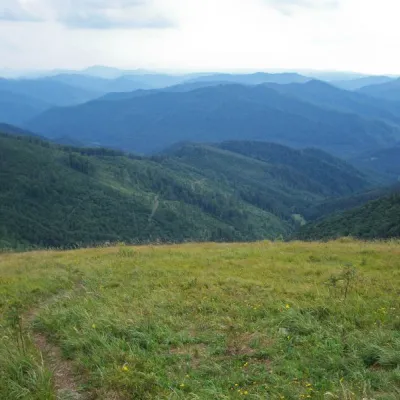 SightSkole Beskydy National Nature ParkSkoleSkole Beskydy is a land of rugged, majestic mountains that proudly stretch over 35 thousand hectares.
Where to stay nearby
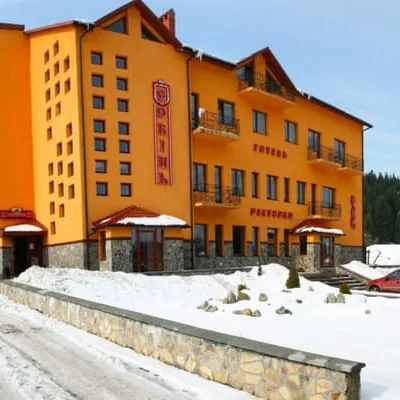 HotelSobin'TurkaSaunaBBQParkingfrom 1 200 UAH per night
 HotelMagnatStryiParkingWi‑FiPetsfrom 650 UAH per night
 HotelZarinekSkolePoolSaunaBBQfrom 1 100 UAH per night
 HostelДомашній ЗатишокStryiParkingWi‑FiPetsfrom 600 UAH per night
 HotelHirkaSkoleSaunaBBQParkingfrom 1 100 UAH per night
 MotelCherturSambirHot tubPoolSaunafrom 1 700 UAH per night
Trails nearby
 ModerateTwo-daySkole to Kamianka Waterfallvia Mount LopataElevation profile447–1 211 m18 kmascent 823 m≈ 6 h walking
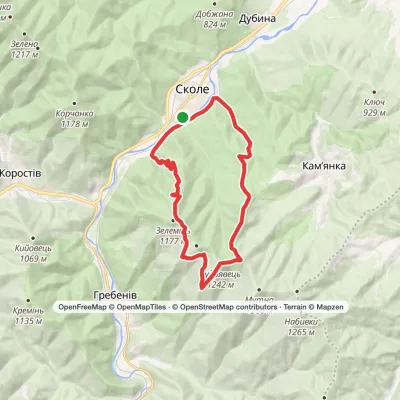 HardTwo-daySkole loopvia Mount Kudriavets, Mount LopataElevation profile437–1 242 m21.2 kmascent 986 m≈ 7.5 h walking
 ModerateTwo-dayMarkedSkole loopvia Mount LopataElevation profile437–1 211 m17.3 kmascent 766 m≈ 6 h walking
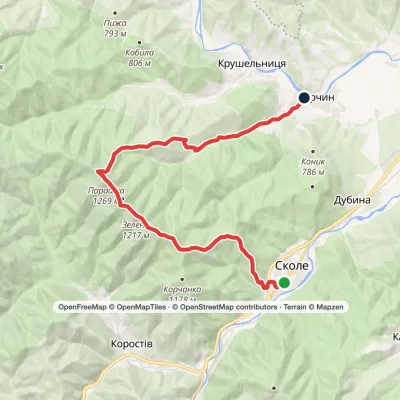 HardTwo-dayMarkedSkole to Korchyn villagevia Mount Parashka, Hurkalo WaterfallElevation profile400–1 268 m22 kmascent 964 m≈ 7.5 h walking
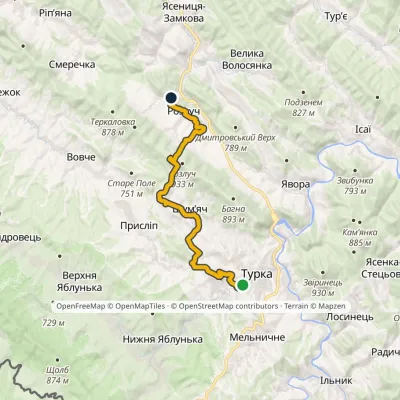 ModerateTwo-dayMarkedNo. 5001-1 Turka Rozluchvia source of the DniesterElevation profile539–907 m19 kmascent 568 m≈ 6 h walking
 HardMulti-daySkole loopvia Mount Lopata, Mount Khom +3Elevation profile418–1 260 m31.4 kmascent 1 006 m≈ 10 h walking
You may also be interested in
All articles Parashka – one of the highest mountains in Lviv regionЗ Парашкою у багатьох із нас особливі спогади. Будучи найближчою до Львова горою, вона не для одного майбутнього туриста стала однією з...
 Unique and Mysterious Lake ZhurovlyneЖуравлине – унікальне та водночас таємниче озеро, яке надзвичайно багате на сірководень. Навколо нього розкинулась болотиста місцевість,...
 Kamianets Waterfall in the National Park "Skole Beskids"Гучні потоки Кам’янецького водоспаду, розташованому в Національному природному парку «Сколівські Бескиди», чути здаля. Завдяки такому...
