Museum of the History of the City of Bolekhiv named after Roman Skvoriya, Bolekhiv
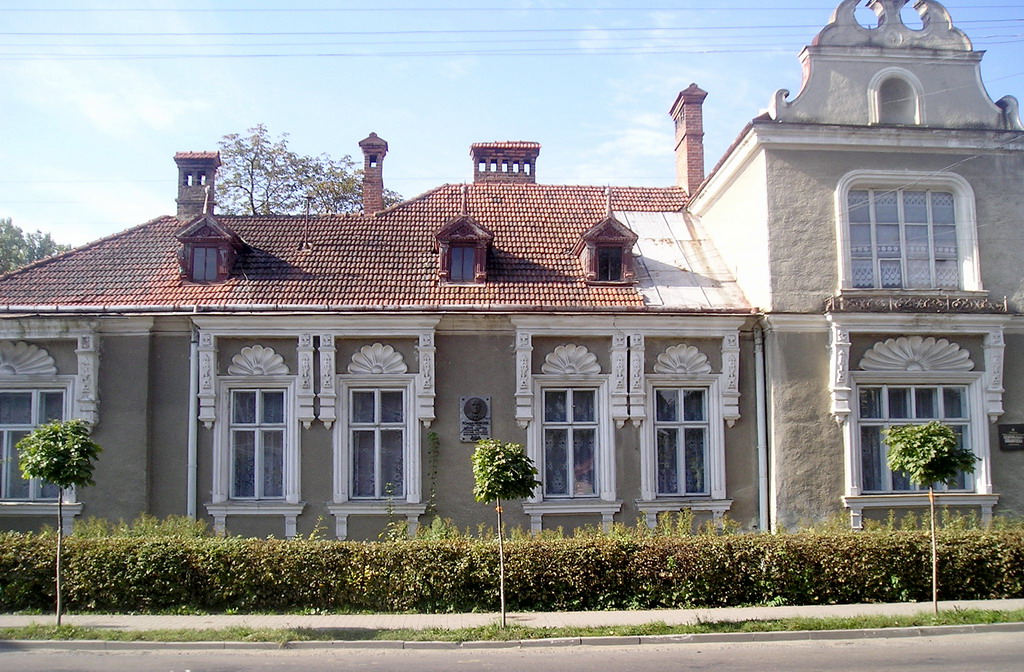
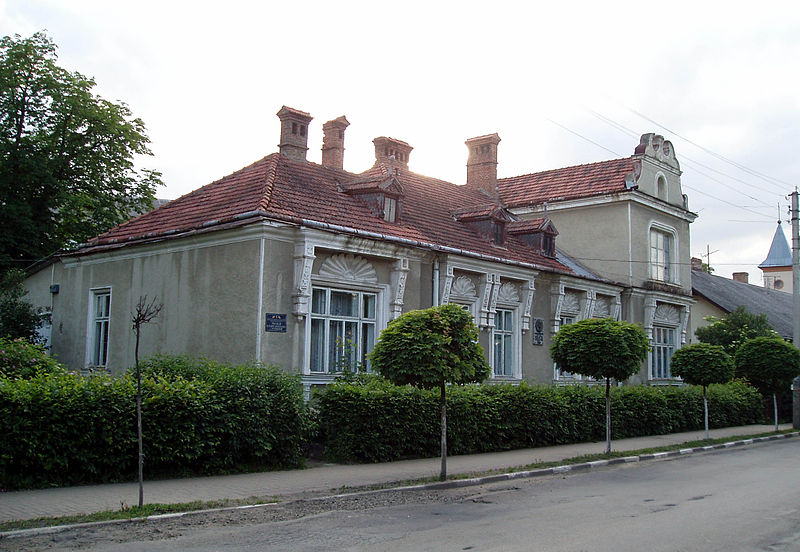
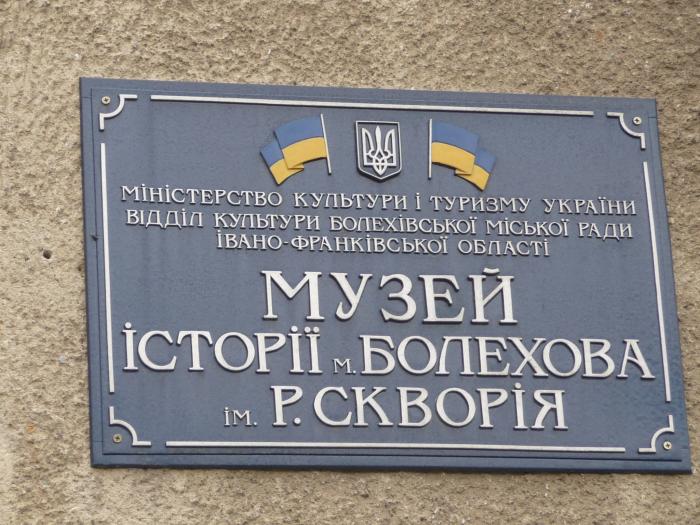
It was founded on November 28, 1967, by the local historian and enthusiast Roman Teodorovych Skvoriya. The impetus for the collecting work was the preparation for the 40th anniversary of the death of Natalia Kobrynska, which fell in January 1960. For over 30 years, the work of this writer and public figure in Bolekhiv and beyond left a deep mark in the memory of many generations. In 1964, a local history room began operating at the library.
In 1970, the museum was awarded the title of People's Museum. Publications about its local history work appeared in "Ukrainian Historical Journal", the journal "Ukrainian Language and Literature in School", the newspaper "Literary Ukraine", and in district and local press. The collected materials were presented to the public through publications in the press of local history studies. In 1987, an order was issued for the reconstruction of the local history museum into a museum of the history of the city.
The local history work of the museum gained publicity and popularity, evidenced by the arrival of new unique items for the exhibition: fragments of handwritten liturgical books from the 17th century from the ancient monastery and church of the village of Dovzhky, a series of photographs from the period of the stay of the famous Ukrainian sculptor Mykhailo Chereshniov in Bolekhiv (1939-1944), and Metropolitan Andrey Sheptytsky (1909). A valuable gift was received from Stryi – sheet music written by T. Bobrynskiy for an emigration song, with the personal stamp of N. Kobrynska.
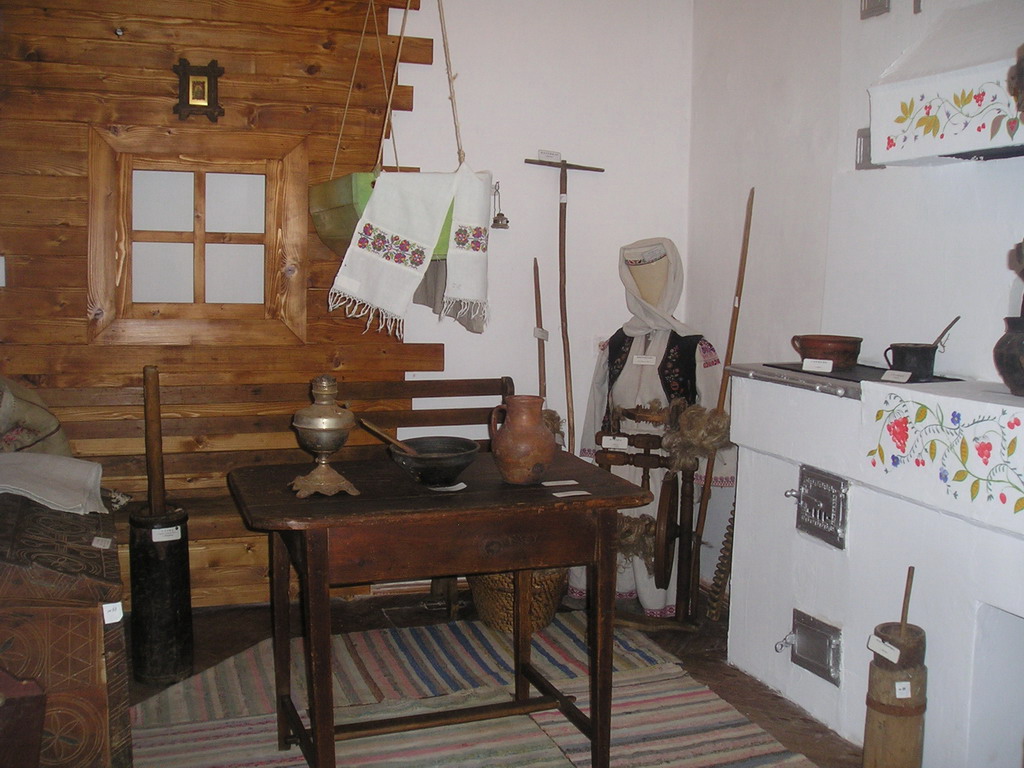
On April 14, 1999, according to the order of the Department of Culture of the Ivano-Frankivsk Regional State Administration, the museum became a state museum. It is located in six halls. The exhibition consists of the following sections: "History of the City of Bolekhiv"; "Boyko Room"; "Development of Industry, Education, and Culture in the 20-30s of the 20th Century"; "World War II, Victims of Fascist and Bolshevik Occupation"; "National and Spiritual Revival of Our Region"; "The Struggle of the Ukrainian People for the Establishment of Their Statehood".
In addition, in the basement of the museum building, there is a memorial prison where Bolekhiv residents and residents of surrounding villages were punished from 1944 to 1947. During this time, dozens and dozens passed through the group cell, as evidenced by various inscriptions on the walls of the basement.
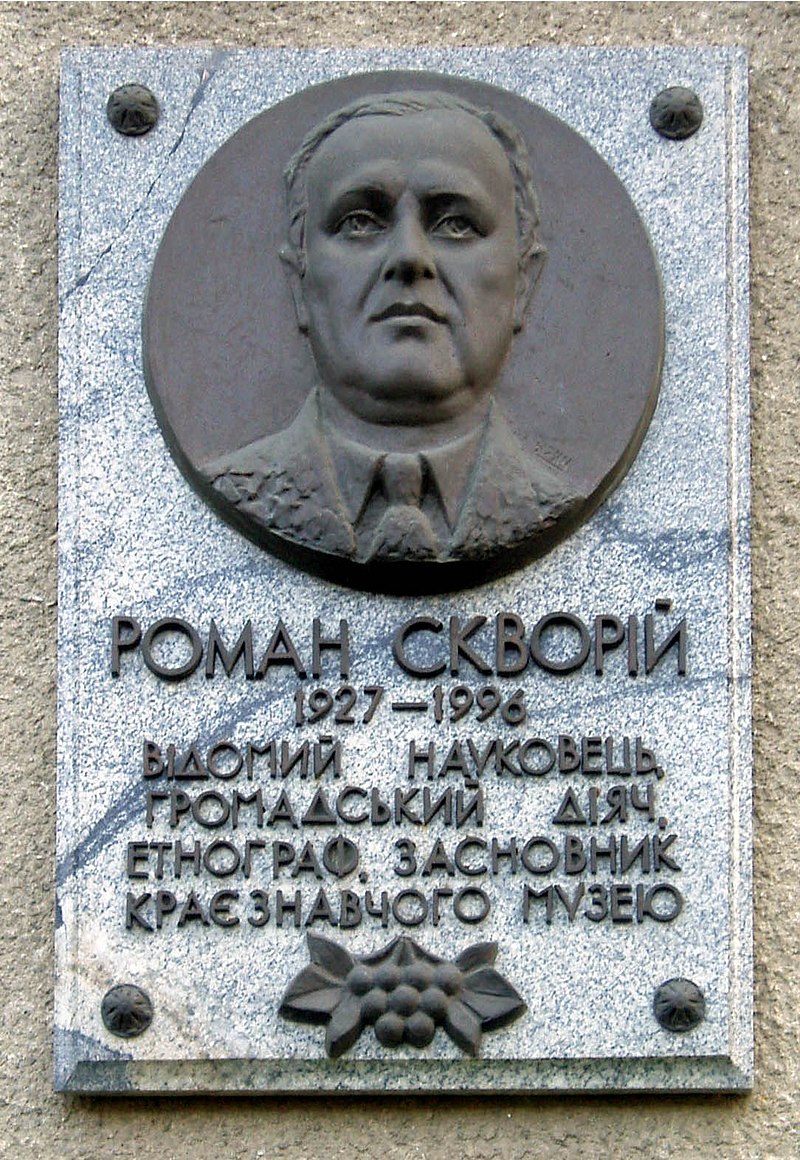
The locals highly appreciated the tireless work of R. Skvoriya. On the occasion of the 70th anniversary of his birth and the 30th anniversary of the museum, a memorial plaque was installed on the library building where he worked for a long time. According to the decision of the 11th session of the Bolekhiv City Council on February 7, 2007, "On Honoring the Memory of Roman Skvoriya", the museum of the history of the city of Bolekhiv was named after its founder. The museum staff conducts overview and thematic excursions, literary hours and consultations, local history and ethnography lessons, various exhibitions, and conferences.
The year 2005 was declared the year of Natalia Kobrynska in Bolekhiv. On October 16, 2005, a new building of the museum was opened with an exhibition about the famous Galician writer and public figure Natalia Kobrynska. The exhibition includes the following sections: "Beloluy", "Bolekhiv in the Time of Natalia Kobrynska"; "Natalia Kobrynska Among Contemporaries"; "Memorial Corner"; "Bolekhiv Honors the Memory of the Writer"; "Natalia Kobrynska and the Sich Riflemen"; "Natalia Kobrynska and Ivan Franko".
Working days: Sunday – Friday. Day off: Saturday. Working hours: from 8:00 to 17:00; Sunday: from 9:00 to 16:00. Free admission. For groups - 30 UAH. Video shooting - 30 UAH. Photo shooting - 20 UAH.
The museum has been included in the list of objects checked for accessibility for people with disabilities.
Roman Skvoriya. He Lived by the Call of the Soul and Heart
At the museum of the history of the city of Bolekhiv, they spoke about a person of pure conscience, extraordinary fate, and unique talent - Roman Skvoriya (Skvoriya). He dedicated many decades of diligent work to the establishment and development of the museum. Here, his talent as a local historian, publicist, writer, and public figure flourished.
Volodymyr Rudyy (this is the real surname of Roman Skvoriya) was born and raised in Kulychiv - a small village in Sokalschyna. Roman Skvoriya's path to self-affirmation was not easy. The material hardships of the post-war period, suspicions and persecutions, the lack of reliable personal documents - are just part of his trials. Thanks to good people and loyal friends, he managed to survive and obtain an education. After graduating from the Lviv Culture and Arts College, he moved to work in Bolekhiv in 1951. Since then, he has forever been connected with the Boyko region. His "Song about Bolekhiv" radiates sincere love for our city. It first sounded at the grand celebration of its 620th anniversary, and in 2002 it was recognized as the anthem of Bolekhiv.
In conversations, R. Skvoriya never mentioned his past and his relatives. When he began to be called Roman Skvoriya, he accepted this change as another opportunity to protect himself from the watchful eye of suspicious informants. Local history became the only possible way for Roman Skvoriya to understand and popularize Ukrainian history and cultural heritage. He researched the past of the entire Dolyn region but dreamed of recreating the chronicle of his native Kulychiv. From his love for Ukraine, experience, and hard work, the museum of our city was born, containing evidence of the material and spiritual culture of Bolekhiv and its surroundings, memories, publications, and photographs about the life and work of the famous writer, organizer of the women's movement Natalia Kobrynska.
Roman Skvoriya's interest in the past of the Ukrainian people did not coincide with communist ideology and the history imposed by it. The authorities restored covert surveillance over him. Three years after the museum was granted the status of a people's museum, it was closed under the pretext of reconstructing the exhibitions, and the founder and director were removed from their beloved work.
However, Roman Skvoriya did not stop his research: he collected ethnographic materials, memories, and photographic evidence of the liberation struggle in our region, worked in archives, organized the collected information, and published articles in periodicals. He studied the unique monument of Ukrainian writing "The Tale of Igor's Campaign", made a poetic translation, and provided his explanations of the text. Yaroslav Isayevych, in his review of the manuscript of the translation of "The Tale...", wrote: "The translation by the well-known local historian, founder of the Bolekhiv People's Museum R. T. Skvoriya will be new and original among Ukrainian translations. Not following any previous translations, the author combines a desire for accuracy with undeniable artistry. If we perceive "The Tale" as a poem, this is determined not only by the poetic nature of the imagery system but also by the rhythmic structure of the text. The translator did not deviate from the spirit of the original, caring for the rhythm, melodic alternation of stresses. There are also dubious places - but in which translation are there none? Departing at times from generally accepted interpretations, the author of the new translation sharpens our attention to the multifaceted nature of the content, contributing to the search for more perfect equivalents."
The late 80s - early 90s of the last century witnessed the revival of state-building processes in Ukraine. The most active participant and leader of this movement in Bolekhivshchyna was R. Skvoriya. What he had always dreamed of - a free and independent state - was beginning to be realized. Then "Prosvita" was revived, and the Union of Ukrainian Women was created, establishing close cooperation with educational and cultural institutions.
The revival of spirituality, historical memory, and cultural heritage were the common steps of the Bolekhiv community, which sought to become part of the Ukrainian nation. These aspirations manifested in numerous rallies and gatherings, honoring famous people of the region, and celebrating anniversaries. One of such large-scale celebrations was the opening of the monument to Natalia Kobrynska in June 1990. That day, the song about Kobrynska "Stages of Pain and Struggle" was first performed, co-authored by R. Skvoriya, with music composed by Vasyl Stetsyk from Dolyna.
Thanks to Roman Skvoriya, the residents of Bolekhiv celebrated its 620th anniversary for the first time in the city's history. At his suggestion, the coat of arms of our city was approved, and old and new street names related to Ukrainian history were restored and given. His contribution to the realization of the book "On the Horizons of Bolekhiv" initiated the creation of a fund for the construction of a monument to Ivan Franko in Bolekhiv. R. Skvoriya took care that the unique natural monument "Dovbush Rocks" gained state status as a monument of history and culture. At his initiative, a monument to N. Kobrynska was erected, and her grave was restored. In the Voloshsky cemetery of Bolekhiv, he found the grave of priest and writer Mykhailo Petrushevych.
While working at the library, Roman Skvoriya was interested in the interests of readers, especially young people, he could listen to everyone, and his interlocutors valued his opinion. Perhaps that is why so many sincere and grateful words were left to his colleague in poetic lines by Yuriy Pronenko, Vasyl Oliinyk, Vasyl Shchehliuk, Stepan Barabash.
In the memory of the poet-educator Vasyl Oliinyk, R. Skvoriya forever remained a life-loving person, a person with strong convictions, a connoisseur of history and literature. Here is how he remembered our fellow countryman: "Roman Skvoriya was well known in Bolekhiv, respected in Dolyna. It was an honor to communicate with him in the scientific circles of Ivano-Frankivsk, Lviv. Always friendly, judicious, meticulous about everything happening in society, he had an indispensable authority among his colleagues at work, friends, and neighbors."
Roman Skvoriya possessed a great gift of persuasion. Among the gifted youth, he sought followers. Under his influence, some of them radically changed their interests and preferences, even their occupation or profession.
Lyudmyla Freyiv, director of the Dolyna Centralized Library System, always recalled her colleague with warmth: "In work, he was unparalleled, truly a professor, a people's academician. They say that there are no irreplaceable people, but the absence of our teacher and advisor is felt even today. We turned to him for experience and learned not only the profession but also devotion to the cause, thrift, and humanity..."
Skvoriya was a deputy of the district council of the first democratic convocation, chairman of the coordinating council of political parties and public organizations. Oleg Dudary, former chairman of the Dolyna District Council, who has known Roman Skvoriya since the creation of the Society of the Ukrainian Language in 1989, remembered him as a well-informed person: "I turned to him for advice. In those years, as now, wise words mattered a lot. The acceptance of many decisions depended precisely on the balanced and convincing words of Roman Teodorovych. He was a deputy that is lacking today. He could not stand aside from the processes occurring in the country and devoted himself to them with all his heart. You could rely on Roman Skvoriya in any matter; he knew how to defend his position."
More than 30 years of research work by R. Skvoriya made a significant contribution to local history. He started with the history of the life of one person - Natalia Kobrynska, but opened for us the history of centuries that reaches far into the past. He managed to outline his many years of research in studies: "On the Horizons of Bolekhiv", "The Riddle of Bubnyshche?", "In Bolekhiv Battles", "Echoes of the Middle Ages", "Ozarkevychi - the Family of Activists", in numerous articles on local history topics. For his long-term activity and significant contribution to the preservation of historical and cultural heritage and natural treasures of Ukraine, he was recognized as a laureate of the regional award named after Ivan Vahylevych in the field of local history (1992) and posthumously awarded the title of "Honorary Member of the Union of Local Historians of Prykarpattia" (1996). Five years ago, a documentary film "In the Mirrors of Eternity..." (director Roman Sobol) was created about R. Skvoriya, which reflects the entire life path of our fellow countryman.
In the last years of his life, he worked a lot, trying to accomplish as much as possible. He hoped to finish writing his memoirs. But it was not meant to be... He unexpectedly passed away on February 20, 1996.
Time inexorably takes away from us the best people - hardworking and selfless, talented and authoritative. From the distance of years, we understand the value of their scientific, creative, and spiritual heritage. Roman Skvoriya will always be remembered by his research books, the street named after him, the memorial plaque on the library building where he worked. And the museum of the history of the city of Bolekhiv named after Roman Skvoriya is one of the best museums of Prykarpattia, which this year will celebrate its half-century anniversary.
Halyna SKVORII-YAKYMYV. Scientific employee of the museum of the history of the city of Bolekhiv named after Roman Skvoriya
Important information! - Experienced guides from the “Boykivshchyna” Museum (Dolyna) will help organize excursion tours of Dolynshchyna if you want to see the Museum of the Insurgent's Hideout in Dolyna, the old salt factory, the bunker where Ukrainian nationalists hid, the Carpathian tram in Vygoda, the Dovbush Rocks in Bubnyshche, the Shirkovets Swamp and the Mizun Waterfalls near Novyi Mizun, or the Hoshiv Monastery, Ivan Franko Museum in the village of Lolin.
Video
 Болехів з висоти пташиного польотуIgor Gataylo
Location on the map
Comments
Places to stay nearby
All stays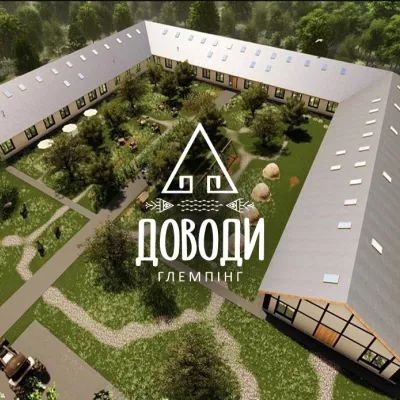 CottageGlamping "DOVODY"Tukholka8.2 km from Museum of the History of the City of Bolekhiv named after Roman Skvoriya, BolekhivGlamping "DOVODY" is the best place for a family vacation. Our glamping is a space of harmony, tranquility, and family relaxation.Nearby: Natalia Kobrynska Museum 6.4 kmCentral pump room 6.5 km
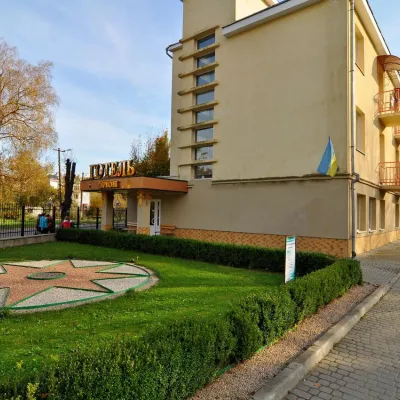 HotelHotel "Orion" MorshynMorshyn8.6 km from Museum of the History of the City of Bolekhiv named after Roman Skvoriya, BolekhivSaunaSPAKidsNearby: Central pump room 200 mNatalia Kobrynska Museum 7.6 km
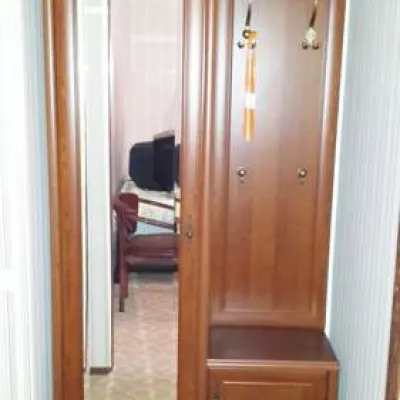 HotelHotel "Villa Anna"Morshyn8.7 km from Museum of the History of the City of Bolekhiv named after Roman Skvoriya, BolekhivParkingNearby: Central pump room 100 mNatalia Kobrynska Museum 7.7 km
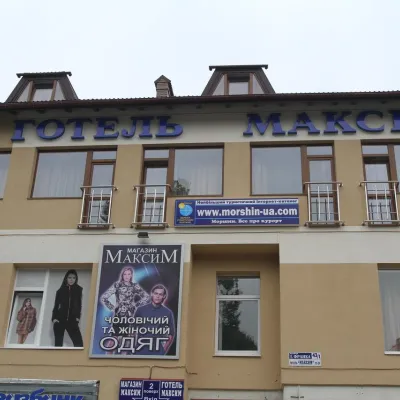 HotelHotel "Maksym"Morshyn8.8 km from Museum of the History of the City of Bolekhiv named after Roman Skvoriya, BolekhivParkingNearby: Central pump room 100 mNatalia Kobrynska Museum 7.8 km
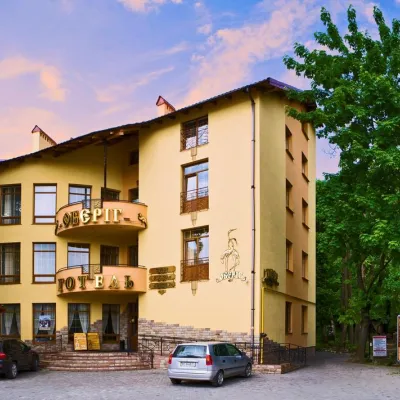 HotelHotel "Oberih" in MorshynMorshyn9.2 km from Museum of the History of the City of Bolekhiv named after Roman Skvoriya, BolekhivTransferNearby: Central pump room 500 mNatalia Kobrynska Museum 8.1 km
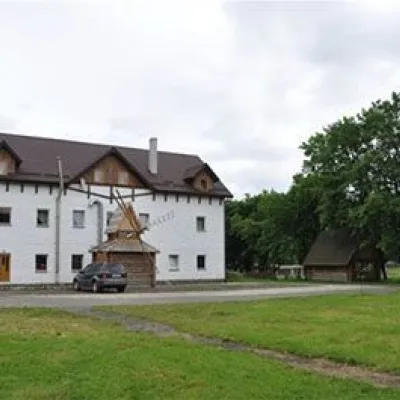 HotelTourist and Recreation Complex "U Dovbusha"Polianytsia11 km from Museum of the History of the City of Bolekhiv named after Roman Skvoriya, BolekhivHot tubSaunaBBQNearby: Mountain Polyanytske Lake 5.8 kmSukil Waterfalls 7.7 km
Trails nearby
All trails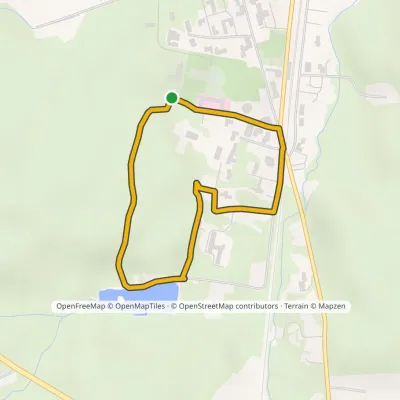 EasyOne-dayMarkedNo. 5006 Morshyn: Nordic walkingElevation profile333–370 m3.1 kmascent 25 m≈ 45 min walking7.8 km from Museum of the History of the City of Bolekhiv named after Roman Skvoriya, Bolekhiv
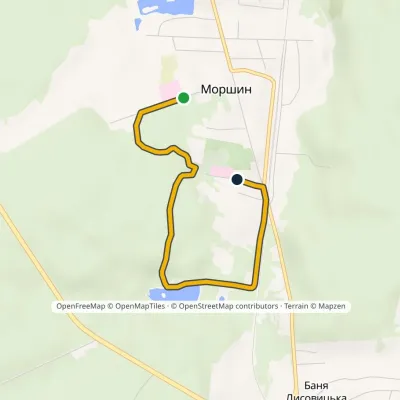 EasyOne-dayMarkedNo. 5008 Morshyn: Nordic walkingElevation profile333–372 m3.6 kmascent 17 m≈ 60 min walking7.8 km from Museum of the History of the City of Bolekhiv named after Roman Skvoriya, Bolekhiv
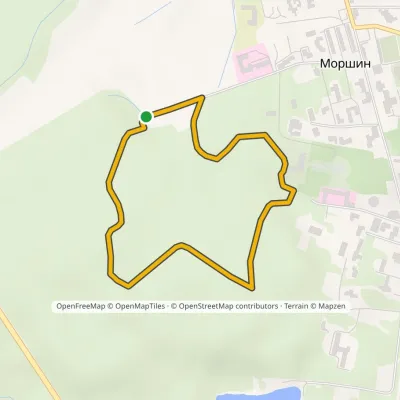 EasyOne-dayMarkedNo. 5007 Morshyn: Nordic walkingElevation profile347–381 m3.2 kmascent 31 m≈ 45 min walking8.2 km from Museum of the History of the City of Bolekhiv named after Roman Skvoriya, Bolekhiv
Nearby attractions
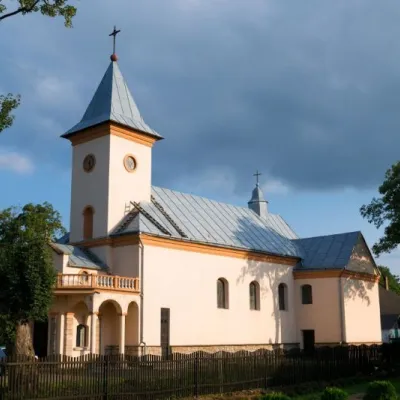 ArchitectureChurch of the Assumption, BolekhivBolekhivunder 1 km from Museum of the History of the City of Bolekhiv named after Roman Skvoriya, BolekhivThe first wooden church was built in the city of Bolekhiv in the late 16th century. In 1730, the construction of a stone church began and ended in 8 years.
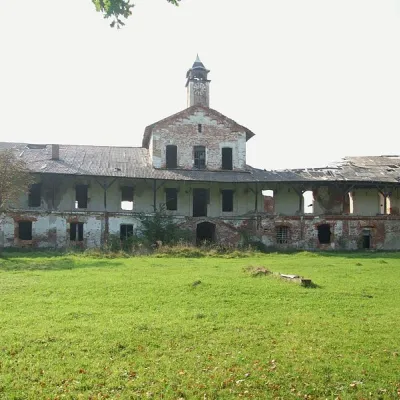 Historic siteSaltworks, BolekhivBolekhivunder 1 km from Museum of the History of the City of Bolekhiv named after Roman Skvoriya, BolekhivAnd the development of the town itself was partly due to the presence of rock salt deposits.The first saltworks in Bolekhiv appeared in 1546.
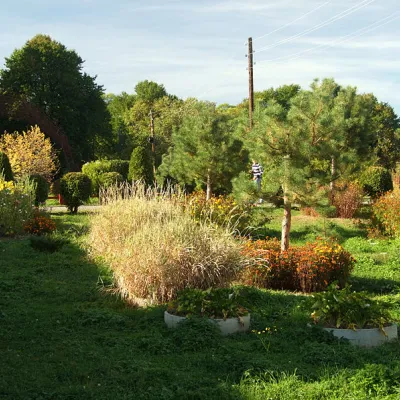 NatureArboretum Park - a monument of landscape art, BolekhivBolekhivunder 1 km from Museum of the History of the City of Bolekhiv named after Roman Skvoriya, BolekhivArboretum Park is one of the oldest parks in Ivano-Frankivsk region. It is located in the Ivano-Frankivsk region, in the city of Bolekhiv, at 14 Zamkova Street ...
Craft nearby
All craft places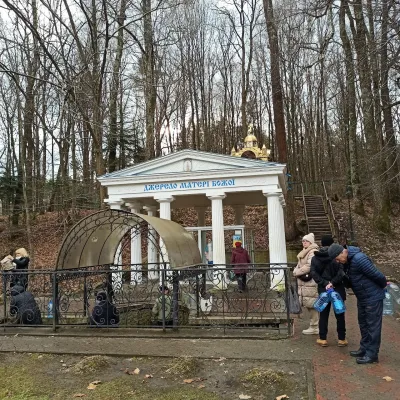 Theme parksSpring No. 4 of the Mother of God, MorshynMorshyn8.7 km from Museum of the History of the City of Bolekhiv named after Roman Skvoriya, BolekhivSpring No. 4, also known as the Spring of the Mother of God, is Morshyn’s most famous mineral spring and probably the resort’s best-loved spot.
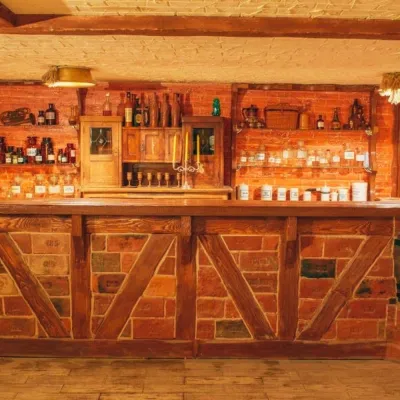 Honey & meaderiesChorna Bdzhola Meadery, VyhodaVyhoda16 km from Museum of the History of the City of Bolekhiv named after Roman Skvoriya, BolekhivChorna Bdzhola (“Black Bee”) in Vyhoda is a small, cosy meadery in the Kalush district of the Ivano-Frankivsk region, where you can learn how drinking mead was...
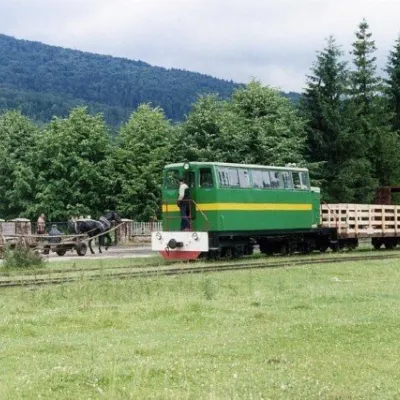 Heritage transportCarpathian TramVyhoda17 km from Museum of the History of the City of Bolekhiv named after Roman Skvoriya, BolekhivIn 1873, Austrian entrepreneur Baron Leopold Popper von Podgari moved the headquarters of his company from Hungary to Galicia.
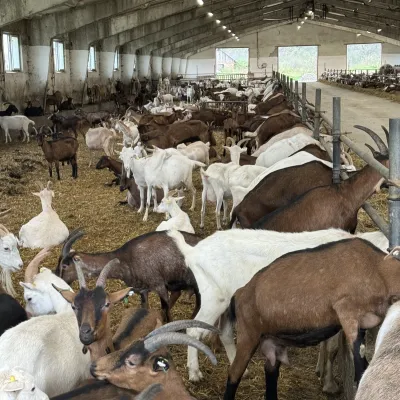 Eco farmsMukko Dairy Farm, UherskoLviv region27 km from Museum of the History of the City of Bolekhiv named after Roman Skvoriya, BolekhivMukko (Prykarpattia Dairy Farm) is one of the best-known cheese addresses in the Lviv region, located in the village of Uhersko near Stryi, about 20 km from the...
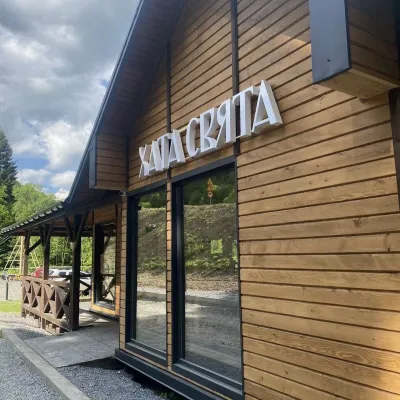 Koliby & Hutsul cuisineKhata Sviata Restaurant, HrebenivHrebeniv30 km from Museum of the History of the City of Bolekhiv named after Roman Skvoriya, BolekhivKhata Sviata restaurant is a small timber restaurant in the village of Hrebeniv between Skole and Slavske, serving Boyko cooking in a modern way but with respect for...
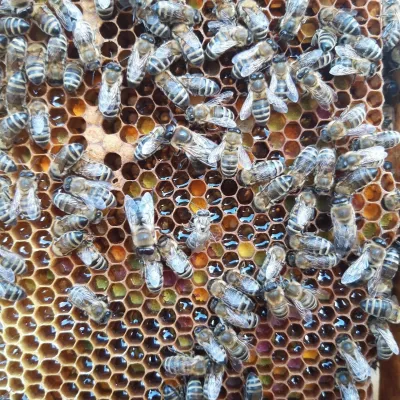 Honey & meaderiesBdzholyna Khata Apiary, DobrohostivStebnyk30 km from Museum of the History of the City of Bolekhiv named after Roman Skvoriya, BolekhivBdzholyna Khata (Bee House) apiary is a family apiary in the village of Dobrohostiv, which adjoins Truskavets on the east along the continuation of Stebnytska Street.