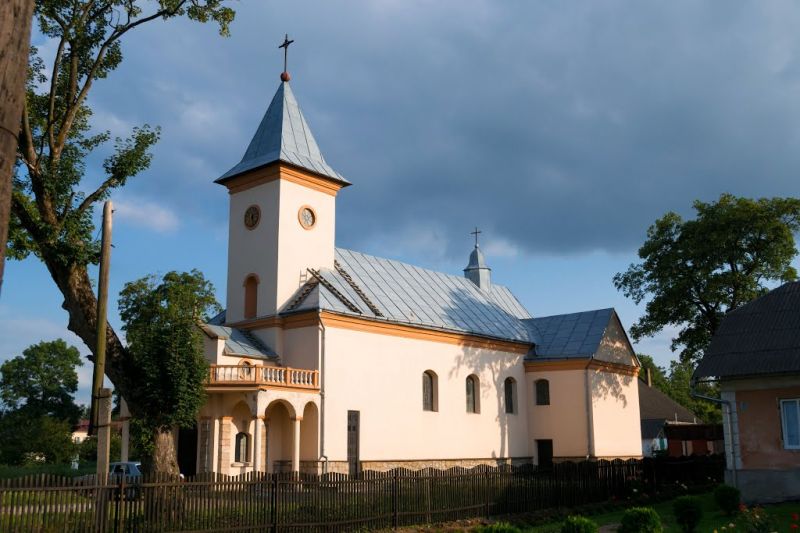
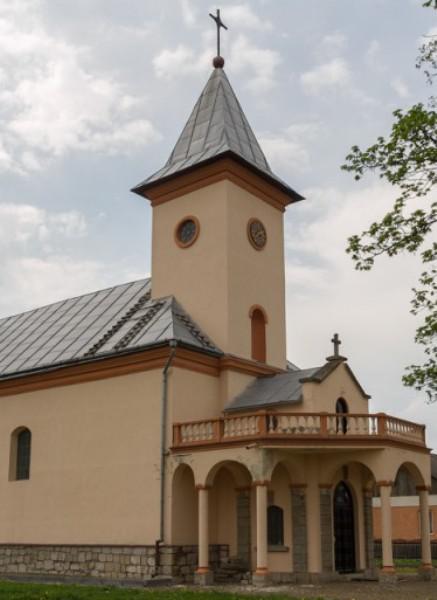
Church of the Assumption, Bolekhiv
The first wooden church was built in the city of Bolekhiv in the late 16th century. In 1730, the construction of a stone church began and ended in 8 years. During the construction of this cathedral was made a number of engineering inaccuracies, which led to the destruction of the temple. And in its place in the 20s of the 19th century, the Assumption Church was erected, which is still in operation today.
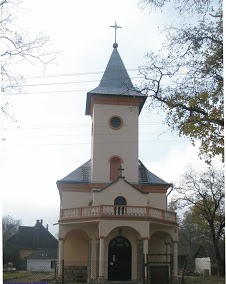
The Church of the Assumption of the Blessed Virgin Mary was built in the Art Nouveau style. Its main entrance is decorated with a colonnade, and there is a small terrace on the roof of the portico. Arched windows, snow-white walls, and a bell tower add some fragility to the compact church.
With the advent of Soviet rule, the church was abolished, and a gym was organized within its walls. Later, the church was converted into a boiler room and used in this way until 1994. After Ukraine gained independence, the church was returned to the Catholic community of the city. In 2000, the restoration of the church was completed.
This is not the only religious building in the city that travelers can visit. While in Bolekhiv, it is worth visiting the Historical Museum and the Church of St. Paraskeva. The town hall built in 1863 and the saltworks are also waiting for visitors.
The manuscripts of the past tell us that already at the end of the sixteenth century there was a close-knit community of supporters of the Pope in the region, which was supported by the nobleman Hedzynski at his own expense (at that time there was already a wooden church of the Holy Cross).
According to updated data, the church was built in 1607, and its founder was apparently again the nobleman Mykola Hedzinski. At the beginning of the seventeenth century, a large fire broke out and the church burned down. In 1730-1738, the laity volunteered to restore it. The funds raised were enough for a new, brick church (and S. Poniatowski became its main founder). In 1739, Archbishop M. Vyzhytskyi consecrated the new high altar of the Assumption of the Blessed Virgin Mary, and the church has been so named ever since.
The end of the seventeenth century brought new challenges. In 1785, due to poor foundations, the church collapsed, and services had to be held in the old wooden shrine of the Holy Cross (built in the early sixteenth century and dismantled in the early twentieth century). The exact date of the construction of the new stone church was not revealed, but it is known that in the early nineteenth century the laity already prayed in the renovated church (no later than 1820-1826). And in 1838, another official dedication of the church took place (Bishop F. Pishtek consecrated the church).
The beginning of the twentieth century (with military disasters, ideological and social upheavals, and popular upheavals) left its mark on the parish and on the building itself - various restorations and arrangements of the church were carried out three times (1910-192, 1920, and 1930). In 1931, Bishop F. Lisowski consecrated the main and side altars. All of this significantly changed the church compared to its original design. But these were minor influences compared to what the church experienced in the following years.
With the advent of the Communists and their satraps came the times of godlessness, so it is not surprising that between 1945 and 1990 the church suffered considerable destruction. It continued to function as a place of worship until 1956, and then it was used for various domestic purposes. Thus, during the Soviet era, the church was used as a gym for a nearby school, and later as a bookstore. But this was not enough for the atheists, who added three shops to the building in 1971.
But democratic changes at the end of the twentieth century led to the formation of Ukrainian statehood and the emergence of the state of Ukraine, which returned the church to the laity. At the same time, the shops were dismantled and the reconstruction of the cultural building began. So on December 22, 1992, Archbishop M. Yavorsky re-consecrated the Church of the Assumption of the Virgin Mary. In 1994-2000 the church was restored inside, and in 2000 a new altar was made. And in the following years, the community continued to take care of their church and arranged the church grounds and the facade of the building. Currently, the previous architectural style, Gothic, has received more pronounced notes of the classicist era after the reconstruction.
Important information! - Experienced guides of the Boikivshchyna Museum (Dolyna) will help you organize sightseeing tours of Dolyna region if you want to see the Museum of Insurgent Victory in Dolyna, the old saltworks, the bunker where Ukrainian nationalists were hiding, the Carpathian tram in Vyhoda, Dovbush's Rocks in Bubnyshche, Shyrkovets Swamp and Mizun Waterfalls near Novyi Mizun or Hoshiv Monastery, Ivan Franko Museum in Lolyn village.
Accommodation around Church of the Assumption, Bolekhiv:


Nearby hiking trails near Church of the Assumption, Bolekhiv:
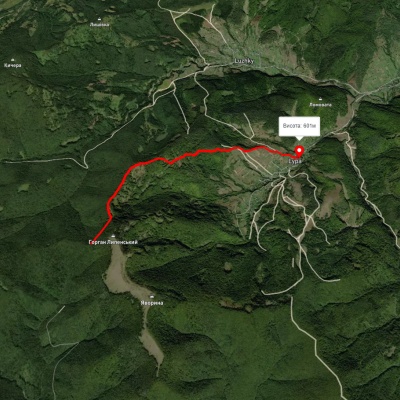
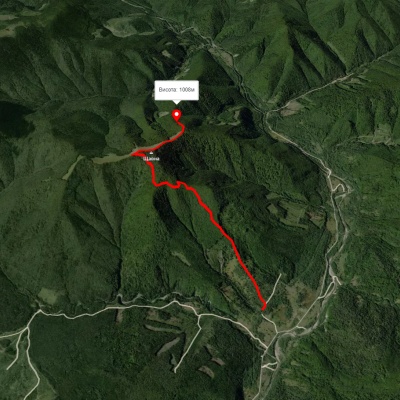
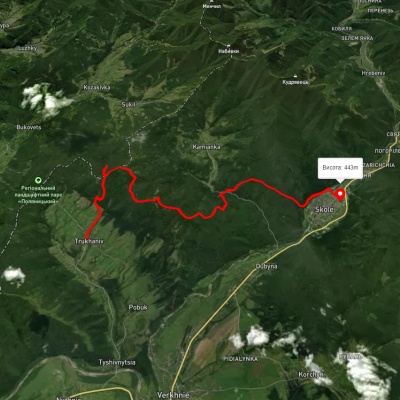
Which trails pass by Church of the Assumption, Bolekhiv?
We suggest these hiking trails through or near Church of the Assumption, Bolekhiv: Lypa village – Yavoryna – Robert's Bunker, Route to Mount Shchavna, Trukhaniv village, via Mount Kliuch, Lake Zhuravlyne and Kamianka Waterfall to Skole, Lybokhora village, via Mount Matahiv to Kozakivka village, Myslivka village, via Mount Yayko-Ilemske and Mount Horhan-Ilemskyi to Myslivka village, Skole, via Mount Parashka, Hurkalo Waterfall and Korchyn village to Verkhnie Synovydne village