Luzhany


The town of Luzhany (approx. 4.9 thousand inhabitants) immediately follows Mamayivtsi, which is, without exaggeration, one of the most interesting places in Bukovyna, an urban-type settlement near Chernivtsi (located in the Kitsman district), and is worth visiting because you can see the oldest church in Bukovyna, the Church of the Ascension. Scientists still debate the date of the settlement's foundation today. The official date is October 7, 1453. It was on this day that boyar Fedir Vitold purchased Luzhany from Kostia Vranych, the son of Dragomir Vranych, boyar to voivode Oleksandr Dobroi, for 400 Turkish gold pieces, as evidenced by a commercial charter.
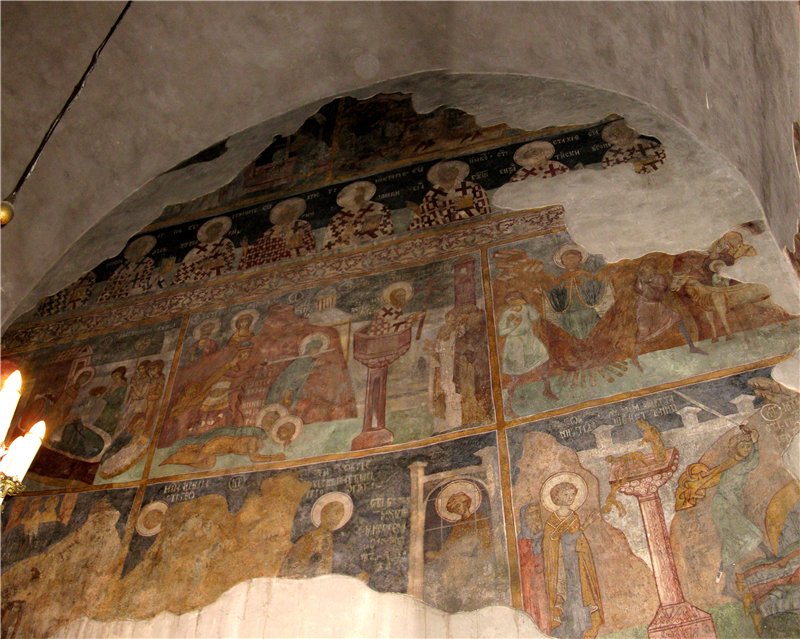
When you hear "the oldest church in Bukovyna," you imagine something incredibly beautiful, something like this... But in fact, when you see the Church of the Ascension, it seems to be primitive. It is a very simple house-type church, its walls are covered with unattractive gray plaster, and the roof is covered with even less attractive tin. The church is officially dated to 1453-1455, the time when Luzhany became the property of Fedir Vitold. Scientists have guessed that the church existed earlier. And in 2006, during the restoration of the church, researchers from the Lviv Research Institute Ukrzakhidproektrestavratsiya discovered a fresco in the church, fragments of which date back to the thirteenth century. This discovery suggests that the church dates back to the thirteenth century.
The Church of the Ascension is the simplest type of stone three-domed, domeless hut-type church typical of Bukovyna and Moldavia in the Middle Ages. It consists of a later-built narthex, a rectangular nave that has the same width as the narthex, and a faceted apse. Due to its miniature size and simplicity, its resemblance to the wooden hut churches that were previously common in Bukovyna is obvious. At the time of the Vranychs and the Witolds, the church was a two-domed church without any wooden extensions or even a roof with decorative domes. In fact, it looked like a brick cube and served as a small fortress. Even now, only small crosses on the top of the church remind us of its religious nature.
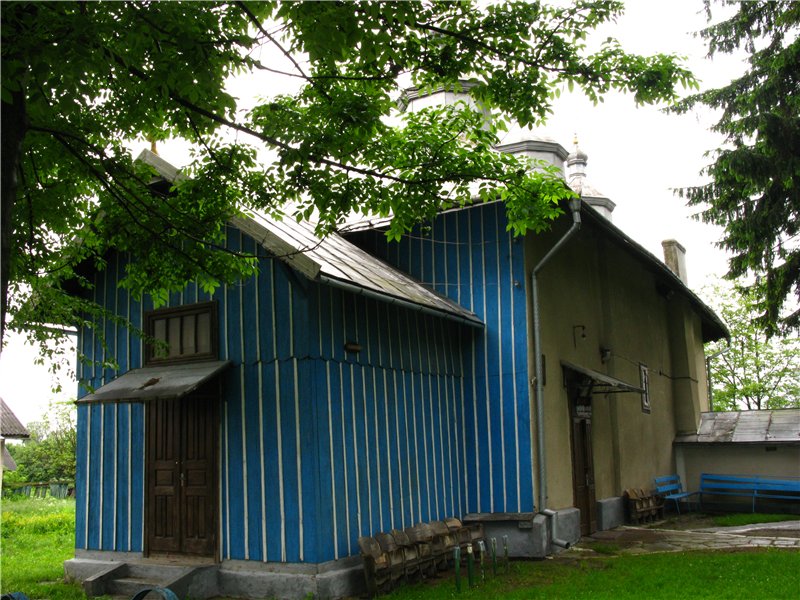
During its existence, the church has undergone several reconstructions. In 1816, a wooden extension on a stone foundation was added to the Babynets. In the nineteenth century, a wooden two-tiered frame bell tower was built in the southwestern part of the churchyard. In 1884, the church was finished with brick, and the church walls were supported by four stone buttresses. At the beginning of the last century, the roof was covered with tin. The church, of course, has not retained its authentic appearance since its construction: a wooden extension painted blue is stuck on the front, and the small three dormers on the roof are later additions. To see it, before reaching the center, turn right near the distillery buildings onto a local road in the direction of Kitsmani. After the railroad crossing, we drive through the park, after which, next to the new giant pink church, we will see a modest church with a wooden bell tower.
A wooden bell tower:
And yet, the main wealth of the Church of the Ascension is its medieval paintings, most of which are believed to have been made in the time of Fyodor Vitold. Previously, the interior of the church was completely painted with frescoes, most of which are now hidden behind whitewash. And only small fragments of paintings in the Babynka give an idea of the quality of the masters' work. The interior painting of the church clearly shows a connection with ancient Russian art. In the niche above the arch connecting the Babynets to the nave, there is an image of St. George. Before the Babynets was built, this was the entrance to the shrine, where the church icon was usually placed. Thus, it is possible that St. George was the patron saint of the church. The western outer wall of the church was decorated with a traditional icon of the Last Judgment, which is typical for Bukovynian religious architecture.
In the lower register on the southern wall of the Babynets are figures of three saints: Sergii, Fedir, and probably Demetrii. On the north wall is an image of Fedir Vitold in a red kireya on a white horse and a coterie inscription: "Az' Mr. Fedir evomi Vitolta slave to Christ God and the Most Holy Mother of God and a coterie to this holy temple." The second register of the northern wall contains a scene of the "Poor Man on the Dungfield", which shows the figures of the biblical kings David and Solomon with an angel, who, playing the husks and some kind of stringed instrument similar to a sack, cheer up the poor man.
An interesting fact is that on the night of June 28-29, 1783, the relics of the Great Martyr John of New Suceava, a revered Bukovinian saint, were kept in the church on the way from Zhovkva to Suceava.
The sights of Luzhany are not limited to the medieval Church of the Ascension. Returning to the highway, before the railway crossing, we will see a monument of landscape art - the Luzhany Arboretum, which was founded in the nineteenth century and has an area of 4.3 hectares. Among the wide variety of local tree species, there are valuable exotic trees such as Weymouth pine, medium spirea, sumac sumac, blue spruce, naked chestnut, maple, Japanese sophora, western frame or ironwood, as well as an alley of catalpa of various species and varieties. They are representatives of the flora of North America, Japan, China, and the Korean Peninsula. The Sovytsia River flows here, where a waterfall and fountains were once arranged.
The Luzhansky Arboretum is really one of the neatest parks in Bukovyna. At least it made the most positive impression on me, despite the rain and gloomy weather. On the territory of the arboretum there is a modest palace, a former manor house of the early nineteenth century, which today houses a music school.
The nearby administrative building of the sugar factory, built in 1895, is also an architectural monument of local importance. To explore the other sites, return to the highway along the same road and turn right towards Kolomyia. Almost immediately after the bend in the center of the town, on the right side of the road, we will see the blue-painted wooden Church of the Savior, which dates back to the seventeenth century and, unfortunately, has long since lost its authenticity.
Almost at the exit from Luzhany, to the left of the road, there is a small stone church of St. John of Dukla in the Neo-Gothic style. The wooden church was first built here in 1847. In the same year, a sculpture of St. John of Dukla was installed next to it, which can still be seen today. The first saint of Lviv was born in Dukla in the Lemkivshchyna region around 1414. At the age of twenty, Jan entered a Franciscan monastery and later the Bernardine Order. In 1463, he settled in Lviv, where he gained fame as a preacher and confessor. Even after he lost his eyesight and his legs were taken away, he continued his priestly activity. Jan of Dukla died on September 29, 1484, in Lviv, and the faithful immediately began to honor his memory. The cult of the saint spread among Catholics not only in Galicia but also in neighboring countries. It is believed that it was Jan of Dukla who guarded Lviv during numerous military actions.
The wooden church almost completely burned down in 1914, and the parishioners decided to build a new brick church. Incredibly, it is believed that the project of building a new neo-Gothic church belonged to the famous Austrian architect Hermann Helmer, the author of such masterpieces as the theater in Chernivtsi, as well as Odesa, Vienna, Hamburg, Zurich, Zagreb, and Sofia theaters. The church was closed by the Soviets in 1955. At first, a furniture store was set up here, and later a store warehouse where salt was stored, which caused the building to suffer greatly. In the 80s of the last century, part of the interior of the Luzhanska church (altar, vestments, banners) was transferred to the Peter and Paul Cathedral in Kamianets-Podilskyi, where it remains today. The church was returned to the Roman Catholic community of Luzhany in 1993 and subsequently restored. Old stained glass windows have been preserved on the cruciform window above the church door.
The railway station in Luzhany was built in the Austrian period:
Video

What to visit
Landmarks, museums and places of interest near Luzhany.
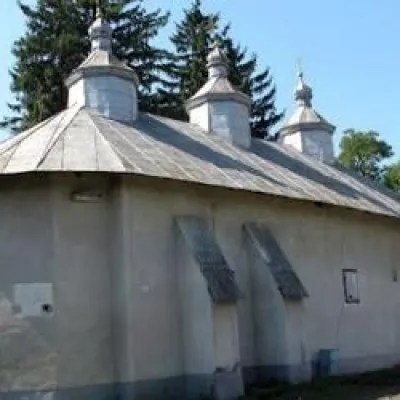 ChurchAssumption (Ascension) Church, LuzhanyLuzhanyunder 1 km from the centreIn the small village of Luzhany, there is the Assumption Church, which is the oldest church and at the same time a building in the Chernivtsi region.
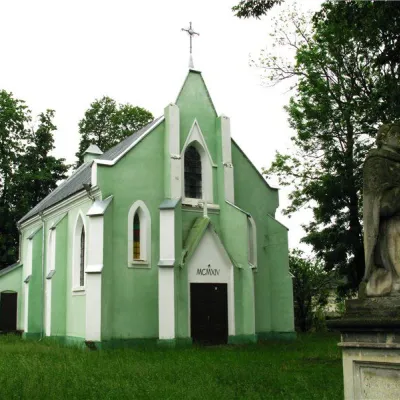 ArchitectureChurch of St. John of Dukla, LuzhanyLuzhanyunder 1 km from the centreIt has become famous among tourists for the oldest Bukovinian church, but there is much more to see here.
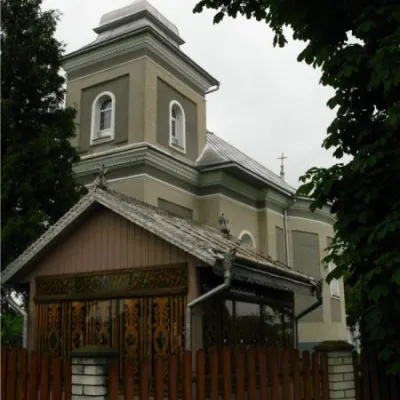 ChurchChurch of the Nativity of the Virgin Mary, ShipintsyShypyntsi1.9 km from the centreNowadays, the village's decoration is the stone church of the Nativity of the Virgin Mary. The founder of the church was a local landowner Myron de Kostin.
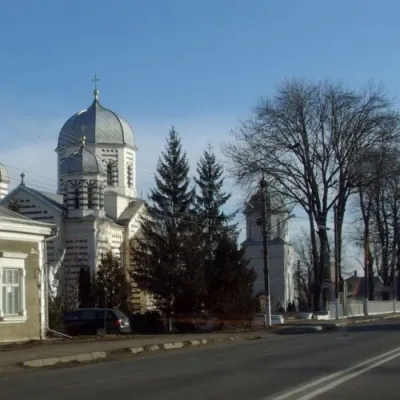 SightThe Church of the Intercession of the Blessed Virgin Mary, MamayivtsiMamaivtsi4.5 km from the centreOne such church is the Intercession Church in the village of Mamayivtsi. The village of Mamayivtsi historically consisted of two villages - Staryi and Novyi Kut.
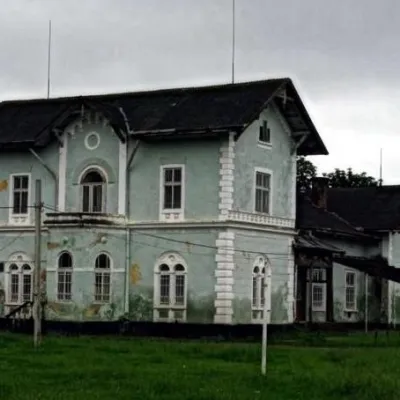 SightShimonovych Palace, DubivtsiDubivtsi4.8 km from the centreOn the road from Chernivtsi to Ivano-Frankivsk, near the turn to Vyzhnytsia, there is a village called Dubivtsi, which can serve as a great stop for you along with a...
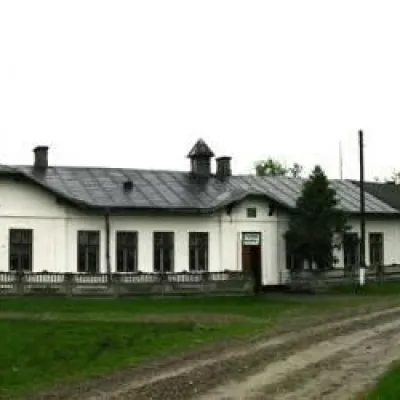 MuseumRusnak Museum, DubivtsiDubivtsi4.8 km from the centreThe small village of Dubivtsi, located in the Kitsmanivsky district of Chernivtsi region, became famous all over the world because one of the best voices of Ukraine,...
Craft nearby
All craft places Eco farmsBukovynskyi Ravlyk Snail Farm, Striletskyi KutMamaivtsi6.9 km from the centreBukovynskyi Ravlyk is a family snail farm in the village of Striletskyi Kut, just 10 km from central Chernivtsi.
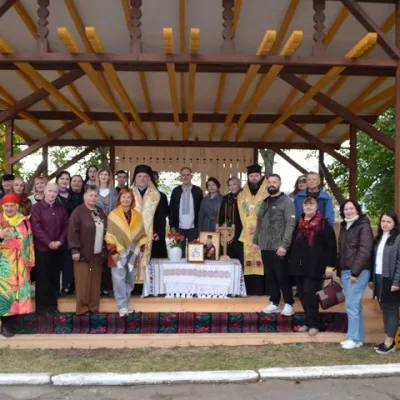 Crafts & workshopsFolk Craft Workshops at the Bukovynian Centre of Culture and Arts, ChernivtsiChernivtsi13 km from the centreThe Bukovynian Centre of Culture and Arts is the main hub of folk art in Chernivtsi Oblast. It stands on Dominik Hill in the Klokuchka district, at 1-A Yosyfa Hlavky...
 Crafts & workshopsBukovynskyi Local Makers' Shop, ChernivtsiChernivtsi14 km from the centreBukovynskyi is a new craft and gift shop in the very heart of Chernivtsi, at 13 Hoholia Street, a few steps from pedestrian Olha Kobylianska Street.
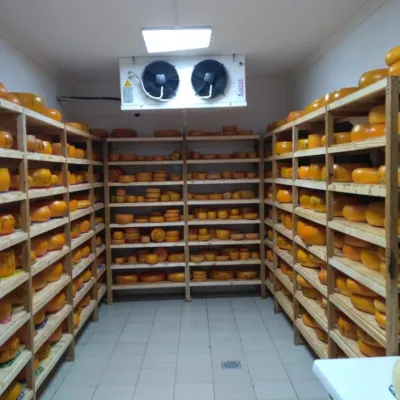 Cheese dairies & pasturesDobri Gazdy Cheese Dairy, MykhailivkaTarashany31 km from the centreDobri Gazdy cheese dairy in the village of Mykhailivka is one of the best-known food stops in Bukovyna and a fine example of how a community can breathe new life into...
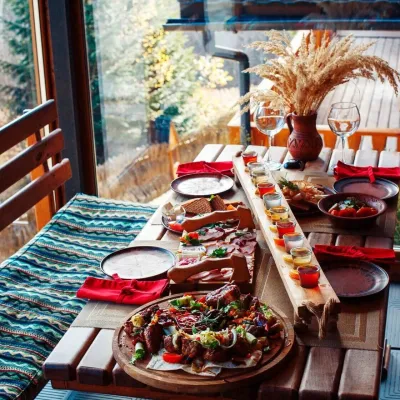 Koliby & Hutsul cuisineKoliba of the Karpaty complex, MyhoveMyhove41 km from the centreThe Kolyba in Myhove is the restaurant of the Karpaty cottage complex on the main street of Myhove, Bukovyna’s ski resort in the Vyzhnytsia district.
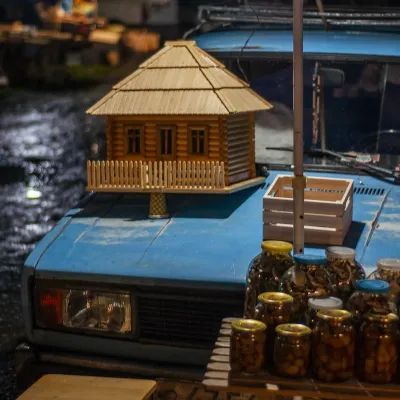 Markets & fairsNight Wood Market, KutyKuty44 km from the centreThe night bazaar in Kuty is the most colourful woodwork market in the Hutsul region, and it vanishes at dawn.
Where to stay
Hotels, sadybas and cottages in and around Luzhany.
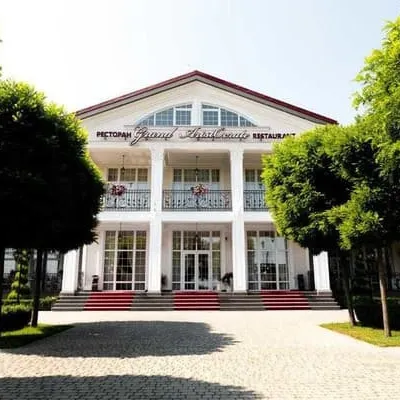 HotelGrand AristocrateChernivtsi4.8 km from the centreParkingWi‑FiNearby: Catholic chapel 300 mShimonovych Palace 500 mfrom 3 105 UAH per night
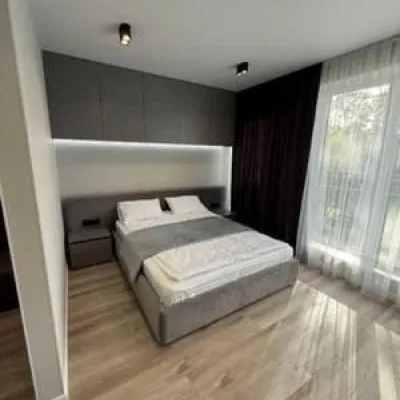 −10%HotelPremium Apartments A&SChernivtsi14 km from the centreParkingWi‑FiPetsNearby: Soborna Square 400 mArmenian Church 700 mfrom 2 430 UAH per night
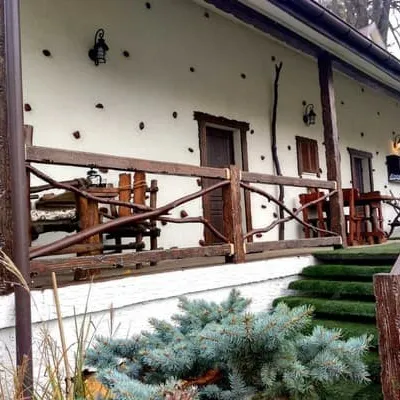 HotelPanorama Hotel & SPAChernivtsi9.1 km from the centreHot tubPoolBBQNearby: Mt Tsetsyno 400 mArmenian Church 6.8 kmfrom 3 200 UAH per night
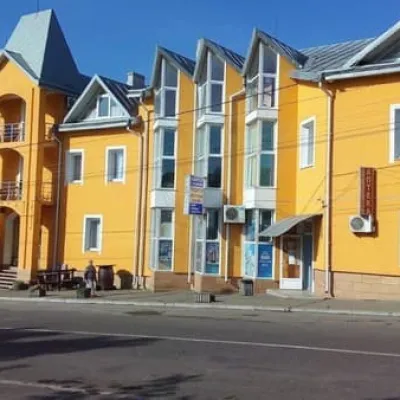 HotelStara banyaKitsman9.4 km from the centrePoolSaunaJacuzziNearby: Town Hall 900 mAssumption Church 5.9 kmfrom 1 000 UAH per night
 −15%HotelKoralChernivtsi17 km from the centreSaunaParkingWi‑FiNearby: Armenian Church 2.9 kmSoborna Square 3.2 kmfrom 1 187 UAH per night
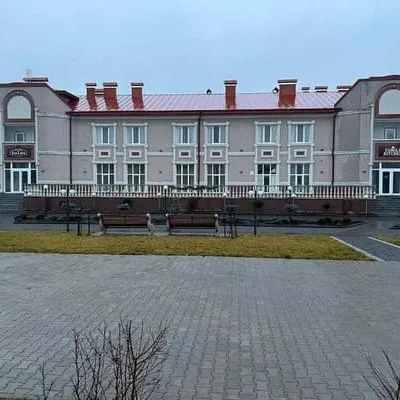 HotelSun LidiaChernivtsi11 km from the centrePoolSaunaParkingNearby: House-ship 4.3 kmArmenian Church 5.0 kmfrom 1 400 UAH per night
Peaks nearby
All peaks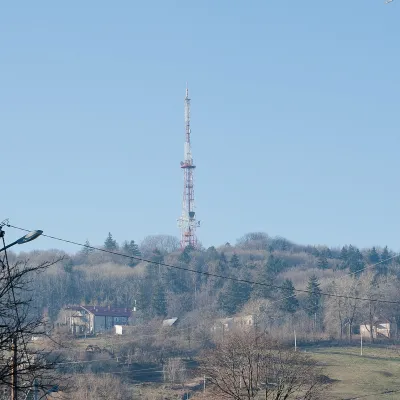 PeakMount TsetsynoChernivtsialtitude 537 m8.9 km from the centreTsetsyno is the highest hill of the Chernivtsi Upland, 537 m high (538 m according to other data). It rises on the western outskirts of Chernivtsi, near the Rosha...
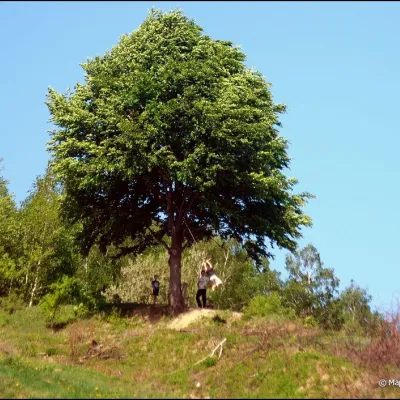 PeakMount KicheraKosivaltitude 567 m48 km from the centreThe march to Kichera is an easy walk that all tourists can do. The small length of the march allows you to take your time and just enjoy nature, eat berries, listen to...
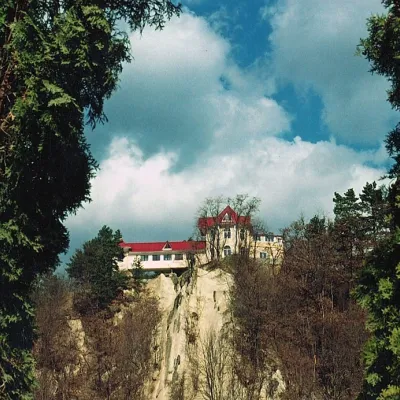 PeakCastle Hill (City)Kosivaltitude 450 m51 km from the centreThe top offers a panoramic view of the city. The mountain is home to unique black alpine pines, as well as deciduous and coniferous plantations, and white acacia...
