Kitsman district
Kitsman district was formed on November 11, 1940. It is located in the northwestern part of the forest-steppe zone of Chernivtsi region. It borders on the Vyzhnytsia, Zastavna, Storozhynets districts of our region, the city of Chernivtsi, Sniatyn and Horodenka districts of Ivano-Frankivsk region. The district center is the village of Kitsman. Main tourist locations (settlements): Shypyntsi, Mamayivtsi, Revakivtsi, where it is possible to rent housing in the private and hotel sectors of the district.
The history of our region is harsh: frequent wars, centuries of foreign domination, national persecution - everything has happened. For more than four centuries, Kitsmanshchyna was a part of the ancient Russian state: in the 10th and 12th centuries it was an outpost of Kievan Rus on its southwestern border, and until the mid-14th century it belonged to the Galician and later to the Galician-Volyn principality.
From the mid-14th to the second half of the 17th centuries, Northern Bukovyna was part of the Moldavian principality, and then our region fell under the yoke of Sultanist Turkey. It was the most difficult time in the life of the masses of Northern Bukovyna during the feudal period. The Kitsman region witnessed many historical events of that time. There were continuous wars of aggression between Moldova and Poland. The population of our region suffered the most from this, as it was on the border between the two warring states.
From 1774 to 1918 Bukovyna was part of Austria-Hungary, as a result of the first partition of the Polish-Lithuanian Commonwealth. Bukovyna was captured by Austrian troops, and the first residence of the governor of Bukovyna, Count Gabriel von Spleni, was in Kitsman. In 1781, Emperor Joseph I issued a patent (decree) that united all parishes and monasteries within Austrian Bukovyna into one diocese and placed them under the jurisdiction of Bishop Dosyfei (Dozophtii) Hereskul, Bishop of Radovets. In 1784-85, German became the official language in all parts of the state. However, the effects of the reforms played a positive role in the development of Ukrainian national and cultural life in Galicia and Bukovyna.
On July 31, 1798, Kitsman was granted the status of a fair city by a charter of the Austrian Kaiser Franz II. In the first years of our century, the strike movement in the Kitsman region intensified. In May and July, the peasants of Kitsman, Orshivtsi, and Valyava went on strike. On March 13, 1848, a popular uprising began in Vienna, forcing Austrian Chancellor Metternich to resign and Emperor Ferdinand I to promise a constitution.
The era of the Austrian Empire is still perceived very positively in Bukovyna. After all, it was an era of "Europeanization." Ukrainians, who were serfs and had no civil rights, received equal civil rights under the Habsburg Empire, gradually realized and declared themselves as a full-fledged nation, and took an active part in the elections to the Austrian Parliament, where many Ukrainians were elected as deputies. On July 12, 1898, the Luzhany-Zalishchyky railway project was implemented in Kitsman.
In 1902. Kitsman received the status of a city. The first "Sich" in Bukovyna was founded in the town of Kitsman in 1903 on the initiative of the writer, educator, and public figure Sylvester Yarychevsky (1871-1918) and the co-founder and organizer of the Radical Party in Bukovyna, educator Ostap Popovych (1883-1916), son of the future president of Bukovyna as part of the Western Ukrainian People's Republic Omelian Popovych. Koreychuk became its head.
In 1908, organized trade union-type associations appeared in Kitsman, which fought to improve the working and living conditions of the peasants.
From 1918 to 1940, Bukovyna was occupied by the Royal Romanian Empire. The new government introduced a brutal regime. One of the first acts of the new occupation regime was the Romanization of schools and the prohibition of the Ukrainian language. At first, Ukrainian schools were closed in Kitsman, Ivankivtsi, Piadykivtsi, Luzhany, and Nepolokivtsi.
On June 28, 1940, Soviet troops entered Northern Bukovyna. On this occasion, a crowded rally was held in Kitsman. The inclusion of Northern Bukovyna into the Ukrainian SSR was an event of great historical significance, as for the first time in many centuries Bukovynians were united within one state structure.
In November 1940, Kitsman became the district center of the Chernivtsi region. From the first day of liberation, the workers of the Kitsman region joined the construction of a new life. Settlements of the Kitsman district.
In 1941, the Great Patriotic War began. The workers of the Kitsman region also felt the breath of death. On July 8, 1941, an SS punitive detachment led by Major Hess entered Kitsman, followed by a battalion of Romanian soldiers. However, even under the brutal conditions of the fascist regime, the workers of the Kitsman region continued to fight. They refused to pay taxes, hid bread, and evaded work.
In March 1944, the residents of the Kitsmanshchyna met the liberating army. On March 28, the first to enter the town were the soldiers of Colonel M. Morgunov's 45th Tank Brigade, who were chasing the enemy in the direction of Chernivtsi.
About 450 participants from 42 collectives of the district are engaged in amateur art. Amateurs of folk art cover all genres of folk art: 6 choral groups, 6 folklore groups, 3 dance groups, 4 folk instrument orchestras, a folk amateur cymbalist ensemble, a folk amateur brass band, a folk amateur bandura ensemble, a violin ensemble, a jazz band, 2 vocal and instrumental ensembles, 6 soloists, and 3 readers. The Kitsman folk amateur choir, the BNTD choir, the brass folk orchestra, the folk instrument orchestra, the folk amateur groups "Yuzhynets young women", "Chervona Kalyna", the choirs of the villages Brusnytsia, Drachyntsi, Orshivtsi, Shyshkivtsi, folklore theaters, "Kitsmanchany", "Rodyna" villages. Revno, Hlynytsia musicians, dance groups "Kolos", Drachyntsi children's "Exemplary", Bandura Ensemble "Predzvyn" of Shyshkivtsi, soloists Svitlana Kolosovska of Kitsman, Svitlana Vereha and many others.
There are 224 monuments on the territory of the district, including 104 archeological, 57 architectural, and 63 historical and cultural monuments.
To develop the tourist and recreational sector, measures continue to be taken to create a structure of recreation areas on the banks of the Prut River offering various forms of recreation in the villages of Brusnitsa, Dubivtsi, Hlynitsa, Mamayivka, and Kyseliv.
To this end, investment proposals have been prepared for the development of the district's tourist and recreational infrastructure:
1. Construction of a sanatorium and tourist complex based on the Brusnytsia deposit of balneological mineral waters (land plot of 3.99 hectares).
2. Construction of tourism, leisure and recreation facilities in the Stinka tract in Hlynitsa village (land plot of 18.0 hectares).
3. Construction of tourism, leisure and recreation facilities in the Haideyka tract in Kyseliv village (land plot - 25.0 ha).
4. Construction of tourism, leisure and recreation facilities in the forest park of Kitsman (land plot of 5.0 hectares).
The first step in creating a tourist infrastructure in the district was the launch of the rural green tourism farmsteads. At present, 12 rural owners have expressed a desire to engage in this business (44 rooms for 80 people are available in 12 estates, accommodation January-December).
The main problem in the development of tourism in the district is the lack of budgetary funds for the capital construction of tourist infrastructure. This is the reason why in the near future we are looking for real investors who would be interested in investing in the construction of tourist infrastructure.
The following roadside tourist service facilities operate in the district:
Car service stations: in Mamayivtsi - "Makavto" with a car shop, cafe and hotel, Yakovyshyn service station; in Kitsman - "U Mlyni", "U Valerii". Restaurant-hotels: Mamayivtsi village - "Prague", "Smereka"; Orshivtsi village - "Zatyshok"; Hlynitsa village - "White Swan"; Brusnytsia village - "Oscar"; Vytylivka village - "Fortuna"; Kitsman town - "Stara Banya"; Luzhany village - "Magic". Restaurants, cafes-bars: Kitsman - "Vodoley", "Smaragd", "Gosha", "Grand Prix"; Mamaivtsi - "Prestige", "Colvik"; Shipyntsi - "Pid Lipami", "Raisa"; Luzhany - "Mishutka".
The main economic sectors of the district are agriculture, industry, construction, transport and communications, trade and services, as well as small business as a new form of self-employment. There are 3,987 private entrepreneurs in the district.
To develop the tourist and recreational sector, measures continue to be taken to create a structure of recreation areas on the banks of the Prut River offering various forms of recreation in the villages of Brusnitsa, Dubivtsi, Hlynitsa, Mamayivka, and Kyseliv.
To this end, investment proposals have been prepared for the development of the district's tourist and recreational infrastructure:
1. Construction of a sanatorium and tourist complex based on the Brusnytsia deposit of balneological mineral waters (land plot of 3.99 hectares).
2. Construction of tourism, leisure and recreation facilities in the Stinka tract in Hlynitsa village (land plot of 18.0 hectares).
3. Construction of tourism, leisure and recreation facilities in the Haideyka tract in Kyseliv village (land plot - 25.0 ha).
4. Construction of tourism, leisure and recreation facilities in the forest park of Kitsman (land plot of 5.0 hectares).
The first step in creating a tourist infrastructure in the district was the launch of the rural green tourism farmsteads. At present, 12 rural owners have expressed a desire to engage in this business (44 rooms for 80 people are available in 12 estates, accommodation January-December).
The main problem in the development of tourism in the district is the lack of budgetary funds for the capital construction of tourist infrastructure. This is the reason why in the near future we are looking for real investors who would be interested in investing in the construction of tourist infrastructure.
The following roadside tourist service facilities operate in the district:
Car service stations: in Mamayivtsi - "Makavto" with a car shop, cafe and hotel, Yakovyshyn service station; in Kitsman - "U Mlyni", "U Valerii". Restaurant-hotels: Mamayivtsi village - "Prague", "Smereka"; Orshivtsi village - "Zatyshok"; Hlynitsa village - "White Swan"; Brusnytsia village - "Oscar"; Vytylivka village - "Fortuna"; Kitsman town - "Stara Banya"; Luzhany village - "Magic". Restaurants, cafes-bars: Kitsman - "Vodoley", "Smaragd", "Gosha", "Grand Prix"; Mamaivtsi - "Prestige", "Colvik"; Shipyntsi - "Pid Lipami", "Raisa"; Luzhany - "Mishutka".
The main economic sectors of the district are agriculture, industry, construction, transport and communications, trade and services, as well as small business as a new form of self-employment. There are 3,987 private entrepreneurs in the district.
The Kitsman district is a highly intensive agricultural area, with the main focus on growing cereals, sugar beets, potatoes, and meat and dairy farming.
Agricultural land in the district is 46.5 thousand hectares. The district's arable land is 35557 hectares, 34057 hectares (95%) are under crops, and 1500 hectares (4.2%) are fallow and fallow land. Of these, arable land belongs to agricultural enterprises - 20611 hectares, and to the population - 14946 hectares.
In the structure of the sown areas of the district's agricultural formations, grain crops occupy 10.7 thousand hectares (52%), of which corn - 3.6 thousand hectares (18%), winter rape - 1.8 thousand hectares (8.7%).hectares (8.7%), soybeans - 2.0 thousand hectares (9.7%), fodder crops - 3.1 thousand hectares (15%), sugar beets - 0.4 thousand hectares (2%), potatoes and vegetables - 0.1 thousand hectares (0.5%).
There are 162 registered farms on the territory of the district, with 2805 hectares under cultivation, including 1115 hectares leased, of which 6 farms have arable land from 50 to 470 hectares, 2 farms are engaged in livestock and poultry farming. The share of land use by farms is 13.6%.
Agricultural land in the district is 46.5 thousand hectares. The district's arable land is 35557 hectares, 34057 hectares (95%) are under crops, and 1500 hectares (4.2%) are fallow and fallow land. Of these, arable land belongs to agricultural enterprises - 20611 hectares, and to the population - 14946 hectares.
In the structure of the sown areas of the district's agricultural formations, grain crops occupy 10.7 thousand hectares (52%), of which corn - 3.6 thousand hectares (18%), winter rape - 1.8 thousand hectares (8.7%).hectares (8.7%), soybeans - 2.0 thousand hectares (9.7%), fodder crops - 3.1 thousand hectares (15%), sugar beets - 0.4 thousand hectares (2%), potatoes and vegetables - 0.1 thousand hectares (0.5%).
There are 162 registered farms on the territory of the district, with 2805 hectares under cultivation, including 1115 hectares leased, of which 6 farms have arable land from 50 to 470 hectares, 2 farms are engaged in livestock and poultry farming. The share of land use by farms is 13.6%.
The entire work of the district's cultural institutions is aimed at implementing the measures of the District Cultural Development Program. The district has 43 clubs, 40 rural libraries, 5 schools of aesthetic education and 10 of their branches, 24 museum rooms. There are 350 amateur art groups at the clubs, involving about 4,220 people, and 17 groups have the honorary title of "People's Amateur".
And such groups as "Rodina" from the village of Revno, "Yuzhynetski Molodychky", Luzhany "Chervona Kalyna", dancers from the village of Mamayivtsi, bandura players from the village of Shyshkivtsi are known not only in Bukovyna but also abroad, where they represent the culture of Ukraine with dignity.
It is not the first year that the district council has been paying scholarships to the best talented children in the field of culture. 11 children from the district receive this scholarship.
And such groups as "Rodina" from the village of Revno, "Yuzhynetski Molodychky", Luzhany "Chervona Kalyna", dancers from the village of Mamayivtsi, bandura players from the village of Shyshkivtsi are known not only in Bukovyna but also abroad, where they represent the culture of Ukraine with dignity.
It is not the first year that the district council has been paying scholarships to the best talented children in the field of culture. 11 children from the district receive this scholarship.
The Kitsman district can undoubtedly be called one of the "most sporty" not only in Bukovyna but also in the whole of Ukraine. Already at the turn of the nineteenth and twentieth centuries, football became widespread in the Kitsman region, and local teams competed on equal terms with the leading Chernivtsi teams. Newspaper clippings from that time have been preserved with stories about their successful matches with their rivals from Sniatyn and Zalishchytsia. The first Sich societies in the region, formed at the same time, saw one of their tasks as the physical hardening of their members. During the years of Romanian occupation, this activity was somewhat dulled, but after World War II it gained a second wind. Since the 1950s, the district has been a regular participant and winner of regional sports days and other competitions of the appropriate level. Highly qualified, passionate coaches (including Honored Worker of Physical Culture of Ukraine Heorhiy Myroniuk), teachers, and sports officials successfully work in Kitsman district.
They train talented athletes in two children's and youth sports schools, 42 secondary schools, and a state agricultural college. Among them are Olympic and world champion in handball Serhiy Kushniryuk, two-time world champion in track and field Ivan Geshko, multiple winner of world and European championships and Cups, Ukrainian champion in judo and sambo Olga Panchuk-Unguryan, Ukrainian 800m champion Volodymyr Kovalyk, winners and runners-up of Ukrainian championships among rural athletes Natalia Kudelnytska, Stepania Todoshchuk, Maria Hryf, Oleh Shyman, Mykola Sopit, Mykola Kozma and dozens of others. Our football players deserve a special mention. Back in the 70s, the Kitsman team was a two-time regional champion in this nationally beloved game. Now it is rapidly reviving its glory.
At the same time, FC Luzhany, which has twice won the regional cup, is doing the same in fierce competition with it. Football matches for the district championship, which are held in two groups, bring hundreds of fans to the stadiums. Also, district sports competitions among rural, school and pre-conscription youth are held regularly every year in the presence of a large number of spectators, including such popular sports as athletics, shooting, arm wrestling, table tennis, kettlebells, tug-of-war, family team competitions, etc.
The 11 best young athletes of the district receive a district scholarship from the district council and the district state administration.
The district council and the district state administration organize a number of events to promote the integrity of the state, its development, and to promote spirituality and peace.
Every year, the district celebrates such holidays as Unity Day, Victory Day, Constitution Day, Civil Servant Day, Independence Day, and Bukovyna Vich Day.
Every year, different villages of the district celebrate the Day of the Village.
The memory of those who died during the war, from famines, political repressions, and the OUN-UPA soldiers is also honored.
To help low-income citizens of the district, the annual "Mercy" campaign is held. Every year, a sports competition is held for people with disabilities. Local governments, teachers, cultural workers, and youth are involved in all these activities.
The Kitsman district has established friendly relations with the Belsko-Biala district of the Republic of Poland. On August 24, 2003, an agreement was signed between our district and the Belsko-Biala Poviat in the field of education, culture, tourism, and health care. Repeatedly, delegations from our district visited the Republic of Poland, and also received honored guests from Poland in the district.
The Stavchany village council has established close relations with the villages of the same name in Romania and Moldova.
The Kitsman district is rich in natural resources: forests, lakes, yellow clay, crushed stone, gravel, sand, mineral and fresh water. Business entities engaged in the extraction of mineral resources in the district currently extract yellow clay, crushed stone, gravel, sand, mineral and fresh water.
There are other explored deposits in the area, which unfortunately are not currently being developed:
- a quarry for a brick factory in Mamayivka village (clay);
- a quarry for a tile factory in Hlynytsia village (clay);
- a quarry for a brick and tile factory in Brusnitsa (clay);
- open pit for a brick and tile factory in Nyzhni Stanivtsi (clay);
- a quarry for sand and clay extraction in Davydivtsi village (sand, clay);
- one well in Vytylivka village (mineral water);
- a capture spring in the village of Stavchany (fresh water);
- a capture spring in the village of Oshykhliby (fresh water);
- Valyavske, a well in the village of Valyava (mineral water);
- a drip spring in the village of Oshykhliby (fresh water);
Captive spring in Nepolokivtsi village.
Cultural and architectural monuments:
1.Manescu Palace in Chortorya village (architectural monument of the XIX century) (now a psychoneurological dispensary). A very rare tulip tree in Ukraine grows in the park near the palace, which blooms in late May and early June with unusually beautiful flowers.
2. Museum-estate of film actor and director Ivan Mykolaychuk in the village of Chortorya, Brusnytsia village council.
3.Museum of native nature in the village of Zeleniv, Brusnytsia village council.
4. Lake Lebedyne - an ornithological reserve in the village of Chortoryna, Brusnytsia village council.
5.Balneological hospital based on a unique deposit of three types of mineral waters in Brusnytsia village.
6. Objects related to the life of composer Volodymyr Ivasyuk in Kitsman:
- the house where the composer was born;
- the music school where V. Ivasyuk studied and which is named after him, the composer's classroom museum;
- a monument to the composer in the city center;
- The House of Folk Art, where Ivasyuk began his career as an amateur composer and musician.
Monuments of religious architecture of national importance:
- Assumption Church of 1453 in Luzhany, the oldest in the Bukovyna region;
- St. Nicholas Church of 1786 in Berehomet, Church of the Nativity of the Virgin Mary of 1794 in Ivankivtsi, which are typical for Bukovyna churches of the "house type";
- The Assumption Church of 1778 in Valiava and St. Nicholas Church of 1794 in Nyzhni Stanovtsi are buildings of the transition stage from the "house" type to the domed type;
- The Church of the Assumption of the 17th century in Dubivtsi, the Church of the Assumption of 1850 in Orshivtsi, and the Church of St. Constantine of 1779 in Oshykhliby, all churches of the Hutsul architectural school;
- Assumption Church of 1786 in the village of Hlynytsia, Church of the Nativity of 1812 in the village of Shypyntsi - stone churches - examples of Bukovyna architecture of the XVII - early XIX centuries.
We recommend visiting in Kitsman district


Trails nearby Kitsman district
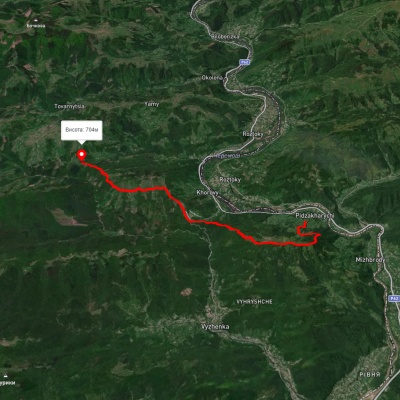
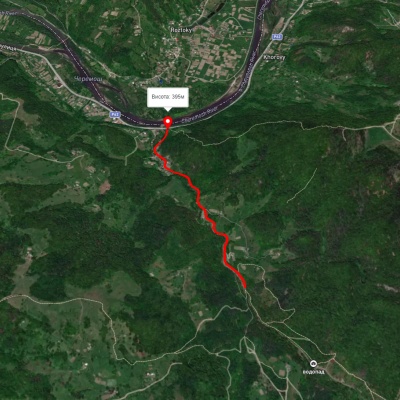
Which hiking trails pass through or near Kitsman district?
We suggest these hiking trails through or near Kitsman district: Nimchych Pass – Protiate Kaminnia, Smuharski Waterfalls