Tatra larkspur
This plant is poisonous: do not taste or pick it, and wash your hands after touching it. In case of poisoning call 112 (103 in Ukraine).
About
Delphinium oxysepalum is an endemic species of the Western Carpathians: it grows naturally only in the Tatras, Low Tatras, Velký Choč, and Little Fatra. This species is not found in Ukraine. In the Tatras, it can be seen in summer near trails at altitudes of approximately 1000 to 2100 m.
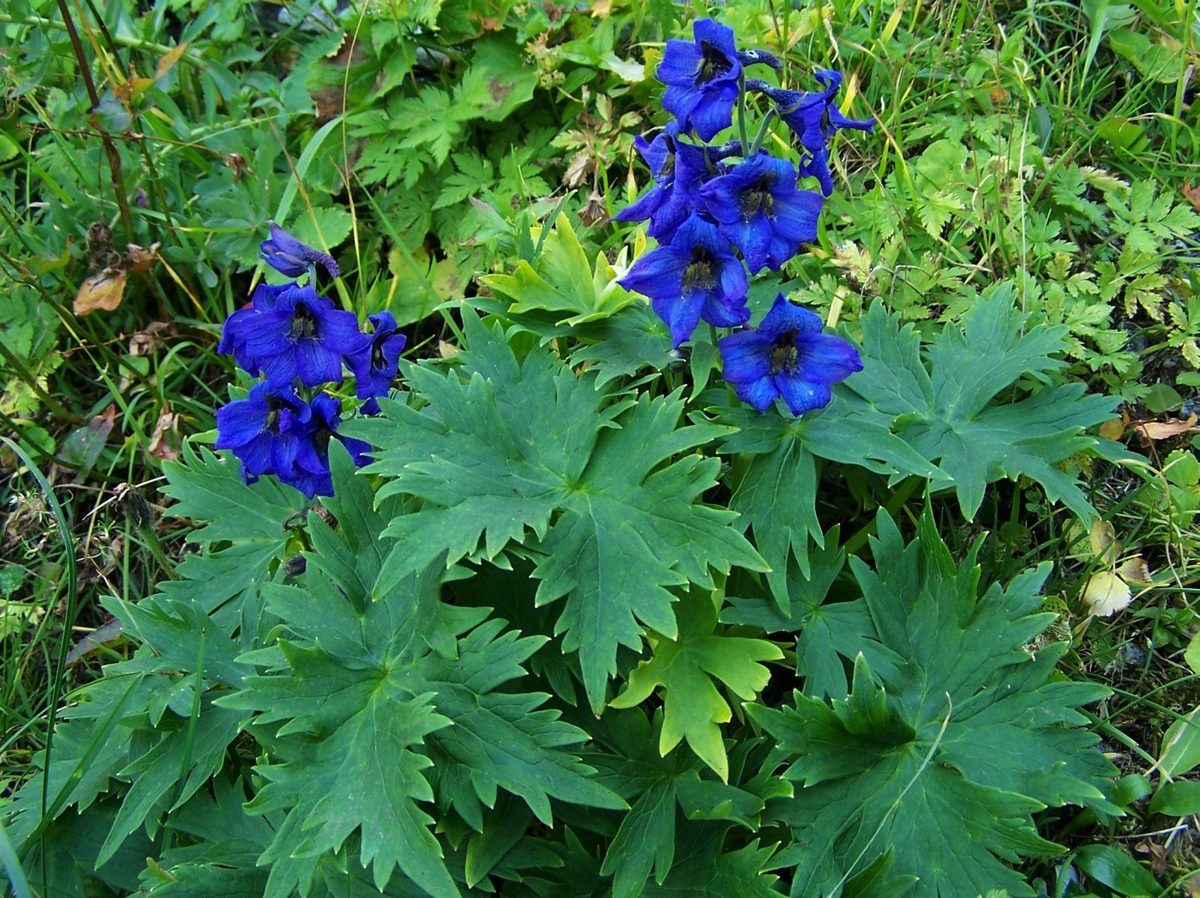
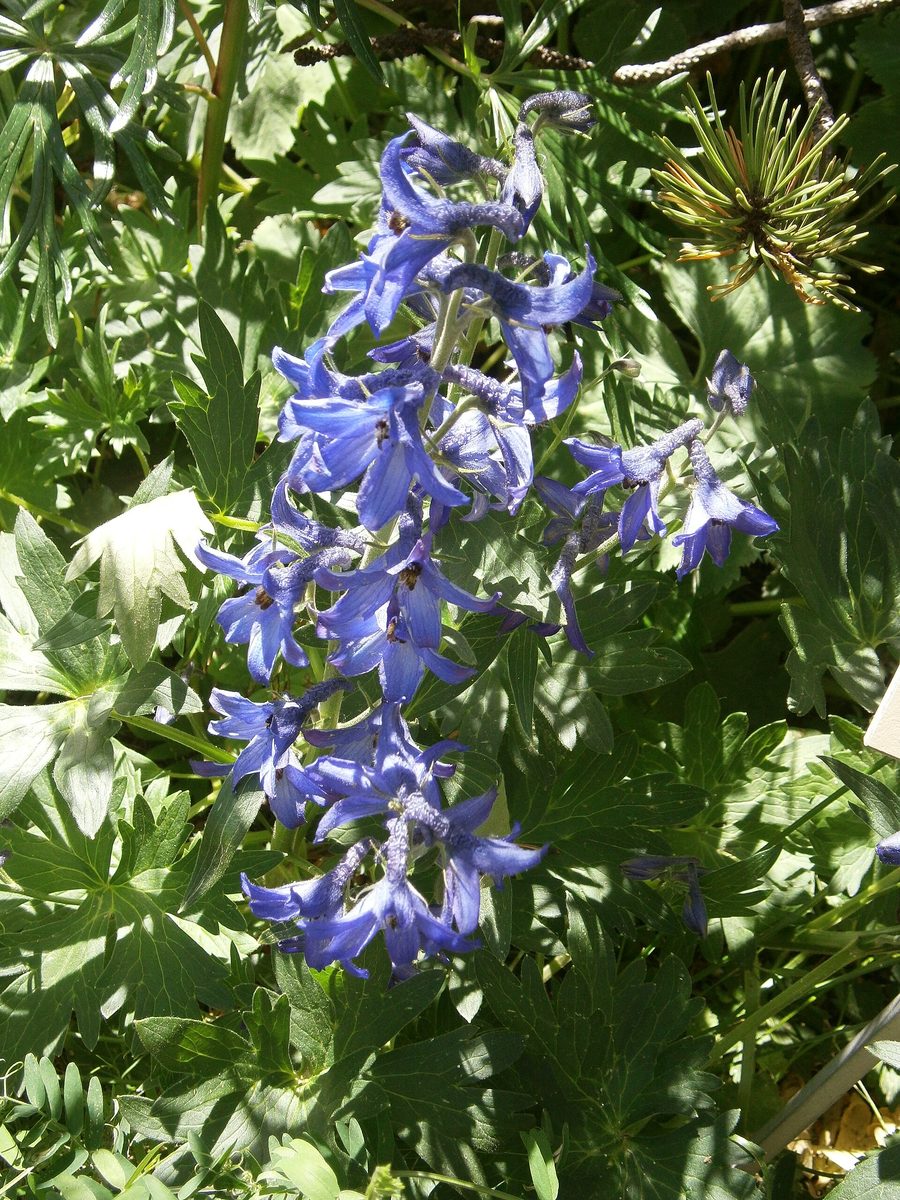
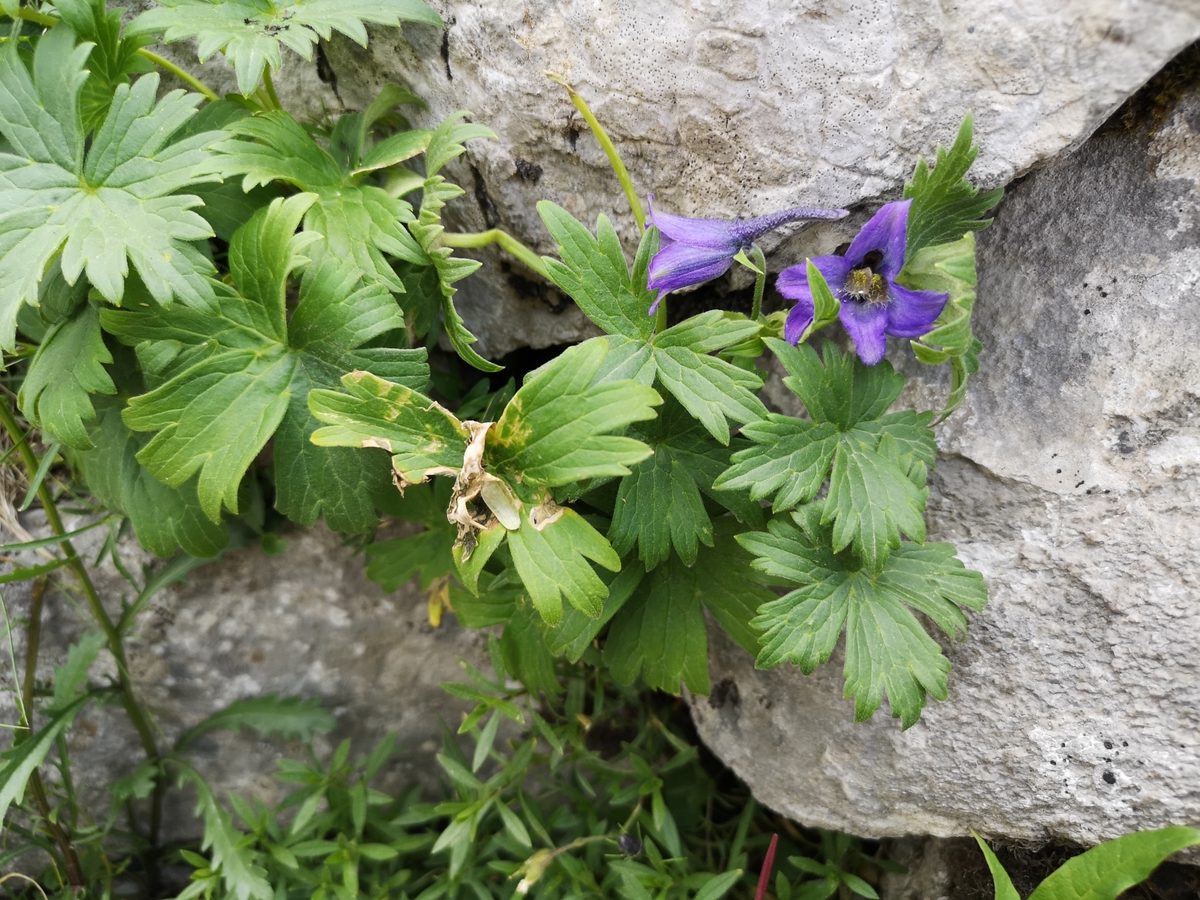
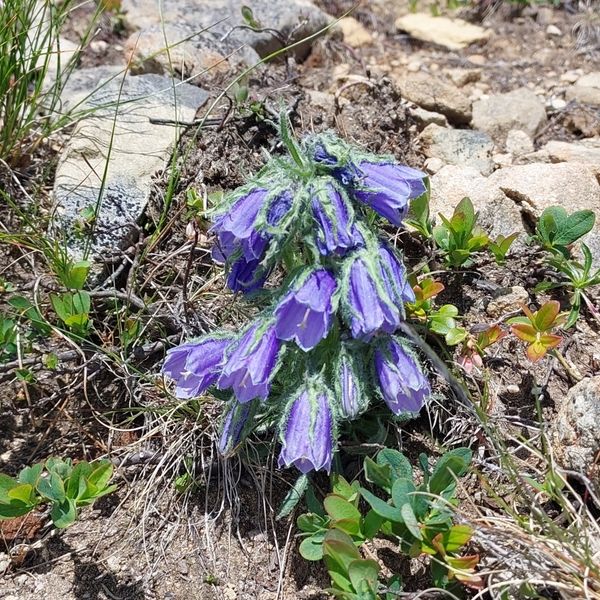
The plant is noticeable from a distance: a thick, juicy, unbranched stem 50–100 cm tall ends with a cluster of rich blue or violet flowers. The flower lacks a spur and measures 22–40 mm in length; five long pointed sepals appear as petals, with the upper one forming a large spur. The leaves are large, on long petioles, deeply divided into five lobes. It blooms in July.
Delphinium grows in tall grass, on scree, among rocks, in meadows, and along trails — both on limestone and granite. The flowers are pollinated by insects, and the winged seeds are dispersed by the wind.
The entire plant, except for the flowers, is poisonous: it causes a drop in blood pressure and difficulty breathing, and large doses can stop the heart. Do not pick it and do not let children handle it. In the national parks of the Tatras, picking any plants is prohibited.
This species does not live in the Ukrainian Carpathians today — you can see it in other Carpathian countries.
Where in the Carpathians

Orange — where naturalists recorded the species (GBIF, CC0/CC BY); a blank area does not mean it is absent.
- Countries
- Slovakia · Poland
- Mountain ranges
- In other countries: 🇸🇰 Belianske Tatras, 🇸🇰 High Tatras, 🇸🇰 Lesser Fatra, 🇸🇰 Low Tatras, 🇸🇰 Western Tatras, 🇸🇰 Slovak Ore Mountains, 🇸🇰 Greater Fatra
- Altitude belts
- Beech forests (600–1200 m) · Conifer forests (1200–1600 m) · Subalpine belt (1600–1900 m) · Alpine belt (above 1900 m)
When to see it
| Jan | Feb | Mar | Apr | May | Jun | Jul | Aug | Sep | Oct | Nov | Dec | |
|---|---|---|---|---|---|---|---|---|---|---|---|---|
| Flowering |
From naturalists’ observations in the Carpathians (iNaturalist, research grade): the darker the cell, the more often the species is seen that month.
Safety
The entire plant, except for the flowers, is poisonous: it causes a drop in blood pressure and difficulty breathing. Do not pick it, and wash your hands after accidental contact. In case of poisoning in Poland and Slovakia, call 112.
Look-alikes — how to tell them apart
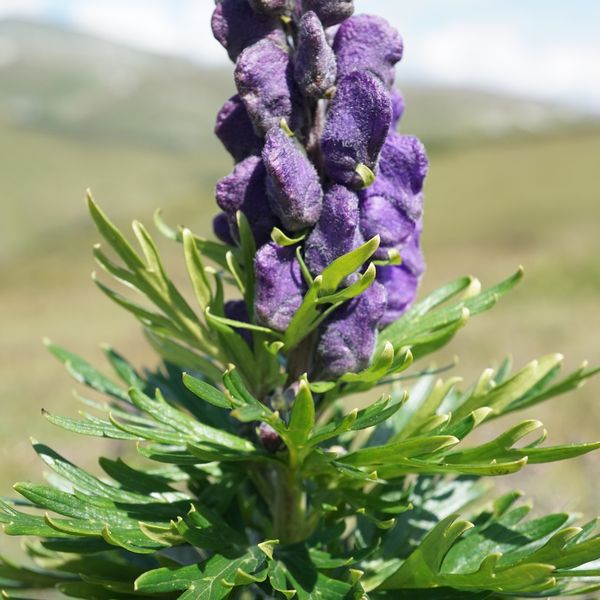
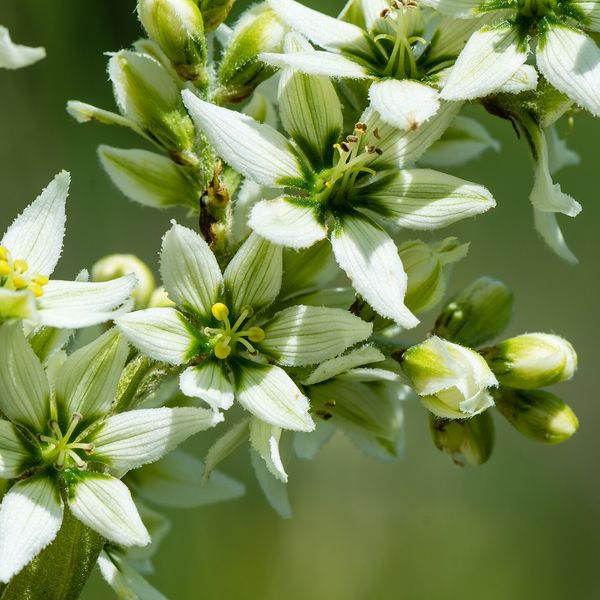
Flowers are dark blue, with a 'helmet' on top, without a spur. Deadly poisonous.
Protection and rules
The species is absent in Ukraine. An endemic of the Western Carpathians; picking plants is prohibited in the national parks of the Tatras.
FAQ
Where does the Tatra larkspur grow?
Only in the Western Carpathians: in the Tatras, Low Tatras, Little Fatra, and on Velký Choč, at altitudes of approximately 1000–2100 m.
Is the Tatra larkspur poisonous?
Yes, the entire plant, except for the flowers, is poisonous: it causes a drop in blood pressure and respiratory issues. Do not pick it.
Comments
Travellers’ experience: reports, tips, questions.
No one has written here yet. Be the first — your experience helps others.
Similar species
Where to meet it
Mountain ranges: In other countries: 🇸🇰 Belianske Tatras, 🇸🇰 High Tatras, 🇸🇰 Lesser Fatra, 🇸🇰 Low Tatras, 🇸🇰 Western Tatras, 🇸🇰 Slovak Ore Mountains, 🇸🇰 Greater Fatra
Trails and peaks near which naturalists recorded the species (GBIF, iNaturalist), matched by altitude and habitat. Sightings are not guaranteed.
Sources
GBIF · iNaturalist · Wikidata · Distribution data: GBIF.org (CC0 and CC BY records), iNaturalist; names and identifiers: Wikidata (CC0). Text: Karpaty.rocks, checked 11.11.2026.
