Summer cep
Never identify a mushroom from a photo alone. If in doubt, leave it. In case of poisoning call 112 (103 in Ukraine) at once.
About
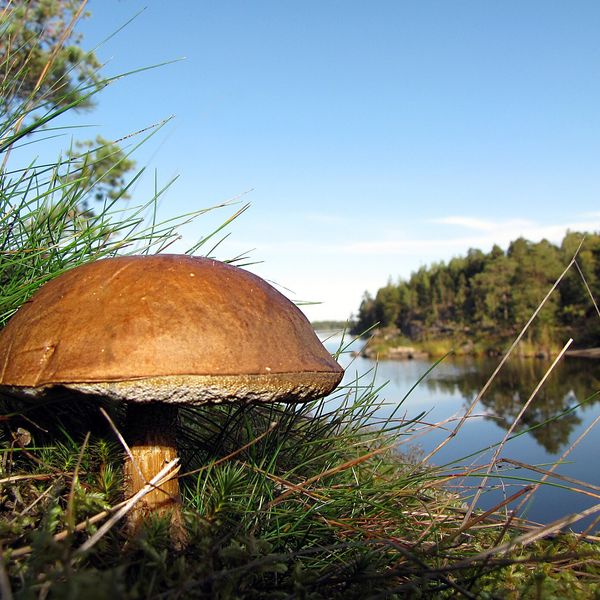
Boletus reticulatus is a close relative of the white mushroom, which mushroom pickers usually also call white. It loves warmth, so it is most often found in deciduous forests in hilly and mountainous areas: under oaks, beeches, hornbeams, and linden trees. In Ukraine, it is rare; in the Carpathians, it is mainly found in oak and beech forests of the foothills.
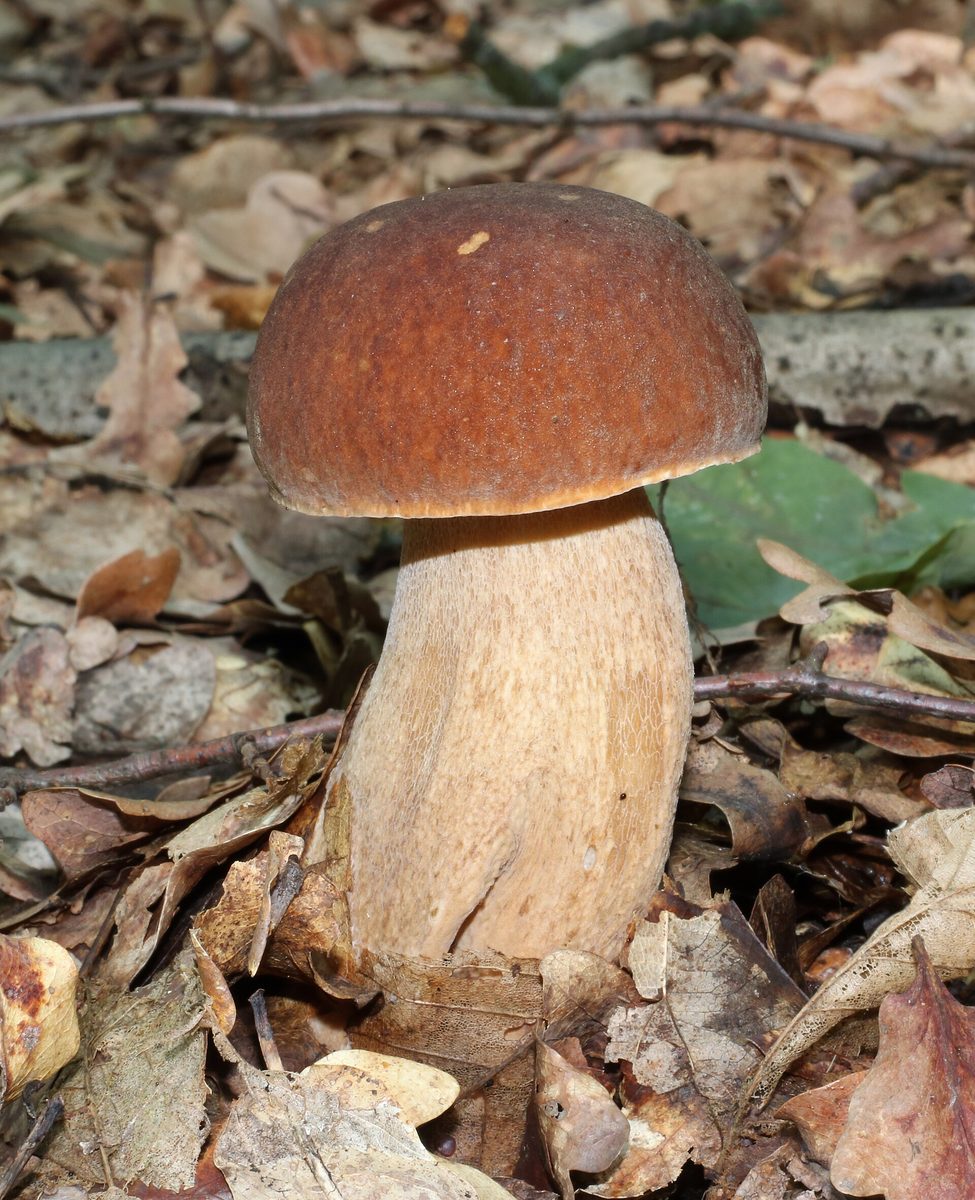
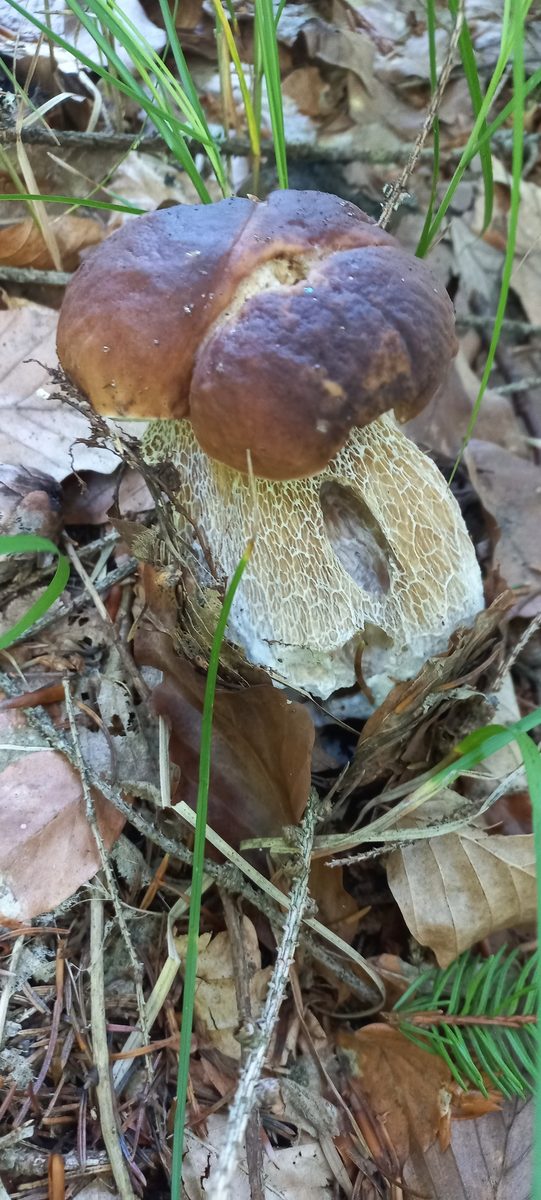
This is one of the earliest boletes: the first mushrooms appear as early as May, and in some places, they fruit until October. The cap is 8–25 cm, dry, velvety, coffee-colored, light brown, or ochre; in dry weather, it often cracks, forming a net-like pattern. The tubes are initially white, then yellow or olive-green. The stem is 10–25 cm, light nut-brown, covered with a noticeable white or brown net almost along its entire length. The flesh is white, dense, with a pleasant mushroom aroma.
Boletus reticulatus is edible and valued just as much as the white mushroom, although its flesh is somewhat softer. When squeezed, the stem springs back, and the taste of the flesh is slightly sweet.
The main lookalike is the bitter bolete with pink tubes and a dark net on the stem, which is very bitter. Also, pay attention to the similar bronze bolete with an almost black cap: it is listed in the Red Book of Ukraine, so collecting it is prohibited. Mushrooms in state and communal forests can be collected for personal use without a permit, but not in reserves and protected areas of national parks.
Where in the Carpathians

The map shows where naturalists recorded the species (GBIF, CC0 and CC BY records), not every place it lives. The Ukrainian Carpathians are less studied, so a blank area does not mean the species is absent.
- Countries
- Slovakia · Romania · Ukraine · Austria · Hungary · Czechia · Poland
- Mountain ranges
- Mátra, Strážov Mountains, Piatra Craiului, Krasna Polonyna, Poiana Ruscă Mountains, Skole Beskids, Little Carpathians, Vihorlat-Gutin Volcanic Ridge, Pieniny
- Altitude belts
- Foothills (below 600 m) · Beech forests (600–1200 m)
When to see it
| Jan | Feb | Mar | Apr | May | Jun | Jul | Aug | Sep | Oct | Nov | Dec | |
|---|---|---|---|---|---|---|---|---|---|---|---|---|
| Sightings |
From naturalists’ observations in the Carpathians (iNaturalist, research grade): the darker the cell, the more often the species is seen that month.
Safety
Collect only young, undamaged mushrooms that you can confidently identify. Do not taste raw mushrooms. Mushroom dishes are not recommended for children under 12 years old. In case of suspected poisoning, call 103 (or 112).
Look-alikes — how to tell them apart
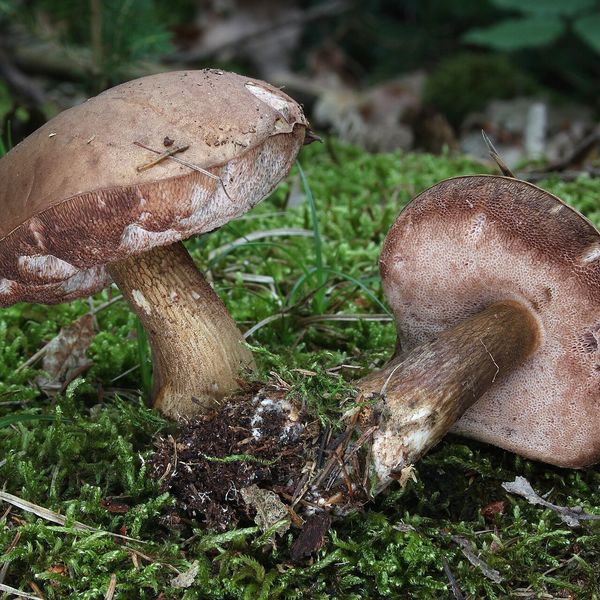
The tubes turn pink, the net on the stem is dark brown, the flesh is very bitter. In Boletus reticulatus, the tubes are white, yellowish, or olive, and the net is light.
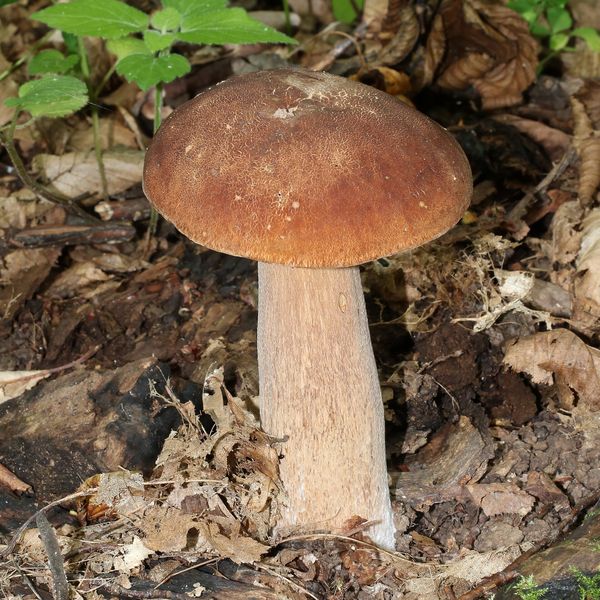
The cap is dark brown, almost black; it grows in warm oak forests. It is listed in the Red Book of Ukraine — collecting is prohibited.
Protection and rules
Not protected. Collecting mushrooms in reserves and protected areas of national parks is prohibited; in other forests for personal use — it is allowed.
FAQ
How does Boletus reticulatus differ from the white mushroom?
Boletus reticulatus has a dry, velvety cap that is often cracked, and the net covers almost the entire stem. It appears earlier, already in May, and prefers deciduous forests with oak and beech.
When do the first white mushrooms appear?
The earliest of the white mushrooms is Boletus reticulatus: in warm deciduous forests, it is found as early as May.
Similar species
Where to meet it
Mountain ranges: Krasna Polonyna, Skole Beskids, Vihorlat-Gutin Volcanic Ridge. In other countries: 🇭🇺 Mátra, 🇸🇰 Strážov Mountains, 🇷🇴 Piatra Craiului, 🇷🇴 Poiana Ruscă Mountains, 🇸🇰 Little Carpathians, 🇵🇱 Pieniny
Trails and peaks near which naturalists recorded the species (GBIF, iNaturalist), matched by altitude and habitat. Sightings are not guaranteed.
Sources
- Вікіпедія: Білий гриб сітчастий
- Wikipedia (en): Boletus reticulatus
- Wikipedia (en): Tylopilus felleus
- Наказ Міндовкілля від 15.02.2021 № 111: Перелік видів рослин та грибів, що заносяться до Червоної книги України
- Лісовий кодекс України, ст. 69: загальне використання лісових ресурсів (збирання грибів і ягід для власних потреб)
- МОЗ України: отруєння грибами — профілактика та перша допомога
- iNaturalist: Boletus reticulatus (спостереження в Карпатах)
GBIF · iNaturalist · Wikidata · Distribution data: GBIF.org (CC0 and CC BY records), iNaturalist; names and identifiers: Wikidata (CC0). Text: Karpaty.rocks, checked 09.11.2026.
