Slovak pasqueflower
This plant is poisonous: do not taste or pick it, and wash your hands after touching it. In case of poisoning call 112 (103 in Ukraine).
About
The Slovak pasqueflower is a rare plant of the Western Carpathians. It grows in Slovakia: in the Western Tatras, on Choč, in the Low Tatras, and in the Greater and Lesser Fatra. In Poland, the only known location is Wielkie Koryciska in the Chochołowska Valley, in a protected area of Tatra National Park, where approximately 80–160 plants were recorded from 2001 to 2008. This species is absent in Ukraine. Some botanists consider it a subspecies of Haller's pasqueflower.
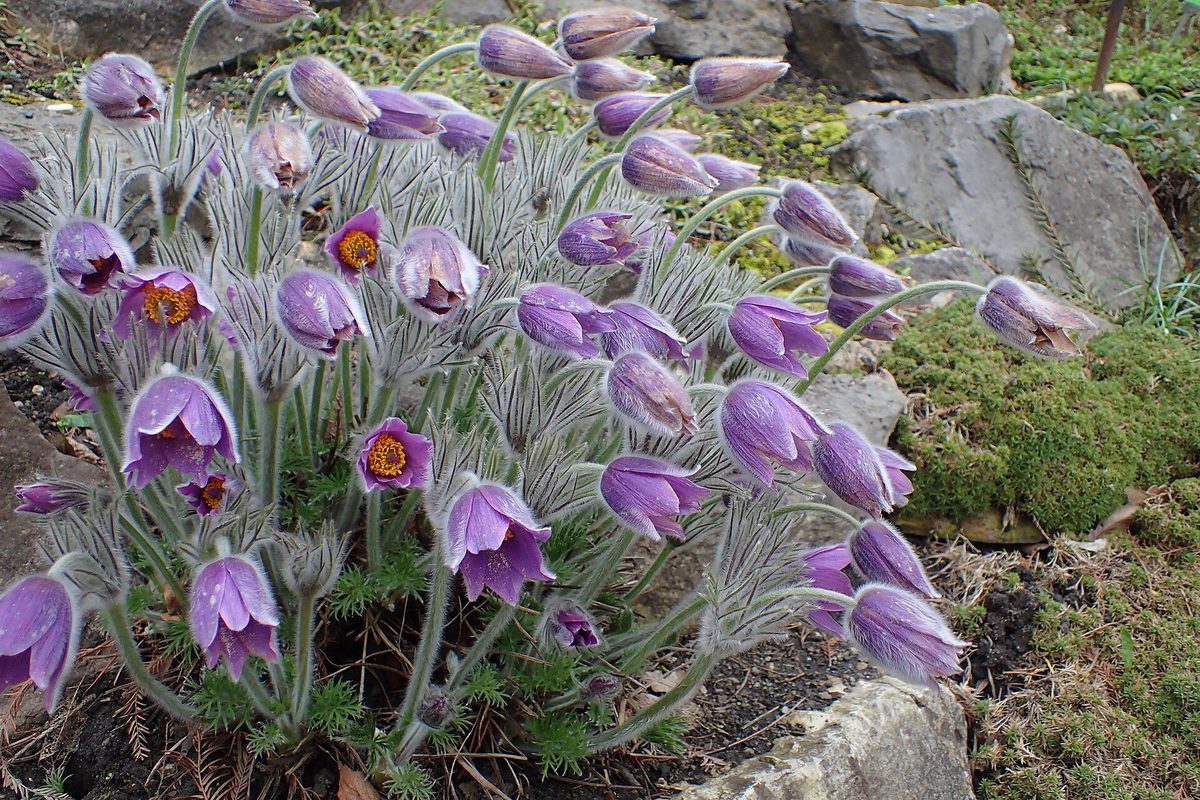
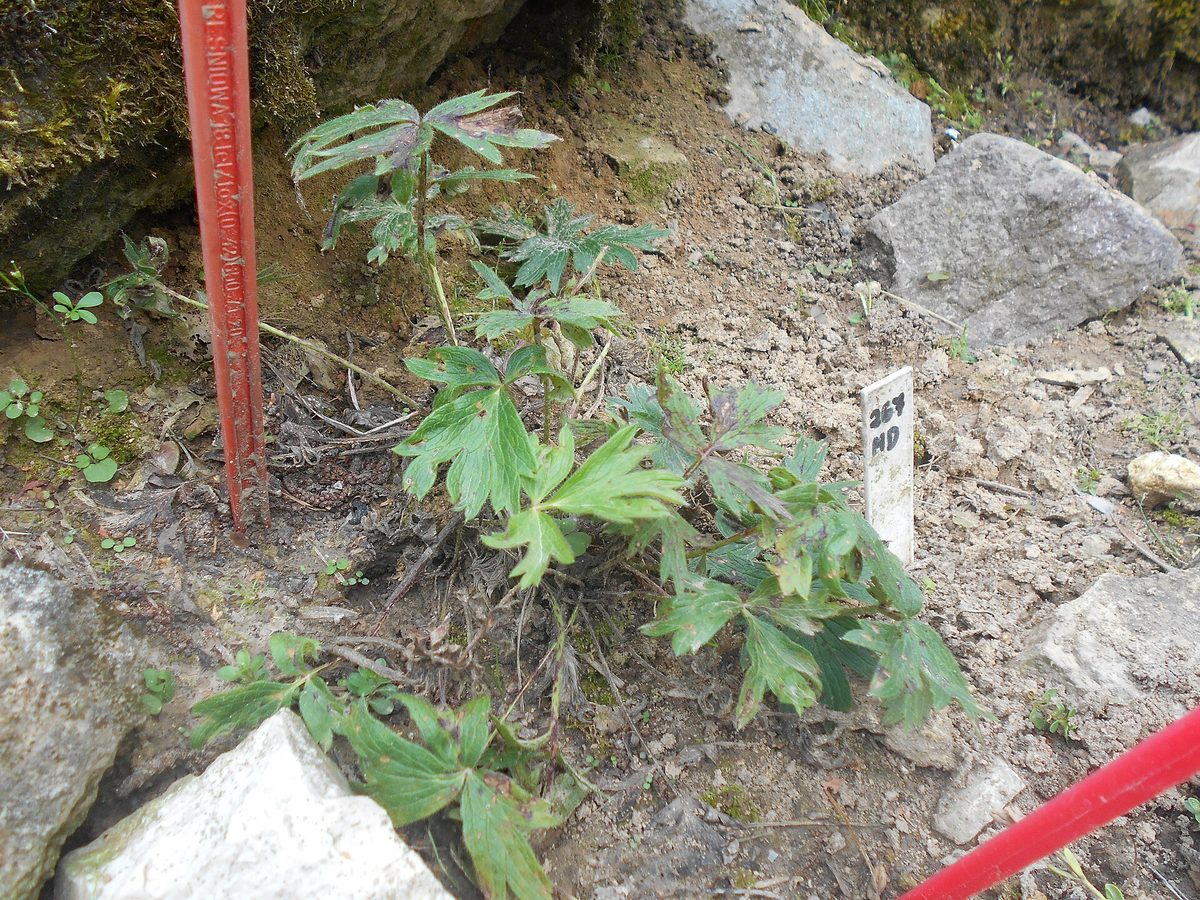
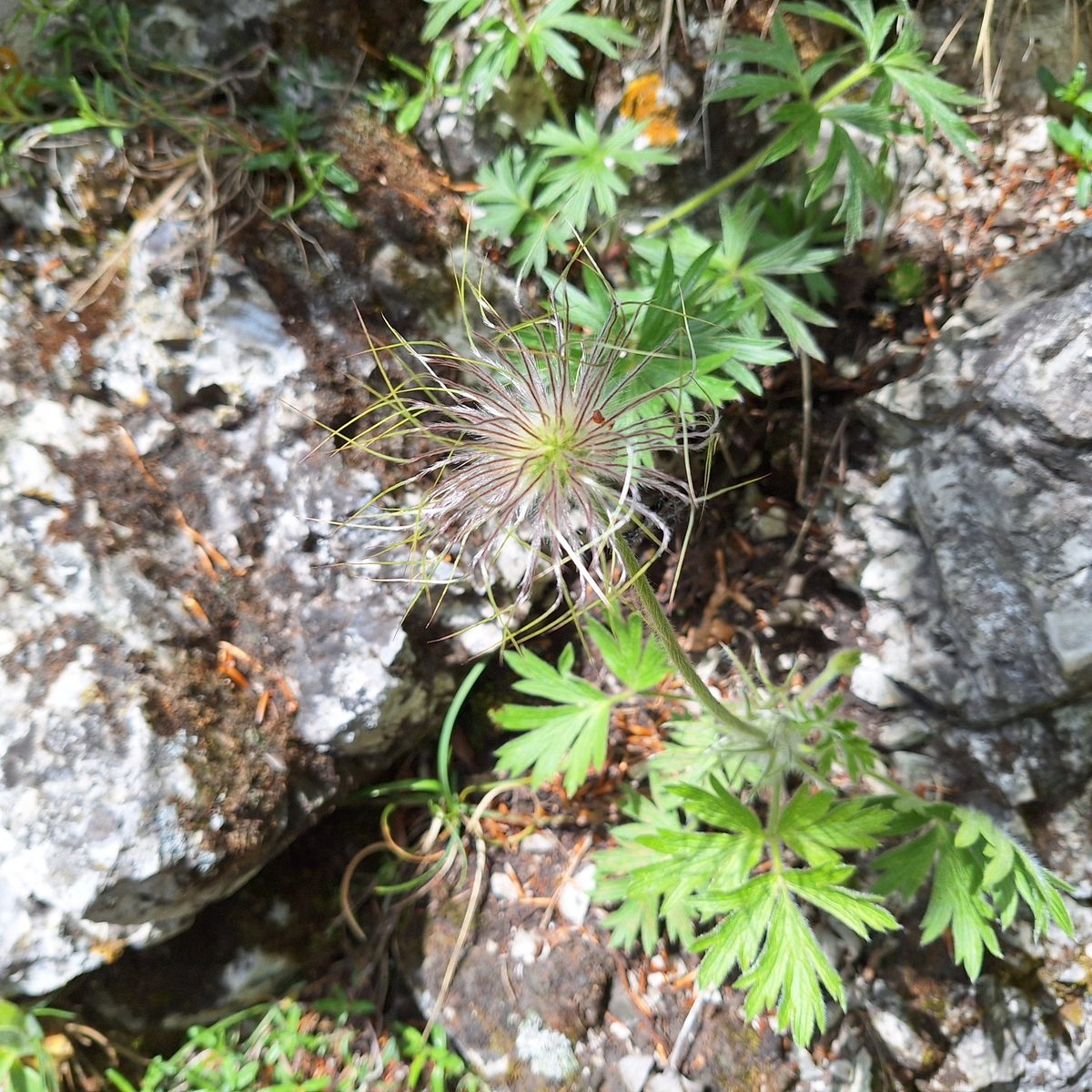
The stem is 15–30 cm tall and covered with white hairs. The flower is large, upright, and widely open, purple or lilac, with a grayish-woolly exterior; the tepals are 3.5–4.5 cm long, and the stamens are yellow. The basal leaves unfold only after flowering. The fruits with long feathery 'tails' form a fluffy ball.
The Slovak pasqueflower blooms in April–May, before the leaves appear, and first flowers in its third year of life. It grows on dry grassy rocky ledges and in light pine forests, almost always on limestone and dolomite. Our data show the highest records in the Strážov Mountains, Greater Fatra, Low Tatras, and Slovak Paradise.
The plant is poisonous — it contains anemonin and protoanemonin. In Poland, the Slovak pasqueflower is under strict protection, included in the Bern Convention and the EU Habitats Directive. The main threats are flower picking and forest encroachment on the rocks. We do not show exact locations: the map is generalized to the level of massifs.
This species does not live in the Ukrainian Carpathians today — you can see it in other Carpathian countries.
Where in the Carpathians

Orange — where naturalists recorded the species (GBIF, CC0/CC BY); a blank area does not mean it is absent. For rare and vulnerable species the map is deliberately coarse (hexagons of ~250 km² or more) so that it never points to dens, nests or growing sites.
- Countries
- Slovakia · Poland
- Mountain ranges
- In other countries: 🇸🇰 Strážov Mountains, 🇸🇰 Slovak Ore Mountains, 🇸🇰 Greater Fatra, 🇸🇰 Low Tatras, 🇸🇰 Lesser Fatra, 🇸🇰 Slovak Paradise, 🇸🇰 Choč Mountains, 🇸🇰 Volovec Mountains, 🇸🇰 Western Tatras, 🇸🇰 Považský Inovec, 🇸🇰 Levoča Mountains, 🇸🇰 Little Carpathians, 🇸🇰 Branisko, 🇸🇰 Žiar Mountains
- Altitude belts
- Foothills (below 600 m) · Beech forests (600–1200 m)
When to see it
| Jan | Feb | Mar | Apr | May | Jun | Jul | Aug | Sep | Oct | Nov | Dec | |
|---|---|---|---|---|---|---|---|---|---|---|---|---|
| Flowering | ||||||||||||
| Fruit |
From naturalists’ observations in the Carpathians (iNaturalist, research grade): the darker the cell, the more often the species is seen that month.
Safety
Poisonous plant (anemonin, protoanemonin): sap irritates skin and mucous membranes. Do not pick or put in your mouth.
Protection and rules
The species is absent in Ukraine. In Poland, it is under strict protection; Bern Convention, Annexes II and IV of the EU Habitats Directive. Picking and digging up is prohibited.
FAQ
Where does the Slovak pasqueflower grow?
In the mountains of Slovakia — the Western and Low Tatras, on Choč, in the Greater and Lesser Fatra — and in one location in the Polish Tatras. It grows on limestone rocks.
When does the Slovak pasqueflower bloom?
In April–May, before the leaves appear.
Comments
Travellers’ experience: reports, tips, questions.
No one has written here yet. Be the first — your experience helps others.
Similar species
Where to meet it
Ranges where it occurs: In other countries: 🇸🇰 Strážov Mountains, 🇸🇰 Slovak Ore Mountains, 🇸🇰 Greater Fatra, 🇸🇰 Low Tatras, 🇸🇰 Lesser Fatra, 🇸🇰 Slovak Paradise, 🇸🇰 Choč Mountains, 🇸🇰 Volovec Mountains, 🇸🇰 Western Tatras, 🇸🇰 Považský Inovec, 🇸🇰 Levoča Mountains, 🇸🇰 Little Carpathians, 🇸🇰 Branisko, 🇸🇰 Žiar Mountains
Trails and peaks near which naturalists recorded the species (GBIF, iNaturalist), matched by altitude and habitat. Sightings are not guaranteed.
Sources
- Wikipedia (pl): Sasanka słowacka
- Вікіпедія: Сон словацький
- GBIF: Pulsatilla halleri subsp. slavica
- Директива Ради 92/43/ЄЕС про збереження природних оселищ (консолідована редакція)
GBIF · iNaturalist · Wikidata · Distribution data: GBIF.org (CC0 and CC BY records), iNaturalist; names and identifiers: Wikidata (CC0). Text: Karpaty.rocks, checked 11.11.2026.
