Red-capped scaber stalk
Never identify a mushroom from a photo alone. If in doubt, leave it. In case of poisoning call 112 (103 in Ukraine) at once.
About
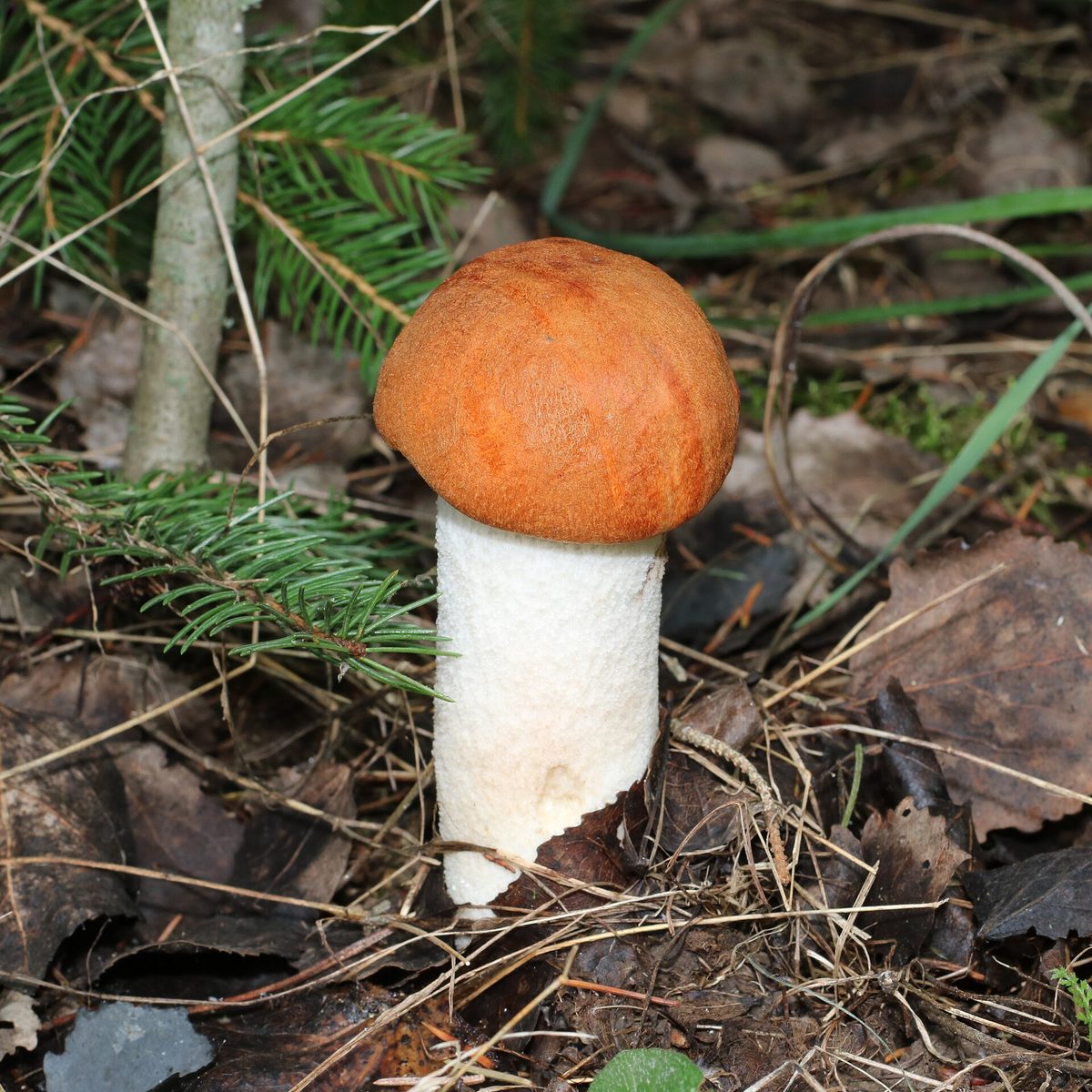
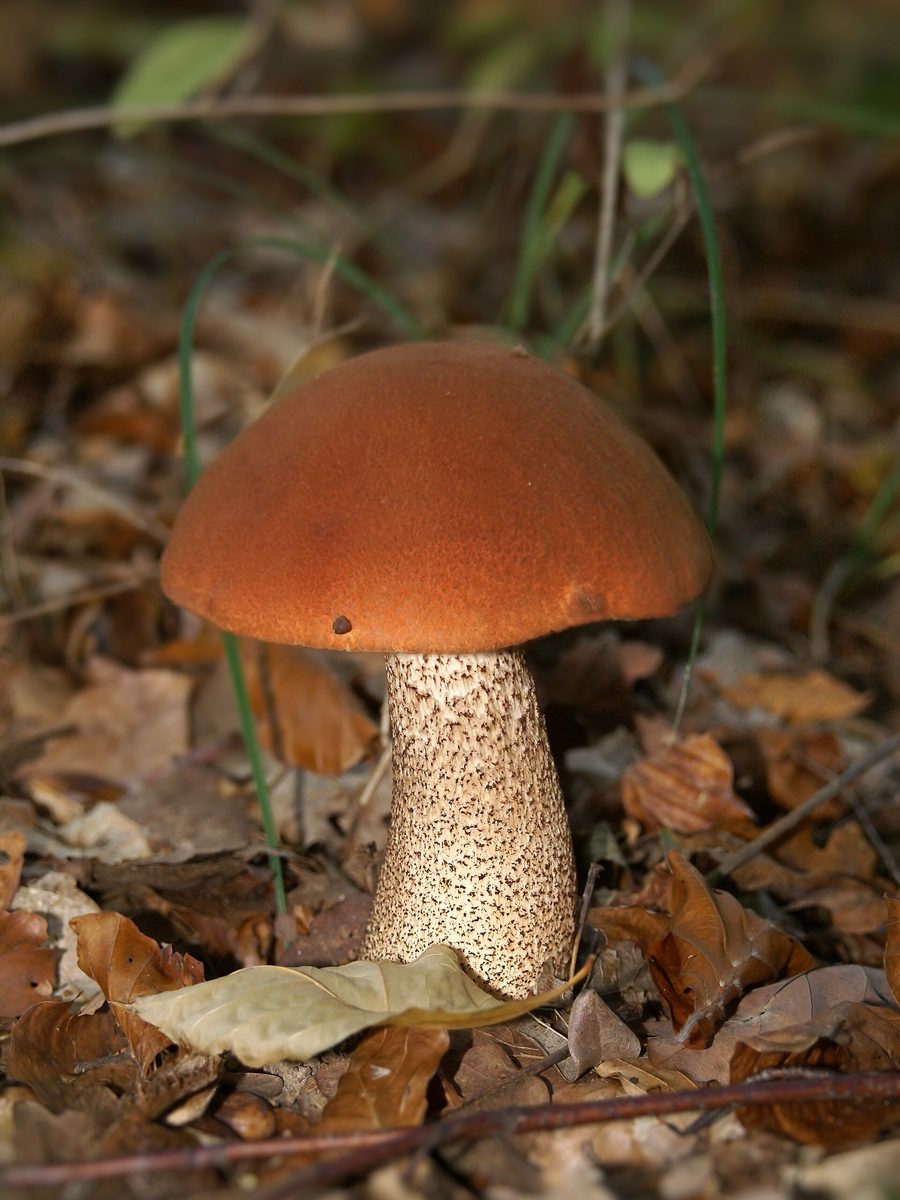
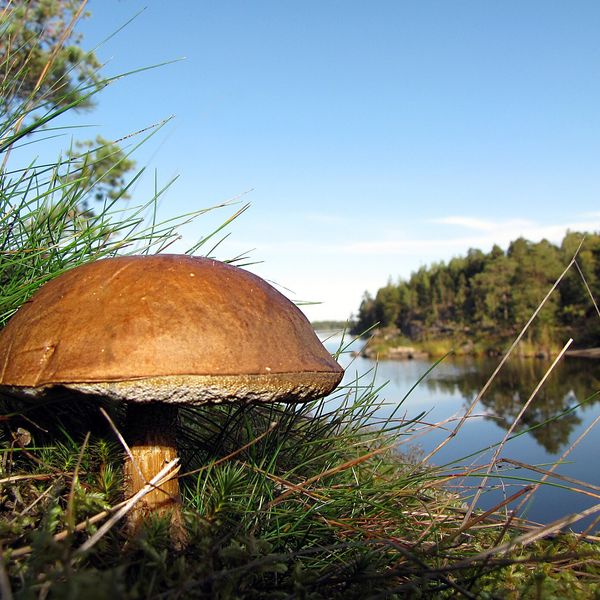
The Red-capped scaber stalk is one of the most recognizable mushrooms: its bright orange-red cap can be seen from afar. It forms mycorrhiza mainly with aspen, as well as with other deciduous trees, particularly alder. In Ukraine, it is widespread in Polissia, the Forest-Steppe, and the Carpathians, where it can be found in mixed forests, on forest edges, and clearings with aspen undergrowth. The season is from summer to autumn.
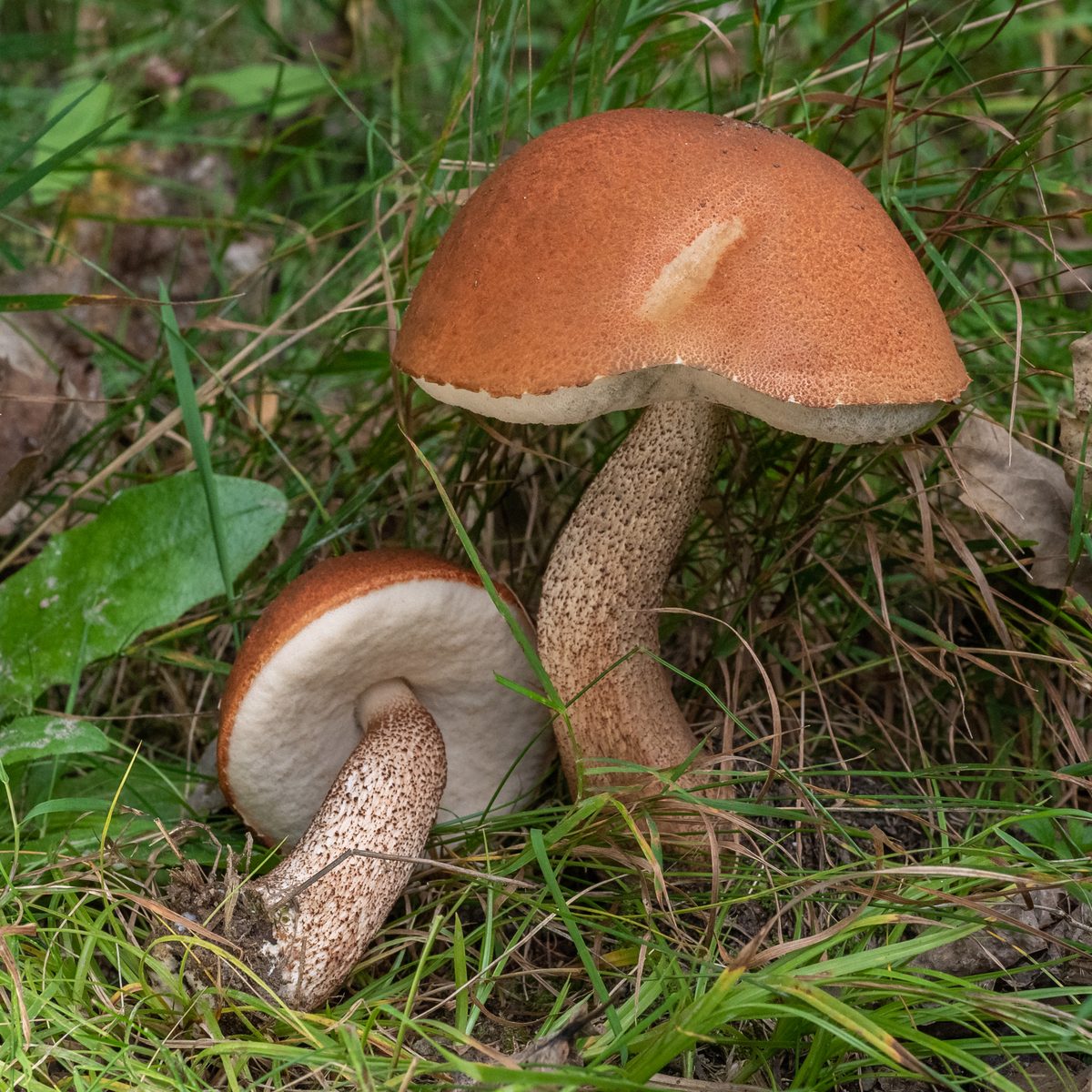
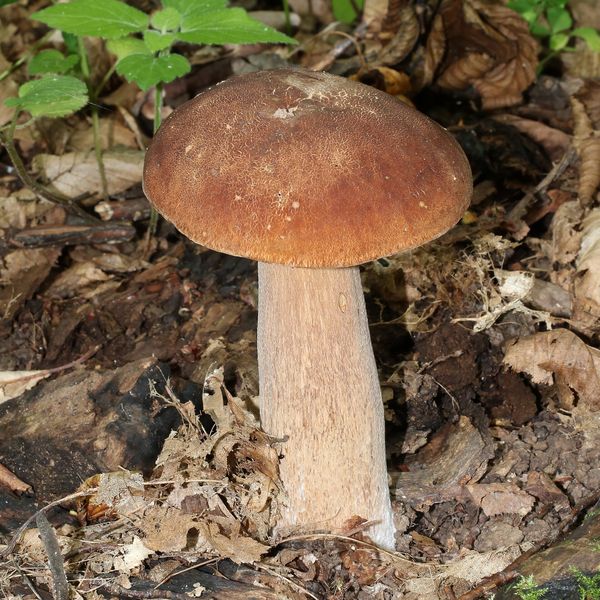
The cap measures 4–15 cm, sometimes up to 20 cm, initially hemispherical, later convex, dark red, brick-red, or orange-brown, dry, glabrous, or finely velvety. The pores are small, whitish, turning gray with age. The stem is tall and dense, 8–15 cm, whitish, covered with small scales that darken with age. The flesh is white and firm; when cut, it first turns pink, then lilac-gray, and finally black. During boiling, the mushroom also darkens.
The Red-capped scaber stalk is considered a good edible mushroom, and in Poland, it is included in the list of mushrooms permitted for sale. However, it should be thoroughly boiled or fried: insufficiently cooked mushrooms can cause vomiting and digestive upset, and some people may have adverse reactions even after processing.
Among the red-capped scaber stalks, there are several closely related species, all of which are considered edible. It has no dangerous lookalikes if you carefully observe the tubes under the cap and the scales on the stem. As with other mushrooms, only collect young and undamaged specimens, leaving old and wormy ones in the forest.
Where in the Carpathians

The map shows where naturalists recorded the species (GBIF, CC0 and CC BY records), not every place it lives. The Ukrainian Carpathians are less studied, so a blank area does not mean the species is absent.
- Countries
- Poland · Austria · Ukraine · Serbia
- Mountain ranges
- Skole Beskids, Kučaj Mountains and Beljanica, Żywiec Beskids
- Altitude belts
- Foothills (below 600 m) · Beech forests (600–1200 m)
When to see it
| Jan | Feb | Mar | Apr | May | Jun | Jul | Aug | Sep | Oct | Nov | Dec | |
|---|---|---|---|---|---|---|---|---|---|---|---|---|
| Sightings |
From naturalists’ observations in the Carpathians (iNaturalist, research grade): the darker the cell, the more often the species is seen that month.
Safety
Thoroughly boil or fry: undercooked mushrooms can cause digestive upset. Only collect young mushrooms that you can confidently identify. Do not give mushroom dishes to children under 12 years old.
Look-alikes — how to tell them apart
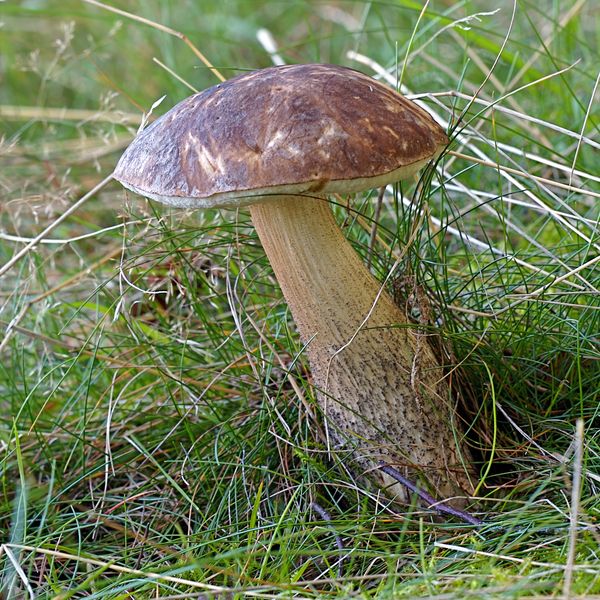
Cap brown or gray-brown, not red; grows under birches; flesh changes color very little when cut.
Stem with a dark mesh, not scales; tubes turn pink; flesh is very bitter.
Protection and rules
Not protected.
FAQ
Why does the red-capped scaber stalk turn black when cut?
Its flesh oxidizes in the air: it first turns pink, then lilac-gray, and finally black. This is a natural reaction and not a sign of toxicity.
Do red-capped scaber stalks need to be boiled for a long time?
They should be thoroughly boiled or fried, as insufficiently cooked mushrooms can cause digestive upset.
Similar species
Where to meet it
Mountain ranges: Skole Beskids. In other countries: 🇷🇸 Kučaj Mountains and Beljanica, 🇵🇱 Żywiec Beskids
Trails and peaks near which naturalists recorded the species (GBIF, iNaturalist), matched by altitude and habitat. Sightings are not guaranteed.
Sources
- Вікіпедія: Підосиковик
- Wikipedia (en): Leccinum aurantiacum
- Rozporządzenie Ministra Zdrowia z 17.05.2011, t.j. Dz.U. 2023 poz. 2237: wykaz grzybów dopuszczonych do obrotu (Польща)
- МОЗ України: отруєння грибами — профілактика та перша допомога
- iNaturalist: Leccinum aurantiacum (спостереження в Карпатах)
GBIF · iNaturalist · Wikidata · Distribution data: GBIF.org (CC0 and CC BY records), iNaturalist; names and identifiers: Wikidata (CC0). Text: Karpaty.rocks, checked 09.11.2026.
